The West End and Davie tour is Vancouver's architecture flagship, eight stops across three and a half kilometres of the city's smallest peninsula. The walk makes an argument most architecture tours avoid: that the way a city builds housing and the way it treats its marginalized residents are not separate subjects. The West End is where Vancouver worked out both at once.
The most-quoted density experiment in North America
Between 1962 and 1975, the West End was transformed. Roughly 220 high-rise towers went up in about fifteen years, replacing an older fabric of wooden houses. That burst of density is the single most-cited residential case study on the continent, and the tour walks its results as a working laboratory.
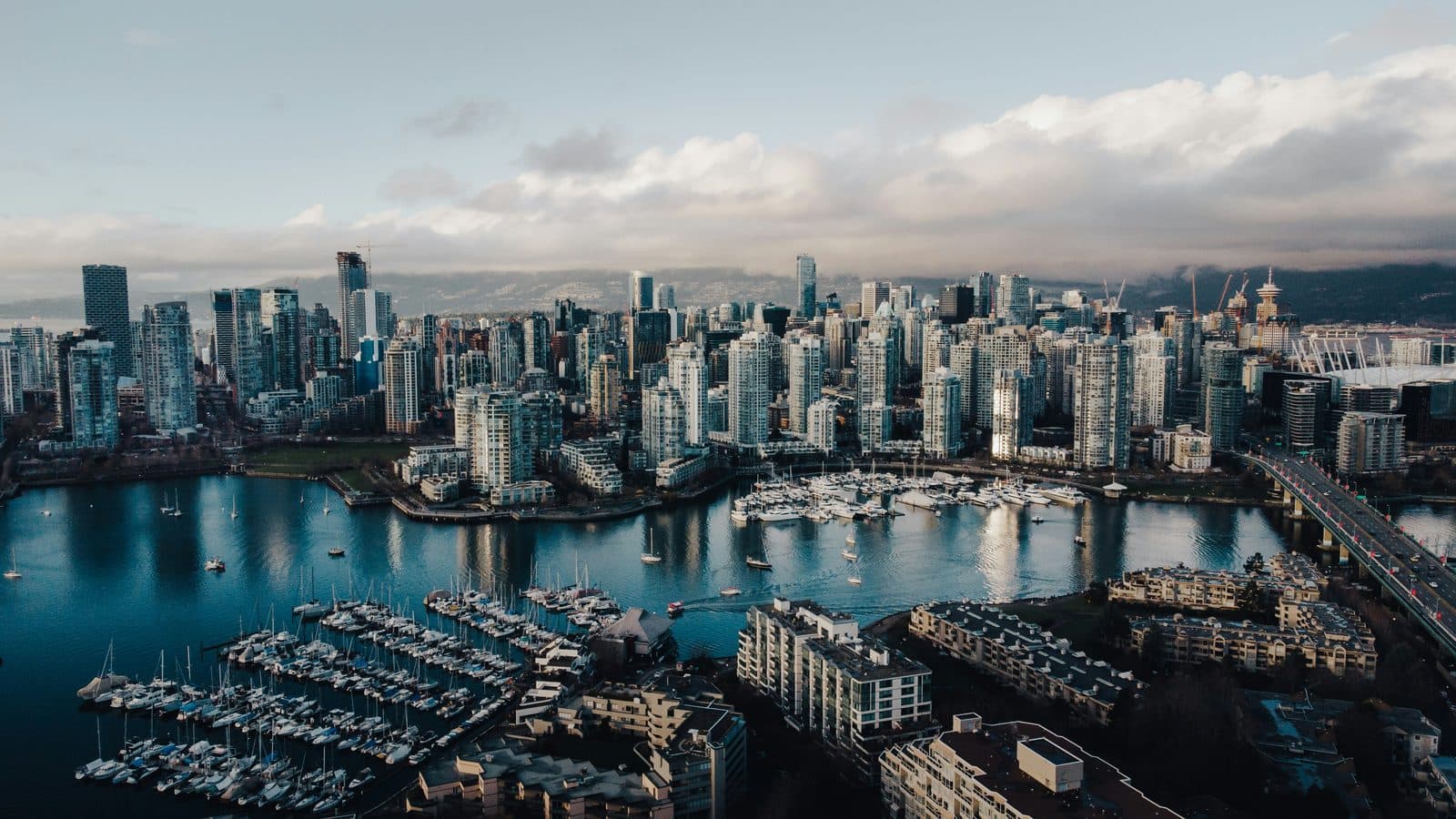
The lesson planners drew from it took decades to codify. Larry Beasley, Vancouver's co-director of planning from 1994 to 2006, spent the late 1980s and 1990s studying what had worked in the West End and what had not, and turned the findings into a planning regime with a name: Vancouverism. Slender point towers on low retail podiums, protected view corridors to the mountains, continuous ground-floor shops, and public amenity edges. The forest of slim glass needles by the harbour that appears in every Vancouver marketing photo, in Coal Harbour and False Creek North, is Vancouverism. The West End at Robson and Bidwell is its precursor and its proof.
The Engineer voice on this walk reads the small-grain details that make the model work: modest tower setbacks, awnings at the retail level, residential entrances tucked between storefronts, almost no surface parking on the corridor. It looks obvious now. It was not obvious in 1962.
The block the towers did not get
Hear a stop from this walk
Mole Hill: The Block the High-Rises Did Not Get
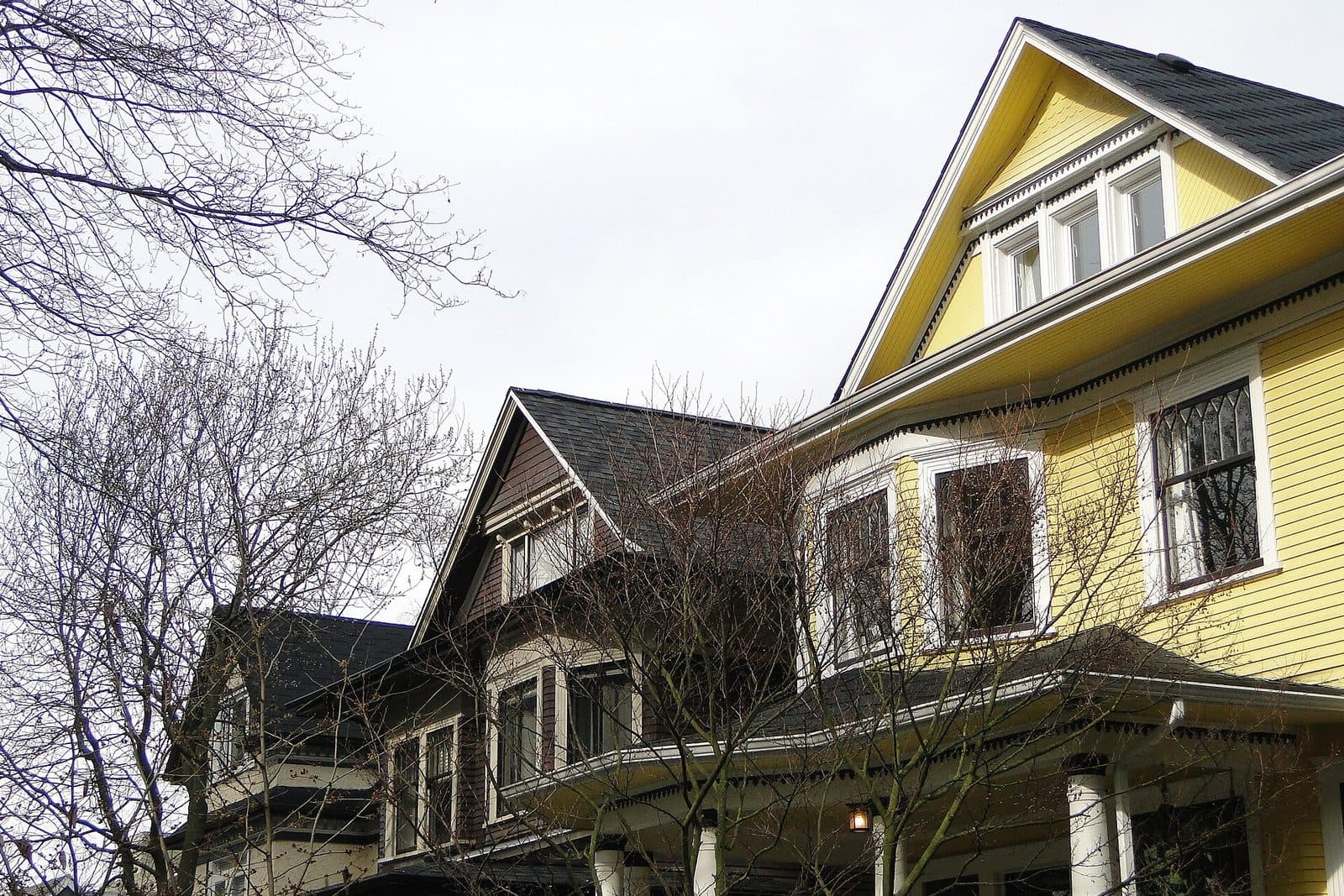
The counter-example is Mole Hill, twenty-eight wooden houses on twenty-nine lots at Pendrell and Bute, built between 1888 and 1908 and the only surviving pre-First-World-War residential block in the West End. It survived by accident: Vancouver Coastal Health had assembled the lots for a St Paul's Hospital expansion that never happened. When the Parks Board proposed demolishing the houses for a tower in the 1990s, the Friends of Mole Hill organized, and the city committed to restoration in 1999. The block is now heritage non-market housing, the pre-tower pattern preserved by a fight the rest of the peninsula lost.
The civil-rights district in the same blocks
Here is where the tour departs from a normal architecture walk. The West End is also Davie Village, and the same streets that hold the density experiment hold Canada's most legible LGBTQ civic landscape.
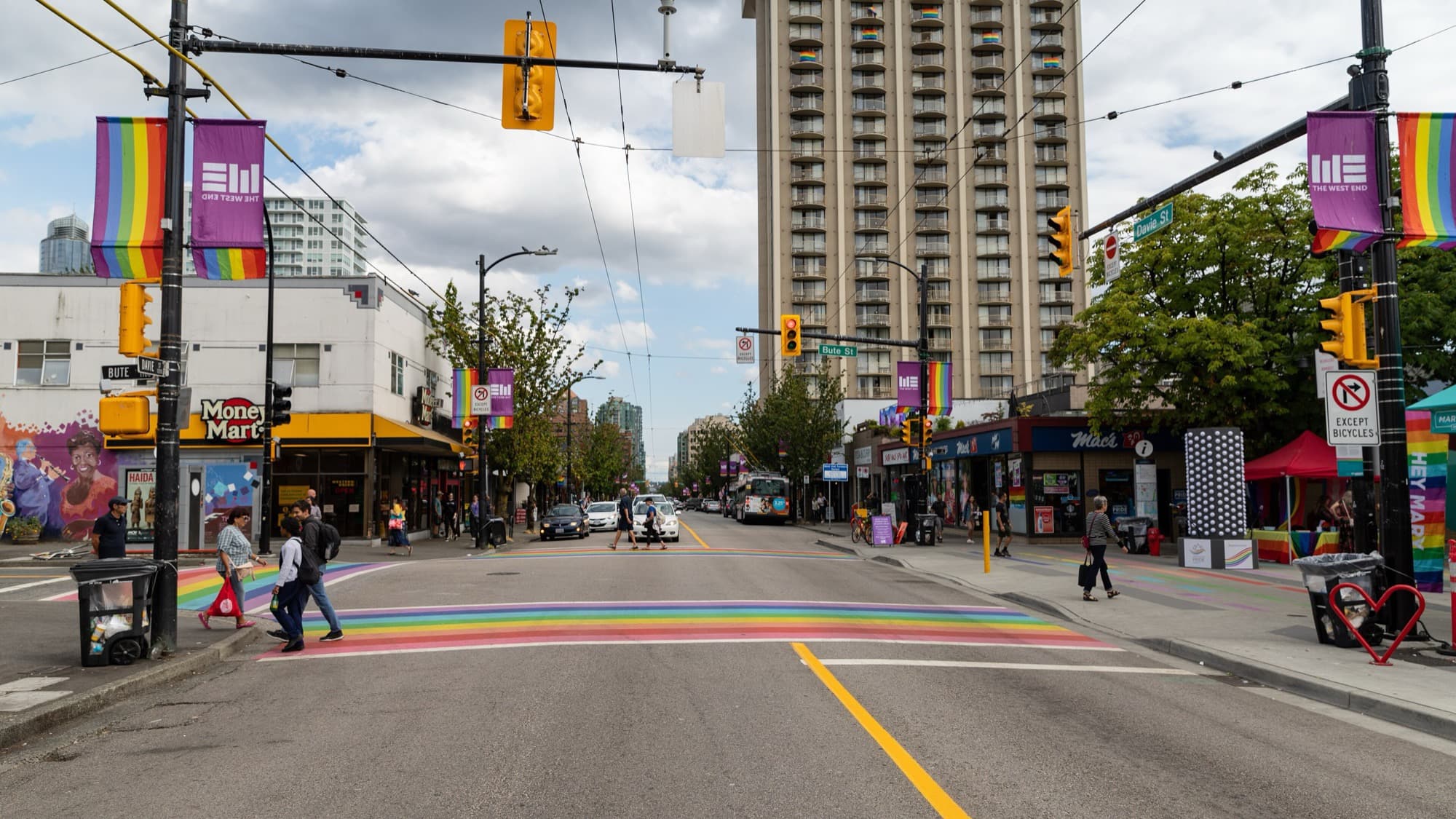
Davie and Bute carries the first permanent rainbow crosswalks installed in Canada, unveiled on 29 July 2013. One block away is the site of Little Sister's Book and Art Emporium, opened by Jim Deva and Bruce Smyth in 1983, which Canada Customs systematically detained shipments to at the border for years. The bookstore sued, and in Little Sisters Book and Art Emporium v Canada the Supreme Court of Canada ruled in December 2000 that Customs had wrongly targeted the shop.
A half-block of Bute Street is now Jim Deva Plaza, opened 28 July 2016 as Vancouver's first pavement-to-plaza conversion, with a steel "soapbox" monument to free speech. Deva, the lead plaintiff against the federal government's customs officers, died in 2014, less than two years before the city that had once prosecuted his shop named a civic plaza for him. That reversal of posture is the human spine of the walk.
A hospital that changed the course of a pandemic
St Paul's Hospital on Burrard, founded by the Sisters of Providence in 1894, is the walk's quietest landmark and one of its most consequential. It is the operational base of the BC Centre for Excellence in HIV/AIDS, where Dr Julio Montaner's work on triple-drug antiretroviral therapy, presented at the 1996 International AIDS Conference held in Vancouver, helped turn HIV from a death sentence into a chronic condition. British Columbia became the first jurisdiction in the world to offer the therapy universally. In a district shaped by the AIDS crisis, the hospital is where the medical answer was found.
Why the architecture and the politics are one tour
The walk closes at the Joe Fortes Memorial Fountain in Alexandra Park, dedicated in 1927 to Vancouver's first official lifeguard, a Black Trinidadian-born man who taught generations of West End children to swim and is the oldest public memorial in the district. It is a fitting last stop, because the whole tour has been about who a dense city makes room for.
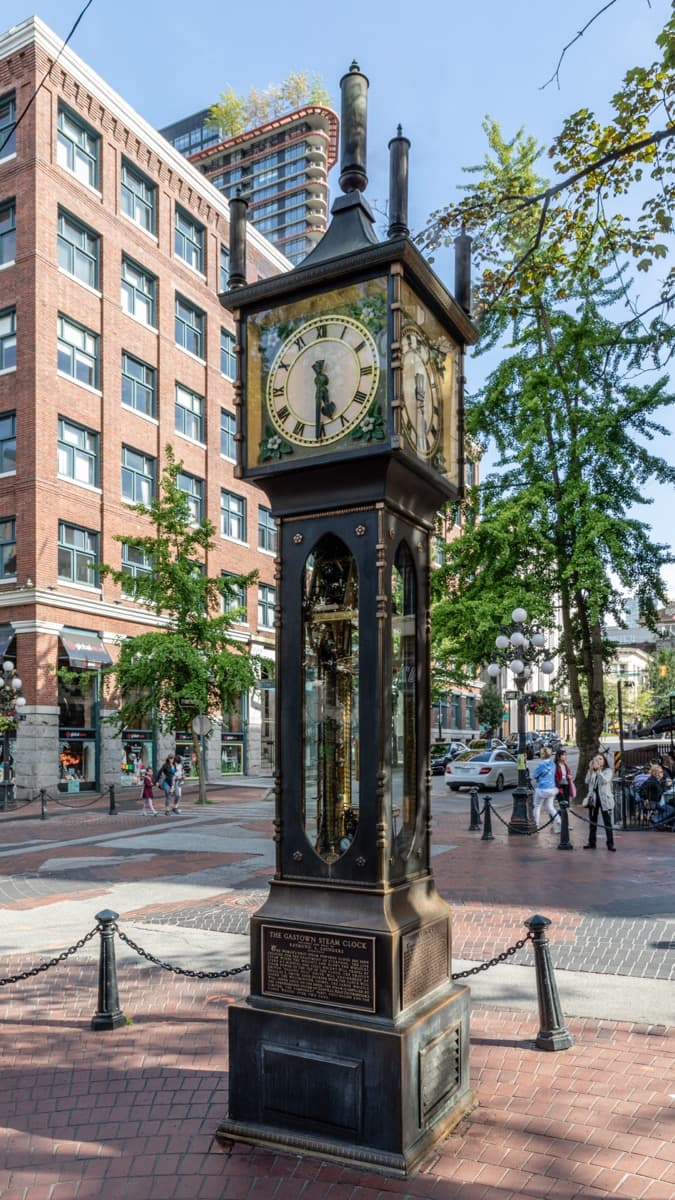
The West End proves that density done well is a design achievement and a social one at the same time. For the pattern across the rest of the city, read the thesis on erasure and reclamation, and for the founding-era architecture the West End replaced, walk the Gastown founding tour. Then walk Davie, and read the towers and the crosswalks as one continuous argument.
Ready to experience it?
The West End and Davie: How a City Got Dense by Accident
70 min · 3.6 km · easy
More from Vancouver
Explore more at your own pace.
One Day in Vancouver: A Walkable Downtown Itinerary (2026)
Chinatown After Hogan's Alley: What Displacement Did to Vancouver's Black and Chinese Blocks
Vancouver: The City Built on Erasure and Reclamation
Chinatown and Hogan's Alley: The Freeway Fight Vancouver Only Half-Won
Gastown: A Founding Myth Assembled in the 1970s