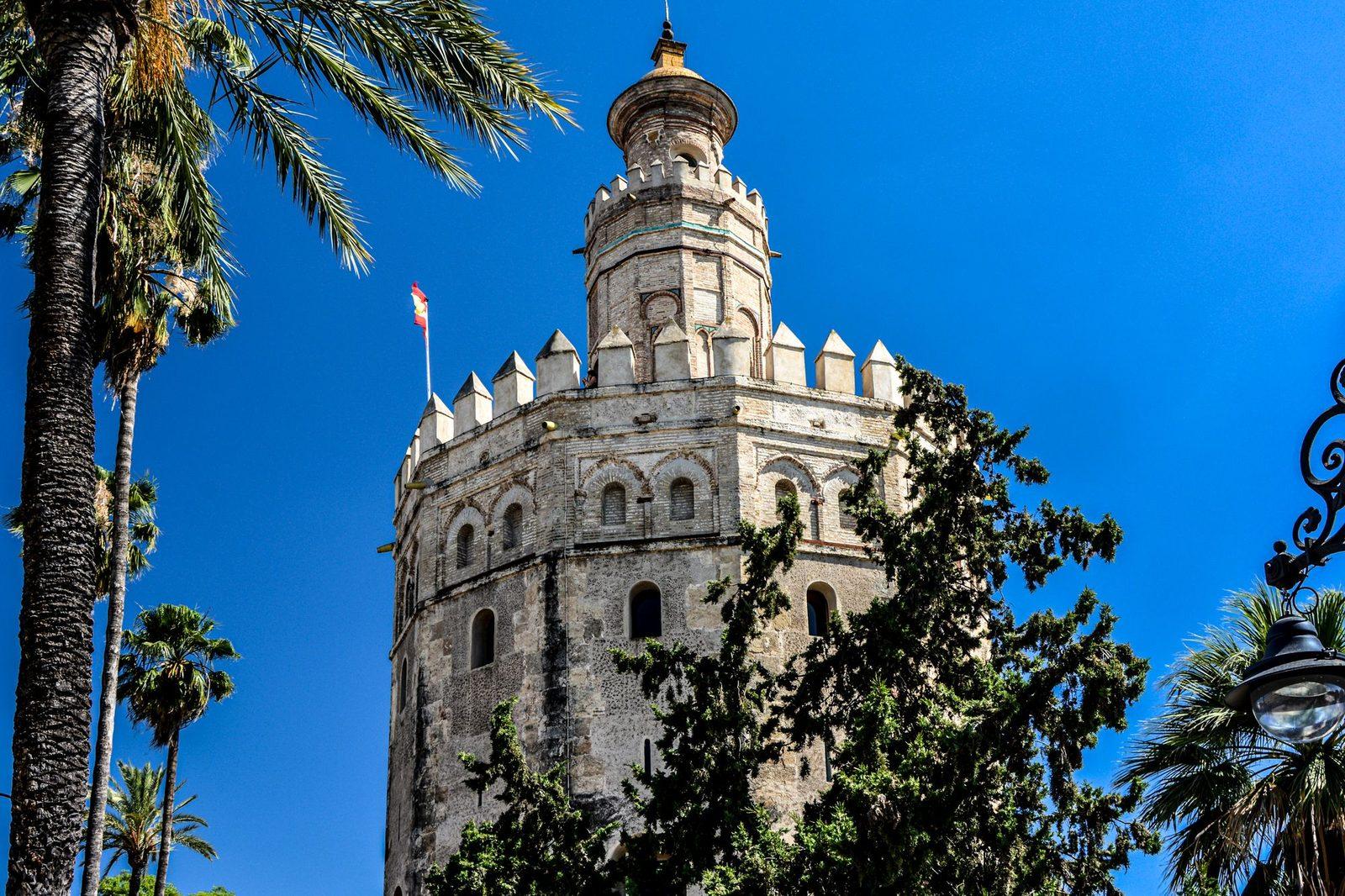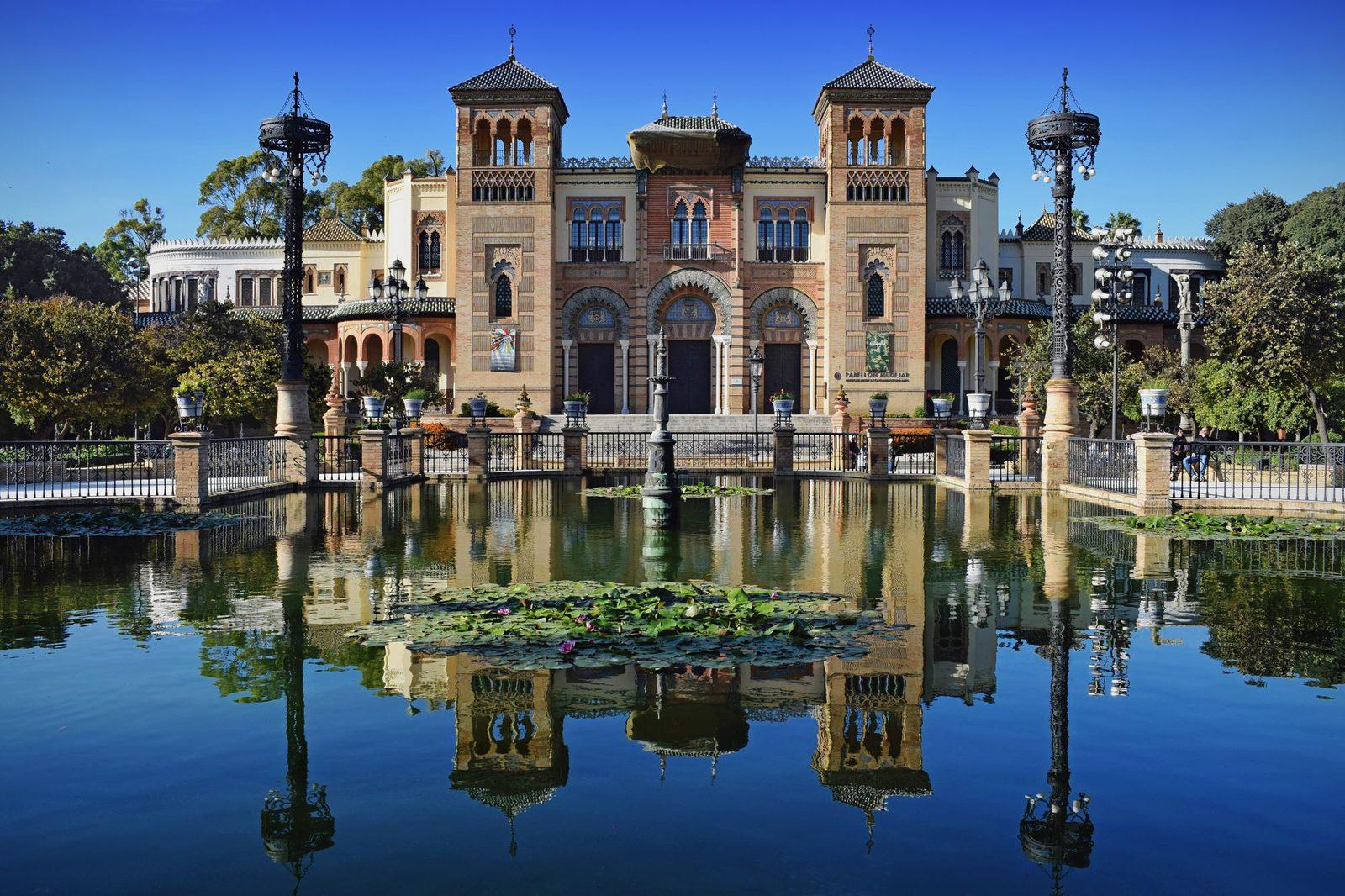
María Luisa Park was a palace garden left to Seville in a princess's will, and a French gardener remade it between 1912 and 1922. It was a public park before it was a world's fair, opened in part in 1914, fifteen years before the 1929 Exposition that grew around it. Its real history is better than several of the stories told about it.
The will
The gardens belonged to the Palacio de San Telmo, home of the Duke and Duchess of Montpensier from 1849. The Infanta María Luisa Fernanda died there on 2 February 1897. Her will, dated 1893, left the palace to the archbishop of Seville and most of its gardens to the city, as the art historian Falcón Márquez records, "for the creation of the future María Luisa Park." Guides often say she donated the park in 1893. She left it, and it came to the city after her death. The tourist office adds that the couple kept a little court here, and is said to have kept deer, camels and gazelles in the gardens.
The gardener
Hear a stop from this walk
Palacio de San Telmo
To turn a private garden into a public one the city chose Jean-Claude Nicolas Forestier, chief gardener of the Bois de Boulogne in Paris. The Andalusian tourism board says his works ran from 1912 to 1922 and that he adapted them to Seville's climate and landscape; the city's tourist office calls the result a romantic garden of Hispano-Arab inspiration, with references to the Alhambra and the Alcázar. The first phase opened on 18 April 1914, during that year's fair. The board names the parts that date from his time: the lotus garden, the Lions' Garden and the Frogs' Fountain. His bust stands near the lion fountain.
What is older than the fair
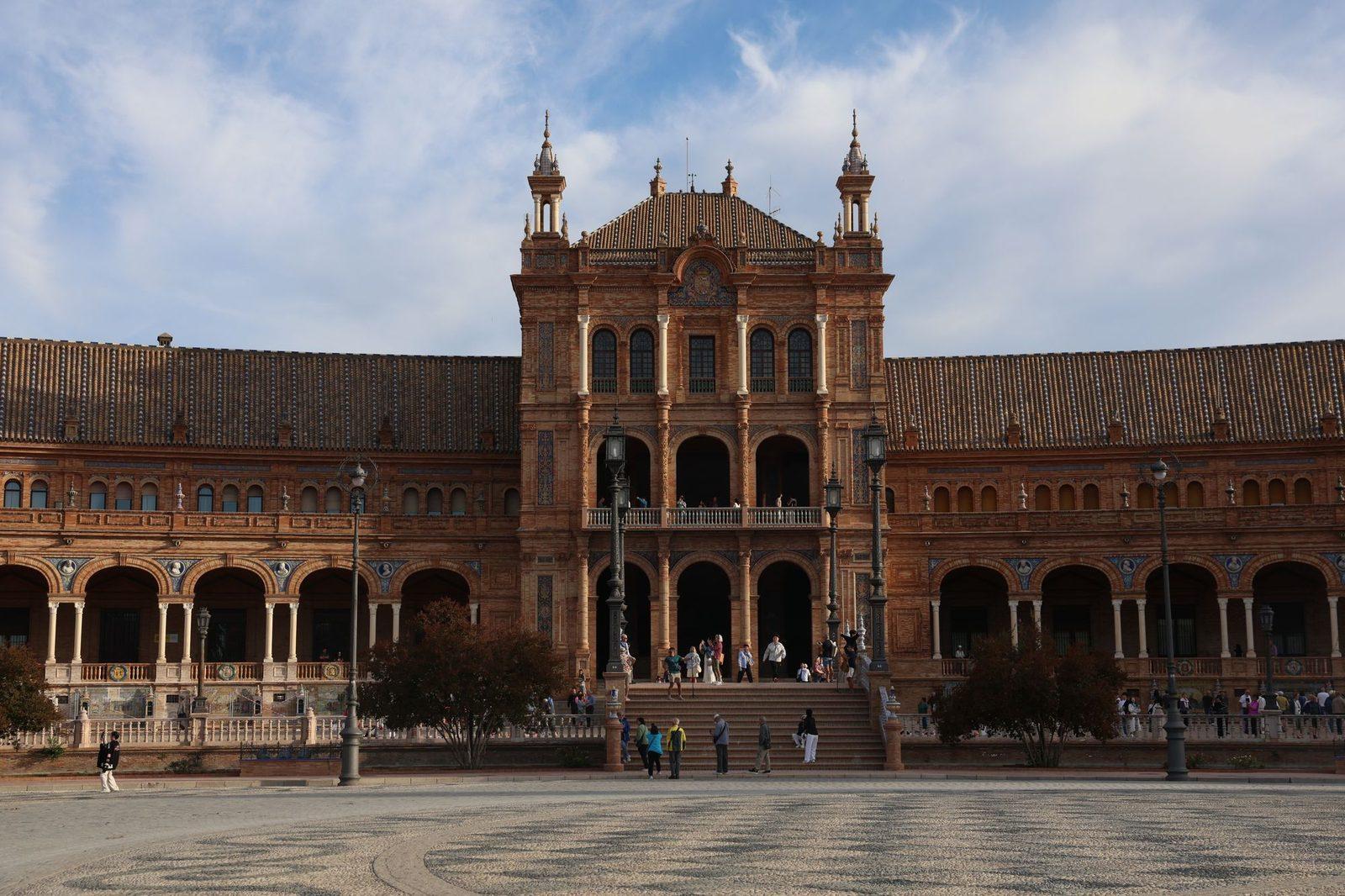
The monument to the poet Gustavo Adolfo Bécquer, unveiled in 1911 and the work of the sculptor Lorenzo Coullaut Valera, stands round a great cypress, with the poet's bust and three women on the sides of its pedestal. The three women are often read as three phases of love; that is the tourist office's reading. When the Exposition finally opened in 1929, the park was already the green ground it was laid out in, and the Plaza de España was built at its eastern edge, open toward it.
Three stories to leave out
The city's own tourist office prints some of the park's favorite legends and then doubts them itself. The lamp posts laid out as constellations: its own text asks whether that is coincidence or hidden intention, and rests on unnamed interviews. The Costurero de la Reina, the little pavilion by the park named for a seamstress queen: the office calls the story chronologically impossible. And the Monte Gurugú, the little hill by the lion fountain, has a name nobody we read explains, so we do not either.
Visiting
The park is free and open every day from 8:00 to midnight, per the tourist office's page (older listings give 22:00 in winter), covers more than 34 hectares and is protected as a historic garden. On Plaza de España: The Garden That Became a World's Fair, the Bécquer monument is stop 6, the duck pond stop 10 and the lion fountain stop 11, before the walk ends at the Plaza de América. It is free to start in the Roamer app: the introduction and first stop play in full, and every later stop plays a short preview. The whole story of the fair is in our Plaza de España companion.
Ready to experience it?
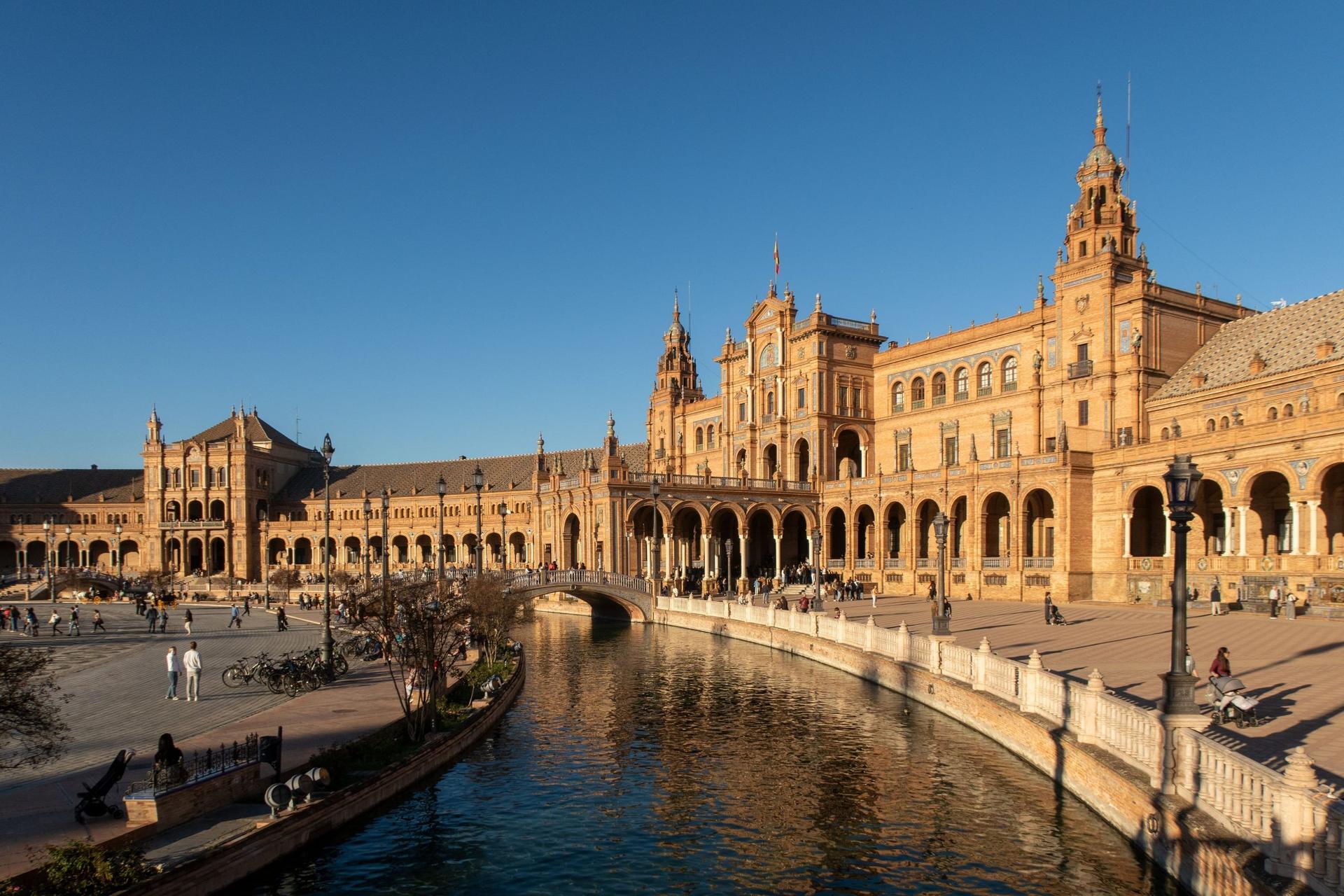
Plaza de España: The Garden That Became a World's Fair
75 min · 2.6 km · easy
More from Seville
Explore more at your own pace.
Seville Monument Tickets, Hours and Closures (Checked November 2026)
Best History Walking Tours in Seville (2026)
Las Setas and the Macarena: A Companion to Seville's Northern Old Town
Plaza de España, Seville: A Companion to the Garden That Became a World's Fair
Alameda de Hércules, Seville: The Lagoon That Became a Garden