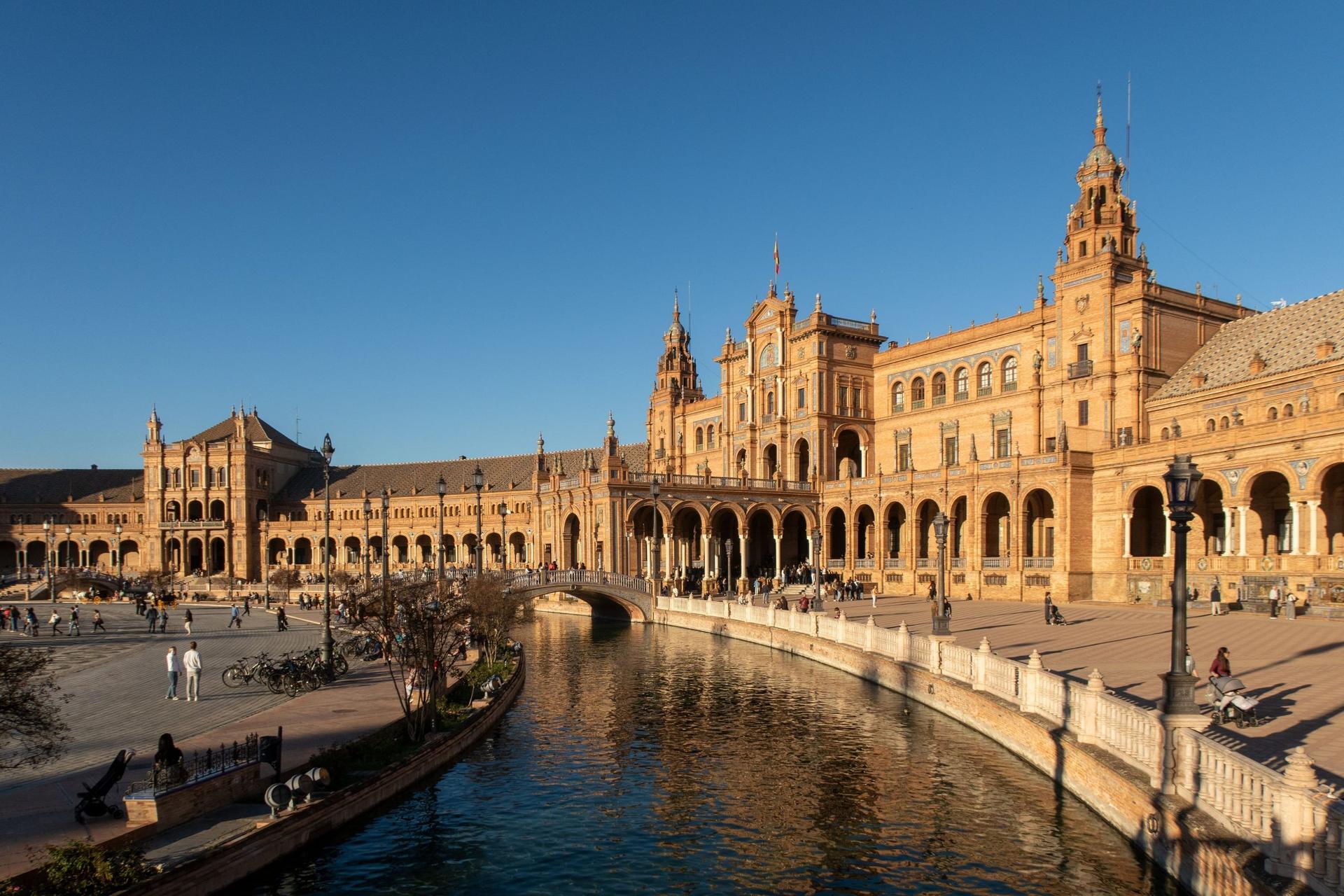
Seville's 1929 Ibero-American Exposition, walked north to south: from the Palacio de San Telmo, whose gardens became María Luisa Park, through the Puerta de Jerez and past the Royal Tobacco Factory, to the half circle of the Plaza de España and its province benches, then through Forestier's park to the three pavilions of the Plaza de América.
Start · Palacio de San Telmo
DirectionsStops
- 1
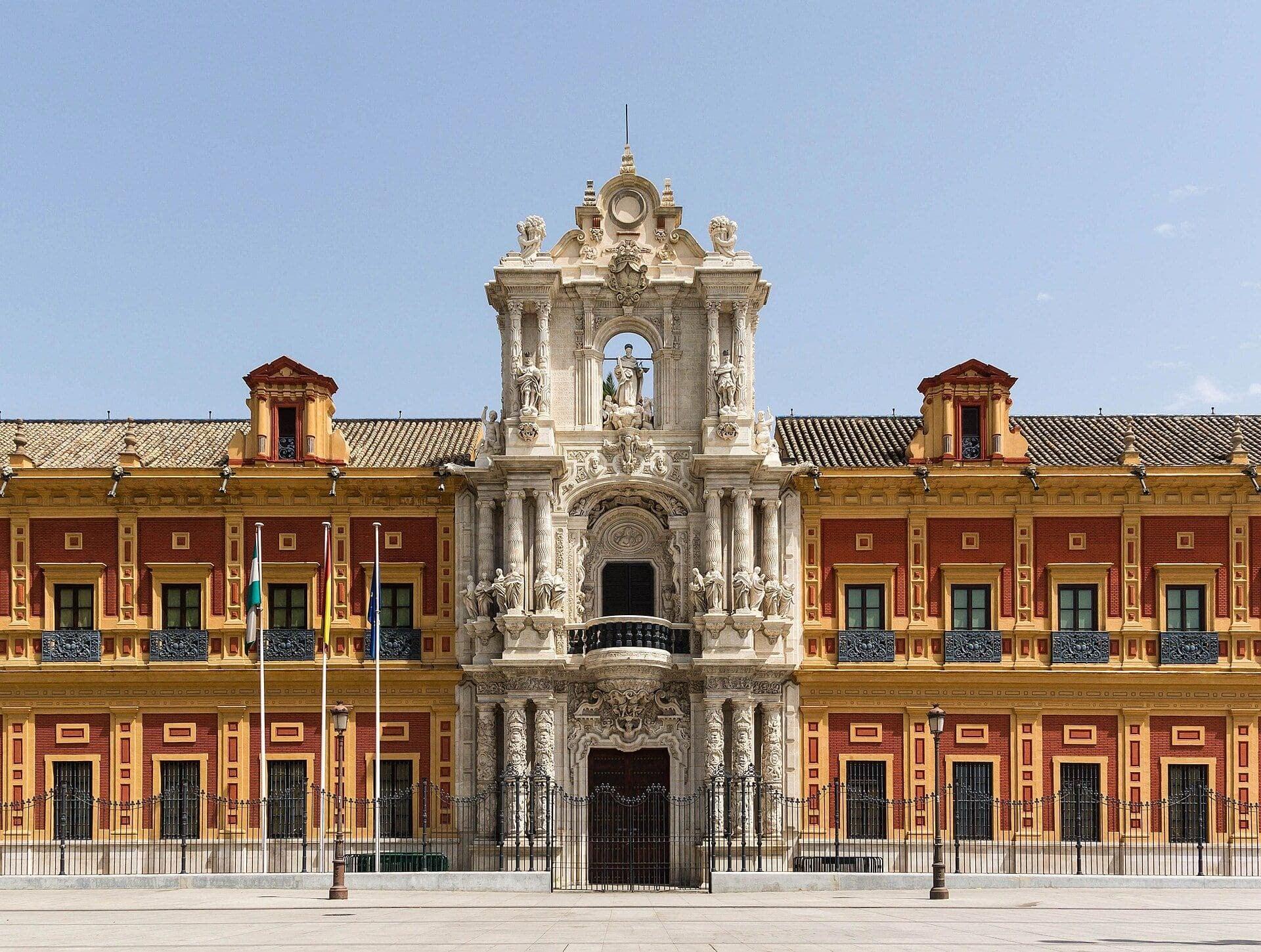
Palacio de San Telmo
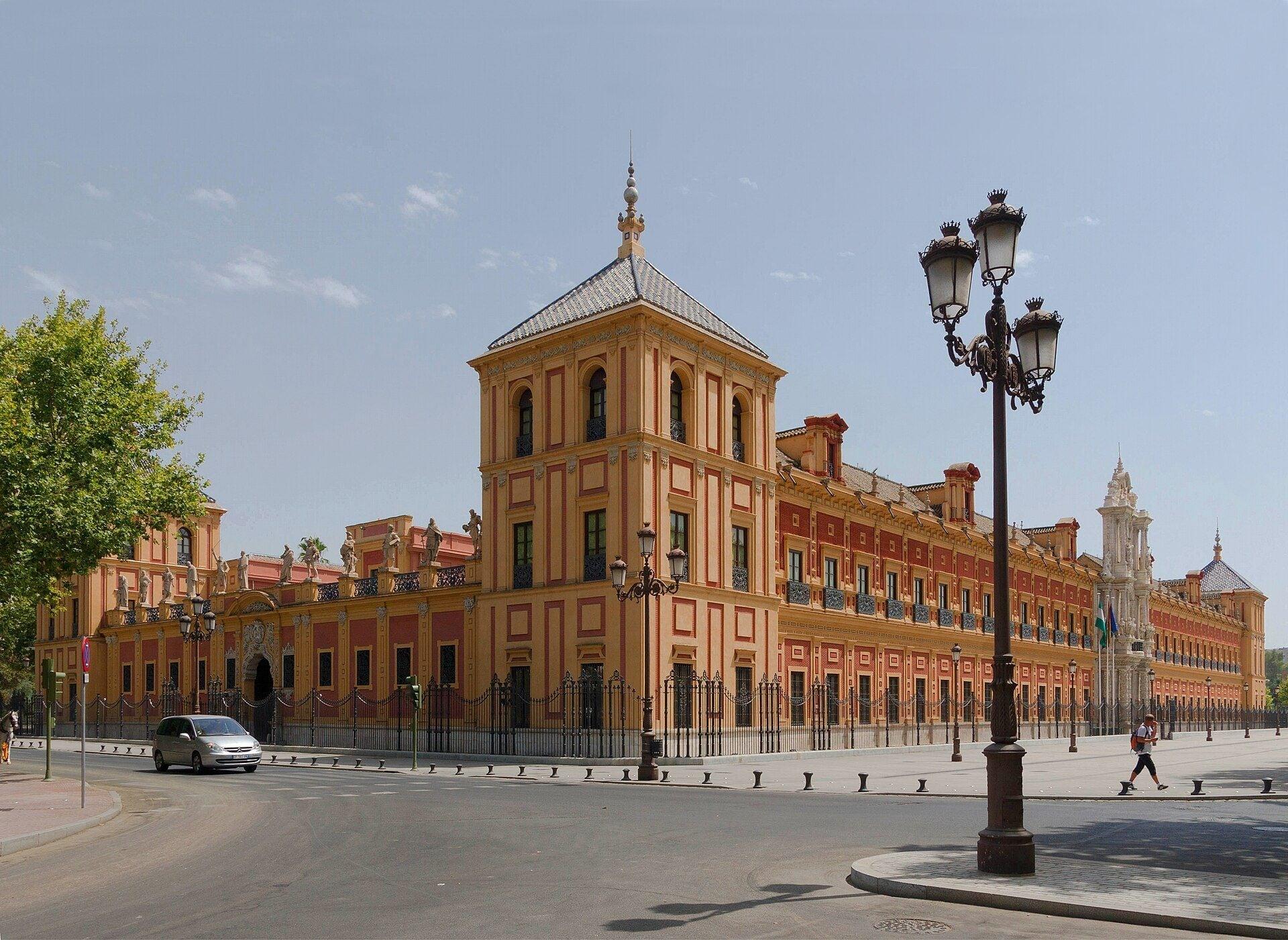
A sailors' college became a palace. The Palacio de San Telmo, today the seat of Andalusia's regional president, whose gardens became María Luisa Park.
- 2
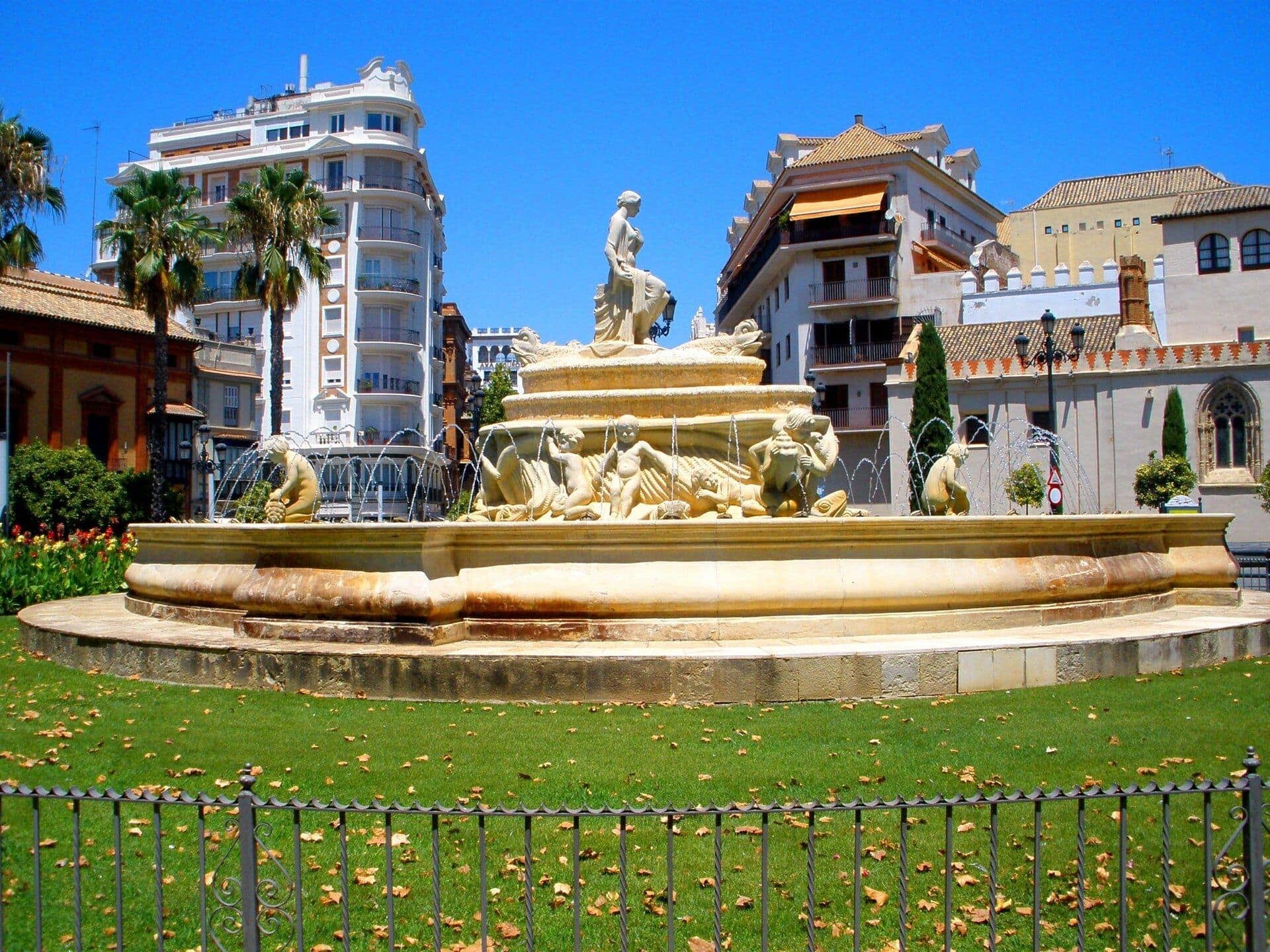
Puerta de Jerez
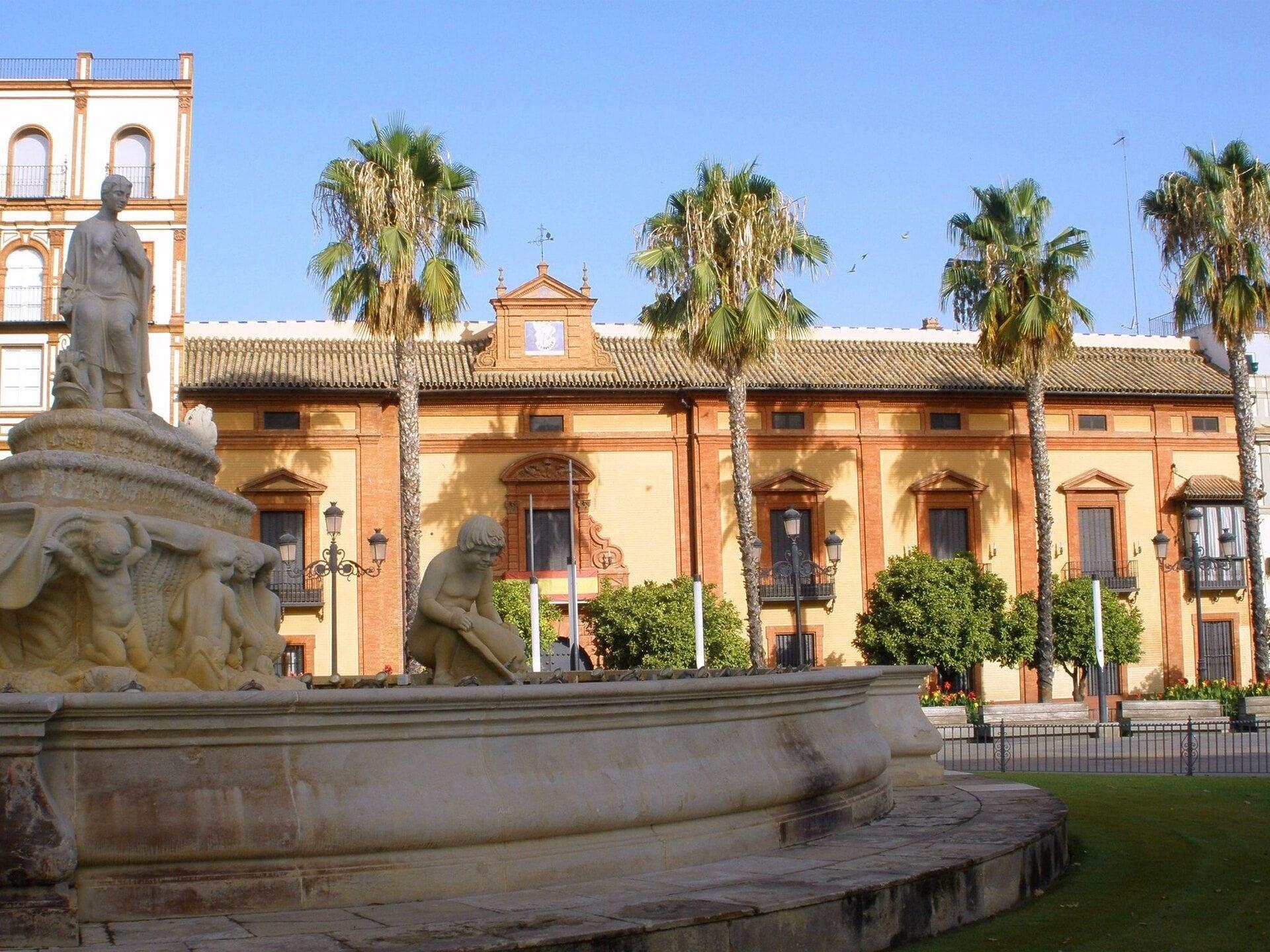
The old city ended right here. The site of Seville's south gate, which the 1929 Exposition dressed for its visitors: a fountain of Seville and a hotel for the fair.
- 3
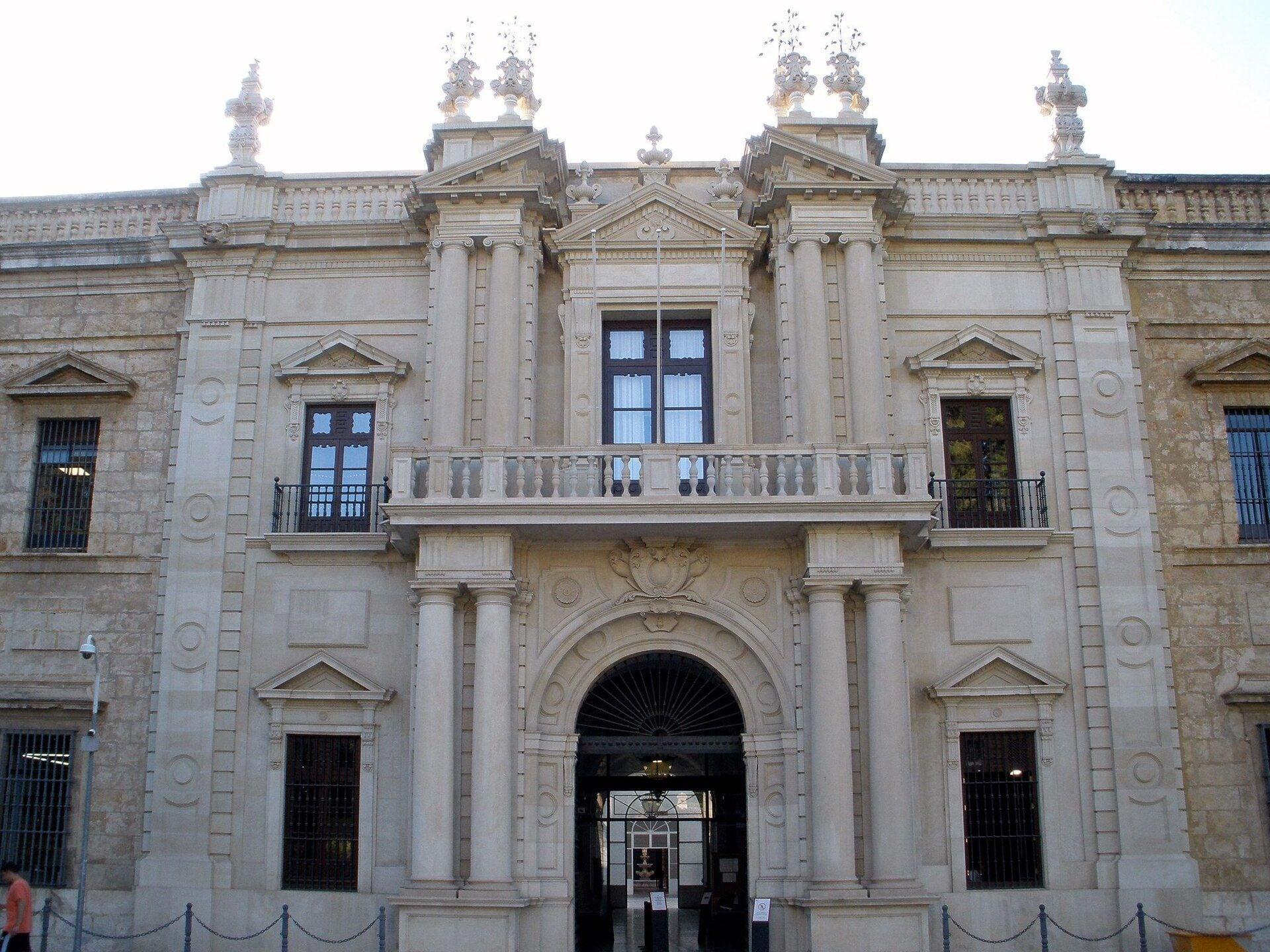
Real Fábrica de Tabacos
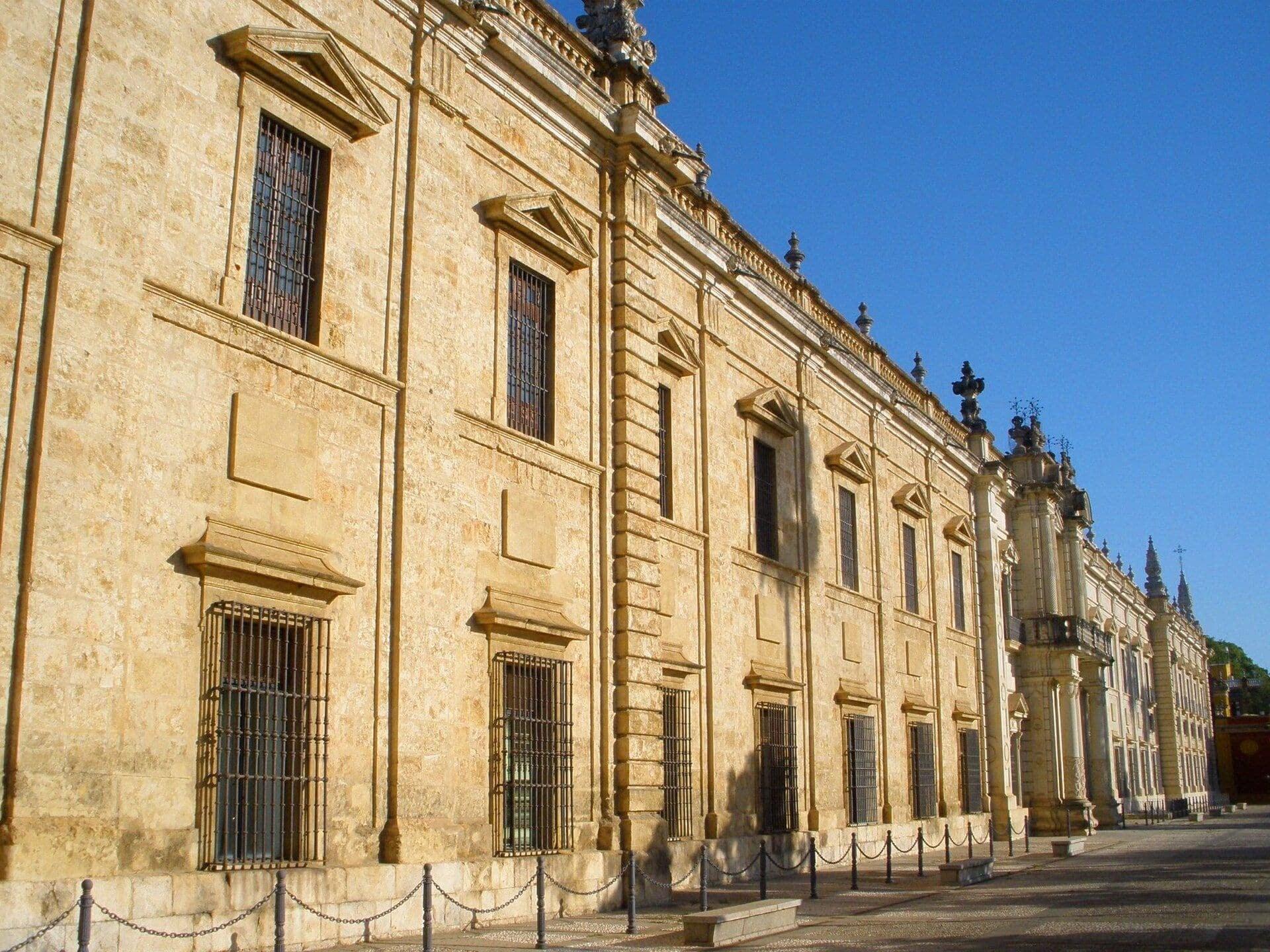
A factory built like a fortress. The Royal Tobacco Factory, 1728 to 1758, with one door, a moat and sentry boxes; the University of Seville since the mid twentieth century.
- 4
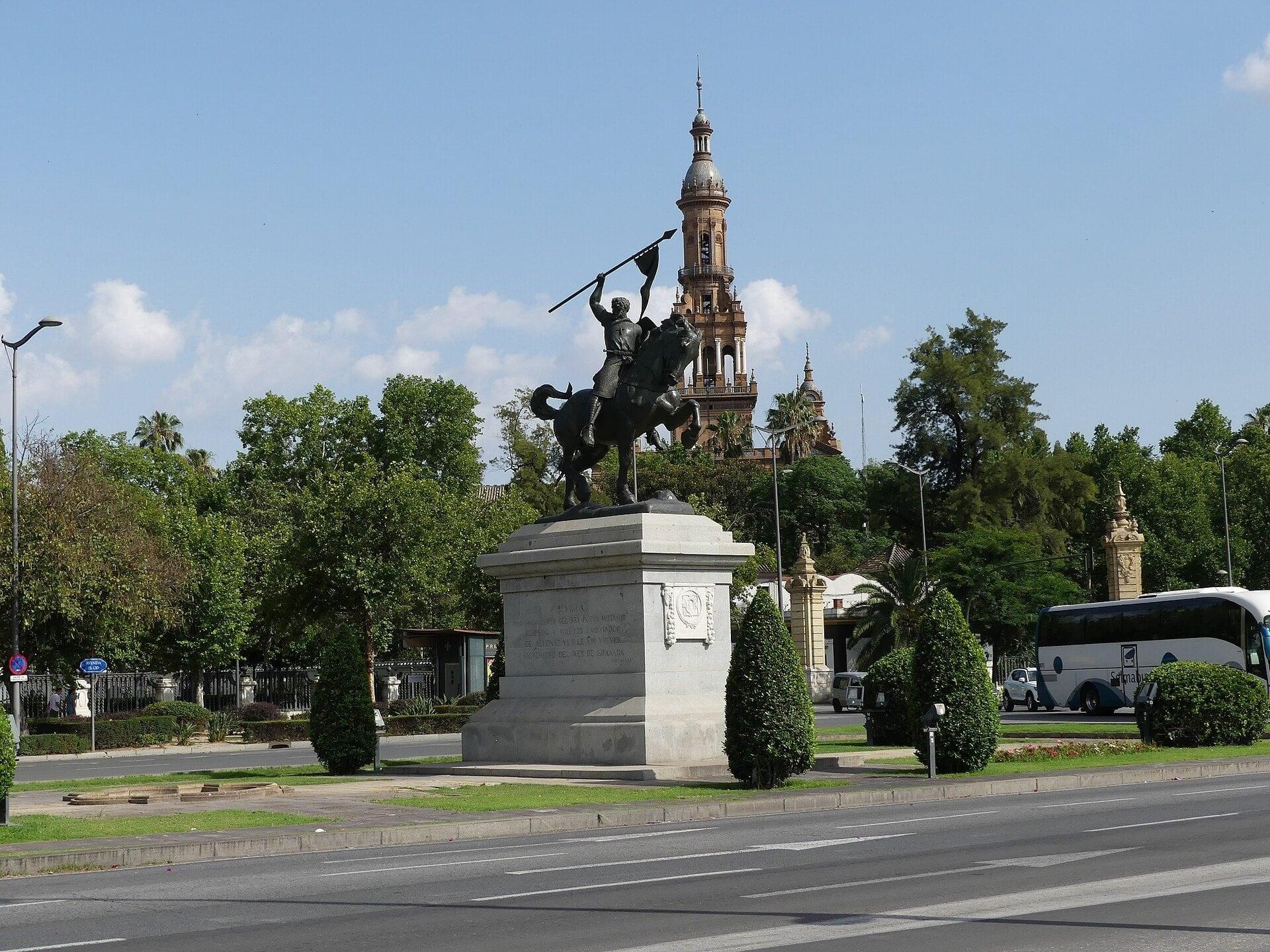
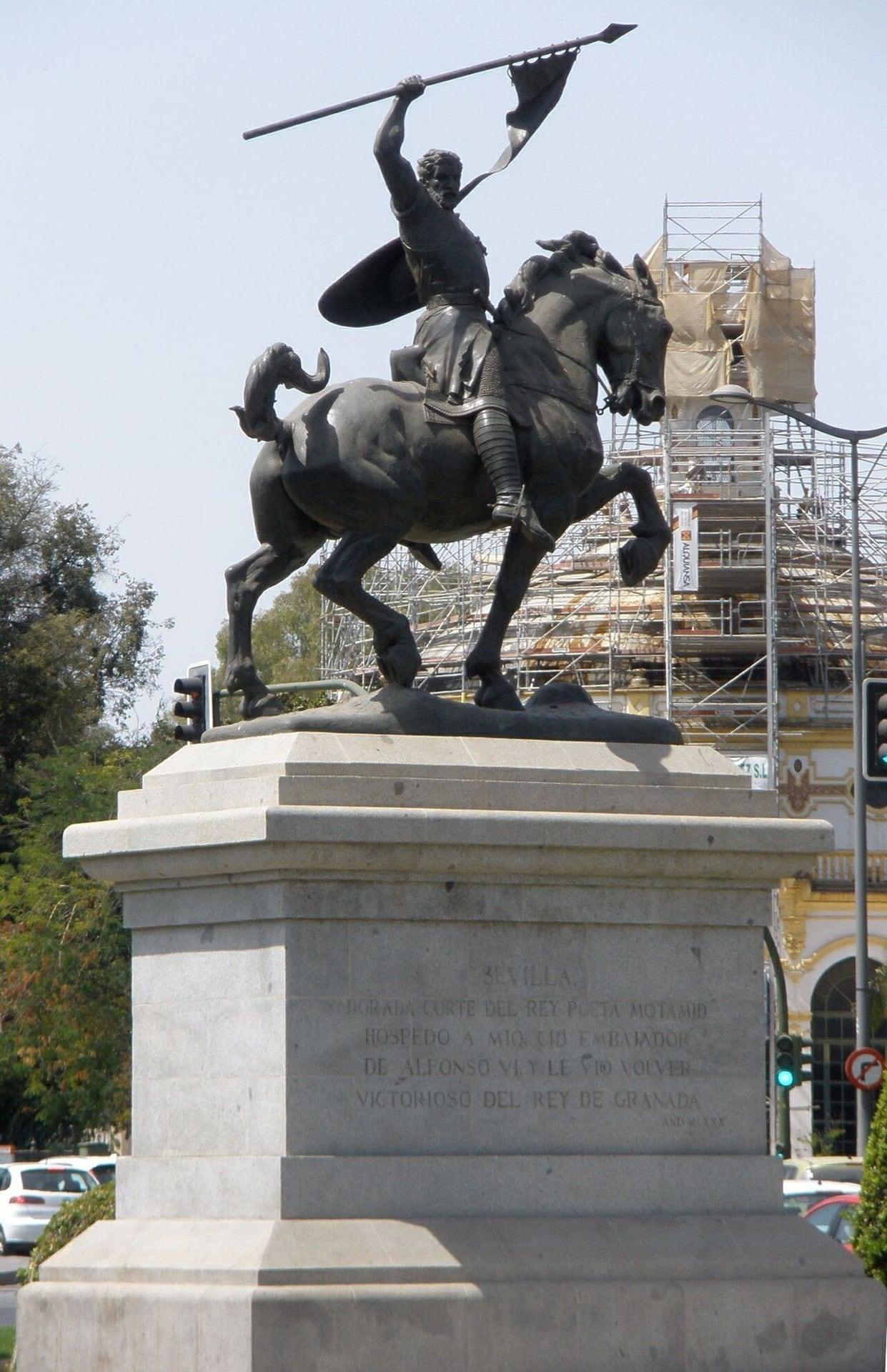
El Cid: The Fair's Front Gate
A gift stood at the front gate. The bronze El Cid on the Avenida de El Cid, offered by an American sculptor and put up at the Exposition's main entrance.
- 5
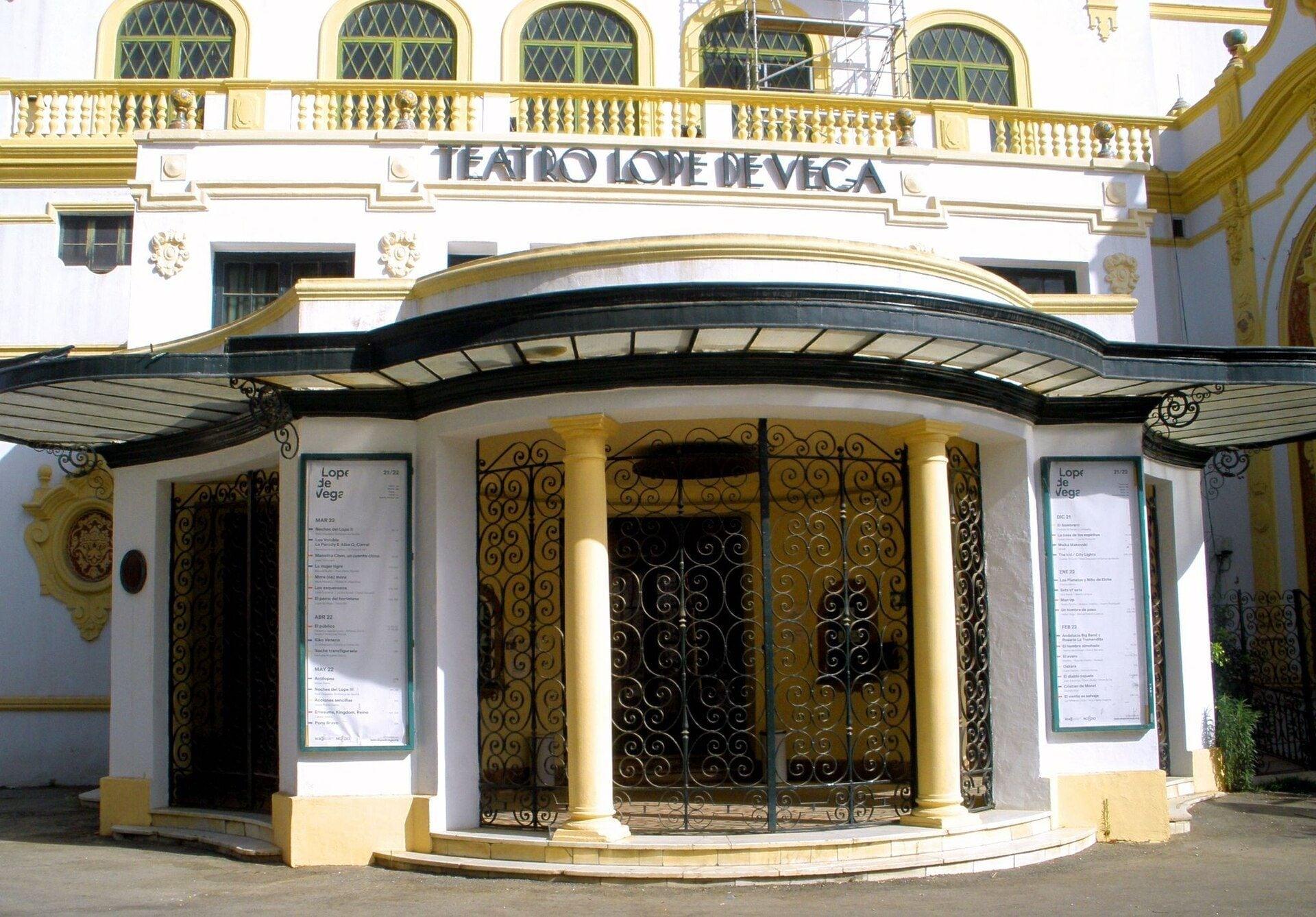
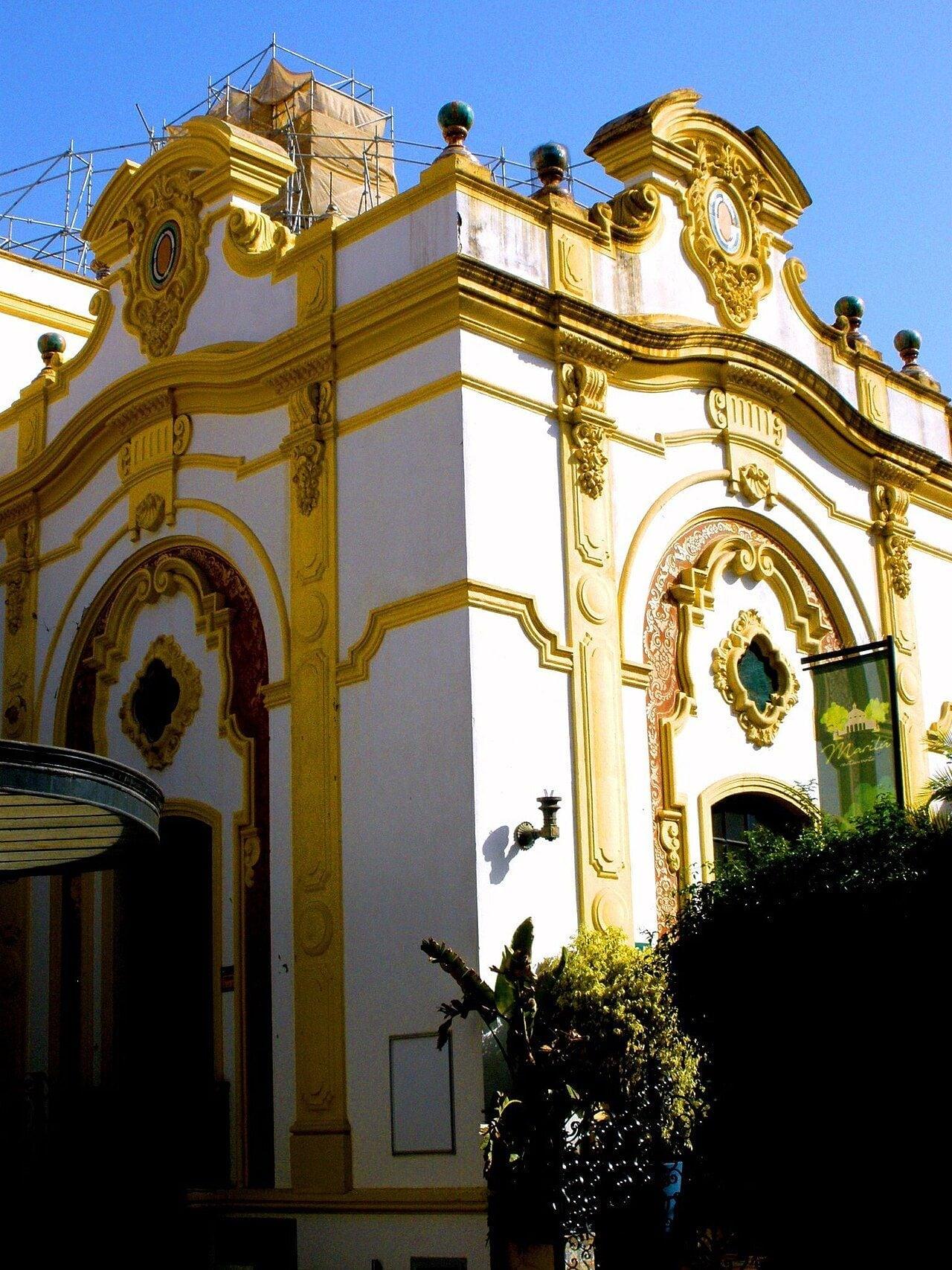
Teatro Lope de Vega
The fair needed somewhere to play. The Teatro Lope de Vega, whose domed hall was the 1929 Exposition's casino and whose auditorium was Seville's own pavilion.
- 6
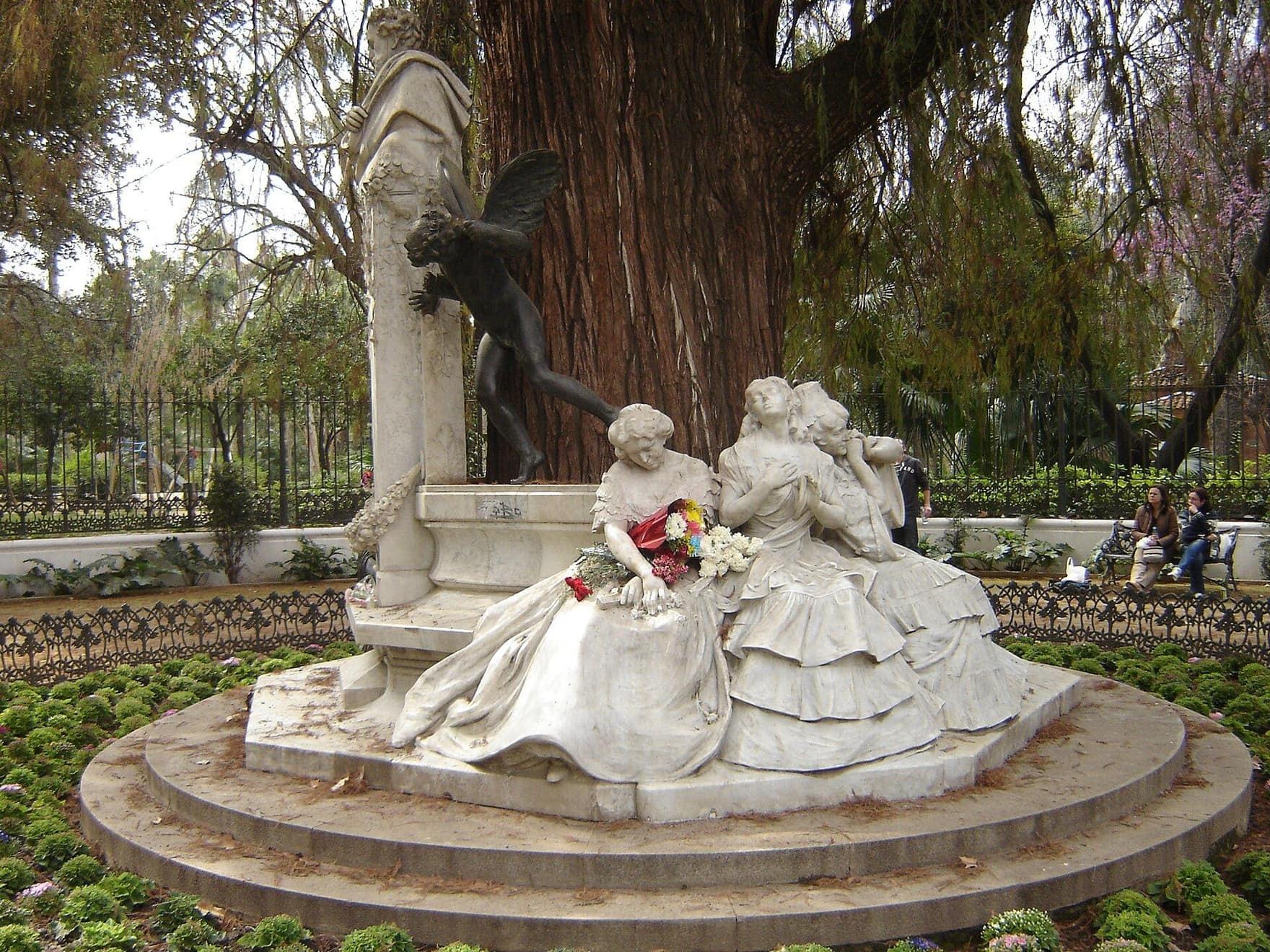
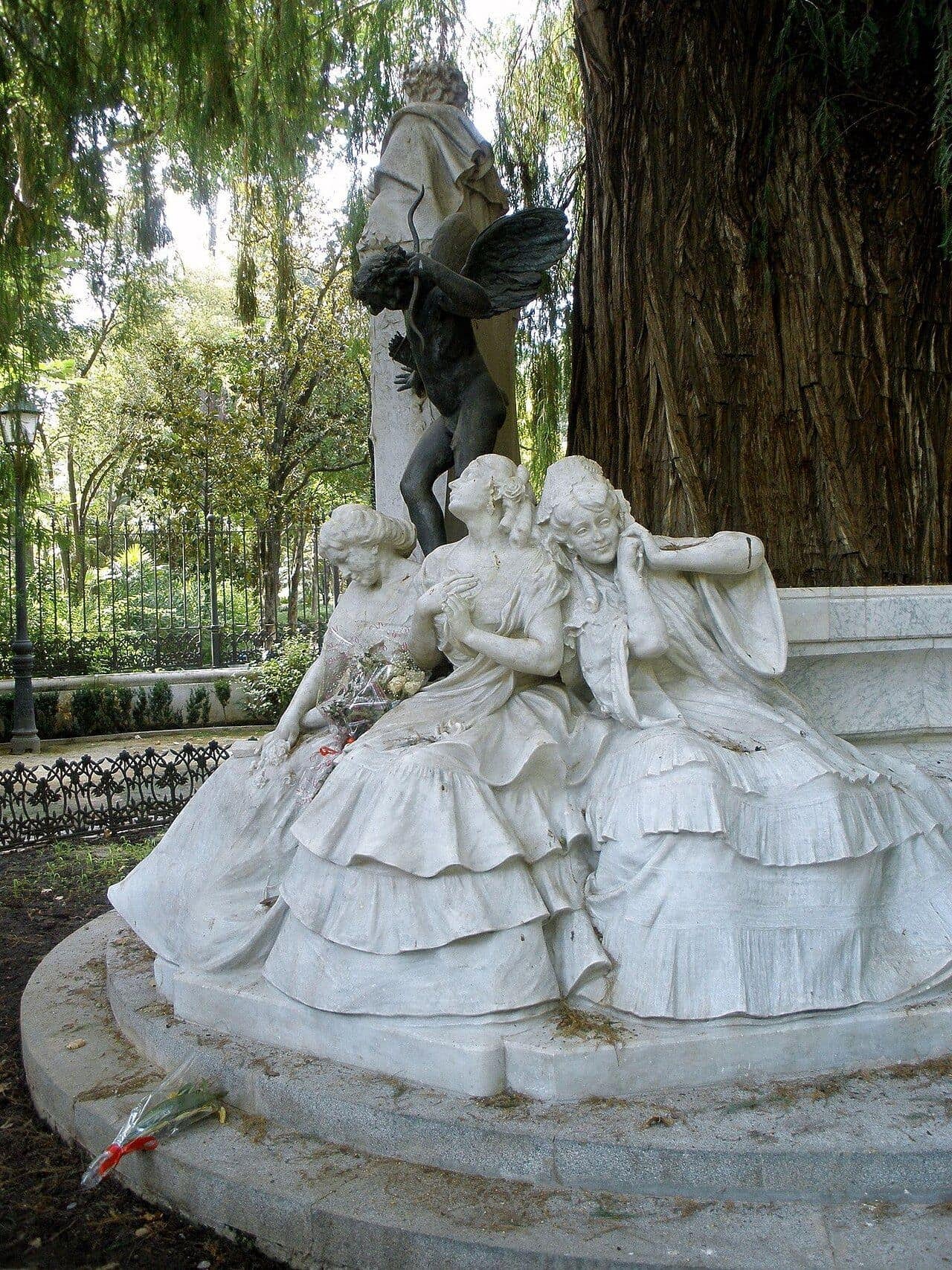
Glorieta de Bécquer
This garden is older than the fair. The 1911 monument to the poet Bécquer, three women around a great cypress, nearly two decades before the Exposition opened.
- 7
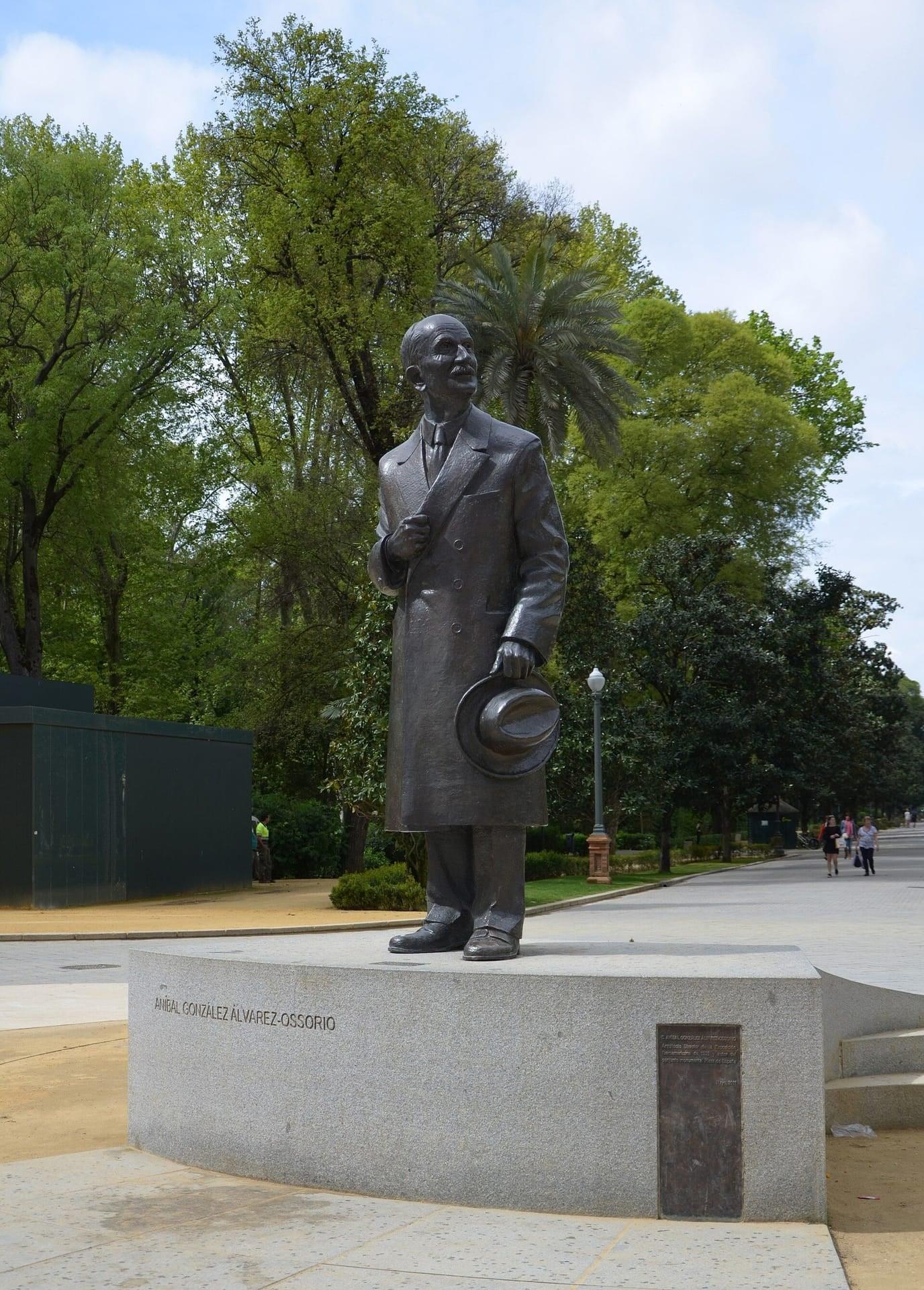
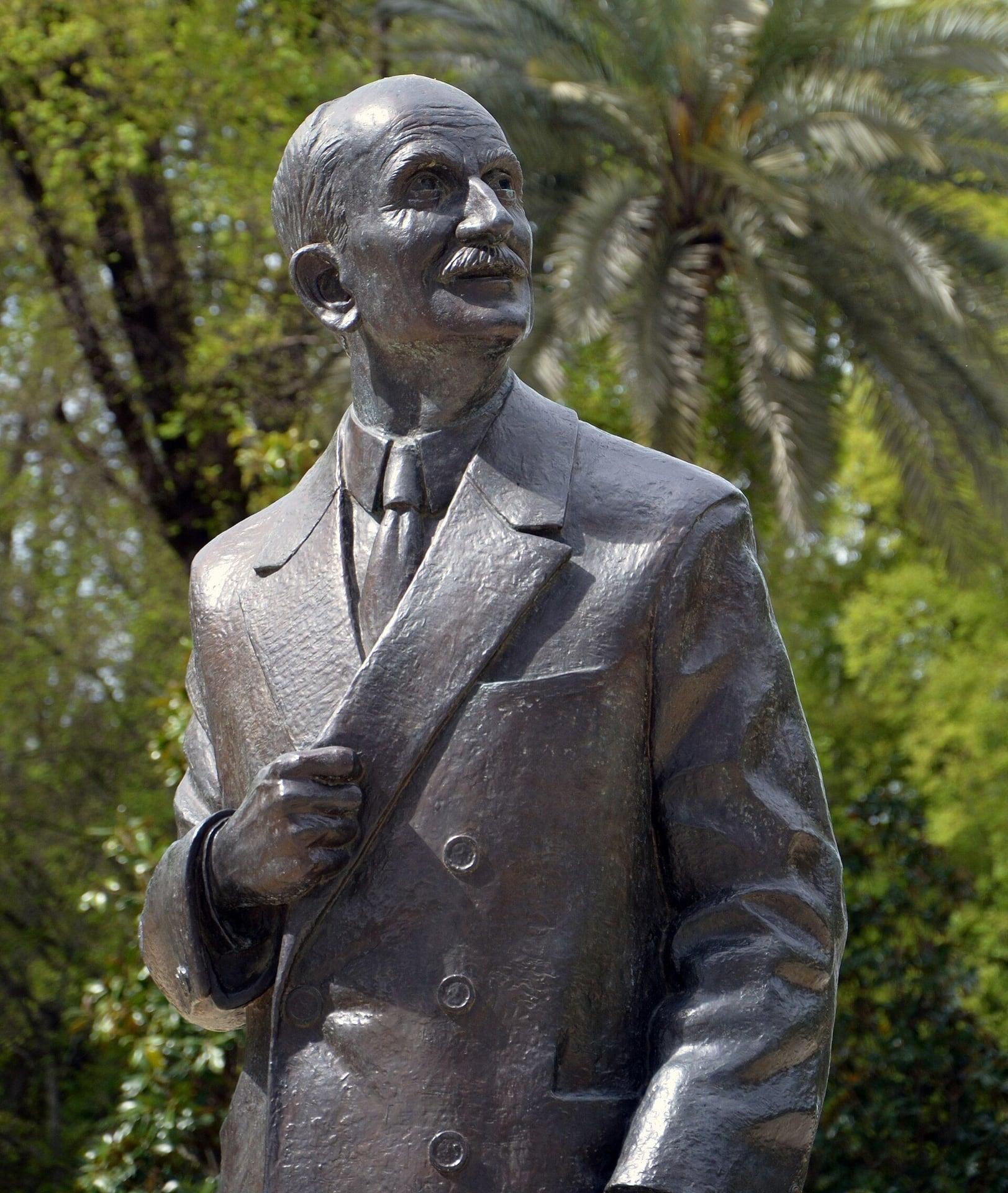
Glorieta de Aníbal González
He drew the fair's greatest square. The statue of Aníbal González, who won the 1911 competition, on the axis of the Plaza de España he designed.
- 8
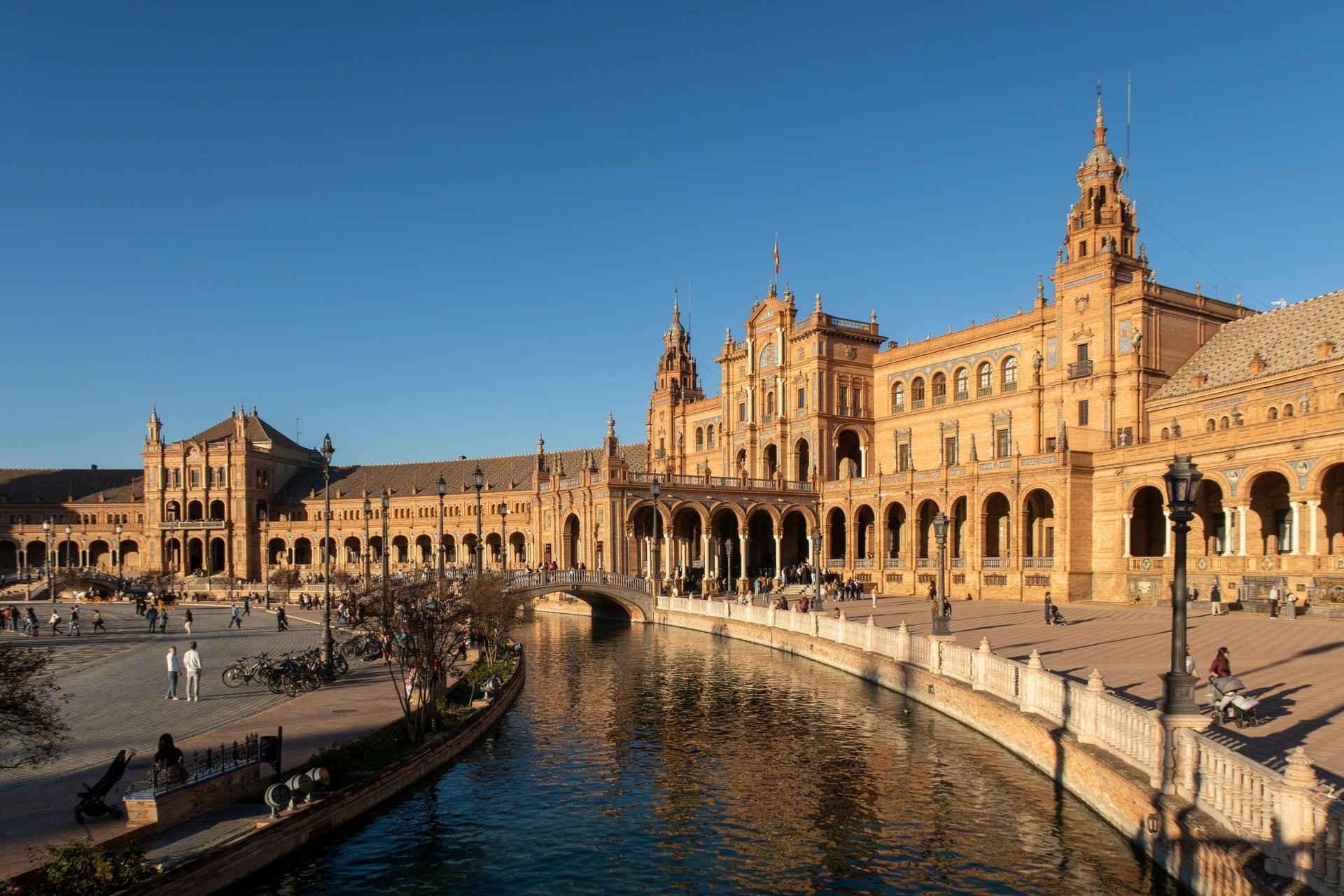
Plaza de España
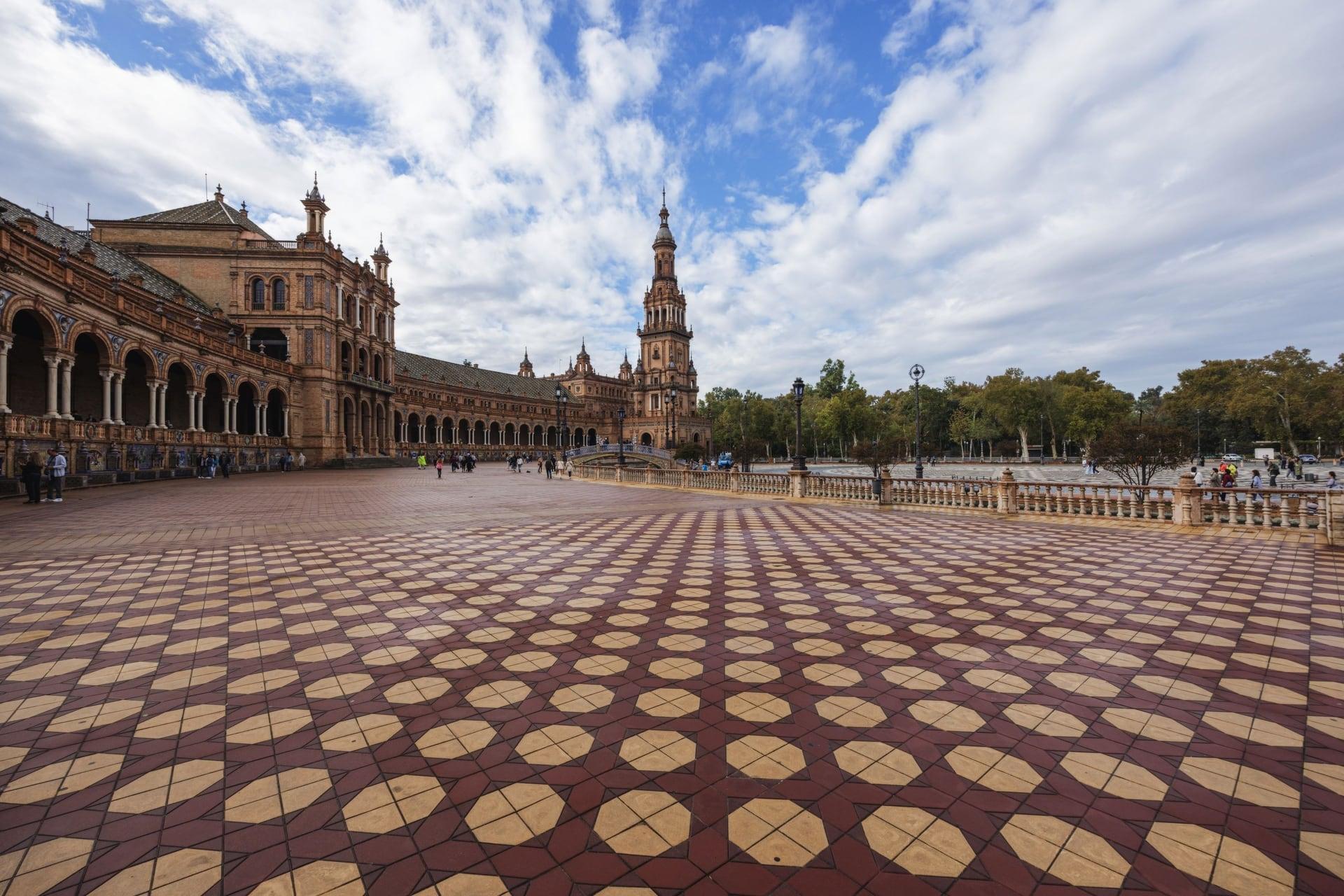
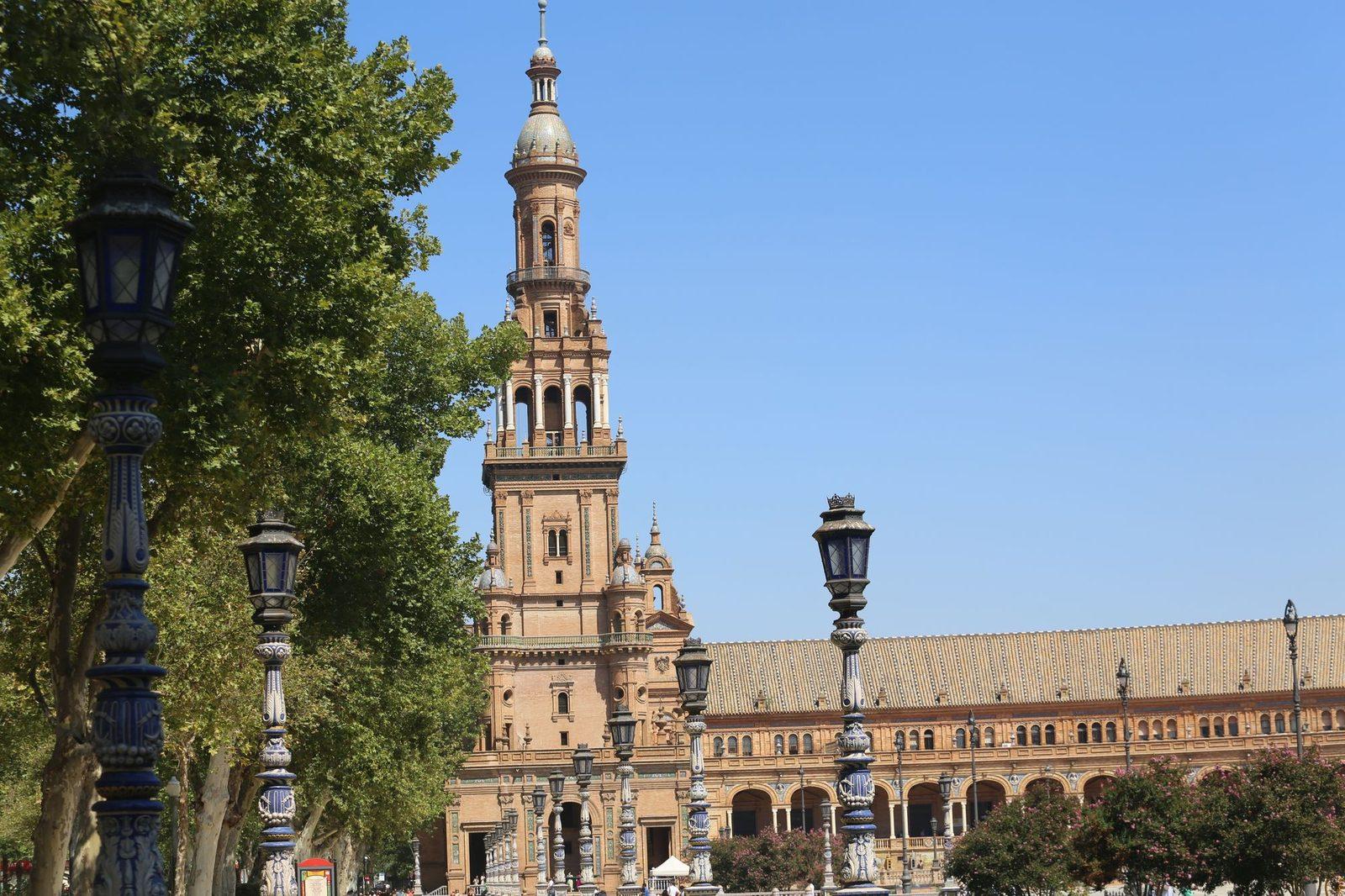
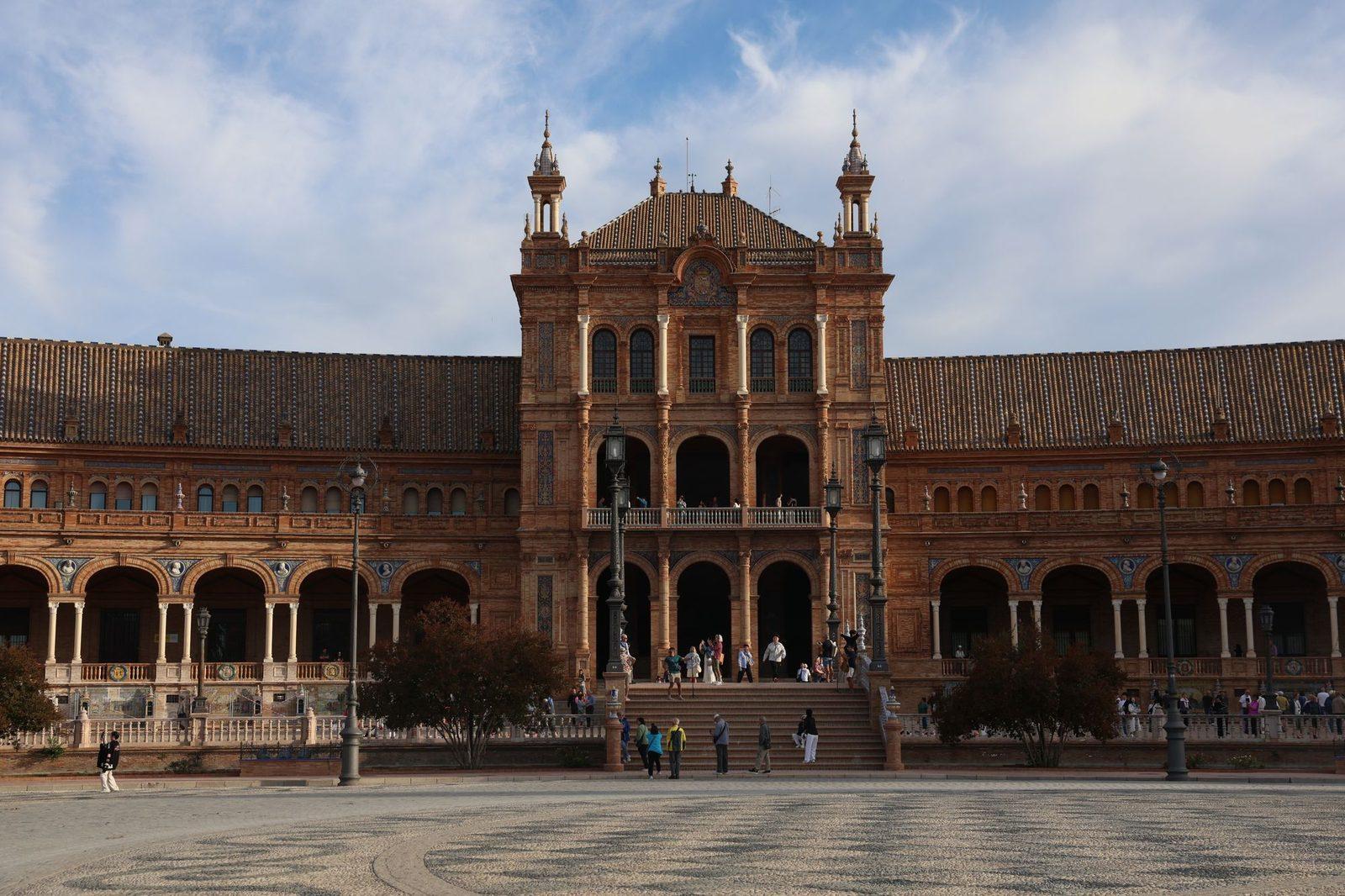
Its arms reach out toward America. The Plaza de España, a half circle of brick and tile 230 meters across, the largest building of the 1929 Exposition.
- 9
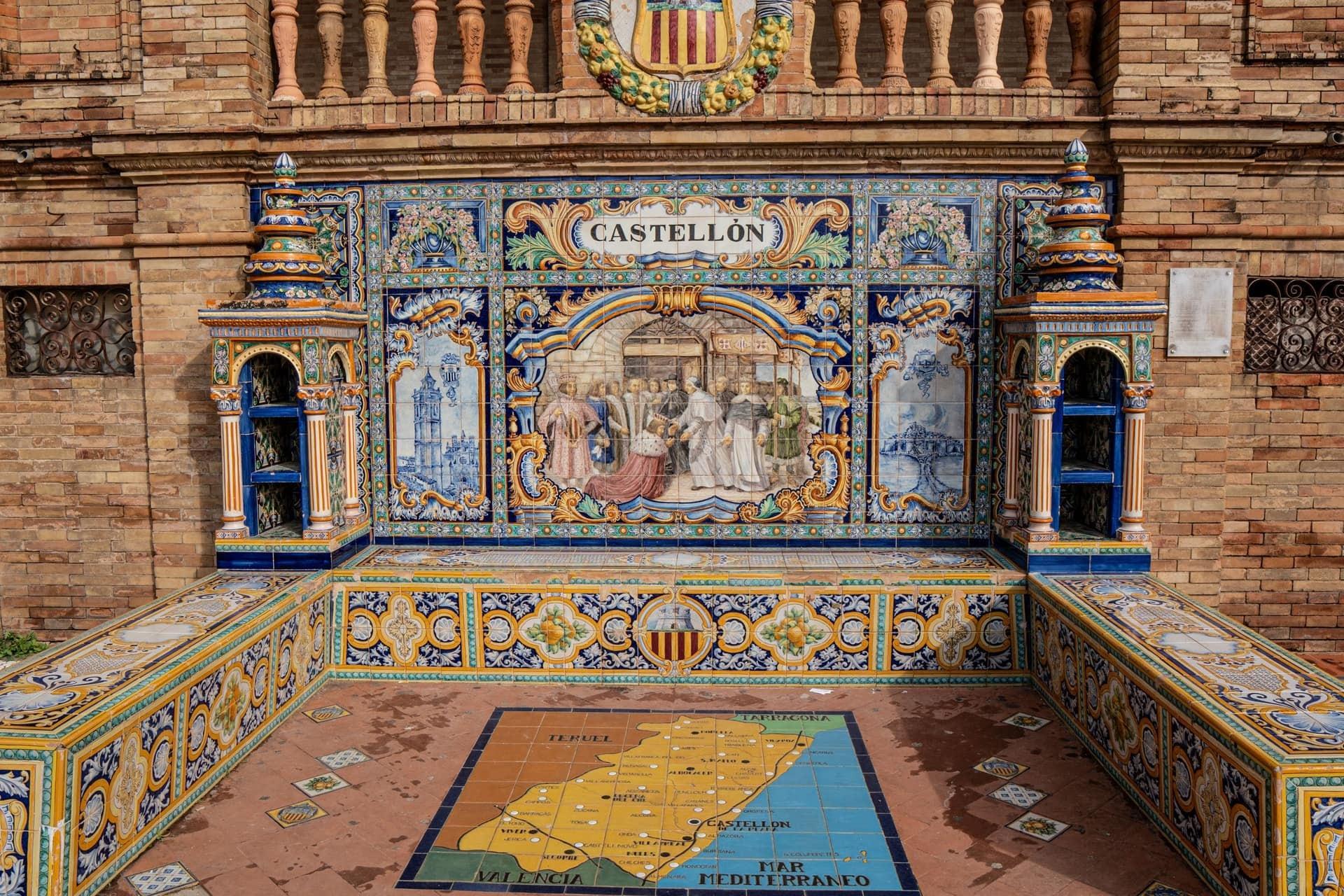
Plaza de España: The Province Benches
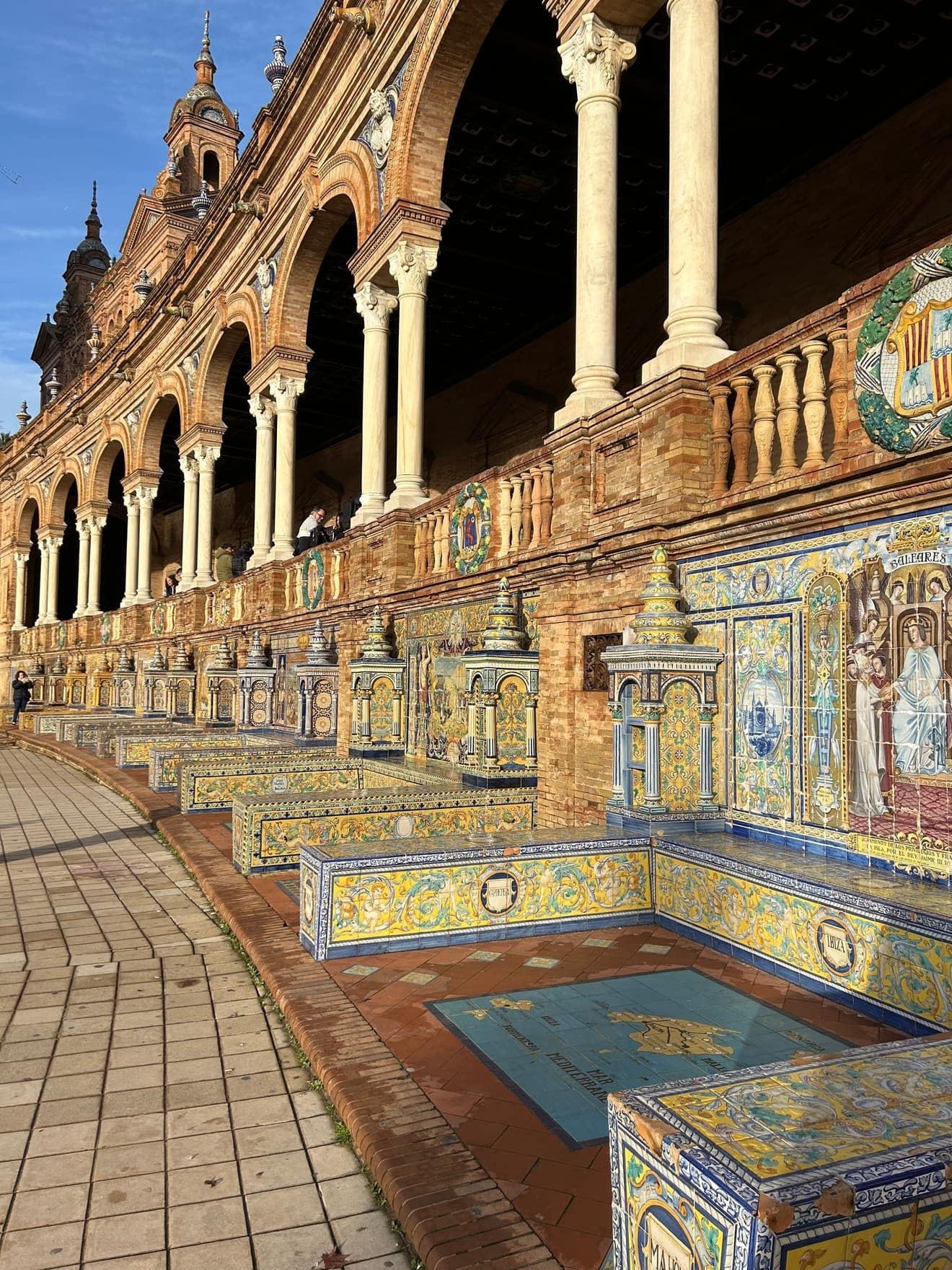
Spain set out in alphabetical order. The tiled province benches of the Plaza de España, each with its map and a scene from its history.
- 10
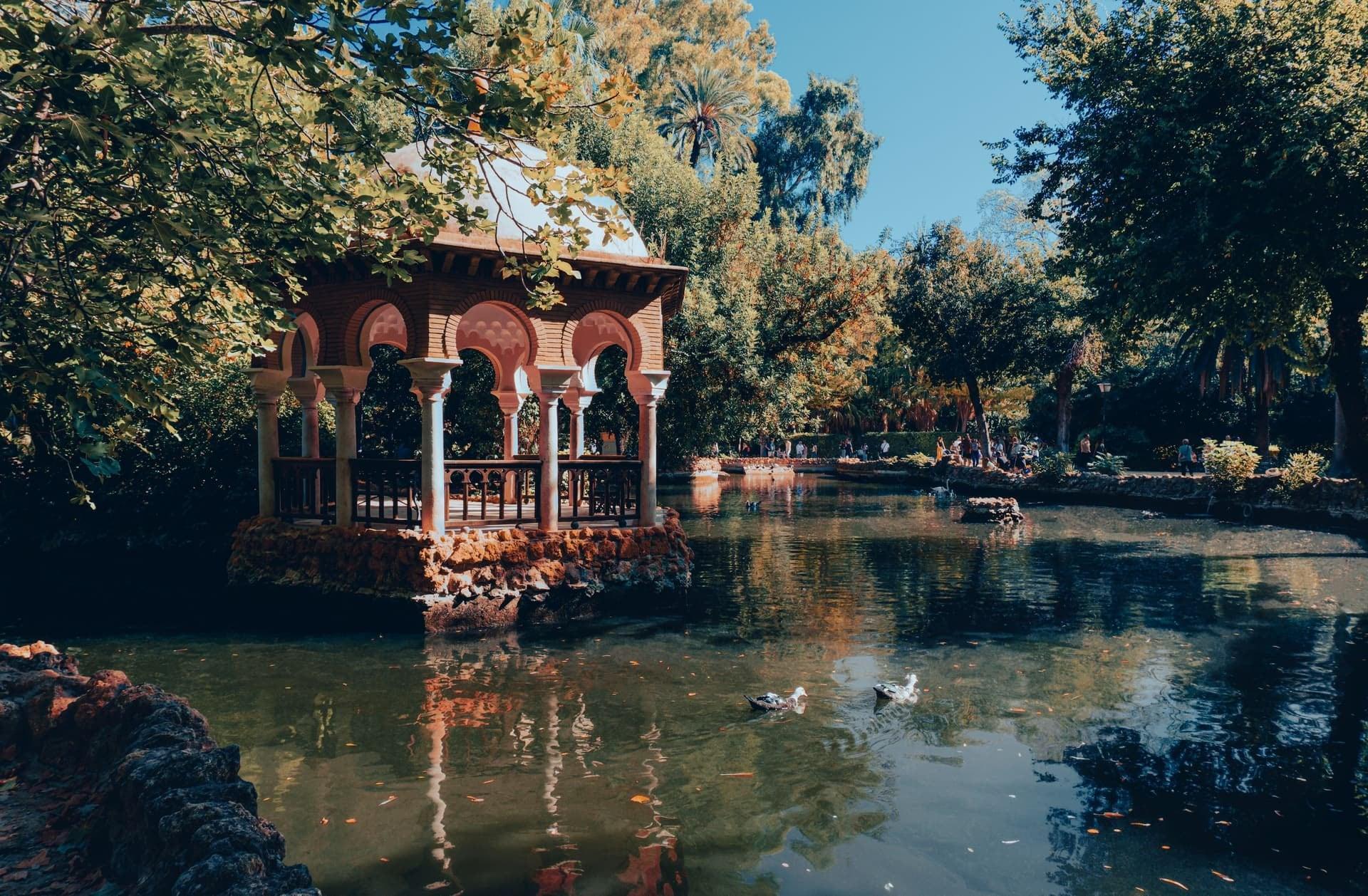
Isleta de los Patos
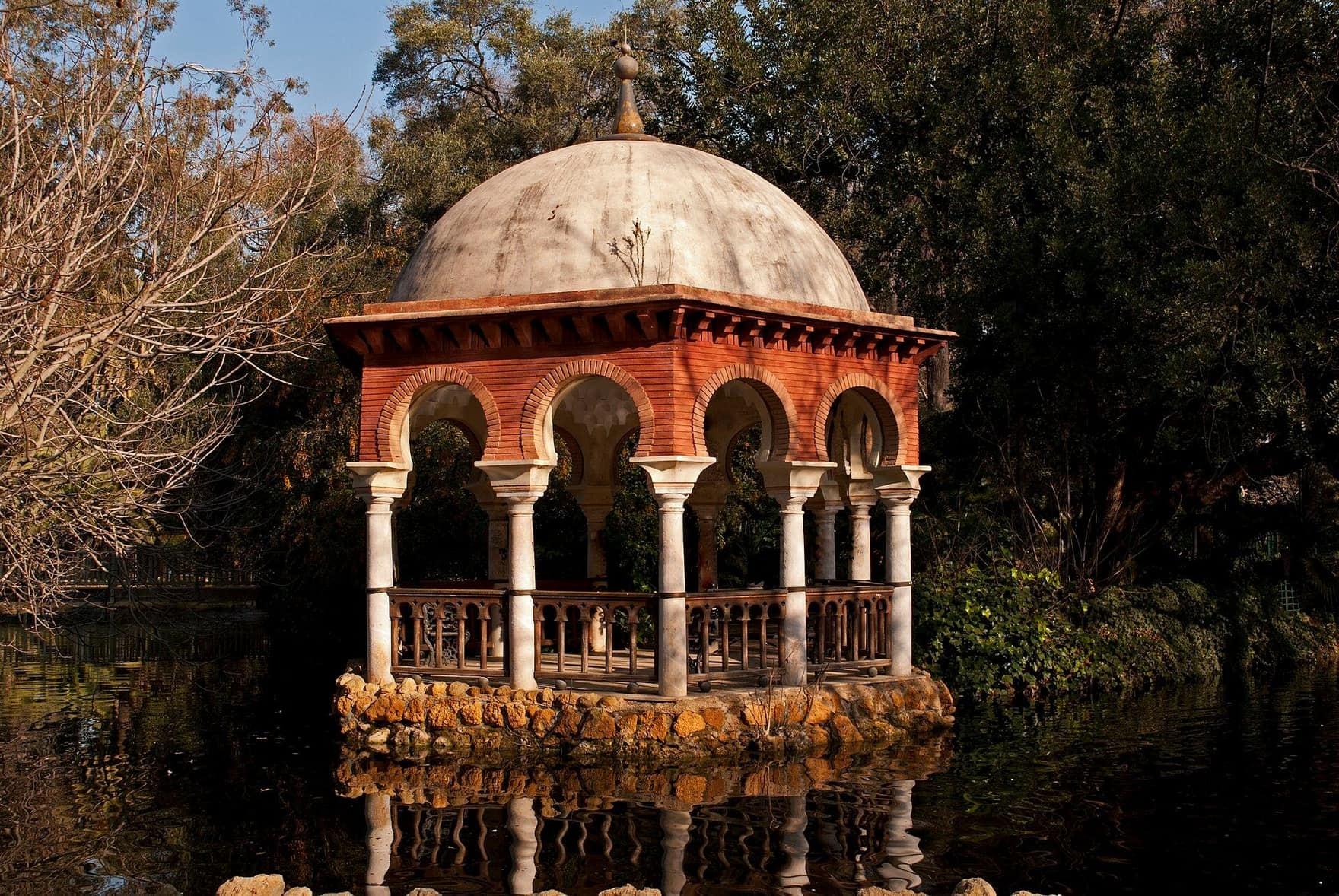
A palace garden turned public park. The Isleta de los Patos, the duck island pond in the park that the Frenchman Forestier remade between 1912 and 1922.
- 11
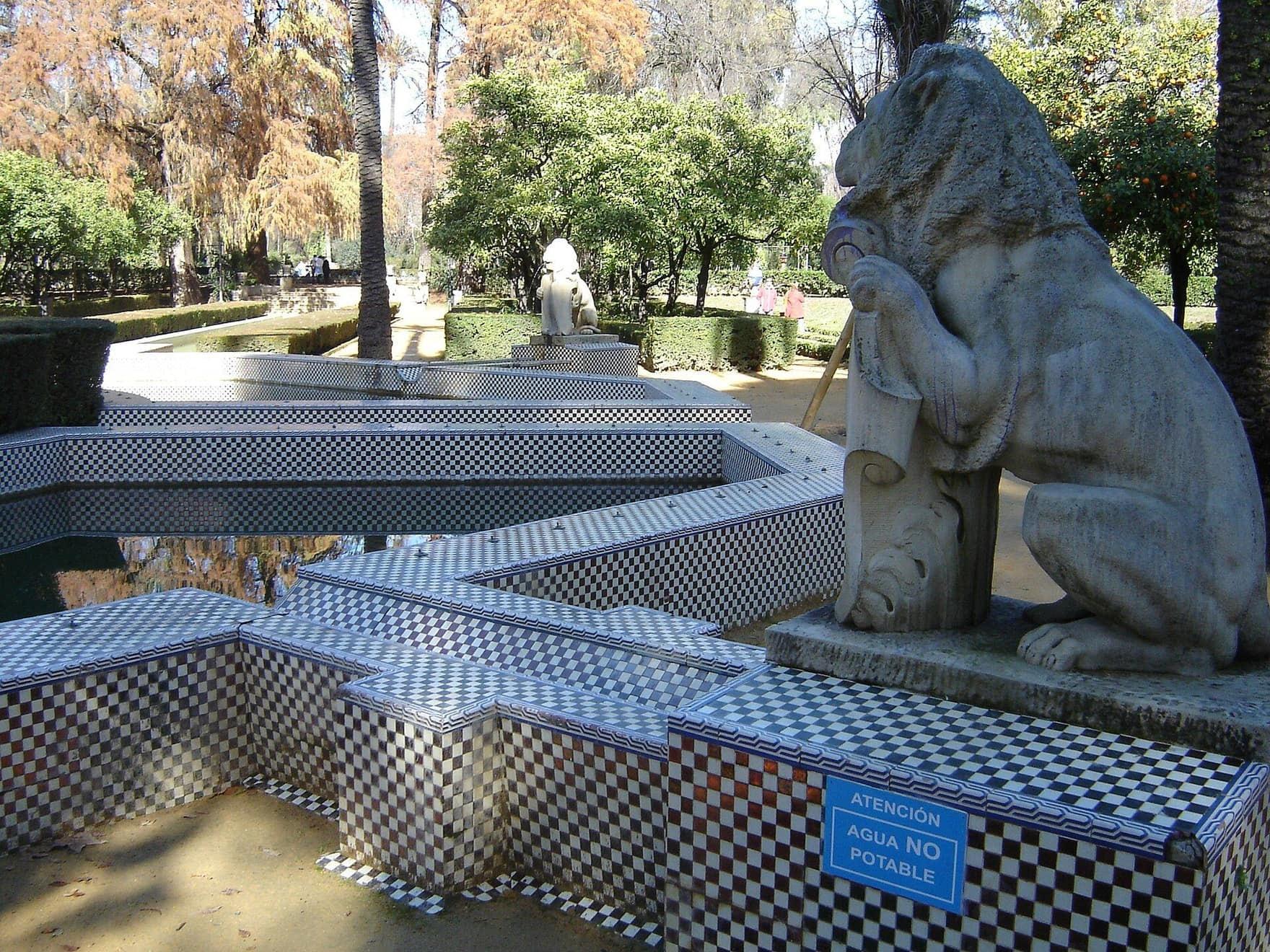
Monte Gurugú and the Lion Fountain
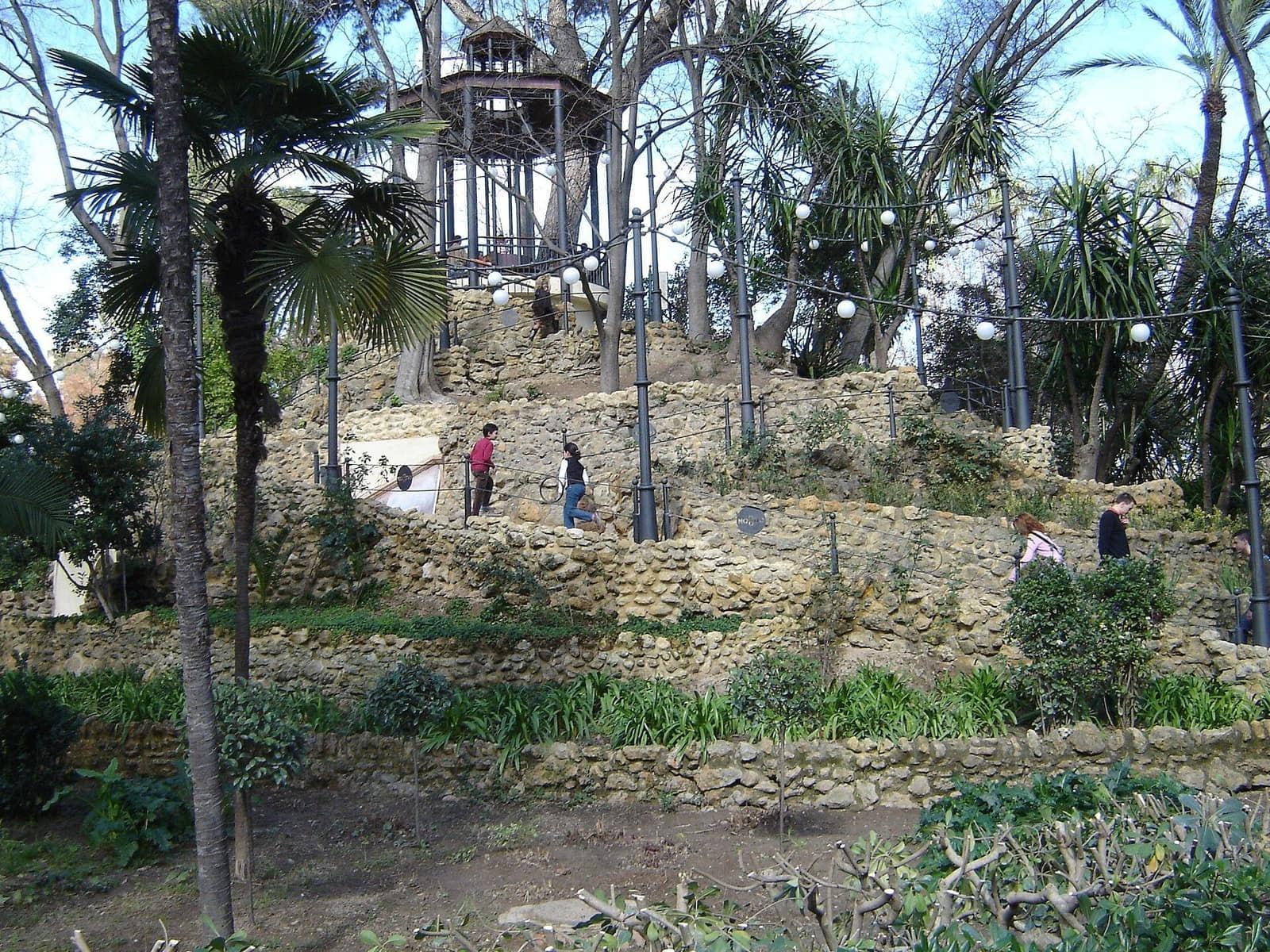
Water borrowed from the Alhambra. The lion fountain and its long channel by the Monte Gurugú, from Forestier's remaking of the park, with his bust nearby.
- 12
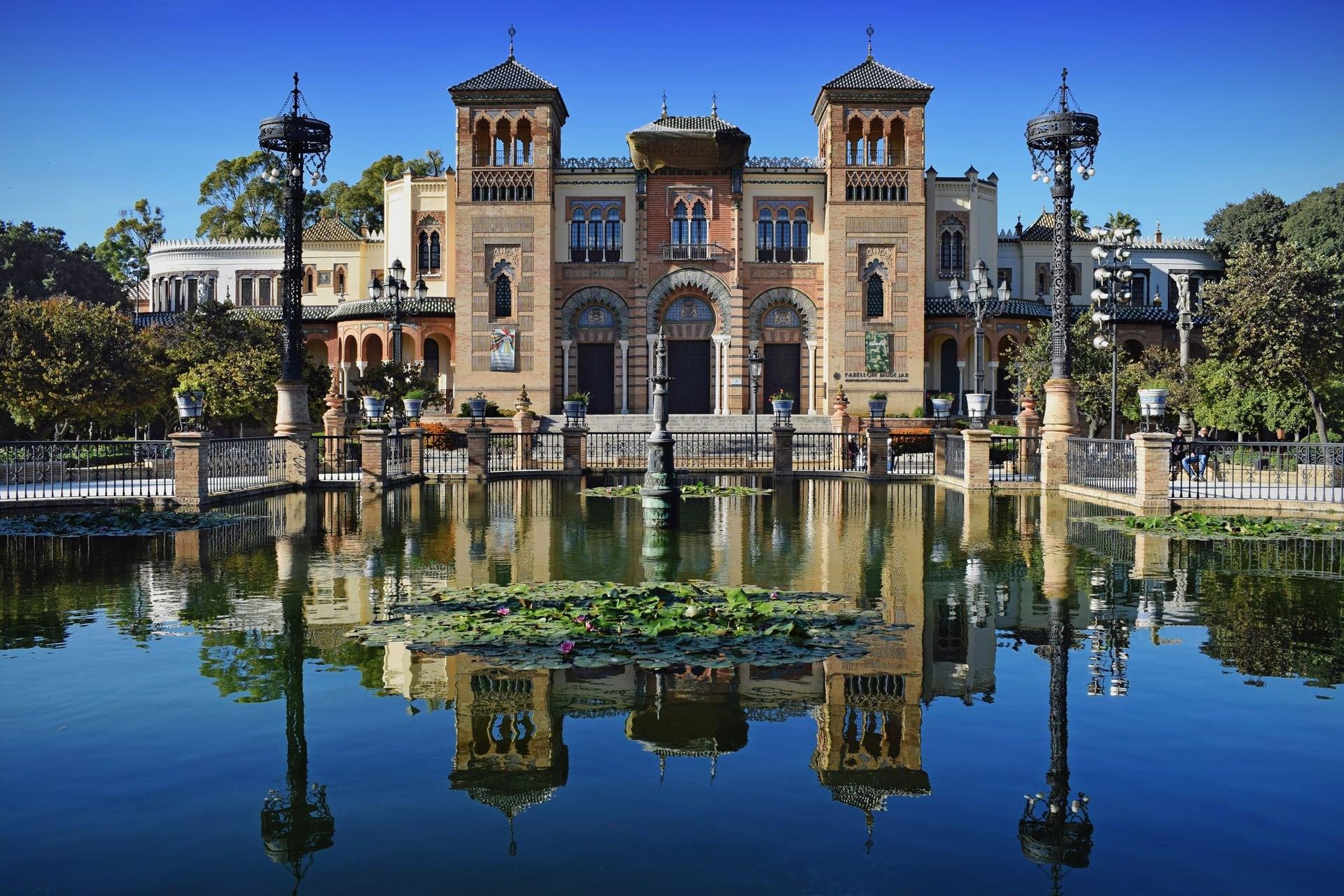
Plaza de América
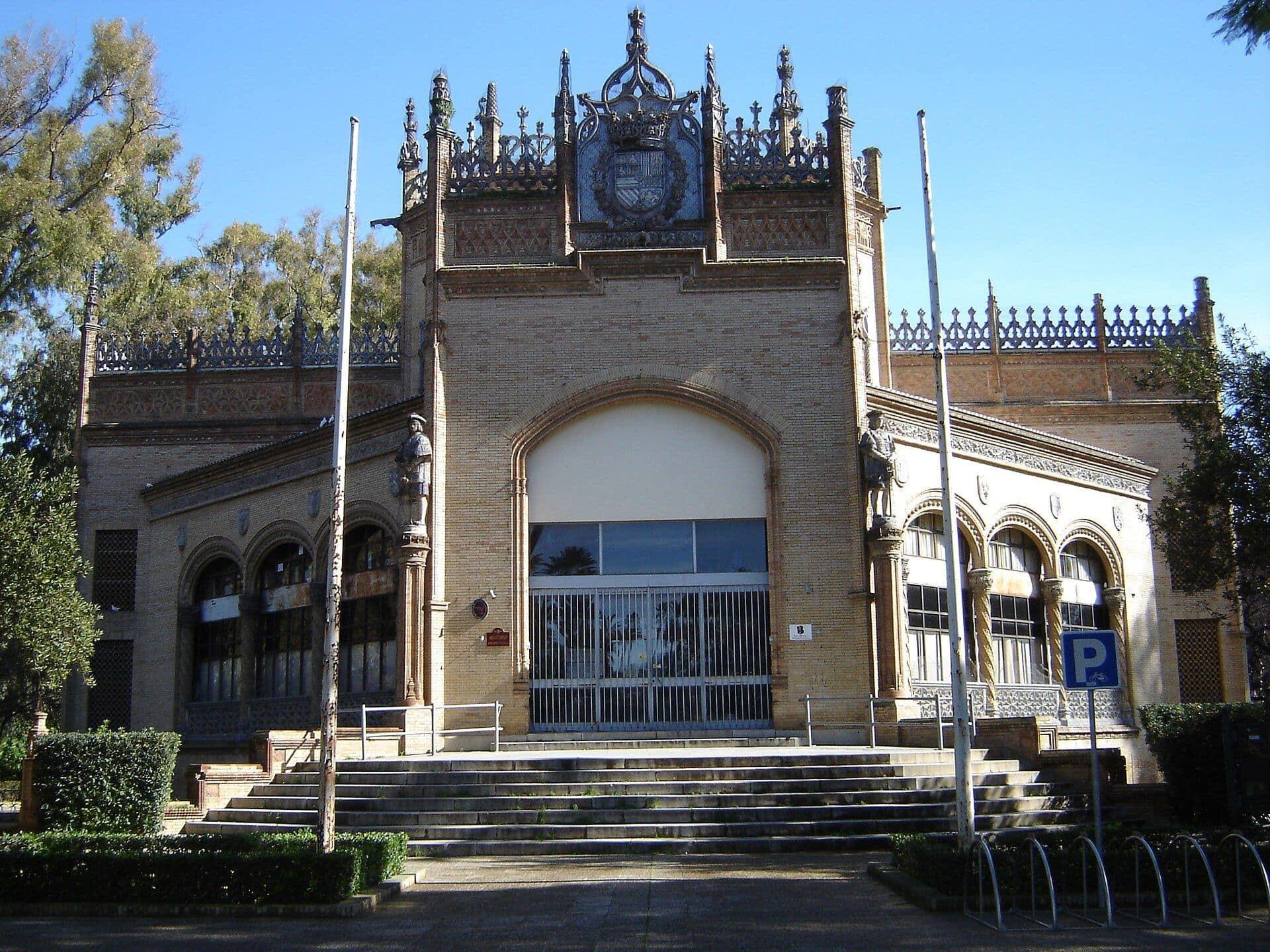
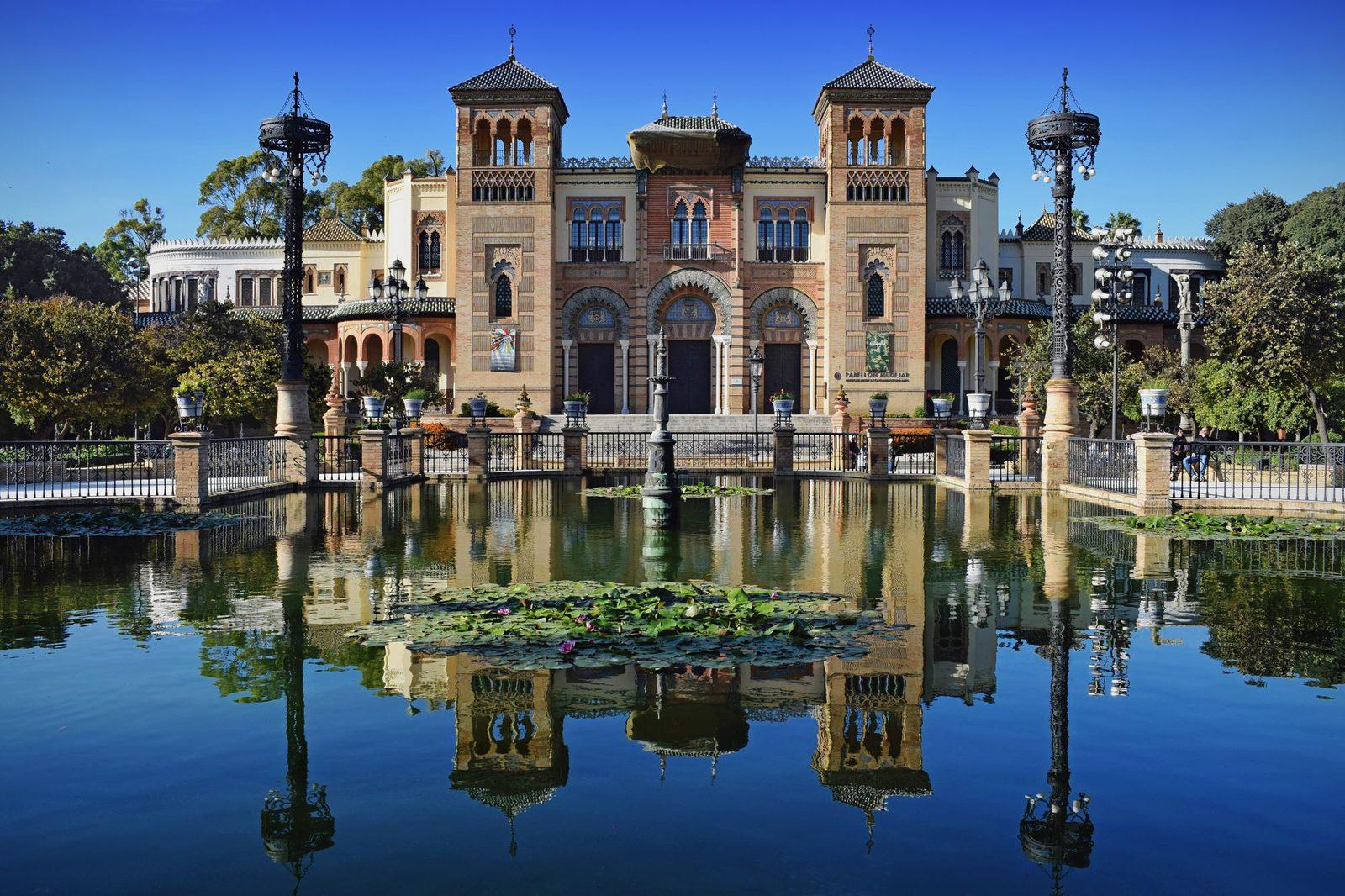
Three pavilions argue about style. The Plaza de América, where Aníbal González built three pavilions for the fair in Mudéjar, Gothic and Renaissance dress.
Details
Best Time to Visit
Morning or mid-afternoon in daylight: the park's paths (stops 6 to 12) are under trees and dim after dark. The park opens every day at 08:00 and closes at 22:00 from 1 October to 31 May and at midnight from June to September (andalucia.org, checked 23 November 2026; Visita Sevilla gives midnight all year). Sunset is about 18:07 on 1 December and 18:16 on 1 January, so start by about 16:00 in winter. December averages about 17 °C by day and 7 °C at night (AEMET), with rain in short heavy bursts. In summer go early or late: the Plaza de América is fully exposed to the sun and July afternoons average 36 °C. The Plaza de España is busiest at sunset and at weekends. The Museo de Artes y Costumbres Populares at the last stop is closed on Mondays.
Pro Tips
- •Getting to the start: Metro line 1 to Puerta de Jerez, or the MetroCentro tram to the Puerta de Jerez stop on Calle San Fernando, then walk about 250 m south down the Avenida de Roma to the forecourt in front of the Palacio de San Telmo's west front.
- •The walk ends at the Plaza de América on the park's south edge, with no Metro station beside it: Plaza de Cuba (Metro line 1) is about 1.4 km north-west across the river, Prado de San Sebastián (Metro and tram) about 1.2 km north. Tussam buses run on the Paseo de las Delicias nearby.
- •At the Plaza de España, walk a few benches along the wall and look for your own province: there are 48, in alphabetical order, but none for Seville province, Ceuta or Melilla.
- •From 5 December 2026 to 5 January 2027 a craft fair, the Feria de Artesanía Creativa, fills the Jardines del Cristina beside the Puerta de Jerez (Visita Sevilla).
- •The Palacio de San Telmo can be visited inside on free guided tours booked in advance through the Junta de Andalucía; the walk does not need it.
Safety & Precautions
- •The MetroCentro tram crosses the route twice, at both ends of Calle San Fernando (legs 2 to 3 and 3 to 4). It is almost silent: look both ways before every track.
- •Green two-way bike lanes run on the sidewalks: the walk starts on a shared path beside one, and crosses others on Calle San Fernando and by the park. Bikes are fast and quiet; cross them as you would a road.
- •Traffic drives on the right. Cross Calle Palos de la Frontera and the Avenida de María Luisa only at the signals, and the park drive (Avenida Isabel la Católica, cars and horse carriages) at the zebra.
- •The bridge from the Plaza de España's center to the bench terrace has 15 steps up and 15 down, tiled and slippery after rain; there is no step-free way onto the terrace.
- •Horse carriages stand at the Puerta de Jerez, the Glorieta Aníbal González and on the park drives. Musicians and fan sellers work the Plaza de España: a polite no is enough.
- •Park paths are dirt in places and muddy after rain; polished stone and fallen oranges are slippery on Calle San Fernando in winter.
Travel advisory: Exercise Increased Caution (Level 2).
Gallery
Related Reading
Go deeper on what you'll see, hear, and walk through.
Overview
One Day in Seville: A Walkable Old-Town and Triana Itinerary (2026)
6 min
Overview
Seville Monument Tickets, Hours and Closures (Checked November 2026)
6 min
Overview
Seville Travel Guide: How Many Days, Getting Around, When to Go (2026)
6 min
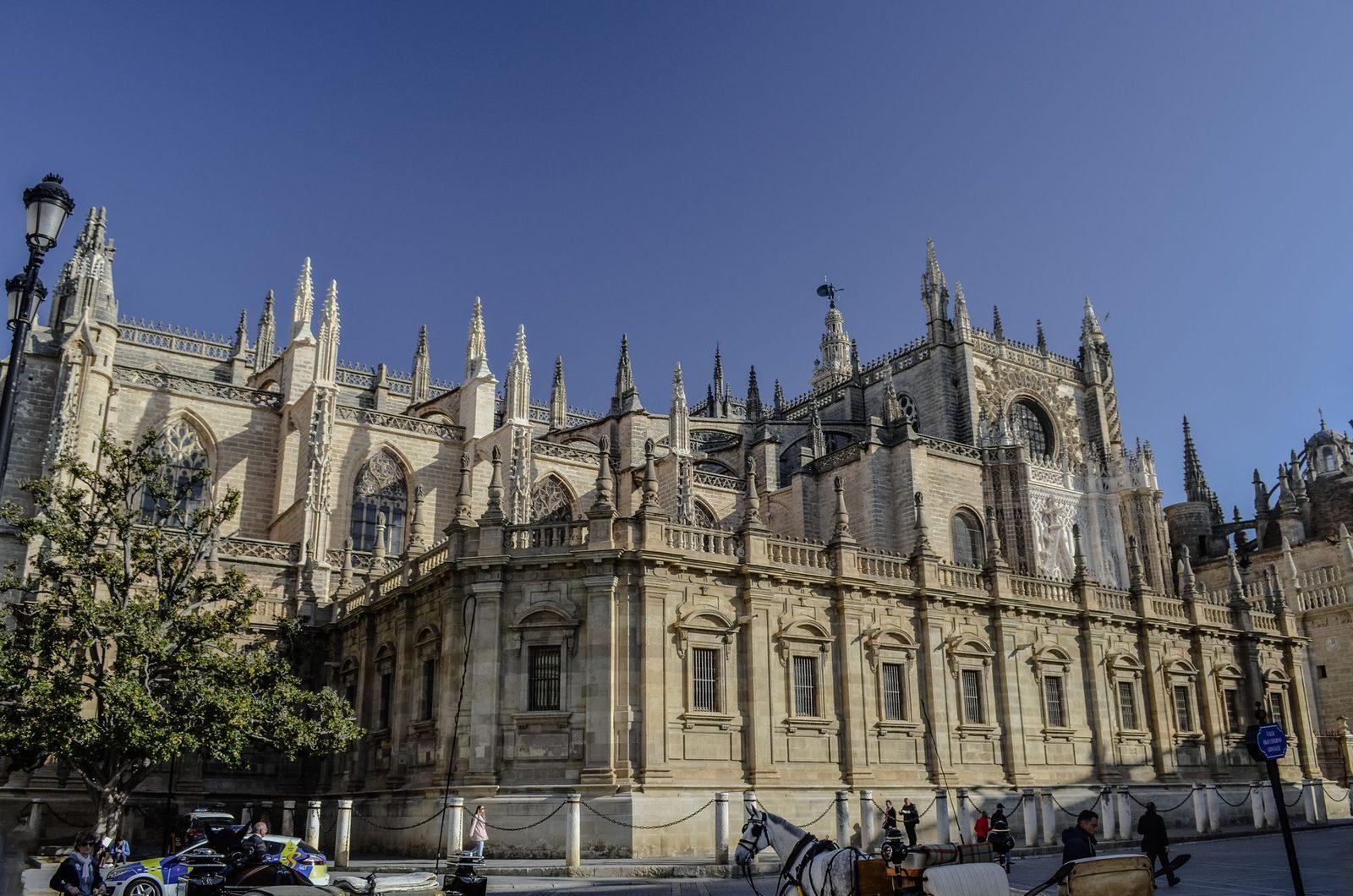
Thematic
Best History Walking Tours in Seville (2026)
3 min
Companion
Plaza de España, Seville: A Companion to the Garden That Became a World's Fair
5 min
Deep dive
María Luisa Park, Seville: A Princess's Will and a French Gardener
3 min
Read the walk
The full story of Plaza de España: The Garden That Became a World's Fair, in words. Prefer to listen? Play it narrated, from home or on location.
Introduction
Seville's Maria Luisa Park began, in part, as a royal family's private garden. A princess left it to the city, and the city turned it into a world's fair, the Ibero American Exposition of nineteen twenty nine, planned for nineteen fourteen and opened fifteen years late. This walk follows the fair's grounds from north to south: from the palace whose gardens became the park, through the old city gate where the fair greeted its visitors, past a tobacco factory built like a fortress, to the great half circle of the Plaza de Espana, and on through the park to a quiet square of pavilions.
Three people come with us: the Infanta Maria Luisa, the princess who left the gardens; Anibal Gonzalez, the architect of the plaza; and Jean Claude Nicolas Forestier, the French gardener who made the park.
There are twelve stops over about two point six kilometers, just over a mile and a half, and the walk takes about seventy five minutes. It is flat. The bridge onto the plaza's benches has fifteen steps up and fifteen down.
The first stretch crosses the tram tracks twice. The tram is almost silent, so look both ways every time. Green bike lanes run along many sidewalks here: cross them as you would a road. In winter, rain comes in short, sharp bursts, and polished stone and fallen oranges make the sidewalks slippery.
Everything is seen from free public ground; no ticket is needed. The regional tourism office lists the park as open from eight in the morning until ten at night from October to May, and until midnight in summer; the paths under the trees are dim, so walk in daylight.
When you arrive at the Palacio de San Telmo, begin with stop one.
1. Palacio de San Telmo
In front of you is the long west front of the Palacio de San Telmo, with its tall carved doorway in the middle. Today it is the seat of the president of Andalusia's regional government. Step back toward the path behind you, without stepping onto it, and the whole doorway comes into view.
This front faces the river. The building was begun in the sixteen eighties as a college for teaching navigation. Its main front and doorway were built on this side, toward the water. The part you will pass next, facing the Puerta de Jerez, is the newest.
The building has changed jobs three times. In eighteen forty nine a royal couple, the Duke and Duchess of Montpensier, made it their palace, with gardens running south behind it. The duchess was the Infanta Maria Luisa, a Spanish princess, the sister of the queen. She lived here for most of her adult life.
When she died in this palace in eighteen ninety seven, her will left the building to the Church, and most of the gardens to the city. Those gardens became the park that carries her name, and the park became the ground of a world's fair.
That is this walk: a private garden that Seville turned into an exposition, and then kept. The palace's inside is open only on booked visits; everything on this walk is seen from free public ground.
Follow the route north along the shared path, keeping to the side for people on foot, to the fountain at the Puerta de Jerez.
2. Puerta de Jerez
Turn around to face the fountain. The figure at its top, with children and turtles around her, is Seville herself. The fountain was set here for the world's fair of nineteen twenty nine.
You are standing where the old city ended. One of the main gates in the medieval wall stood here, on the road south to Jerez and Cadiz. A newer gate replaced it in eighteen forty six, and in eighteen sixty four it was pulled down. Only the name stayed.
The fair dressed that old line to greet its visitors. To your right, on the corner, stands the big hotel built for the fair's visitors. It went up over twelve years and opened in April nineteen twenty nine, in time for the guests.
And the fair needed that time. The first plan was for an exposition in nineteen fourteen. It failed, mainly for lack of money. In nineteen twenty one Portugal and Brazil were invited in, and the Hispanic American fair became an Ibero American one. It finally opened on the ninth of May, nineteen twenty nine, fifteen years late, and closed in June nineteen thirty.
Horse carriages and taxis wait around this square. Ahead, the tram runs silently through it.
Follow the route east into Calle San Fernando. You cross the tram tracks there: the tram makes almost no sound, so look both ways.
3. Real Fábrica de Tabacos
Turn to face the great building across the tram tracks and the garden strip. Straight across, behind the railings, is a carved doorway crowned by a winged figure: Fame, today the emblem of the University of Seville. This was the Royal Tobacco Factory, built between seventeen twenty eight and seventeen fifty eight. Tobacco was a royal monopoly, and this was one of the crown's most important industries.
Now look at how it was built. The University's own heritage catalogue says the original building had a single door, this one, facing north, to give maximum control against theft or fraud. A moat ran all the way around the building and its gardens, guarded by sentry boxes. The two smaller buildings on either side of the doorway were the factory's chapel and its prison.
One door, a moat, guards and a jail: a factory designed like a fortress, so that the precious leaf could not walk out with the workers. Thousands of people worked inside.
The city's tourism board says only the monastery of El Escorial covers more ground in Spain. The other doors were cut in nineteen fifty, when the building was made over for the University.
And one worker here never existed. The heroine of the opera Carmen rolls cigars in this factory: a story, not a person.
Follow the route on along the street. At its end you cross the tram tracks again, where they turn, and two bike lanes: look both ways.
4. El Cid: The Fair's Front Gate
Across the road, on the planted strip between the two carriageways, a knight on horseback in bronze. This is El Cid, the medieval Castilian hero. There is no crossing out to him: look from here.
This avenue was the main entrance to the Exposition. The statue was a gift of the late nineteen twenties from an American sculptor, a woman whose husband had founded the Hispanic Society of America in New York. In nineteen twenty seven the couple offered it to the King of Spain, and by royal choice it was put up here, at the fair's front gate, ready for the opening in nineteen twenty nine.
Think about that welcome. A fair about Spain and the Americas greeted its visitors with a Castilian hero, cast by an artist from New York.
The fair was diplomacy as much as display. Countries taking part built pavilions of their own, and the building beyond the avenue is the pavilion Portugal built for the fair. Portugal had been invited in nineteen twenty one, along with Brazil.
Follow the route south to the end of this promenade and cross at the signals, toward a domed building on the far corner.
5. Teatro Lope de Vega
Ahead, behind the trees, is a domed building. If a tree hides the dome, take a few steps on along the path toward it. The great domed hall was the Exposition's casino, its main place of leisure. The theatre behind it was built at the same time as Seville's own pavilion at the…
Full narration for this stop unlocks with the tour.
6. Glorieta de Bécquer
In front of you, around the trunk of a great cypress, is a monument: the bust of the poet Becquer, and below him three women, often read as three stages of love. A Cupid and a figure struck by an arrow complete the scene. Look at the date, because it changes the story. This…
Full narration for this stop unlocks with the tour.
7. Glorieta de Aníbal González
The bronze figure here is Anibal Gonzalez, the Seville architect who designed the Plaza de Espana. Now look past him, straight ahead along the axis. Across the canal and the open plaza stands the central building, and at the two ends of the great curve rise its towers. In…
Full narration for this stop unlocks with the tour.
8. Plaza de España
Straight ahead, beyond the canal, is the central building with its rows of arches. The building curves away to both sides in a great half circle, ending in two towers, each seventy four meters high. Between the towers it measures two hundred and thirty meters across. Now look…
Full narration for this stop unlocks with the tour.
9. Plaza de España: The Province Benches
Along the wall beside you runs a row of small tiled alcoves, each with a bench. There are forty eight of them, dedicated to the provinces of Spain and set out in alphabetical order. Each shows the province's map in tiles and a scene from its history. The decree that protects the…
Full narration for this stop unlocks with the tour.
10. Isleta de los Patos
Find the water: a pond with a small island in it, and a little pavilion on the island among the trees. This is the Isleta de los Patos, the little island of the ducks. This park is made partly from the old palace gardens of San Telmo, where the walk began. To turn them into a…
Full narration for this stop unlocks with the tour.
11. Monte Gurugú and the Lion Fountain
Close by is a fountain with lions and a long, straight channel of water, and beside it a wooded hill with paths climbing it. The hill is called the Monte Gurugu. This lion garden dates from Forestier's years, the regional tourism office says. Look at the water. The long channel…
Full narration for this stop unlocks with the tour.
12. Plaza de América
Close by stands the first of three pavilions. Beyond the garden of ponds and pergolas stand the other two: the Royal Pavilion, and at the far end of the garden, the third, in Renaissance dress. All three are by Anibal Gonzalez, the architect of the Plaza de Espana, and all…
Full narration for this stop unlocks with the tour.
- Monumento a El Cid Campeador. Avenida del Cid. Sevilla, Andalucía, España. — CarlosVdeHabsburgo, CC BY-SA 4.0 · source
- [s7] Statue de l'architecte sévillan Aníbal González, placée devant la Place d'Espagne de Séville (Espagne) — Gzzz, CC BY-SA 3.0 · source
- [s7] Statue de l'architecte sévillan Aníbal González, placée devant la Place d'Espagne de Séville (Espagne) — Gzzz, CC BY-SA 3.0 · source
- Isleta de los Patos (Parque de María Luisa) Sevilla — Anual, CC BY-SA 3.0 · source
Images may be cropped or resized. Other photos via Unsplash and Pexels.