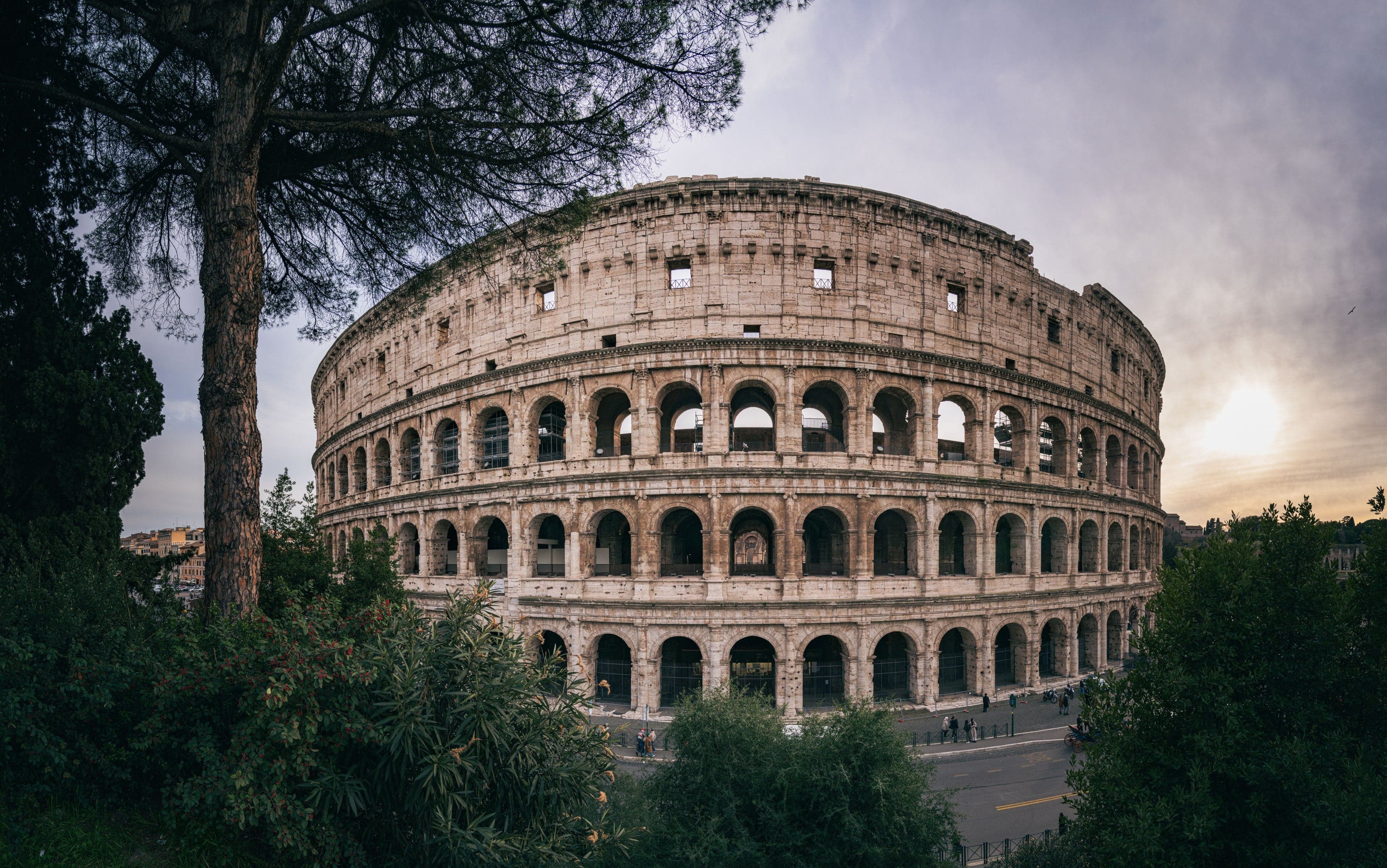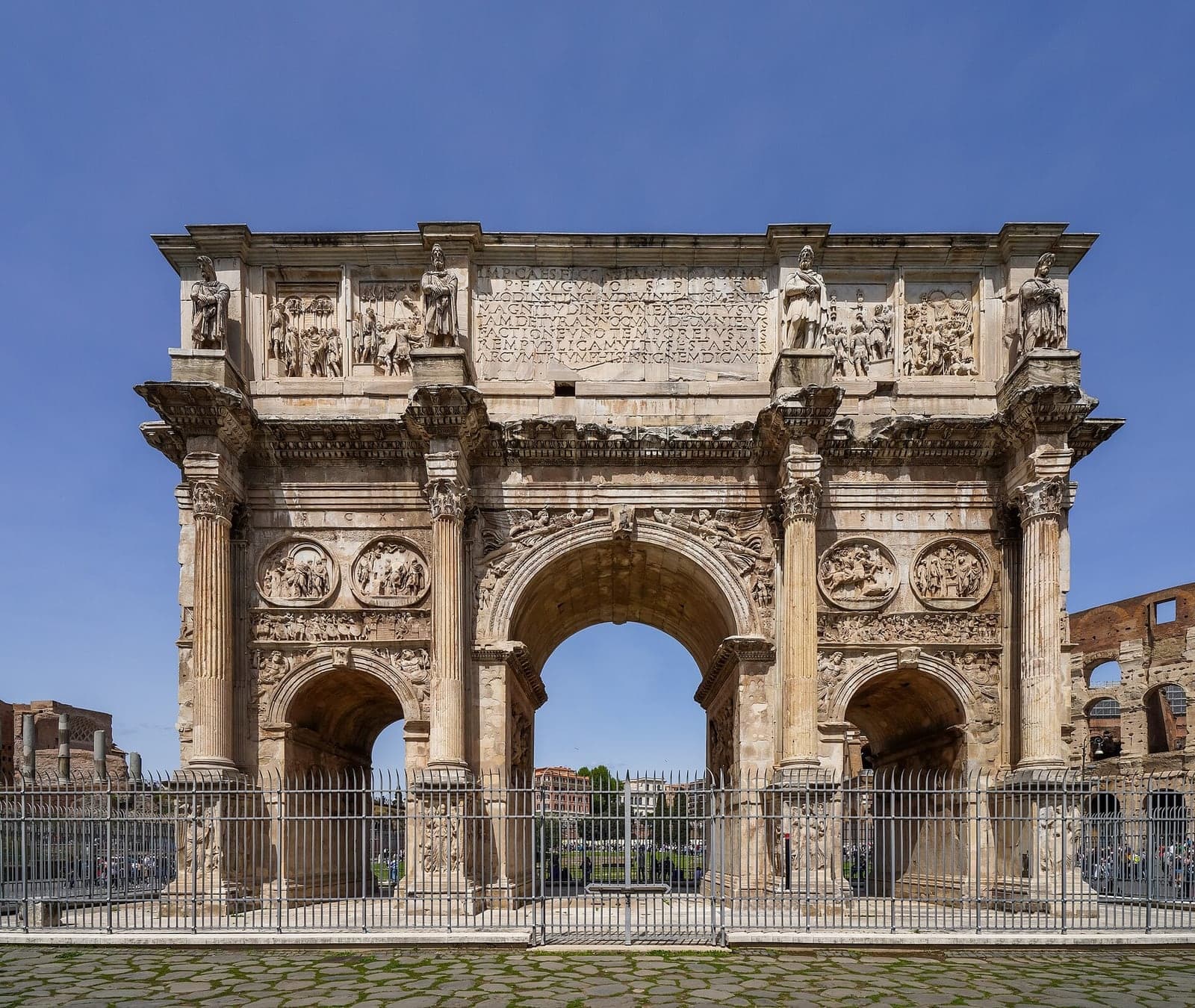
Colosseum and Roman Forum: Rome Built From Rome
75 min · 1.9 km · moderate
The Palatine is the centremost of Rome's seven hills, and from its terraces you can look down over the Roman Forum on one side and the long green hollow of the Circus Maximus on the other. It is also the hill where Rome says it began. Most founding myths float somewhere safely offstage. The Palatine is unusual because here the legend and the ground almost touch, and because the hill gave a word to half the languages of Europe.
The myth on the hill
Legend places on this hill the Lupercal, the cave where a she-wolf was said to have suckled the abandoned twins Romulus and Remus. And it was here, tradition holds, that Romulus went on to found the city, in the year 753 BC. That date is the one every Roman schoolchild learned, the official birthday of Rome, and it is pinned to this specific hilltop rather than to the valley or the river.
Where the myth and the spade almost meet
Hear a stop from this walk
Tarpeian Rock: The Cliff and the Church
What makes the Palatine remarkable is that the archaeology does not simply contradict the story. Excavators have found traces of Iron Age huts on this hilltop, simple dwellings from the centuries around the traditional founding date. So the myth of Romulus and the physical evidence of Rome's earliest settlement sit almost directly on top of each other, on the same ground. It does not prove the legend, and it is not meant to. But it is a rare and striking case of a founding story and the oldest layer of a real city occupying the same address.
One modern claim deserves caution. A cavity found beneath the hill and announced in 2007 as the actual Lupercal cave has never been confirmed and remains disputed. Hold it as a contested idea, not a fact. The honest version of the Palatine is powerful enough without it: the huts are real, the dating is real, and the overlap with the legend is real.
The hill that named every palace
Now walk forward a few centuries. The emperor Augustus lived on this very hill, and later emperors built a sprawling palace complex on it. Its brick arches and walls still climb the slope above the Circus Maximus, supports for the buildings that stood on top. For centuries the Palatine was where Rome's rulers lived, and that is where a piece of everyday language comes from. The name of this hill, the Palatine, is by the usual derivation the origin of the word palace, carried down through language after language across Europe. Every palace in the world is named, at one remove, after this ground. It is one of the quiet payoffs of the whole ancient core: a hill so associated with imperial living that its name became the generic word for a grand residence.
Reading it on the ground
Climb to the edge of a terrace and use the two views deliberately. Look down at the Forum and you are looking at the public Rome, the square where the city argued and traded. Turn to the Circus Maximus and you are looking at the space of mass spectacle, the chariot track. Between them, on the height, sat the private world of the men who ran it all. The Palatine is where public Rome, popular Rome and imperial Rome are all visible from one spot.
The hill is inside the paid archaeological park it shares with the Colosseum and the Forum, which sells name-bound, time-slot tickets, and reaching the terraces involves a real climb on uneven ground, so wear proper shoes and take the ascent slowly. There is little shade on top, so carry water and sun protection. You do not have to climb to see it. The free overlook behind the Senators' palace on the Capitoline Hill looks across the Forum to the Palatine, and the Circus Maximus walk looks up at its brick supports from the valley below.
The Palatine is the hill beyond the Forum at the end of Colosseum and Roman Forum: Rome Built From Rome, and the hill you look up at on Circus Maximus and Aventine: Racetrack to Orange Garden. Read how the Roman Forum worked as a public square just below it, browse the full set of Rome walking tours, or plan a day in Rome around the ancient core. Stand on the hill knowing what is under it, and it stops being a viewpoint and becomes the address where a city and its legend share a foundation.
Sources
- Palatine Hill, Wikipedia. The hill as the traditional site of Rome's founding, the Lupercal legend of Romulus and Remus, and the location of the imperial residences.
- Iron Age huts on the Palatine, encyclopedic reference. The earliest dwellings on the hill; excavation dates are not given here because they were not re-verified.
- Etymology of "palace", encyclopedic reference. The derivation of the word palace from the Palatine Hill across European languages.
- 2007 reported Lupercal cavity, Wikipedia. Cited as a disputed and unconfirmed claim.
- Roamer tour dossier for "Colosseum and Roman Forum: Rome Built From Rome" (rome-colosseum-forum), fact-checked October 2026. Sovrintendenza Capitolina text on the Circus Maximus for the palace supports above the track.
Ready to experience it?
Colosseum and Roman Forum: Rome Built From Rome
75 min · 1.9 km · moderate
More from Rome
Explore more at your own pace.
One Day in Rome on Foot: A Walkable Morning-to-Evening Itinerary
Best Architecture Walking Tours in Rome (2026)
St. Peter's Square and the Surprise Rome Demolished: Borgo, the Spina and Via della Conciliazione
The Aventine's Orange Garden and Keyhole: A Fortress That Became a View
The Water Behind the Trevi Fountain: Following the Acqua Vergine to the Pincio