Kasbah of the Udayas: Rabat's Old Town Above the Sea
110 min · 2.5 km · easy
Rabat is Morocco's capital, and unusually for a Moroccan city its old town is calm, walkable, and open to the Atlantic. Stand anywhere along the Bou Regreg river and you read a single city built four times over: an Almohad caliph's oversized imperial ambition, a refugee town that arrived from Spain and settled inside it, a layered ground where Romans and Marinids buried the dead among gardens, and a modern shrine to the kings who won the country back. The through-line is grandeur measured by what never got finished, and a capital that other people quietly moved into. You can walk it at your own pace, no group and no schedule steering you, with the ocean at the edge of almost every view.
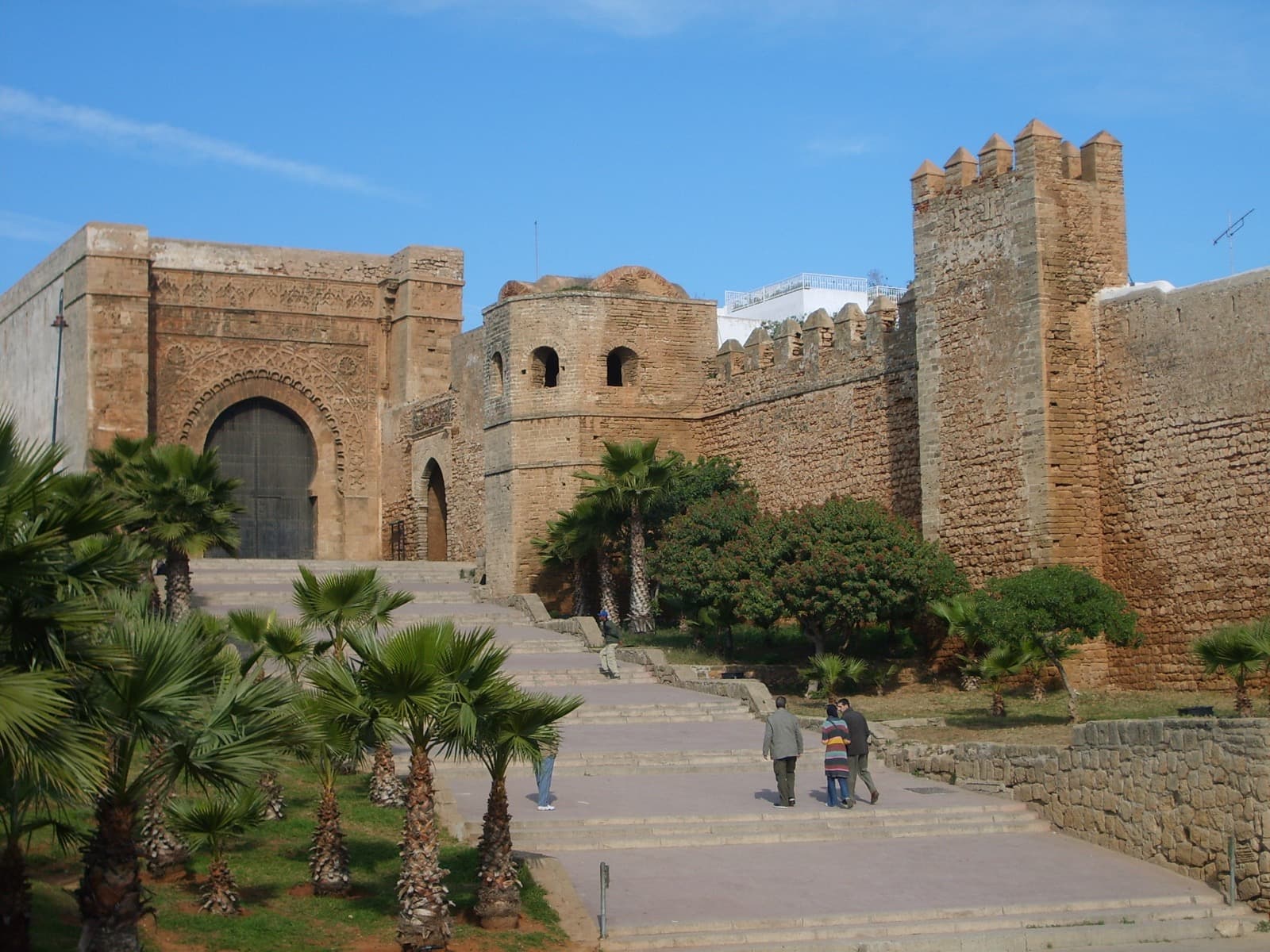
Start with the ambition, because everything else settles into the space it left empty. In the late twelfth century the Almohad caliph Yacoub el-Mansour, who reigned from eleven eighty-four to eleven ninety-nine, conceived Rabat as a monumental new imperial capital and drew its ramparts for a city far larger than was ever built. He named his naval base Ribat al-Fath, the stronghold of victory, and it is from ribat, a fortified frontier monastery, that both the country's word and the city's name descend. Then the dynasty fell before it could fill the walls. What you see on the Kasbah of the Udayas walk is a frame around an absence: great red rammed-earth ramparts and monumental gates such as Bab el-Had, which UNESCO records as the only surviving parts of the project for a great capital city of the Almohad caliphate. The circuit is vast; the town that grew inside it is small.
The refugees who arrived to fill an empty capital
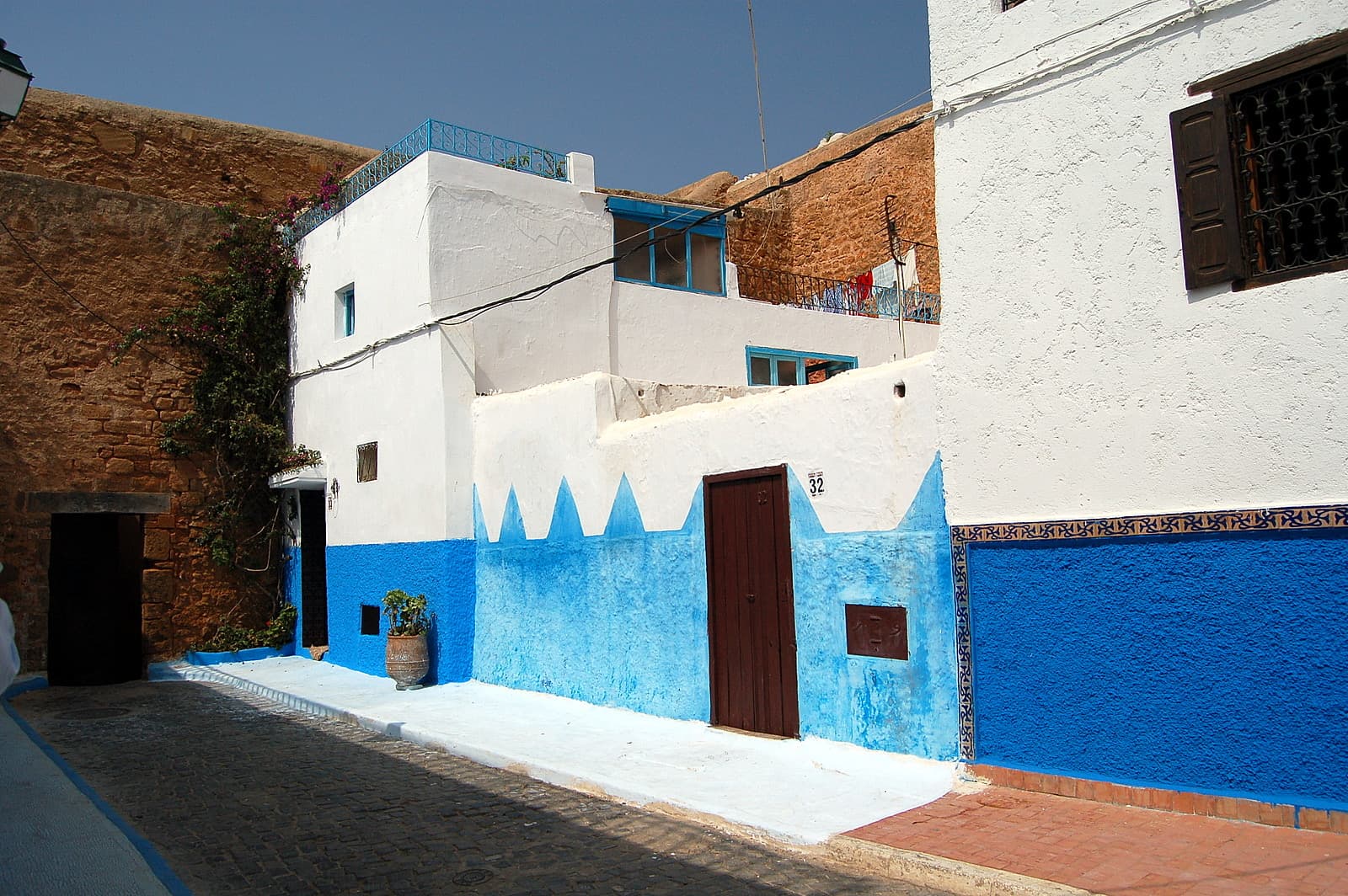
What settled inside those oversized walls was not an Almohad metropolis but a refugee town. Muslims expelled from Spain after the expulsion decree of sixteen hundred and nine, the Moriscos and the people of Hornachos, laid out the Medina of Rabat in the early seventeenth century on a regular, almost grid-like plan. That straightness is a fingerprint. Where older Moroccan medinas grew organically over centuries, this one was planned all at once by people who arrived together. Around two thousand came from Hornachos alone, and thousands more Moriscos followed. They painted their lanes blue, raised their own seventeenth-century Andalusian Wall separate from the Almohad ramparts, and turned the river mouth into something formidable.
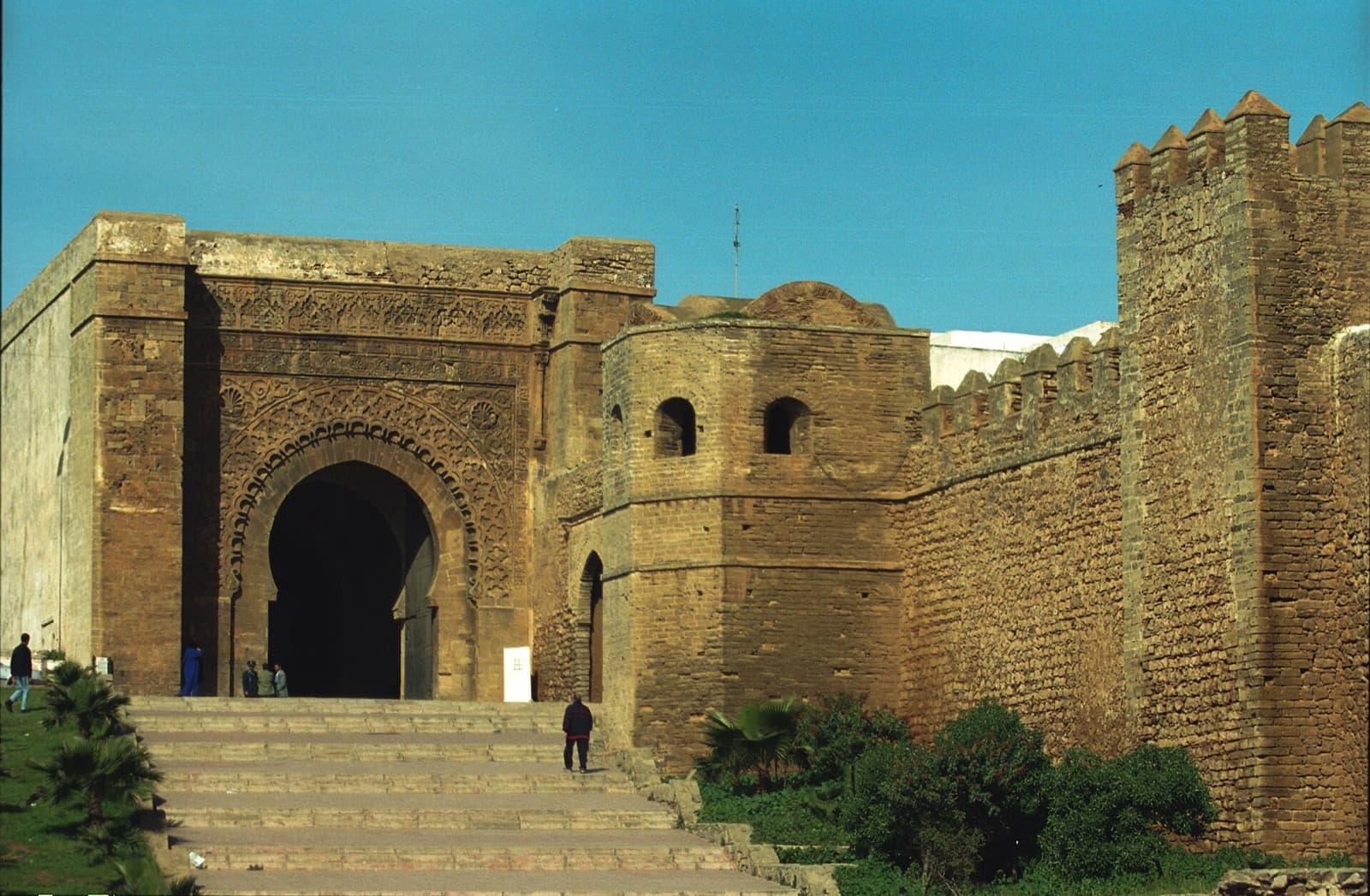
The kasbah on the cliff is where their story becomes visible. Bab Oudaia, the great gate raised under Yacoub el-Mansour in the final years of the twelfth century, opens onto a fortress-village on a bluff where the Bou Regreg meets the Atlantic. The site began as a tenth-century ribat and holds Jamaa al-Atiqa, the Old Mosque, founded around eleven fifty and the oldest mosque in Rabat. (As an active mosque it is closed to non-Muslims, so it is admired from the exterior.) The lanes are washed white below and painted blue above, a scheme popularly linked to the Andalusian refugees, though the tours are careful to narrate that as tradition rather than documented fact. Inside the same walls, the Andalusian Gardens surprise on their date: they were planted between nineteen fifteen and nineteen eighteen during the French Protectorate, a colonial-era garden inside a medieval fort, beside a pavilion built by Sultan Moulay Ismail (who reigned from sixteen seventy-two to seventeen twenty-seven) that reopened as the National Jewellery Museum in January of twenty twenty-three.
Walk to the seaward platform and the geography finally explains the fortress. Below, the Bou Regreg pours into the ocean; across the water sits the white town of Sale. In sixteen twenty-seven Rabat and Sale united to form the independent Republic of Bou Regreg, and its corsairs, the Sale Rovers, worked this harbour. The core of that pirate republic was the same Moriscos, many from Hornachos: driven out of one country, they built a seafaring, raiding state at a river mouth. Their memory survives in the medina's Rue des Consuls, which took its name because foreign consuls were legally required to live on that one street, and where captives taken by the corsairs were once ransomed. One French consul, Louis Chenier, served there from seventeen sixty-eight to seventeen eighty-two.
The city of the dead, and the shrine that completes the story
Hear a stop from this walk
The Ramparts and the Almohad Wall: Walls for a Capital Never Filled
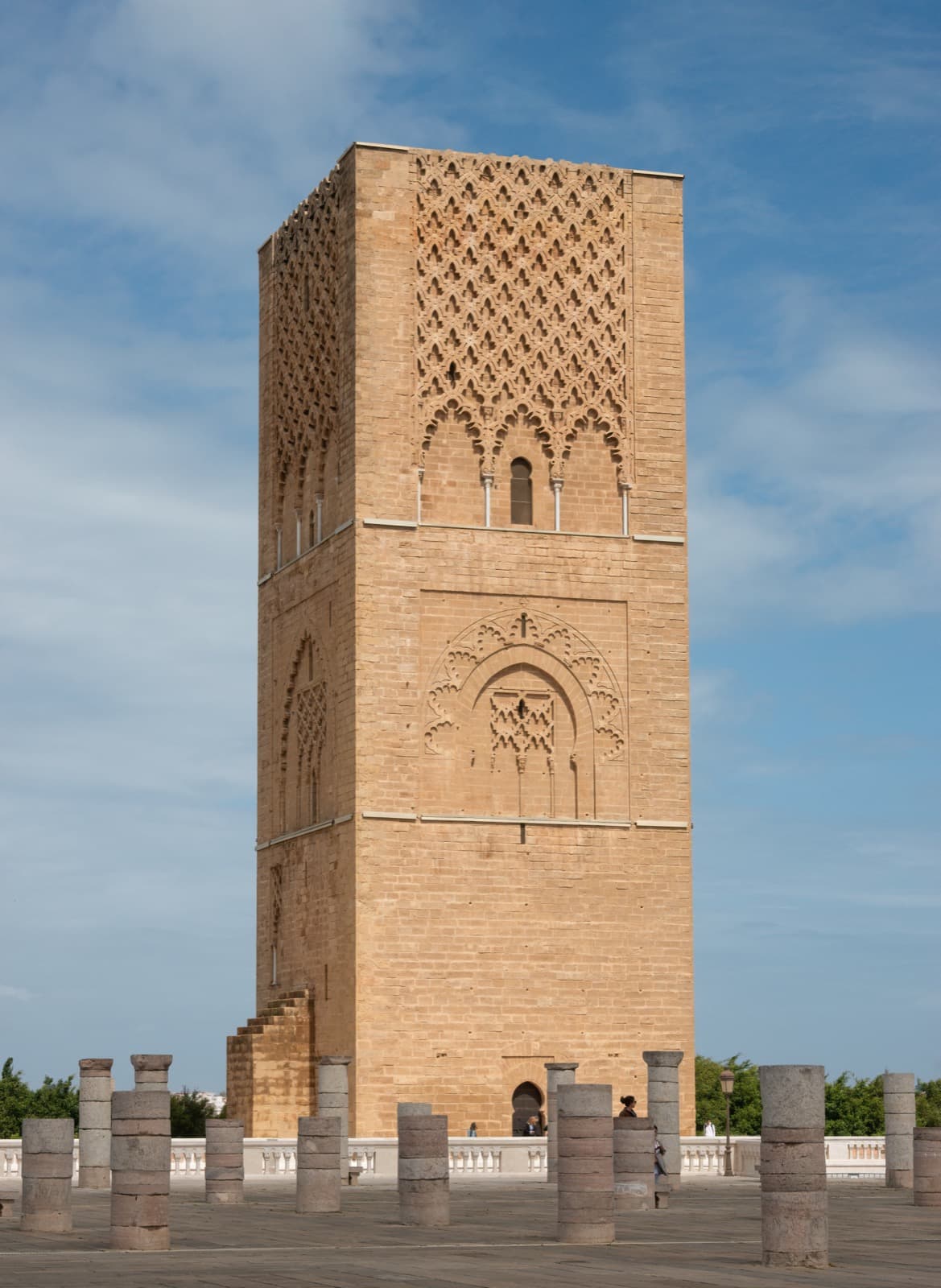
If the kasbah is arrival, the Hassan Tower and Chellah walk is ambition, ruin, and reconciliation. The Hassan Tower is the minaret of the mosque Yacoub el-Mansour meant to be the largest in the western Muslim world. He began it around eleven ninety-one, tied to his victory at the Battle of Alarcos, then died in eleven ninety-nine, and his successors left it unfinished. The tower reached only forty-four metres, less than half of some estimates of its planned height. Modeled on the Koutoubia in Marrakech and a sibling of the Giralda in Seville, it stands above a field of some three hundred and forty-eight column stumps: the floor plan of a prayer hall whose roof was never raised, shaken further apart when the great Lisbon earthquake of seventeen fifty-five reached across the Atlantic. It is grandeur you measure by its ruins rather than its roof.
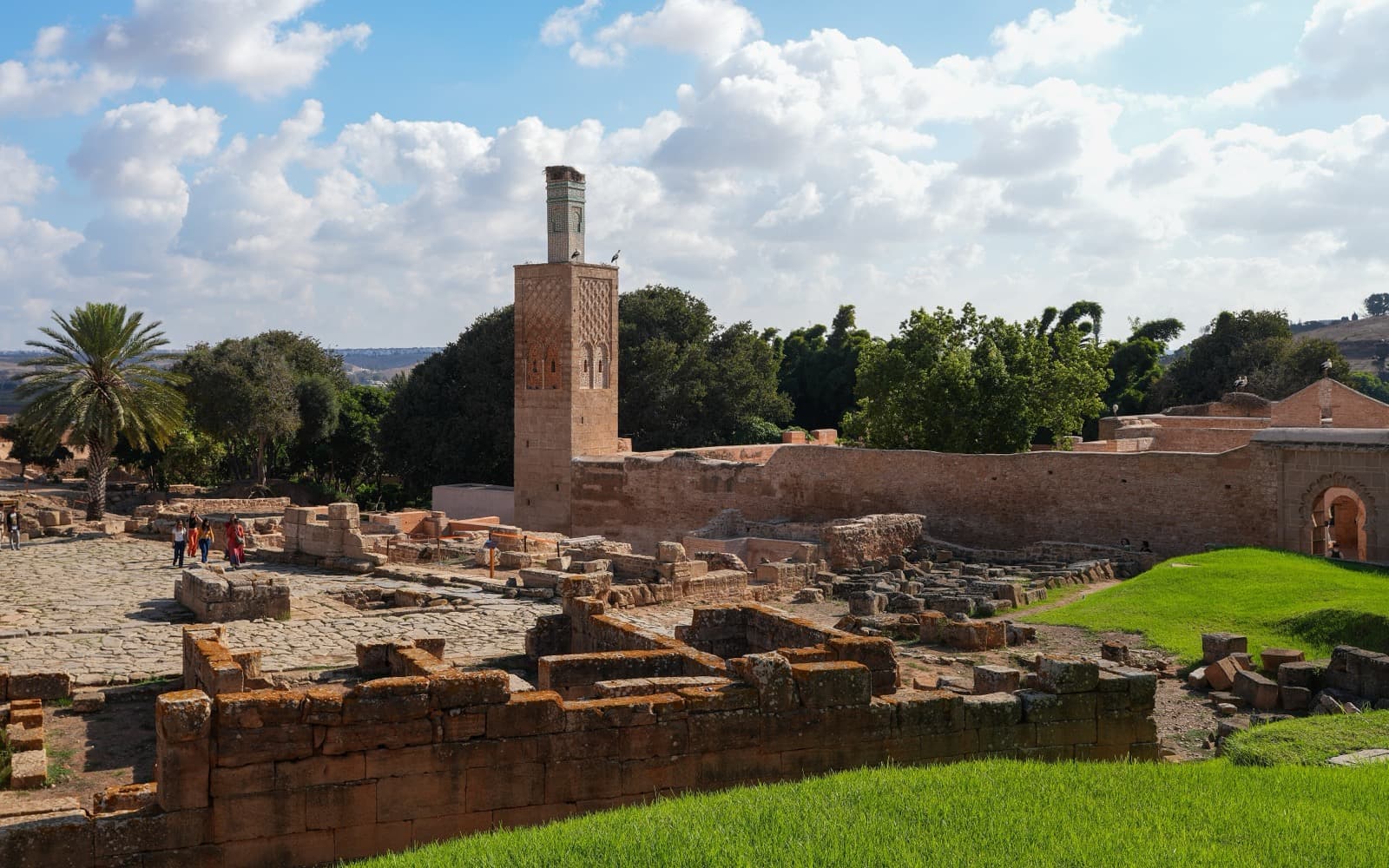
The Chellah carries the same idea back a thousand years and forward into greenery. The walled garden sits on Sala Colonia, a Roman city in the province of Mauretania Tingitana that reached the rank of municipium by the middle of the second century and served as an Atlantic port. Among figs and nesting storks you can still trace the Roman forum, the decumanus maximus, a capitoline temple from around the reign of Hadrian, and Roman baths. In the thirteenth and fourteenth centuries the Marinid sultans enclosed these ruins and turned the hillside into a royal necropolis rather than rebuilding a city on it. The necropolis was chiefly built under Abu al-Hasan Ali ibn Othman, who reigned from thirteen thirty-one to thirteen forty-eight and died in thirteen fifty-one; his richly carved tomb is the finest in the complex, and his wife Shams al-Duha, who died in thirteen forty-nine, lies in a ruined mausoleum nearby. A spring-fed pool with eels carries a fertility legend the tour is careful to name as folklore, not fact. One garden holds a Roman forum and a medieval Muslim graveyard together.
Between the two ruins stands the reconciliation. The white marble Mausoleum of Mohammed the Fifth, built between nineteen sixty-one and nineteen seventy-one and designed by the Vietnamese architect Cong Vo Toan, holds the kings who won the country back: Mohammed the Fifth, who led Morocco to independence from the French Protectorate in nineteen fifty-six, his son Hassan the Second (died nineteen ninety-nine), and Prince Abdallah (died nineteen eighty-three). Unlike the working mosques, this living shrine welcomes respectful visitors of any faith, free of charge. And the walk closes at Bab er-Rouah, the Gate of the Winds, completed by about eleven ninety-seven by the same caliph whose mosque failed, its bent four-turn defensive passage still intact and now an art gallery. The great mosque was never finished, yet the gate stands whole in every carved seashell. That is Rabat's through-line in one wall: the Almohad gate outlasted the Almohad dream, and the refugees, the storks, and the kings filled in the rest.
For the full route map and more of the city's tours, see the Rabat walking tours hub.
Sources
- UNESCO World Heritage Centre, "Rabat, Modern Capital and Historic City: a Shared Heritage" (inscription 2012), whc.unesco.org
- Tour transcript and fact audit, "Kasbah of the Udayas: Rabat's Old Town Above the Sea," Roamer
- Tour transcript and fact audit, "Hassan Tower and the Chellah: Imperial Rabat," Roamer
- Encyclopaedia Britannica, "Rabat" (capital of Morocco), britannica.com
- Ministry of Culture of Morocco / Chellah archaeological site (Sala Colonia and the Marinid necropolis) public documentation
Frequently asked questions
- Why is Rabat's old town calmer and more walkable than other Moroccan medinas?
- Rabat's medina was laid out all at once in the early seventeenth century by Moriscos and Hornacheros, Muslims expelled from Spain after the sixteen hundred and nine decree, on a regular grid-like plan. Older Moroccan medinas grew organically over centuries, so they twist and tangle. Because refugees planned Rabat's in straight lines, its streets run in an unusually regular pattern that is easier to navigate.
- What is the Hassan Tower and why is it unfinished?
- The Hassan Tower is the minaret of a mosque the Almohad caliph Yacoub el-Mansour intended to be the largest in the western Muslim world. He began work around eleven ninety-one and died in eleven ninety-nine, and his successors abandoned the project. The tower reached only forty-four metres, and the prayer hall was never roofed, leaving a field of some three hundred and forty-eight column stumps.
- Can non-Muslims enter the monuments in Rabat?
- Active mosques in Morocco, including the Old Mosque in the Kasbah of the Udayas and the small mosque beside the mausoleum, are closed to non-Muslims. However, the ruins of the Hassan site and the Chellah are open to all with a ticket, and the Mausoleum of Mohammed the Fifth is a rare living shrine that welcomes respectful visitors of any faith, free of charge.
- What is the Chellah in Rabat?
- The Chellah is a walled garden of ruins built on Sala Colonia, a Roman city in Mauretania Tingitana that became a municipium by the middle of the second century. In the thirteenth and fourteenth centuries the Marinid sultans enclosed the site and turned it into a royal necropolis. Today one garden holds a Roman forum and main street alongside medieval Muslim tombs, with storks nesting in the ruins.
- Who is buried in the Mausoleum of Mohammed the Fifth?
- The mausoleum holds King Mohammed the Fifth, who led Morocco to independence from the French Protectorate in nineteen fifty-six, his son King Hassan the Second, who died in nineteen ninety-nine, and Prince Abdallah, who died in nineteen eighty-three. It was built between nineteen sixty-one and nineteen seventy-one and designed by the Vietnamese architect Cong Vo Toan.
Ready to experience it?
Kasbah of the Udayas: Rabat's Old Town Above the Sea
110 min · 2.5 km · easy
More from Rabat
Explore more at your own pace.
One Day in Rabat: A Walkable Itinerary From Kasbah to Chellah
Rabat Travel Guide: How Many Days, Getting Around, Safety, and Cost
Bab Oudaia: The Almohad Gate That Explains All of Rabat
Hassan Tower: Reading Imperial Rabat Through Its Grandest Ruin
The Andalusian Gardens and Jewellery Museum: A Colonial Garden Inside a Medieval Fort