Walk into the walled garden at the south end of Rabat's Kasbah of the Udayas and the first thing you feel is that it must be old. Orange and citrus trees throw shade over clipped box hedges, bougainvillea spills down the walls, and the sea light comes in cool and blue off the Atlantic. It reads as medieval, a courtyard the Almohads or the Andalusian refugees left behind. It is not. The Andalusian Gardens were planted between 1915 and 1918, under the French Protectorate, on the site of a palace parade ground, and the older building beside them, the one you can actually enter, is a seventeenth-century sultan's pavilion that reopened in 2023 as the National Jewellery Museum. This single enclosure holds three eras stacked on top of each other, and knowing which is which changes how you stand in it.
A garden the colonial era planted
The garden's date is the surprise. It was laid out during the French Protectorate, which ran from 1912 to 1956, in a Moorish and Andalusian style borrowed from the historic Islamic gardens of southern Spain. The designer was a French architect, Maurice Tranchant de Lunel, and he set the beds and pathways across what had been the mechouar, the parade ground of the adjoining palace. So the geometry that feels so authentically Andalusian is a colonial-era reconstruction of an Andalusian idea, built inside a genuinely medieval fort.
That is worth naming plainly, without nostalgia and without a slogan. The Protectorate reshaped Rabat's historic sites, and this garden is one of the things it left beside the older city. UNESCO's 2012 inscription of Rabat as a shared-heritage site treats these Protectorate-era layers as part of the record, alongside the Almohad ramparts and the Andalusian medina below. The garden is not a fake and it is not a shrine. It is a real, documented layer of a city that has kept adding layers for a thousand years, and the trees give exactly the shade the whole town seems built to seek.
The pavilion that predates it
Hear a stop from this walk
The Ramparts and the Almohad Wall: Walls for a Capital Never Filled
Beside the garden stands the older structure, and here the clock runs backwards. This pavilion was built by Sultan Moulay Ismail, who reigned from 1672 to 1727, at the end of the seventeenth century. It is arranged around a riad, a courtyard house turned inward on itself, the classic Moroccan plan where the life of the building faces a private garden rather than the street. When Tranchant de Lunel planted his beds two centuries later, he was landscaping around a building that was already old.
Unlike the Old Mosque you pass earlier in the kasbah, which stays closed to non-Muslims and is admired only from the lane, this pavilion opens its doors. The garden is free; the museum inside charges a small admission. It is worth the ticket precisely because so little else on this walk lets you cross a threshold. You step out of the citrus shade and into a genuine seventeenth-century interior, and the craft on the walls and in the cases is Moroccan even though a French architect arranged the roses outside.
From ethnographic museum to jewellery
The building has been a museum for more than a century. It was first converted into an ethnographic museum in 1915, during the same Protectorate years that produced the garden, under the initiative of Prosper Ricard. For decades it was known as the Musée des Oudayas and showed regional crafts and costume. Then, after restoration, it reopened on January 7, 2023, with a sharper focus, as the National Jewellery Museum.
The collection is larger than the small pavilion suggests, roughly eight thousand items, and its span is startling. It reaches from prehistory to the early twentieth century, and the earliest object on show is a reproduction of perforated shell beads dated to around 142,000 years ago, a reminder that personal adornment in this part of North Africa is almost unimaginably old. From there the cases move through Berber silver, the fibula brooches that pinned a woman's cloak, the palm-shaped khmissa amulets carried against the evil eye, and the heavy urban bridal ornaments of Fez, Marrakesh and other cities. The museum drew forty thousand visitors in its first week after reopening, which for a small pavilion in a kasbah is a crowd.
The one thing to understand standing here
If you take a single idea away from this stop, let it be this: the enclosure is honest about its own layers, and most of Rabat is like this. The fort is Almohad, from the twelfth century. The pavilion is Alaouite, from the seventeenth, built by Moulay Ismail. The garden is colonial, from the 1910s. The museum's mission is contemporary, set in 2023. None of it pretends to be older than it is once you know the dates, and the pleasure of the place comes from holding all four eras at once rather than flattening them into a single "old Morocco."
That is also why this stop rewards slowness. There is no schedule pulling you out of the shade and no guide checking a watch. You can sit on a bench under the orange trees for as long as you like, then decide, on your own clock, whether to pay the small fare and step inside the pavilion or simply carry on. The jewellery will still be there. So will the beads that are older than almost anything humans have made.
Walk it in sequence
The Andalusian Gardens and National Jewellery Museum sit in the middle of a walk that starts at the great gate on the cliff and ends at ramparts drawn for a capital that was never filled. The garden lands where it should, as the cool, quiet centre of the route, between the blue-and-white lanes above and the pirate harbour and refugee medina below. Reaching it on foot, in order, is what makes the layering legible: you arrive at the colonial garden having just walked the medieval fort, and you leave it heading down toward the seventeenth-century town the Moriscos built.
Roamer's self-guided audio walk, "Kasbah of the Udayas: Rabat's Old Town Above the Sea," puts this stop third of six, roughly two and a half kilometres and ninety minutes at an unhurried pace. You set the pace, carry your own map, and linger in the garden as long as the shade holds you. For more routes across the capital, browse our Rabat walking tours, or start from the Rabat city page to see where this walk fits among the others.
Sources
- National Jewellery Museum (Morocco), Wikipedia. Timeline of the pavilion, the 1915 ethnographic conversion under Prosper Ricard, the January 7, 2023 reopening, the roughly 8,000-item collection, and the 142,000-year-old shell-bead reproduction.
- Kasbah of the Udayas, Wikipedia. The Andalusian Gardens' 1915 to 1918 creation by Maurice Tranchant de Lunel on the palace mechouar, and the Moorish and Andalusian planting scheme.
- Rabat, Modern Capital and Historic City, UNESCO World Heritage List (Inscription 1401, 2012). Treatment of the Protectorate-era layers as part of Rabat's shared heritage alongside the Almohad and Andalusian city.
- Roamer tour transcript, "Kasbah of the Udayas: Rabat's Old Town Above the Sea." Fact-audited route narration for stop three, the Andalusian Gardens and Jewellery Museum, and the sequence of the walk.
Ready to experience it?
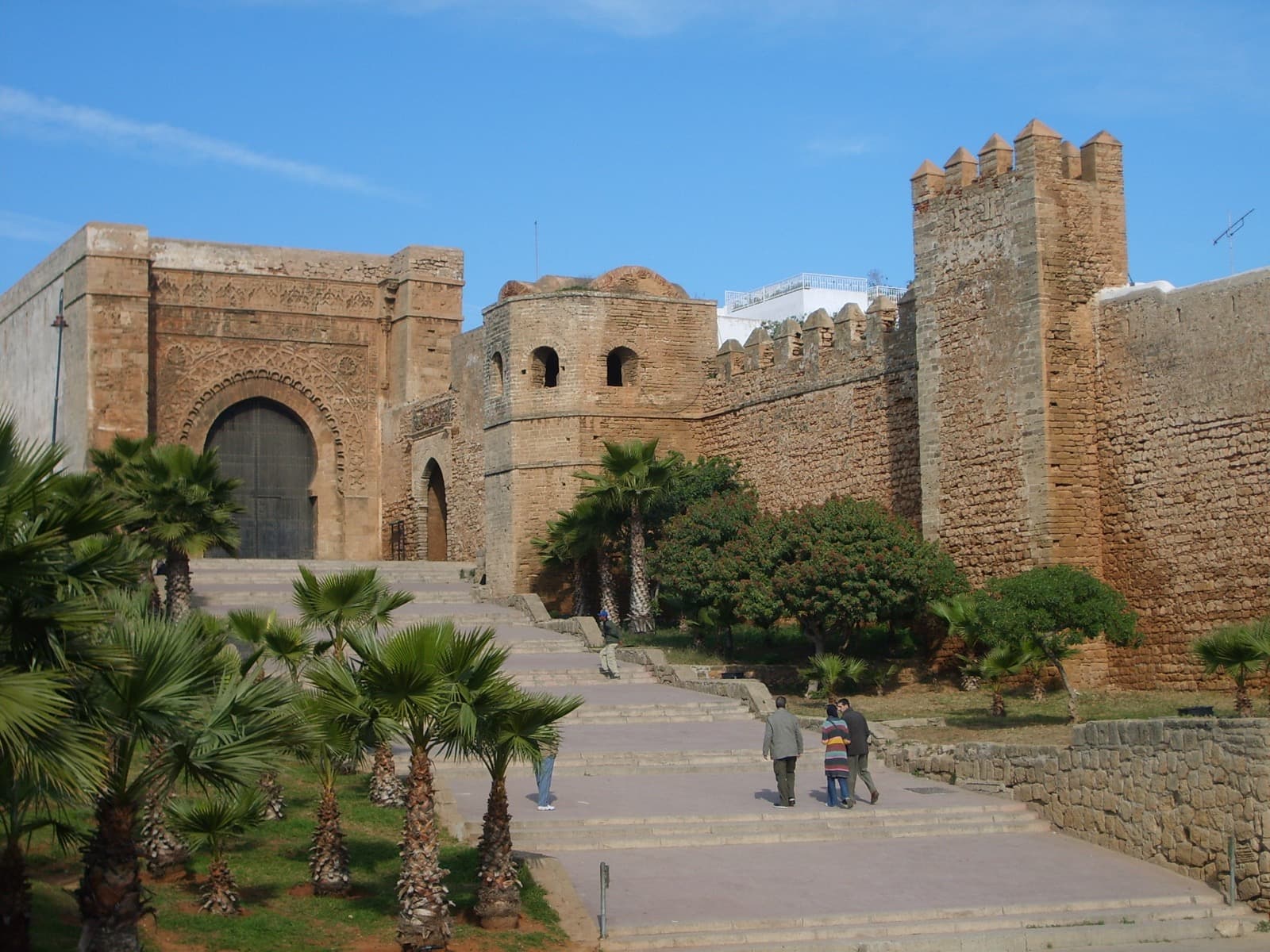
Kasbah of the Udayas: Rabat's Old Town Above the Sea
110 min · 2.5 km · easy
More from Rabat
Explore more at your own pace.
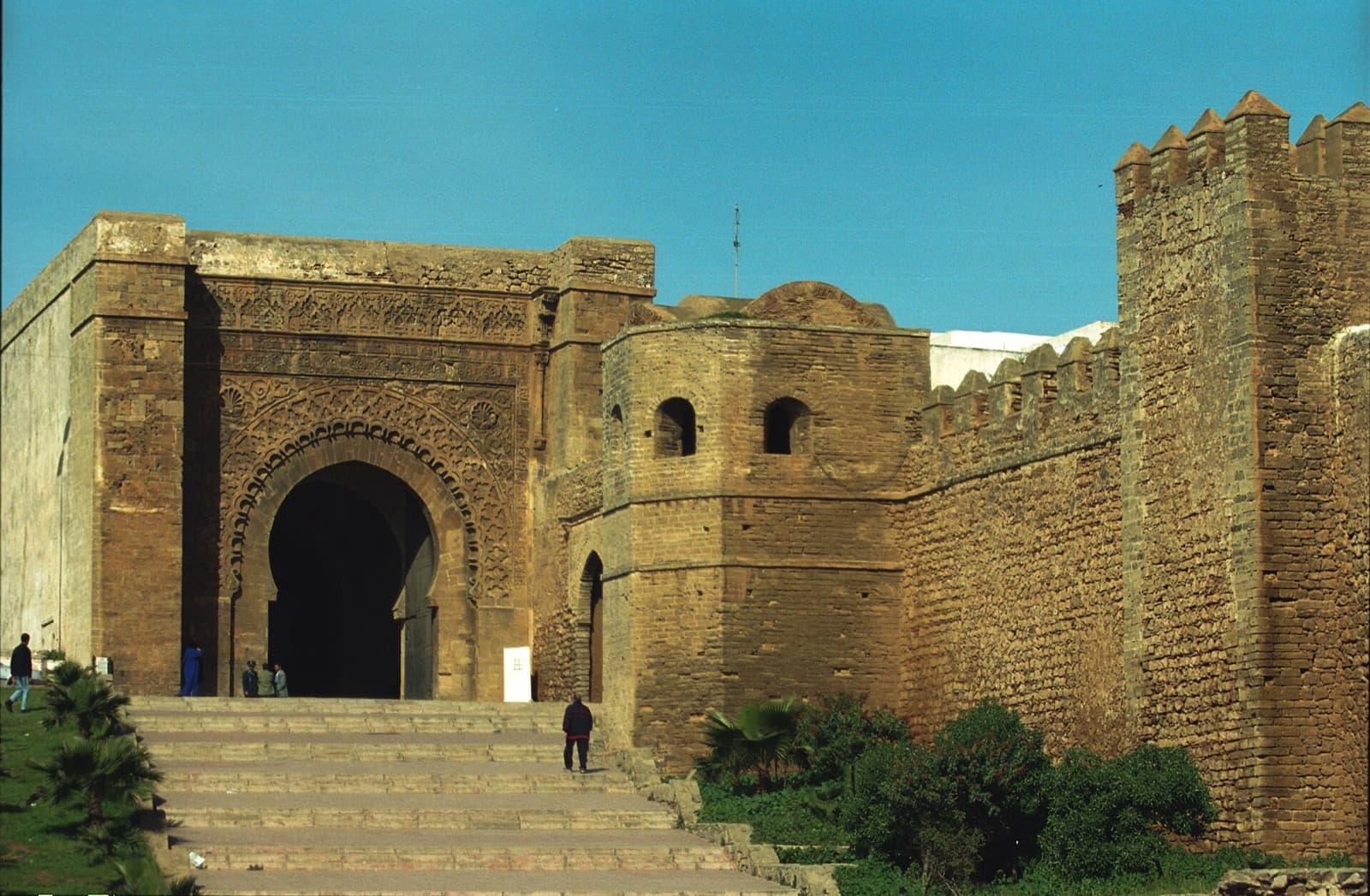
One Day in Rabat: A Walkable Itinerary From Kasbah to Chellah
Rabat Travel Guide: How Many Days, Getting Around, Safety, and Cost
Rabat: The Ocean-Facing Capital That Was Never Filled
Bab Oudaia: The Almohad Gate That Explains All of Rabat
Hassan Tower: Reading Imperial Rabat Through Its Grandest Ruin