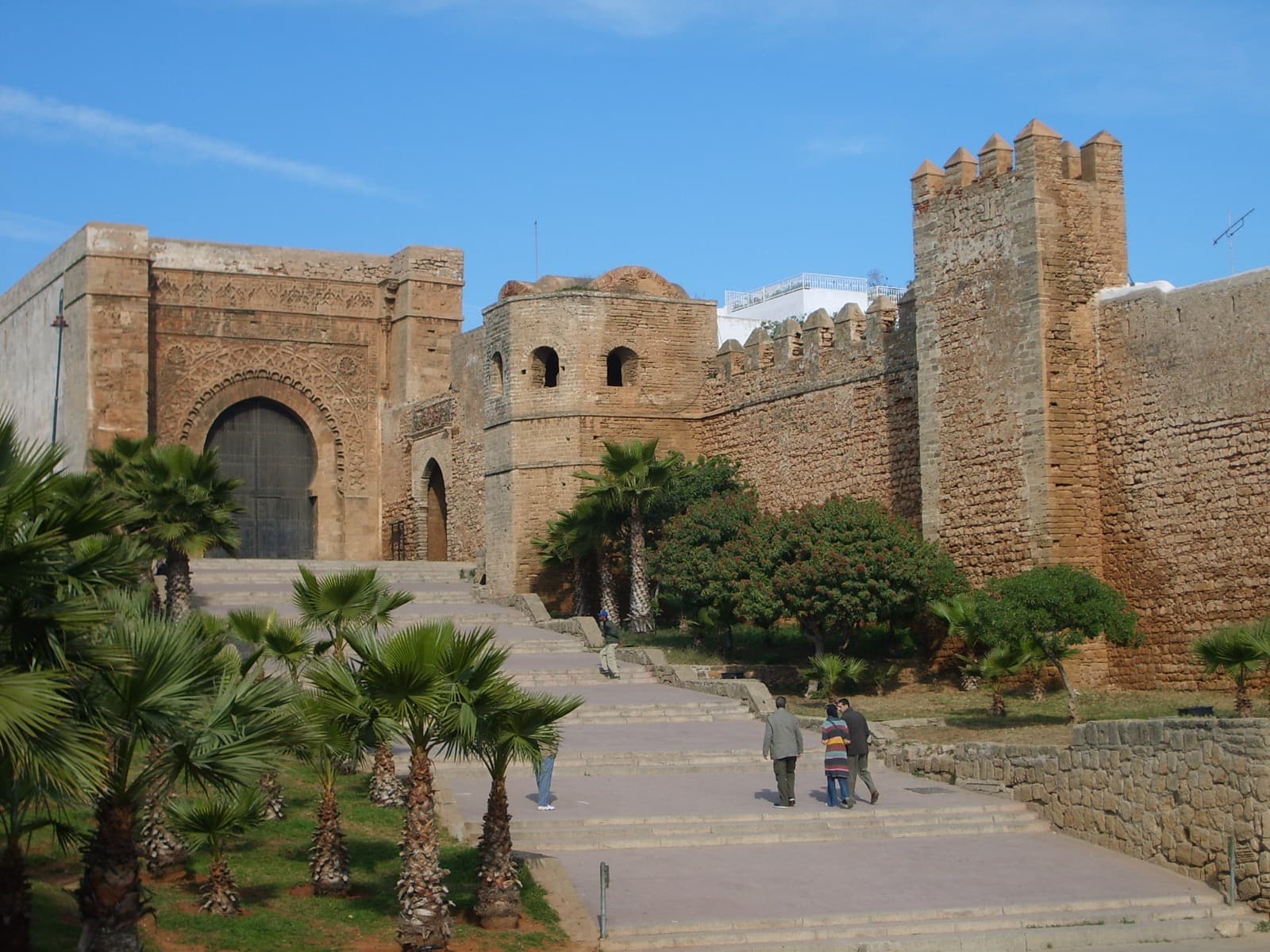
On a bluff where the Bou Regreg river meets the Atlantic, walk the blue-and-white lanes of an Almohad fortress-village, then descend into the medina that Muslim refugees from Spain laid out in straight lines, all at your own unhurried pace.
Start · Bab Oudaia and the Kasbah of the Udayas: The Gate on the Cliff
DirectionsStops
- 1
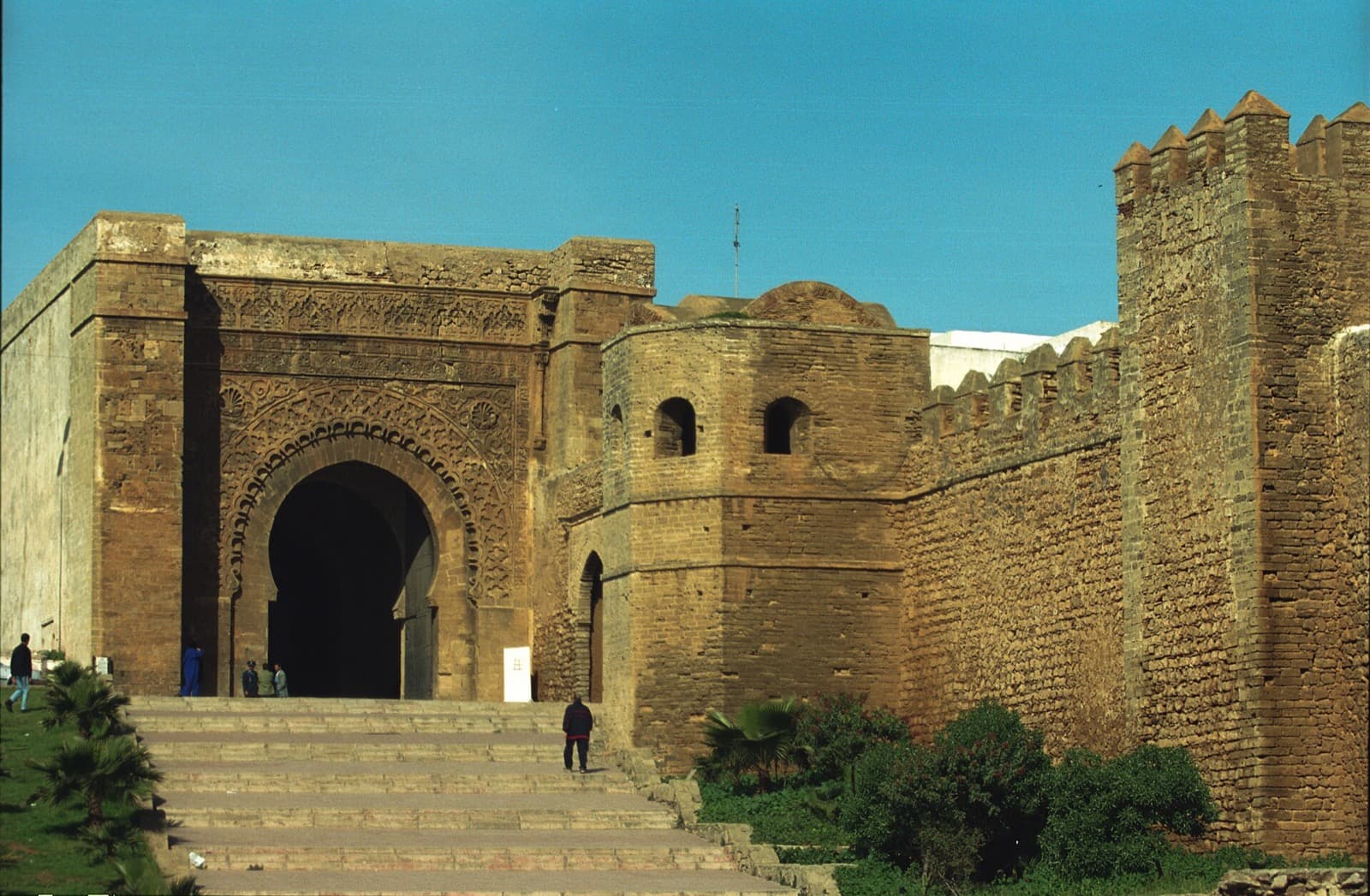
Bab Oudaia and the Kasbah of the Udayas: The Gate on the Cliff
The monumental Almohad gate that opens onto a fortress-village on the cliff where the Bou Regreg river meets the Atlantic.
- 2
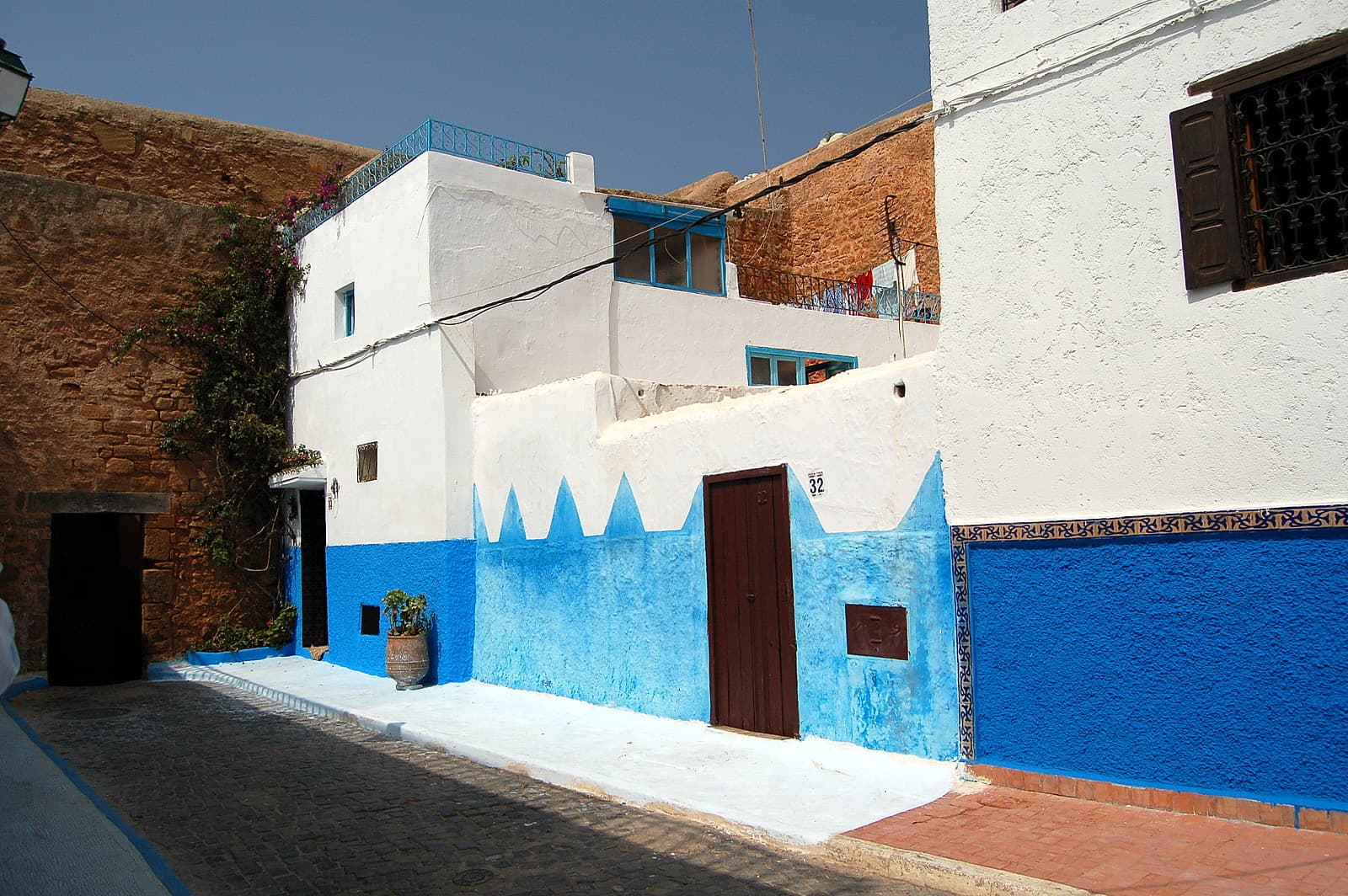
The Blue-and-White Lanes and the Kasbah Mosque
A village of narrow lanes washed white below and painted blue above, gathered around the oldest mosque in Rabat.
- 3
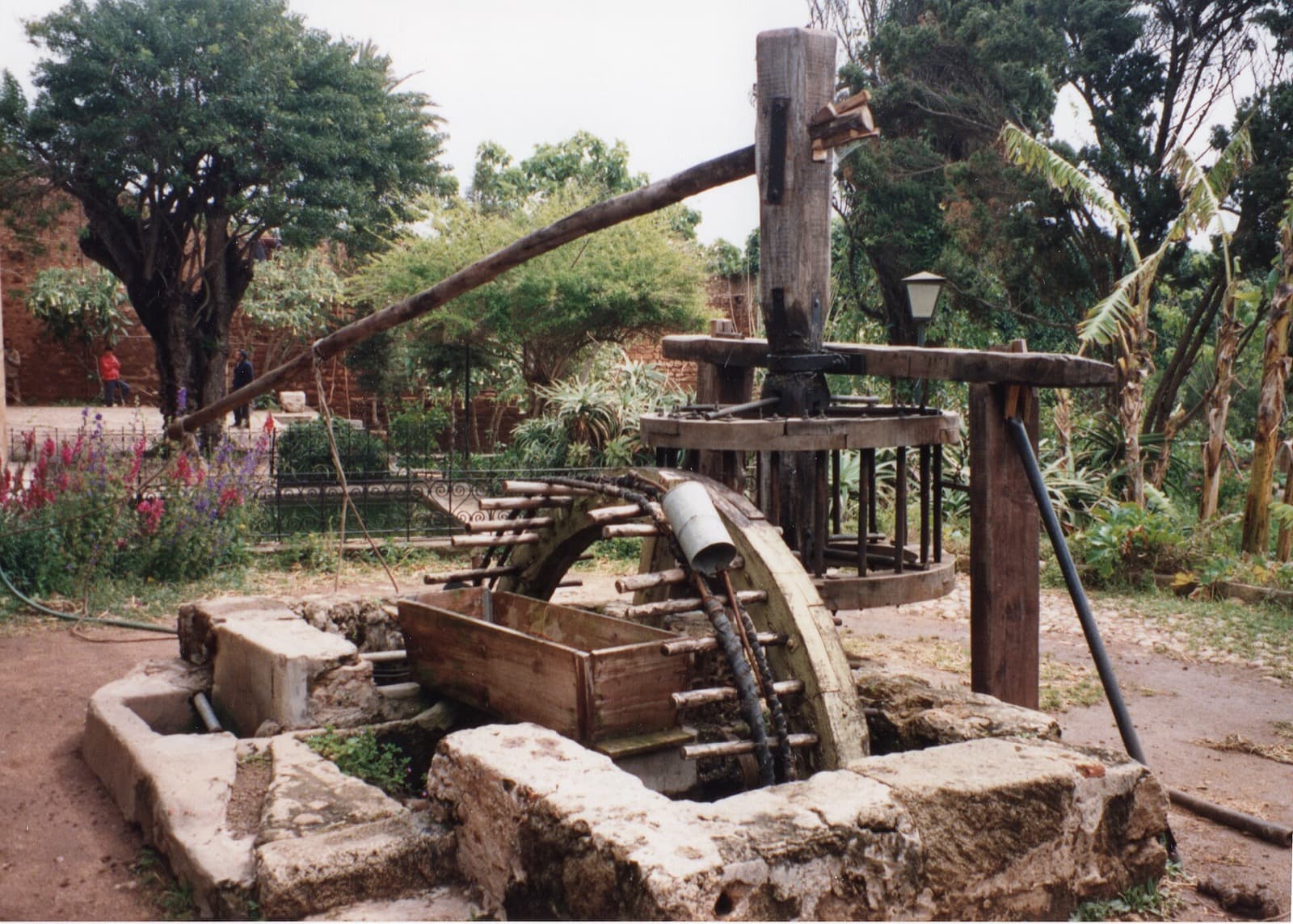
The Andalusian Gardens: A Garden the Colonial Era Planted in a Medieval Fort
A walled formal garden of citrus and bougainvillea planted during the French Protectorate inside the medieval kasbah, beside a museum-palace you can enter.
- 4
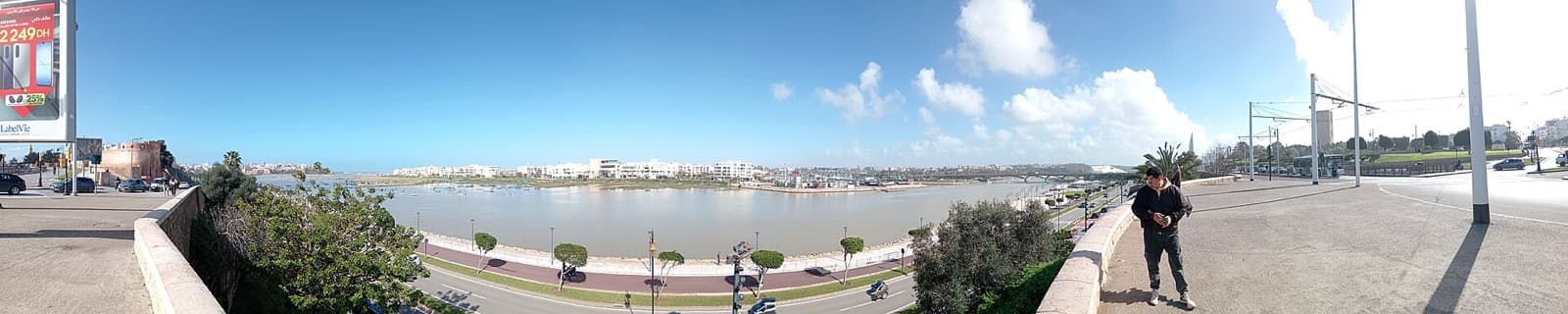
The Platform Over the Bou Regreg: The Pirate Harbour Where River Becomes Ocean
A lookout terrace at the seaward end of the kasbah, over the river mouth that was once the harbour of the Bou Regreg corsairs.
- 5
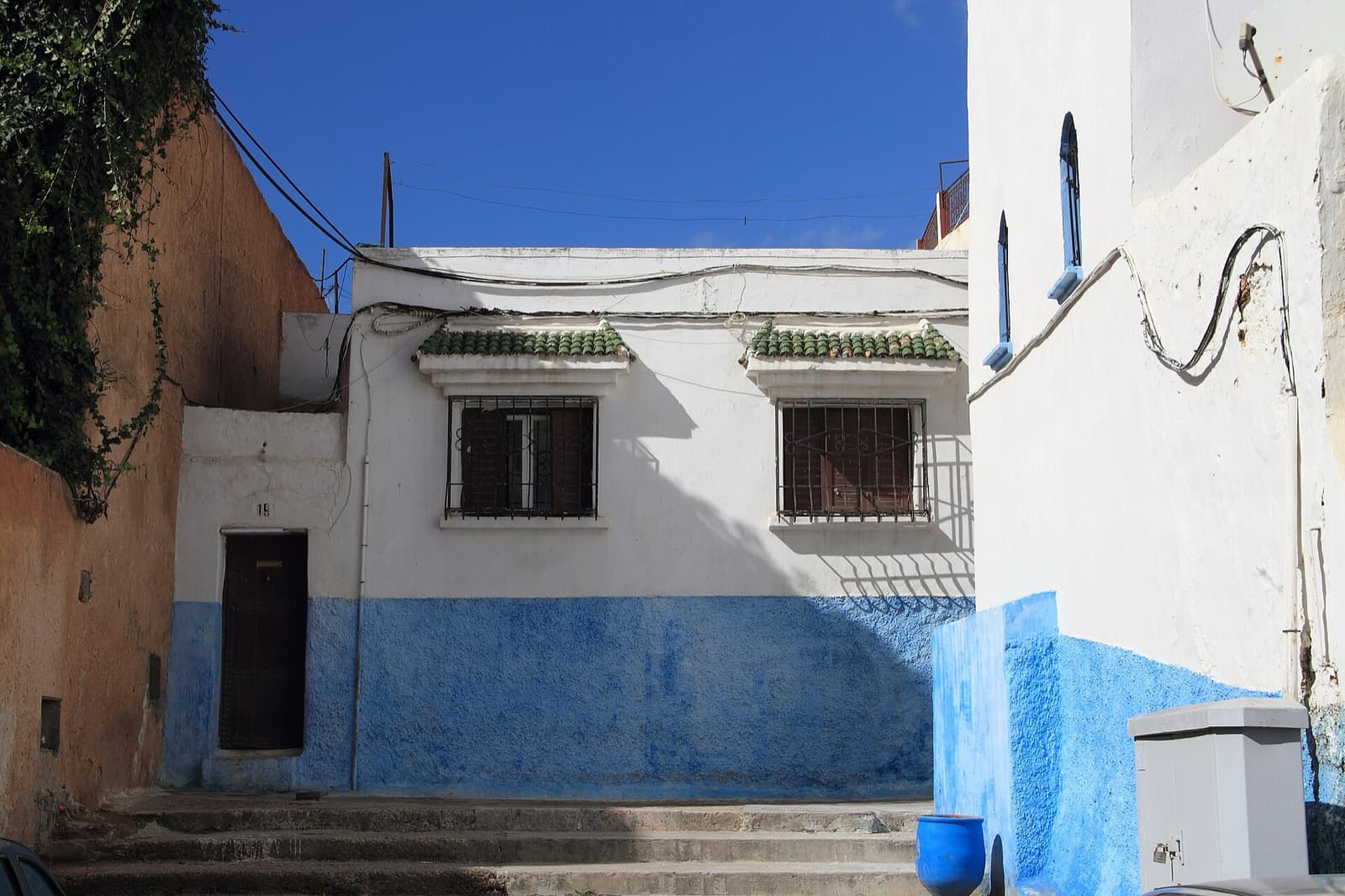
The Medina and Rue des Consuls: The Old Town Refugees Laid Out in Straight Lines
A medina laid out on a regular Andalusian plan by Muslims expelled from Spain, threaded by the historic craft street where foreign consuls once had to live.
- 6
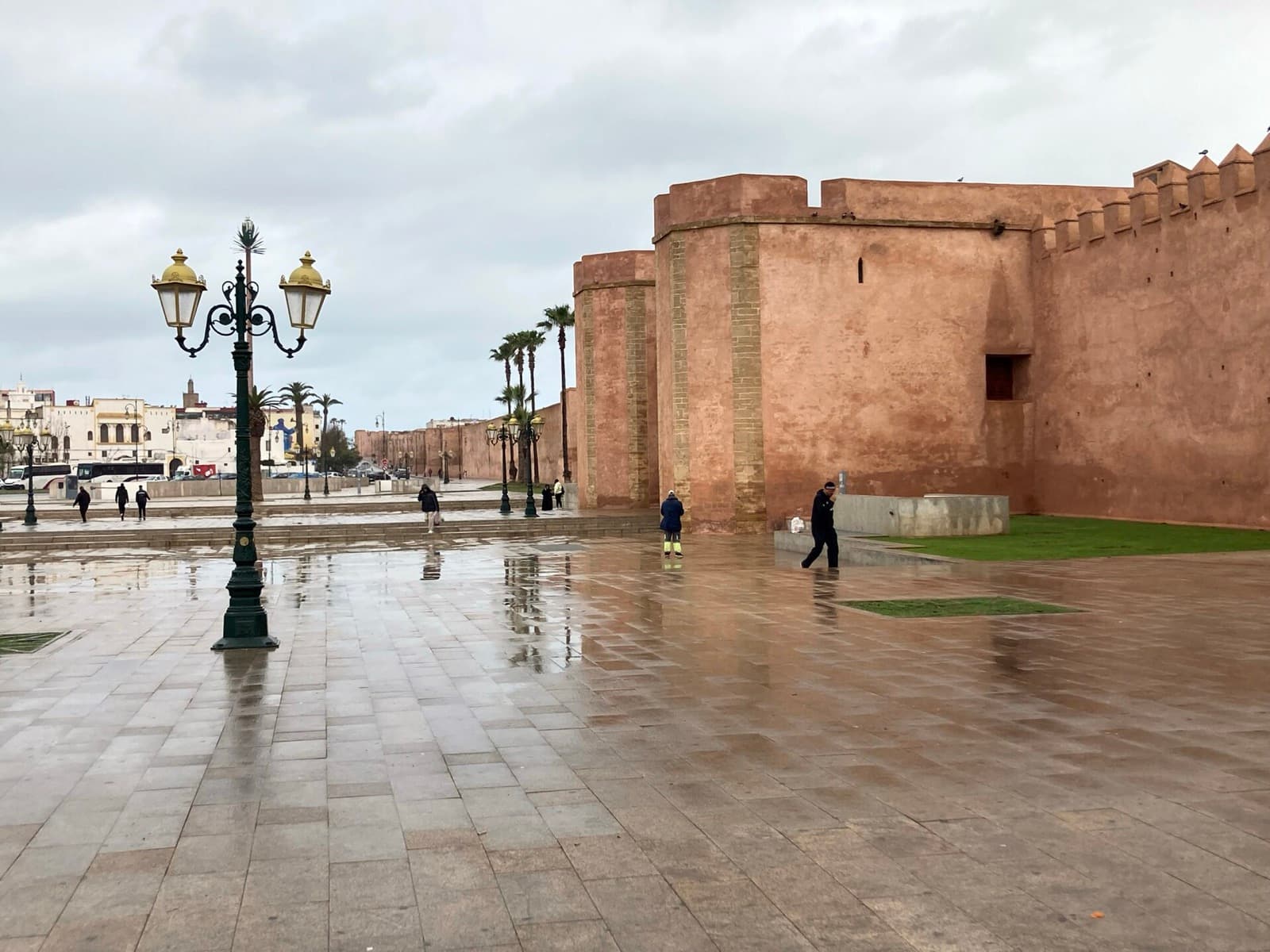
The Ramparts and the Almohad Wall: Walls for a Capital Never Filled
Great red rammed-earth Almohad ramparts and the gate of Bab el-Had, raised to enclose an imperial capital the dynasty never lived to fill.
Details
Best Time to Visit
Morning is ideal, when the kasbah lanes are quiet, the sea light is soft on the blue walls, and the gardens and the seaward platform are cool before the midday sun. Late afternoon is a lovely second choice, with warm light over the Bou Regreg mouth and Sale across the water. Note that Friday and daily prayer times change the rhythm of the mosque quarters, and the National Jewellery Museum in the gardens keeps its own opening hours, so a late-morning start lets you catch it open. The kasbah and the medina are enjoyable year-round; Rabat's Atlantic setting keeps summers milder than the Moroccan interior.
Pro Tips
- •Carry your own map and set your own route. The kasbah is small enough that you cannot truly get lost, and moving at your own pace is the whole point.
- •Keep small cash in Moroccan dirhams for the National Jewellery Museum ticket, small tips, and anything you choose to buy on Rue des Consuls.
- •The gardens are free but the adjoining museum-palace charges a small admission, so it is worth the ticket if you want to step inside a genuine seventeenth-century pavilion.
- •Go slowly on Rue des Consuls and treat it as a heritage craft street rather than a shopping errand; a firm, polite no keeps you free to browse without pressure.
- •Combine this walk with the seaward platform at a golden hour, morning or late afternoon, for the best light over the river mouth and Sale.
- •Wear comfortable shoes with grip; the medina lanes and the descent from the kasbah have uneven, sometimes worn footing.
Safety & Precautions
- •Non-Muslims may not enter active mosques in Morocco, including the Old Mosque of the kasbah, so view it and any shrine from the outside only; the exteriors are the reward, never a disappointment.
- •Insistent faux-guides, touts, and shopkeepers work the medina gates and Rue des Consuls; carrying your own map and giving a firm, polite no keeps you moving freely without a paid escort.
- •The medina lanes are a genuine maze with uneven footing, so take them at your own pace, watch your step, and do not rush.
- •Dress modestly, especially near the mosque and in the medina, and note that strong sun and little shade at the gardens and the seaward platform mean you should carry water.
- •On the busy stretches of Rue des Consuls, keep valuables zipped and your bag worn to the front, and agree a price before anything is wrapped or handed over, so the deal is settled up front rather than at the till.
Travel advisory: Exercise Increased Caution (Level 2).
Gallery
Related Reading
Go deeper on what you'll see, hear, and walk through.

Overview
Best Self-Guided Walking Tours in Rabat (2026)
3 min
Overview
One Day in Rabat: A Walkable Itinerary From Kasbah to Chellah
6 min
Overview
Rabat Travel Guide: How Many Days, Getting Around, Safety, and Cost
7 min
Thematic
Rabat: The Ocean-Facing Capital That Was Never Filled
7 min
Companion
Bab Oudaia: The Almohad Gate That Explains All of Rabat
7 min
Deep dive
The Andalusian Gardens and Jewellery Museum: A Colonial Garden Inside a Medieval Fort
7 min
Read
What to Eat in Rabat: Seafood, Pastilla, and Medina Street Food
6 min
Read the walk
The full story of Kasbah of the Udayas: Rabat's Old Town Above the Sea, in words. Prefer to listen? Play it narrated, from home or on location.
Introduction
Rabat is the capital of Morocco, and unusually its old town is calm, walkable, and open to the ocean. This self-guided walk reads that ocean-facing old capital from the cliff to the water, at your own pace, with your own quiet map, no group and no schedule steering you. It covers six stops across roughly two and a half kilometres and takes about ninety minutes to two hours, depending on how long you linger over a blue lane or a view of the sea.
The story here has a tension worth carrying. Rabat was conceived as the grand imperial capital of a vast Almohad empire in the twelfth century, its ramparts drawn for a city far larger than was ever built. The dynasty fell before it could fill them. What settled inside those oversized walls instead was not an Almohad metropolis but a refugee town, Muslims expelled from Spain who laid out straight streets, painted their lanes blue, and turned the harbour into a corsair republic.
The walk begins at the great gate on the cliff, the Kasbah of the Udayas, a fortress-village on a bluff where the Bou Regreg river meets the Atlantic. From there it moves through cool blue lanes and a garden, out to a platform over the pirate harbour where river becomes ocean, down into the medina the refugees built, and finally to the ramparts. UNESCO lists all of it as a shared heritage of Almohad, Andalusian, and modern city. Take it slowly. Nothing here is on a timetable but you. When you arrive at Bab Oudaia, the monumental gate of the kasbah, begin with stop one.
1. Bab Oudaia and the Kasbah of the Udayas: The Gate on the Cliff
You are standing before Bab Oudaia, the great gate of the Kasbah of the Udayas, a walled fort-quarter on a cliff where the Bou Regreg river runs out to meet the Atlantic. Bab means gate, and kasbah means citadel or walled fort-quarter. This one began long before the empire that made it famous. On this bluff stood a ribat, a fortified frontier monastery, as early as the tenth century, and it is from that ribat that both the country's word and the city's name descend. When the Almohads built a naval base here around eleven seventy, they called it Ribat al-Fath, the stronghold of victory.
The gate itself was raised under the Almohad caliph Yacoub el-Mansour, who reigned from eleven eighty-four to eleven ninety-nine, built in the final years of that century. Look at the carved stone around the arch: bands of interlacing geometric forms, Quranic inscriptions, scallop and shell motifs, and rare serpentine S-shapes that are probably eels. It is counted among the finest gates in Morocco, and it cost nothing to stand here, as the kasbah and its gate are open to all.
One small correction to a common assumption. The name Udaya does not come from these medieval founders. It comes from the Udaya tribe, resettled here in the nineteenth century after their expulsion from Fez. So the fort is Almohad, the gate is twelfth century, and the name is comparatively recent. That layering is the whole city in miniature. Take the gate at your own pace. There is no one here to hurry you through or steer you toward a stall. When you are ready, pass through into the lanes.
2. The Blue-and-White Lanes and the Kasbah Mosque
Inside the walls the kasbah becomes a village, and the lanes change colour. The walls are washed white below and painted a distinctive blue above, and the effect in the sea light is cooling and quiet. It is worth knowing that this scheme is tradition rather than documented fact. The blue-and-white painting is popularly linked to the Andalusian refugees who came here, and to later local custom, but it is a story people tell, not a record anyone kept. Narrate it to yourself as tradition, and it loses none of its charm.
At the heart of these lanes stands the old mosque, Jamaa al-Atiqa, which simply means the Old Mosque. Jamaa is the word for mosque or assembly. It was founded around eleven fifty and is the oldest mosque in Rabat, a modest rectangle of roughly twenty-six by twenty-five metres. It was restored in the eighteenth century by Ahmed el-Inglizi, and the minaret dates from that later work.
This is an active mosque, and in Morocco non-Muslims may not enter. So take it from the outside, which is reward enough: the plain strong minaret rising above the blue lanes, the exterior walls, the doorway glimpsed from the street. There is nothing to be disappointed about here. The mosque belongs to the people who pray in it, and the village around it is yours to wander. Linger over a doorway, follow a lane to a dead end and turn back, or move straight on. No one is steering you, and there is no group waiting. The kasbah is small enough that you cannot truly get lost, and slow enough that you should not try.
3. The Andalusian Gardens: A Garden the Colonial Era Planted in a Medieval Fort
Within the same walls lies a walled formal garden of orange and citrus trees, bougainvillea and clipped box hedges, shaded and calm above the sea. These are the Andalusian Gardens, and their date may surprise you. They were created between nineteen fifteen and nineteen eighteen,…
Full narration for this stop unlocks with the tour.
4. The Platform Over the Bou Regreg: The Pirate Harbour Where River Becomes Ocean
At the seaward end of the kasbah the lanes open onto a platform, and the whole geography of the city arrives at once. Below you the Bou Regreg river reaches its mouth and pours into the Atlantic. Across the water is the white town of Sale, and beyond it the open ocean. Old…
Full narration for this stop unlocks with the tour.
5. The Medina and Rue des Consuls: The Old Town Refugees Laid Out in Straight Lines
Below the kasbah lies the Medina of Rabat, the old walled city, and it does not feel like the tangled medinas elsewhere in Morocco. Its streets run in a regular, almost grid-like plan, and that regularity is a fingerprint of who built it. In the early seventeenth century the…
Full narration for this stop unlocks with the tour.
6. The Ramparts and the Almohad Wall: Walls for a Capital Never Filled
The walk ends at the ramparts, and they tell the tension of the whole city in a single wall. These are great red walls of pise, rammed earth, raised under the Almohad caliph Yacoub el-Mansour in the late twelfth century. He built them to enclose his intended imperial capital,…
Full narration for this stop unlocks with the tour.