Kasbah of the Udayas: Rabat's Old Town Above the Sea
110 min · 2.5 km · easy
A walkable one day in Rabat runs from the Kasbah of the Udayas in the morning, down through the medina at midday, over to the Hassan Tower and the Mausoleum of Mohammed the Fifth in the afternoon, and out to the Chellah before it closes at dusk. Rabat is Morocco's calm, ocean-facing capital, and its historic core is compact enough to cover on foot in a single day, with one short taxi hop to reach the Chellah. Two self-guided audio tours carry the narration for you: Kasbah of the Udayas: Rabat's Old Town Above the Sea for the morning, and Hassan Tower and the Chellah for the afternoon. This guide sets the order, the timing, the tickets you need, and where to slow down.
The whole day is built around free or low-cost entry. The kasbah, the Andalusian Gardens, the medina, the Hassan esplanade, and the Mausoleum of Mohammed the Fifth cost nothing to enter. Only two stops charge a ticket: the National Jewellery Museum inside the gardens and the Chellah. Carry cash in Moroccan dirham, wear shoes with grip, and start early.
Morning: the Kasbah of the Udayas (roughly 9:00 to 11:00)
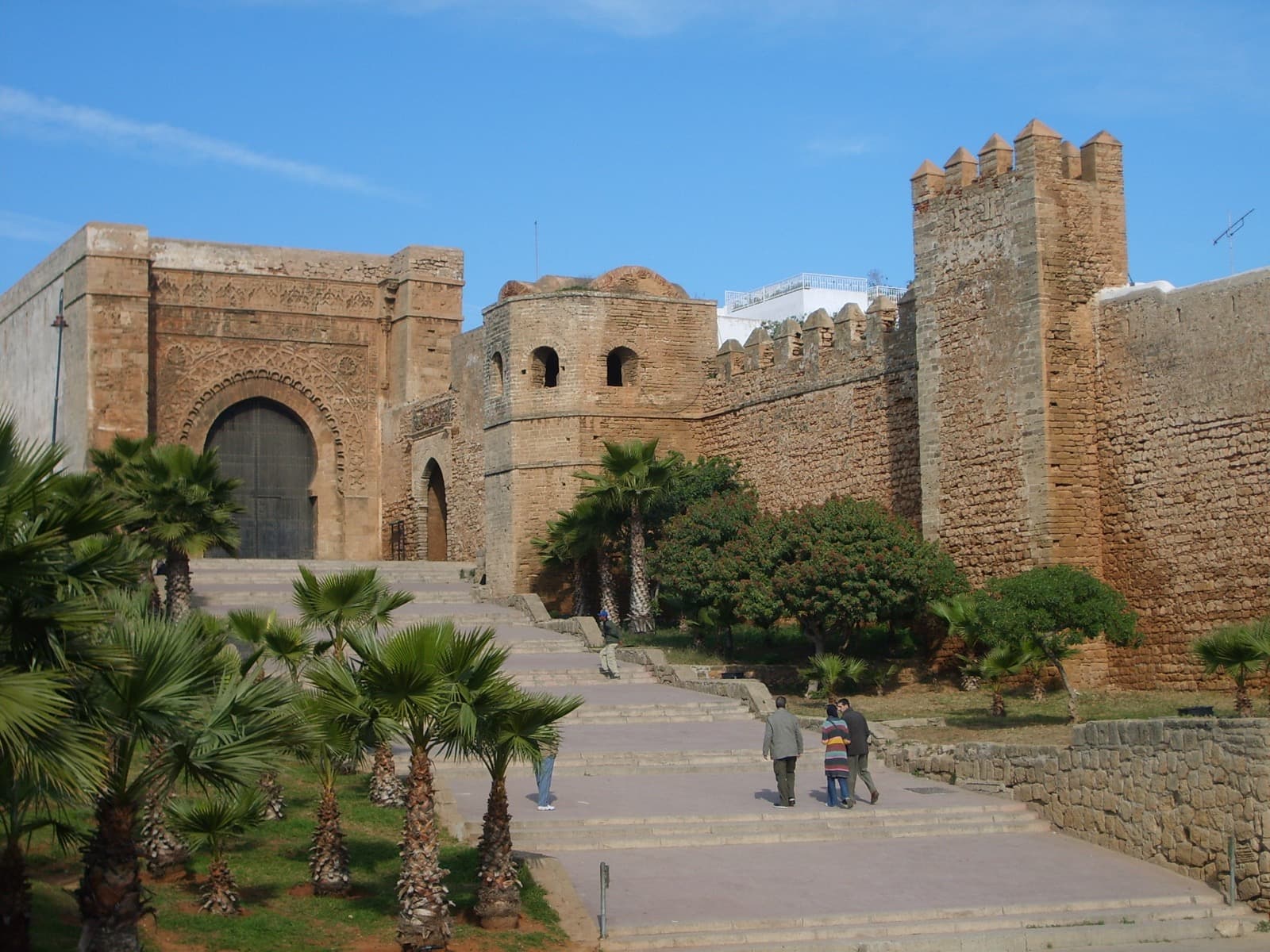
Begin at Bab Oudaia, the monumental gate of the Kasbah of the Udayas, a walled fortress-village on the cliff where the Bou Regreg river meets the Atlantic. The gate was raised under the Almohad caliph Yacoub el-Mansour in the final years of the twelfth century, and the fort itself sits on the site of a tenth-century ribat, the fortified frontier monastery that gave both the country's word and the city's name their root. Entry to the kasbah and its gate is free.
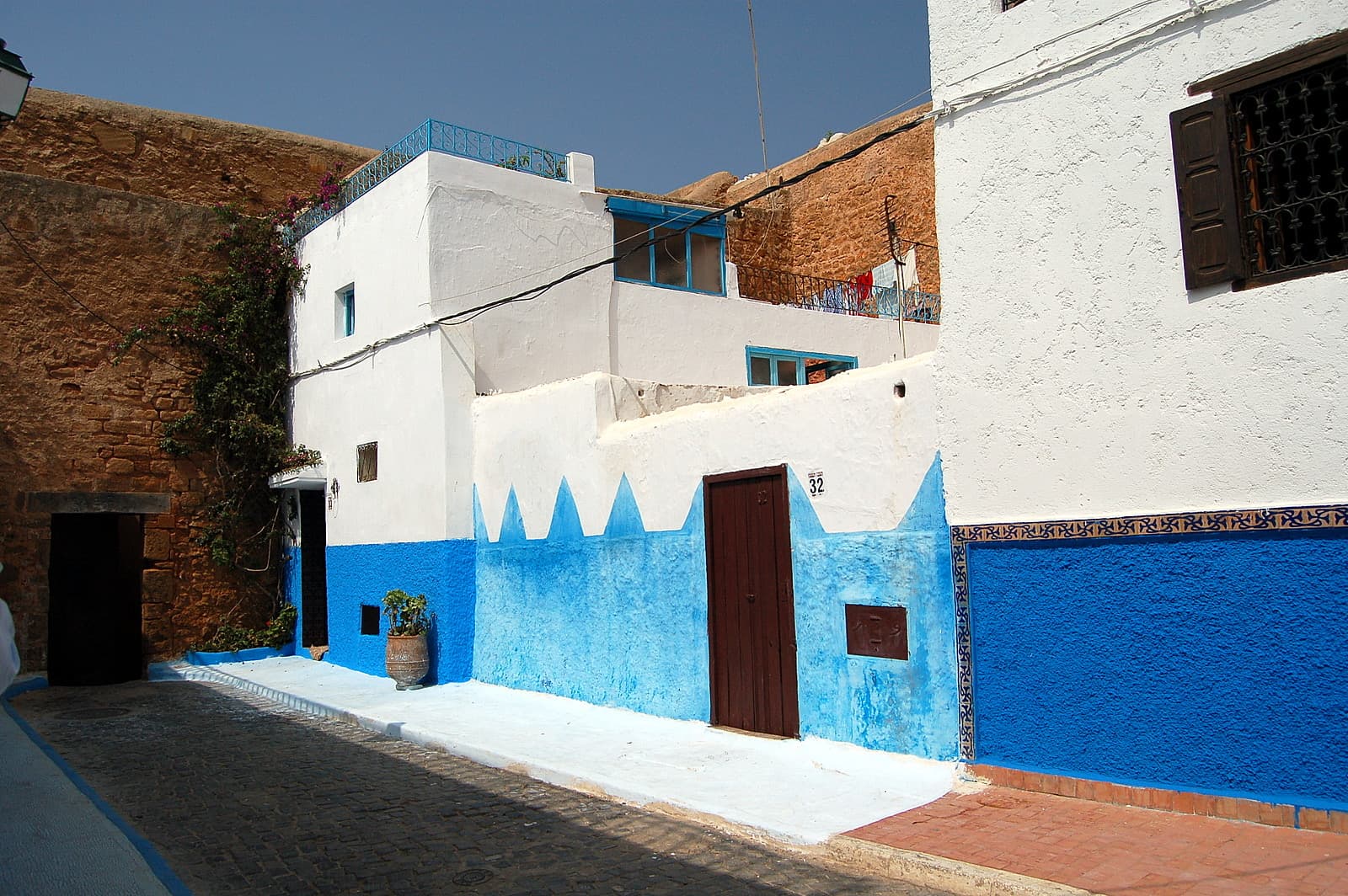
Inside, the lanes turn blue above and white below, and the effect in the sea light is cooling and quiet. This is a place to wander rather than tick off. The Old Mosque at the center, founded around eleven fifty, is the oldest mosque in Rabat, but it is active, so non-Muslims view it from the outside only. From there, walk to the Andalusian Gardens, a formal garden of citrus and bougainvillea laid out between nineteen fifteen and nineteen eighteen during the French Protectorate, planted inside a medieval fort.
Beside the gardens stands a seventeenth-century pavilion built by Sultan Moulay Ismail, now the National Jewellery Museum, which reopened in January twenty twenty-three. If you want to step inside, plan around its hours: it opens around 10:00 in the morning and closes in the late afternoon, and it is closed on Tuesdays, with an entry fee of roughly 60 dirham (the gardens themselves are free). Finish the kasbah at the seaward platform, a lookout over the river mouth that was the harbour of the Bou Regreg corsairs, the raiders known in English as the Sale Rovers, whose seventeenth-century republic was founded by Muslims expelled from Spain.
Midday: down into the medina (roughly 11:00 to 13:00)
Hear a stop from this walk
The Ramparts and the Almohad Wall: Walls for a Capital Never Filled
From the kasbah, descend into the Medina of Rabat, the old walled city. Unlike the tangled medinas elsewhere in Morocco, this one runs in a regular, almost grid-like plan, because it was laid out all at once in the early seventeenth century by Moriscos and Hornacheros, Muslims expelled from Spain after the sixteen hundred and nine decree. Thread your way to Rue des Consuls, the historic craft and carpet street that took its name because foreign consuls were once required to live there.
Treat Rue des Consuls as heritage rather than a shopping errand. The sales pressure can be real, but you carry your own map and set your own pace, and a firm, polite no keeps you moving freely. This is also a natural point to stop for lunch in the medina or near the waterfront before the afternoon's imperial sites. See the full stop-by-stop route on the Rabat walking tours hub.
Afternoon: Hassan Tower and the Mausoleum (roughly 14:00 to 15:30)
Cross toward the Hassan esplanade, the grandest of Rabat's imperial ruins. The Hassan Tower is a lone square minaret of red sandstone, the beginning of a mosque the same caliph, Yacoub el-Mansour, meant to be the largest in the western Muslim world. He died in eleven ninety-nine and it was never finished. The tower reached forty-four metres, less than half of some estimates for its planned height. South of it spread hundreds of column stumps, the floor of a prayer hall that was never raised, later shaken by the Lisbon earthquake of seventeen fifty-five. The esplanade is open and free.
At the southern end stands the Mausoleum of Mohammed the Fifth, a white marble shrine under a green pyramidal roof, holding the king who led Morocco to independence from the French Protectorate in nineteen fifty-six. Entry is free, and this is one of the very few religious monuments in Morocco that welcomes respectful non-Muslim visitors. Dress modestly, covering shoulders and knees, remove your shoes where asked, and keep your voice low near the royal honour guard. Plan around the midday Friday prayer, when the shrine closes for a few hours.
Late afternoon: the Chellah before it closes (roughly 16:00 to 18:00)
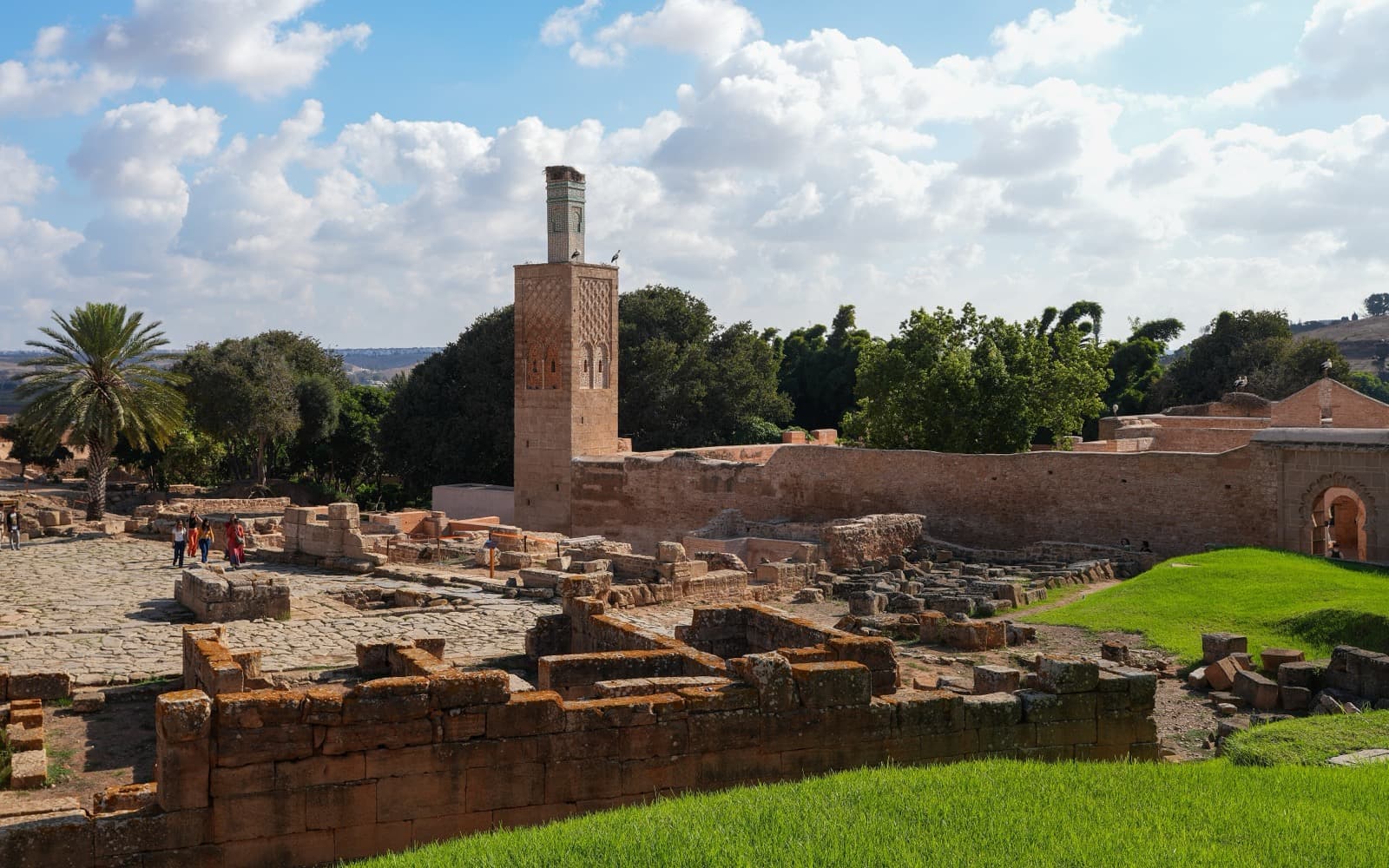
Save the Chellah for last, and mind the clock. Take a petit taxi, the blue taxis of Rabat, a few kilometres south-east from the Hassan site; agree the fare or ask for the meter before setting off. The Chellah is a walled garden of ruins built over the Roman town of Sala Colonia, where a Roman forum and main street survive among medieval Marinid tombs, wild figs, and a large colony of nesting storks. It is the payoff of the whole day.
The Chellah charges an entry ticket. As of 2026 the standard self-guided adult fee is about 70 dirham (around 120 dirham with an audio guide), cash at the gate. Hours are seasonal: 9:00 to 6:00 in winter (October through March) and 9:00 to 8:00 in summer (April through September), with shorter hours during Ramadan. Arriving by mid to late afternoon gives you soft light on the ruins and the storks at their most active, without racing the closing time. The Hassan Tower and the Chellah are the two imperial anchors of the afternoon audio tour.
Practical notes
Rabat is Morocco's calmest major city and its historic core is easy and pleasant to walk by day, with active, well-lit streets. Petty theft can happen near busy medina gates and taxi ranks, so keep an eye on your belongings, as you would in any capital. Insistent faux-guides work the medina gates and site entrances; a firm, polite no and your own map keep you from being steered toward a paid escort or a shop. The Rabat-Sale tramway Line 1 links the medina, the Hassan Tower area, and the main train station if you prefer not to walk a stretch. Carry water and sun protection: the Hassan esplanade and the Chellah gardens offer very little shade.
Sources
Frequently asked questions
- Can you see Rabat in one day?
- Yes. Rabat's historic core is compact and calm, and you can walk the Kasbah of the Udayas, the medina, the Hassan Tower, and the Mausoleum of Mohammed the Fifth on foot, then take a short taxi to the Chellah. A full day from about 9:00 in the morning to dusk covers the main sites without rushing.
- How much does it cost to enter the Chellah in Rabat?
- As of 2026 the standard self-guided adult ticket is about 70 Moroccan dirham, or around 120 dirham if you add an audio guide. Moroccan citizens and foreign residents receive a discount. Bring cash, as the ticket is bought at the gate.
- Is the Kasbah of the Udayas free to visit?
- Yes. Entry to the Kasbah of the Udayas, its monumental gate, the blue-and-white lanes, and the Andalusian Gardens is free. The only paid stop inside is the National Jewellery Museum, which charges roughly 60 dirham and is closed on Tuesdays.
- Can non-Muslims enter the Mausoleum of Mohammed V?
- Yes. The Mausoleum of Mohammed the Fifth is one of the few religious monuments in Morocco that welcomes respectful non-Muslim visitors, and entry is free. Dress modestly covering shoulders and knees, remove your shoes where asked, and keep quiet near the royal honour guard. It closes for a few hours around the midday Friday prayer.
- Is Rabat safe to walk around?
- Rabat is Morocco's calmest major city and its historic core is easy to walk by day, with active, well-lit streets. Petty theft can happen near busy medina gates and taxi ranks, so watch your belongings. Insistent faux-guides work the site entrances, and a firm, polite no keeps you moving freely.
- How do you get from the Hassan Tower to the Chellah?
- Take a petit taxi, the blue taxis of Rabat, for the few-kilometre hop south-east to the Chellah. Agree the fare or ask for the meter before setting off. The Rabat-Sale tramway Line 1 also links the medina, the Hassan Tower area, and the main train station for other parts of the day.
Ready to experience it?
Kasbah of the Udayas: Rabat's Old Town Above the Sea
110 min · 2.5 km · easy
More from Rabat
Explore more at your own pace.
Rabat Travel Guide: How Many Days, Getting Around, Safety, and Cost
Rabat: The Ocean-Facing Capital That Was Never Filled
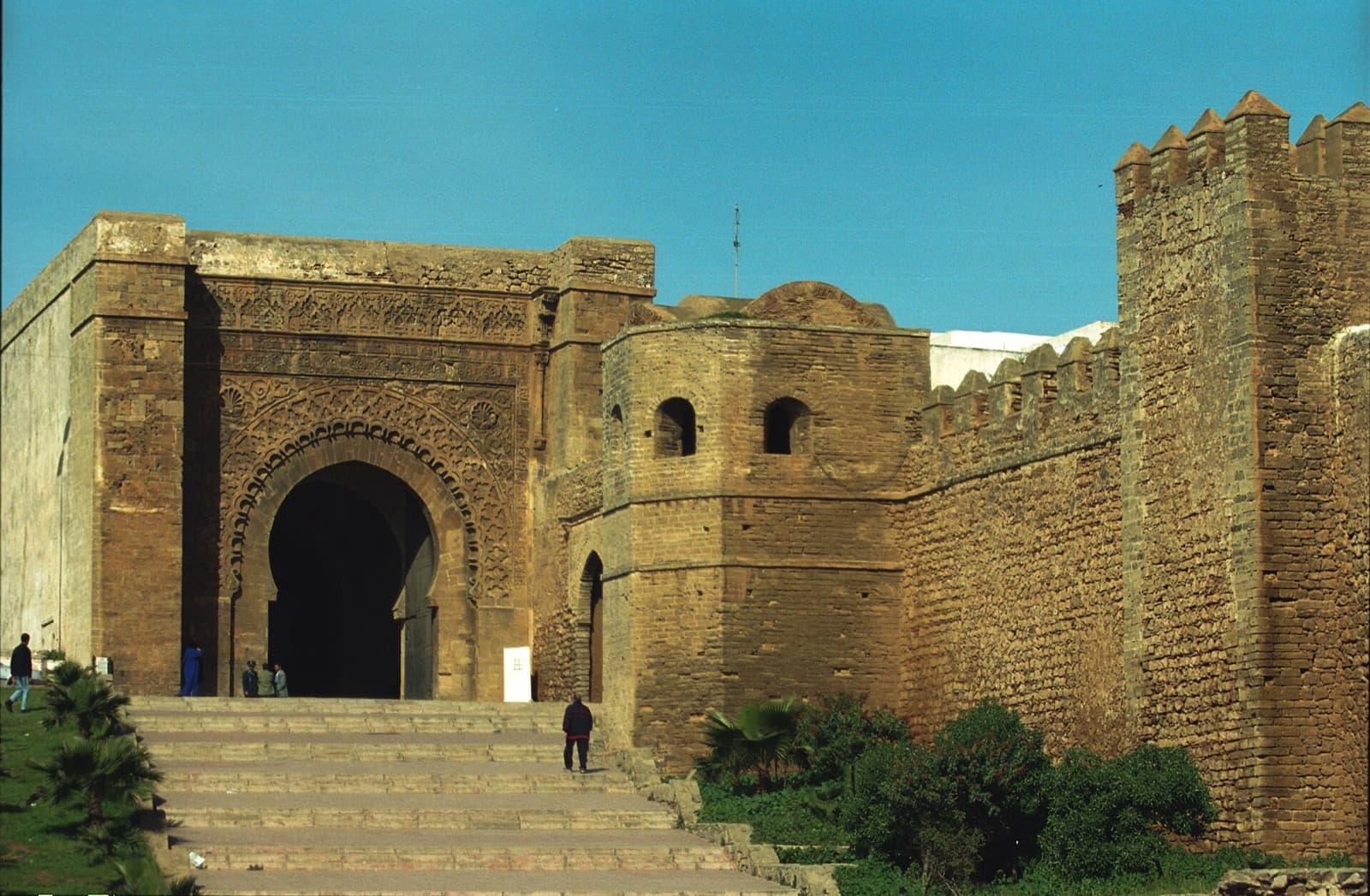
Bab Oudaia: The Almohad Gate That Explains All of Rabat
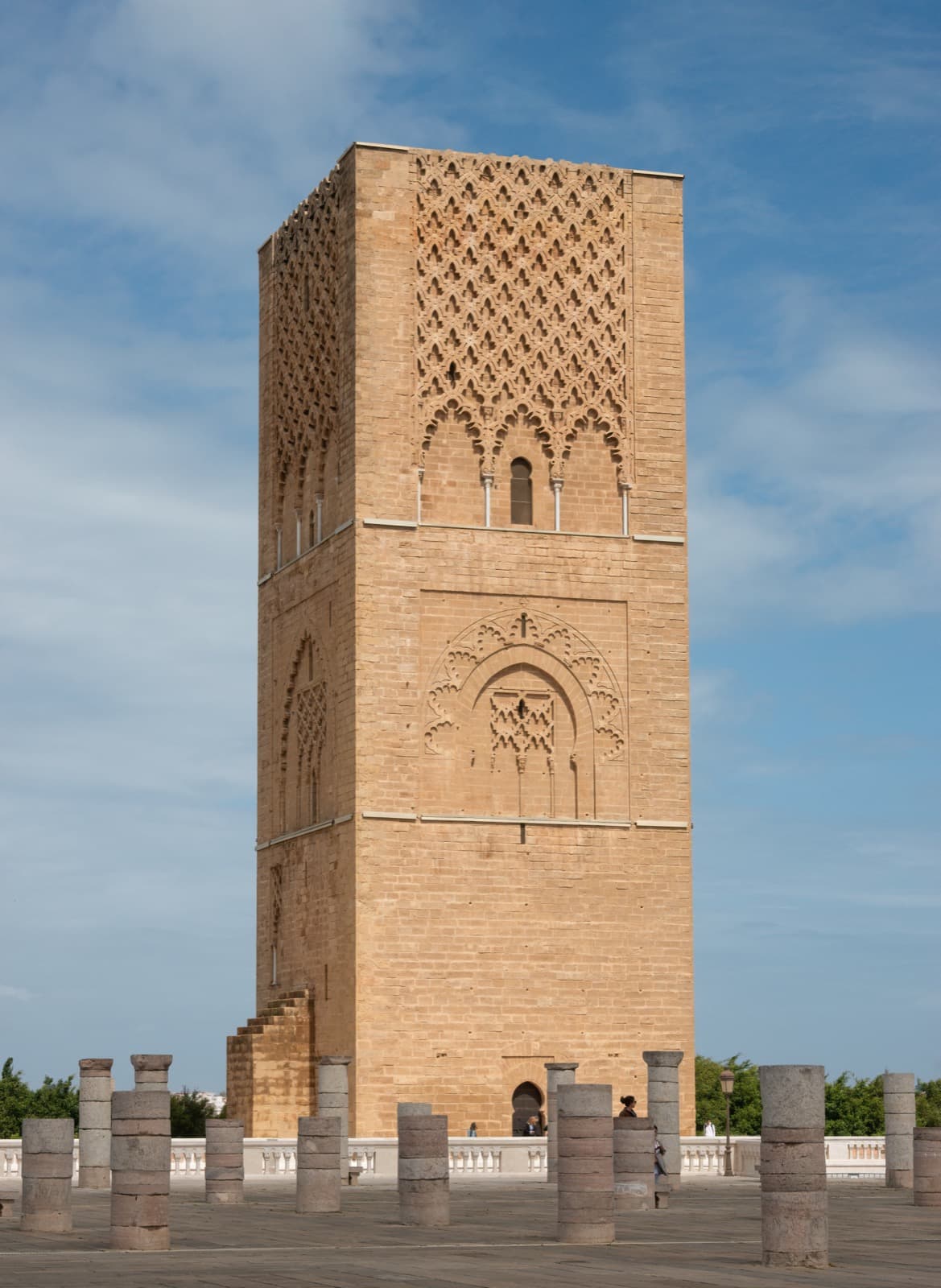
Hassan Tower: Reading Imperial Rabat Through Its Grandest Ruin
The Andalusian Gardens and Jewellery Museum: A Colonial Garden Inside a Medieval Fort