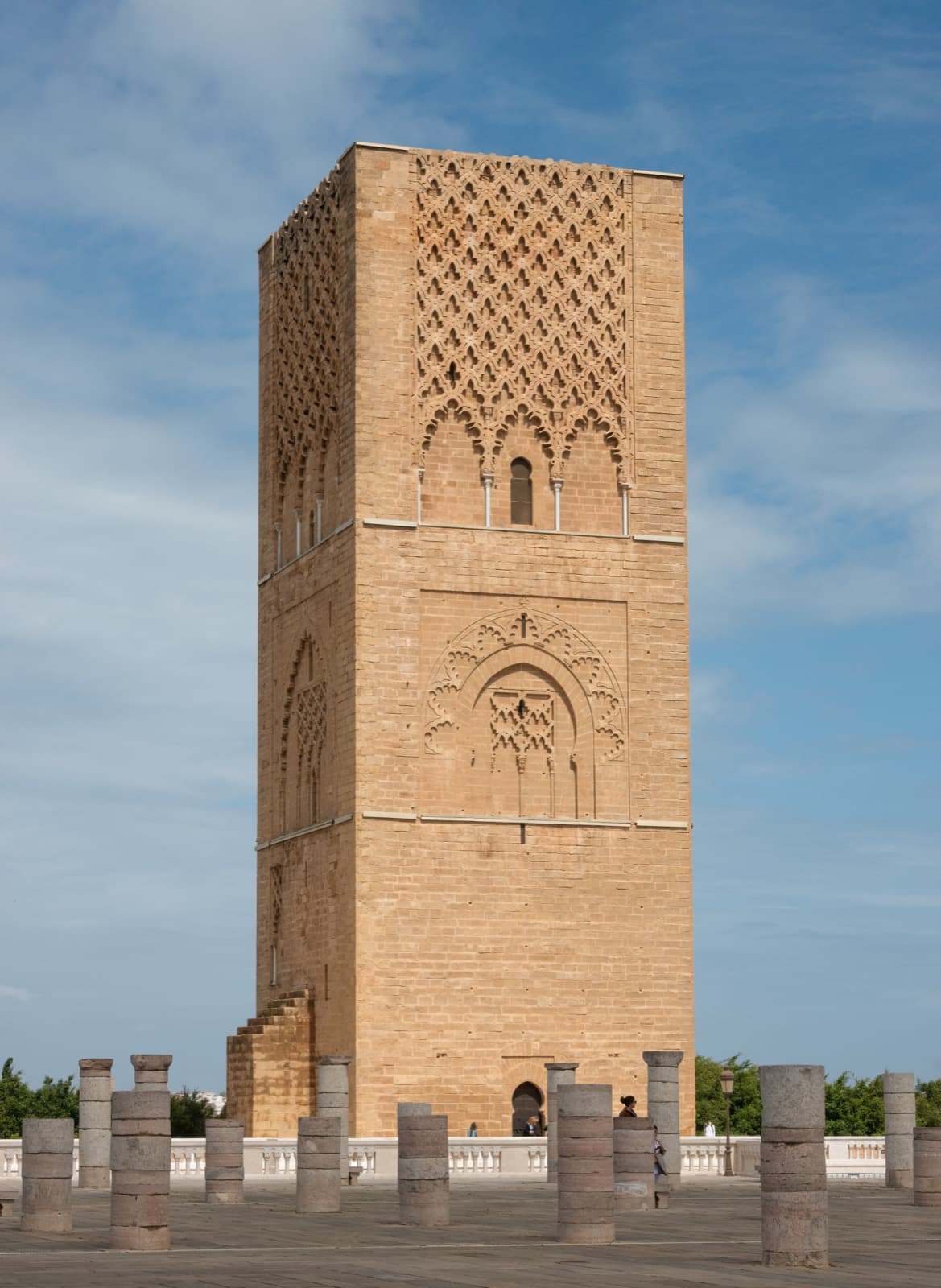
A self-paced walk through the grandest unfinished dream of imperial Rabat, the white shrine of the kings who won Morocco back, and a Roman town turned into a Muslim garden of tombs.
Start · The Hassan Tower: The Minaret That Was Never Finished
DirectionsStops
- 1
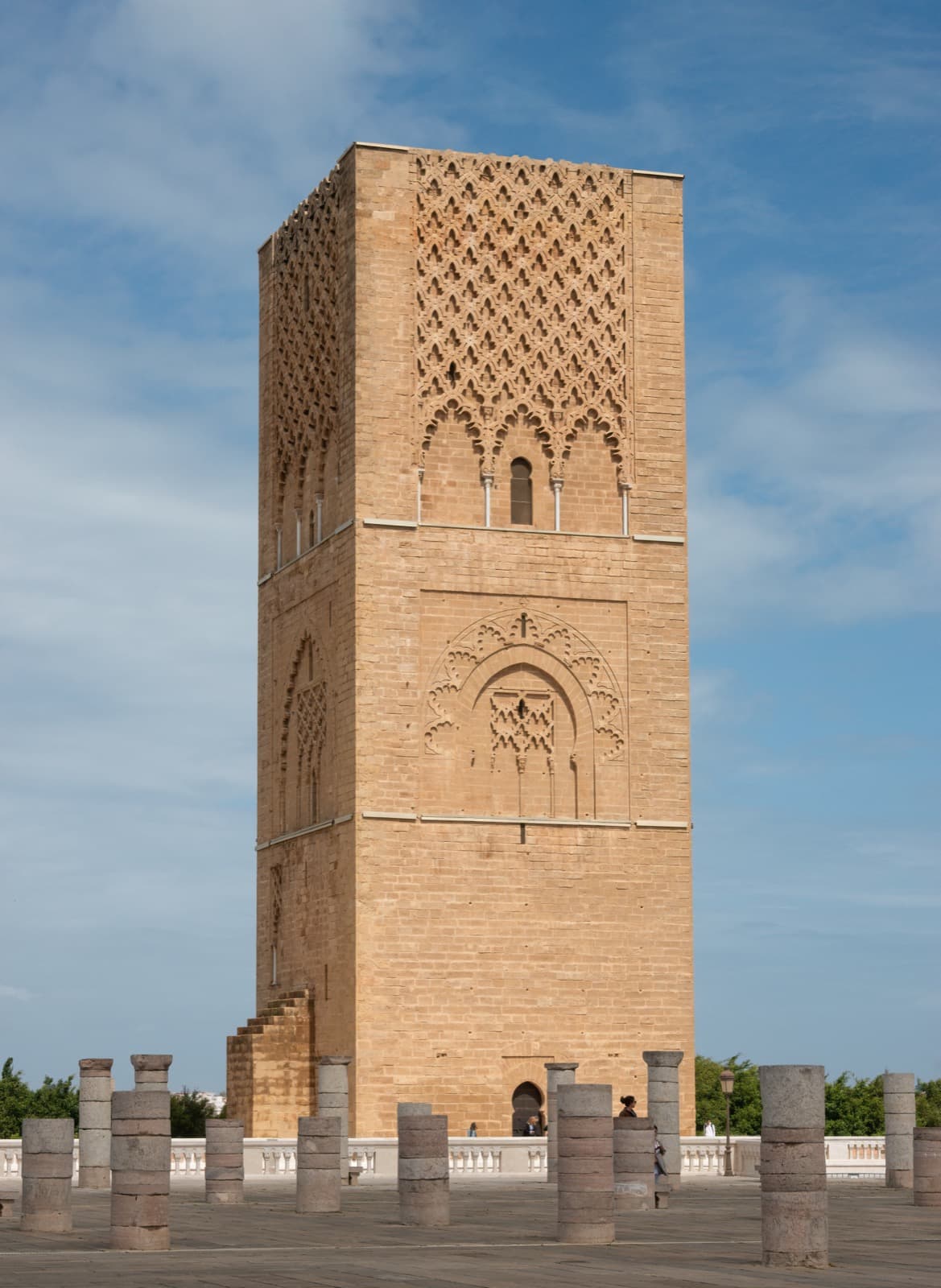
The Hassan Tower: The Minaret That Was Never Finished
A lone square minaret of weathered red stone, all that rose of an Almohad caliph's dream of the largest mosque in the western Muslim world.
- 2
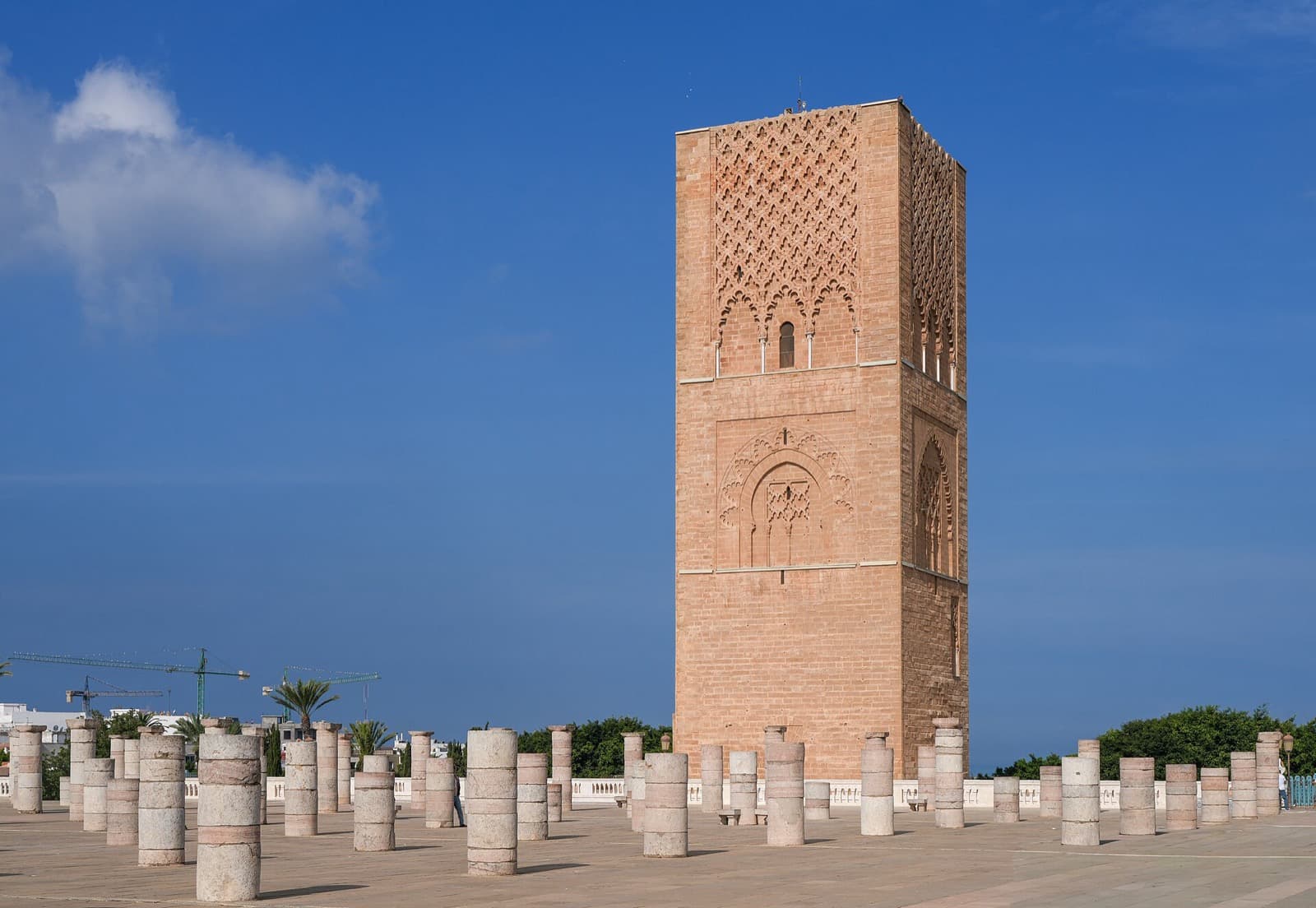
The Columns of the Unfinished Mosque: A Dynasty's Missing Floor
A vast esplanade of some three hundred and forty-eight column stumps, the floor plan of a prayer hall that was never built and later shaken by an earthquake.
- 3
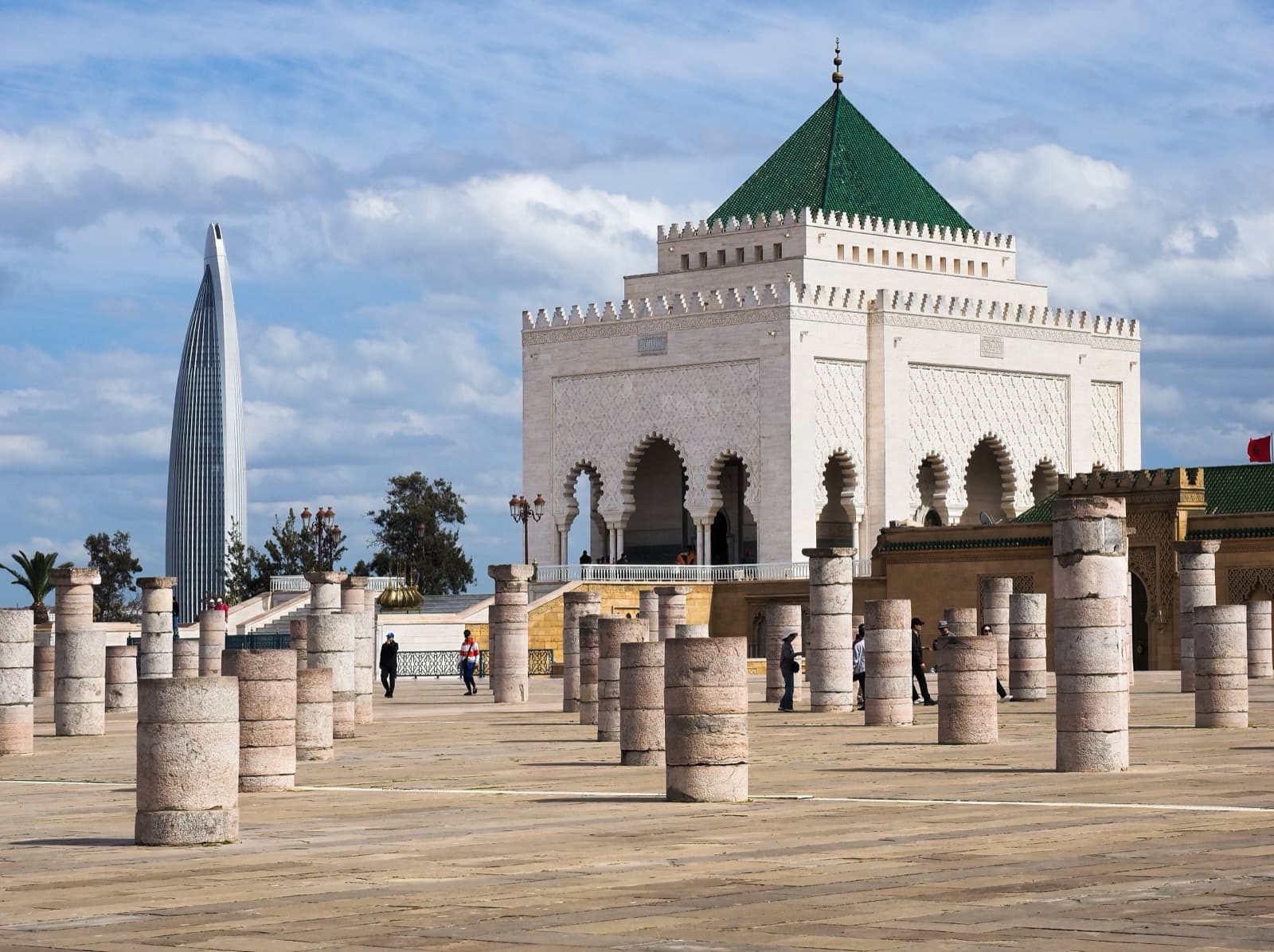
The Mausoleum of Mohammed the Fifth: The Shrine of the Kings of Independence
A white marble mausoleum with a green pyramidal roof, holding the kings who led Morocco to independence, and a rare Moroccan shrine that welcomes respectful non-Muslim visitors.
- 4
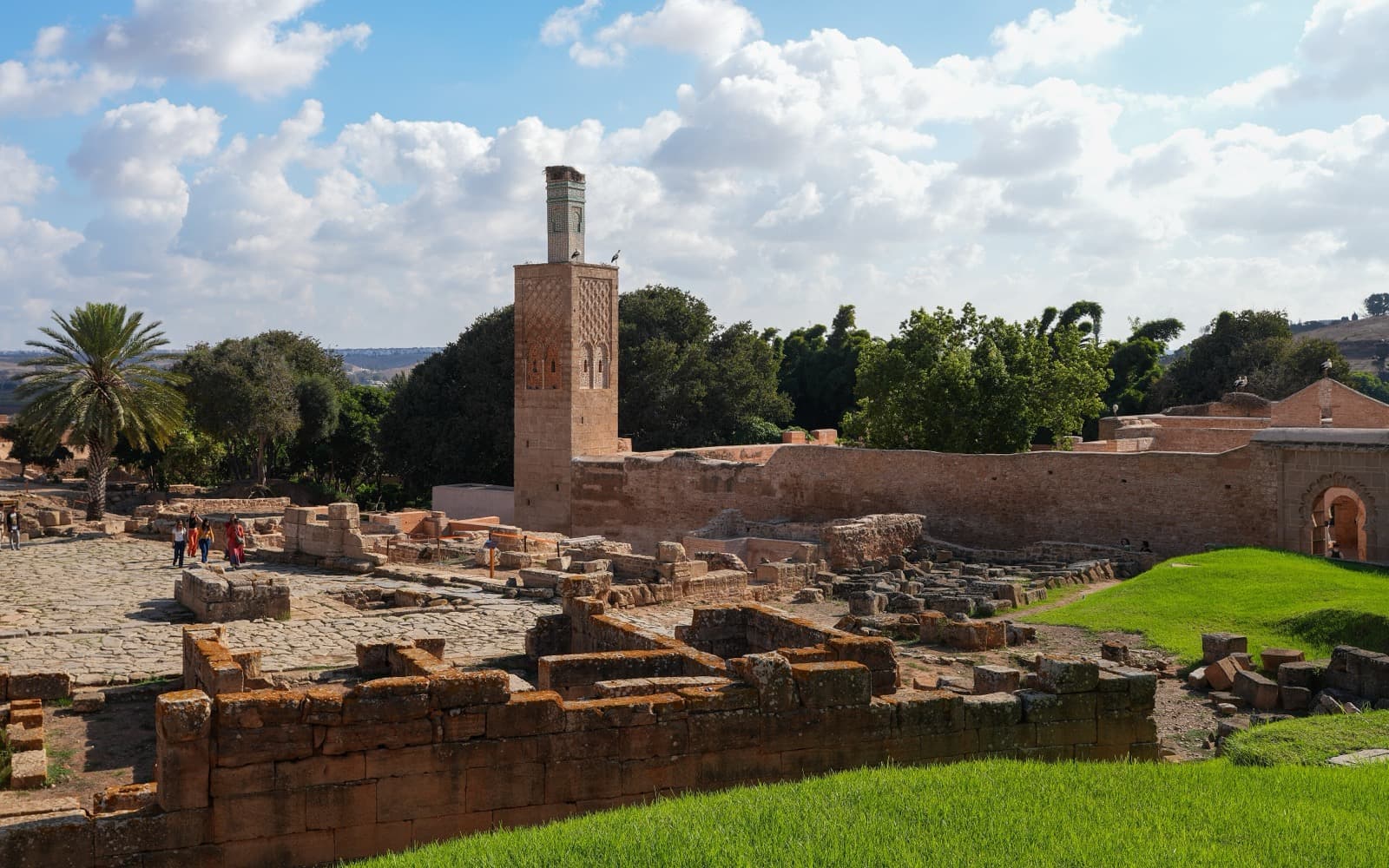
The Chellah: A Roman Town Turned Into a Garden of Tombs
A walled, gardened necropolis built over the Roman city of Sala Colonia, where a forum and a main street survive among medieval Muslim tombs, storks, and figs.
- 5
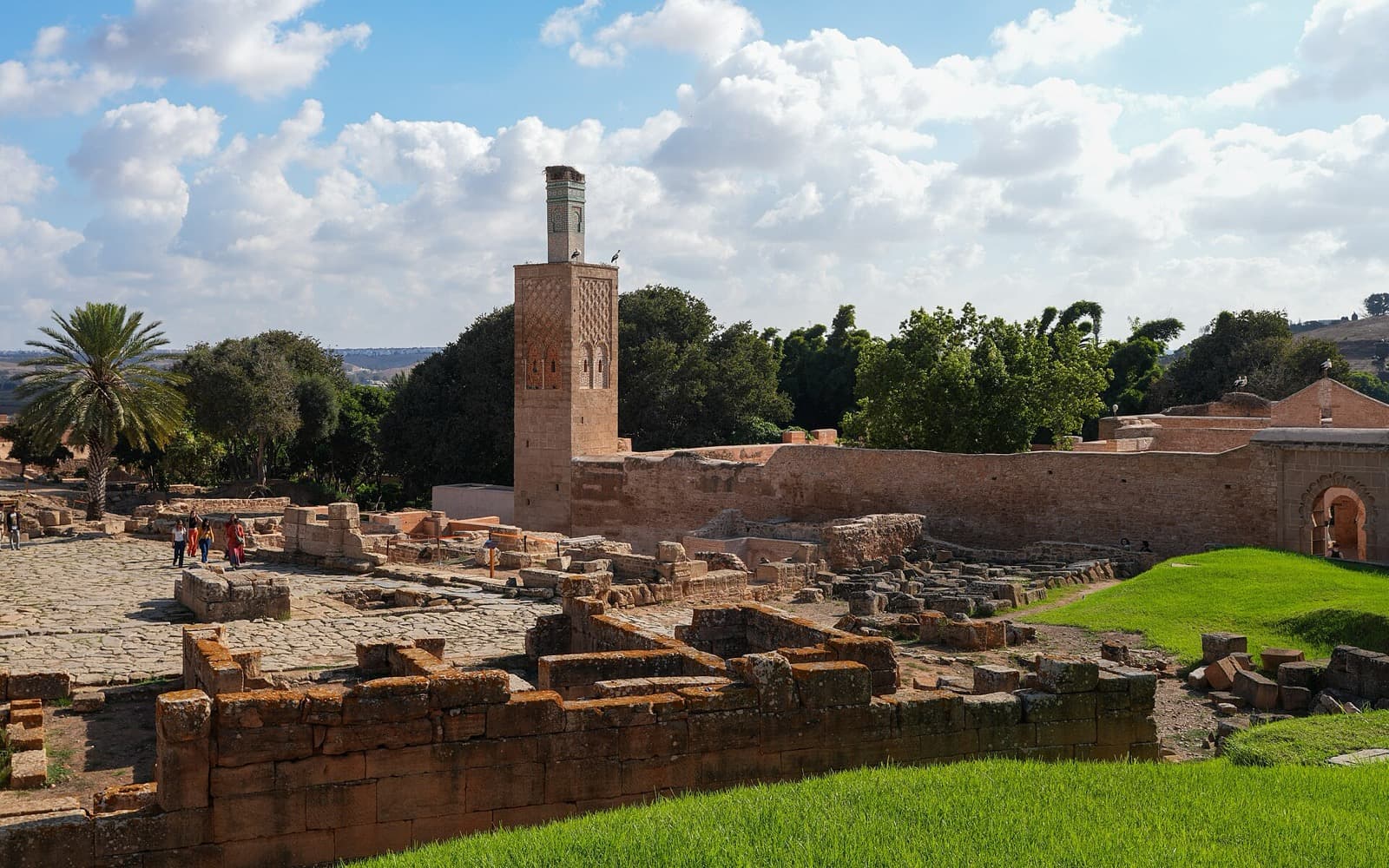
The Marinid Necropolis: The Sultan's Tomb Among the Storks
Deep in the Chellah, a ruined Marinid mosque and minaret shelter the richly carved tomb of a sultan, beside a spring-fed pool famous in local legend.
- 6
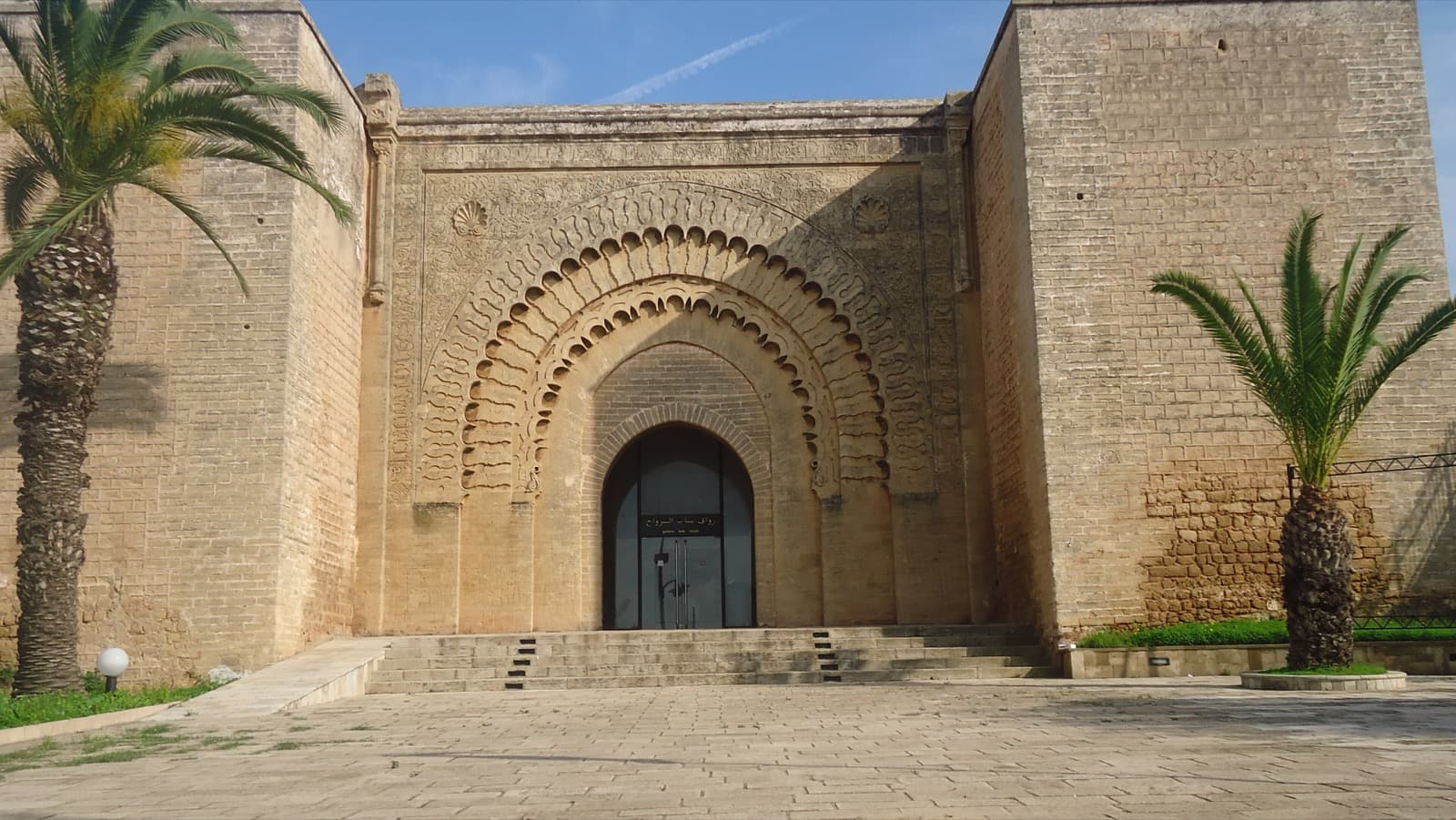
Bab er-Rouah: The Almohad Gate That Outlasted the Almohad Dream
A monumental Almohad gate of carved stone with a bent, four-turn defensive passage, finished centuries before the great mosque failed and standing complete to this day.
Details
Best Time to Visit
Early morning or the cooler late afternoon, when the Hassan esplanade and the open ruins of the Chellah are gentler under the sun and the storks are most active. Spring and autumn are the most comfortable seasons; midsummer brings strong heat and little shade. Note that Friday and daily prayer times shift the rhythm around the working mosque beside the mausoleum.
Pro Tips
- •Carry water and sun protection: the Hassan esplanade and the Chellah gardens are open and offer very little shade.
- •Keep your own quiet map handy at the site entrances, so a firm, polite no to any insistent faux-guide keeps your route your own.
- •For the mausoleum, dress modestly, remove your shoes where asked, and keep quiet near the honour guard, since this is a living shrine you are lucky to enter.
- •Budget a small amount of cash in Moroccan dirham for the Chellah entry ticket and any gate-gallery admission, as cards are not always taken.
- •Take the short taxi between the Hassan site and the Chellah rather than walking the whole way, and agree the fare or ask for the meter before setting off.
- •Move at your own pace among the column stumps and the necropolis: there is no group and no schedule, so linger where a stop rewards it and skip what does not.
Safety & Precautions
- •Non-Muslims may not enter active mosques in Morocco, including the small working mosque by the mausoleum and Rabat's living shrines, so admire those from the outside and treat them, and the royal honour guard at the mausoleum, with respect.
- •Around the site gates and the medina you may meet insistent faux-guides, touts, and shopkeepers, so a firm, polite no and your own map keep you moving freely and unsteered.
- •Footing at the Chellah and among the Hassan columns is uneven, with fallen stone, steps, and slopes, so watch your step and take the ruins at an unhurried pace.
- •Sun exposure is real at the esplanade and the open Chellah gardens with little shade, so carry water, and remember Friday and prayer times change the rhythm around the mosque quarters.
Travel advisory: Exercise Increased Caution (Level 2).
Gallery
Related Reading
Go deeper on what you'll see, hear, and walk through.

Overview
Best Self-Guided Walking Tours in Rabat (2026)
3 min
Overview
One Day in Rabat: A Walkable Itinerary From Kasbah to Chellah
6 min
Overview
Rabat Travel Guide: How Many Days, Getting Around, Safety, and Cost
7 min
Thematic
Rabat: The Ocean-Facing Capital That Was Never Filled
7 min
Companion
Hassan Tower: Reading Imperial Rabat Through Its Grandest Ruin
7 min
Deep dive
The Chellah in Rabat: A Roman Town That Became a Garden of Tombs
6 min
Read
What to Eat in Rabat: Seafood, Pastilla, and Medina Street Food
6 min
Read the walk
The full story of Hassan Tower and the Chellah: Imperial Rabat, in words. Prefer to listen? Play it narrated, from home or on location.
Introduction
Rabat, the capital of Morocco, carries the ruins of two enormous ambitions and a modern shrine that reconciles them. In the late twelfth century an Almohad caliph began the largest mosque in the western Muslim world here, then died with it unfinished, leaving a lone great square minaret above the Bou Regreg river and a floor of broken columns. Centuries earlier, on a green hillside just outside the walls, Romans raised the port-town of Sala, and the Marinids later turned its ruins into a royal necropolis, so that one walled garden holds a Roman forum and a medieval Muslim graveyard among storks and figs. Between the two stands the modern white mausoleum of the kings who led the country to independence. This route has six stops and runs roughly two hours, though it is yours to stretch or shorten. The walking near the Hassan esplanade covers under a kilometre, with a short taxi hop of a few kilometres to the Chellah and back toward the gate. There is no group and no schedule, so linger among the columns or move straight on as you please, your own quiet map in hand and no one steering you. Most of what you will see is open ruin or a shrine that welcomes respectful visitors, so you can wander freely, though a few working mosques here can only be admired from outside. Carry water, since the esplanade and the Chellah offer little shade. When you arrive at the base of the Hassan Tower, begin with stop one.
1. The Hassan Tower: The Minaret That Was Never Finished
Above the Bou Regreg river stands a square tower of sandstone weathered to a deep red-ochre, and it is the minaret of a mosque that was never finished. The Almohad caliph Yacoub el-Mansour commissioned it, beginning work around eleven ninety-one, a date also given as eleven ninety-five or six and tied to his victory at the Battle of Alarcos. He meant it to crown the largest mosque in the western Muslim world and the heart of a grand new capital. Then, in eleven ninety-nine, he died, and his successors lacked the resources or the will to finish. The mosque and the capital were left incomplete. The tower reached forty-four metres. Its full planned height is an estimate rather than a settled fact, put at least at sixty-four metres and possibly around eighty to eighty-six metres once a lantern-tower and finial were added. It was modeled on the Koutoubia minaret in Marrakech and would have been slightly taller than the Giralda in Seville, the three of them sibling Almohad towers spread across two continents. UNESCO records this whole ensemble as a World Heritage site, Rabat as a shared heritage. The esplanade around the tower is wide and open, free to enter, and the interior cannot be climbed, so admire the great red shaft from below at your own pace. There is no group here and no one waiting on you. This is the Almohad dream at its ceiling: a monument to ambition, measured forever by how much of it never rose.
2. The Columns of the Unfinished Mosque: A Dynasty's Missing Floor
South of the tower spreads a wide platform ranked with columns and re-erected column stumps, and this is the floor of a prayer hall that was never raised. Three hundred and forty-eight columns and stumps stand across the esplanade, marking the plan of an enormous hypostyle hall, the kind of mosque where a forest of pillars carries the roof. Had it been finished, this would have been the largest mosque in the western Muslim world. It was not. After the caliph's death in eleven ninety-nine the work simply stopped, and what had been built stood half-made for centuries. Then, in seventeen fifty-five, the great Lisbon earthquake reached across the Atlantic and shook Rabat, toppling much of what remained and leaving these ranks of stumps. Here is the theme of this whole walk in a single image: a floor of broken pillars where a dynasty's grandest mosque should stand, grandeur you measure by its ruins rather than its roof. This is an open archaeological esplanade, not a mosque interior, so there is nothing to enter and no threshold to respect. Wander the ranks in any order you like, count a row or skip it, sit a while or move on toward the far end. Your pace, your route, no one steering you. The missing floor of the missing mosque is one of the quietest and most eloquent ruins in Morocco.
3. The Mausoleum of Mohammed the Fifth: The Shrine of the Kings of Independence
At the far, southern end of the esplanade rises a mausoleum of white marble beneath a green pyramidal roof, and it holds the kings who won the country back. Construction began in nineteen sixty-one and was completed in nineteen seventy-one, when the body of King Mohammed the…
Full narration for this stop unlocks with the tour.
4. The Chellah: A Roman Town Turned Into a Garden of Tombs
A short taxi hop south-east of the Hassan site brings you to a walled garden of ruins called the Chellah, and it is the payoff of this whole walk. Here a Roman town became a Muslim garden of tombs. The site sits on Sala Colonia, a Roman city in the province of Mauretania…
Full narration for this stop unlocks with the tour.
5. The Marinid Necropolis: The Sultan's Tomb Among the Storks
Deep inside the Chellah walls stand the ruins of the Marinid royal mosque and its square minaret, about fifteen metres tall and often crowned by a stork's nest. This necropolis was chiefly built under Abu al-Hasan Ali ibn Othman, who reigned from thirteen thirty-one to thirteen…
Full narration for this stop unlocks with the tour.
6. Bab er-Rouah: The Almohad Gate That Outlasted the Almohad Dream
The walk closes at Bab er-Rouah, the Gate of the Winds, where bab simply means gate. It is one of the monumental Almohad gates of Rabat, commissioned by the same caliph Yacoub el-Mansour who began the great mosque, and completed by about eleven ninety-seven. It is built of…
Full narration for this stop unlocks with the tour.