The Royal Route: The Coronation Way
150 min · 4.8 km · moderate
Prague came through the twentieth century almost intact, so a thousand years of building still stand shoulder to shoulder above a bend in the Vltava. You can walk the coronation route the Bohemian kings climbed from a Gothic gate to a crowning cathedral, read the walled Jewish quarter that buried its dead in layers and gave the world the legend of the Golem, and trace the single decade when a Gothic city taught itself two brand new ways to shape a wall. Three tours hold this through-line, and together they explain why so few European capitals let you read this many centuries in one afternoon: Prague was rarely rebuilt over, so its layers survive side by side rather than one erasing the next.
The coronation route: a city built to hold a crown
Start with the line the kings walked. For four hundred years the rulers of Bohemia followed a single processional route to their crowning, and The Coronation Way follows it uphill from the Powder Tower to Saint Vitus Cathedral, roughly five kilometres from gate to crown.
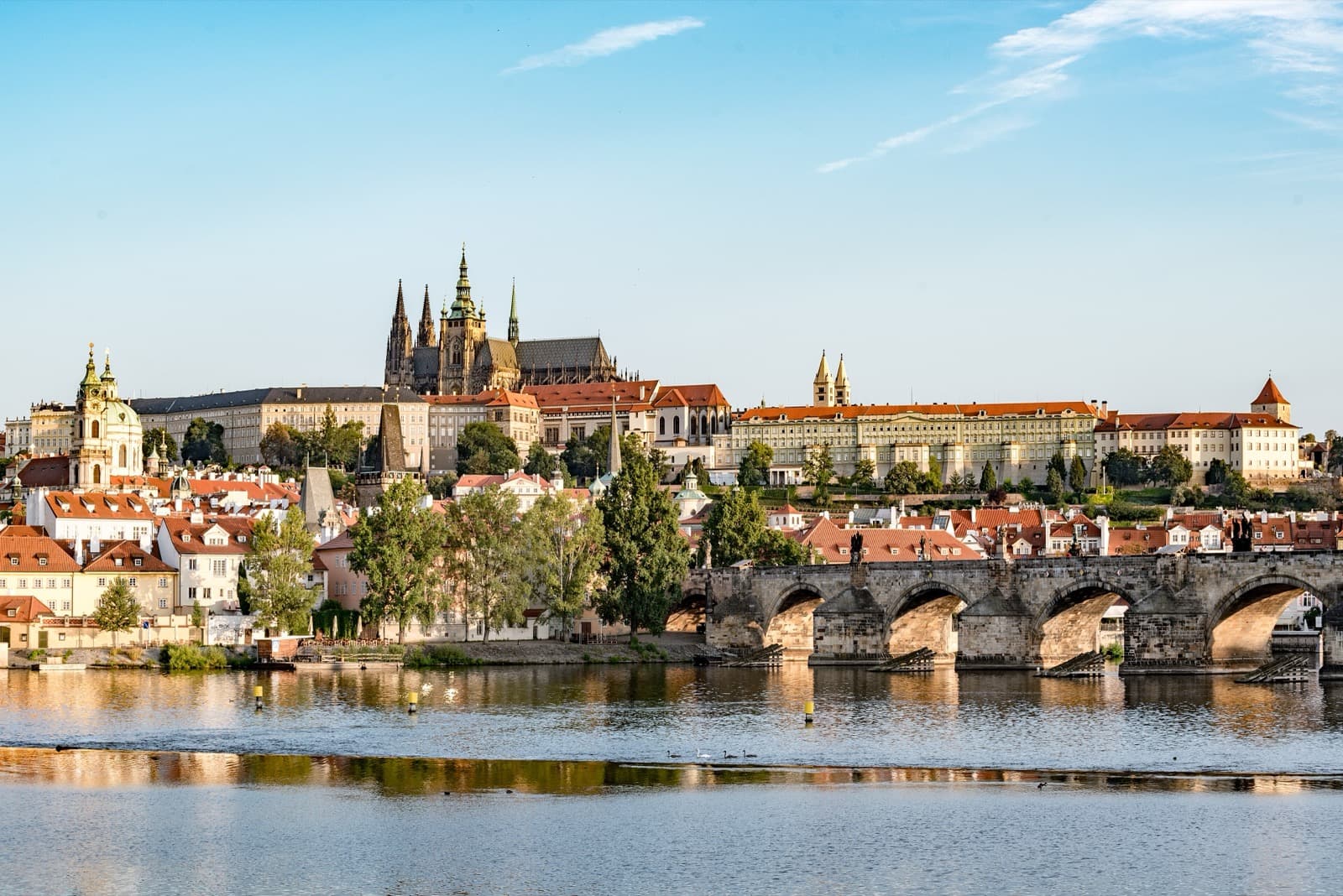
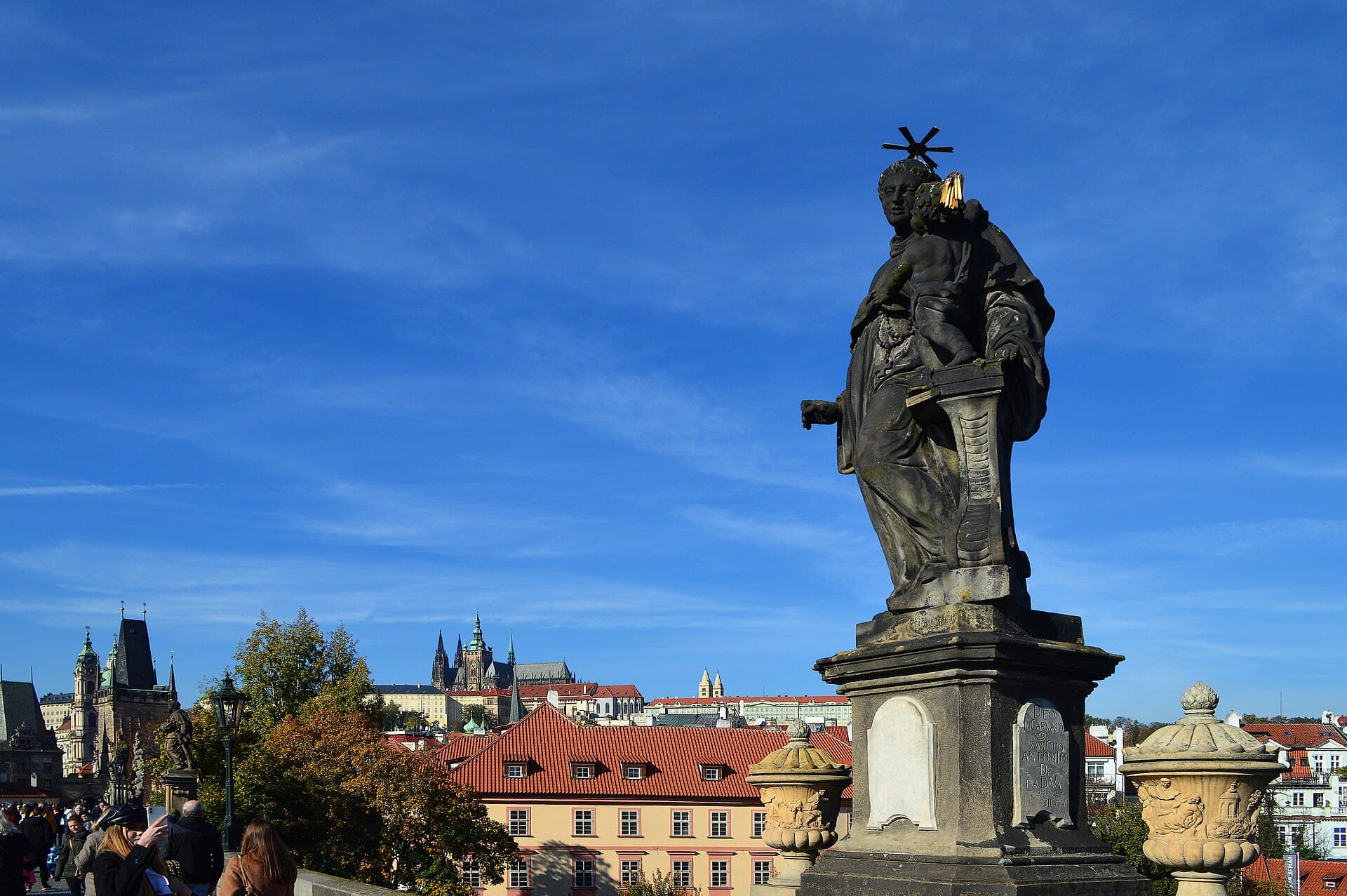
The route reads as a compressed lesson in how the city assembled itself. Charles the Fourth is the organizing hand behind much of it: he commissioned Charles Bridge, whose construction began in the year thirteen fifty-seven under the master builder Peter Parler, and it was the only bridge across the Vltava in Prague until eighteen forty-one. He also launched Saint Vitus Cathedral, begun on the twenty-first of November, thirteen forty-four, first under Matthias of Arras and then under that same Peter Parler. The cathedral is itself a portrait of Prague's slow, uninterrupted layering: it was not completed and consecrated until nineteen twenty-nine, nearly six hundred years after the foundation was laid.
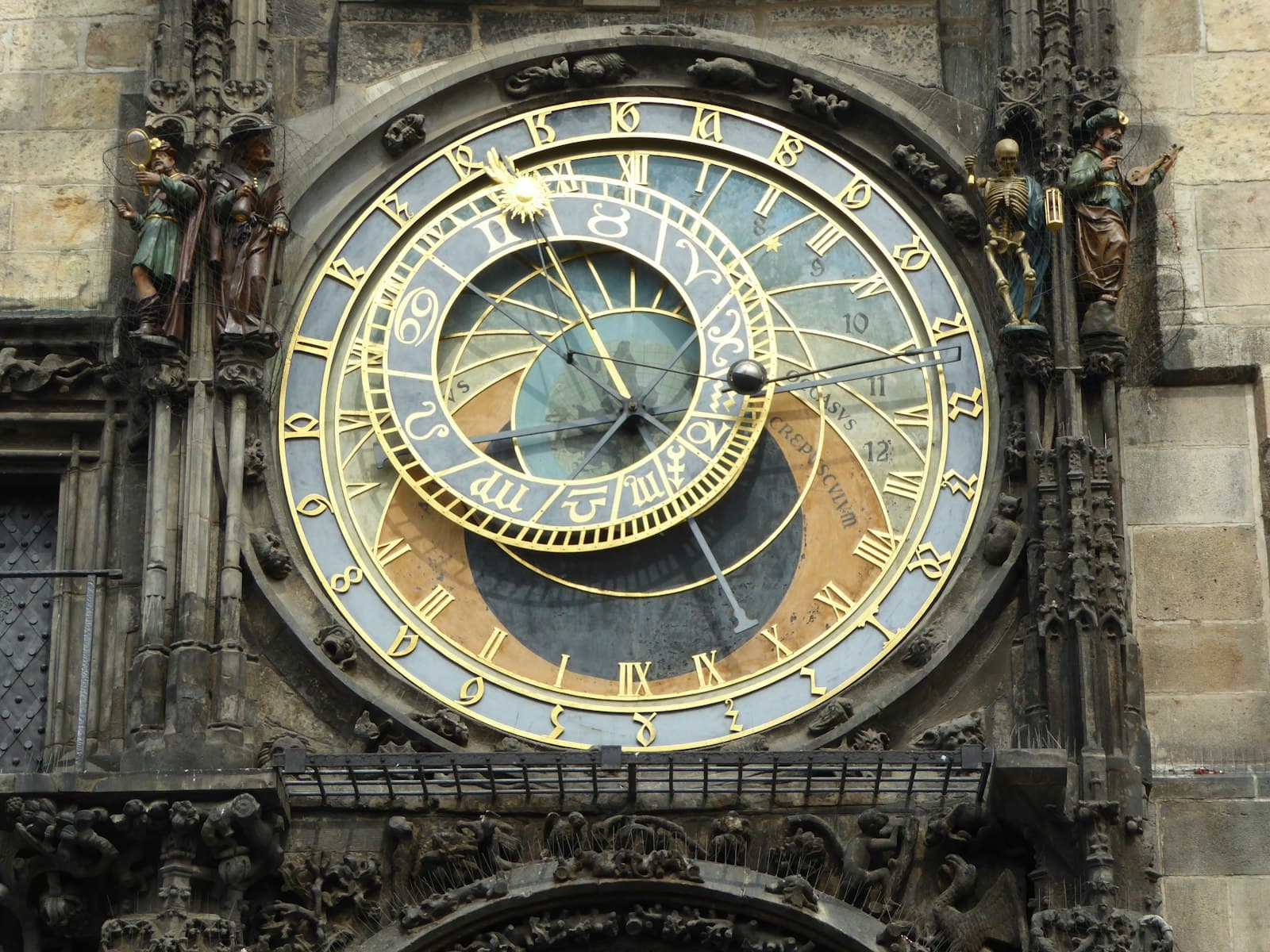
Along the way the walk names legends as legends and facts as facts. The Astronomical Clock on the Old Town Hall dates to the year fourteen ten, the oldest astronomical clock still running anywhere in the world, and the tale that its maker was blinded to stop him building a rival was traced by the scholar Zdenek Horsky to a simple historical mix-up. The Church of Our Lady before Tyn holds the tomb of the astronomer Tycho Brahe, dated sixteen oh one. Old Town Square carries the Jan Hus Memorial, unveiled on the sixth of July, nineteen fifteen, exactly five hundred years after Hus was burned at Constance in fourteen fifteen. The route ends inside Prague Castle, cited by Guinness World Records as the largest ancient castle in the world, at the cathedral that keeps the crown of Saint Wenceslas.
Josefov: the town within the city that was twice nearly erased
Hear a stop from this walk
St. Vitus Cathedral: The Crowning Church
The second layer is the one that almost did not survive. Between the Old Town Square and the river, a walled Jewish quarter stood for roughly eight centuries, forbidden to grow. The Town Within the City walks Josefov as a sober cluster, and its through-line is confinement met with endurance.
Because the quarter could not spread outward, it buried its dead upward. The Old Jewish Cemetery was in use from about fourteen thirty-nine until seventeen eighty-seven, and since the community was refused permission to expand it, graves were stacked in layers, in places as many as twelve deep, with roughly twelve thousand stones crowding the surface above a far greater number beneath. Two names written across the whole quarter rest here: Rabbi Judah Loew, the Maharal, who died in sixteen oh nine, and the mayor and financier Mordechai Maisel, who died in sixteen oh one.
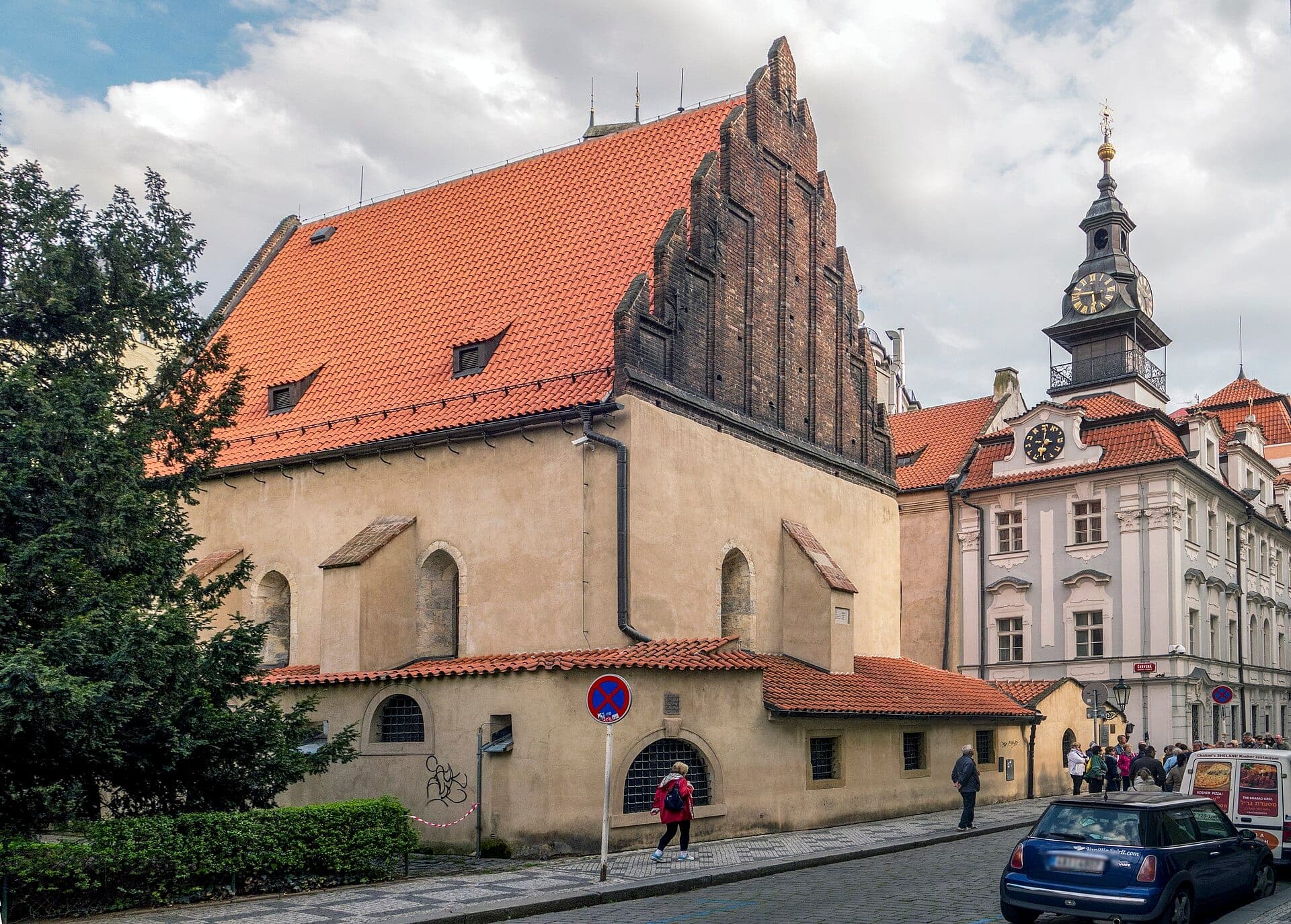
At the medieval core stands the Old-New Synagogue, completed around the year twelve seventy and described as Europe's oldest active synagogue, its steep attic the legendary home of the Golem, a folk tale attached to the real Maharal only in later centuries. The quarter's own council kept faith with its own script: the Jewish Town Hall, built in fifteen eighty-six under Mordechai Maisel, carries a Hebrew-numeral clock whose hands run counter-clockwise because Hebrew is read from right to left.
Then come the two near-erasures. The Pinkas Synagogue, completed in fifteen thirty-five, now carries on its walls the handwritten names of seventy-seven thousand two hundred ninety-seven Jewish men, women, and children of Bohemia and Moravia murdered in the Shoah, grouped by home community, with about four and a half thousand surviving children's drawings from the Terezin ghetto upstairs. The buildings themselves survived by a grim irony: the occupiers meant to keep them as a so-called museum of an extinct race, and the Maisel Synagogue, completed in fifteen ninety-two, was used to store property seized from the murdered. The earlier erasure was physical: during Franz Kafka's own childhood, between roughly eighteen ninety-three and nineteen thirteen, a slum clearance swept away the crooked medieval lanes and left only the synagogues and the cemetery standing. Kafka, born on the third of July, eighteen eighty-three, grew up watching his quarter vanish, and Jaroslav Rona's monument to him, unveiled in December of two thousand three, marks the edge of that lost ground.
The modern grammar: a Gothic city learns two new alphabets
The third layer is the youngest, and it proves the same point from the other direction. Between roughly nineteen oh five and nineteen fifteen, a city famous for Gothic spires and Baroque swirl taught itself two brand new ways to shape a wall. The City's Modern Grammar reads that decade of surface invention as a single sentence.
First came the flowing gold, glass, and mosaic of Art Nouveau. The Municipal House, begun in nineteen oh five and opened in nineteen twelve, rose on the site of a former royal court palace, so the moderns literally built their new civic face over the old royal one. Its Lord Mayor's Hall was painted by Alphonse Mucha, and on the twenty-eighth of October nineteen eighteen an independent Czechoslovakia was proclaimed inside its halls. The same grammar crowns Prague Main Station, whose Art Nouveau head building by Josef Fanta was built roughly between nineteen oh one and nineteen oh nine, later stacked over a brutalist concourse from the nineteen seventies.
Then a small circle of Czech architects tried something attempted almost nowhere else on earth: they built Cubism in stone and concrete. The House of the Black Madonna, completed in nineteen twelve by Josef Gocar, is the earliest Cubist building in Prague, folding its facade into sharp planes over a reinforced-concrete frame while a retained Baroque statue of a black Madonna keeps watch at the corner. The faceted logic even shrank to street furniture: a Cubist lamppost on Jungmann Square, attributed to Emil Kralicek around nineteen thirteen and widely reported to be the only one in the world.
This decade also carries the century's hardest history in its stone. Wenceslas Square, founded by Charles the Fourth in thirteen forty-eight as the Horse Market, holds gilded Art Nouveau nymphs on the former Grand Hotel Evropa and, in the same paving, the memory of the nineteen sixty-eight invasion, the January nineteen sixty-nine self-immolation of the student Jan Palach, and the Velvet Revolution crowds of nineteen eighty-nine. The National Museum, completed in eighteen ninety-one, still bears lighter-sandstone repairs from gunfire during that August nineteen sixty-eight invasion, left legible on purpose.
Why the layers still stand together
Read the three walks in one visit and the through-line resolves. A coronation route from the ninth-century castle to a Gothic cathedral finished in nineteen twenty-nine. A Jewish quarter that layered its dead a dozen deep and lost its people but kept its stones. A single generation that added Art Nouveau and Cubism to a Gothic skyline. Prague is legible because it was rarely wiped clean, so a thousand years of building still stand shoulder to shoulder above the same bend in the river. For the full set of routes, start at Prague walking tours.
Sources
- The Coronation Way tour, Roamer (Powder Tower, Charles Bridge, Saint Vitus Cathedral, Prague Castle, Astronomical Clock, Jan Hus Memorial, Church of Our Lady before Tyn): /czech-republic/prague/tours/prague-royal-route
- The Town Within the City tour, Roamer (Old-New Synagogue, Jewish Town Hall, Old Jewish Cemetery, Pinkas Synagogue, Maisel Synagogue, Spanish Synagogue, Franz Kafka Monument): /czech-republic/prague/tours/prague-josefov-jewish-quarter
- The City's Modern Grammar tour, Roamer (Municipal House, House of the Black Madonna, Cubist Lamppost, Wenceslas Square, Lucerna Palace, National Museum, Prague Main Station): /czech-republic/prague/tours/prague-art-nouveau-cubist
- Jewish Museum in Prague, custodian of the Old Jewish Cemetery, Pinkas, Maisel, and Spanish synagogues
- Guinness World Records, Prague Castle recognized as the largest ancient castle in the world
Frequently asked questions
- Why does Prague have so many well-preserved historic buildings?
- Prague came through the twentieth century almost intact, with little of the wholesale rebuilding or wartime destruction that reshaped many European capitals. As a result, layers from different centuries survive side by side rather than one erasing the next, from the ninth-century castle to Art Nouveau and Cubist facades built around 1910. You can read the coronation route, the Jewish quarter, and the modern decade in a single visit.
- What is the Royal Route or Coronation Way in Prague?
- It is the processional route the Bohemian kings followed to their crowning for about four hundred years. It runs uphill from the Powder Tower at the edge of the Old Town, across Charles Bridge (begun in the year 1357), and up the castle hill to Saint Vitus Cathedral, which keeps the crown of Saint Wenceslas. On foot the walk is roughly five kilometres.
- Why is the Old Jewish Cemetery in Josefov stacked in layers?
- The walled Jewish quarter was forbidden to expand its cemetery, and Jewish tradition does not disturb existing graves. So the community brought in soil and laid new graves above the old ones, in places as many as twelve layers deep. The cemetery was in use from about 1439 until 1787, and roughly twelve thousand gravestones now crowd the surface above a far greater number of burials.
- What is Czech Cubist architecture and where can you see it in Prague?
- Around 1910 to 1915, a small circle of Czech architects tried to build Cubism in stone and concrete, faceting facades into sharp crystalline planes, something attempted almost nowhere else. The House of the Black Madonna, completed in 1912 by Josef Gocar, is the earliest Cubist building in Prague. A Cubist lamppost attributed to Emil Kralicek, dated around 1913, survives on Jungmann Square and is widely reported to be the only one in the world.
- What survived the demolition of Prague's old Jewish quarter?
- During a slum clearance between roughly 1893 and 1913, most of the crooked medieval lanes of Josefov were torn down and replaced with grand apartment blocks. What survived were the synagogues and the Old Jewish Cemetery. A second near-erasure came with the Shoah, which murdered the community, though the occupiers spared the buildings intending to keep them as a museum of a people they meant to wipe out.
Ready to experience it?
The Royal Route: The Coronation Way
150 min · 4.8 km · moderate
More from Prague
Explore more at your own pace.
One Day in Prague: A Walkable Morning-to-Evening Itinerary
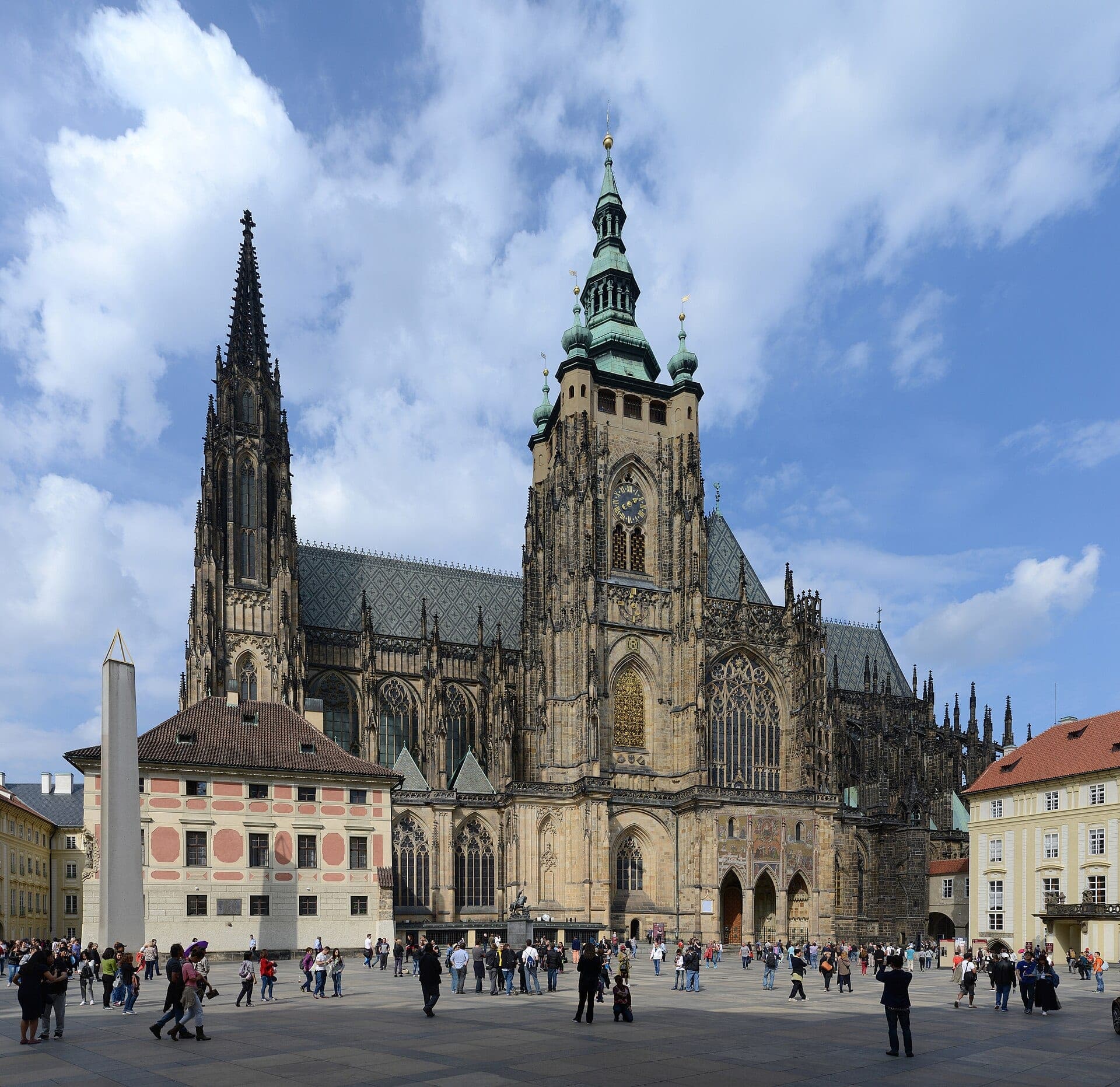
St. Vitus Cathedral and the Crown at the End of Prague's Royal Route
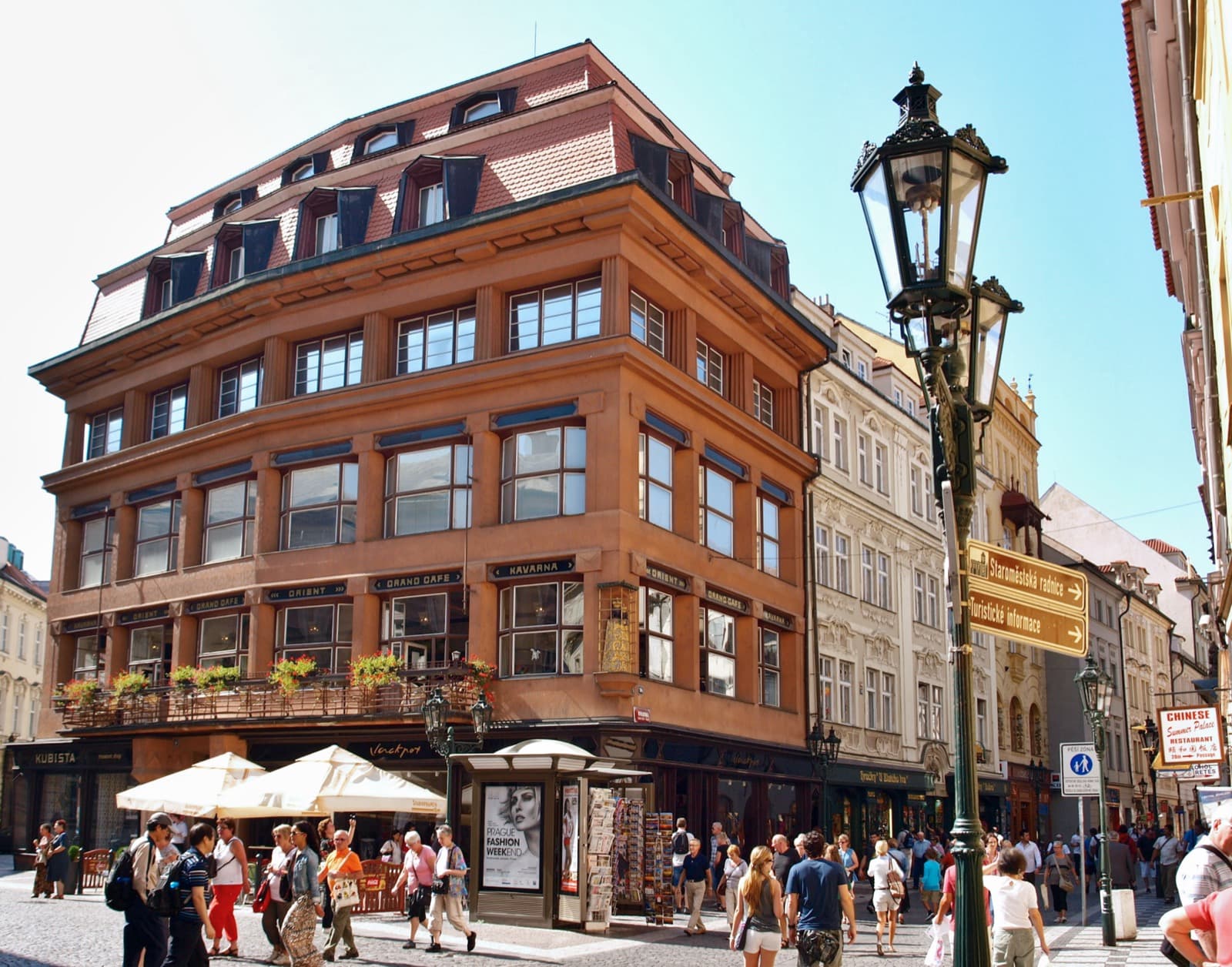
The House of the Black Madonna: How Prague Built Cubism Into a Wall
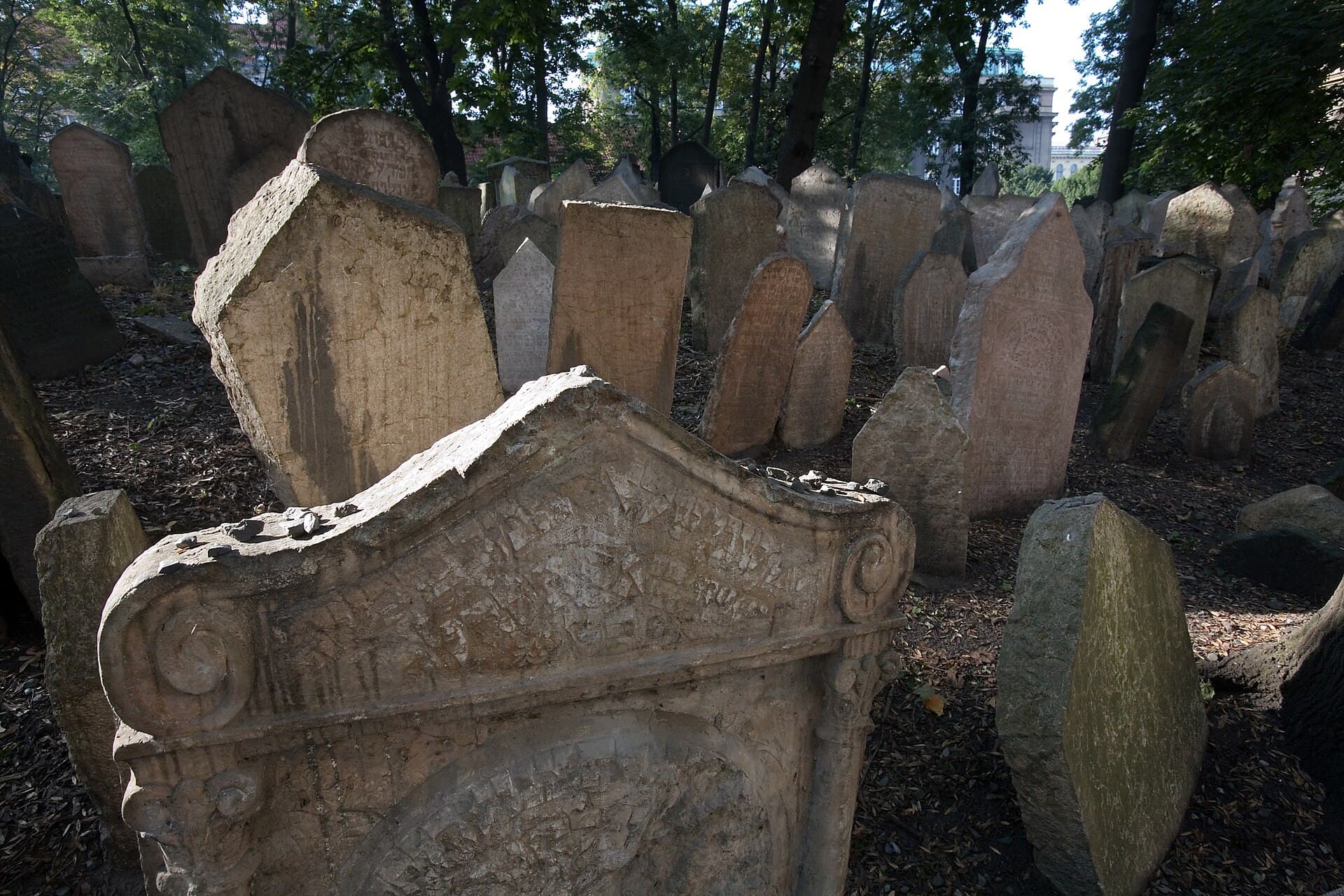
The Old Jewish Cemetery Reads Prague's Whole Confined Quarter
Charles Bridge: The Crossing Charles the Fourth Built to Last