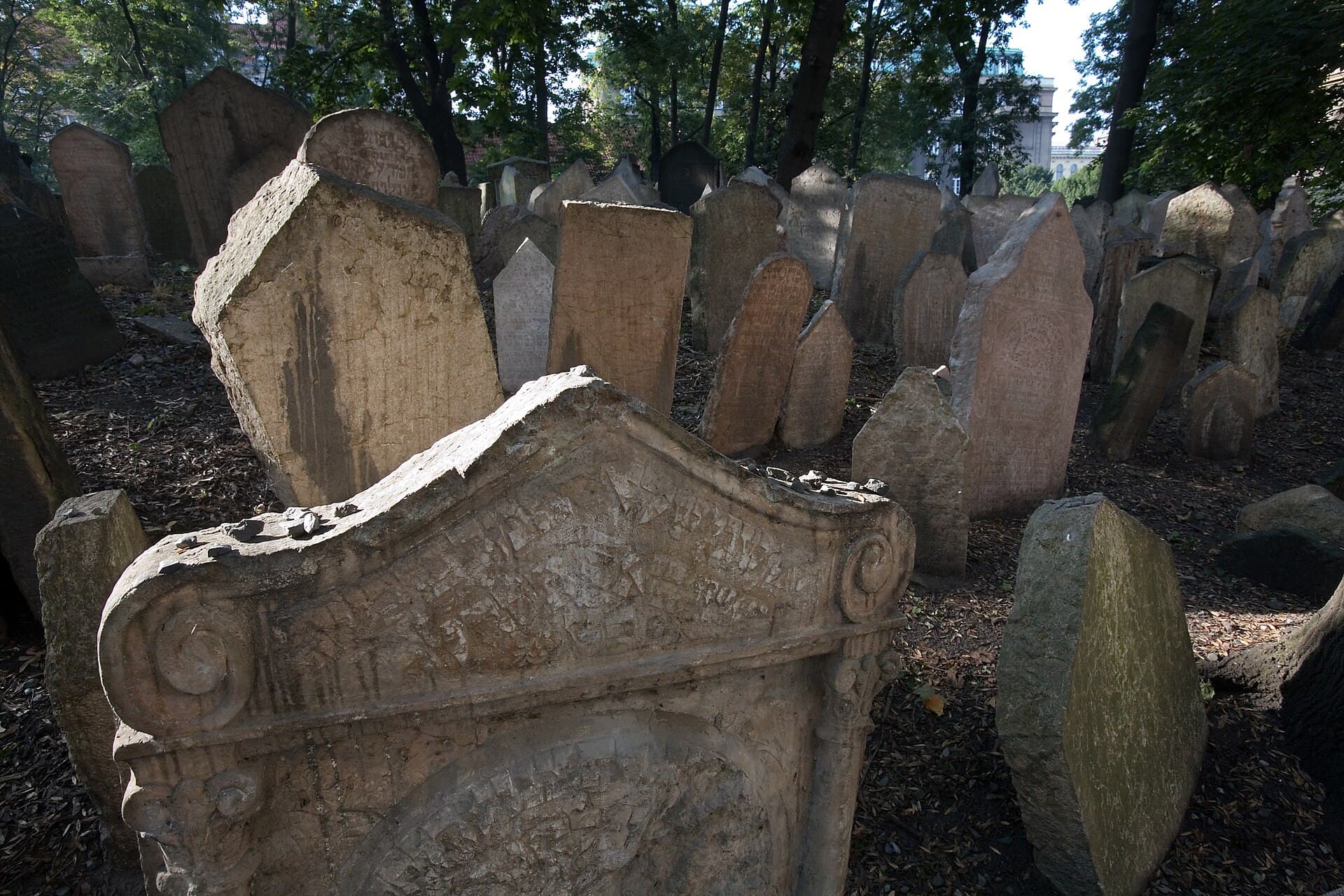
Prague's Old Jewish Cemetery is the single stop that explains the entire Josefov walk. A confined community, forbidden to expand its burial ground, stacked graves in layers until they stood a dozen deep. Read that crowded, leaning ground and you have already read the whole quarter: eight centuries of a Jewish town hemmed inside the city, twice nearly erased, and still standing between the Old Town Square and the river. Everything else on the route, the oldest active synagogue, the backward clock, the names on the wall, is a variation on the same fact of confinement.
Why the earth rises
The cemetery was in use from about the year 1439, the date of its earliest surviving gravestone, until 1787. Across those roughly three and a half centuries the community was refused permission, again and again, to enlarge the ground. But burial could not stop, and Jewish tradition does not disturb the dead. So the community did the only thing left to it. It brought in soil and laid new graves above the old ones, generation resting atop generation. In places, as many as twelve layers of graves now exist, which is why the earth here visibly rises and the headstones crowd so tightly against one another that they seem to lean into conversation. Roughly twelve thousand stones stand visible on the surface, above a far greater number of burials beneath.
This is not a picturesque quirk of an old graveyard. It is the physical record of a rule. When you stand among these stones, you are looking at what happens when people are told exactly where they may and may not go, for centuries, and refuse to stop honoring their dead. Walk this ground quietly and keep to the paths. It is a graveyard, densely and painfully full, and it earns a slow pace far more than a quick pass-through.
The names carved into the walk
Hear a stop from this walk
The Old-New Synagogue
Two men buried in this cemetery hold the rest of the route together. Rabbi Judah Loew ben Bezalel, known as the Maharal, died in 1609. He was the real sixteenth-century scholar to whom later centuries attached the legend of the Golem, the clay figure said to have been shaped to protect the community. The tale is folk story, not history: when people searched the attic of the Old-New Synagogue for the Golem in 1883, and again in August of 2014, they found nothing. But the rabbi was real, and his grave is here.
The second name is Mordechai Maisel, mayor of the Jewish Town and its financier, who died in 1601. His name runs across the whole quarter. He sponsored the Jewish Town Hall in 1586. He secured a personal privilege from Emperor Rudolf the Second in 1591 to build his own synagogue, completed the following year. His wealth and his standing at the imperial court helped fund a genuine flourishing of the ghetto during the age of Rudolfine Prague, a rare stretch of relative security. Also buried in this ground are the scholar and historian David Gans and the book collector David Oppenheim. To read the cemetery is to meet, in stone, the same figures whose buildings you walk past above ground.
The town within the city
The quarter is called Josefov, and for roughly eight centuries it was a town within the city: one of the oldest Jewish communities in Europe, walled in and forbidden to spread. Because it could not grow outward, it grew downward, which is exactly what the cemetery makes visible. The rest of the seven-stop cluster carries the same theme in different registers.
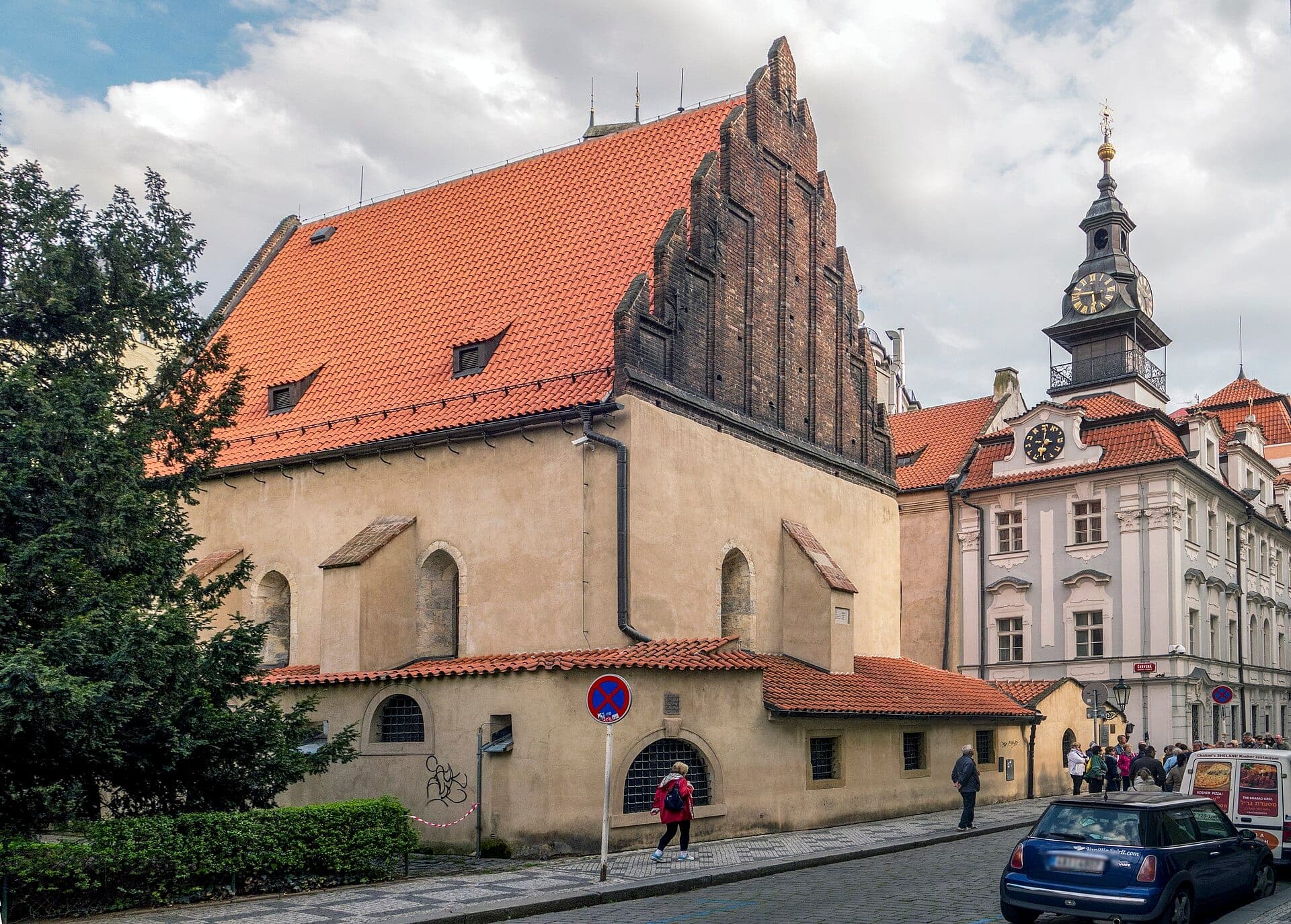
At the Old-New Synagogue, completed around the year 1270 and described as Europe's oldest active synagogue, the confinement produced endurance: worship has continued here for around seven and a half centuries. At the Jewish Town Hall, a Hebrew-numeral clock runs counter-clockwise, keeping faith with a language read from right to left. In a quarter told where it could and could not go, here was a building that answered to its own council and even measured the hours in its own script.
Then the walk turns from confinement to catastrophe. The Pinkas Synagogue, a house of prayer whose congregation traces back to the fifteenth century, has since the 1950s carried on its walls the handwritten names of 77,297 murdered Jews of Bohemia and Moravia, each with a birth date and a death date, grouped by home community so that whole towns stand together on the plaster. Upstairs survive about four and a half thousand children's drawings from the Terezin ghetto, made in secret art lessons led by the artist Friedl Dicker-Brandeis, who was herself murdered. Lower your voice here. It is a naming of the dead, kept so they cannot be reduced back to a number.
The double erasure the buildings survived
Josefov was nearly erased twice, and understanding that is the last thing the cemetery teaches. First came a slum clearance between roughly 1893 and 1913 that swept away the crooked medieval lanes and left only the synagogues and the cemetery standing amid grand new apartment blocks. Franz Kafka, born in 1883 into Prague's German-speaking Jewish community at the edge of this quarter, grew up watching his own childhood streets demolished around him. Jaroslav Rona's bronze monument to Kafka, unveiled in December of 2003, shows the writer riding the shoulders of a hollow, empty suit, an image drawn from his story Description of a Struggle. He belongs at the edge of the walk, looking back at ground that formed him and vanished.
The second erasure was the Shoah, which murdered the community. By a grim irony, the occupiers spared the buildings because they meant to keep them as a museum of a people they intended to wipe out. The Maisel Synagogue was used to store Jewish property seized from the murdered, part of that cold plan. The buildings survived because of the intention. Never let that irony become anything but a wound honestly recorded.
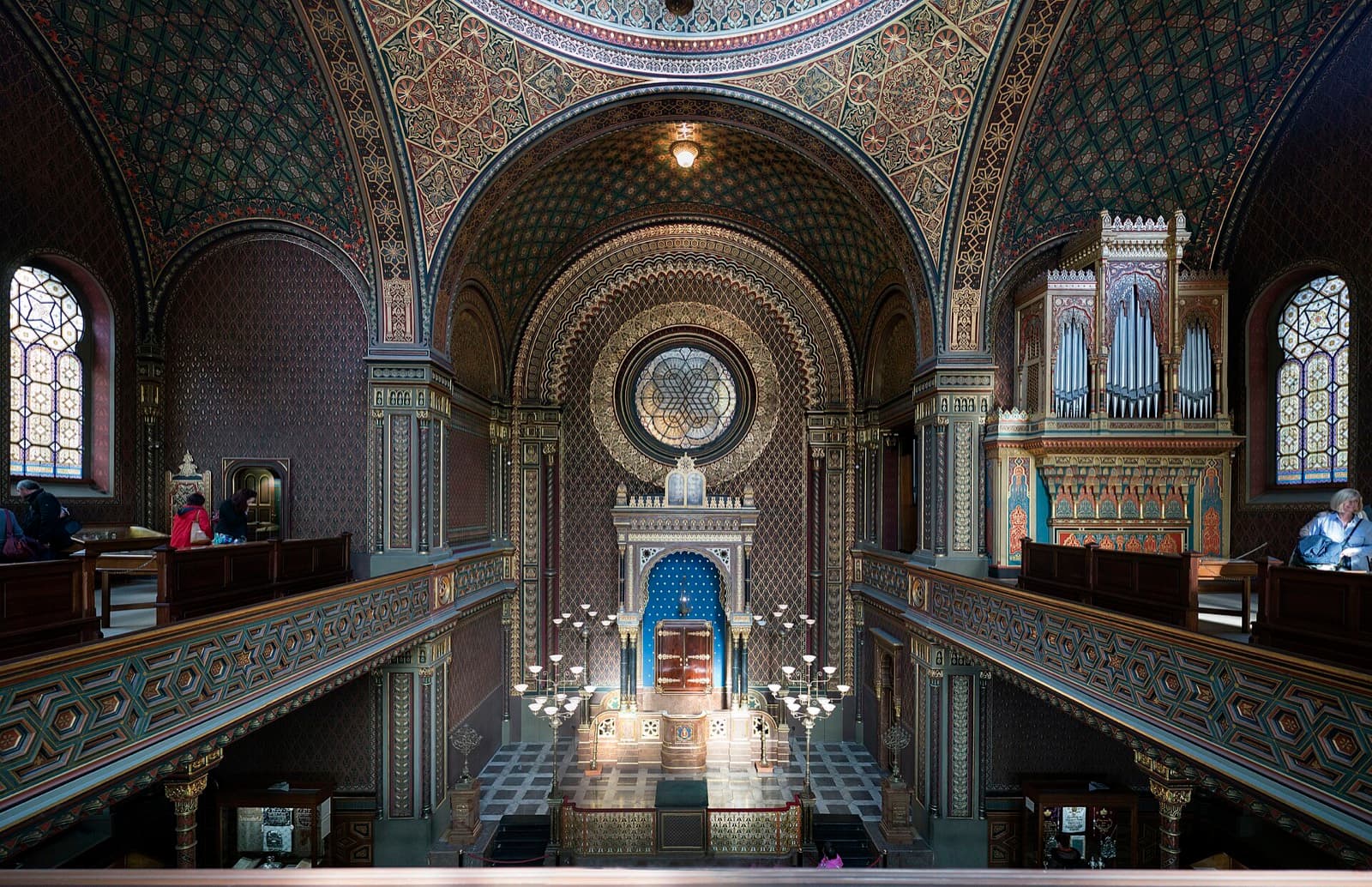
The walk ends, or can end, on a lighter note at the Spanish Synagogue, completed in 1868 in Moorish Revival style, its gilded arabesque interior the architecture of a community that had, for a while, come out from behind the walls. But you understand that release only because you first stood in the cemetery and read what the walls held in.
Walking it well
This is a compact route of just over one kilometre, seven stops close together, easy to reach in any order, and best walked slowly over about two hours. The Jewish Museum sites and the Old-New Synagogue close on Saturdays and Jewish holidays, so plan for Sunday through Friday, ideally late morning on a weekday before the midday crowds reach the cemetery and the Pinkas Synagogue. For the full route and other itineraries in the city, see Prague walking tours, or browse everything on offer in Prague. Bring patience and a lowered voice. The ground here asks for both.
Sources
- Old Jewish Cemetery, Prague (Wikipedia): dates of use, layered burials, and notable graves including Rabbi Judah Loew and Mordechai Maisel.
- Old Jewish Cemetery, Jewish Museum in Prague: official site describing the cemetery's management and history.
- Pinkas Synagogue, Jewish Museum in Prague: the Shoah memorial, the inscribed names, and the Terezin children's drawings.
- Old New Synagogue (Wikipedia): completion around 1270, its status as Europe's oldest active synagogue, and the Golem attic searches of 1883 and 2014.
- Statue of Franz Kafka (Wikipedia): Jaroslav Rona's 2003 monument and its source in Kafka's Description of a Struggle.
Ready to experience it?
Josefov Jewish Quarter: The Town Within the City
70 min · 1.2 km · easy
More from Prague
Explore more at your own pace.
One Day in Prague: A Walkable Morning-to-Evening Itinerary
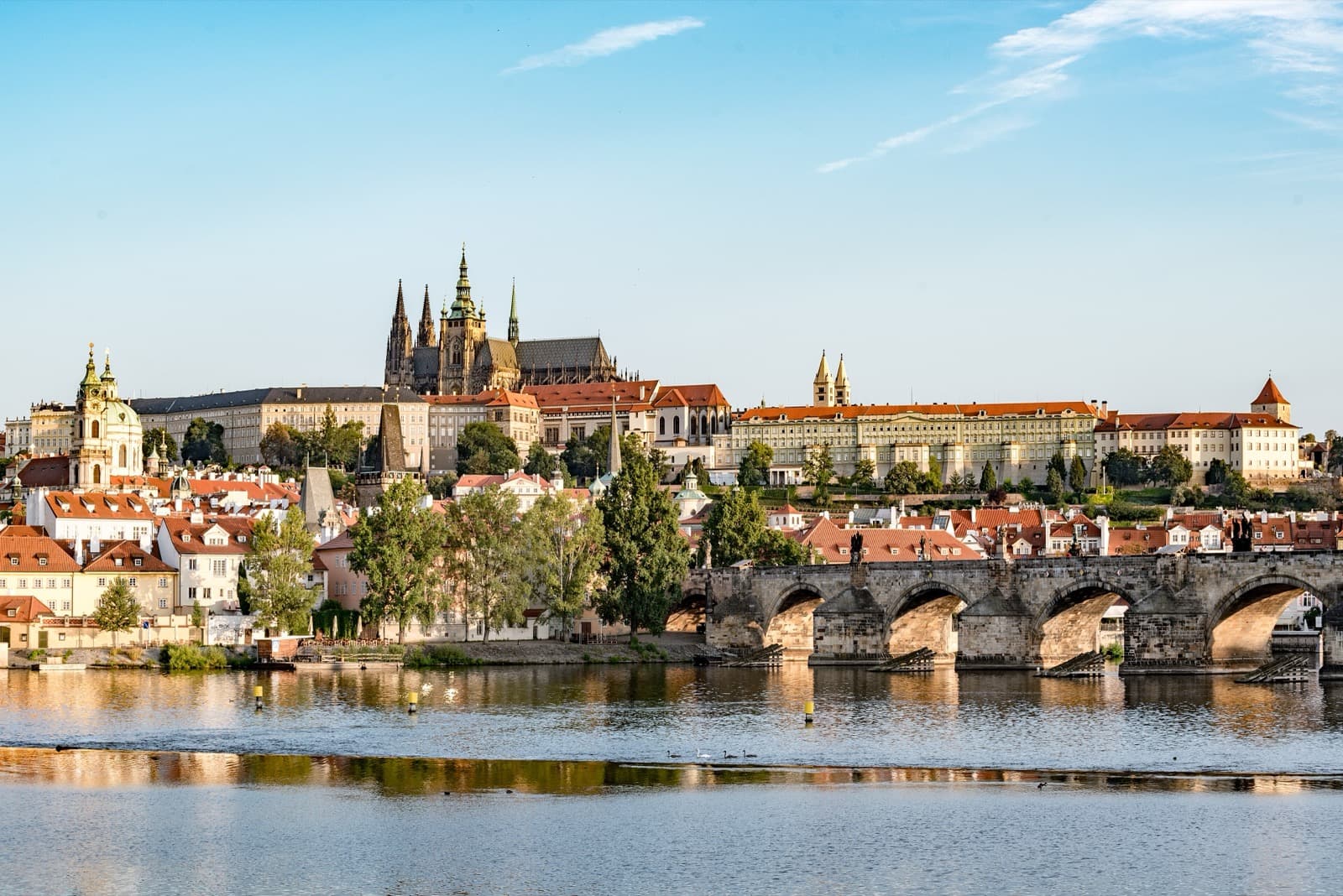
Prague's Layered City: The Coronation Route, Josefov, and a Modern Grammar
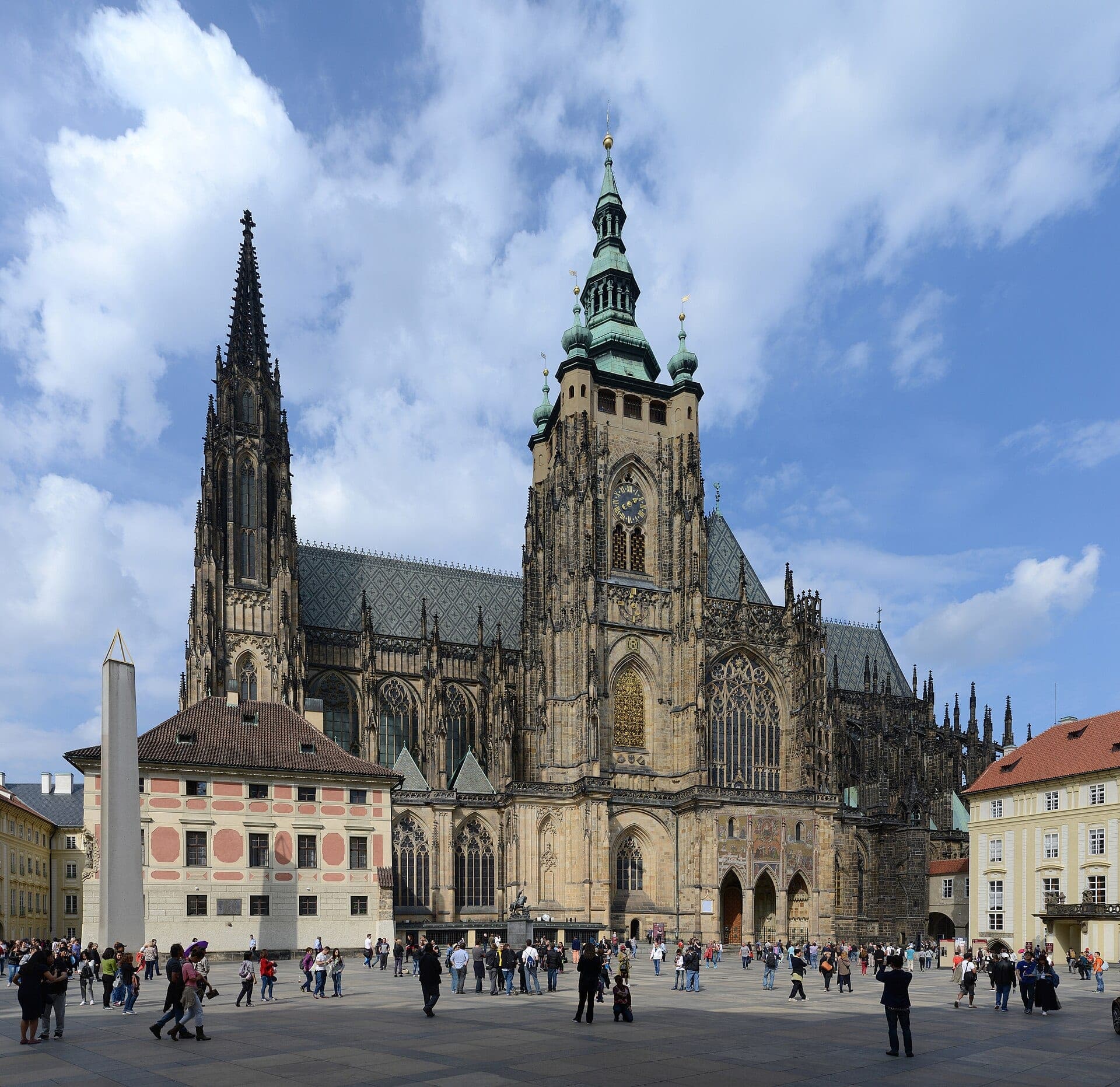
St. Vitus Cathedral and the Crown at the End of Prague's Royal Route
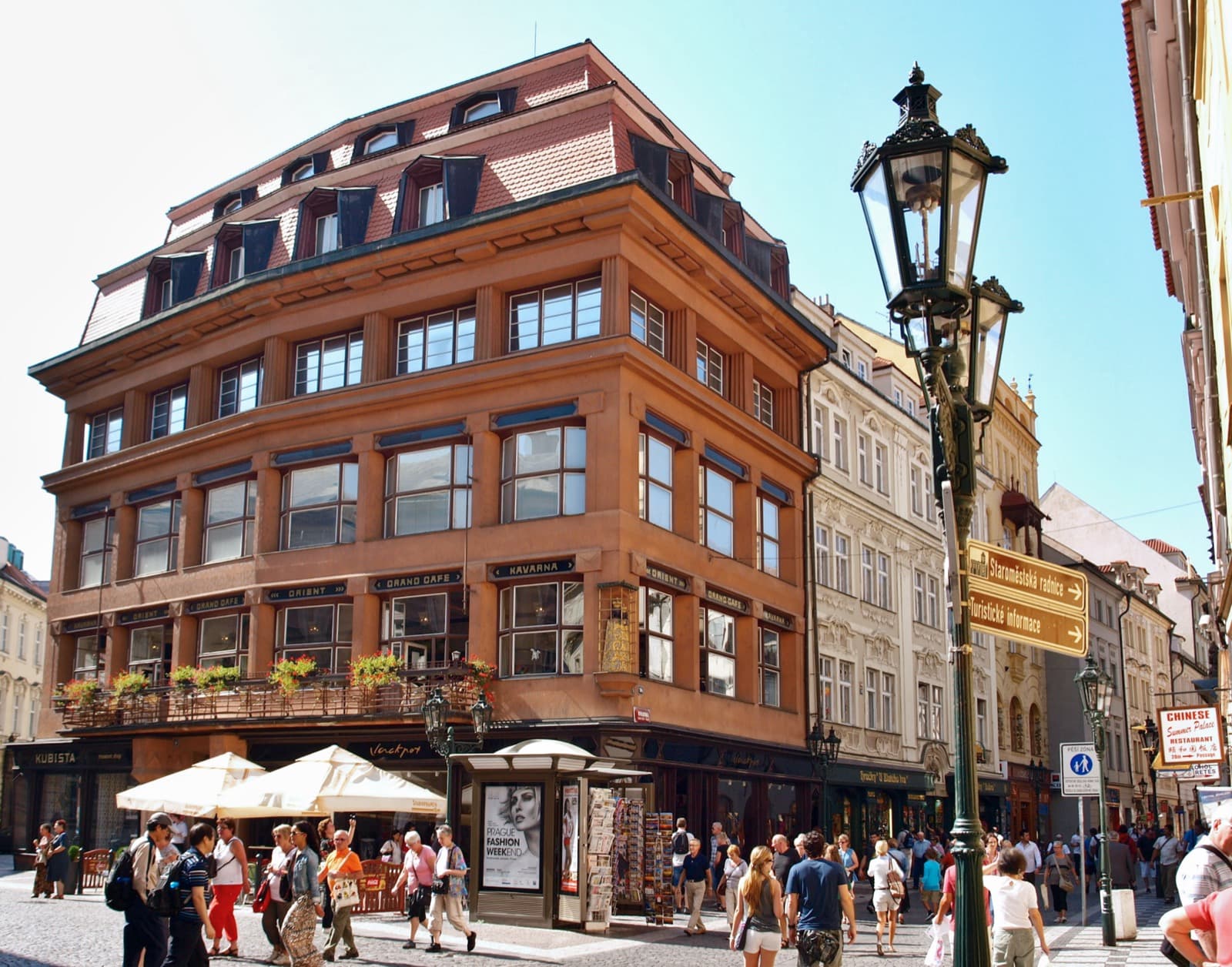
The House of the Black Madonna: How Prague Built Cubism Into a Wall
Charles Bridge: The Crossing Charles the Fourth Built to Last