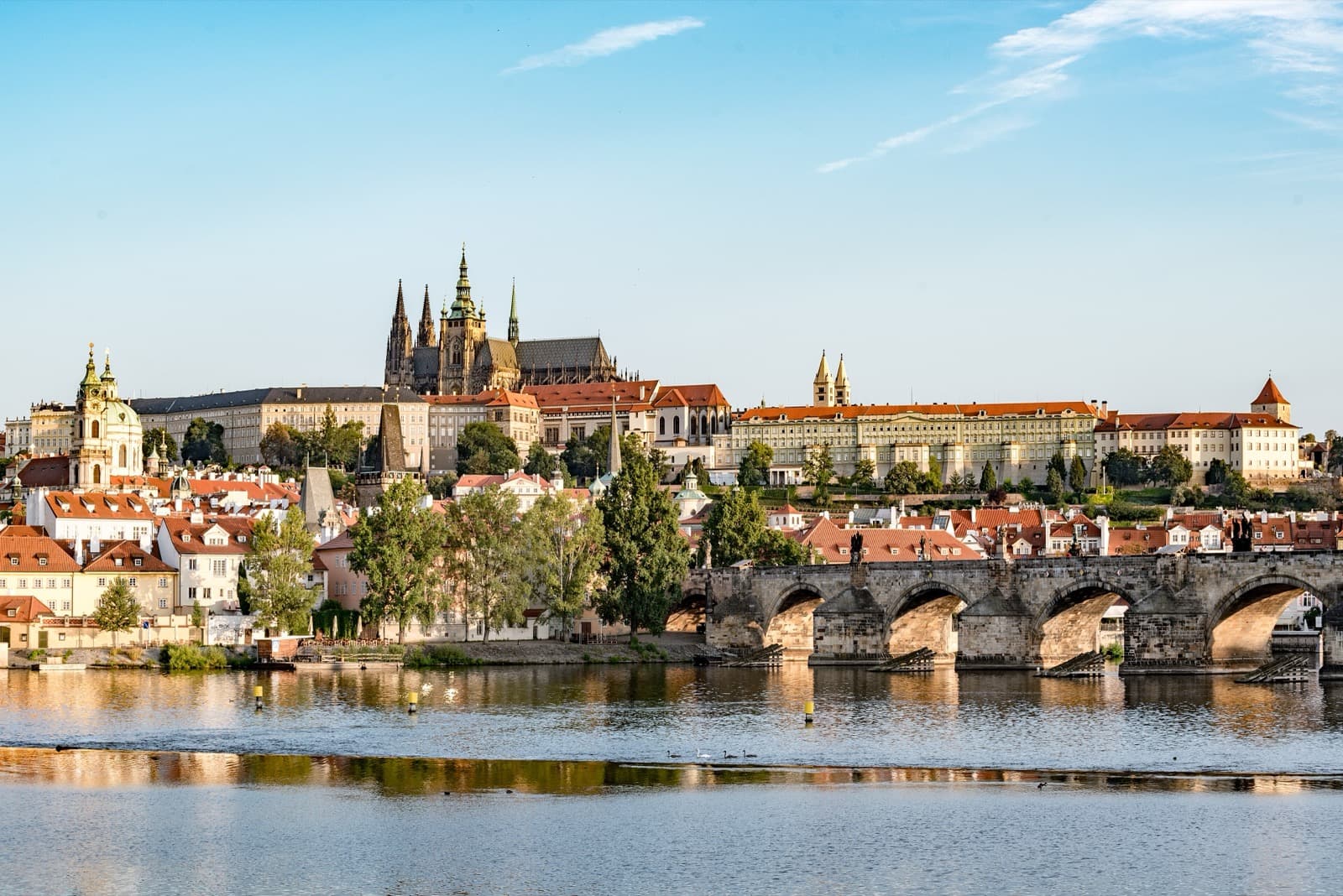
Charles Bridge is not the statue gallery most visitors take it for. It is a piece of fourteenth-century state engineering, commissioned by Charles the Fourth in the year 1357 to replace a crossing the river had destroyed, and it carried the coronation route and every other traveler over the Vltava as the only bridge in Prague for nearly five hundred years. Stand at either end and you are looking at the single most important act of infrastructure in the medieval city: a road, in stone, over water that had already swept one bridge away.
The river that made the bridge necessary
To understand why the bridge matters, start with what it replaced. Before Charles Bridge there was the Judith Bridge, a Romanesque crossing built in the twelfth century. In the year 1342 a flood on the Vltava, the river that divides the city, badly damaged it. A capital cannot function with a broken river crossing, and Prague under Charles the Fourth was becoming a serious capital. He was King of Bohemia and Holy Roman Emperor, and he shaped a great deal of the Prague a walker still moves through today. The bridge was his answer to the flood: build again, and build to survive the next one.
Construction started in 1357 under the master builder Peter Parler, the same architect whose vaulting would later define St. Vitus Cathedral up on the castle hill. Work continued for decades and reached completion around 1402. What Parler and his workshop produced was deliberately overbuilt. The bridge stretches about 516 metres, runs nearly ten metres wide, and rests on sixteen arches. Those numbers are the whole point. This was not a delicate span but a heavy, load-bearing causeway meant to take carts, processions, armies, and centuries of weather.
Why "the only bridge" is the fact that matters
Hear a stop from this walk
St. Vitus Cathedral: The Crowning Church
If you remember one thing standing on Charles Bridge, make it this: it was the only bridge across the Vltava in Prague until 1841. For close to five hundred years, everyone and everything that crossed the river inside the city crossed here. Merchants, kings walking to their crowning, funeral processions, invading and retreating soldiers, ordinary people going to market. The bridge was not a scenic option among several. It was the crossing, singular and unavoidable, which is why so much of Prague's ceremonial and commercial life was funneled onto these stones.
That is also why the bridge sits where it does on the Royal Route, the processional line the Bohemian kings followed to their coronation. The route ran from the Powder Tower at the edge of the Old Town, across the market square, over this bridge, and up to the cathedral on the castle hill. The kings did not choose Charles Bridge for its beauty. They crossed it because there was no other way to reach the far bank, linking the Old Town with the Lesser Town, in Czech Mala Strana, on the opposite side. Engineering, not aesthetics, put the crown's procession on this exact stretch of stone.
The statues came much later, and they are copies
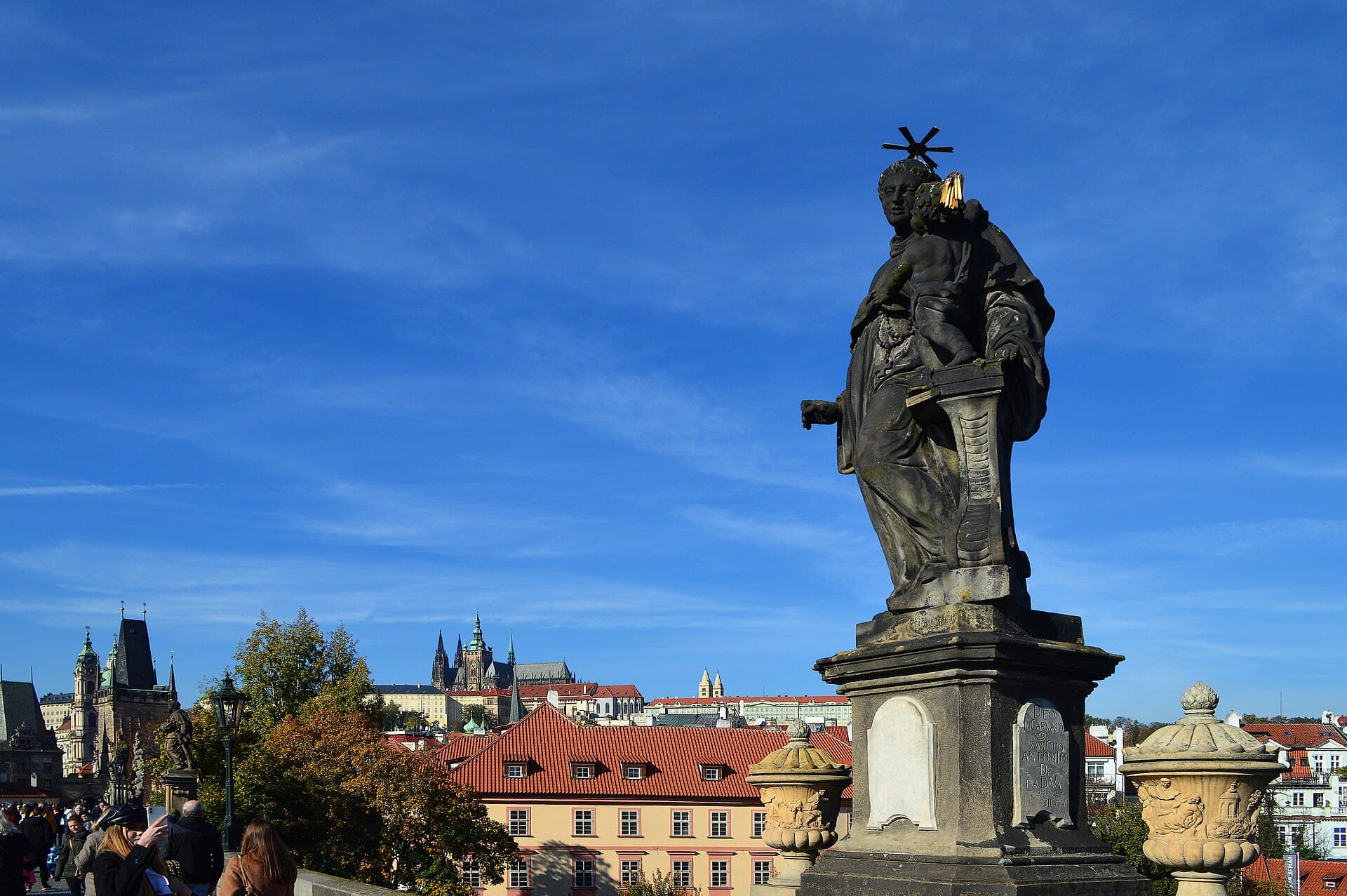
The rows of figures that now line the parapets are the feature everyone photographs, and they are the part of the bridge most often misunderstood. They are not medieval. The roughly thirty Baroque statues were set up mostly between 1683 and 1714, so call it around the year 1700, more than three centuries after the bridge itself was finished. The bridge stood bare of them for its entire first age. The most famous of the group is Saint John of Nepomuk.
There is a further wrinkle worth knowing before you reach out to touch one. What you see outdoors today are replicas. Beginning in 1965, the original statues were gradually moved indoors to protect them from weather and pollution. So the bridge you cross is authentically fourteenth-century in its stone and its arches, and comparatively recent in its sculpture, and the sculpture you actually touch is a modern stand-in for the Baroque originals now kept safe under cover. None of that diminishes it. It simply means the bridge is a layered object, built in one century and dressed in another.
Two good stories, neither of them true
Charles Bridge attracts legends the way old stone attracts moss, and part of reading it honestly is separating the tales from the record. Two in particular follow every visitor.
The first says that eggs were mixed into the mortar to strengthen it, with villages across Bohemia supposedly sending cartloads of them to the building site. It is a charming image of a whole kingdom feeding its bridge. It is also not documented fact, only tradition.
The second is even more seductive. It holds that Charles the Fourth, an emperor with a known taste for numerology, chose the exact foundation moment of 5:31 in the morning on the ninth of July, 1357, because the digits form a rising and falling palindrome: 1-3-5-7-9-7-5-3-1. It is a beautiful idea. It is also undocumented, a later flourish rather than a recorded decision. Hold both stories lightly. They tell you something real about how much Praguers have loved this bridge, which is its own kind of truth, but they are not history, and a careful walker keeps the difference in view.
Standing in front of it
The one thing to understand while you are actually there is that permanence was the design brief. Charles the Fourth watched a flood take the previous bridge and answered with sixteen arches, half a kilometre of stone, and a structure that then did its single job, carrying the whole city across one river, for the next five centuries without a rival. Everything else, the saints, the buskers, the crowds, the sunrise light on the towers, arrived later on a frame that was already doing the work.
Charles Bridge is stop five on Roamer's self-guided Royal Route, the coronation walk that runs from the Powder Tower up to St. Vitus Cathedral. The audio tour crosses the bridge exactly where the kings did, then climbs into the Lesser Town toward the castle, so you can walk the whole ceremonial line at your own pace with the history in your ear. If you are planning your days in the city, browse more Prague articles and guides or start from the Prague city page, then let the Royal Route carry you over the water the way it has carried travelers since Peter Parler's masons finished the last arch.
Sources
- Charles Bridge, Wikipedia: construction dates, dimensions, sixteen arches, Judith Bridge history, and statue program.
- Peter Parler, Wikipedia: his work on both St. Vitus Cathedral and Charles Bridge under Charles the Fourth.
- Roamer tour "The Coronation Way" (prague-royal-route), fact-audited stop transcript for Charles Bridge: the Royal Route context, the egg and palindrome traditions, and the 1965 statue replicas.
- Prague City Tourism (prague.eu): visitor context for the Old Town, Lesser Town, and the egg-in-mortar tradition.
Ready to experience it?
The Royal Route: The Coronation Way
150 min · 4.8 km · moderate
More from Prague
Explore more at your own pace.
One Day in Prague: A Walkable Morning-to-Evening Itinerary
Prague's Layered City: The Coronation Route, Josefov, and a Modern Grammar
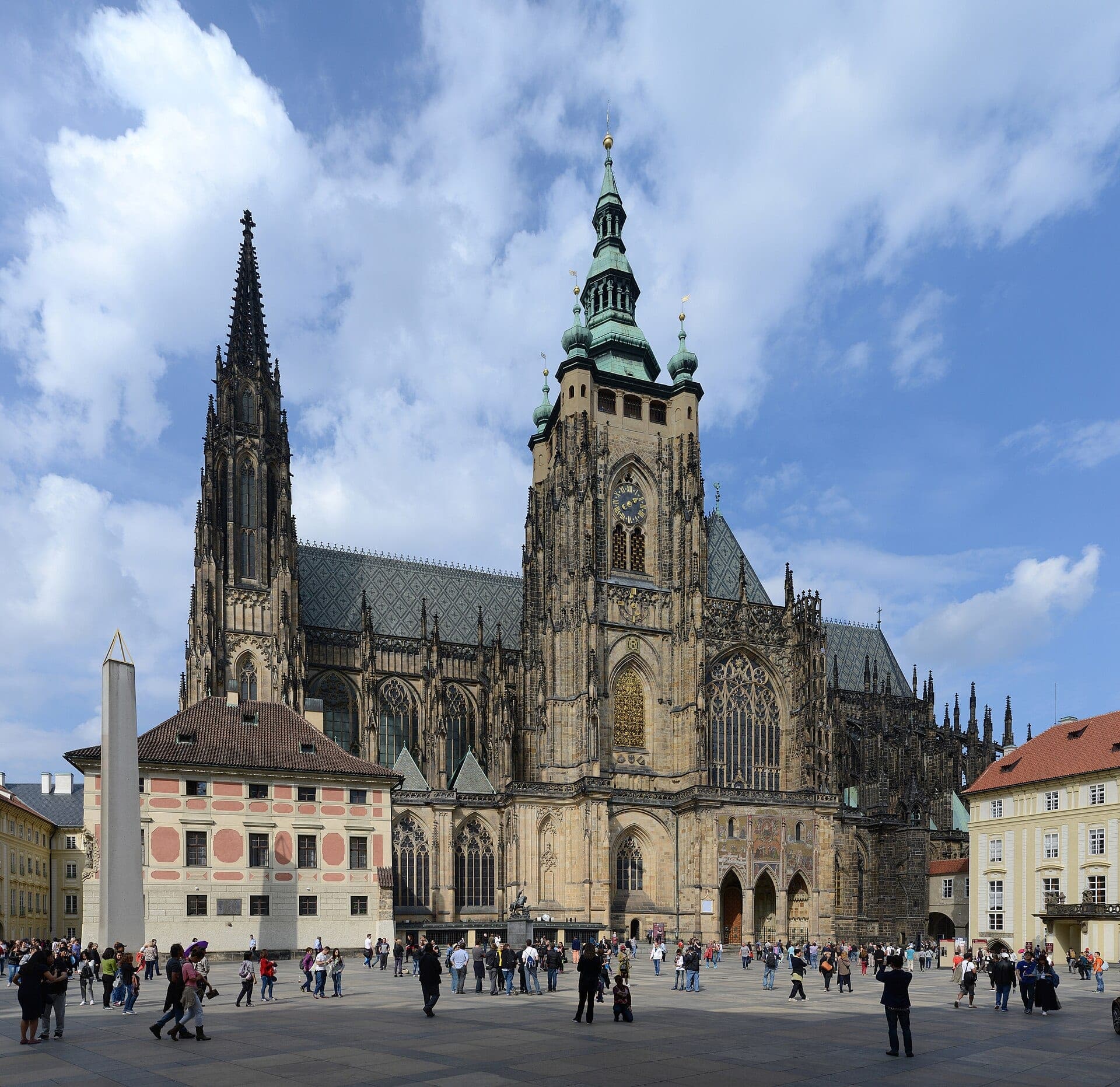
St. Vitus Cathedral and the Crown at the End of Prague's Royal Route
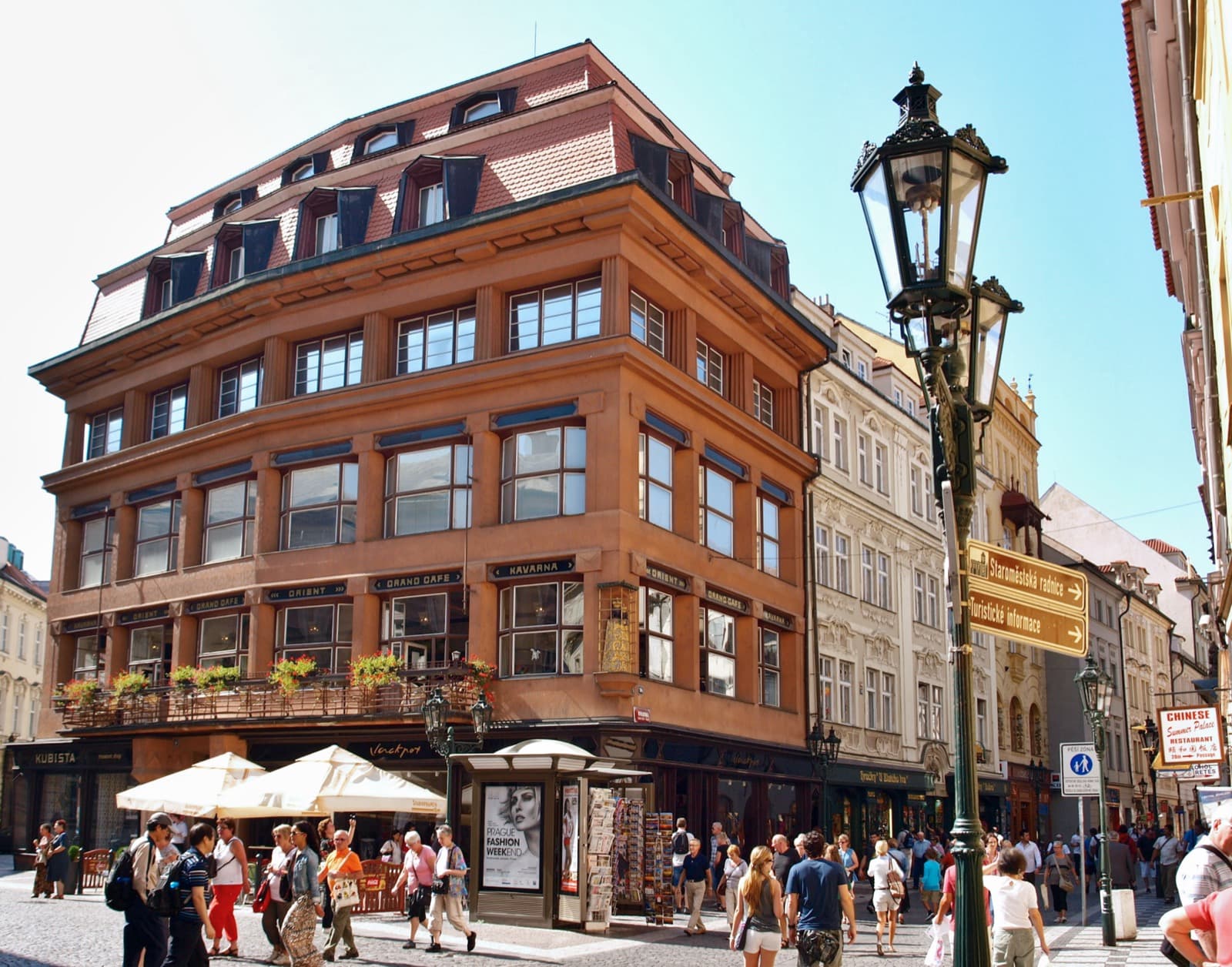
The House of the Black Madonna: How Prague Built Cubism Into a Wall
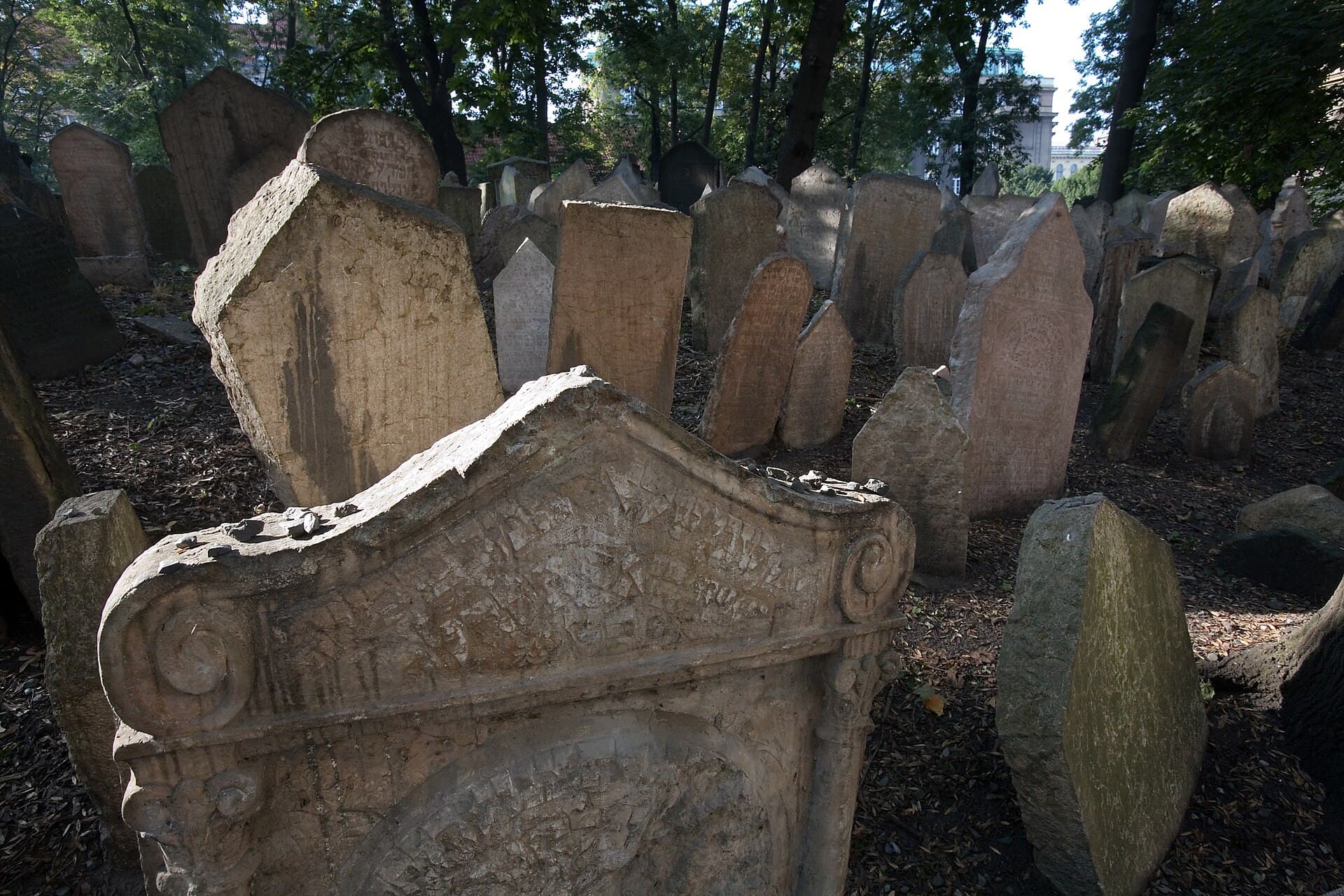
The Old Jewish Cemetery Reads Prague's Whole Confined Quarter