Walk the Royal Route the Bohemian kings walked to their crowning, from the Gothic gate at the edge of the Old Town, over Charles Bridge, and up the castle hill to the cathedral that held the crown of Saint Wenceslas.
Start · The Powder Tower: The Ceremonial Threshold
DirectionsStops
- 1
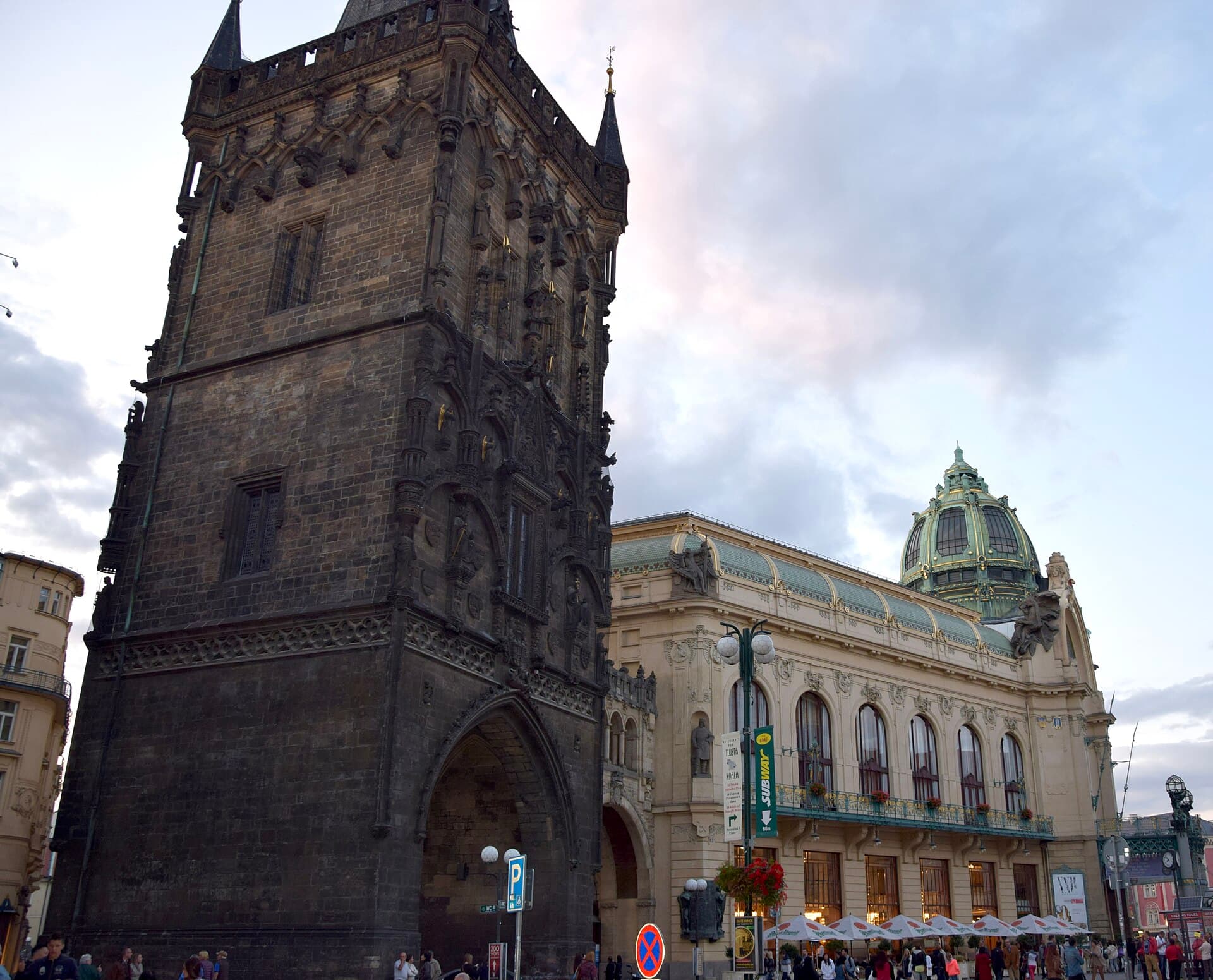
The Powder Tower: The Ceremonial Threshold
The tall Gothic gate where the coronation processions of the Bohemian kings began their climb toward the castle.
- 2
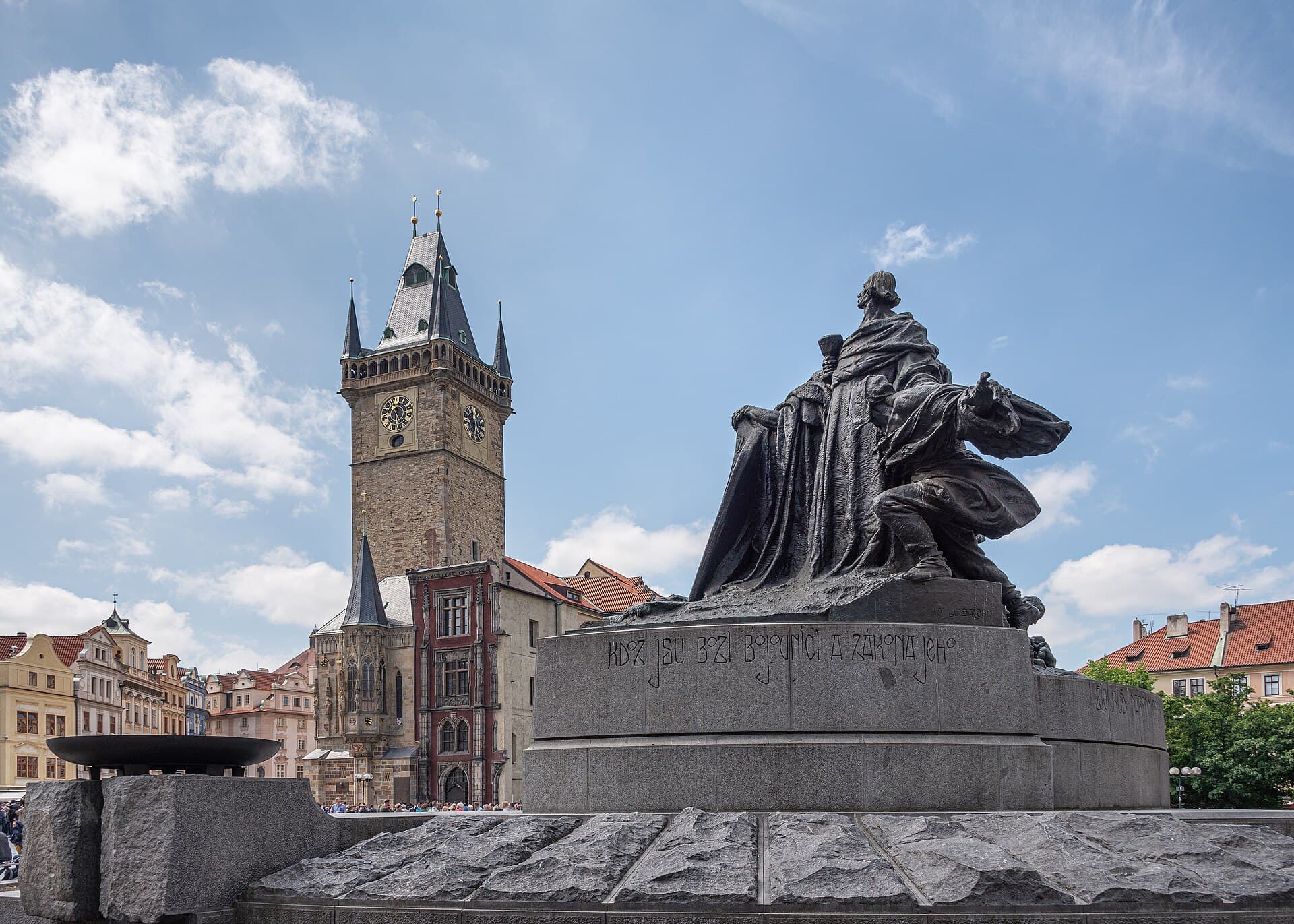
Old Town Square and the Jan Hus Memorial
The medieval market square at the heart of the Old Town, watched over by a memorial to the reformer Jan Hus.
- 3
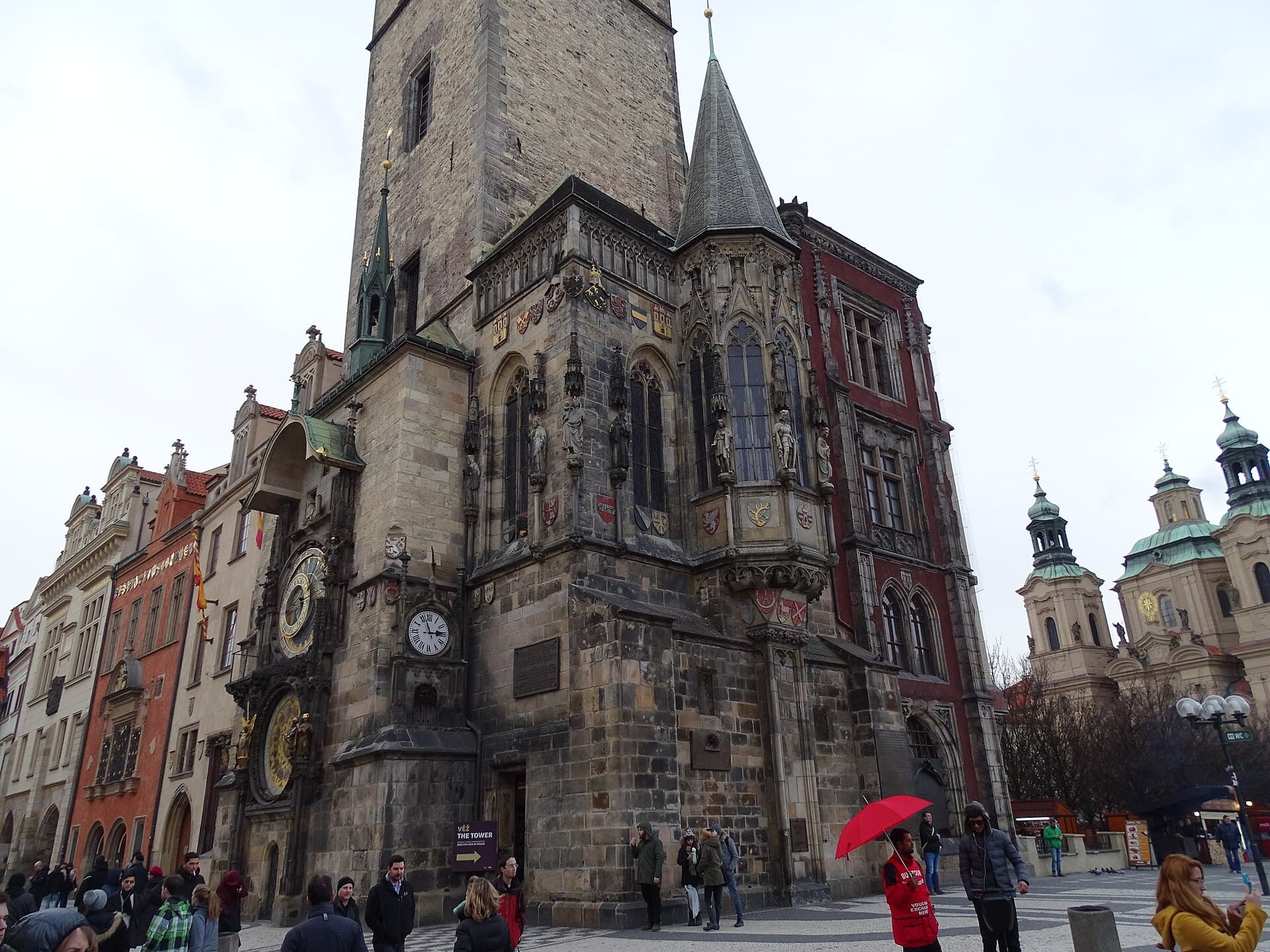
The Astronomical Clock and the Old Town Hall
A medieval astronomical clock on the Old Town Hall tower, one of the oldest still running, wrapped in a famous legend.
- 4
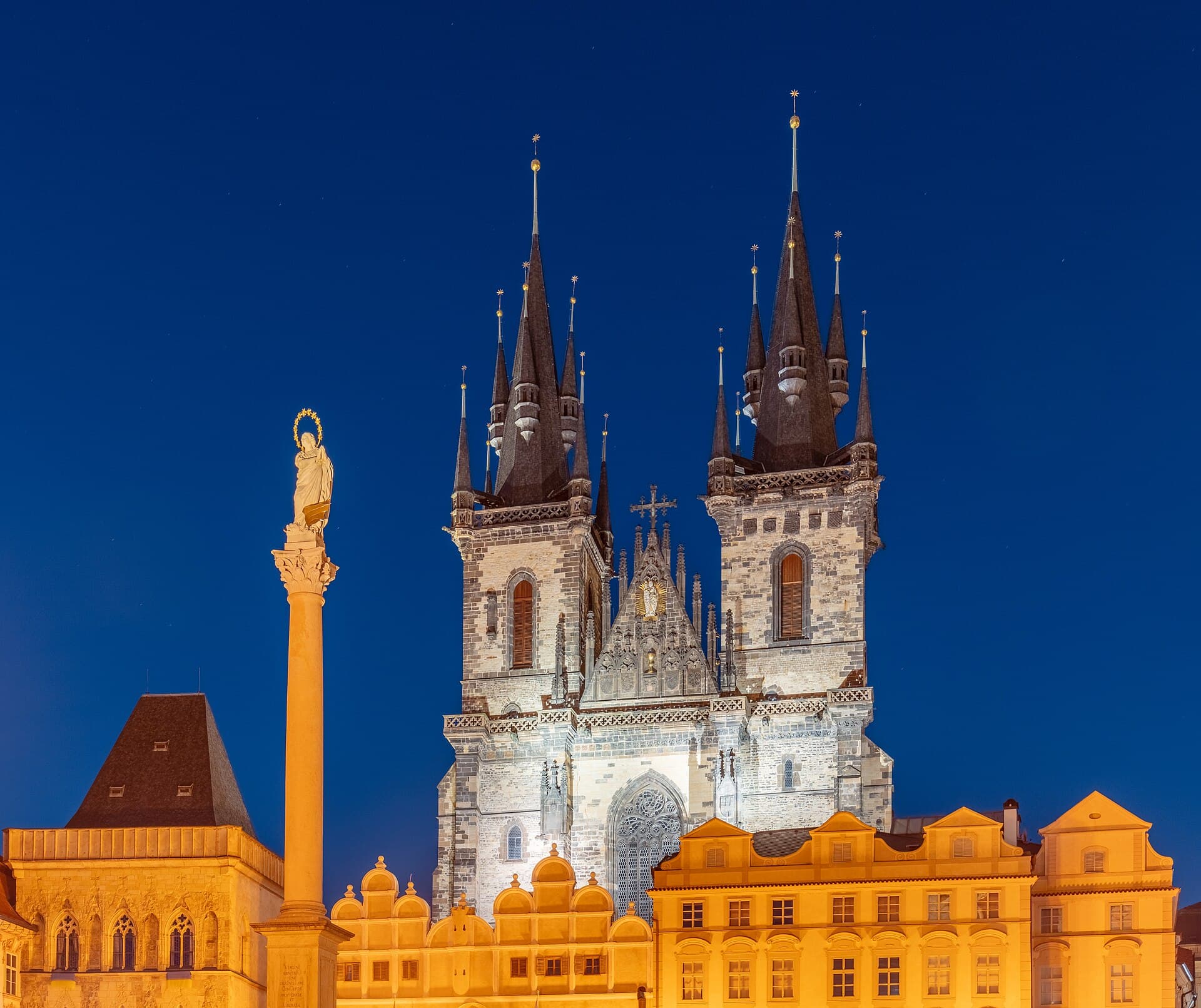
The Church of Our Lady before Tyn
The twin-towered Gothic church rising over Old Town Square, burial place of the astronomer Tycho Brahe.
- 5
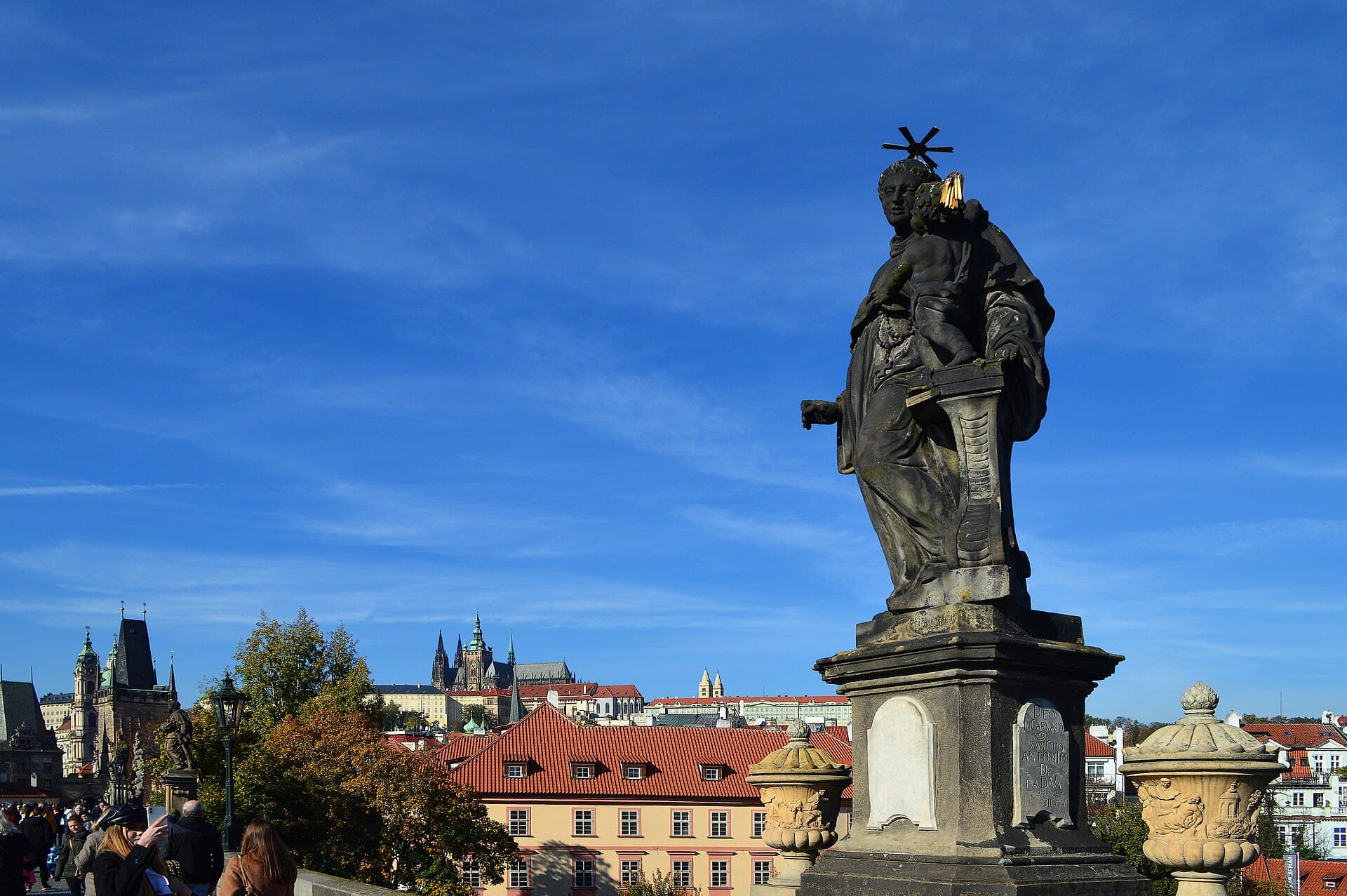
Charles Bridge
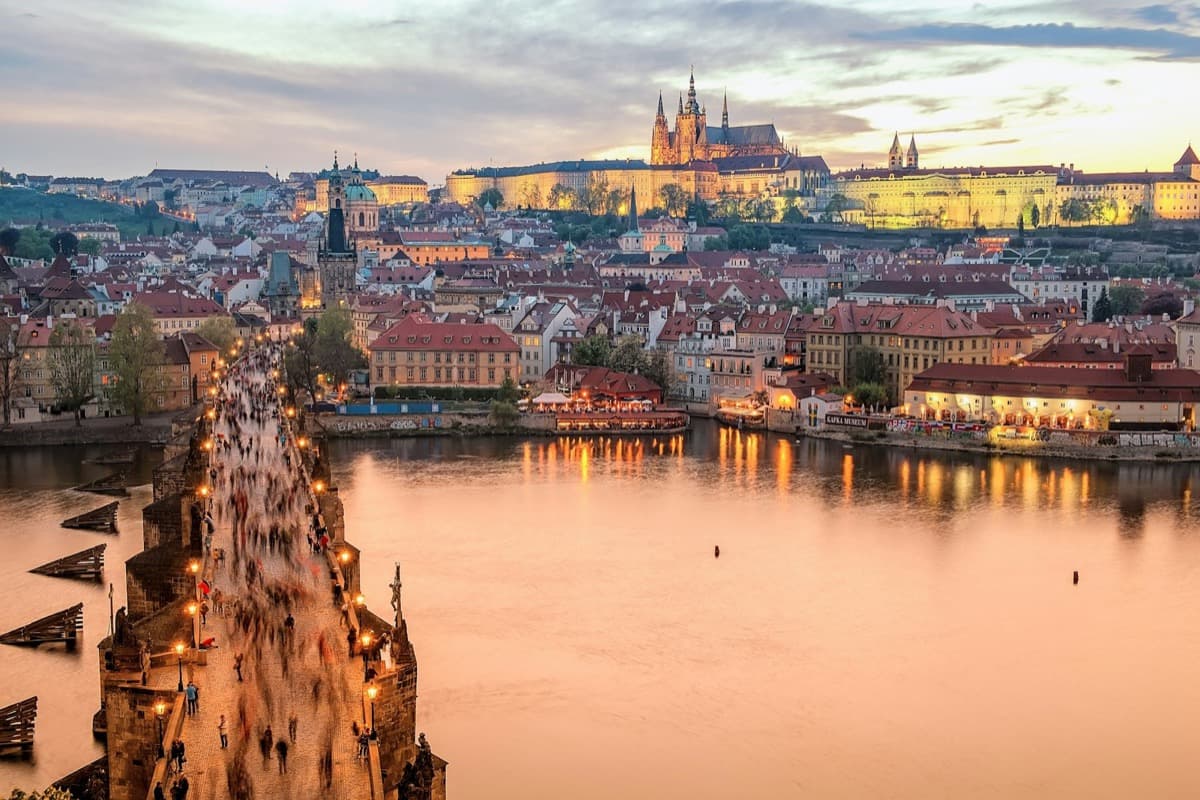
The great stone bridge over the Vltava that Charles the Fourth commanded, the coronation route's crossing toward the castle.
- 6
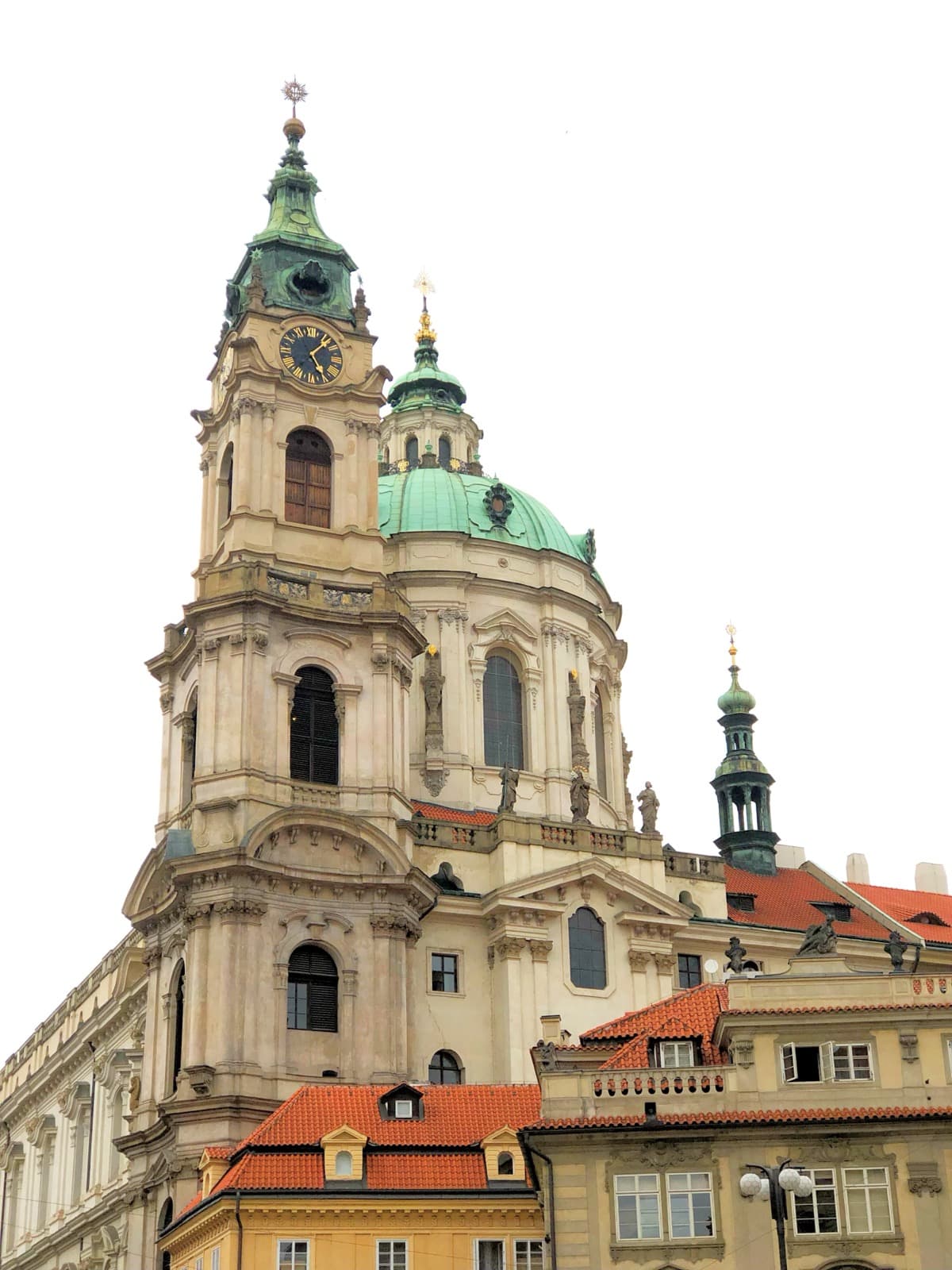
St. Nicholas Church, Lesser Town
The High Baroque church with a great green dome crowns the Lesser Town Square, below the castle hill.
- 7
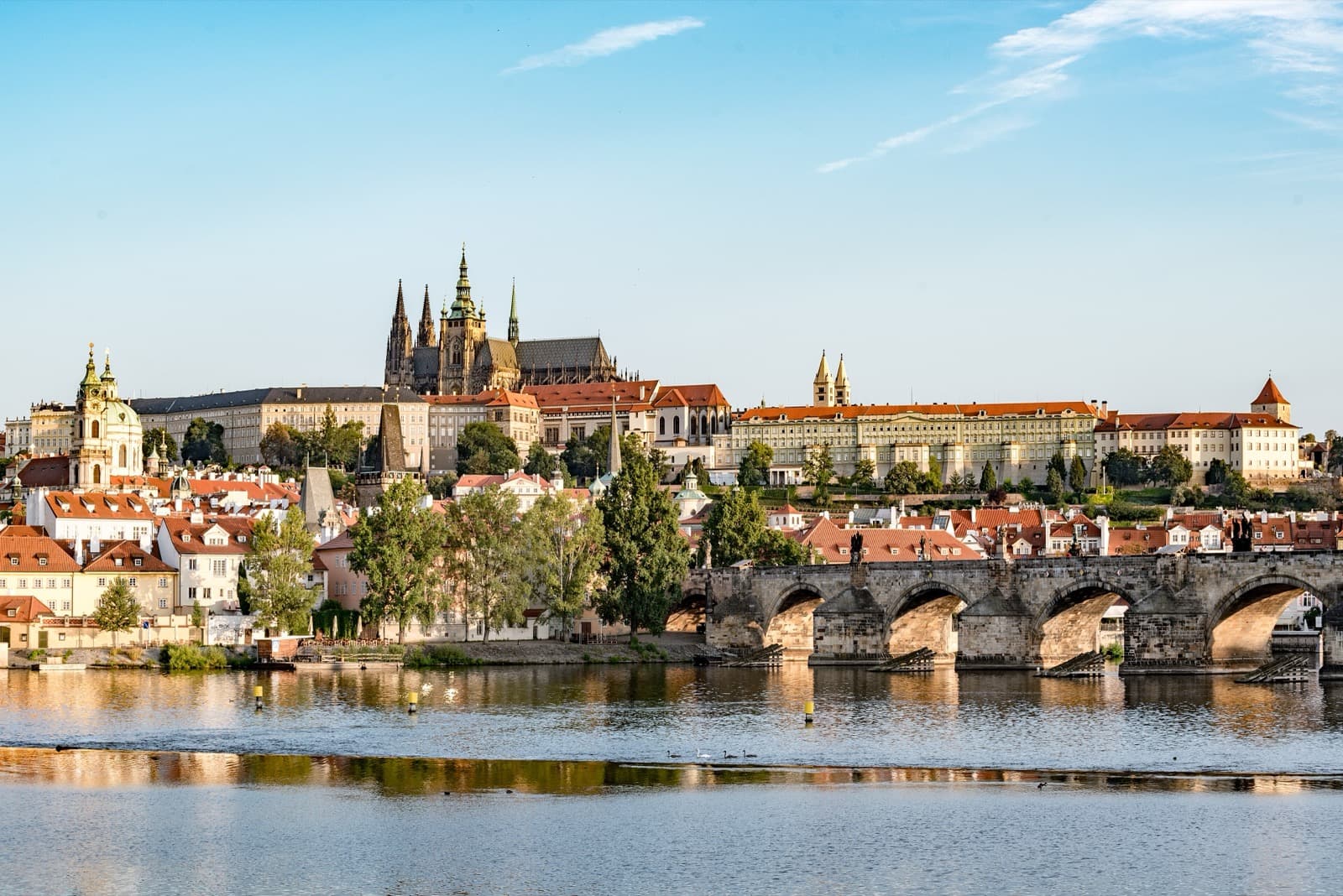
Prague Castle
The vast hilltop castle complex, seat of Bohemian kings and emperors, cited as the largest ancient castle in the world.
- 8
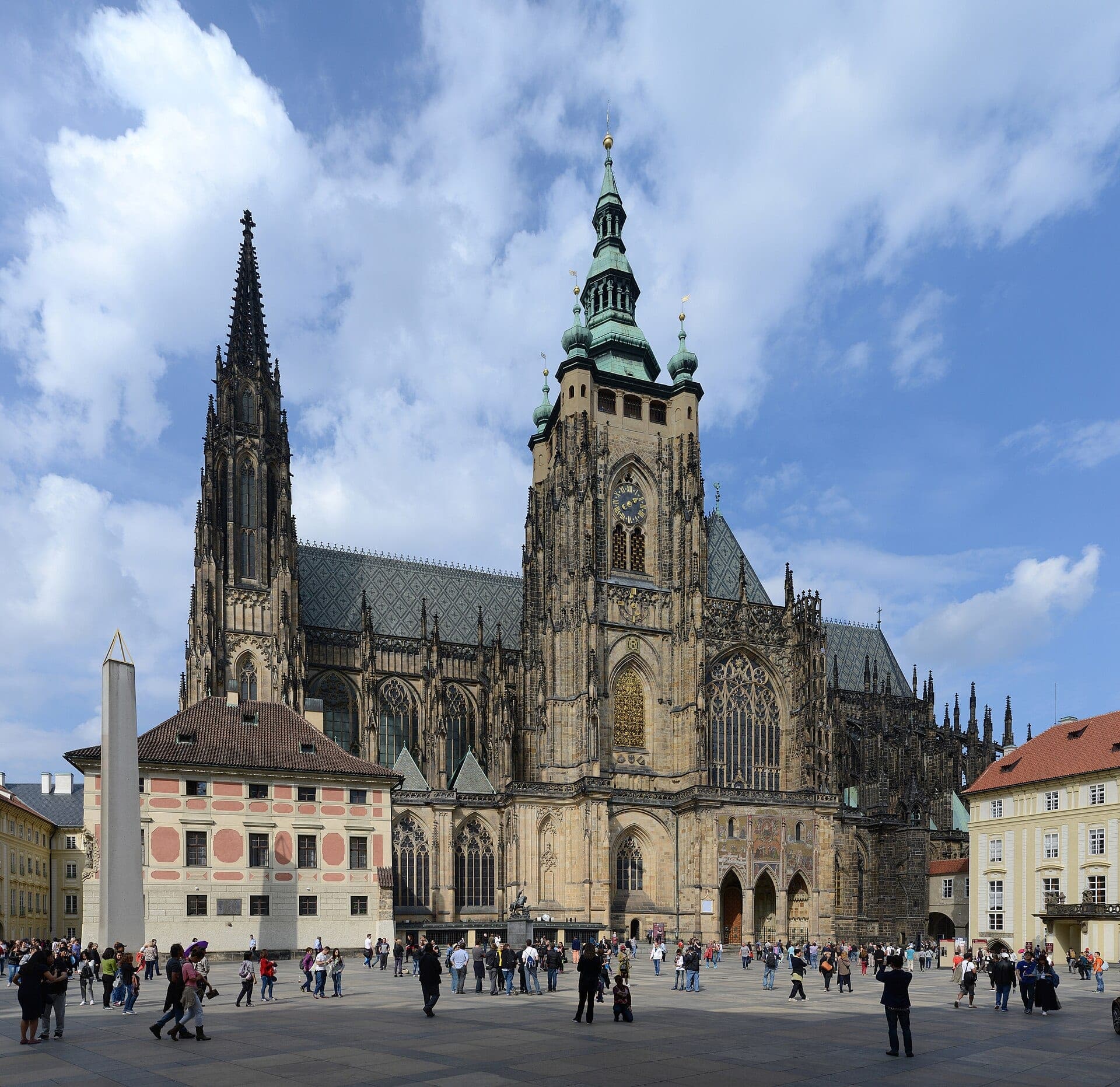
St. Vitus Cathedral: The Crowning Church
The Gothic cathedral inside Prague Castle, the coronation church of the Bohemian kings and keeper of the crown of Saint Wenceslas.
Details
Best Time to Visit
Early morning is the kindest time for this walk. The Old Town Square, the Astronomical Clock, and Charles Bridge grow shoulder to shoulder crowded by mid-morning, so setting out soon after sunrise gives you the coronation route with room to breathe and the best light on the towers and the river. Late afternoon into the golden hour is a fine alternative, with warm light on the castle hill as you climb, though the bridge and square stay busy. Spring and early autumn offer mild weather for the climb; summer is hot and crowded, and winter is cold but atmospheric, with far thinner crowds.
Pro Tips
- •Walk the route in one direction, uphill from the Powder Tower to St. Vitus Cathedral, so gravity works with you and you finish at the crowning church, the way the kings did.
- •Buy a combined Prague Castle ticket if you want to go inside St. Vitus Cathedral, the Old Royal Palace, and the Golden Lane; a limited front section of the cathedral is free, but the ticketed circuit lets you linger.
- •Wear proper walking shoes with grip. The Old Town lanes, the bridge, and the castle approach are almost all uneven cobblestones, and the final climb involves steps.
- •Start early to reach Charles Bridge and the Old Town Square before the crowds thicken; the same stones are a very different experience at eight in the morning versus noon.
- •Time your pause at the Astronomical Clock for the top of the hour if you want to see the little procession of Apostles move, but do not feel you must fight the crowd for it; the dial itself rewards a quiet look any time.
- •Carry water and pace the uphill stretch to the castle. Rest on the Lesser Town Square by St. Nicholas Church before the final climb, and take in the view back over the river when you reach the summit.
Safety & Precautions
- •Watch for trams: Prague's trams are fast and nearly silent, and they run through the Lesser Town and along the route. Look both ways before crossing any tram tracks, and never assume you have heard one coming.
- •Guard against pickpockets in the crowded places, especially the Old Town Square, on Charles Bridge, and aboard trams and the metro. Keep bags zipped and in front of you, and keep your phone and wallet secure in the tightest crowds.
- •The route climbs steadily to the castle and finishes with steps and steep, uneven cobblestones; take the ascent slowly, and if mobility is a concern, plan rest stops on the Lesser Town Square before the final climb.
- •Dress respectfully and stay quiet inside the churches. St. Vitus Cathedral, St. Nicholas, and the Church of Our Lady before Tyn are active places of worship, so cover shoulders, remove hats, keep voices low, and be mindful during any service. Note that Prague Castle and its cathedral run on timed tickets and queues, so allow time and consider booking ahead in high season.
Travel advisory: Exercise Normal Precautions (Level 1).
Gallery
Related Reading
Go deeper on what you'll see, hear, and walk through.
Overview
Best Self-Guided Walking Tours in Prague (2026)
3 min
Overview
One Day in Prague: A Walkable Morning-to-Evening Itinerary
7 min
Overview
Prague Travel Guide: Days, Transport, Safety, and Budget
7 min
Thematic
Best History Walking Tours in Prague (2026)
2 min
Thematic
Prague's Layered City: The Coronation Route, Josefov, and a Modern Grammar
8 min
Companion
St. Vitus Cathedral and the Crown at the End of Prague's Royal Route
7 min
Deep dive
Charles Bridge: The Crossing Charles the Fourth Built to Last
6 min
Read
What to Eat in Prague
6 min
Read the walk
The full story of The Royal Route: The Coronation Way, in words. Prefer to listen? Play it narrated, from home or on location.
Introduction
For four hundred years, the kings of Bohemia walked a single route to their crowning. This walk follows that line, called the Royal Route, from a Gothic gate at the edge of the Old Town, across the great market square, over the stone bridge that Charles the Fourth commanded, and up the castle hill to the cathedral where the crown of Saint Wenceslas waited. This is Prague, capital of the Czech Republic, a city stitched together from four historic towns. The route was laid out as one-directional ceremony, moving toward a single climax. You are under no such rule. There is no court and no clock here, so take the whole thing at your own pace, and skip any stop that does not hold you. There are eight stops in all. On foot the walk runs roughly five kilometres, much of it climbing gently from the low town up to the castle heights, and unhurried, with pauses, you might give it two to three hours, more if you climb a tower or step inside a church. The narration carries the weight of centuries lightly, folding in dates and names like a chronicler, but always beside you, never asking you to hurry. Along the way it will name legends as legends and facts as facts: the blinded clockmaker, the eggs in the mortar, and the human stories of Jan Hus, Tycho Brahe, and Charles the Fourth. The city climbs from low town to high, from gate to crown. When you arrive at the Powder Tower at the edge of the Old Town, begin with stop one.
1. The Powder Tower: The Ceremonial Threshold
Stand at the foot of this dark, slender Gothic gate, and you are standing where the coronation began. This is the Powder Tower, in Czech the Prasna brana, and brana means gate. Construction started in the year fourteen seventy-five, the foundation stone laid under King Vladislav the Second. From fourteen seventy-eight the Gothic architect Matej Rejsek took charge and added its rich carved stonework. It was one of the original gates in the walls of the Old Town, in Czech the Stare Mesto, marking the edge where the Old Town met the newer town beyond. Here is a small correction to a common story. It was not built to hold gunpowder, and it was not first called the Powder Tower at all. Its first name was simply the New Tower. It only earned the name Powder Tower in the seventeenth century, when it was pressed into service as a store for gunpowder. What matters most for our walk is this: the tower marks the very start of the Royal Route, the processional line that the kings of Bohemia followed toward the castle and the cathedral for their crowning. That use is documented right into the nineteenth century. The gate rises about sixty-five metres, with a viewing gallery partway up at forty-four metres, reached by a climb if you want the rooftops of the Old Town spread below you. What you see today owes much to a careful restoration between eighteen seventy-five and eighteen eighty-six, led by Josef Mocker in a faithful Gothic style. Take a moment at the threshold. Then, whenever you are ready, follow the way the kings walked, in toward the great square at the heart of the Old Town.
2. Old Town Square and the Jan Hus Memorial
You have stepped into the heart of the Old Town. This is Old Town Square, in Czech Staromestske namesti, and namesti means square. For centuries this was the market square, the place where the medieval city gathered, and it is ringed by houses in Gothic, Baroque, and Renaissance dress, each facade a different century. At one side stands a great dark bronze memorial, and it rewards a slow look. This is the Jan Hus Memorial, sculpted by Ladislav Saloun and unveiled on the sixth of July, nineteen fifteen. That date was chosen with care, marking five hundred years since Hus was burned at the stake in fourteen fifteen, at Constance. Jan Hus was a religious reformer whose call for change shook Bohemia and Europe. The memorial was paid for entirely by public donations, penny by penny, and its figures tell a hard national story. Around Hus you can find victorious Hussite warriors, Protestants driven into exile two centuries after his death, and a young mother who stands for national rebirth. Consider the moment of its unveiling. In nineteen fifteen these lands were still ruled from Vienna, under Habsburg rule, so raising a monument to a Czech martyr in the main square was itself a quiet act of defiance. Hus belongs to documented history, and the story deserves to be told plainly, without spectacle. Take the square at your own pace. Sit on a step, watch the facades change color as the light moves, and when you are ready, turn toward the town hall and its famous clock. But there is no rush here. This square has waited a very long time, and it will wait for you.
3. The Astronomical Clock and the Old Town Hall
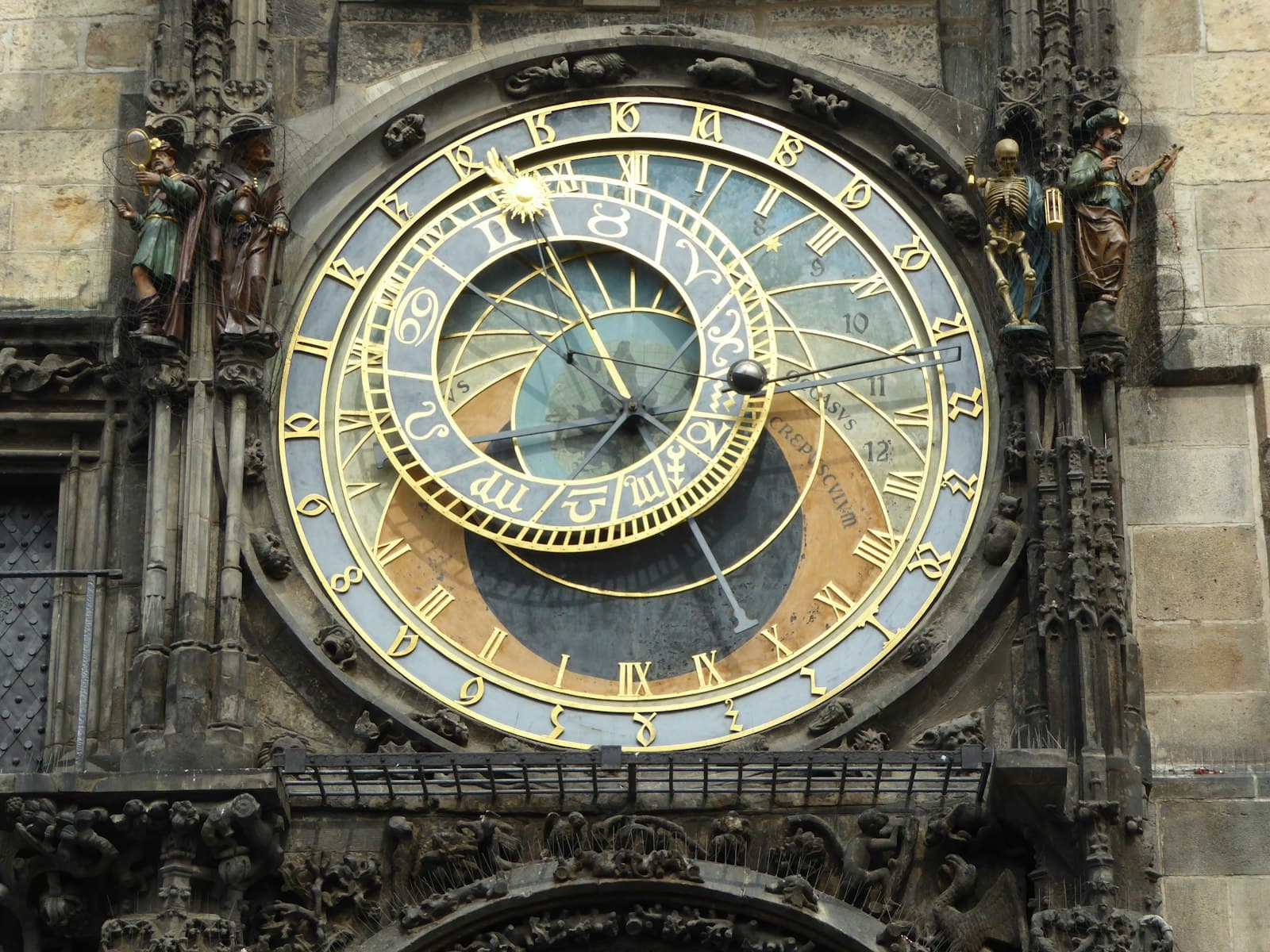
Look up at the south wall of the Old Town Hall tower, in Czech the Staromestska radnice, and radnice means town hall. Set into it is a marvel of the medieval mind: the Astronomical Clock, in Czech the Orloj. Its astronomical dial and mechanism date to the year fourteen ten, with the first recorded mention on the ninth of October, fourteen ten. It was made by the clockmaker Mikulas of Kadan, working with the astronomer and Charles University scholar Jan Sindel. This is the oldest astronomical clock still in operation anywhere in the world, and the third oldest ever built. The dial is not just a clock. It maps the sun and moon across the sky, the passing of the day, and the turning of the zodiac. A painted calendar dial was added around fourteen ninety, and the version most associated with the artist Josef Manes dates to eighteen sixty-six. The little procession of the Apostles, the figures that parade on the hour, came after major repairs between seventeen eighty-seven and seventeen ninety-one. Now, the legend, and it is a legend, so hold it lightly. The tale says the clockmaker, called Hanus in the story, was blinded on the councillors' orders so he could never build another clock to rival it. It is a haunting story, but it is not history. The scholar Zdenek Horsky traced it to a simple mix-up, a confusion with a man named Hanus who reconstructed the Old Town Hall around fourteen seventy to fourteen seventy-three. So enjoy the tale for what it is, a good dark story, and keep the truth beside it. If you wish, the tower itself is open to climb, for a wider view over the red roofs. But the clock face is yours for free, right here, for as long as you care to watch it.
4. The Church of Our Lady before Tyn
Raise your eyes to the east side of the square, and two dark Gothic towers seem to pierce the sky. This is the Church of Our Lady before Tyn, in Czech the Tynsky chram, and chram means church. Those twin towers stand about eighty metres tall, and here is a detail worth catching:…
Full narration for this stop unlocks with the tour.
5. Charles Bridge
Now the walk carries you to the river, and to the most storied crossing in the city. This is Charles Bridge, in Czech Karluv most, and most means bridge. Below it runs the Vltava, in Czech Vltava, the river that divides the city. This bridge was commissioned by Charles the…
Full narration for this stop unlocks with the tour.
6. St. Nicholas Church, Lesser Town
Across the river, the Lesser Town gathers around its square, and one building dominates everything: a soaring green dome and a tall bell tower. This is St. Nicholas Church, in Czech kostel svateho Mikulase, and kostel means church. It stands on the Lesser Town Square, in Czech…
Full narration for this stop unlocks with the tour.
7. Prague Castle
You have made the climb, and the coronation way opens onto its summit. This is Prague Castle, in Czech Prazsky hrad, and hrad means castle. It is not a single building but a whole world walled on the hilltop: palaces, churches, courtyards, and lanes. Its story reaches back an…
Full narration for this stop unlocks with the tour.
8. St. Vitus Cathedral: The Crowning Church
Here the way ends, at the church the whole route was built to reach. This is St. Vitus Cathedral, in Czech Katedrala svateho Vita. Step into the courtyard and its Gothic front rears up, dizzying and dense with stone. This is the coronation church of the Bohemian kings, and…
Full narration for this stop unlocks with the tour.