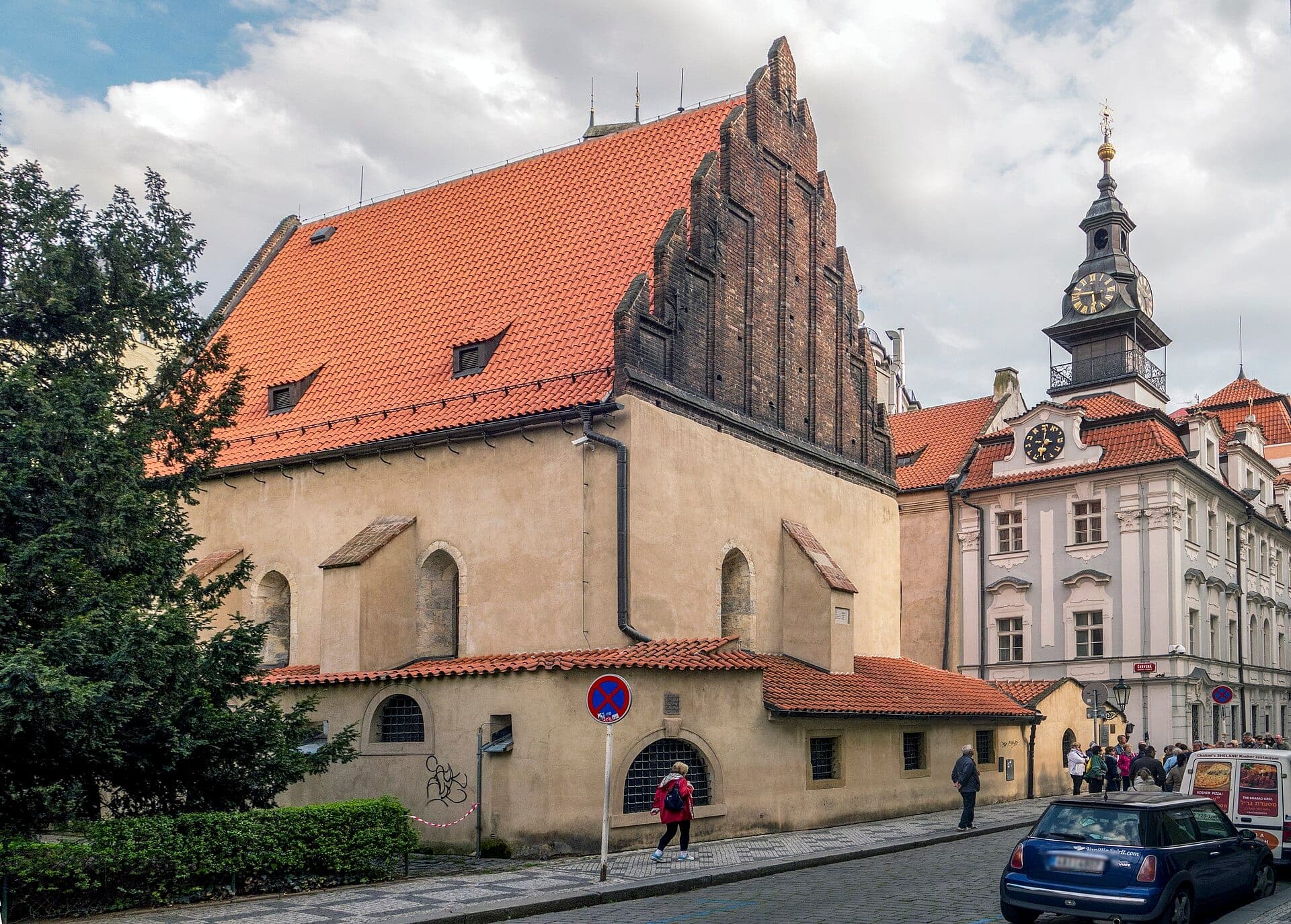
Completed around the year 1270, the Old-New Synagogue in Prague is described as Europe's oldest active synagogue, a double-nave Gothic hall that has sheltered continuous Orthodox worship for roughly seven and a half centuries. It sits in Josefov, the former Jewish quarter, and the single fact that should organize everything you feel standing in front of it is that word active. This is not a preserved shell. It is a working house of prayer, and it has been one for longer than almost any building around it has existed.
What you are looking at
In Czech the building is the Staronova synagoga, and synagoga simply means synagogue. Its completion around 1270 makes it one of the earliest Gothic buildings in Prague, older than most of the city's famous stone. The exterior reads as a steep brick gable rising over a low, thick-walled hall, with an old ladder climbing the outside toward the attic. It does not announce itself. For centuries the community that built it was walled into this quarter and forbidden to grow, so the synagogue was never meant to dominate a skyline. It was meant to endure, and it has.
Step your eye inside, either through the doorway if it is open or through the photographs and descriptions. The interior runs as a double nave: two aisles set under six vaulted bays, divided by a pair of central pillars. The detail worth carrying is in the vaulting itself. Each bay is spanned not by the usual four or six ribs but by five. The extra rib serves no structural purpose, and the story long told about it is that a sixth rib was deliberately avoided so the crossing pattern would never read as a Christian cross. Whether that explanation is literal design intent or later interpretation, the five-rib vault is genuinely unusual for its period, and it is the kind of quiet decision that tells you a minority community was thinking carefully about what its own sacred space should and should not resemble.
The attic and its legend
Hear a stop from this walk
The Old-New Synagogue
Above the hall is an attic, and the attic is the reason many visitors have heard of this building at all. Local lore holds that the great sixteenth-century Rabbi Judah Loew ben Bezalel, known by the acronym the Maharal, shaped a figure of clay called the golem to protect the Jewish community, and that when its work was done its remains were laid to rest in the loft above the synagogue.
Hold that lightly. It is folk tale, not history, and the honest version is more interesting than the legend. Rabbi Loew was a real and formidable scholar. You can find his grave a short walk away in the Old Jewish Cemetery, where he was buried after his death in 1609. But the golem stories attached themselves to his name only in later centuries, long after he died. And the attic itself has been checked. Explorers went up into it in 1883, and again in August of 2014, looking for the clay body the legend promises. Both times they found nothing: no golem, no trace of one. What is genuinely up there is old timber and centuries of dust. What is genuinely down here, under your feet and around your shoulders, is stone that has held prayer since the thirteenth century. The legend is a good story. The building is the astonishing thing.
Why it survived
The Old-New Synagogue's continuity is not an accident of luck alone. It survived fires, floods, and, most pointedly, the demolition of nearly everything around it. Between roughly 1893 and 1913, a slum clearance swept away the crooked medieval lanes of Josefov and replaced them with grand apartment blocks. The synagogues and the cemetery were among the very few structures left standing amid the new streets. Then came the far darker survival. During the Nazi occupation, worship here was interrupted for the only time in the building's history, while the community that used it was murdered in the Shoah. The buildings themselves were spared because the occupiers intended to keep them as a museum of a people they meant to erase entirely. That is not a triumph. It is a wound. The stone outlived the plan to end the people who prayed in it, and Orthodox worship resumed here after the war and continues today, with seating separated by gender in the traditional manner.
Standing there with respect
The one thing to understand in front of the Old-New Synagogue is that you are not looking at a monument to the past. You are looking at a living institution that happens to be seven and a half centuries old. If the doors are open and prayer is happening inside, that is not a performance for visitors. It is a congregation keeping faith in the same room its ancestors used. Practically, this shapes your visit: it is ticketed separately from the neighboring Jewish Museum sites, it closes on Saturdays and Jewish holidays, and men are expected to cover their heads inside, where head coverings are usually provided. Dress and behave as you would in any working place of worship.
The synagogue is the first stop on our self-guided audio walk through Josefov, and it is the right place to begin because it sets the register for everything after it. From here the walk moves outward through the centuries: the Jewish Town Hall with its backward-running Hebrew clock, the Old Jewish Cemetery layered a dozen graves deep, the names of the murdered handwritten across the walls of the Pinkas Synagogue, the golden age of the mayor Mordechai Maisel, the gilded Spanish Synagogue of a freer century, and finally Franz Kafka, who watched this quarter demolished around him as a child. Each stop is close to the next, and you can take them slowly and in the order you like.
If you want to plan the wider visit, browse our Prague walking tours or read more about what to do in Prague. But start here, at the oldest active synagogue in Europe, and give the building the quiet it has earned. Walk the full Josefov tour at your own pace, and let the Old-New Synagogue be the note you measure everything else against.
Sources
- Old New Synagogue, Wikipedia: completion date around 1270, five-rib vaulting, the golem legend and the 1883 and 2014 attic searches, and its description as Europe's oldest active synagogue.
- Old New Synagogue, Prague City Tourism (prague.eu): official visitor overview of the Staronova synagoga as a working Orthodox synagogue, closed on Saturdays and Jewish holidays.
- Old Jewish Cemetery, Jewish Museum in Prague: the burial and death date of Rabbi Judah Loew, the Maharal, in the adjacent cemetery.
- Roamer tour transcript, "The Town Within the City" (Josefov, Prague): fact-audited walking-tour narration covering the synagogue, the Josefov slum clearance of roughly 1893 to 1913, and the wartime history of the quarter.
Ready to experience it?
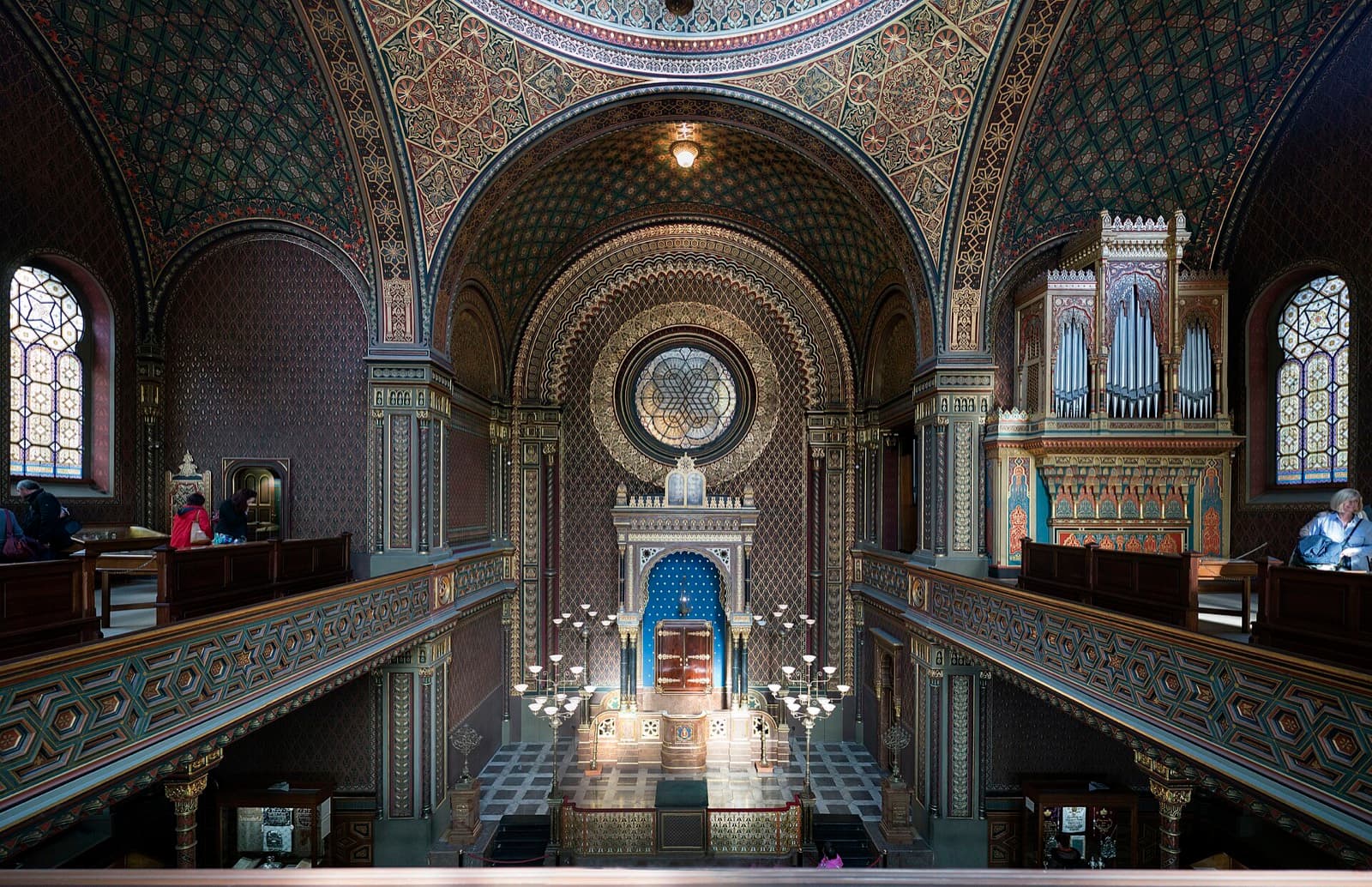
Josefov Jewish Quarter: The Town Within the City
70 min · 1.2 km · easy
More from Prague
Explore more at your own pace.
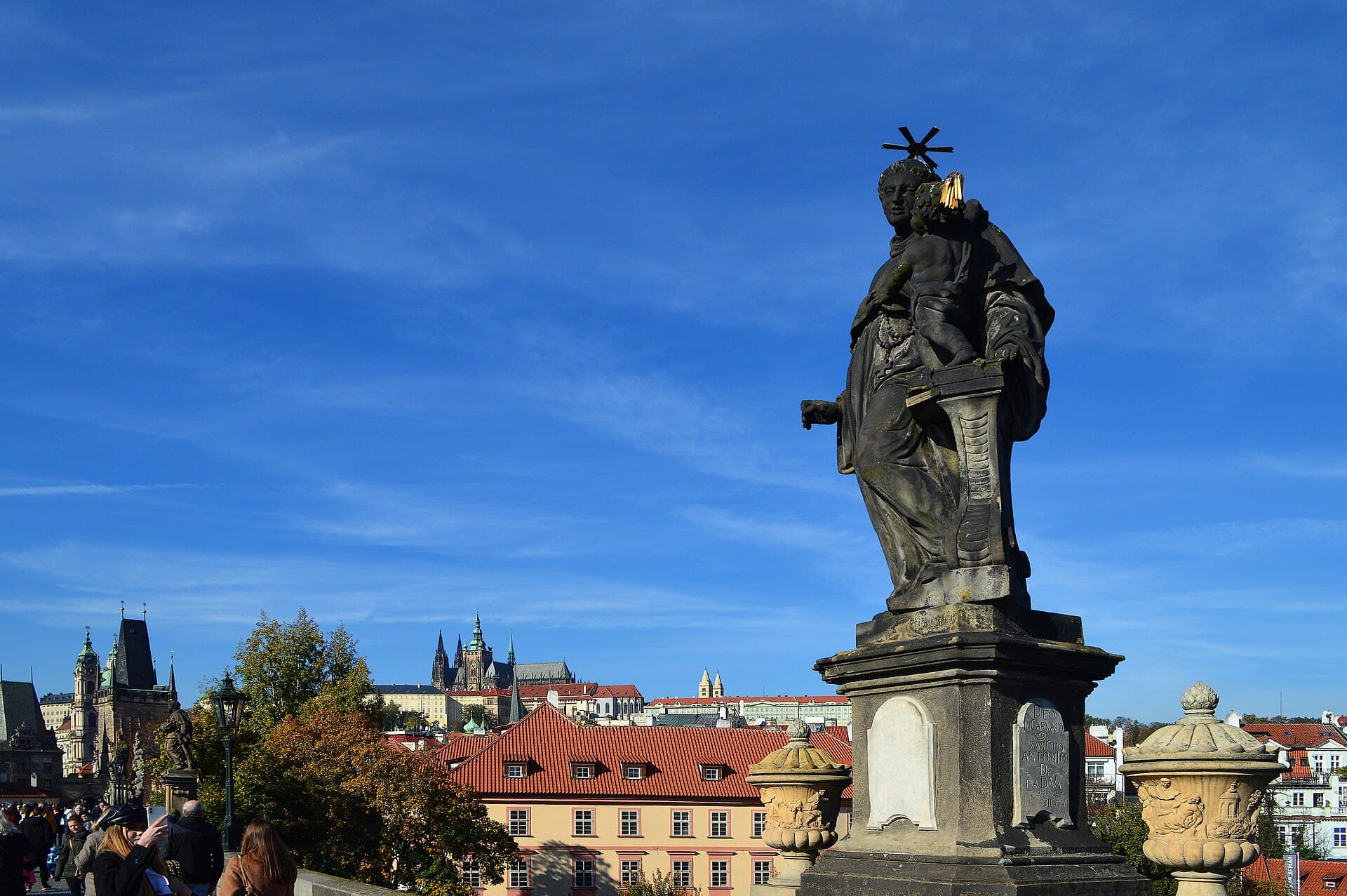
One Day in Prague: A Walkable Morning-to-Evening Itinerary
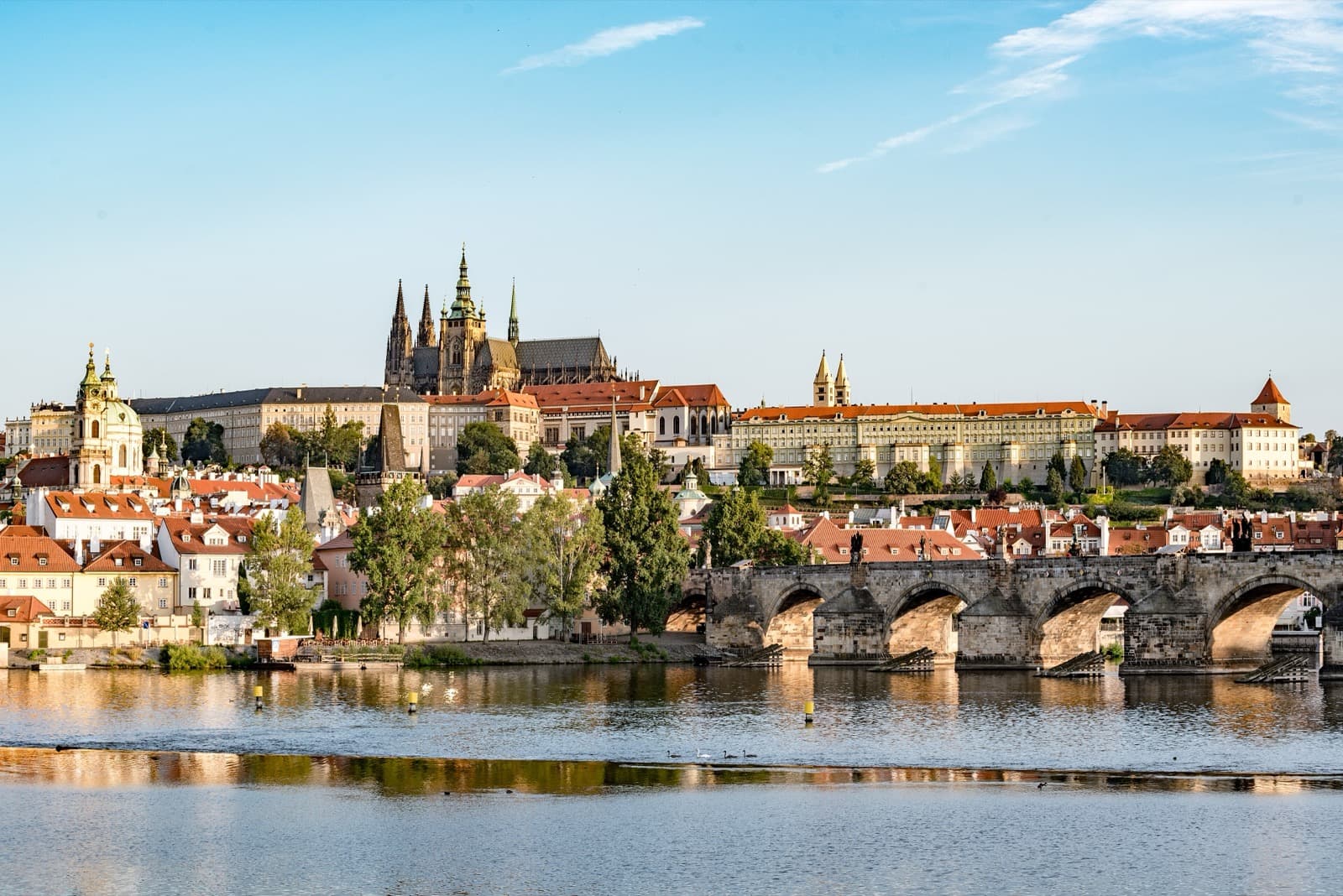
Prague's Layered City: The Coronation Route, Josefov, and a Modern Grammar
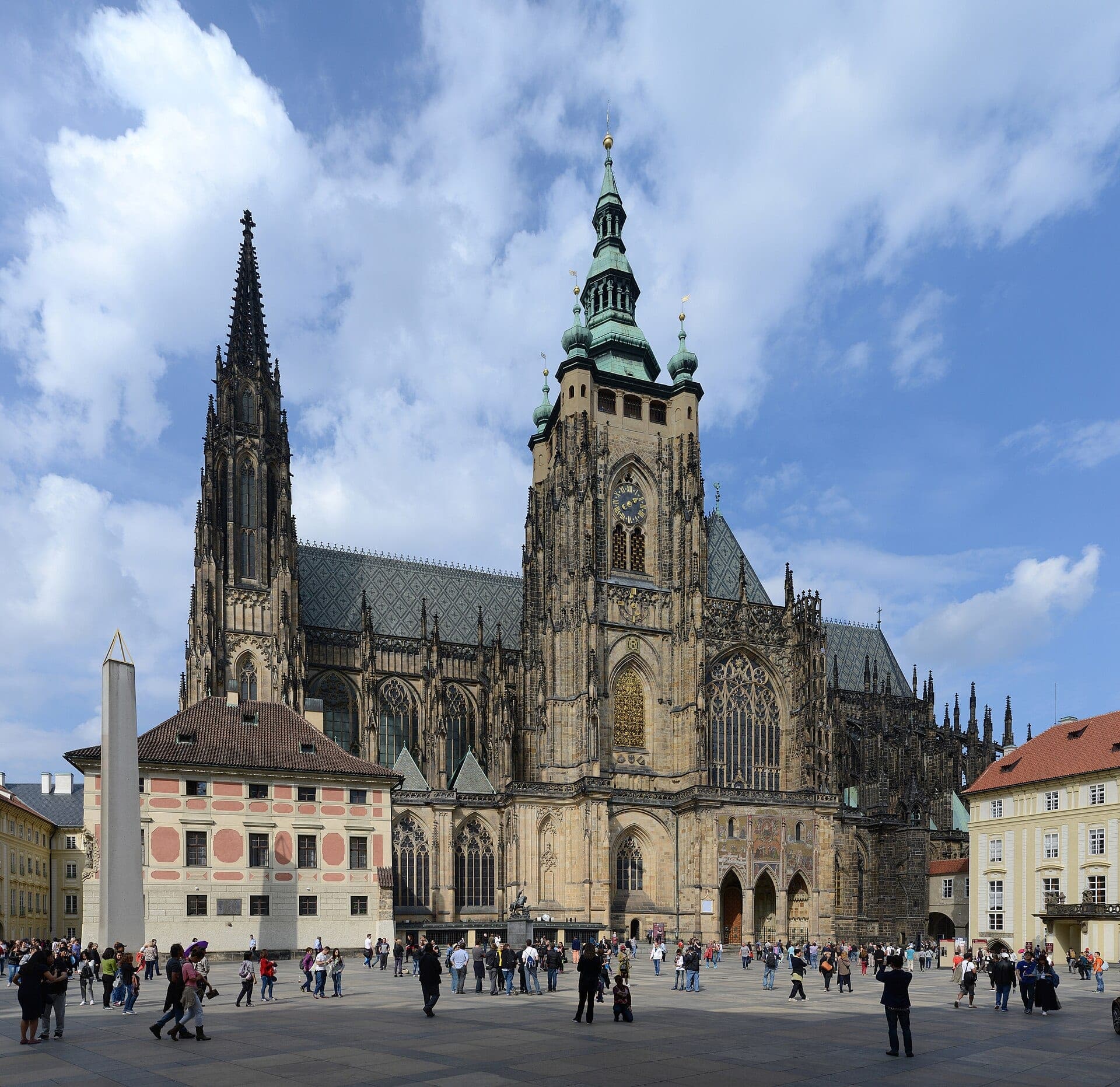
St. Vitus Cathedral and the Crown at the End of Prague's Royal Route
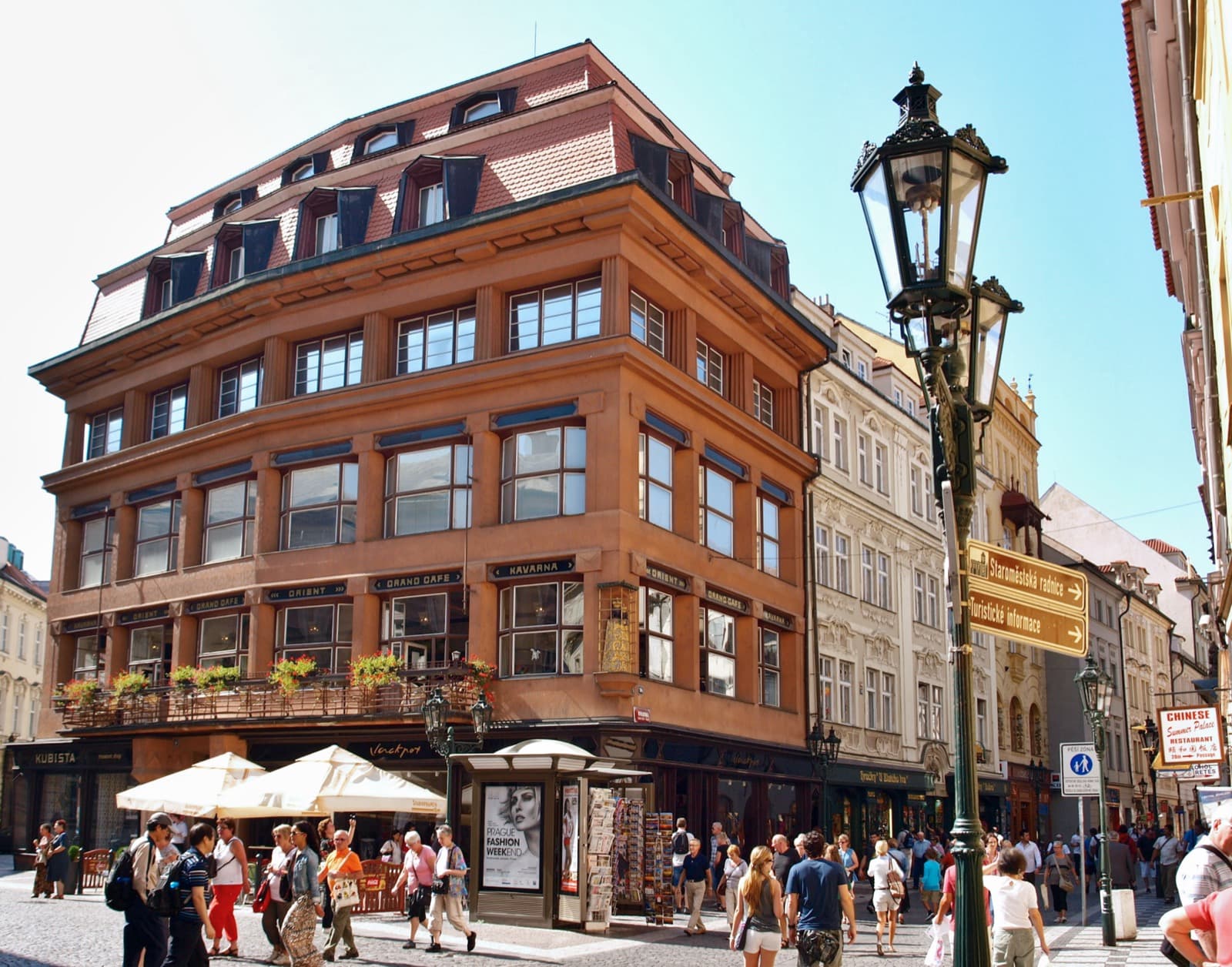
The House of the Black Madonna: How Prague Built Cubism Into a Wall
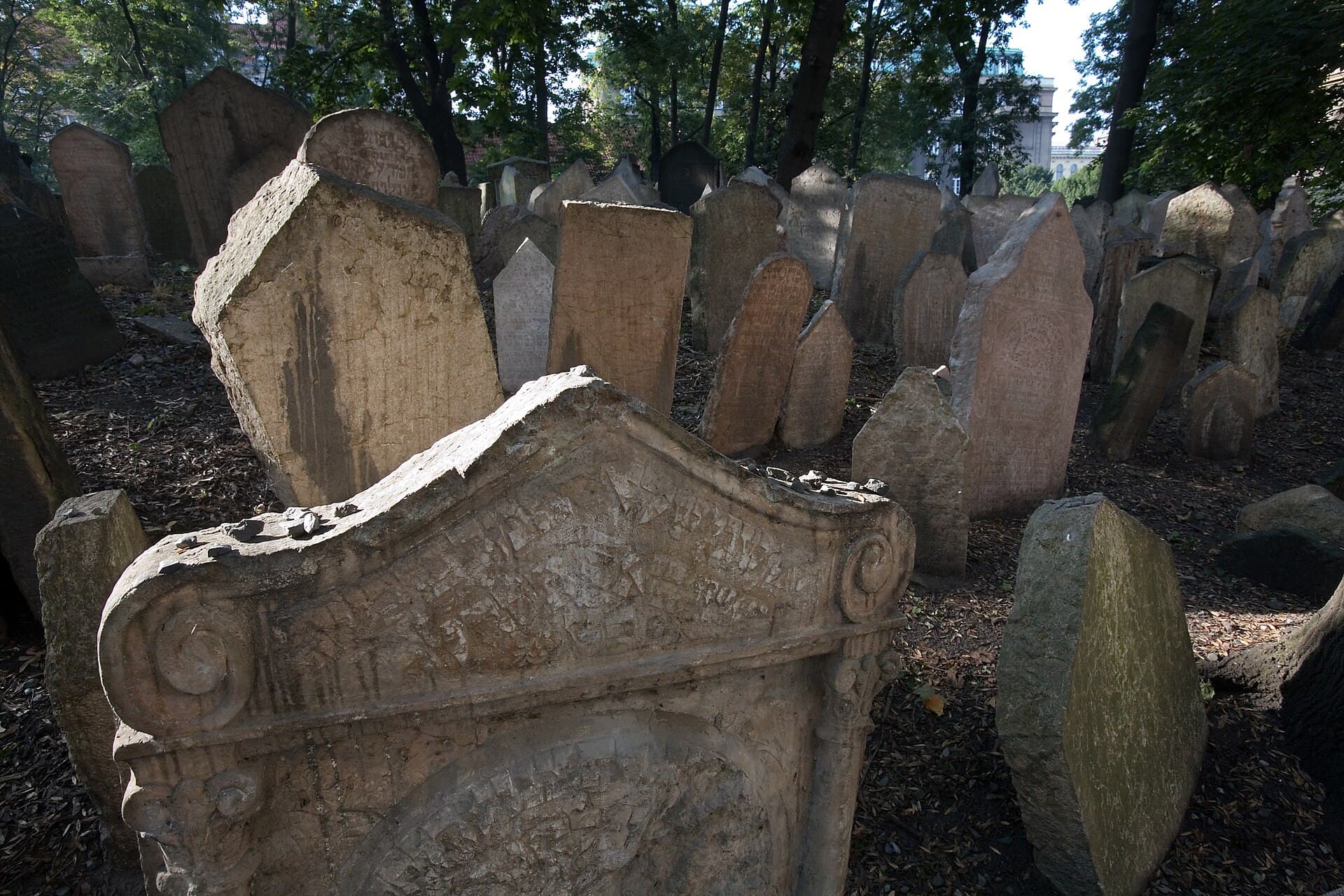
The Old Jewish Cemetery Reads Prague's Whole Confined Quarter