A walk through the single decade when a city of Gothic spires and Baroque swirl taught itself two brand new ways to shape a wall: the flowing gold of Art Nouveau, and Cubism carved into stone and concrete.
Start · The Municipal House: The Overture in Gold
DirectionsStops
- 1
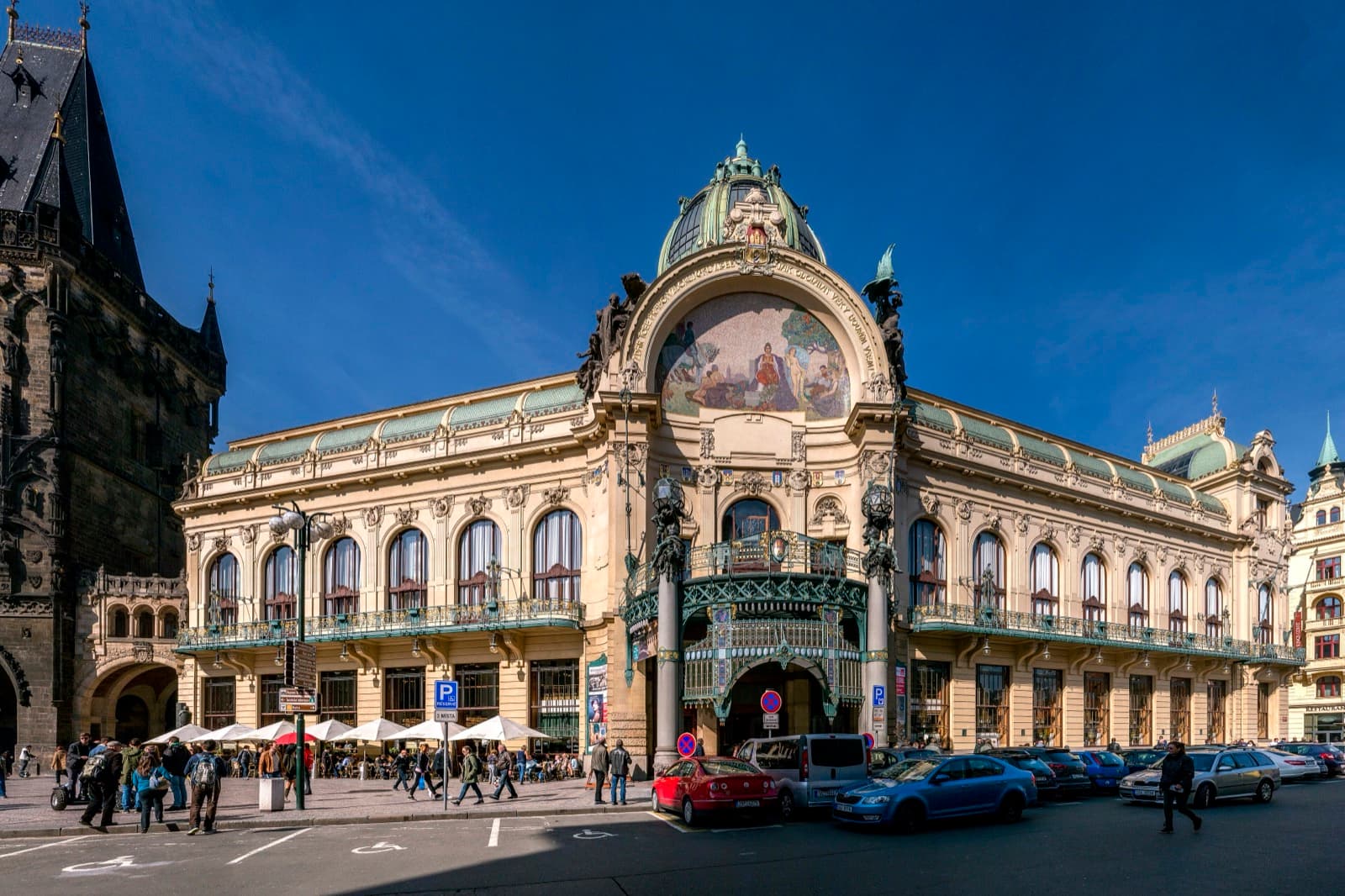
The Municipal House: The Overture in Gold
A grand Art Nouveau civic palace where the modern decade opens in mosaic and glass, and where an independent nation was proclaimed in nineteen eighteen.
- 2
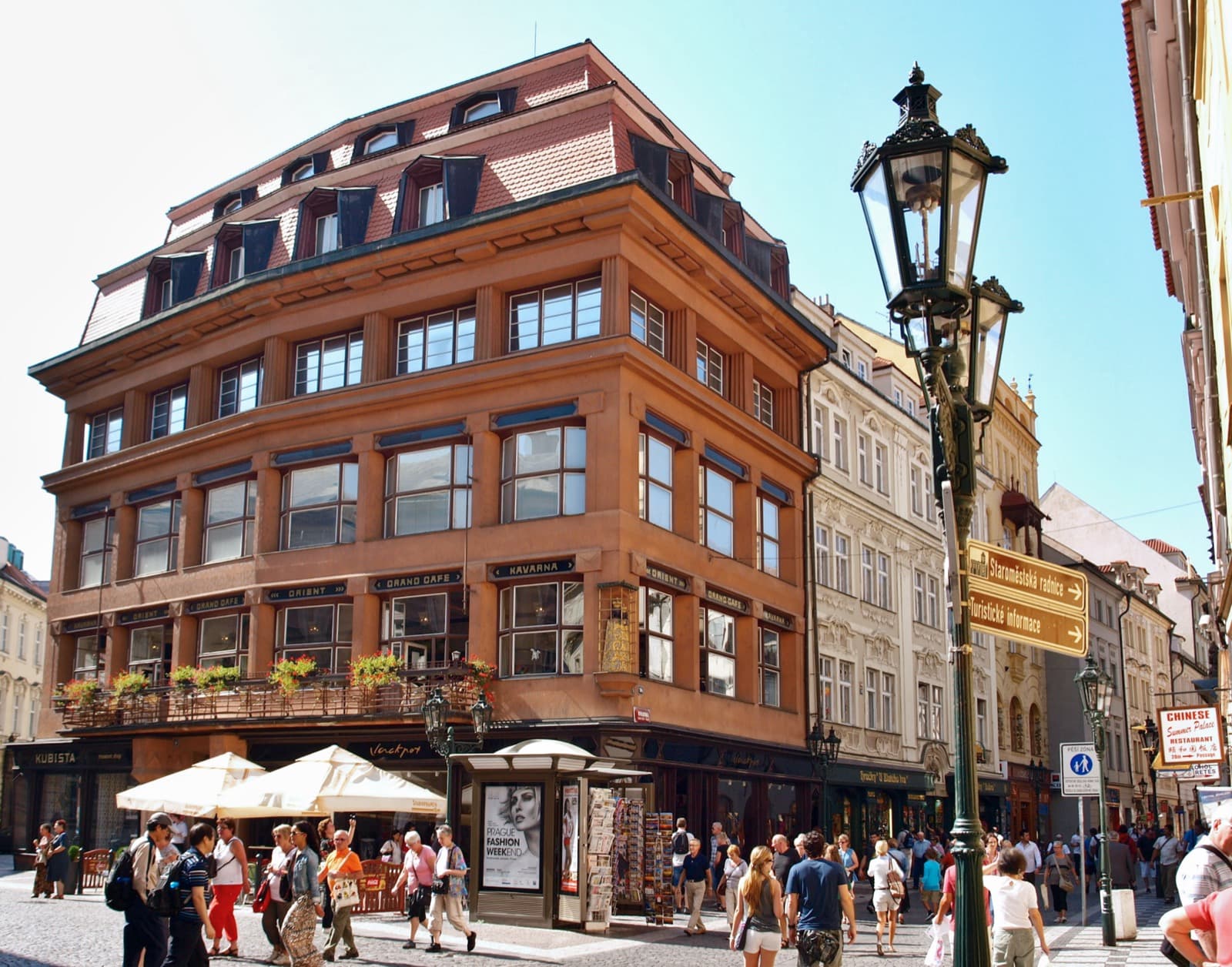
The House of the Black Madonna: The Shock of the New
The earliest Cubist building in Prague, a reinforced-concrete design that folds its facade into sharp planes while a Baroque statue keeps watch at the corner.
- 3
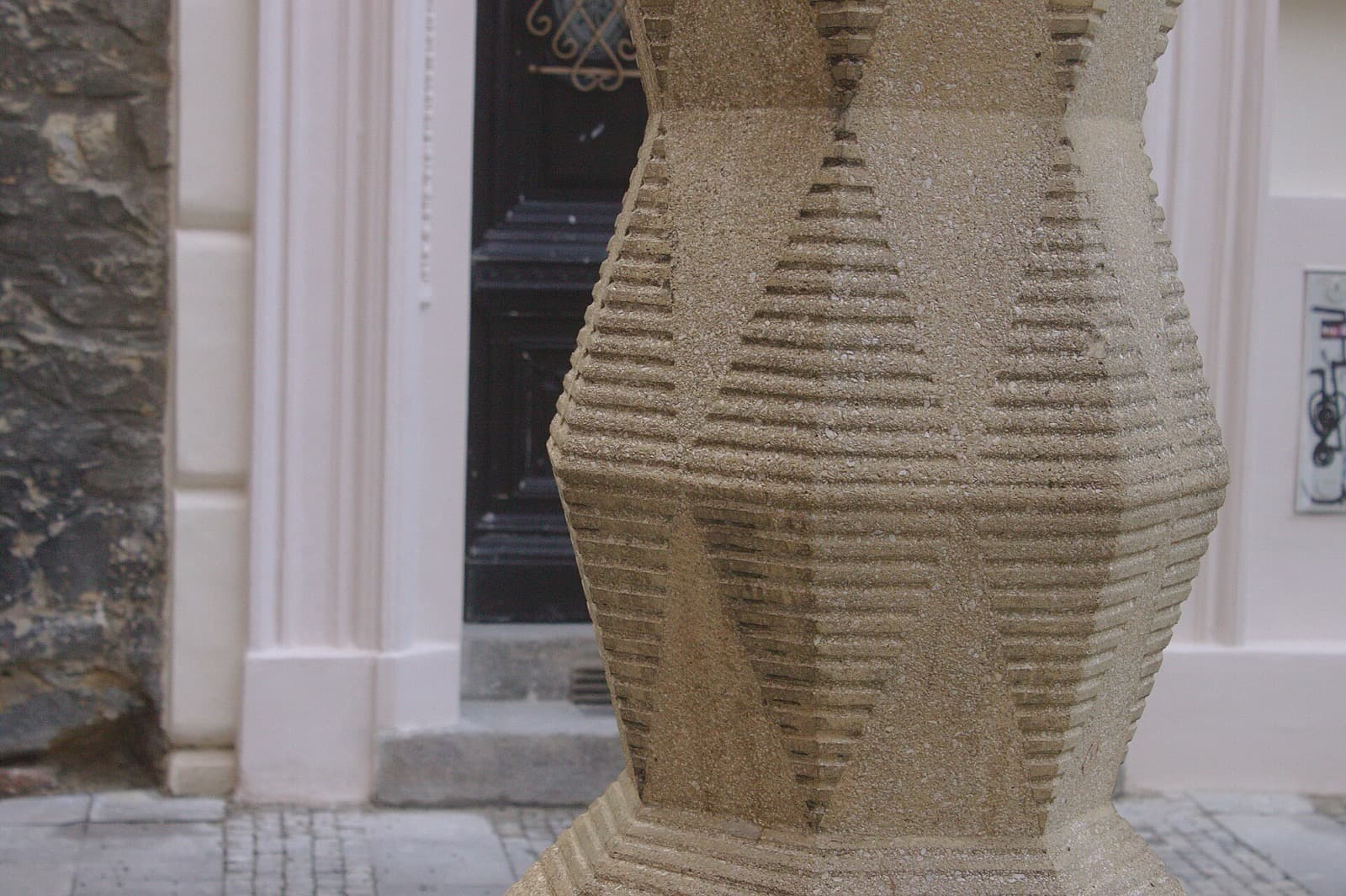
The Cubist Lamppost: A Footnote in Concrete
A small faceted concrete street lamp on a corner of Jungmann Square, widely reported to be the only Cubist lamppost anywhere.
- 4
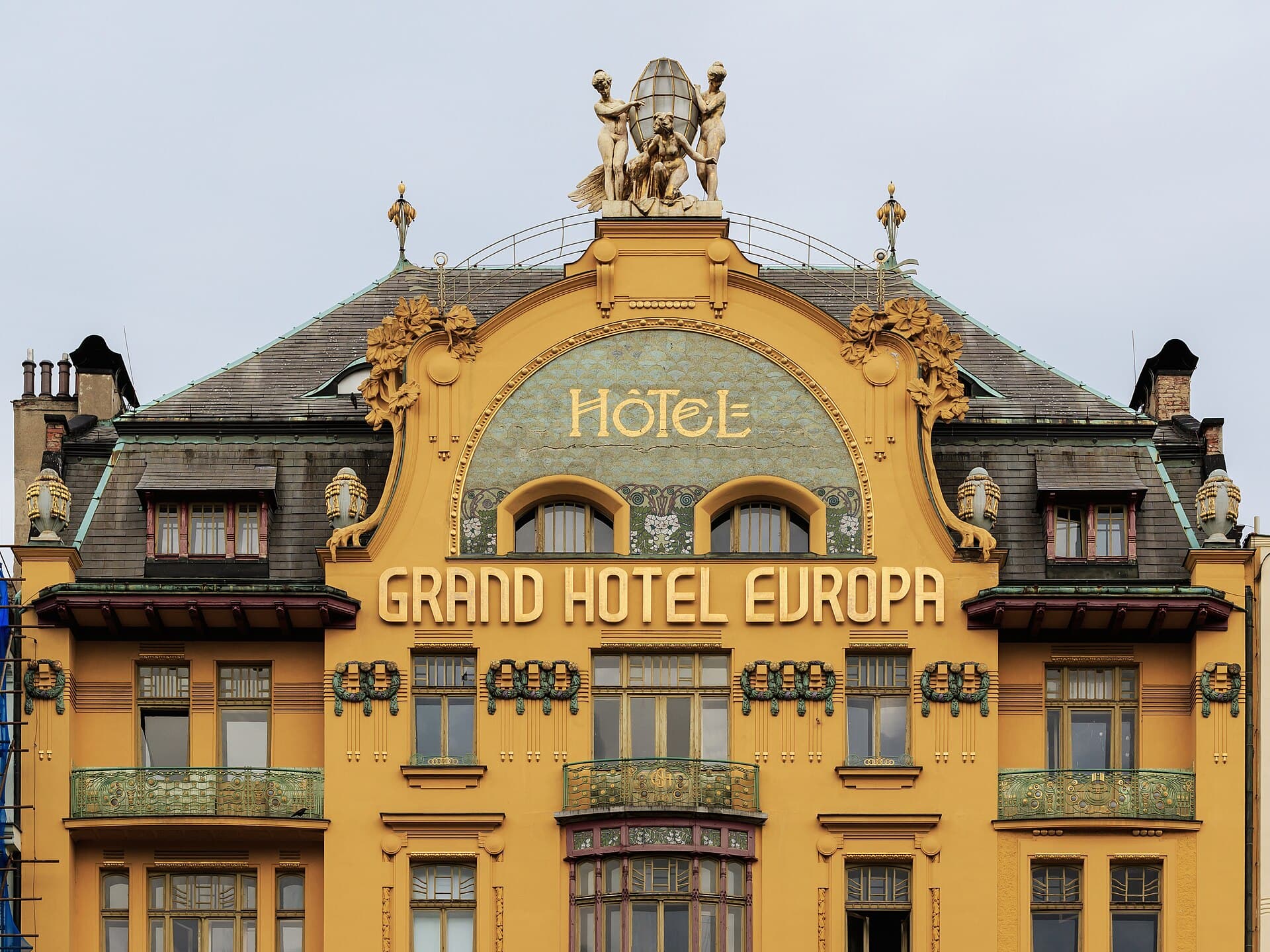
Wenceslas Square: Beauty and Memory on One Boulevard
A long boulevard-square founded as a medieval horse market, lined with Art Nouveau facades and holding the memory of nineteen eighteen, nineteen sixty-eight, nineteen sixty-nine, and nineteen eighty-nine.
- 5
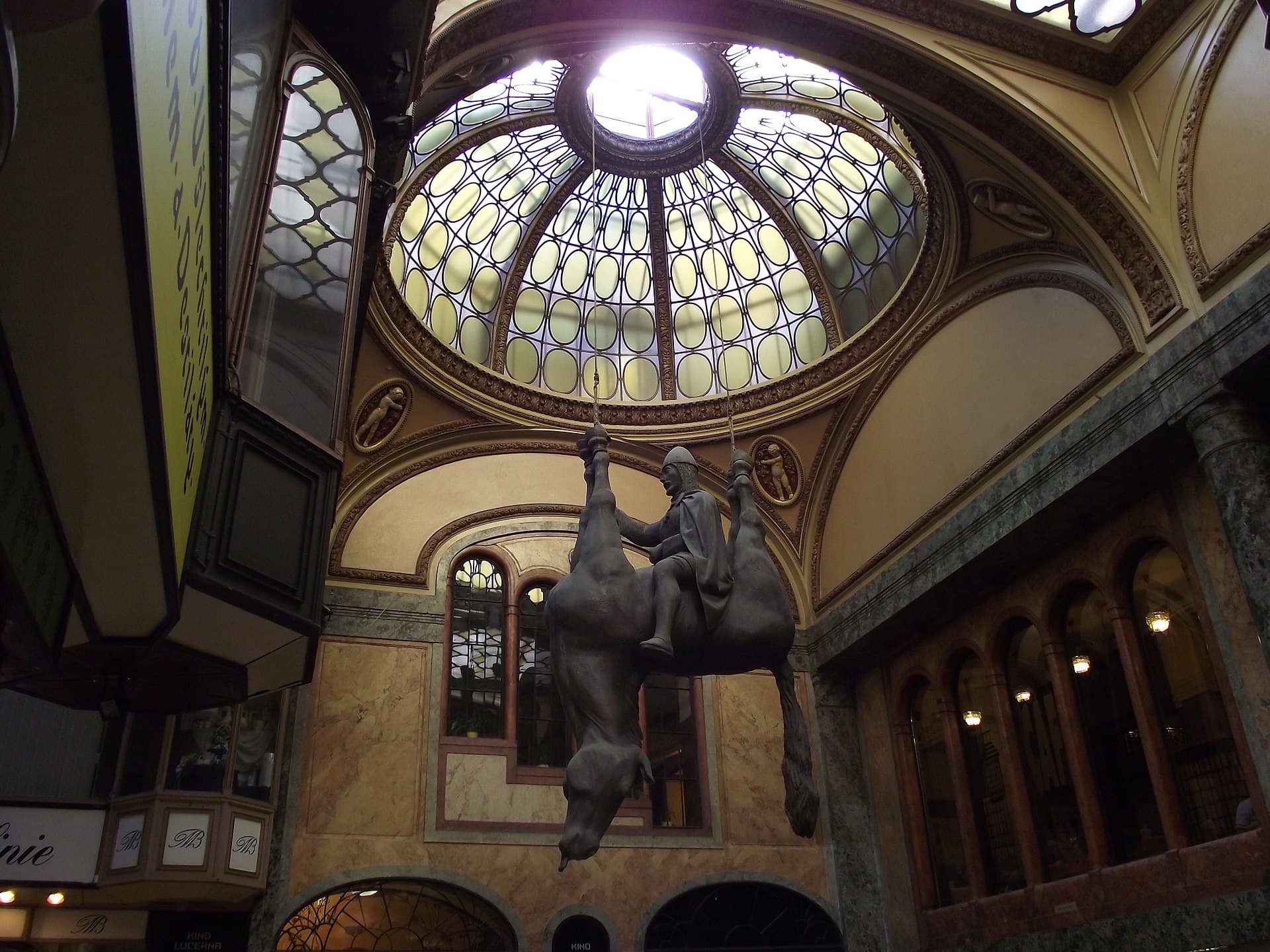
The Lucerna Palace: The Decade's Engineering Nerve
A glass-roofed passage in one of Prague's first reinforced-concrete buildings, commissioned by the grandfather of a future president and hung with a famous satirical sculpture.
- 6
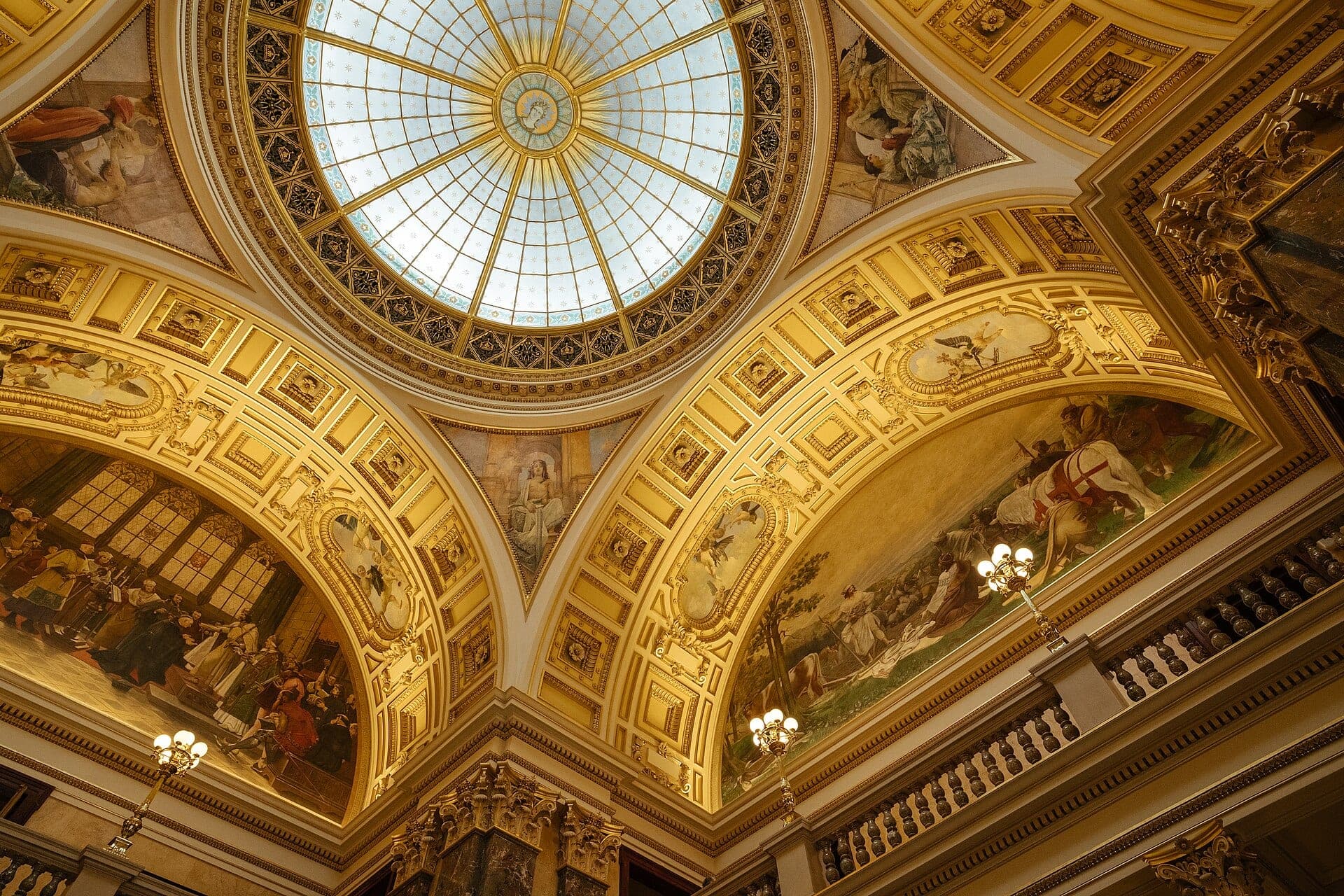
The National Museum: The Older National Note
A grand Neo-Renaissance museum closing the top of Wenceslas Square, its facade still marked by repairs from the nineteen sixty-eight invasion.
- 7
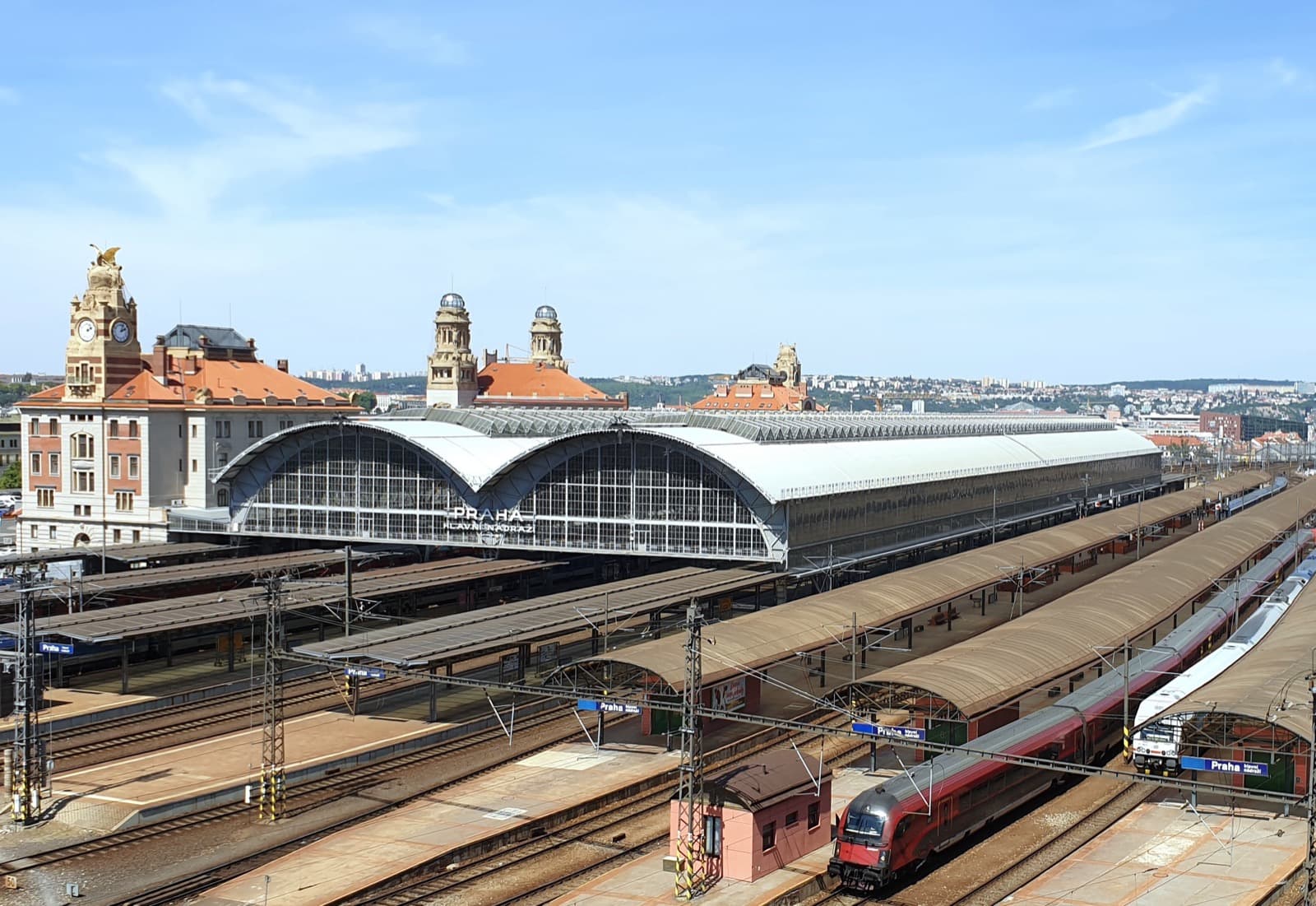
Prague Main Station: The Gateway Wearing the Grammar
A working railway station whose Art Nouveau head building, by architect Josef Fanta, crowns the whole modern decade with a decorated dome and a restored cafe.
Details
Best Time to Visit
Late morning to mid-afternoon, when the ground-floor lobbies, cafes, and the Lucerna passage are open and the light rakes across the facades. A weekday is calmer than a weekend on Wenceslas Square. If you want to step inside the Municipal House halls or the National Museum, aim to arrive early enough to catch a guided tour slot or beat the afternoon queues.
Pro Tips
- •The whole route is free to walk, and most of what matters here is on the outside: you can read every facade from the street without buying a single ticket.
- •Step into the ground-floor lobby and cafe of the Municipal House and the ground floor of the House of the Black Madonna, both free, to see the Art Nouveau and Cubist interiors up close.
- •The Cubist lamppost is small and easy to miss: look for it on a corner of Jungmann Square near the Church of Our Lady of the Snows, at the foot of Wenceslas Square.
- •Walk the Lucerna passage slowly and look up to find David Cerny's upside-down horse sculpture; the arcade is a public shortcut between two streets and is free to pass through.
- •At the National Museum, scan the sandstone for the paler repair patches from nineteen sixty-eight, and treat them as a scar rather than a photo opportunity.
- •Save the railway station for last: sit in the restored Art Nouveau cafe under the cupola before catching onward transport, and notice how the brutalist concourse below contrasts with Fanta's ornate hall.
Safety & Precautions
- •Prague's trams are fast and nearly silent, and tram tracks plus cobblestones make uneven footing: watch the ground and look both ways before stepping across any street or rail, especially near Wenceslas Square and Jungmann Square.
- •Wenceslas Square, the busy Old Town streets, and public transport are known spots for pickpockets: keep bags zipped and closed in front of you, and stay alert in crowds and on trams.
- •If you use a tram or the metro between stops, validate your ticket immediately (stamp it in the machine on board the tram or before entering the metro), or you risk a fine from inspectors.
- •The National Museum, the Municipal House halls, and other interiors can require timed tickets and involve queues, and opening hours vary by exhibition: check current times before planning to go inside.
Travel advisory: Exercise Normal Precautions (Level 1).
Gallery
Related Reading
Go deeper on what you'll see, hear, and walk through.
Overview
Best Self-Guided Walking Tours in Prague (2026)
3 min
Overview
One Day in Prague: A Walkable Morning-to-Evening Itinerary
7 min
Overview
Prague Travel Guide: Days, Transport, Safety, and Budget
7 min
Thematic
Prague's Layered City: The Coronation Route, Josefov, and a Modern Grammar
8 min
Companion
The House of the Black Madonna: How Prague Built Cubism Into a Wall
7 min
Deep dive
Wenceslas Square: The Horse Market That Became a Nation's Stage
6 min
Read
What to Eat in Prague
6 min
Read the walk
The full story of Art Nouveau and Cubist Prague: The City's Modern Grammar, in words. Prefer to listen? Play it narrated, from home or on location.
Introduction
Between roughly nineteen oh five and nineteen fifteen, Prague, in the Czech Republic, did something remarkable. A city famous for Gothic spires and Baroque swirl taught itself two brand new ways to shape a wall. First it wrapped its surfaces in the flowing gold, glass, and mosaic of Art Nouveau. Then a small circle of Czech architects tried something attempted almost nowhere else on earth: they built Cubism in stone and concrete, faceting facades, and even a lamppost, like cut crystal. This walk reads that decade of surface invention as a single sentence. Over seven stops, about ninety minutes at an unhurried pace, and roughly three kilometres, you will move from a civic palace whose halls were painted by Alphonse Mucha, to the earliest Cubist building in the city, past a faceted concrete lantern hiding in plain sight, along a boulevard that holds both gilded nymphs and the memory of nineteen eighteen, nineteen sixty-eight, and nineteen eighty-nine, through an early concrete arcade, and out to a railway station crowned with an Art Nouveau dome. Each stop stands on its own. Skip any that do not call to you, and linger where the stone rewards it. The buildings carry the argument themselves, so I will name an architect once and let the facade do the rest. Hold beauty and grave history in the same hand here. The same square that shows off golden figures also remembers a young nation, an invasion, and a quiet revolution. When you arrive at the Municipal House beside the Powder Tower, begin with stop one.
1. The Municipal House: The Overture in Gold
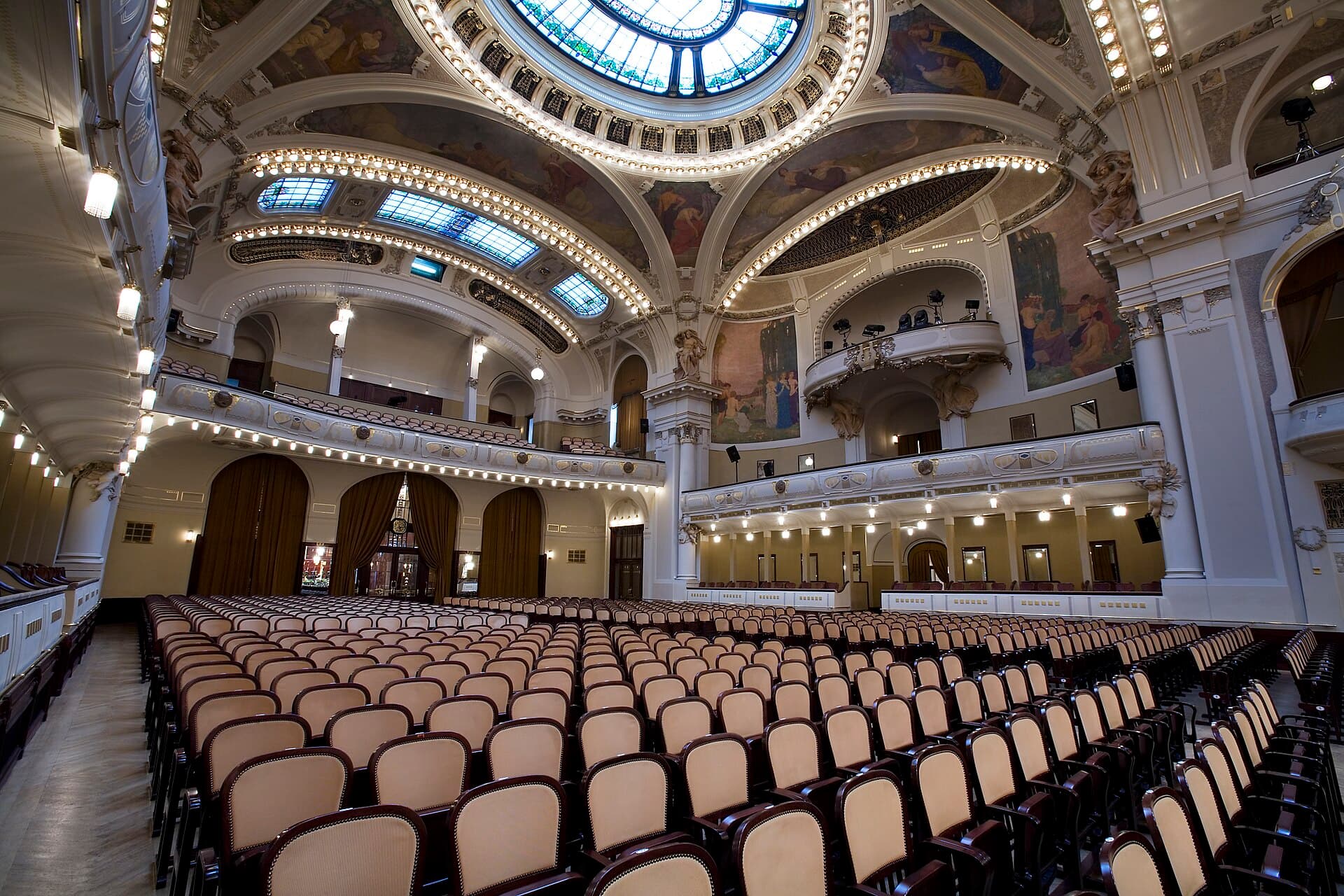
Stand in front of the Municipal House (Obecni dum), and you are reading the overture to Prague's modern grammar. Construction began in nineteen oh five, and the building opened in nineteen twelve, the work of two architects, Osvald Polivka and Antonin Balsanek. It rose on the site of a former royal court palace, the residence of Bohemian kings in the fifteenth and early sixteenth centuries, so the moderns quite literally built their new civic face over the old royal one. Look up at the great glass and iron canopy over the entrance, and above it the half-dome mosaic. That mosaic is called Homage to Prague, by the artist Karel Spillar. This is Art Nouveau speaking at full volume: gold, glass, wrought iron curved like plant stems, and figures that seem to float on the facade. Inside, and you can step into the ground-floor lobby and cafe for free, the decoration deepens. The Lord Mayor's Hall was painted by Alphonse Mucha, the Czech artist whose sinuous posters helped define the whole style. At the heart of the building sits Smetana Hall, a glass-domed concert auditorium that still fills with music. And on the twenty-eighth of October nineteen eighteen, in these halls, an independent Czechoslovakia was proclaimed. So the building is not only pretty. It was a young nation's attempt to invent a modern face of its own, and it announced that nation into the world. Let the surface hold both notes at once: the beauty in the gold, and the weight in the date.
2. The House of the Black Madonna: The Shock of the New
Here the grammar breaks. The House of the Black Madonna (Dum U Cerne Matky Bozi) is the earliest example of Cubist architecture in Prague, completed in nineteen twelve by the architect Josef Gocar. After the flowing curves of Art Nouveau, look at what he did instead. The facade folds. Bay windows push out in sharp angled planes, cornices tilt like cut crystal, and the whole surface seems faceted, as if the building were carved rather than built. This was Cubism, the movement painters were exploring on canvas, translated by a small circle of Czech architects into stone and concrete. Almost nowhere else on earth did architects try to build Cubism as a whole structure. The name comes from the corner. Look up, and you will find a small Baroque statue of a black Madonna, kept from an earlier building that once stood on this site. The old figure and the radically new facade share the same wall. Underneath the angled surface is a reinforced-concrete skeleton, a modern engineering idea drawn from tall American buildings, which let Gocar open the interiors without a forest of supporting walls. On the first floor is the Grand Cafe Orient, presented as the only Cubist cafe, reconstructed in the early two thousands from nineteen twelve photographs, so even the chairs and railings are faceted. The upper floors hold the Museum of Czech Cubism. You can walk into the ground floor and see the cafe for free. Stand back on the street and let the facade tell you plainly: this was a young nation testing whether it could invent something entirely its own.
3. The Cubist Lamppost: A Footnote in Concrete
This stop is a footnote, and an easy one to walk straight past. On a quiet corner of Jungmann Square (Jungmannovo namesti), near the tall Gothic Church of Our Lady of the Snows and just off the foot of Wenceslas Square, stands a lamppost like no other. It is a Cubist lamppost. The shaft and the lantern above it are made of reinforced concrete, faceted into crystalline, zigzag forms, the same sharp language you just saw on the House of the Black Madonna, but shrunk down to a single piece of street furniture. It is attributed to the architect Emil Kralicek and dated to around nineteen thirteen. It is widely reported to be the only Cubist street lamp in the world. I will pass that claim on as it is usually told, said to be the only one, rather than swear to it, but either way it is a genuine oddity: an entire architectural movement compressed into an object you could reach out and touch. Kralicek left other marks nearby. He is credited with a Cubist pharmacy just around the corner on Wenceslas Square, and with reshaping this little square around the same time. What I love about this stop is its modesty. There is no ticket, no queue, no crowd. It simply stands here, doing an ordinary job, holding light over a corner, while quietly being one of the strangest survivors of Prague's Cubist decade. Give it a moment. Walk around it once. Then carry the shape in your eye, because you will start seeing that faceted logic everywhere.
4. Wenceslas Square: Beauty and Memory on One Boulevard
Wenceslas Square (Vaclavske namesti) is less a square than a broad boulevard, about seven hundred and fifty metres long, sloping gently upward. Charles the Fourth founded it in thirteen forty-eight as the Horse Market. It only took the name of Saint Wenceslas, the patron of…
Full narration for this stop unlocks with the tour.
5. The Lucerna Palace: The Decade's Engineering Nerve
Step in off the street and into the Lucerna Palace (Palac Lucerna), and you are standing inside the engineering nerve of Prague's modern decade. Built roughly between nineteen oh seven and nineteen twenty-one, it was one of the first reinforced-concrete buildings in the city,…
Full narration for this stop unlocks with the tour.
6. The National Museum: The Older National Note
At the top of Wenceslas Square, closing it like a full stop, stands the National Museum (Narodni muzeum). This is the older note that the moderns were answering. It was designed by the architect Josef Schulz and completed in eighteen ninety-one, in a grand Neo-Renaissance style,…
Full narration for this stop unlocks with the tour.
7. Prague Main Station: The Gateway Wearing the Grammar
The walk ends where a city greets the world: Prague Main Station (Praha hlavni nadrazi). This is the most public flourish of the whole Art Nouveau decade, a gateway wearing the grammar for every arriving traveler to see. Let me be precise about the layers, because it is easy to…
Full narration for this stop unlocks with the tour.