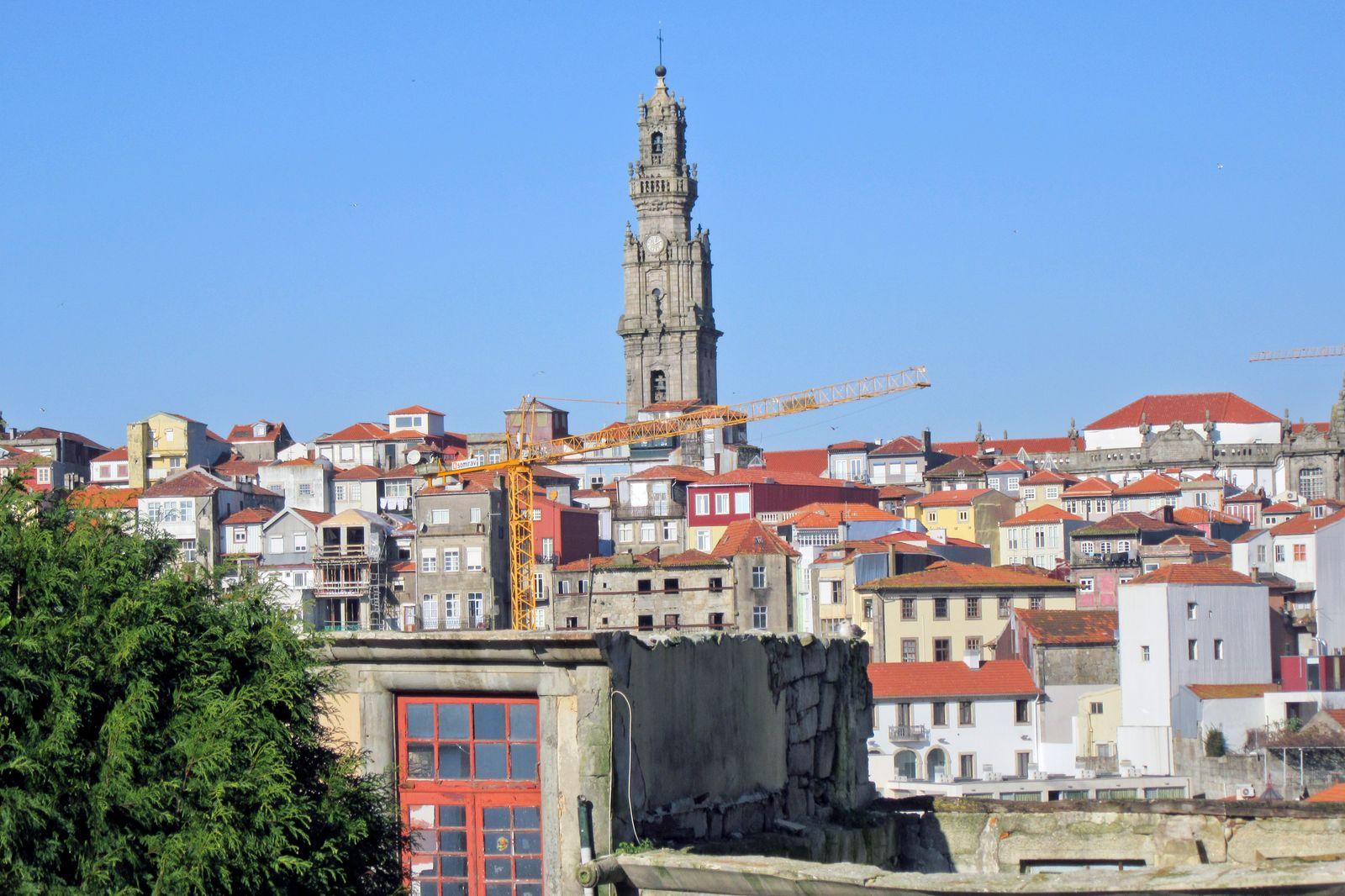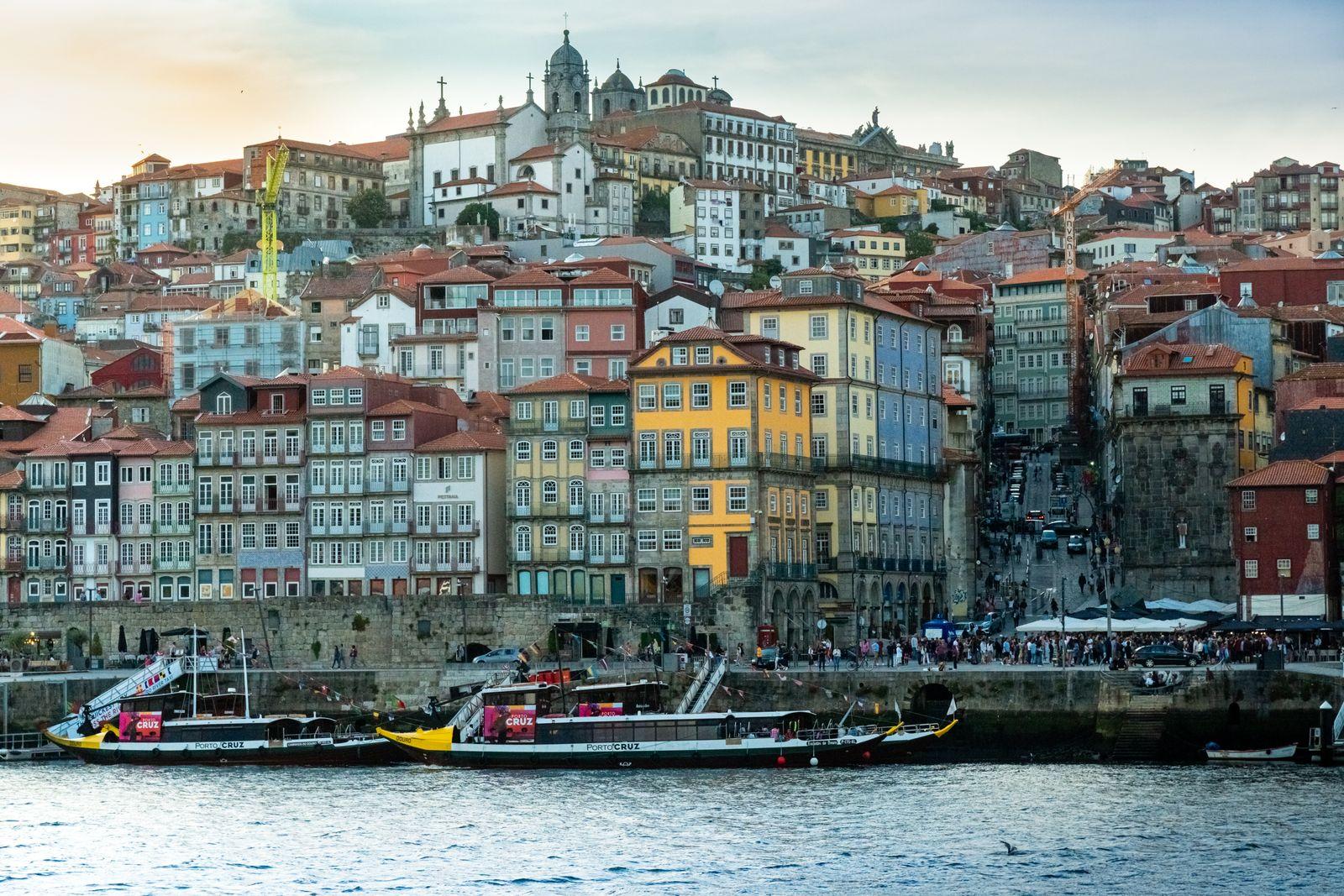
A descent through the granite city, from the baroque skyline and the tiled upper town down the hill to the working river and the iron bridge that finally crossed it, is the simplest way to understand Porto. The city is built of hard grey stone, and it chose to say everything on its surfaces: in carved granite, in gold leaf, in glazed blue and white tile. But underneath every surface is the Douro. For centuries wine, cork and cargo came down that river from the interior, and the wealth came back up. Walk from the top of the hill to the water and the city explains itself in order.
Act one: the dressed-up hill
The walk opens at the Torre dos Clérigos, 75.6 metres of granite that refuses to behave like plain stone. It scrolls and flourishes, the work of Nicolau Nasoni, an Italian painter and architect who arrived in Porto in 1725 and stayed. The church went up from 1732 and the tower was finished in 1763. Here the whole paradox is already visible: the city's hardest material turned into its most theatrical gesture.
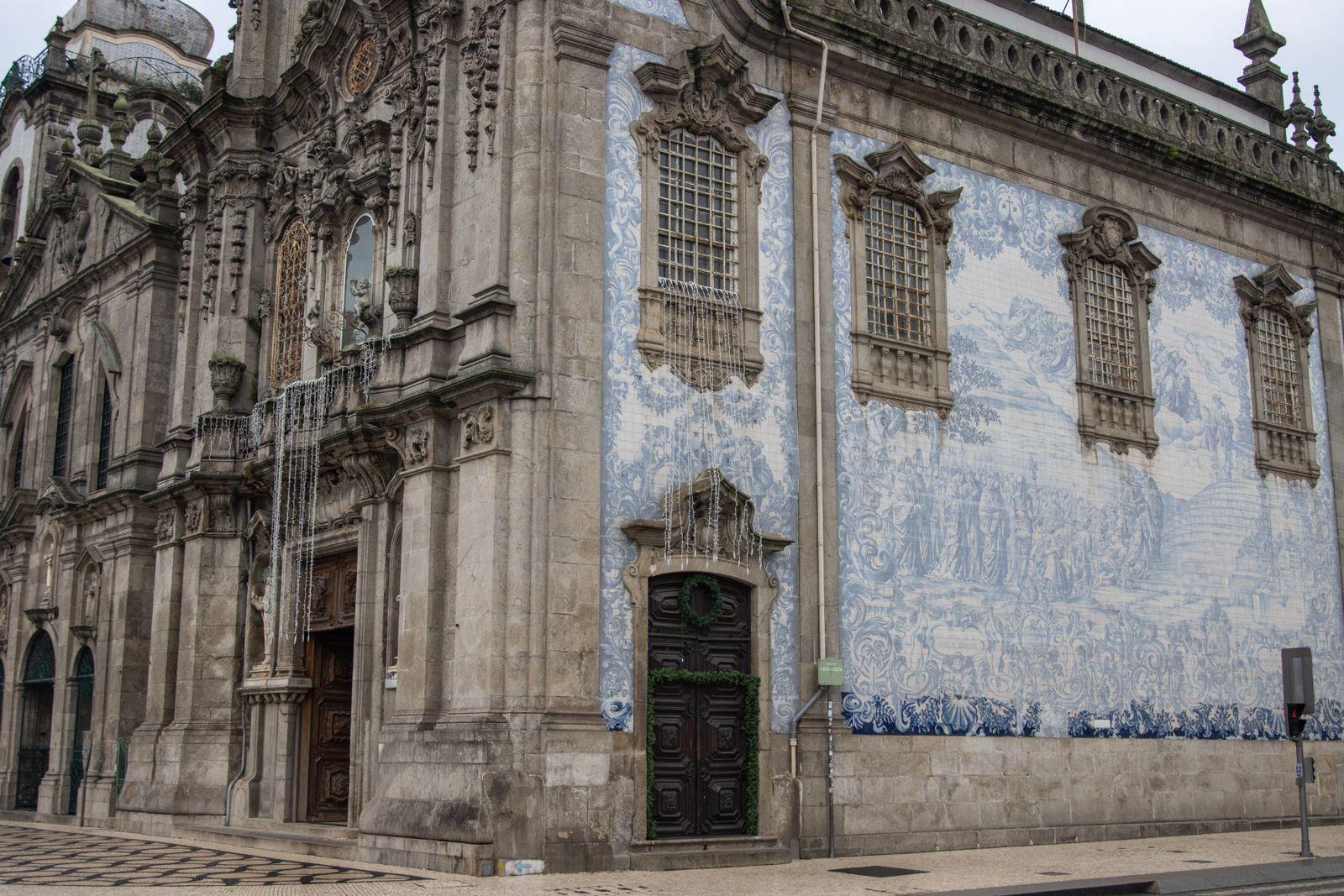
A few steps on, the Livraria Lello, opened in 1906, saves its theatre for the inside, with a forked staircase climbing to a gallery under a stained-glass skylight. Then the Igreja do Carmo shows Porto's most famous trick at full size. Its long east wall is sheathed in a huge blue and white azulejo panel of the founding of the Carmelite Order. The church is from 1756 to 1768. The tiles are from 1912. The stone is baroque; the skin is modern. Squeezed between the Carmo and its neighbour is a house barely wider than a door.
Act two: stone that speaks, tile that tells
Hear a stop from this walk
Praça da Ribeira: The Face Turned to the Water
The Avenida dos Aliados turns sober. After colour and glaze, the granite here is carved into cornices, pilasters and sculpted doorways, and the City Hall closes the avenue under a clock tower begun in 1920 and finished in 1955. The decoration has not gone, it has changed language, from colour to relief.
Then São Bento station puts the brightest skin back on. Its entrance hall, opened in 1916, holds about twenty thousand tiles by Jorge Colaço: battles and kings high on the walls, and below them the work of the regions, vineyards and harvests and boats of wine. It is a working commuter station, and the hall is free to walk into. A place to buy a ticket carries the whole national story on its walls.
Act three: the crown and the counting house
The climb to the Sé is the turn. This is the windy crown where Porto began, and the cathedral, begun around 1110, was built as much for holding as for praying: thick walls, two blunt towers, a rose window. King John the First married Philippa of Lancaster here in 1387, the wedding that bound Portugal and England. From its terrace the city falls away to the water, and from here the walk is all downhill.
The merchant quarter below is where the river's money shows. The Palácio da Bolsa was built not by a king but by the Commercial Association of Porto, from 1842, on the ruins of a Franciscan convent that burned in the siege of 1832, and its showpiece Arab Room took from 1862 to 1880. Next door, the Igreja de São Francisco keeps a plain Gothic face over an interior drowned in gilded carved wood, with an ossuary beneath: gold above, bone below. The Casa do Infante, built by royal decree in 1325 as a customs house, is where the river's cargo was weighed and taxed. Tradition says Henry the Navigator was born here, though that remains tradition rather than record.
The river
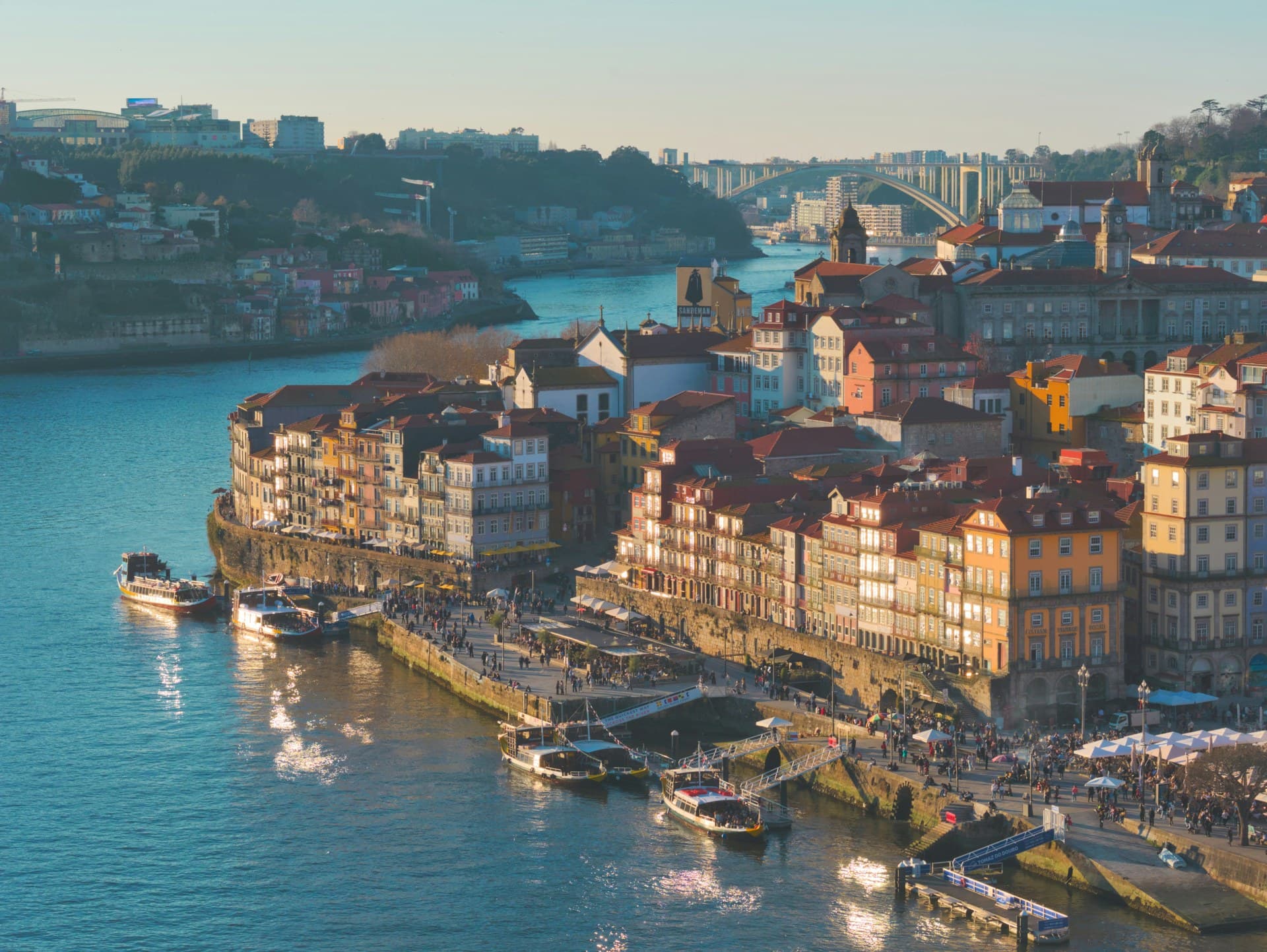
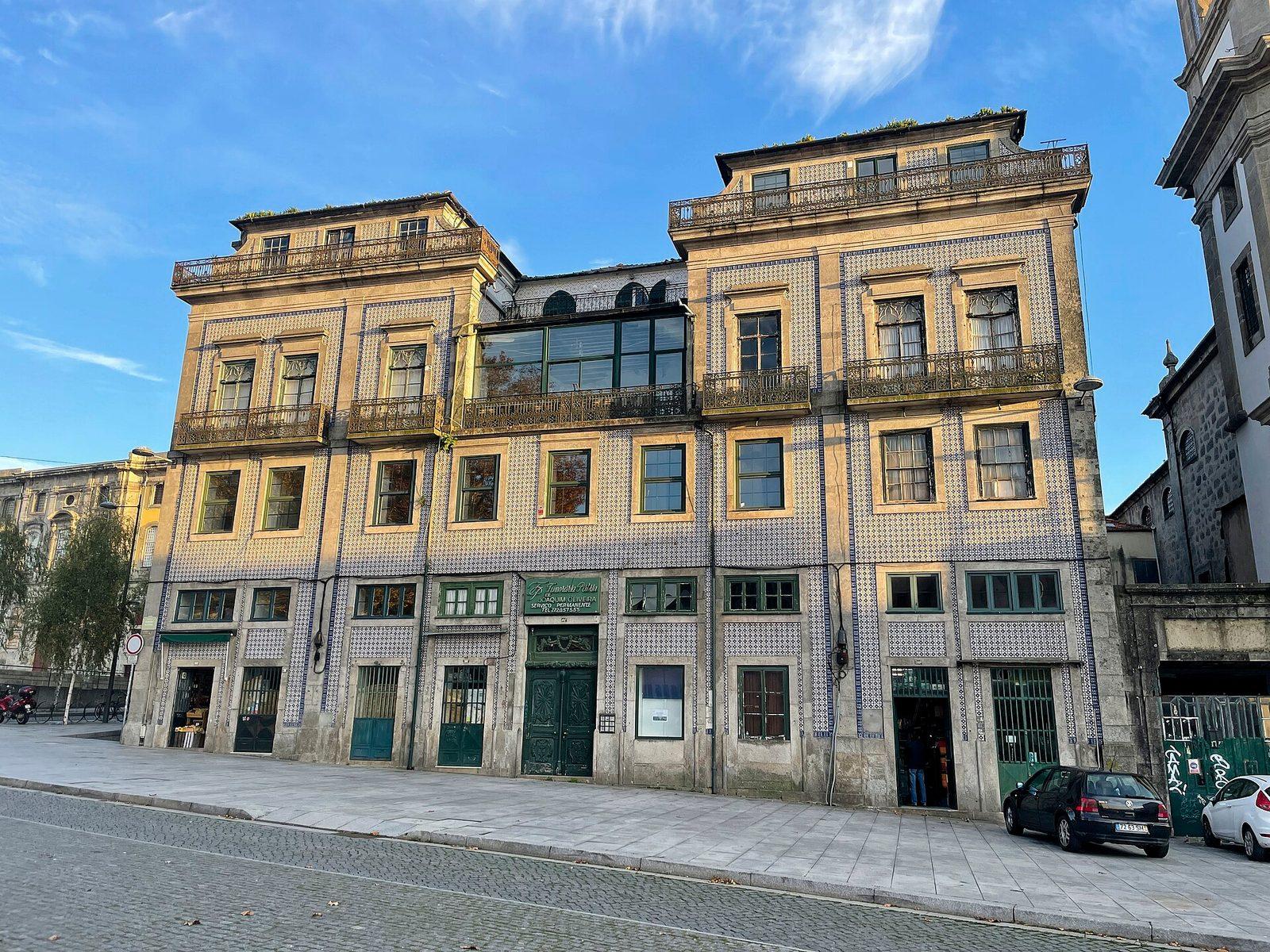
Then the lanes give out and the Douro opens. The Praça da Ribeira is the oldest face the city turned to its river, a market and landing place since the Middle Ages. Its tall narrow houses were rebuilt with ground-floor arcades after a fire in 1491, and a three-tier wall fountain from the 1780s carries a small Saint John the Baptist. A Roman port at the river mouth, Portus Cale, gave its name to the whole country.
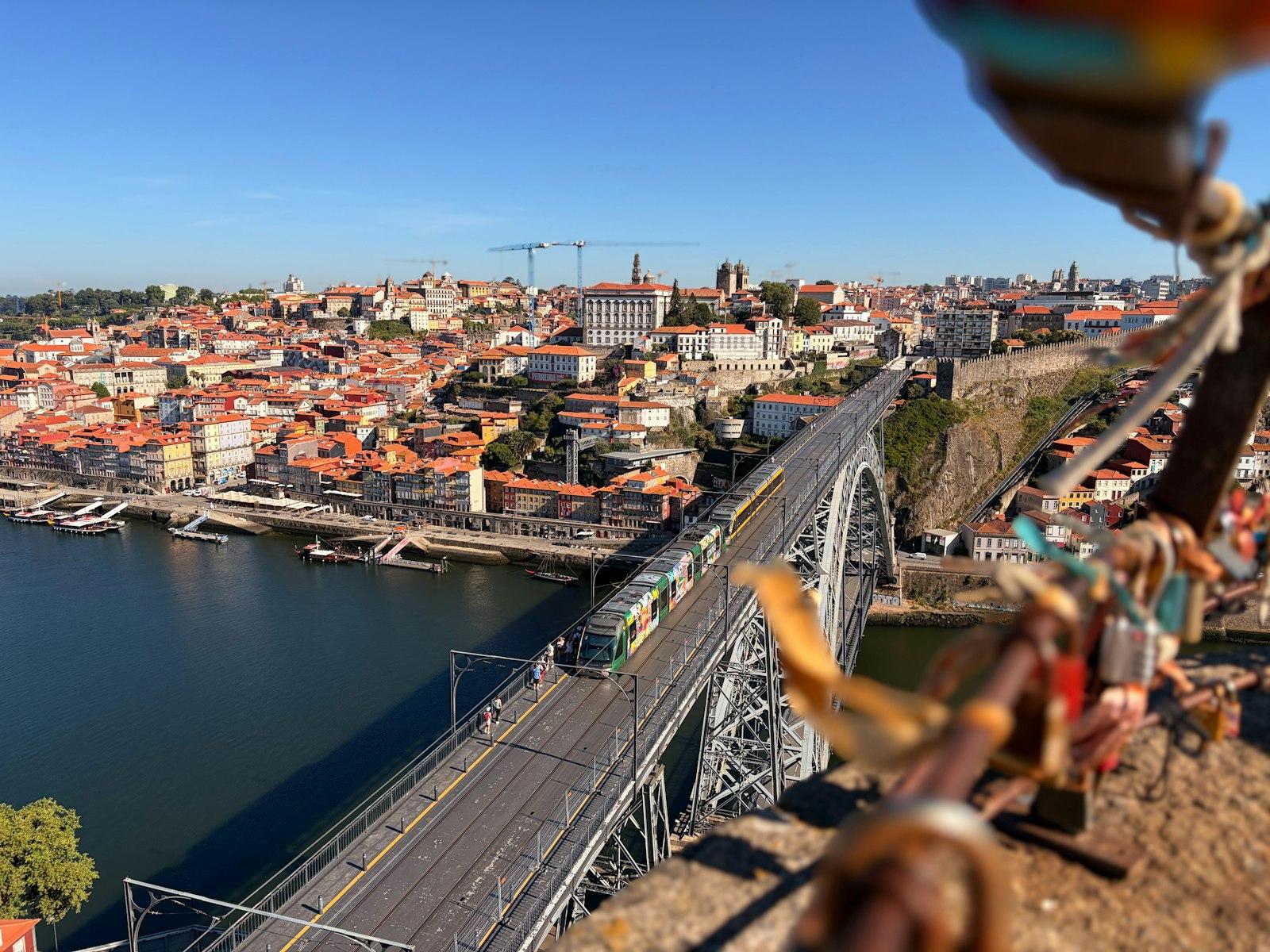
The walk ends looking at the Ponte Dom Luís I, the double-deck iron arch inaugurated on 31 October 1886 with a span of about 172 metres. It was designed by Théophile Seyrig, a former partner of Gustave Eiffel, not by Eiffel himself. For a thousand years the two banks stared at each other across the water. The bridge, part of the UNESCO World Heritage property inscribed in 1996, finally joined them.
Walking it
The walk is eleven stops over about 3.3 kilometres and takes about 105 minutes, most of it downhill toward the river. The cobbles are beautiful and slick, so wear shoes with grip. Lello, the Bolsa, São Francisco and the cathedral cloister each have their own tickets and are separate from the walk. It works at your own pace and on your own schedule, with no group to keep up with: linger at the tiles, skip a stop that does not call to you, and take as long as you like on the quay.
The bridge is stop 11 of Historic Center: Granite, Gold, and the River, which starts at the Torre dos Clérigos and is free to start. See all routes on the Porto page.
Sources
- Torre dos Clérigos, 292 Years of History: Nasoni's arrival in 1725, the church, infirmary and tower built 1732 to 1763, and the tower's height of 75.6 metres.
- Dom Luís I Bridge, Wikipedia: designer Théophile Seyrig, inauguration on 31 October 1886, the 172 metre span, Eiffel's rejected design, and the 1996 UNESCO inscription of the Historic Centre of Porto, Luiz I Bridge and Monastery of Serra do Pilar.
- Igreja do Carmo (Porto), Wikipedia (Portuguese): construction 1756 to 1768, the 1912 tile panel by Silvestre Silvestri and Carlos Branco, and the narrow house between the two churches.
- Roamer's audited tour transcript for the Historic Center walk: the Lello, Aliados, São Bento, Sé, Bolsa, São Francisco, Casa do Infante and Ribeira dates and details.
Ready to experience it?
Historic Center: Granite, Gold, and the River
105 min · 3.3 km · moderate
More from Porto
Explore more at your own pace.
One Day in Porto: A Walkable Itinerary From Cathedral to River
Porto: The Granite City That Faces Its River
The Porto Market Hall That Never Sold a Thing
Why Port Wine Ages Across the River in Gaia, Not in Porto
Igreja do Carmo: Why Porto's Most Famous Tiled Wall Is Younger Than It Looks