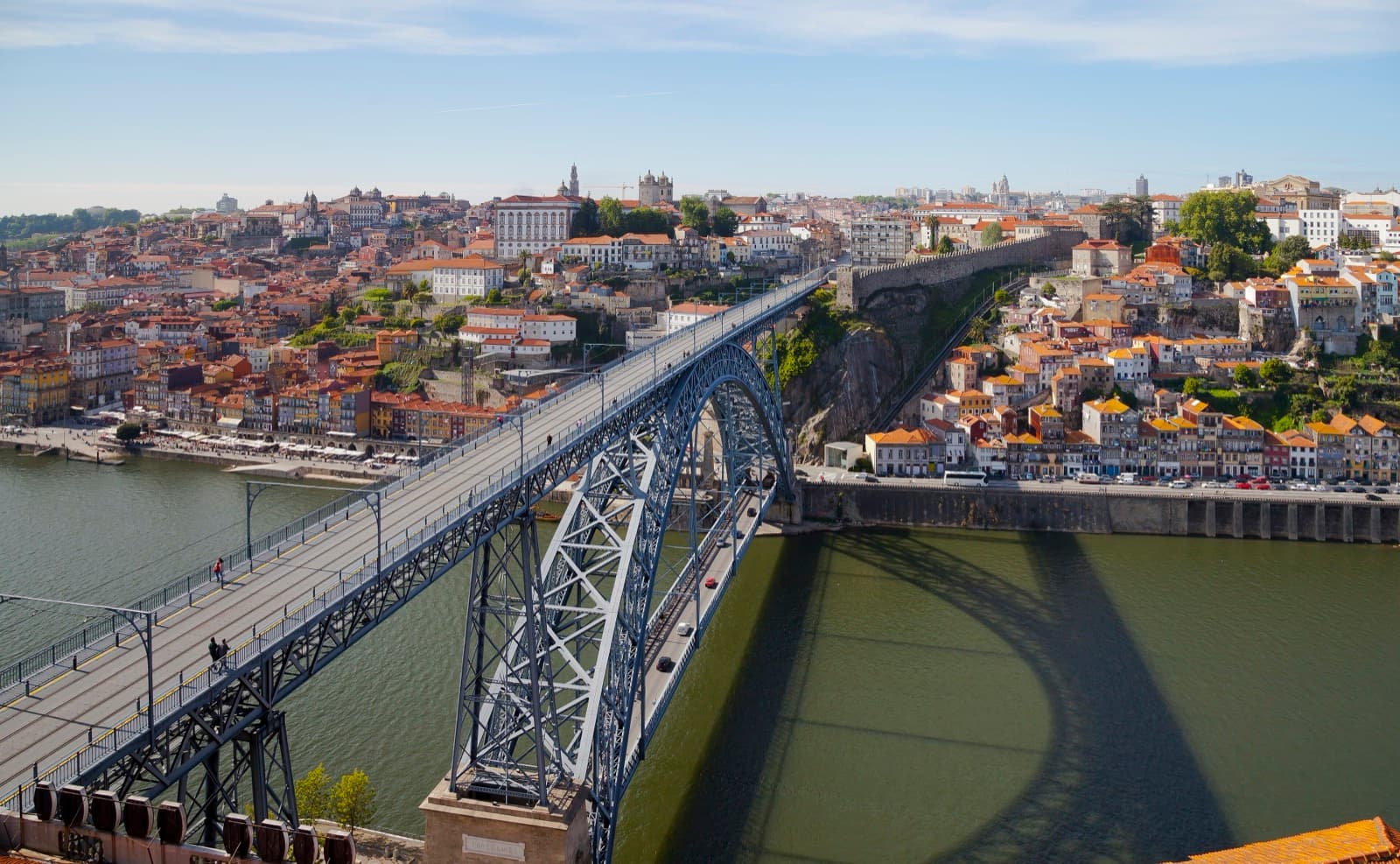
The complete descent through old Porto, from the baroque tower and tiled upper town down the granite hill to the working river and the great iron bridge. A city that wears its glory on its surfaces, in gold and glazed blue tile, but is built, always, on its river.
Start · Torre dos Clérigos: The Overture
DirectionsStops
- 1
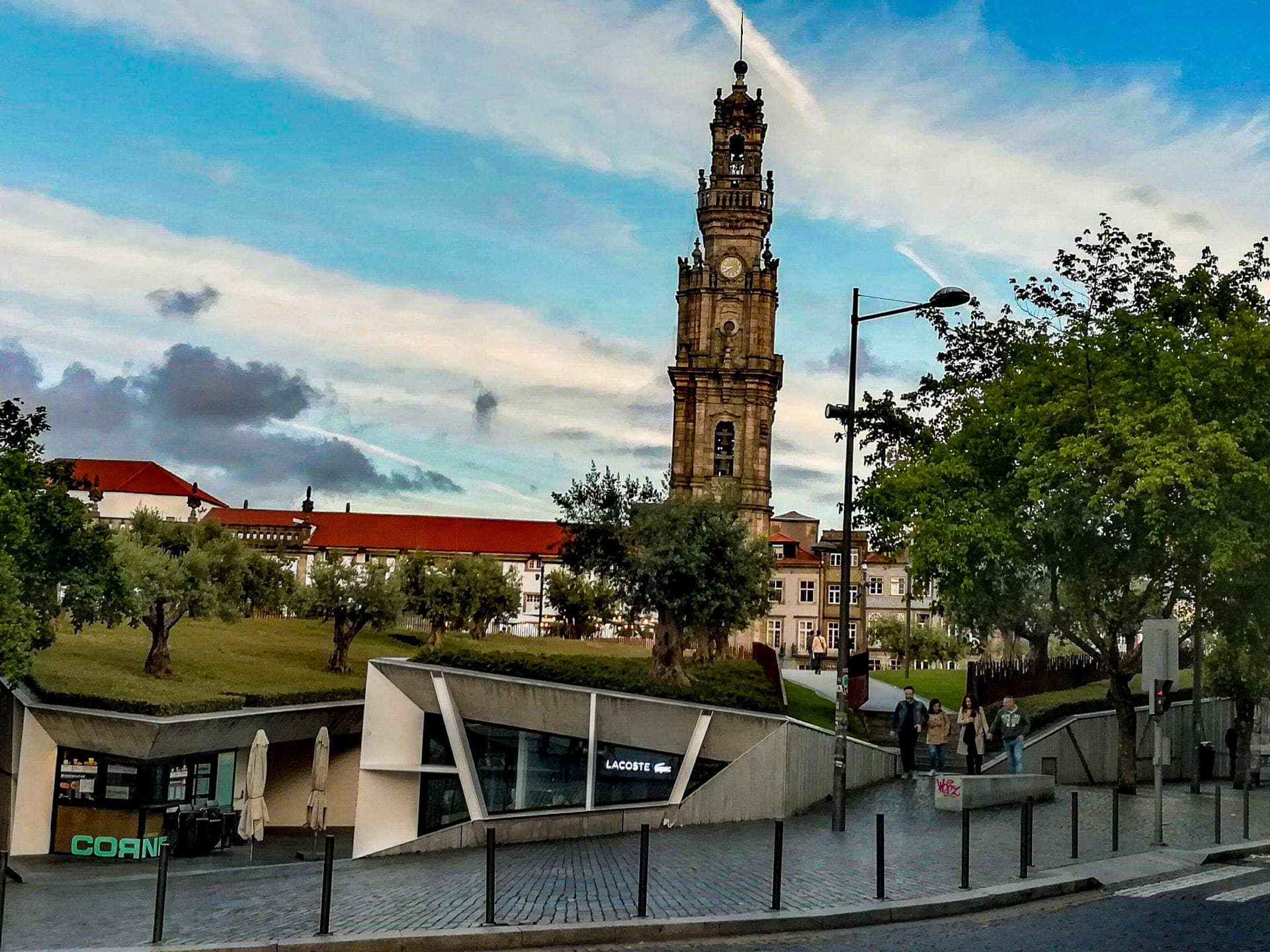
Torre dos Clérigos: The Overture
The soaring baroque bell tower that opens Porto's story, grey granite carved into its most theatrical gesture and long read as the symbol of the city.
- 2
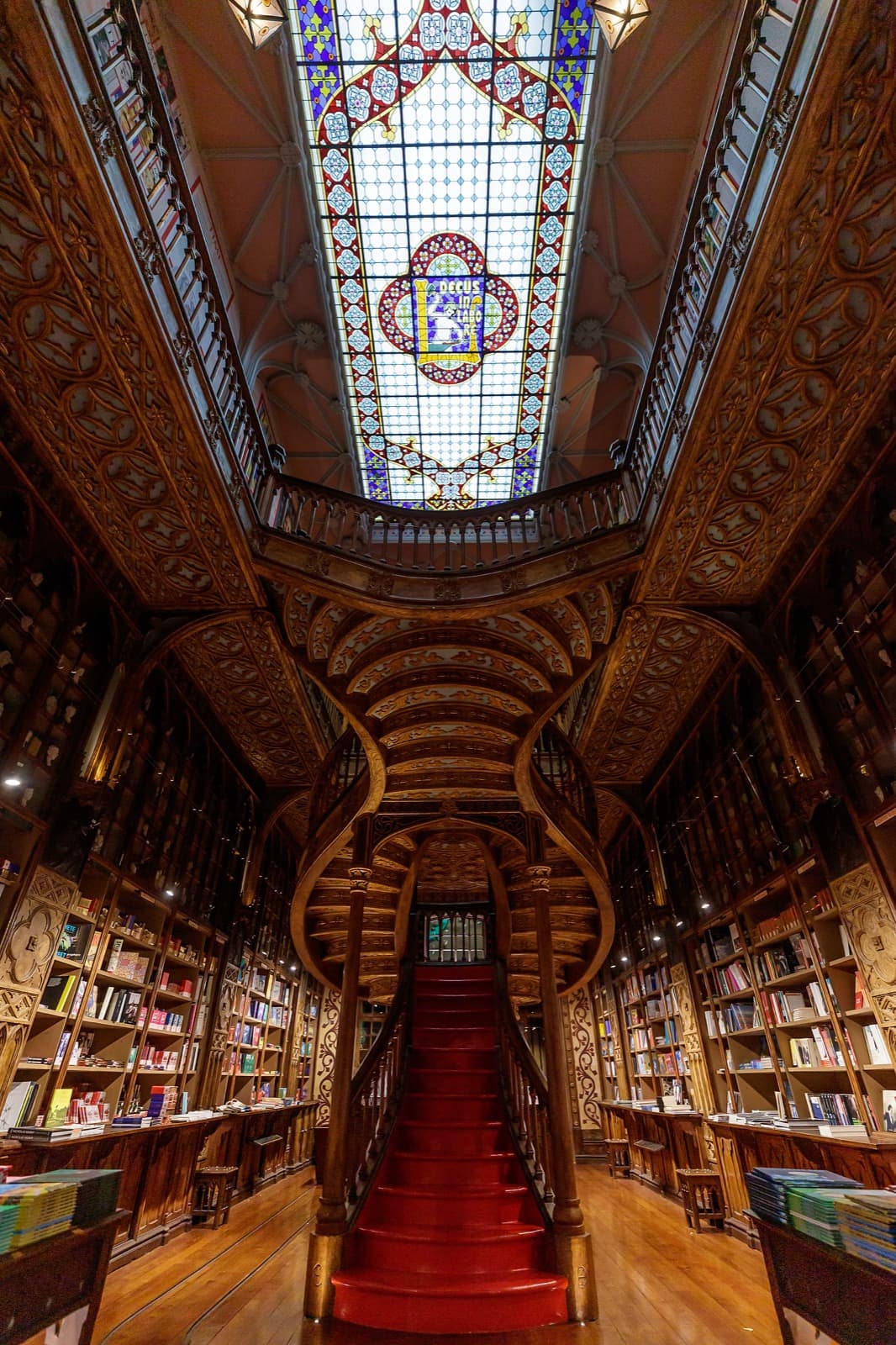
Livraria Lello: The Staged Interior
A bookshop built like a shrine, all carved wood, a curving forked staircase, and a stained-glass skylight, where the city's instinct to dress a plain function turned inward.
- 3
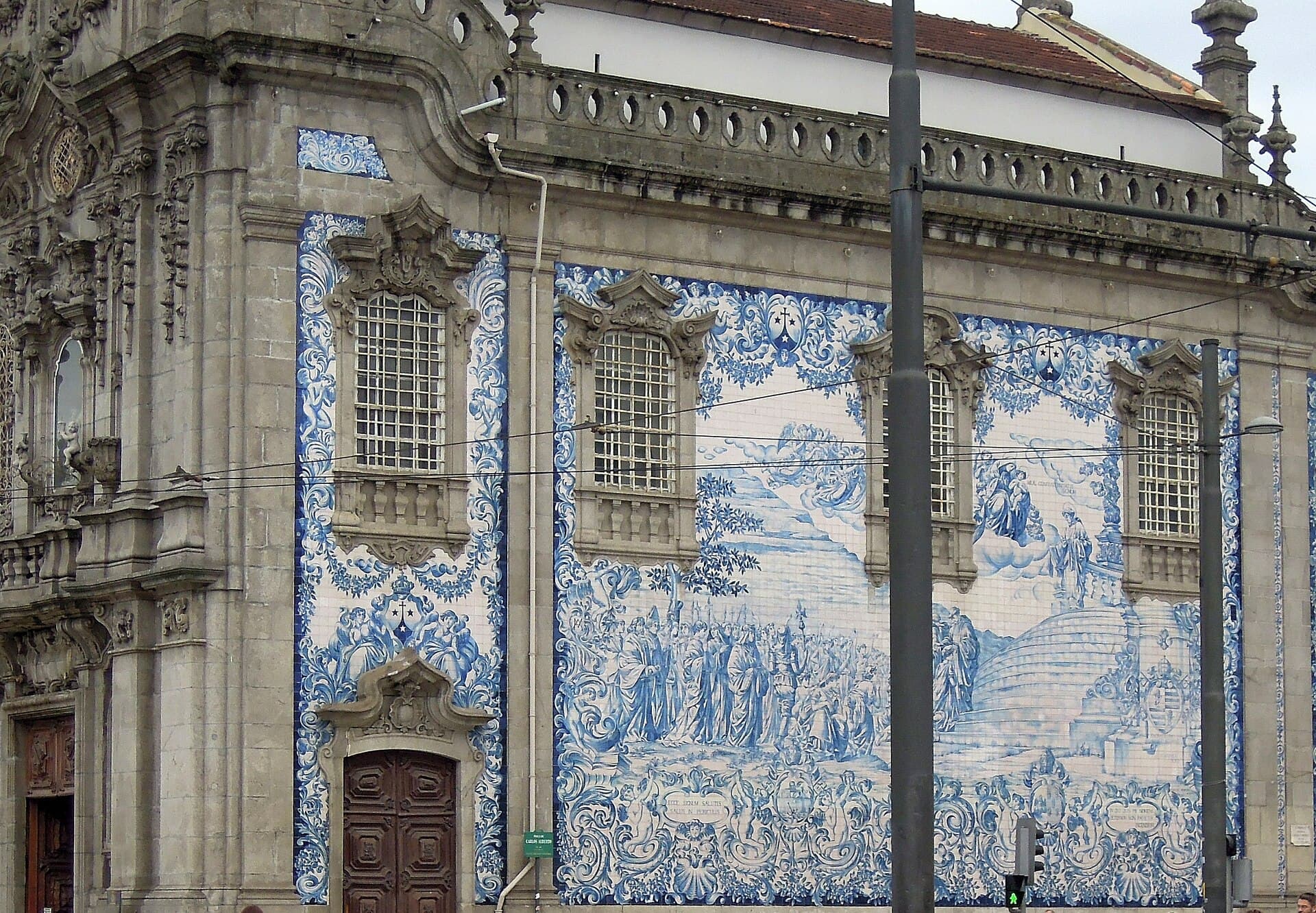
Igreja do Carmo: The Tiled Wall
A baroque church with a tiled side wall. The entire wall became a canvas of blue-and-white tile, though not in the century you would guess, with the narrowest house in Porto wedged beside it.
- 4
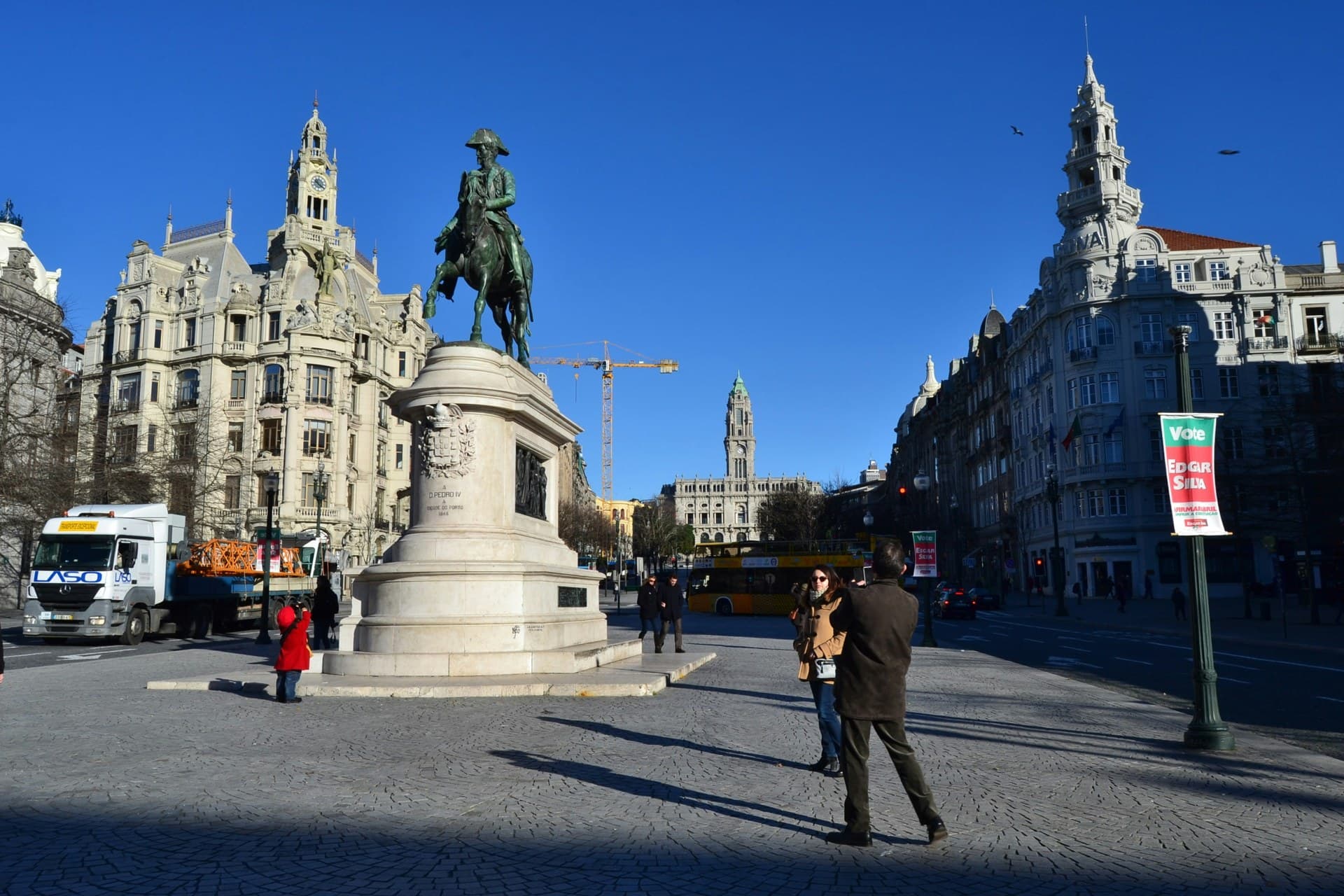
Avenida dos Aliados: The Granite Speaks for Itself
The grand civic boulevard of Porto. Here the tiled and gilded skins give way to the city's carved civic granite, cornices and cupolas and all, crowned at its head by the City Hall's clock tower.
- 5
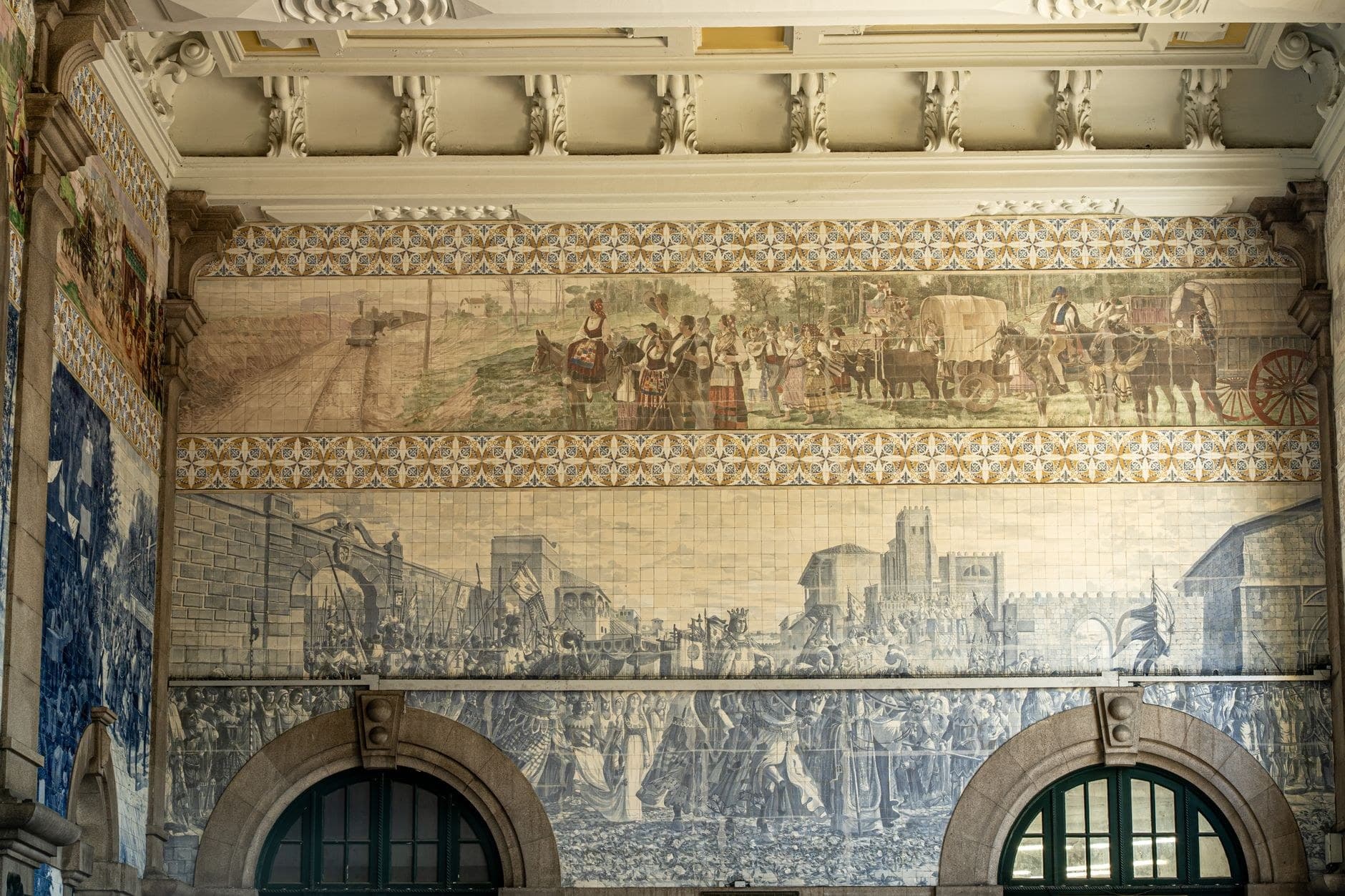
Estação de São Bento: Tile as National Narrative
A working railway station with a tiled hall. Its entrance hall is a painted history of Portugal in some twenty thousand blue-and-white tiles, free to anyone passing through.
- 6
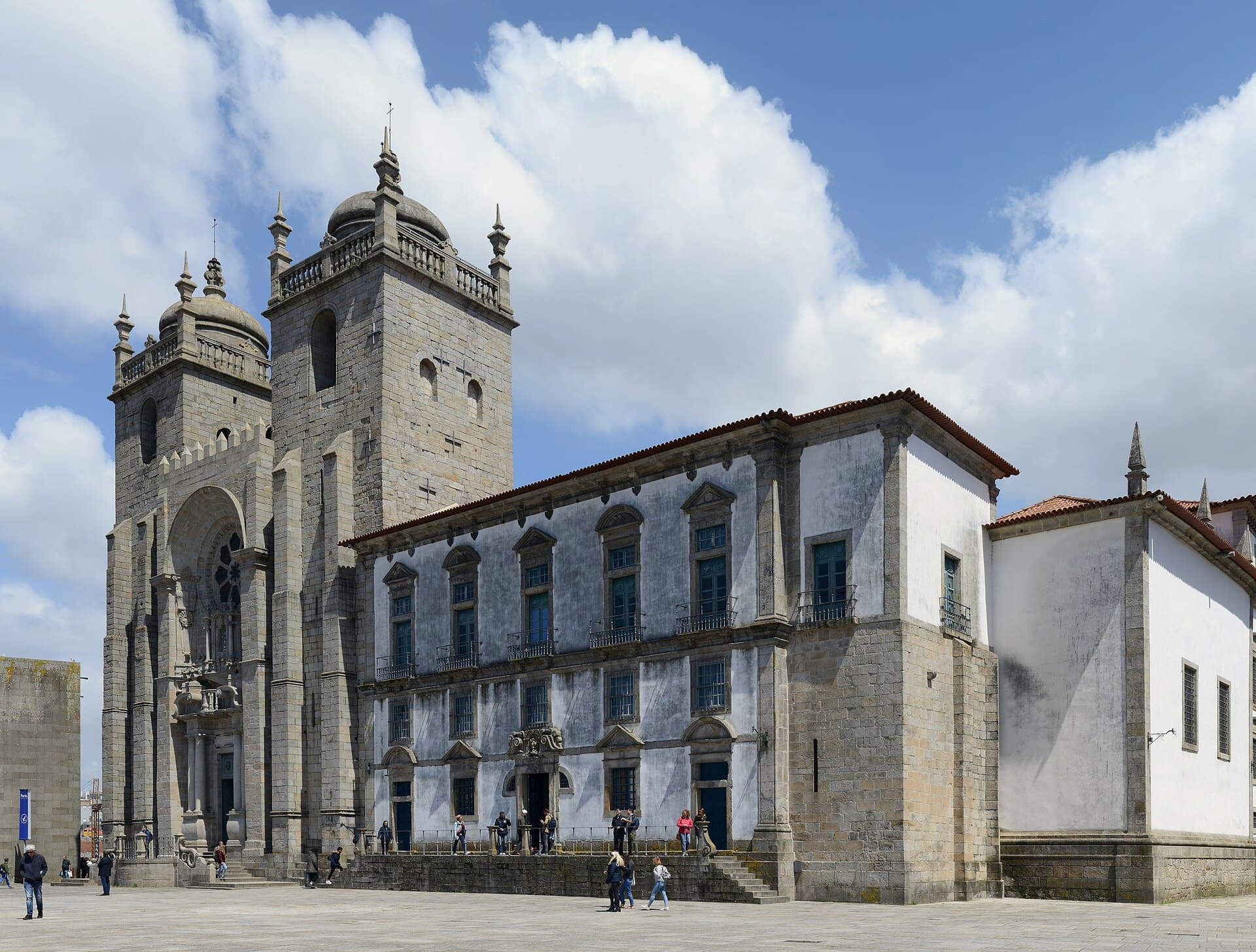
Sé do Porto: The Fortress on the Hill
Porto's Romanesque cathedral crowns the highest point of the old city, a granite stronghold cut to be a fortress as much as a church, where the whole descent to the river begins.
- 7
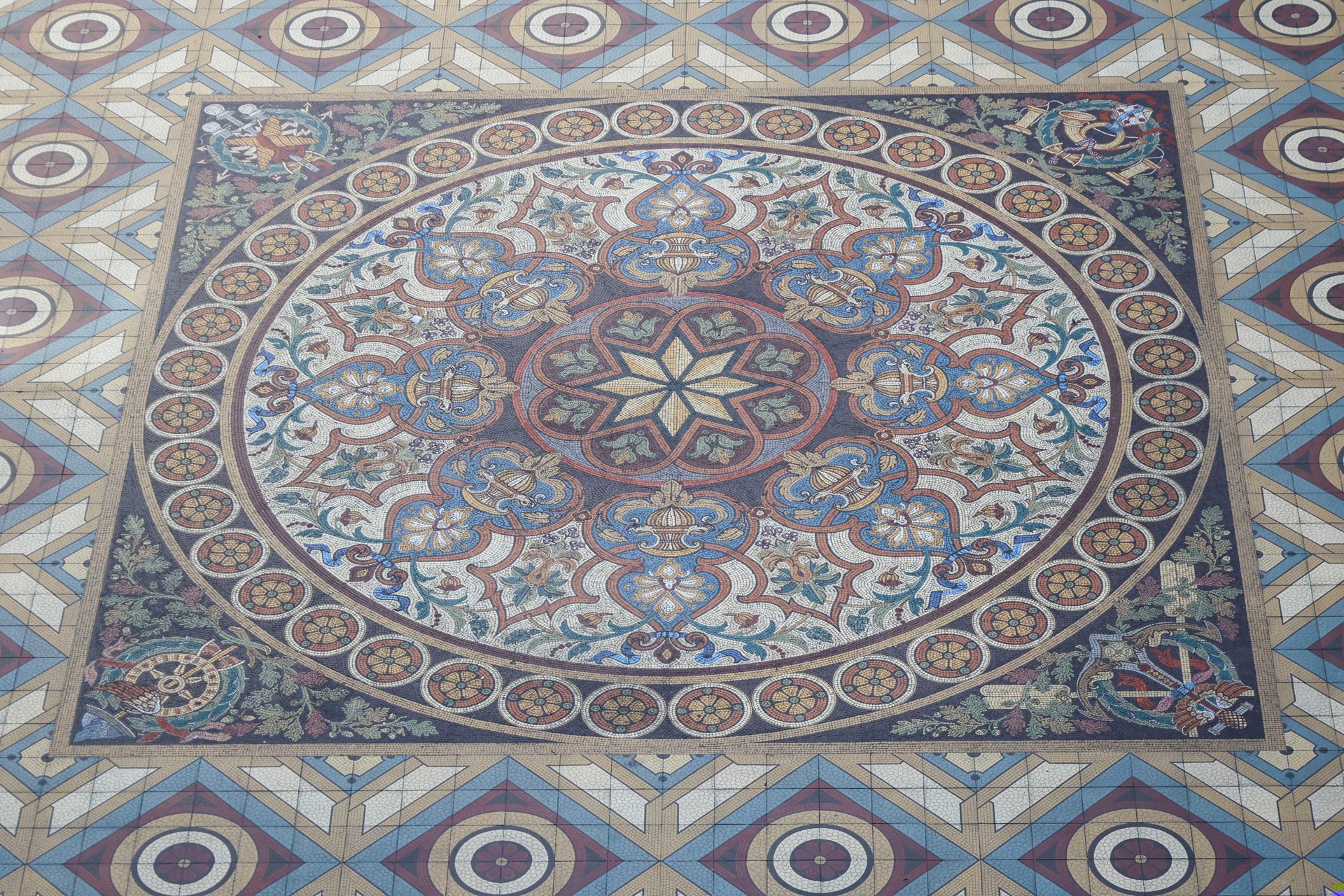
Palácio da Bolsa: The Palace the Merchants Built
A stock-exchange palace raised by the city's merchants. They built it in the nineteenth century on the ruins of a burned convent, crowned by an opulent Moorish-revival hall.
- 8
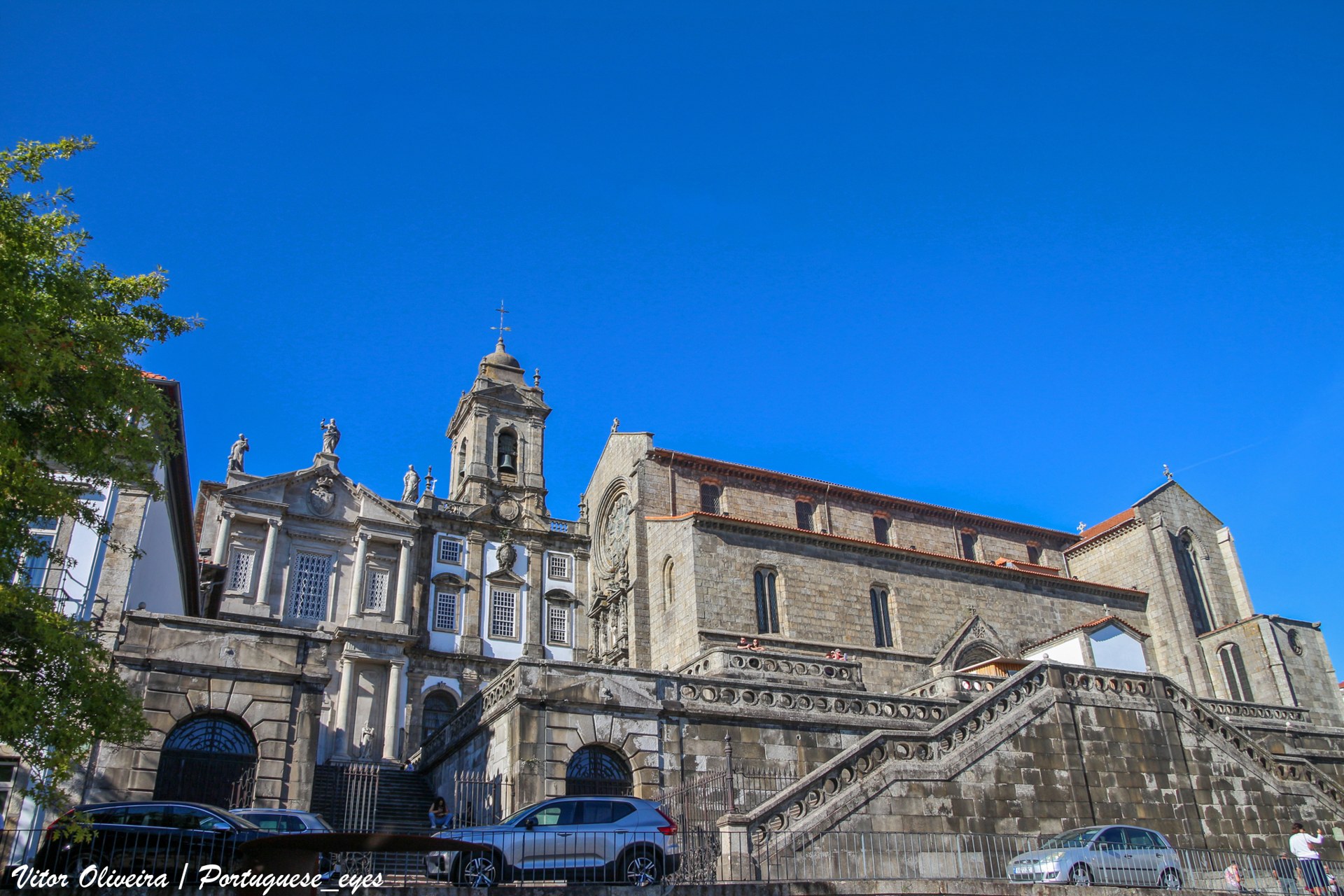
Igreja de São Francisco: Gold Over Stone
An austere Gothic church with a gilded interior. Inside, it was later smothered in hundreds of kilograms of gilded woodwork, with an ossuary of thousands of bones beneath.
- 9
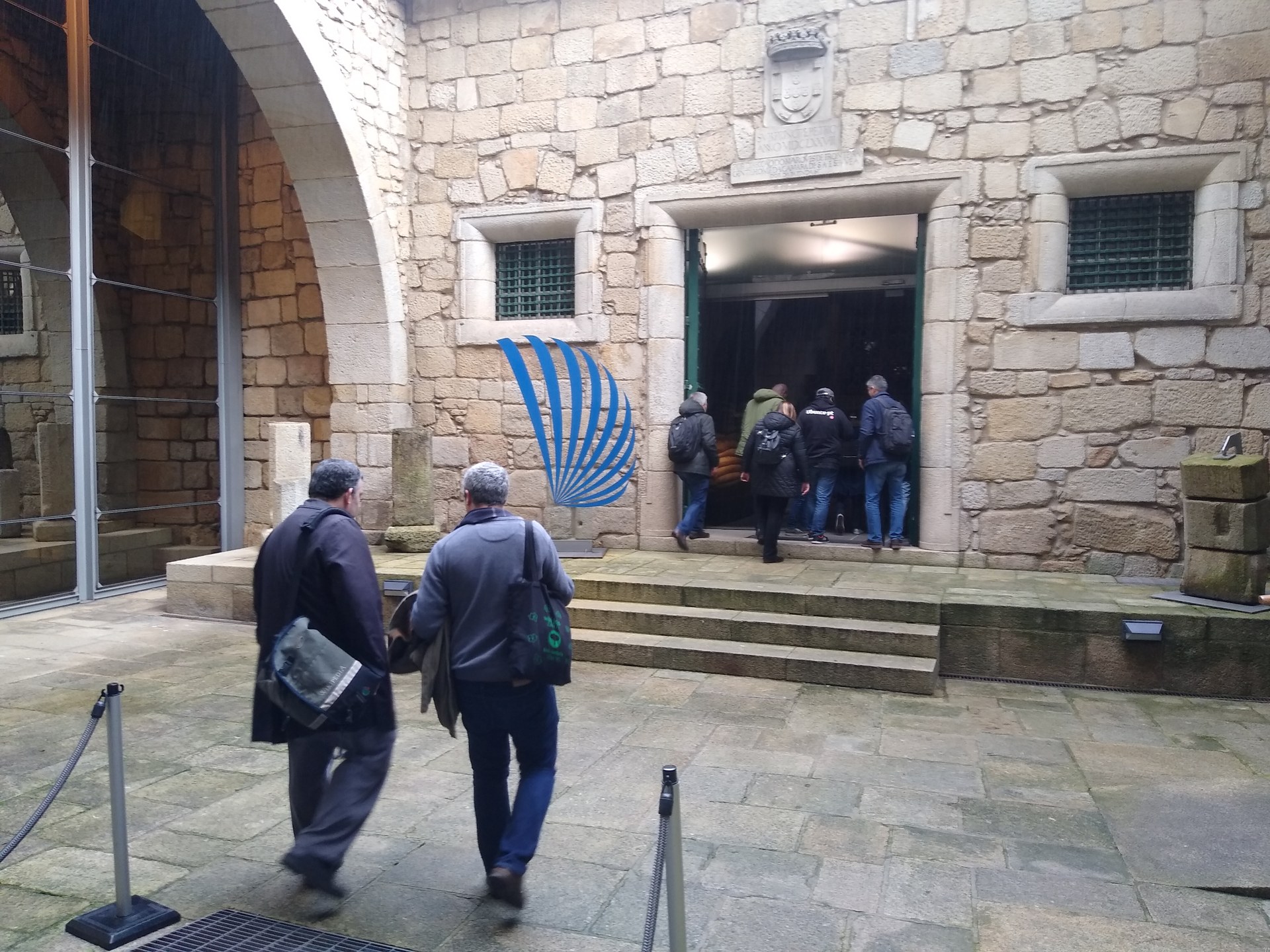
Casa do Infante: The Royal Customs House
A medieval customs house built on a Roman villa, where the crown taxed the river's cargo and where tradition says Henry the Navigator was born.
- 10
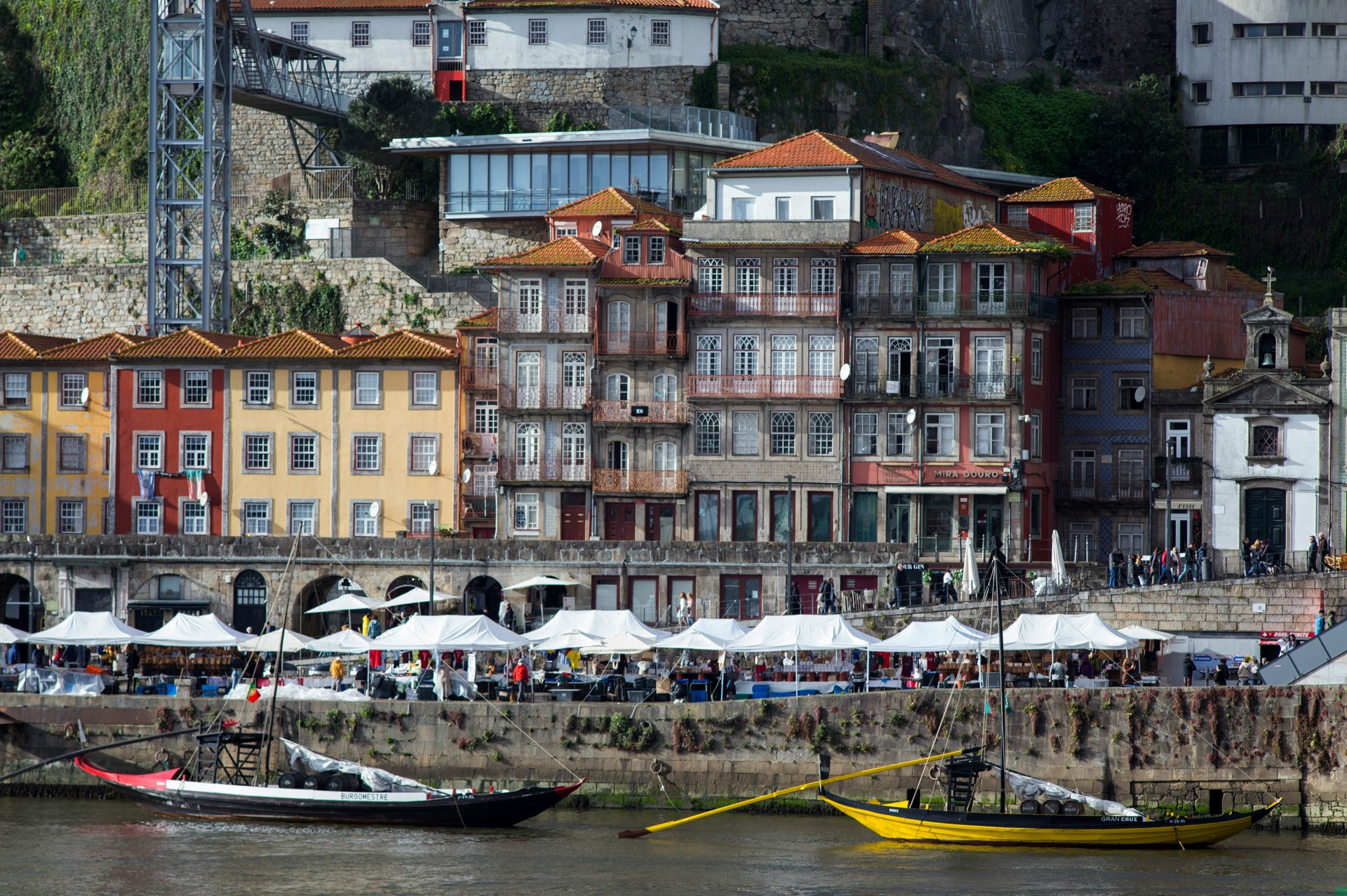
Praça da Ribeira: The Face Turned to the Water
The medieval merchant square on the quay, arcaded and rebuilt after fire, whose Roman river-mouth port gave Portugal its very name.
- 11
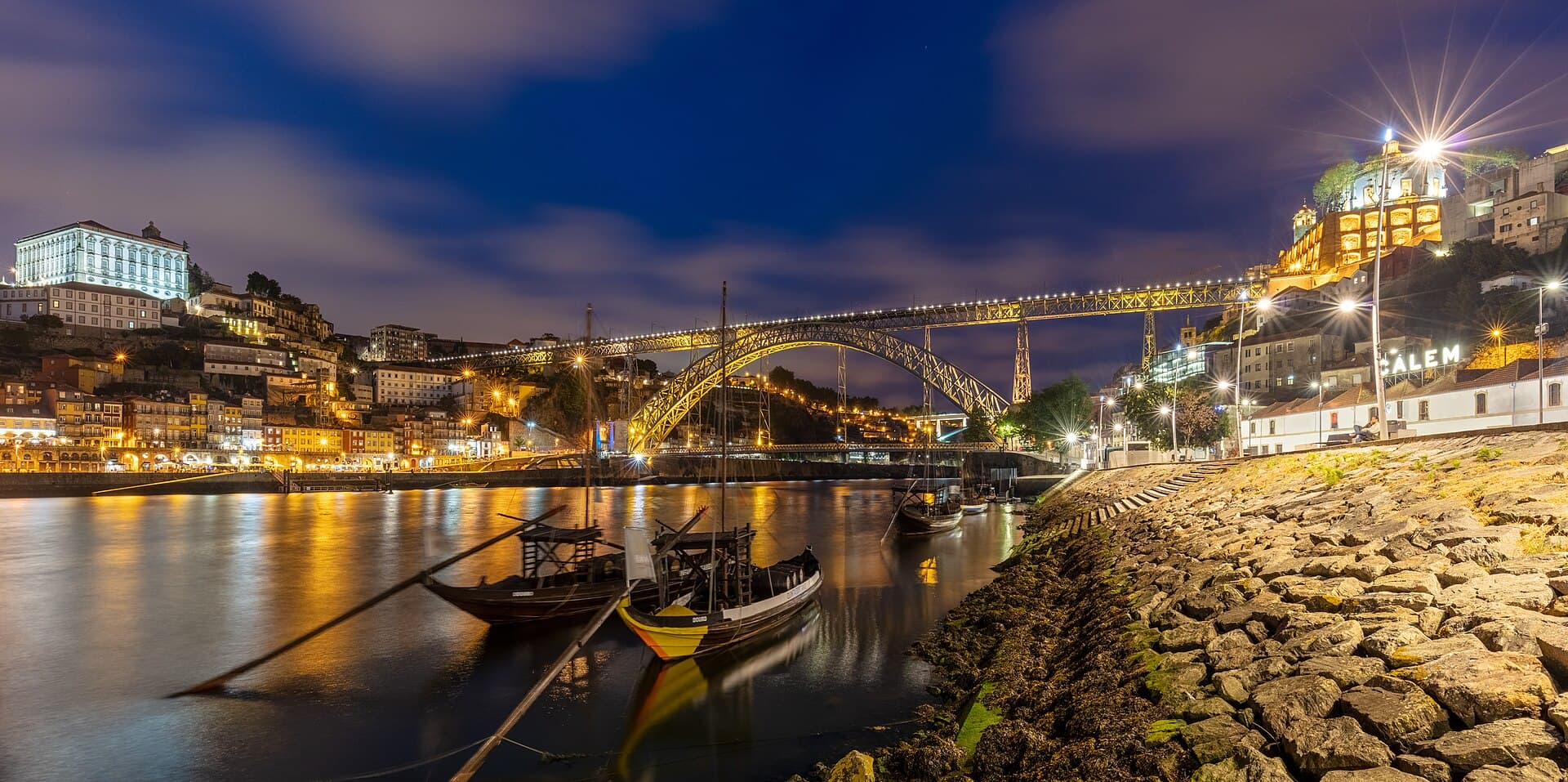
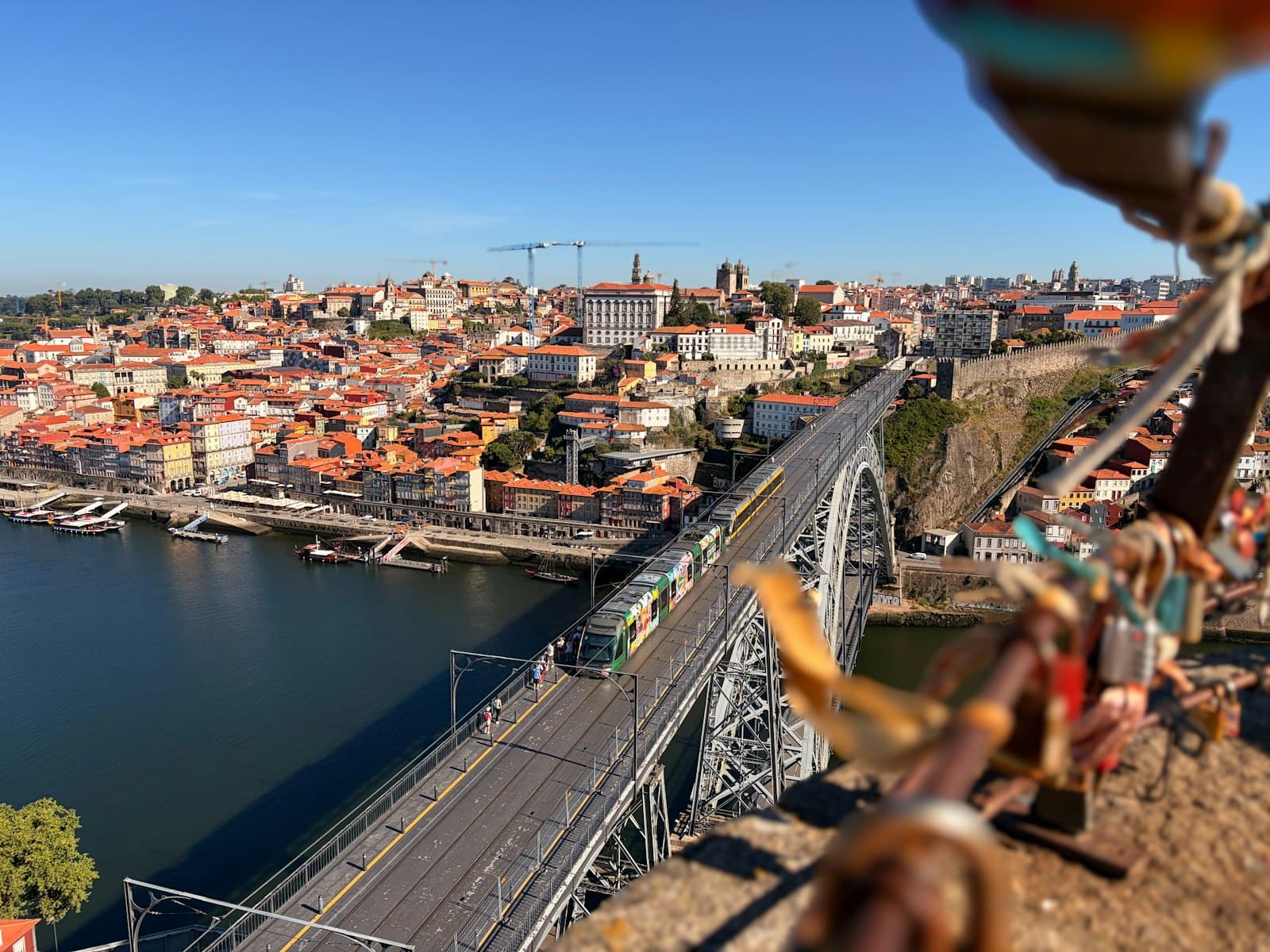
Ponte Dom Luís I: The Marriage of the Two Banks
The double-deck iron arch bridge of eighteen eighty-six, the engineering feat that finally joined Porto to the far bank across the Douro, where the walk lets go over the water.
Details
Best Time to Visit
Late afternoon into early evening is ideal. Start among the upper-town monuments in the cooler, quieter light, and time the long descent so you reach the Ribeira quay and the Dom Luís bridge as the low sun warms the granite and lights the far bank of the Douro. The Clérigos tower and the Livraria Lello draw long lines by late morning, so an early start lets you climb and read those interiors first; overcast Porto light actually flatters the blue-and-white azulejo. Avoid the middle of a summer afternoon, when heat and cruise-day crowds peak around São Bento and the sun-struck quay can be draining.
Pro Tips
- •The walk runs downhill from the upper town to the river, so take it in order and let gravity carry you from the Clérigos tower down to the bridge rather than climbing back up.
- •The Clérigos tower climb and the Livraria Lello both charge admission, while the churches, São Bento atrium, the Miradouro da Vitória, and the Ribeira are free. Budget for the two ticketed stops and enjoy the rest at no cost.
- •The Palácio da Bolsa can be seen only on a guided tour, so if its interior calls to you, check the tour times and consider booking ahead to skip the queue.
- •Keep two names in mind as you walk: Nicolau Nasoni, whose hand shaped the Clérigos tower, and Jorge Colaço, who painted the tiled atrium of São Bento. Spotting the makers behind the surfaces is half the pleasure.
- •Wear shoes with real grip: the calçada, the old mosaic cobblestone, is genuinely slick, especially on the steep upper lanes and the descent to the river, and worse after rain.
- •Save the Dom Luís bridge for last and walk out onto it, ideally as the light drops, for the widest view of the river and the Gaia bank of port-wine lodges opposite.
- •Move at your own pace and skip freely; every stop is short and self-contained, so linger where you are drawn and pass by what does not call to you.
Safety & Precautions
- •Porto's steep lanes and the polished calçada cobblestones become slippery, particularly downhill and in the rain, so descend slowly and use handrails where they exist.
- •The churches, the cathedral, and the Bolsa are working religious and heritage spaces; dress modestly, keep quiet, and expect photography to be limited, especially near the São Francisco ossuary.
- •The Clérigos tower and Livraria Lello, and the Bolsa guided tours, draw ticket queues in high season, so allow extra time or book ahead rather than rushing.
- •The narrow riverfront and hillside lanes carry trams, delivery vans, and traffic on tight bends, so stay alert and step aside on blind corners rather than walking in the roadway.
Travel advisory: Exercise Normal Precautions (Level 1).
Gallery
Related Reading
Go deeper on what you'll see, hear, and walk through.
Read the walk
The full story of Historic Center: Granite, Gold, and the River, in words. Prefer to listen? Play it narrated, from home or on location.
Introduction
Porto is a hard grey city that decided to say everything on its surfaces. It sits where the Douro, a mountain river, finally reaches the sea in northern Portugal, and for a thousand years that river was the reason for everything. Down it came wine and cork and cargo from the interior, and back up came the wealth. This walk reads the whole city as a single descent, from its decorated skyline down the granite hill to the water that made it. You begin high, among the baroque and the blue-and-white tile of the upper town, where an austere stone city dresses itself in gold and glaze and tells its grandest stories on its outermost skin. Then the ground tips downhill. You pass the worked civic granite of the great avenue, the tiled railway hall that paints the nation's history, and the fortress cathedral on its windy crown, where Porto began. From there you drop, stop by stop, into the old merchant quarter: a royal customs house, a Gothic church drowned in gilt, a stock-exchange palace built by traders rather than kings. You land on the quay that gave this country its very name, and you finish out over the river itself, on the great iron bridge that finally married the two banks. There are eleven stops. Walking time runs about two and a half hours if you linger, and the route covers about three and a half kilometres, most of it downhill toward the Douro. Wear shoes with real grip, because the calçada, the old mosaic cobblestone, is beautiful and slick, and Porto is a city of steep lanes. Move at your own pace, and skip any stop that does not call to you. When you arrive at the Torre dos Clérigos, begin with stop one.
1. Torre dos Clérigos: The Overture
Begin at the foot of the Torre dos Clérigos, the tower of the Clérigos church, and let your eye climb it. Torre means tower, and this one rises seventy-five point six metres into the Porto sky, with two hundred forty steps coiling up six floors inside. It is granite, the same grey stone as half the city, and yet it refuses to behave like reserved granite at all. It bends, it scrolls, it gathers into baroque flourishes. The man responsible is Nicolau Nasoni, an Italian architect and painter who came to work in northern Portugal in the eighteenth century and never left. Church construction began in the year seventeen thirty-two, and the tower, with the monumental divided stairway that spills down in front of it, was completed in seventeen sixty-three. The church itself is one of the first in Portugal to adopt a baroque elliptical floor plan, an oval where you would expect a rectangle. For centuries this tower has been the city's fixed point, visible across the rooftops and out along the Douro, so travelers and sailors alike learned to steer by it. It has often been called the symbol of Porto. And it is the right overture for this walk, because here the paradox of the whole city is already complete. The hardest, plainest material Porto had was carved into its most theatrical gesture. If you climb the two hundred forty steps, the entire tiled and gilded city we are about to descend opens out below you, granite roofs and glazed walls together, with the river beyond. When you come back down, keep the tower behind you and walk the short block up Rua das Carmelitas. Our next stop is only a couple of minutes north, an easy doorway to miss on a street of shopfronts.
2. Livraria Lello: The Staged Interior
A few steps away, turn off the street into the Livraria Lello and the register changes entirely. Livraria means bookshop, but this one was built like a shrine. It was inaugurated in nineteen oh six to designs by the architect Francisco Xavier Esteves, its skin a mix of neo-Gothic and Art Nouveau with Art Deco touches inside. The showpiece is a curving forked staircase that splits and rejoins as it climbs to a first-floor gallery, its wooden balusters carved with real care. Overhead stretches a large stained-glass skylight, about eight metres by three and a half, carrying the motto Decus in Labore, honour in work, along with the owners' monogram. It is frequently rated among the most celebrated bookshops in the world; it has been placed third in lists by Lonely Planet and the Guardian. Let me be honest about what this stop is and is not. It is not a shopping tip. It is a piece of heritage architecture that happens to sell books, and since July of twenty fifteen it has charged an entrance fee, usually redeemable against a purchase. Come for the reason you would enter any of the churches on this walk, to read a decorated interior. And notice how it fits the pattern we are tracing. Where the churches wear their exuberance outside in tile and gilt, the Lello saves its theatre for within, turning the simple act of holding a book into something staged and luminous. Porto's instinct to dress a plain function in extraordinary surfaces did not stop at the church door. When you step back out, the Carmo is only a minute further up the street, its whole side wall wrapped in blue tile. Walk up and let it come into view.
3. Igreja do Carmo: The Tiled Wall
Walk on to the Igreja do Carmo. Igreja means church, and here two of them sit almost shoulder to shoulder. The one to read is the Carmo, built between seventeen fifty-six and seventeen sixty-eight and opened on the twenty-fourth of July, seventeen sixty-eight. Its architect, José de Figueiredo Seixas, was a disciple of Nasoni, so the lineage from the tower carries straight into this stone. The church face is baroque and rococo, fairly restrained. But turn to the long side wall and you meet one of Porto's great blue-and-white surfaces, an enormous azulejo panel sheathing the entire eastern wall, showing the founding of the Carmelite Order and the image of Mount Carmel. Here is the honest catch, and it matters for the whole walk. That panel is not eighteenth century. It was added in nineteen twelve, designed by Silvestre Silvestri and painted by Carlos Branco, more than a century after the church itself. The stone is baroque; the skin is modern, a nineteen-hundreds revival dressing older walls in an older style. Now find the far end of that tiled wall, the left-hand end, where the Carmo almost touches its neighbour, the Igreja dos Carmelitas, once a convent of nuns. Squeezed into the narrow seam between the two churches, easy to walk straight past, is one of the narrowest houses in Porto: the Casa Escondida, the hidden house, barely a metre wide and lived in until the nineteen eighties. Look for its slim door tucked right into the gap. Why it was built is not settled fact but affectionate local tradition, told several ways: to keep the Carmelite nuns and the Carmo friars apart, or to honour an unwritten rule that no two churches share a wall. Take your pick. The stone is documented; the story is legend.
4. Avenida dos Aliados: The Granite Speaks for Itself
Make your way into the Avenida dos Aliados, the grand civic boulevard, with the Câmara Municipal, the Porto City Hall, closing its head above you. Avenida means avenue, and câmara municipal is the city hall, a monumental granite building crowned by a clock tower about seventy metres tall, begun in nineteen twenty and not finished until nineteen fifty-five. The whole avenue was laid out in the early twentieth century to a plan by the English town planner Barry Parker, and its name honours Portugal's allies in the First World War. As you walk it, look closely at what these buildings are wearing. After the glazed tile and gilded wood of the upper town, the bright coloured skins are gone. But do not mistake this for bare stone. The granite here is carved and worked: Beaux-Arts and neoclassical façades with cornices and pilasters, sculpted figures over the doorways, the occasional dome and cupola along the ridgeline. The decoration has not fallen away, it has changed language, from colour to relief, from glaze to chiselled granite. This is Porto in its civic, monumental register, grey but far from plain, a boulevard that means business. So read the whole avenue as you descend it. We opened where Porto carved its plainest material into baroque theatre, then watched it apply skin after skin, the tiled wall of the Carmo, the staged interior of the Lello. Here the surfaces turn sober and structural, the city speaking in stone rather than colour. Hold that grey in your eye, because at the very next stop the city puts its most extraordinary skin back on, and turns a place to catch a train into a painted history of the nation.
5. Estação de São Bento: Tile as National Narrative
Step into the atrium of the Estação de São Bento. Whichever door you come through, stop the moment the walls open up around you. Here decorative tile stops being ornament and becomes a nation telling its own story. The station opened in nineteen sixteen to designs by the…
Full narration for this stop unlocks with the tour.
6. Sé do Porto: The Fortress on the Hill
Feel the climb in your legs and the wind on this hilltop. This is Penaventosa, the windy rock, the highest point of the old city, and you are standing where Porto began. You are on the terrace before the cathedral's west front, its two blunt towers and rose window facing you,…
Full narration for this stop unlocks with the tour.
7. Palácio da Bolsa: The Palace the Merchants Built
Come down off the cathedral hill by the old streets, the ones that narrow to shoulder width and turn without warning, granite underfoot and washing overhead. These lanes are the medieval city itself, the tight working quarter that grew between the church on its crown and the…
Full narration for this stop unlocks with the tour.
8. Igreja de São Francisco: Gold Over Stone
Step next door, to the Igreja de São Francisco. Igreja means church, and from the outside this one keeps a plain, honest Gothic face. The present church was begun in the year thirteen eighty-three under King Ferdinand the First and finished around fourteen twenty-five, and its…
Full narration for this stop unlocks with the tour.
9. Casa do Infante: The Royal Customs House
A few steps toward the river now, to the Casa do Infante. The name means the house of the prince, and it was built by royal decree in the year thirteen twenty-five as a customs house. This is where the river paid its dues. Every cask of wine, every load of cork and cloth that…
Full narration for this stop unlocks with the tour.
10. Praça da Ribeira: The Face Turned to the Water
Now you stand on the water. The Praça da Ribeira, the riverside square, and the Cais da Ribeira, the quay along the Douro. Take it in first, because this is the view the whole descent was for: the broad green river sliding past, the boats working it, the terraced lodges climbing…
Full narration for this stop unlocks with the tour.
11. Ponte Dom Luís I: The Marriage of the Two Banks
And here is the release. The Ponte Dom Luís I. Ponte means bridge, and this is the great double-deck iron arch that finally did what the river had withheld for a thousand years. You have stopped back along the quay on purpose, far enough that the whole of it reads at once,…
Full narration for this stop unlocks with the tour.
- Torre dos Clérigos — Ivan Stesso, CC BY-SA 4.0 · source
- Livraria Lello — Editor1906, CC BY-SA 4.0 · source
- Igreja do Carmo — Güldem Üstün, CC BY 2.0 · source
- Sé do Porto — Alvesgaspar, CC BY-SA 4.0 · source
- Palácio da Bolsa — flowcomm, CC BY 2.0 · source
- Igreja de São Francisco — Vitor Oliveira, CC BY-SA 2.0 · source
- Casa do Infante — NunoCaldeira, CC BY-SA 4.0 · source
- Ponte Dom Luís I — Diego Delso, delso.photo, CC BY-SA 4.0 · source
Images may be cropped or resized. Other photos via Unsplash and Pexels.