Old Town: Hans Christian Andersen's Odense
65 min · 1.9 km · easy
Odense wears the face of a fairytale because Hans Christian Andersen was born here in eighteen oh five, but its name reaches a thousand years past him. Odense means the shrine of the god Odin, a compound of Odin and an Old Danish word for a sacred place, first recorded in the year nine eighty-eight. To walk this city on the Danish island of Funen is to read two towns at once: the crooked cobbled quarter of a poor shoemaker's son, and the older, grittier settlement of Viking rings, murdered kings, and working cloth mills that lies beneath it. Andersen's Odense is the surface. Odin's Odense is the foundation. Both are still here, and both can be walked at your own pace.
The fairytale surface: a shoemaker's son and a garden museum
Start with the town everyone comes for. Andersen was born in poverty on the second of April eighteen oh five, the son of a shoemaker named Hans Andersen and a washerwoman named Anne Marie Andersdatter, and he left Odense at fourteen in eighteen nineteen, walking out toward Copenhagen with almost nothing. From those narrow means came The Little Mermaid, The Ugly Duckling, The Emperor's New Clothes, and The Steadfast Tin Soldier, tales now among the most widely translated works ever written by a single author.
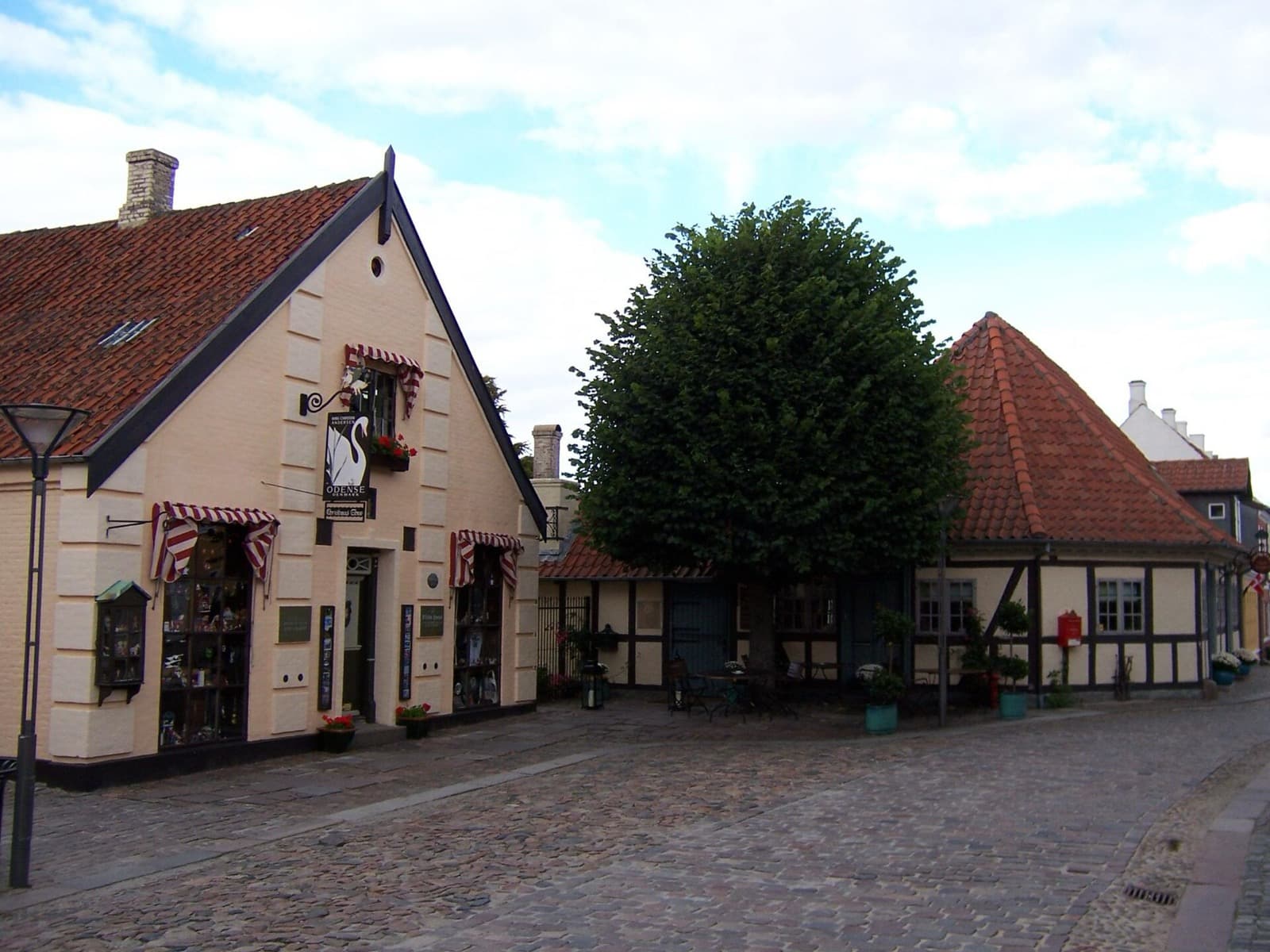
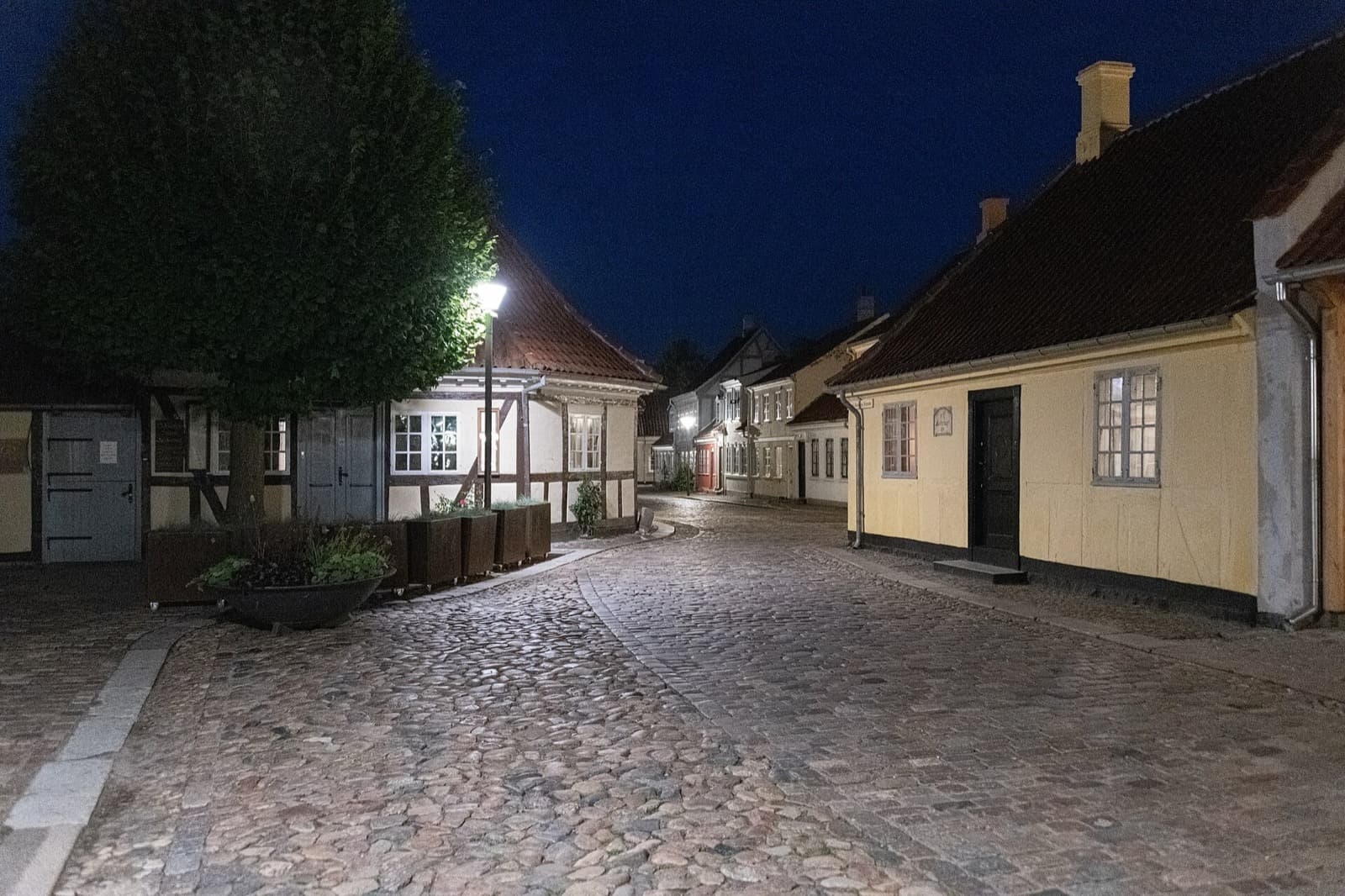
The Old Town: Hans Christian Andersen's Odense walk holds one honest ambiguity at its center. The little yellow corner house at Hans Jensens Straede forty-five, dated to about seventeen ninety-nine, has been honored as his birthplace and part of a museum since nineteen oh eight, but the record does not confirm he was born under that roof. It is a cherished tradition, not a documented fact, which feels fitting for a man who spent his life turning the ordinary into story.
Wrapped around the birthplace is H.C. Andersens Hus, the fairytale museum that reopened in the summer of twenty twenty-one. Designed by the Japanese architect Kengo Kuma and Associates, who won the international competition in twenty sixteen, it is a scatter of low timber-and-glass pavilions with scooped green roofs, largely sunk into circular gardens and maze-like hedges. The idea is that you step down into it the way a reader steps down into a story, and VisitDenmark records that the design draws in part on Andersen's tale The Tinderbox, in which a hollow tree opens into an underground world. A fairy tale garden gathers eleven of his stories among the hedges. Because the museum keeps most of its bulk below ground, the preserved low quarter of Hans Jensens Straede and Bangs Boder stays dominant, and the small human scale that made the boy is never overwhelmed.
The walk closes at his childhood home on Munkemoellestraede, where the family lived from May eighteen oh seven until eighteen nineteen. Opened as a museum in nineteen thirty, it preserves a single humble room. Not marble, not a garden museum, but one poor room where a boy lay and dreamed before he walked out of town.
The town before the tale: a coin workshop and a murdered king
Hear a stop from this walk
Andersen's Childhood Home: The One Poor Room Where the Boy Dreamed
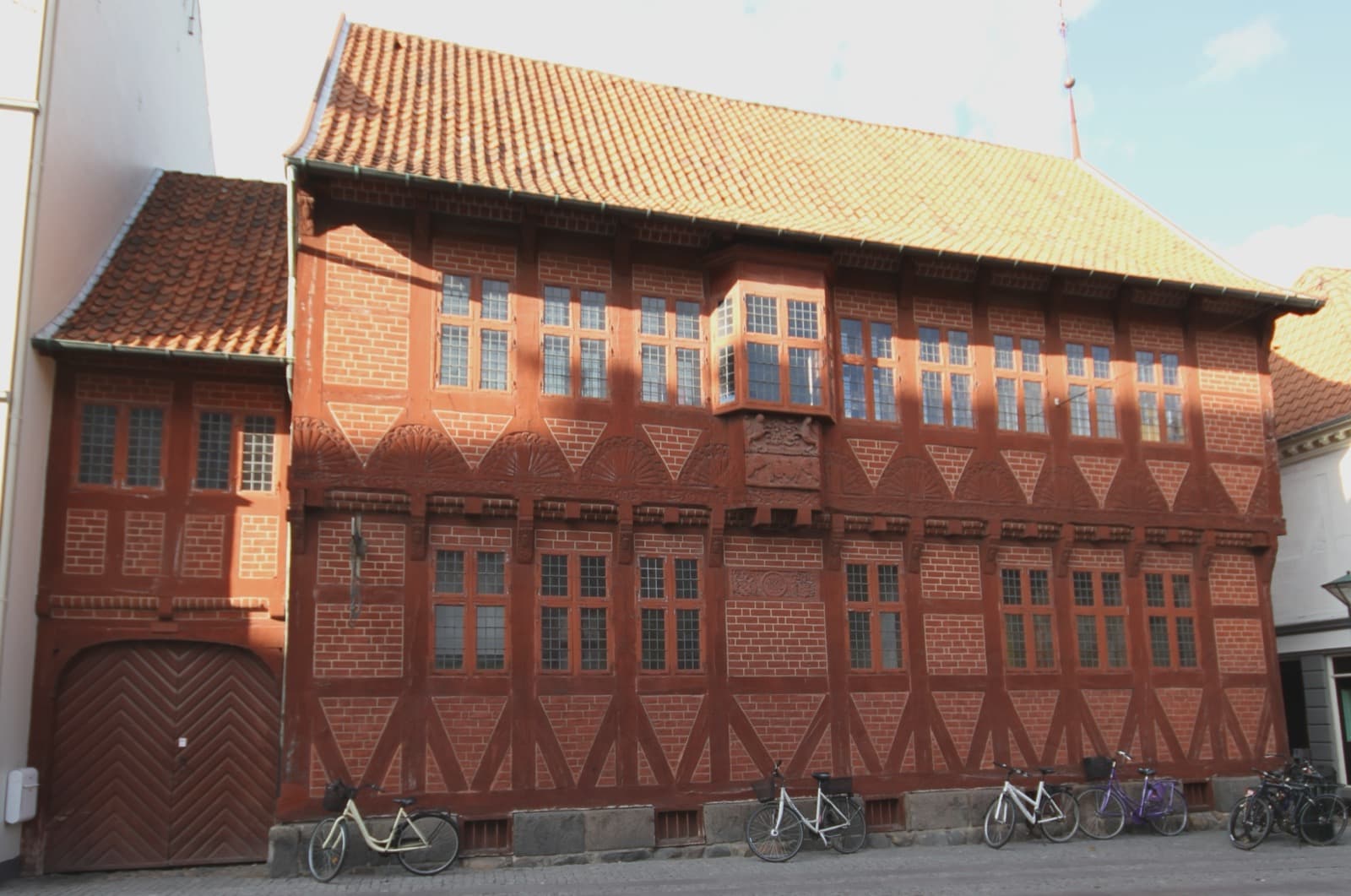
Even the Andersen walk keeps pushing past the fairytale. Moentergaarden, the city's cultural-history museum, sits in half-timbered renaissance merchant houses at Overgade forty-eight, the main house dating to sixteen forty-six and built for a nobleman named Falk Goeye. Its name recalls a former mint that once worked coins on or near the site. It holds the Koelbjerg remains, recorded as the oldest human remains known from Denmark, from about eight thousand years before Christ. Long before a shoemaker's son was born nearby, this was a working town of merchants and coiners with a thousand years already behind it.
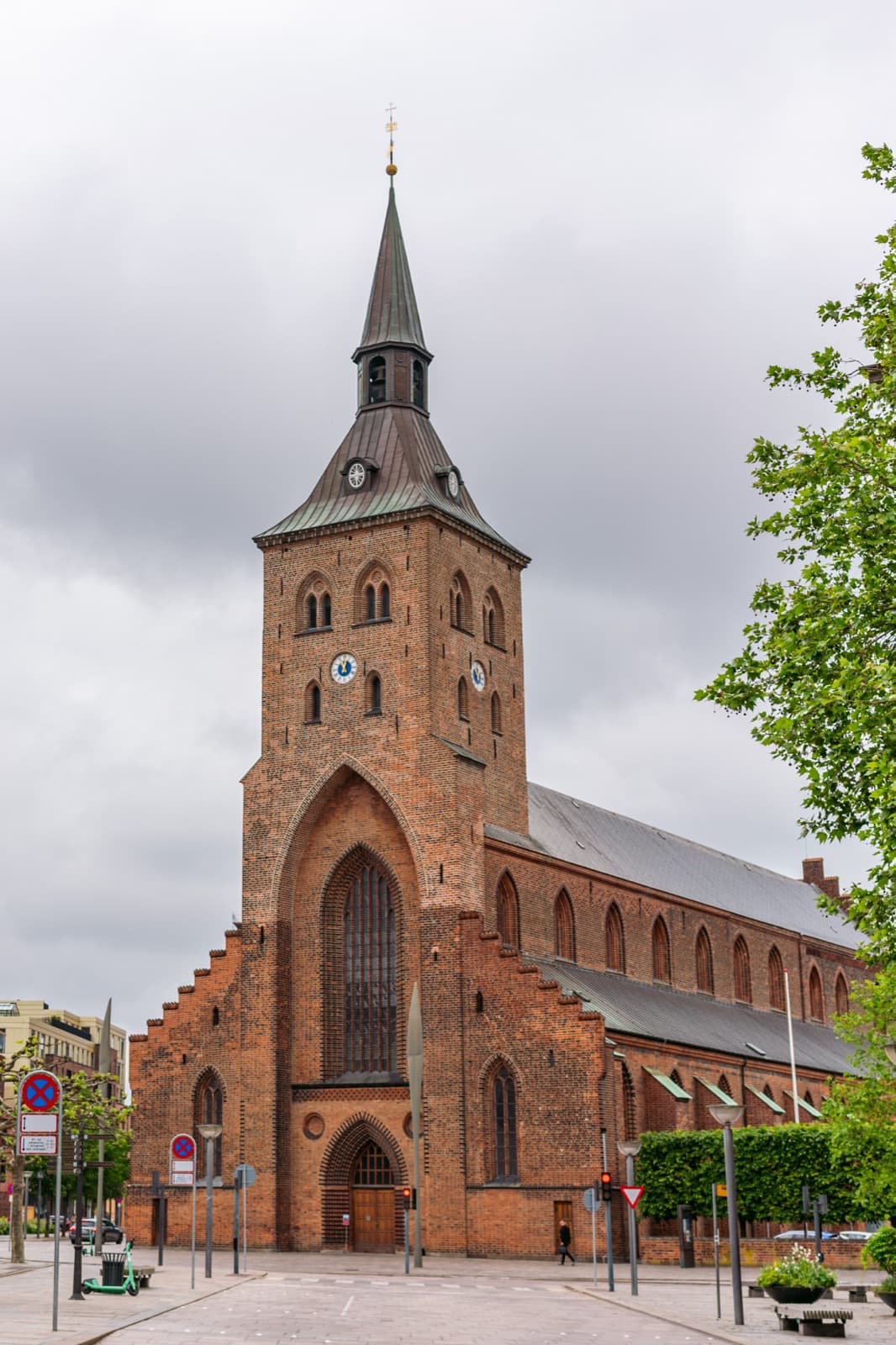
That deeper story climbs to its highest point at Saint Canute's Cathedral, one of the finest brick-Gothic churches in Denmark. Beneath its raised choir rest the relics of King Canute the Fourth, known as Canute the Holy. He reigned from ten eighty to ten eighty-six, and on the tenth of July ten eighty-six, during a peasant revolt, rebels stormed the nearby church of Saint Alban and killed the king, his brother Benedict, and seventeen of his followers before the altar. He was canonised on the nineteenth of April eleven oh one by Pope Paschal the Second, the first Danish king made a saint. The cathedral also holds the gilded altarpiece carved by Claus Berg around fifteen fifteen to fifteen twenty-five, commissioned by Queen Christine and moved here in eighteen oh seven when the old Franciscan friary church was demolished.
Odin's Odense: the buried Viking ring by the river
To read the oldest layer of all, follow the water. The Odin's Shrine: The Viking Town by the River walk traces the little Odense river, the Odense Aa, from the royal palace down to a green valley. Odense Palace grew from a medieval house of the Knights of Saint John, first recorded here in twelve eighty, into a royal seat where King Frederik the Fourth died on the twelfth of October seventeen thirty. The state sold it to the city in nineteen oh seven, when the King's Garden opened to the public.
The river itself is the reason the town exists. Along the banks of Munke Mose, the Monks' Marsh, the Odense river boats have sailed since eighteen eighty-two, now converted to run silently on solar power. Just past the park, beneath perfectly ordinary streets, lies the buried heart of the deeper city. Nonnebakken, the Nuns' Hill, hides a Viking ring fortress of the Trelleborg type, built around the year nine eighty and attributed to King Harald Bluetooth. It was a perfect ring roughly one hundred and eighty metres across, and of the five known ring fortresses in Denmark, inscribed together on the UNESCO World Heritage list on the seventeenth of September twenty twenty-three, Nonnebakken is the only one buried beneath a city centre. Excavations in twenty fifteen and twenty twenty confirmed it survives remarkably well, invisible under houses, gardens, and pavements.
The martyred king surfaces again at Sankt Albani Kirke, a neo-Gothic Catholic church consecrated in nineteen oh eight, named for, though not the same as, the medieval priory where Canute was killed. Nearby, Sortebroedre Torv marks a Dominican friary begun in twelve thirty-eight, its footprint now traced in brass buttons set into the paving after the buildings vanished following the Reformation of fifteen thirty-six. The route then reaches Brandts Klaedefabrik, a yellow-brick cloth mill whose production began in eighteen sixty-nine with ten employees and grew into one of the largest workplaces in Odense, converted from the nineteen eighties into a quarter of galleries, cinema, and courtyards. It ends downstream at Fruens Boege, Our Lady's Beeches, a riverside woodland the city bought in eighteen seventy-five and where the river boats turn around.
Read both towns at your own pace
The through-line is simple. Andersen made Odense famous, but he was late to it. The city was already a coin-minting merchant town, a royal seat, a martyr's shrine, and a Viking stronghold before the fairytales were written, and all of that is still legible on foot, in a crypt, on a buried ring, in brass markers underfoot. Both walks are flat and short, with no group, no schedule, and no guide to tip. Wander the Odense walking tours and read the fairytale city and the Viking town beneath it, lingering wherever a corner catches you.
Sources
Frequently asked questions
- What does the name Odense mean?
- Odense means the shrine of the god Odin, a compound of Odin and an Old Danish word for a sacred place. The name is first recorded in the year nine eighty-eight, making it one of the oldest recorded place names in Denmark. The city sits on the island of Funen.
- Where was Hans Christian Andersen born in Odense?
- Andersen was born in poverty on the second of April eighteen oh five, the son of a shoemaker and a washerwoman. The little yellow corner house at Hans Jensens Straede forty-five is honored by tradition as his birthplace and has been part of a museum since nineteen oh eight, but the record does not confirm he was actually born under that roof. He left Odense for Copenhagen at fourteen in eighteen nineteen.
- What is Nonnebakken in Odense?
- Nonnebakken is a buried Viking ring fortress of the Trelleborg type, built around the year nine eighty and attributed to King Harald Bluetooth. It measured roughly one hundred and eighty metres across. Of the five known ring fortresses in Denmark, inscribed on the UNESCO World Heritage list in September twenty twenty-three, Nonnebakken is the only one buried beneath a city centre, invisible under modern streets.
- Who is buried in Saint Canute's Cathedral in Odense?
- The cathedral crypt holds the relics of King Canute the Fourth, known as Canute the Holy, along with his brother Benedict. Canute was killed by rebels at the nearby church of Saint Alban on the tenth of July ten eighty-six, and was canonised on the nineteenth of April eleven oh one, the first Danish king made a saint. The cathedral also holds a gilded altarpiece carved by Claus Berg around fifteen fifteen to fifteen twenty-five.
- Who designed the Hans Christian Andersen museum in Odense?
- H.C. Andersens Hus was designed by the Japanese architect Kengo Kuma and Associates, who won the international competition in twenty sixteen. The museum reopened in the summer of twenty twenty-one as a scatter of low timber-and-glass pavilions largely sunk into circular gardens and hedges. Its design draws in part on Andersen's tale The Tinderbox.
Ready to experience it?
Old Town: Hans Christian Andersen's Odense
65 min · 1.9 km · easy
More from Odense
Explore more at your own pace.
Odense Travel Guide: Days, Transport, Safety, and Costs
One Day in Odense: A Walkable Morning-to-Evening Itinerary
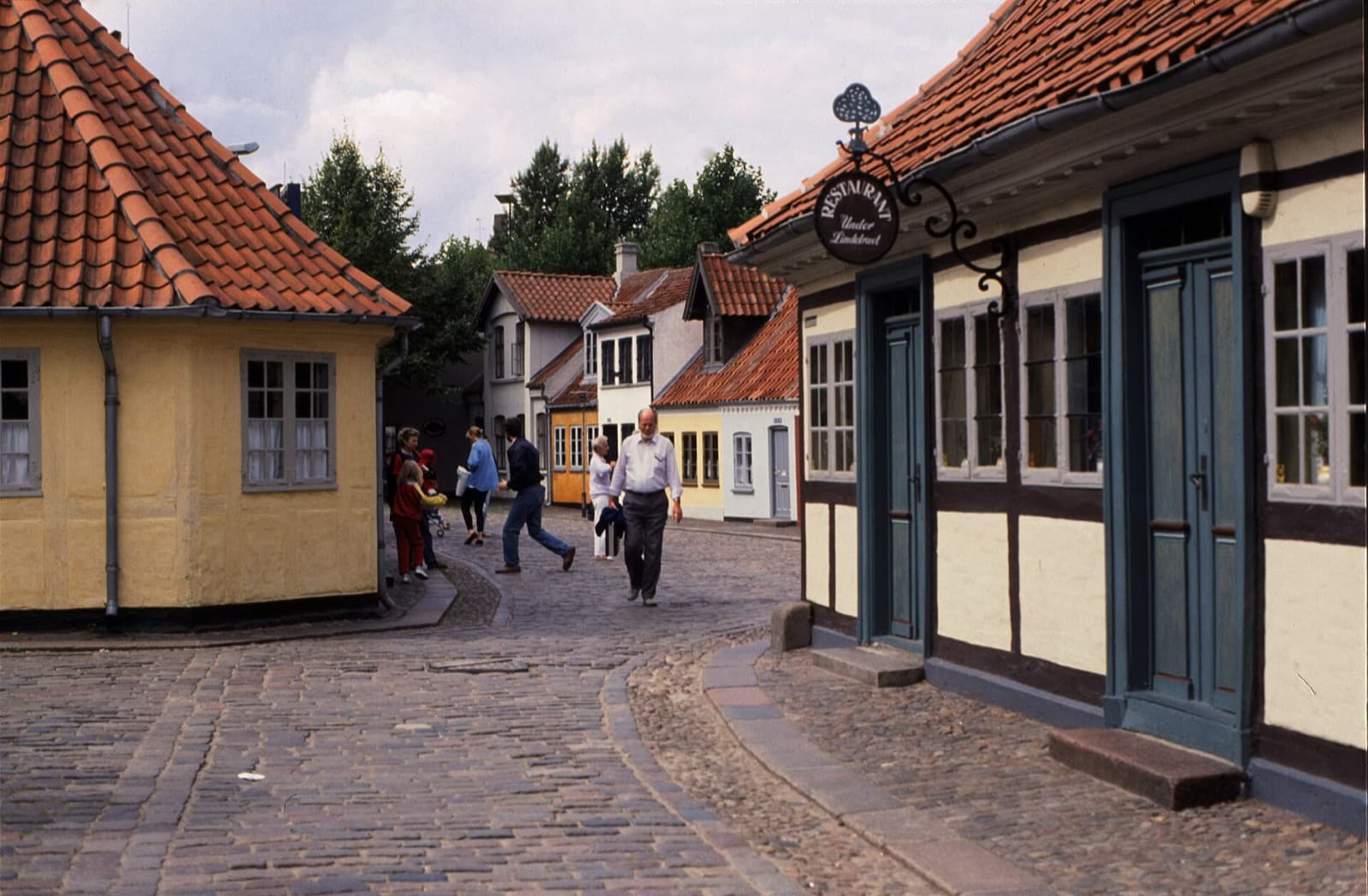
Andersen's Birthplace and the Old Town of Odense: Where a Shoemaker's Son Became a Fairy Tale
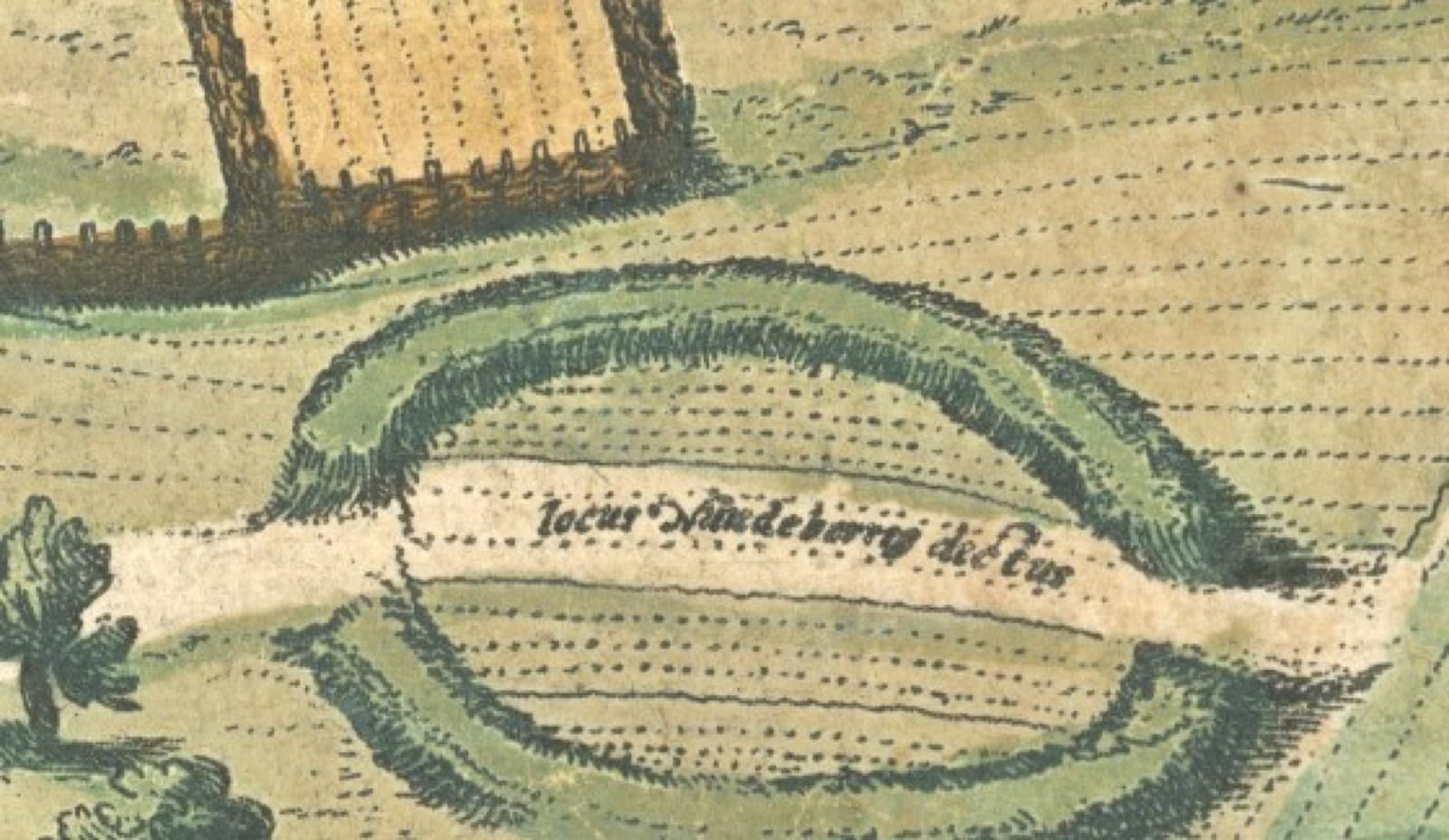
Nonnebakken: The Buried Viking Fortress Under Odense
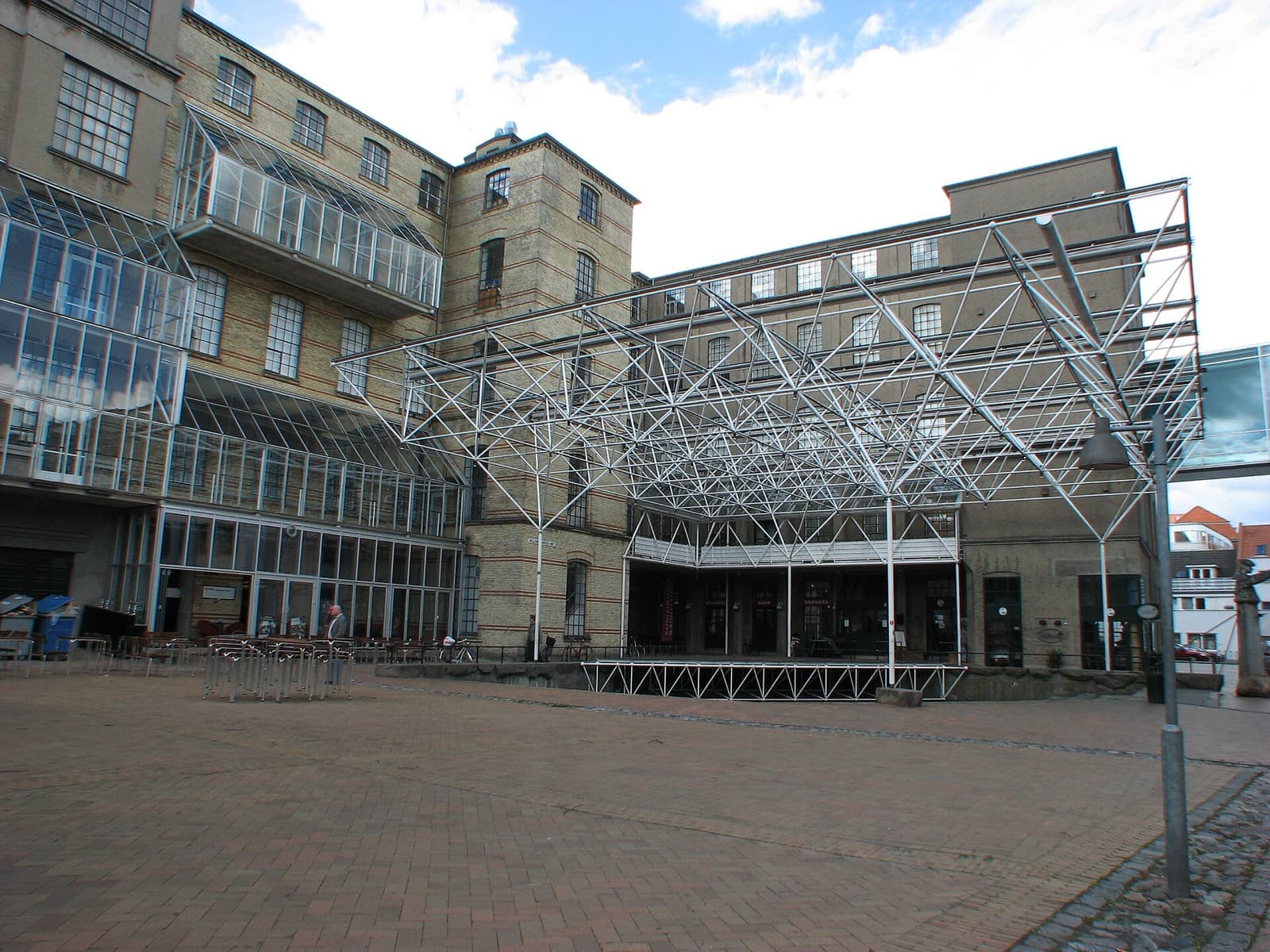
Brandts Klaedefabrik: The Odense Cloth Mill Reborn as a Quarter of Art