Old Town: Hans Christian Andersen's Odense
65 min · 1.9 km · easy
If you have one day in Odense, walk it. Denmark's third city, the birthplace of Hans Christian Andersen on the island of Funen, packs its fairytale quarter, its medieval cathedral, its riverside parks, and a buried Viking fortress into a flat, compact core you can cover on foot between morning coffee and an evening by the water. This guide lays out a genuinely walkable itinerary, morning to evening, and hands you off to two self-guided audio tours that carry the history stop by stop while you set your own pace.
The short version: start in the old cobbled quarter around Andersen's birthplace, spend the late morning inside the fairytale museum, cross the medieval town-hall square to Saint Canute's Cathedral, break for lunch, then trade the fairytale for the deeper town along the river in the afternoon. Nothing here is far apart. The Andersen old-town loop runs under two kilometres, and even the longer riverside walk stays flat and easy.
Morning: the old town and the fairytale quarter
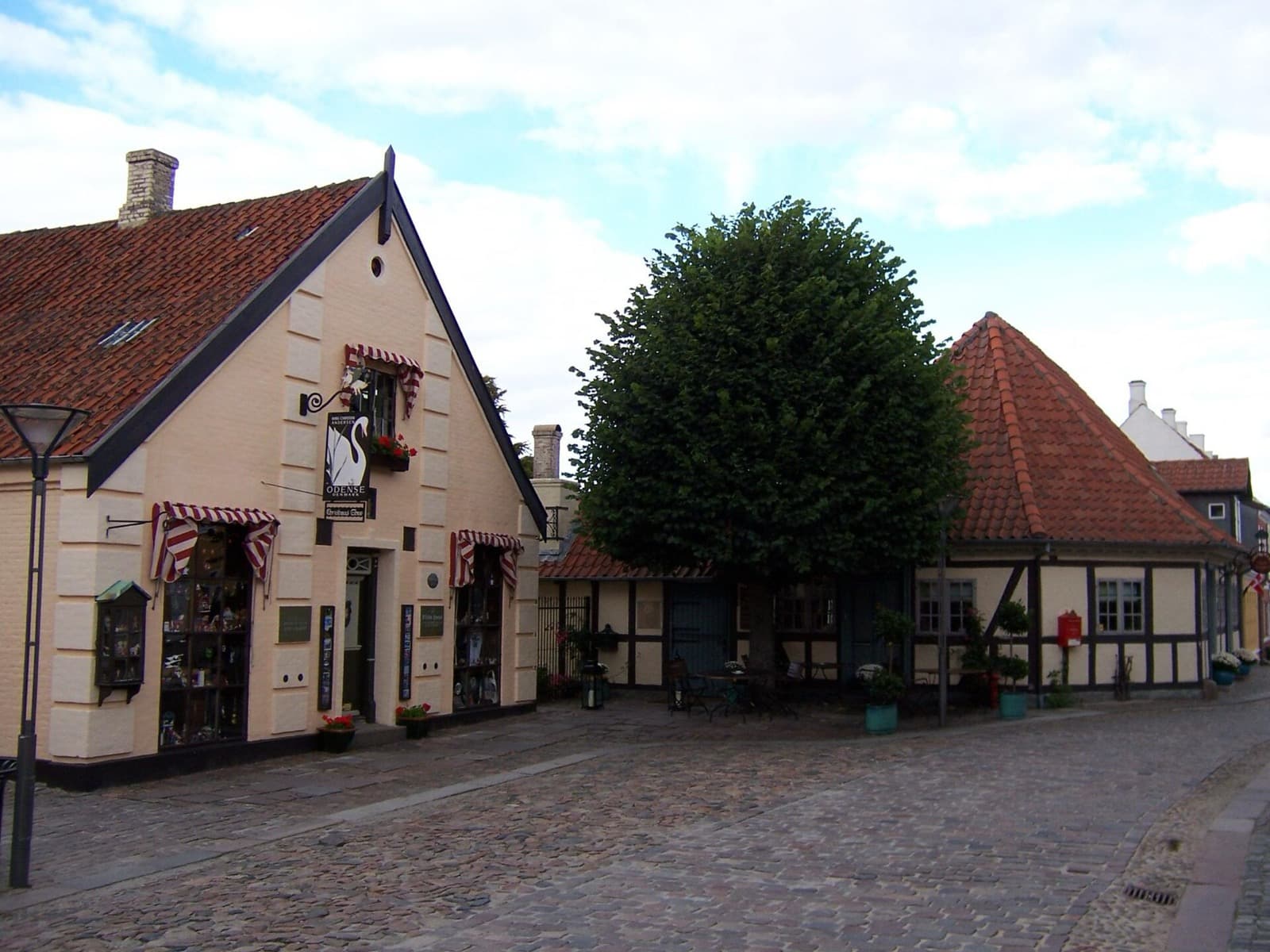
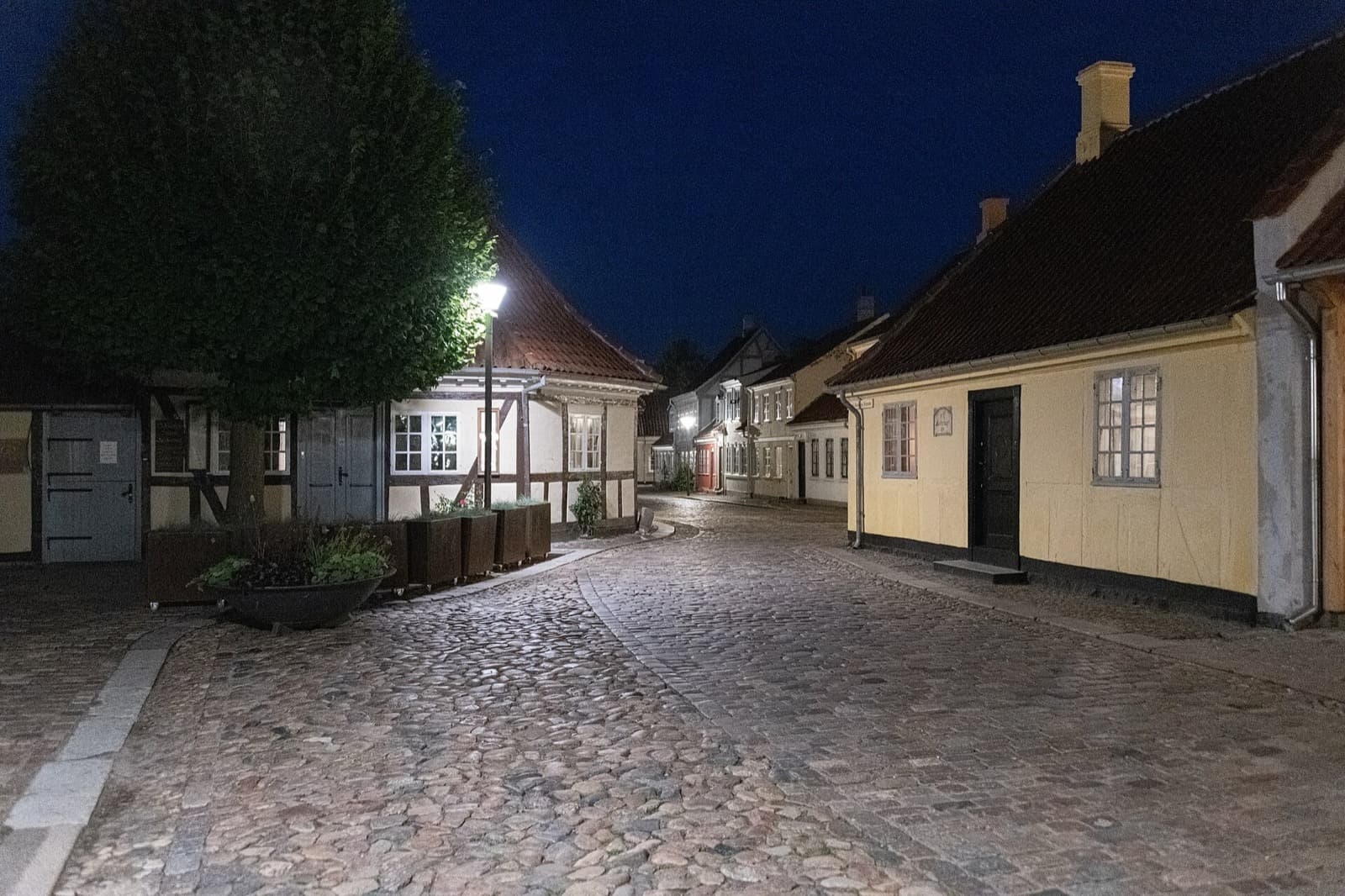
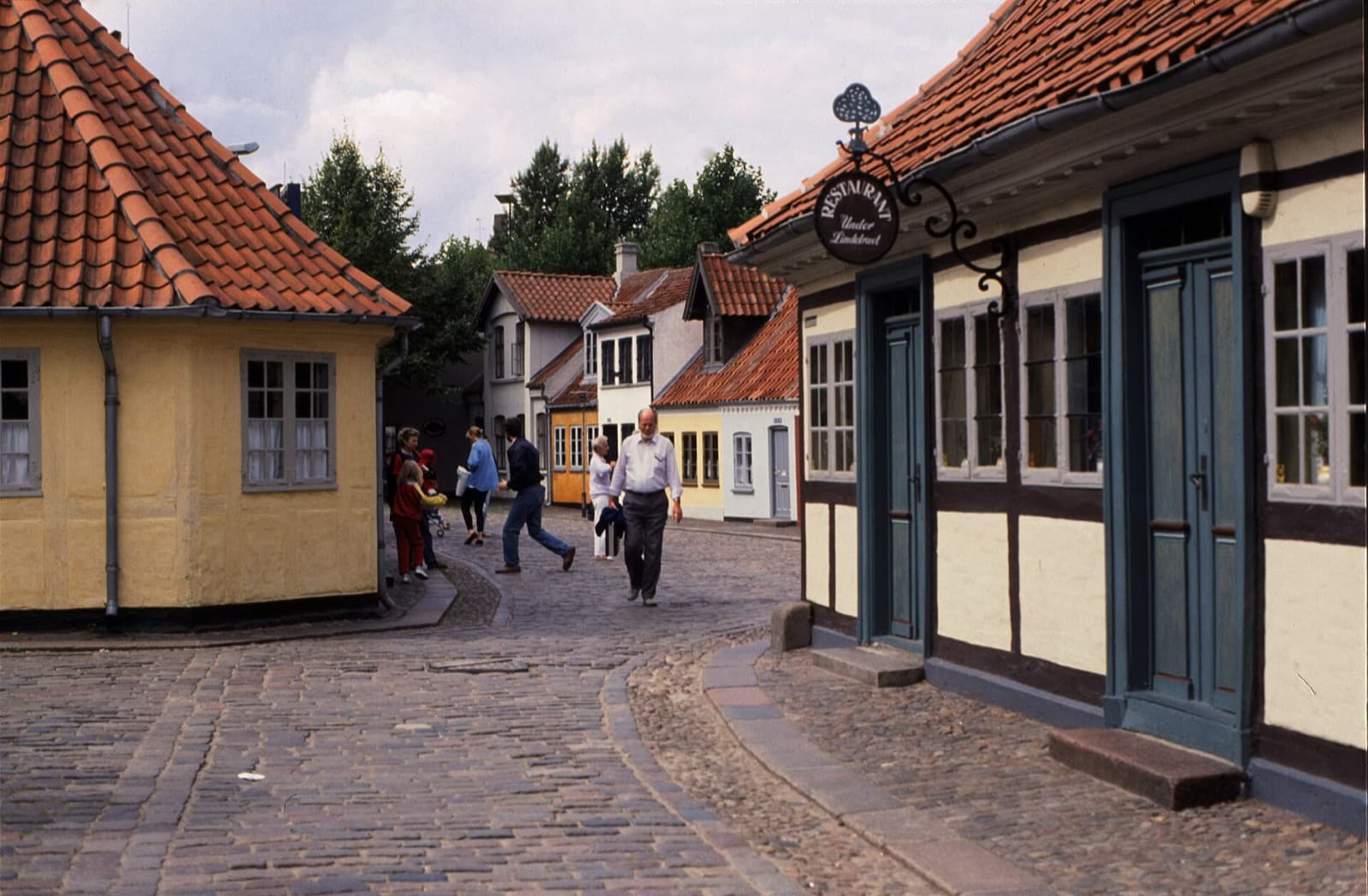
Begin at the little yellow corner house at Hans Jensens Straede 45, honored by tradition as the place where Andersen was born in 1805. Be honest with yourself about that word tradition: the house has been part of a museum since 1908, but the record does not actually confirm he was born under this roof. It is a cherished story rather than a proven fact, which feels fitting for a man who turned the ordinary into legend. The lanes around it, low houses and rounded cobbles, are the best-preserved stretch of poor-quarter Odense, and they reward a slow first hour.
Wrapped around the birthplace is H.C. Andersens Hus, the fairytale museum that reopened in the summer of 2021 in a building by the Japanese architect Kengo Kuma and Associates, who won the competition for it in 2016. It is a scatter of low timber-and-glass pavilions sunk into circular gardens and maze-like hedges, so you step down into it the way a reader steps into a story. Entry is time-slotted and you must book a ticket in advance, including for under-18s who enter free. Adult admission is 165 Danish kroner as of 2026. Hold on to that ticket: it also gives 30 days of free entry to Andersen's Childhood Home, which you can visit later the same day. Summer hours (July 1 to August 31) run daily 09:00 to 18:00; most of the rest of the year it opens 10:00 to 17:00. Allow 60 to 90 minutes inside.
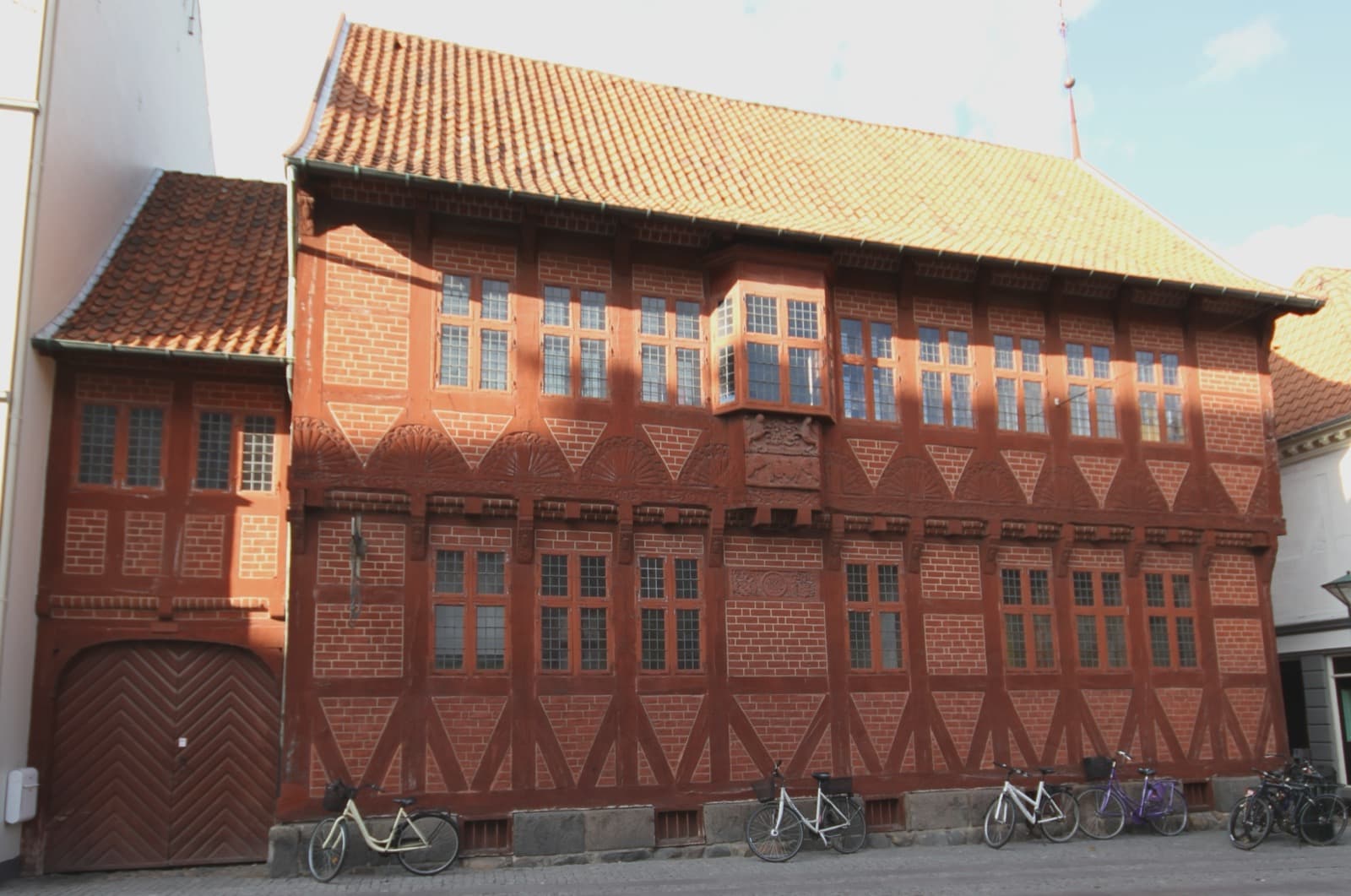
From the museum it is a two-minute walk to Moentergaarden, the city's cultural-history museum in half-timbered renaissance merchant houses, whose collections carry Funen from prehistory through the Viking age. This is the whole of the Old Town: Hans Christian Andersen's Odense self-guided walk, seven stops from the birthplace to the cathedral, and it is the natural spine of your morning.
Midday: the town hall square and the cathedral
Hear a stop from this walk
Andersen's Childhood Home: The One Poor Room Where the Boy Dreamed
Walk south to Flakhaven, the medieval town-hall square, where the red-brick Odense Town Hall (built 1881 to 1883) rises with a silhouette borrowed from the Palazzo Pubblico in Siena. The square has linked civic power and church power for centuries, and it costs nothing to cross and take in.
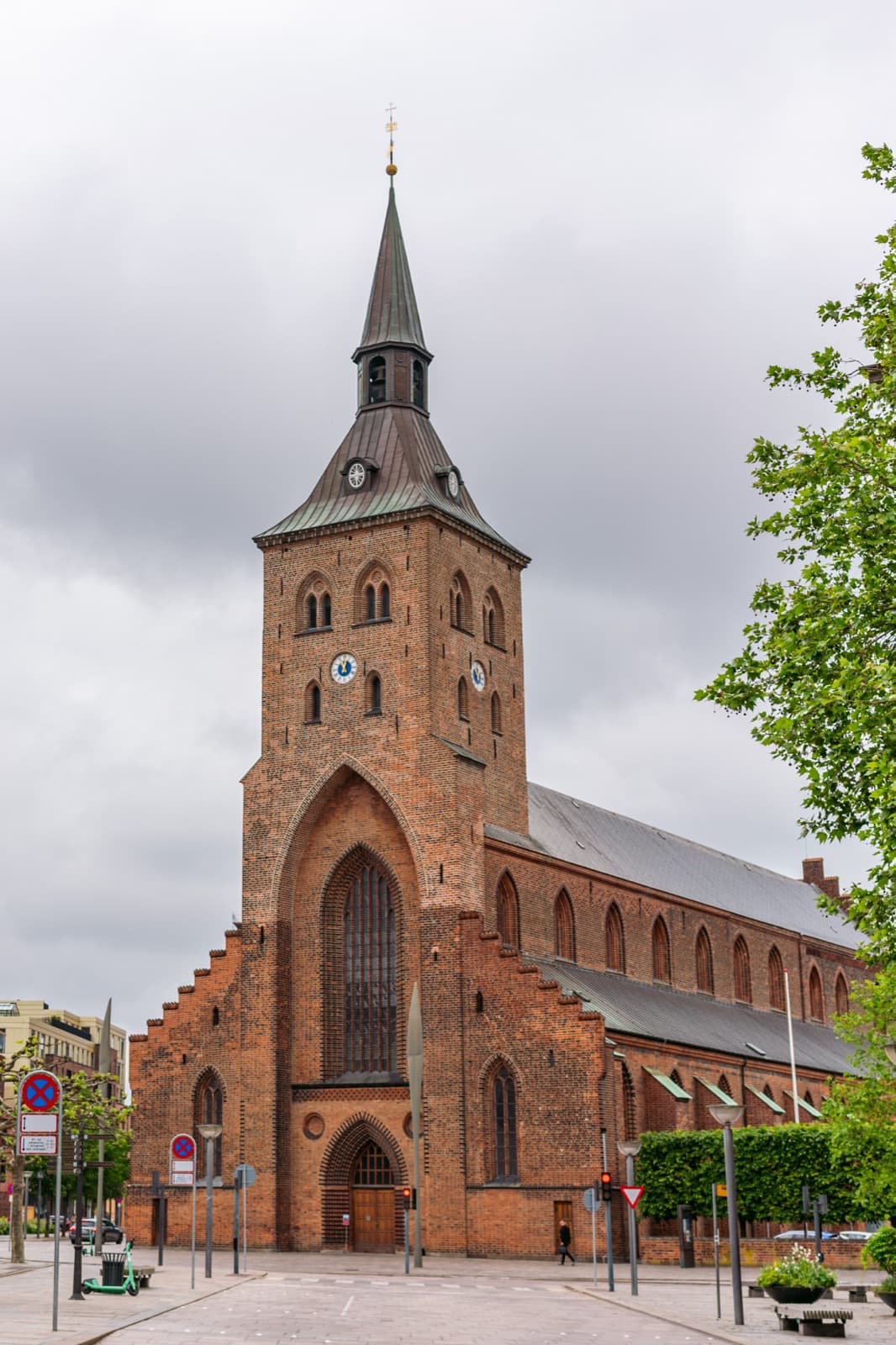
Opposite stands Saint Canute's Cathedral, Sankt Knuds Kirke, one of the finest brick-Gothic churches in Denmark and the emotional center of the day. Entry is free, with donations welcomed. Beneath the raised choir, an accessible crypt holds the relics of King Canute the Fourth, killed by rebels at the nearby Saint Alban's church on July 10, 1086, and later canonised in 1101 as the first Danish king made a saint. The cathedral also holds the gilded altarpiece carved by Claus Berg around 1515 to 1525. Go early or over the lunch hour when the church is quietest; the cathedral typically opens from 10:00, with shorter hours on Sundays and holidays, so check the day's times. This is a working church and a real burial place, so dress modestly and keep your voice low in the crypt. Give it 30 to 45 minutes.
Break for lunch around here. The pedestrian streets and the Brandts quarter both sit within a few minutes' walk and hold cafes and casual spots.
Afternoon: the deeper town along the river
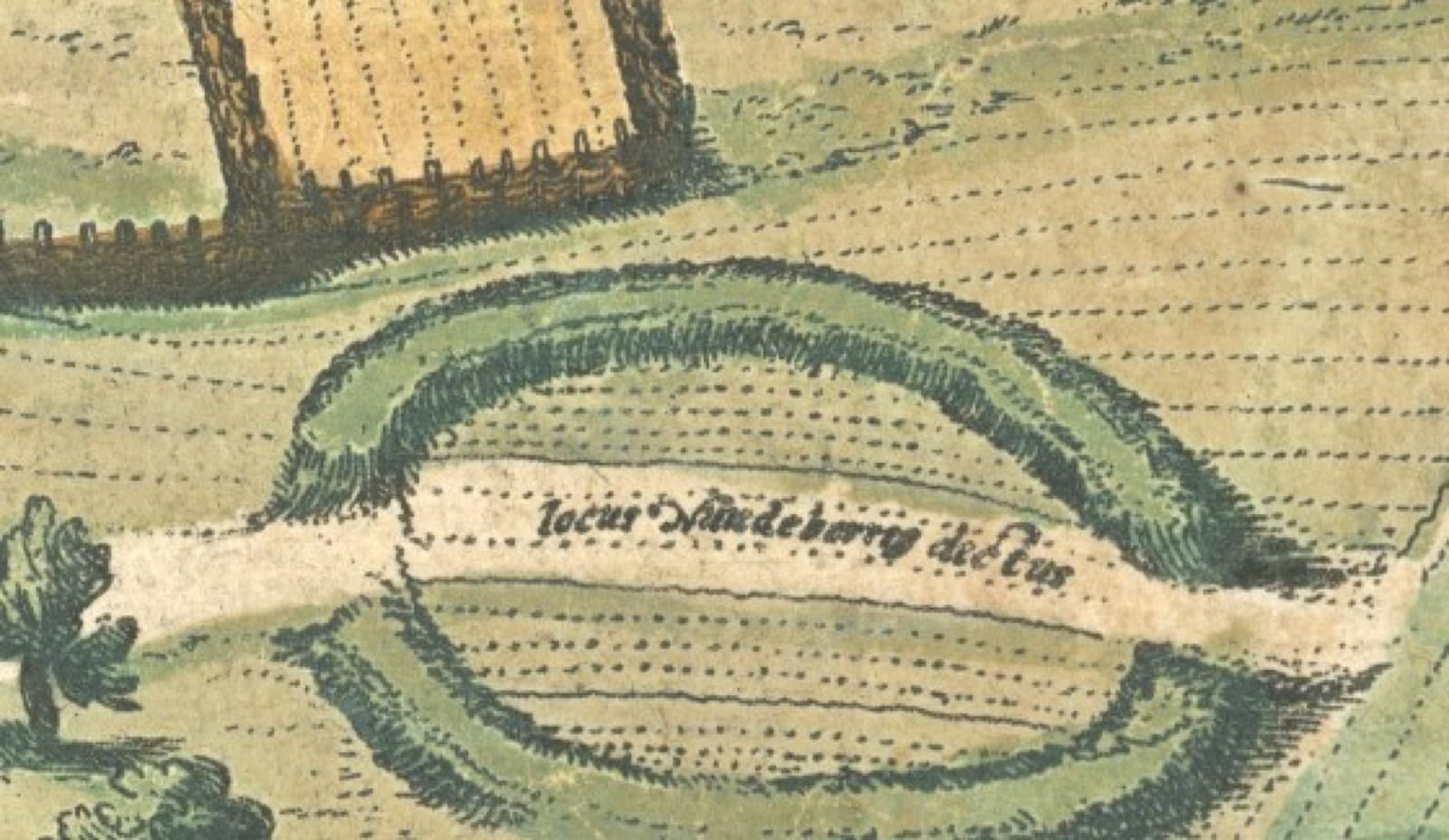
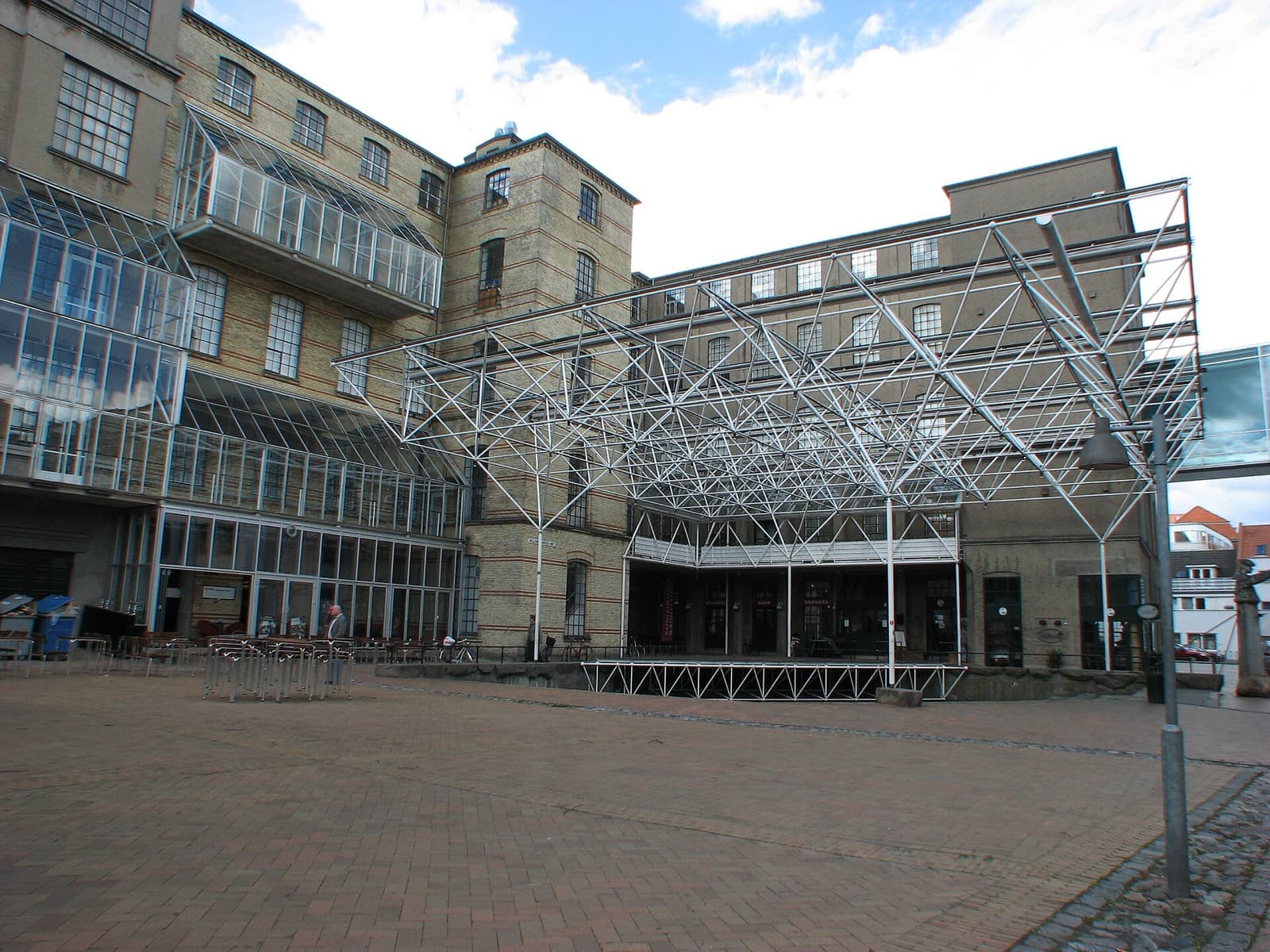
After lunch, trade the fairytale for the older town underneath it. The Odins Shrine and the River self-guided walk follows the Odense river from Odense Palace and its King's Garden down through Munke Mose river park, past the buried Nonnebakken Viking ring fortress, to Brandts Klaedefabrik, a former cloth mill reborn as an arts quarter with courtyards you can wander for free. Nonnebakken is one of Denmark's five Viking-age ring fortresses inscribed together on the UNESCO World Heritage List, and the only one built inside a city, though almost nothing of it is visible above ground today. This walk is longer, roughly seven kilometres end to end if you follow it all the way to the Fruens Boege woods, but it stays flat and you can turn back whenever you like.
If your legs are done by mid-afternoon, let the river do the walking. Odense Aafart has run pleasure boats on the river since 1882, sailing from Munke Mose down to the Fruens Boege woods with a stop near the zoo. The Munke Mose to Fruens Boege leg takes about 30 minutes, with several departures an hour in high summer and fewer in the shoulder months. The cruise charges a fare in Danish kroner; booking ahead is wise in peak season. Riverside paths can be wet and slick after rain, so wear shoes with grip.
Evening: closing the loop
Close the day back at Andersen's Childhood Home at Munkemoellestraede 3 to 5, the small, very low house where the boy lived from 1807 until he left for Copenhagen at fourteen in 1819. A single humble room survives, and standing in it tells you more about the imagination that escaped this poverty than any grander stop. Admission is normally 75 Danish kroner on its own, but it is included free for 30 days with your H.C. Andersens Hus ticket, so this is the payoff for buying that ticket in the morning. In July and August it opens 10:00 to 17:00; the rest of the year it runs 11:00 to 16:00 and closes on Mondays, so check the day's hours and aim to arrive with time to spare.
Then spend the last of the light by the river or on a pedestrian street. The old town is safe and easy to walk in the evening; Odense is a calm mid-size Danish city, and the main caution is the usual one of watching your footing on wet cobbles and keeping valuables discreet in busier spots.
Getting there and practical notes
Odense sits on the direct line between Copenhagen and Jutland, about 139 kilometres from the capital. Direct trains run roughly hourly and take about 1 hour 25 minutes to 1 hour 50 minutes, which makes a car-free day trip from Copenhagen realistic if you start early. From Odense station, the old town is a short, flat walk. Carry a card or some Danish kroner, since the museums charge in kroner rather than euros and many Danish sites prefer contactless payment. For the full stop-by-stop history, GPS-triggered audio, and a route you can pause and resume on your own clock, browse the Odense walking tours and start with the old-town Andersen loop.
Sources
Frequently asked questions
- Can you see Odense in one day?
- Yes. Odense's old town is flat and compact, so one day is enough to walk Hans Christian Andersen's birthplace and fairytale museum, Saint Canute's Cathedral, the town-hall square, and the riverside parks. The main Andersen old-town loop runs under two kilometres, and the longer riverside walk stays flat and easy.
- How much does H.C. Andersens Hus cost and do you need to book?
- Adult admission is 165 Danish kroner as of 2026, and children under 18 enter free but still need a ticket. Entry is time-slotted, so you must book in advance, including for under-18s. Your ticket also gives 30 days of free entry to Andersen's Childhood Home.
- Is Saint Canute's Cathedral in Odense free to enter?
- Yes, entry to Saint Canute's Cathedral is free, with donations welcomed. Its crypt holds the relics of King Canute the Fourth, killed at the nearby Saint Alban's church in 1086 and canonised in 1101. It is a working church, so dress modestly and keep your voice low.
- How do you get from Copenhagen to Odense?
- Direct trains run roughly hourly between Copenhagen and Odense and take about 1 hour 25 minutes to 1 hour 50 minutes, covering about 139 kilometres. From Odense station the old town is a short, flat walk, which makes a car-free day trip realistic if you start early.
- What is the best order to walk Odense in a day?
- Start in the morning at Andersen's birthplace and the fairytale museum, cross to the town-hall square and Saint Canute's Cathedral around midday, break for lunch, then follow the river through Munke Mose and the Brandts quarter in the afternoon. Close the day at Andersen's Childhood Home, which is included free with your museum ticket.
- Can you take a river cruise in Odense?
- Yes. Odense Aafart has run pleasure boats on the river since 1882, sailing from Munke Mose down to the Fruens Boege woods with a stop near the zoo. The Munke Mose to Fruens Boege leg takes about 30 minutes, with several departures an hour in high summer. It charges a fare in Danish kroner and booking ahead is wise in peak season.
Ready to experience it?
Old Town: Hans Christian Andersen's Odense
65 min · 1.9 km · easy
More from Odense
Explore more at your own pace.
Odense Travel Guide: Days, Transport, Safety, and Costs
Odense: The Fairytale City and the Viking Town Beneath It
Andersen's Birthplace and the Old Town of Odense: Where a Shoemaker's Son Became a Fairy Tale
Nonnebakken: The Buried Viking Fortress Under Odense
Brandts Klaedefabrik: The Odense Cloth Mill Reborn as a Quarter of Art