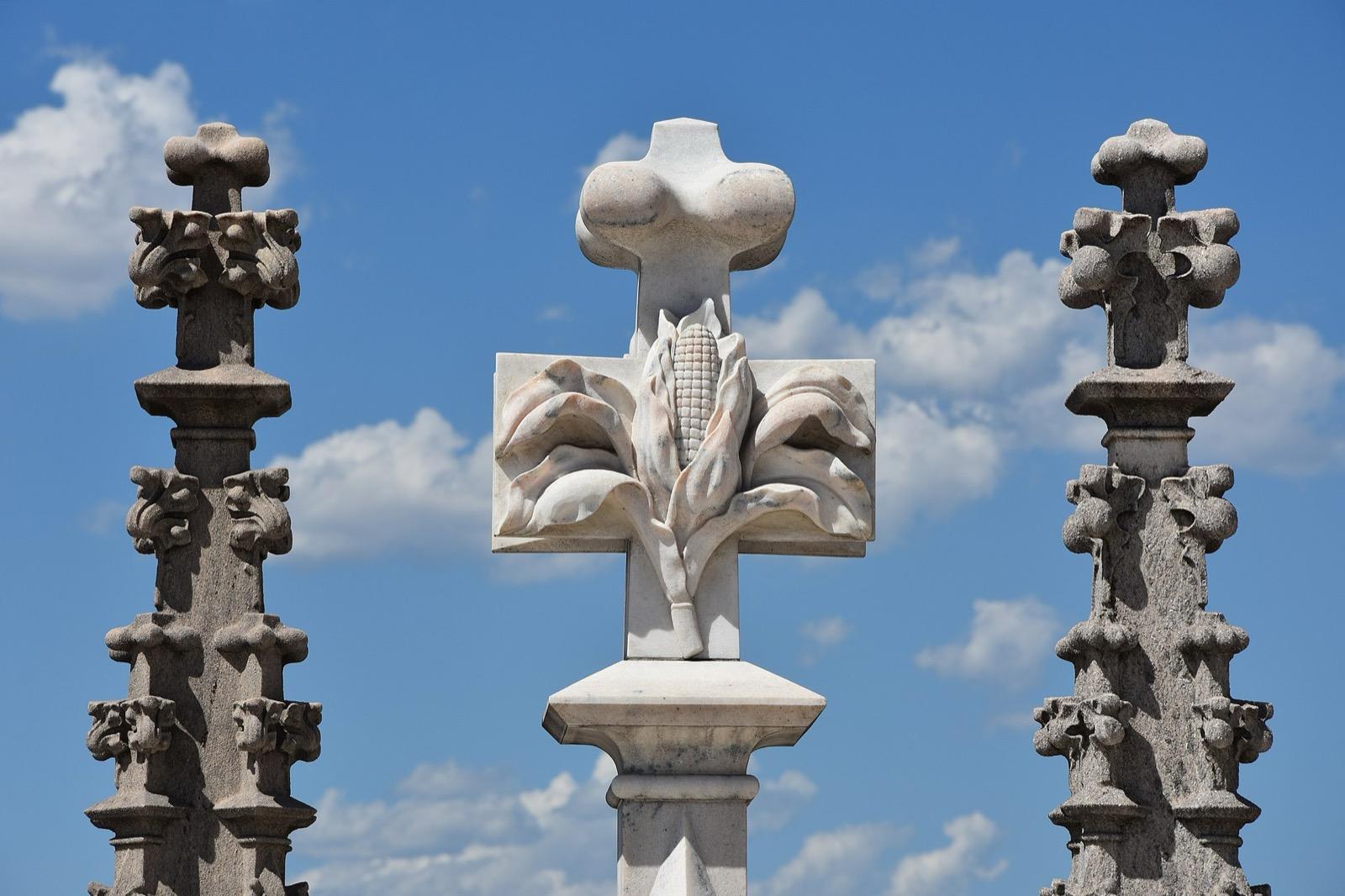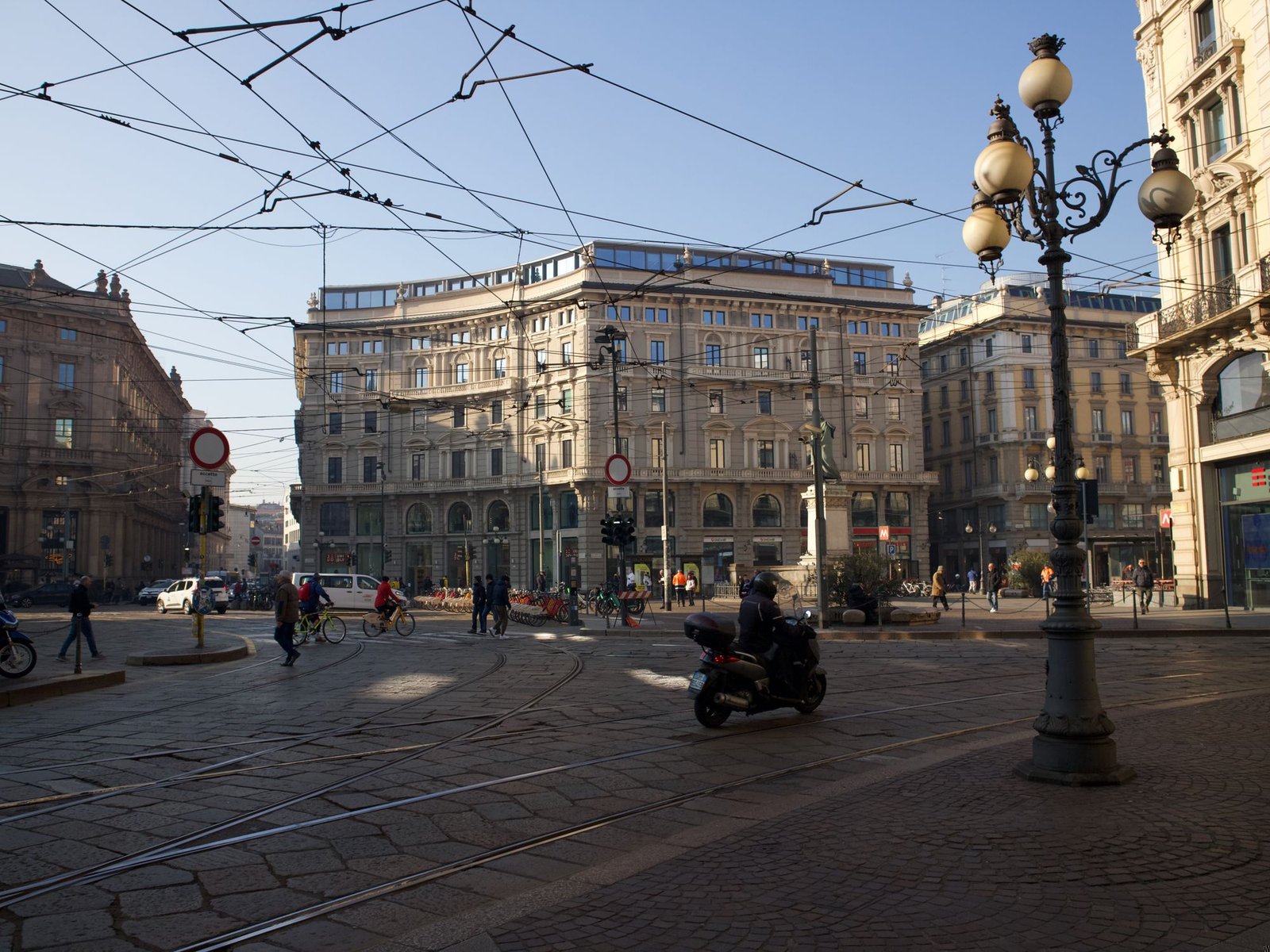
Milan's monumental core, walked as a single loop around one square, reads as a grammar of ambition. The civic piazza at the city's centre, the marble cathedral that took nearly six centuries to finish, the glass arcade named for Italy's first king, the square where La Scala made Milan an opera capital, the royal palace and the small ducal chapel that held one of the city's first public clocks all sit within a few minutes of each other. Each one is a different kind of power saying the same thing: this city matters. Six hundred years, from court to cathedral to nation, in under a mile.
The stage: a square built in the 1860s
Start by noticing how young the Piazza del Duomo is. Its open expanse, roughly seventeen thousand square metres, looks timeless, but its present form is largely the work of one architect, Giuseppe Mengoni, who redesigned it between 1865 and 1873. A medieval neighbourhood of narrow streets was pulled down so the square could open wide enough to answer the cathedral. In the middle rides Victor Emmanuel the Second in bronze, inaugurated in 1896. The square and the arcade off its north side are one design: Mengoni drew both, so they read as a single nineteenth-century gesture, the newly united kingdom staging itself in front of a medieval church.
The two giants of the loop have their own pieces on Learn. The cathedral, begun in 1386 and finished only in 1965, is the city's longest sentence. The Galleria Vittorio Emanuele the Second is its proudest modern one. Here it is enough to see them as two answers to one square: faith in marble, nation in iron and glass.
Art and government, facing each other
Hear a stop from this walk
Duomo di Milano: The Marble Forest Six Centuries in the Making
Walk through the Galleria and you come out into Piazza della Scala, calmer and smaller. The opera house, completed in 1778 to designs by Giuseppe Piermarini, took its name from the church it replaced, Santa Maria della Scala, and passed the name on to the square. Its neoclassical facade is restrained, a building that keeps its drama indoors.
In the middle stands Pietro Magni's monument to Leonardo da Vinci, unveiled in 1872, with four of his pupils around the base: Boltraffio, Marco d'Oggiono, Cesare da Sesto and Salaino. Opposite the theatre, Palazzo Marino houses Milan's city hall. Stand by Leonardo and turn slowly: theatre on one side, town hall on the other, the master and his students between them. It is a civic arrangement as much as a monument.
The court beside the cathedral
Back on the south side of the square, Palazzo Reale shows what it cost to sit next to the Duomo. For much of Milan's history this was the seat of government and the royal residence. It once had two courtyards, and both were partly cut back to make room for the rising cathedral, the sacred literally crowding out the secular. Piermarini, the same architect as La Scala, gave it its neoclassical face, completed in June 1778 under Archduke Ferdinand of Austria-Este. On 15 August 1943 Allied bombing destroyed its furnishings and the celebrated Hall of Caryatids. The palace became something else instead: a venue for major exhibitions, and home since 2013 to the cathedral's own museum, the Grande Museo del Duomo.
Where the ambition began
The loop ends small, on purpose. Tucked behind the palace, San Gottardo in Corte was built between 1330 and 1336 as the private chapel of Azzone Visconti, lord of Milan, designed by Francesco Pecorari of Cremona. Azzone suffered from gout and dedicated it to Saint Gotthard, patron of gout sufferers. Look up at the bell tower: an octagonal shaft of rose terracotta banded with white marble, among the loveliest in the city. It held one of Milan's first public clocks, which gave the street beside it its name, Via delle Ore, the street of the hours. Inside are a Giotto-school Crucifixion fresco found in 1926 and Azzone's own tomb.
That chapel is the hinge of the whole walk. Fifty years after Azzone built it, his family still ruled Milan when work on the cathedral began in 1386, with Gian Galeazzo Visconti rising to power. Court came before cathedral, and the cathedral before the nation that rebuilt the square around it.
Walking it
The loop is short and flat, easy to take at your own pace and in whatever order the crowds allow; linger in the Galleria, step inside the cathedral or the palace only if you want to, or sit on the steps of the square. The walk is Duomo di Milano: The Marble Forest at the City's Heart, six stops over about 1.4 kilometres in roughly 90 minutes, from the Piazza del Duomo to San Gottardo in Corte. See all routes on the Milan page.
Sources
- Piazza del Duomo, Milan, Wikipedia: Mengoni's redesign, the demolished neighbourhood, the square's area and the 1896 equestrian statue.
- Piazza della Scala, Wikipedia: the 1778 opera house by Piermarini on the site of Santa Maria della Scala, Magni's 1872 Leonardo monument and its four pupils, Palazzo Marino as city hall.
- Royal Palace of Milan, Wikipedia: the courtyards cut for the cathedral, Piermarini's redesign, the 1943 bombing and the Hall of Caryatids, the Grande Museo del Duomo.
- San Gottardo in Corte, Wikipedia: Azzone Visconti's chapel of 1330 to 1336, Pecorari, the bell tower and its clock, the Giotto-school fresco and the tomb.
Ready to experience it?
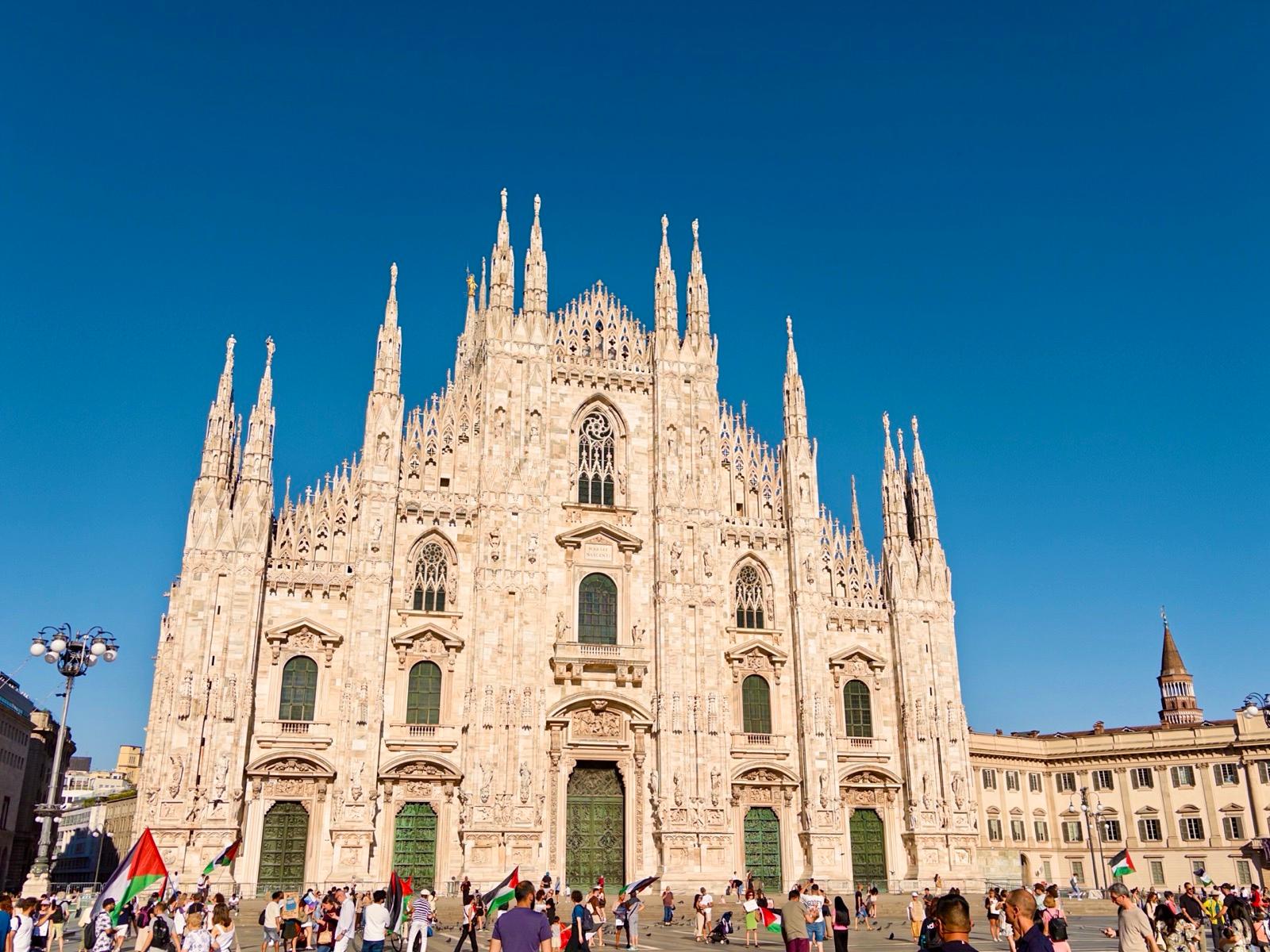
Duomo di Milano: The Marble Forest at the City's Heart
90 min · 1.4 km · easy
More from Milan
Explore more at your own pace.
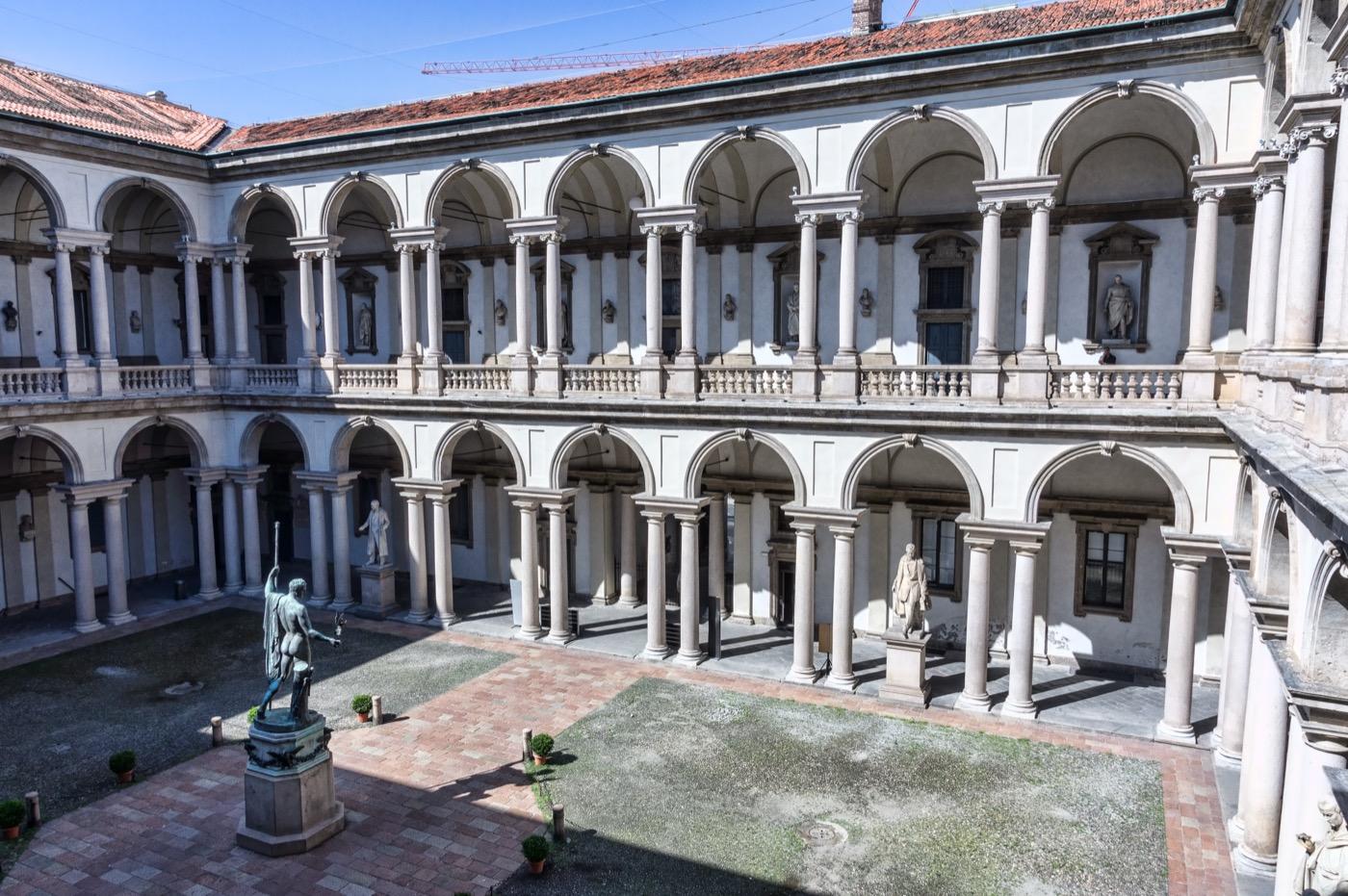
Brera and the Pinacoteca: Where Milan Chooses to Be Soft
Piazza Gae Aulenti and the District Milan Built on Air
Vicolo dei Lavandai: The Washermen's Alley That Explains Milan's Buried Port
Bosco Verticale: The Vertical Forest You Can Weigh
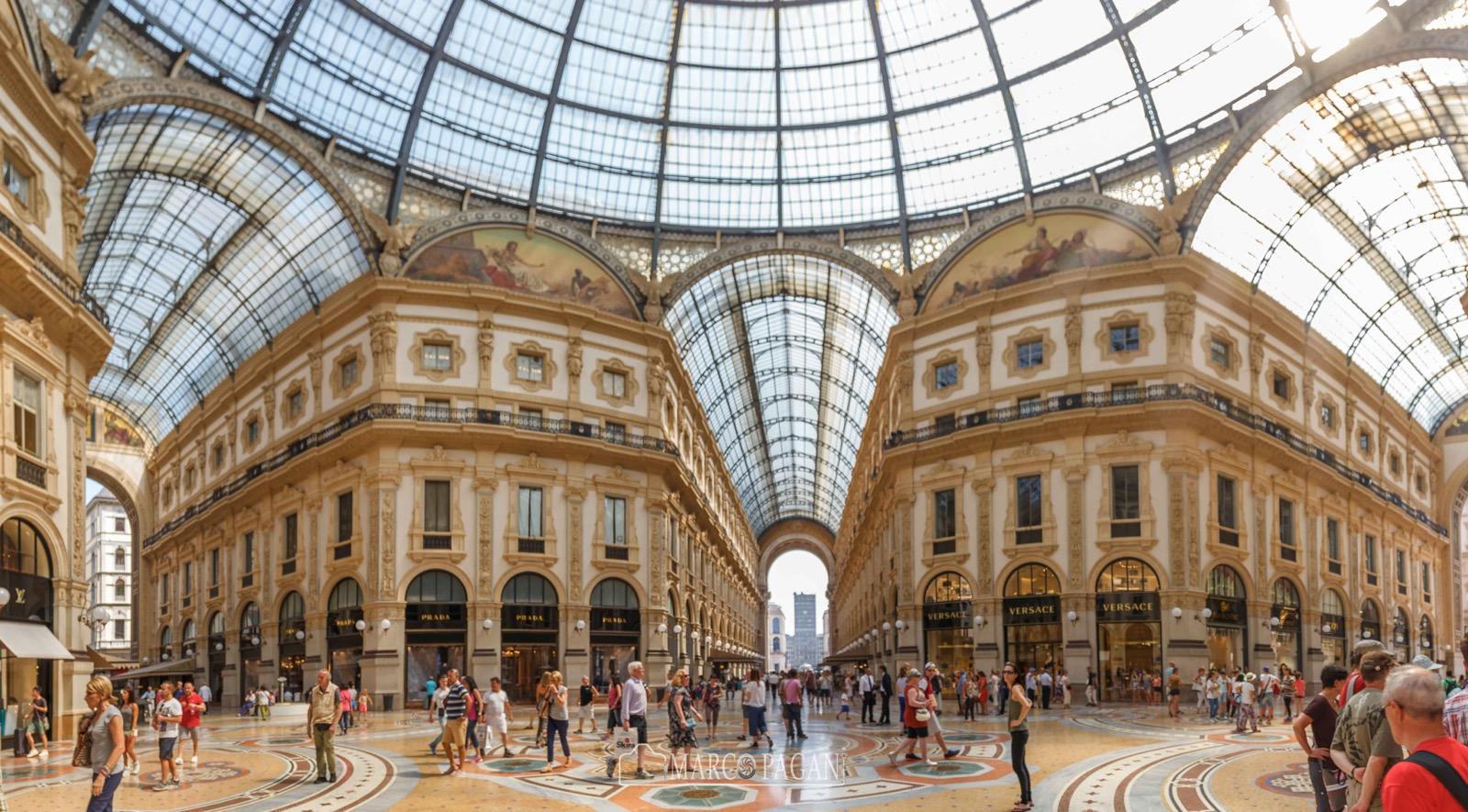
Galleria Vittorio Emanuele II: The Glass Salon of Milan