Cottonopolis: The City That Invented the Modern Economy
110 min · 3.5 km · easy
Manchester is the same city twice.
The first Manchester assembled the modern industrial economy in public, system by system, in a corridor you can still walk in an afternoon. The second Manchester took the buildings the first one emptied and turned them into a sound that travelled further than the cotton ever did. The unusual thing is not that both happened. It is that the second act runs on the physical inheritance of the first. The warehouses that stored raw cotton became the rooms where the records were made. That is the argument this city makes to anyone who reads it closely, and it is the thread that ties Roamer's three Manchester walks together.
The first act: an economy built in a corridor
You can see the invention happen in sequence. The Industrial Revolution Core tour walks the corridor in the order the systems arrived.
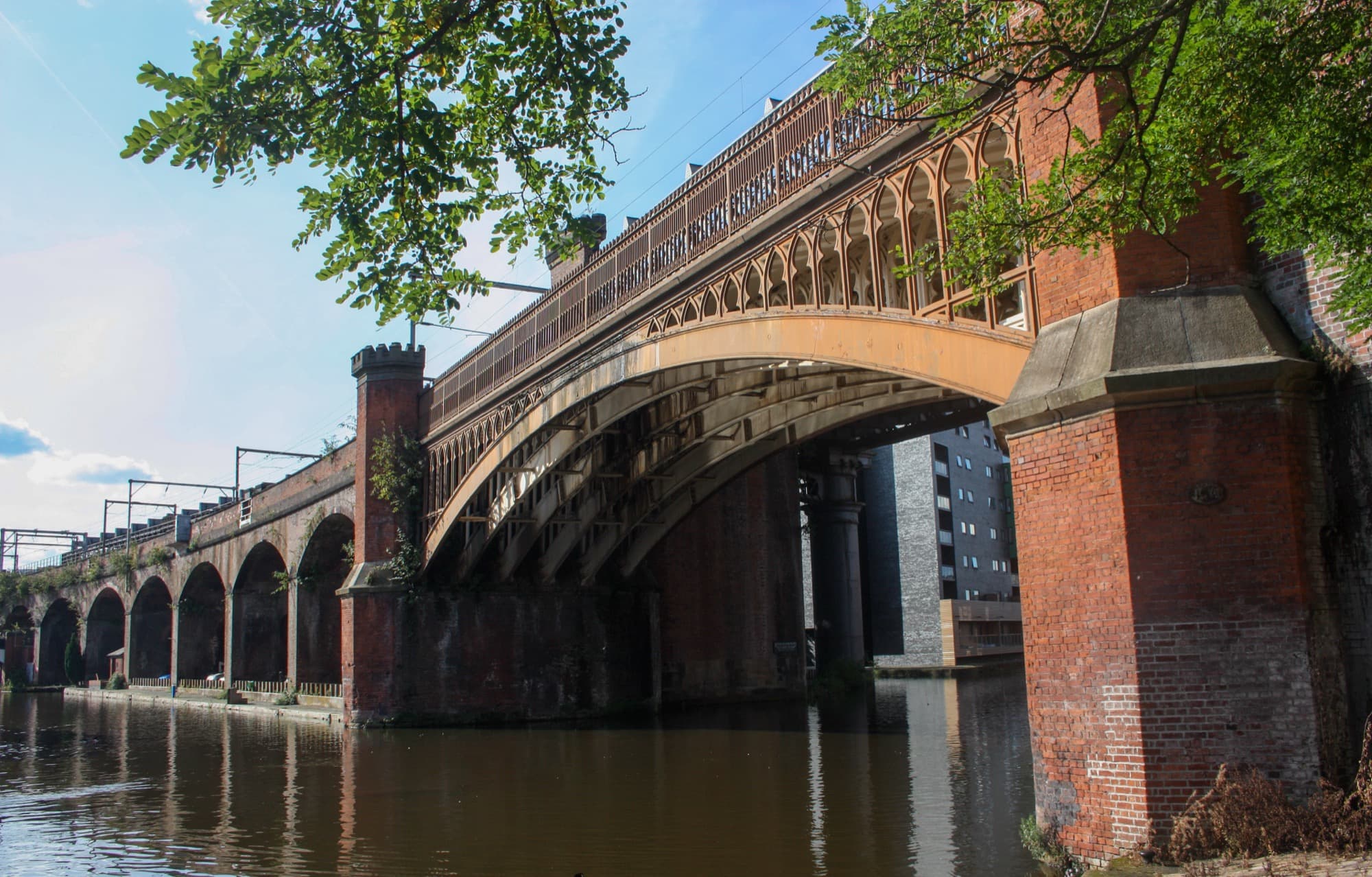
It starts with water. The Bridgewater Canal opened its first cut at Castlefield in 1761, built to carry coal from the Duke of Bridgewater's mines into Manchester. It was the first industrial canal in the country, and it dropped the price of coal in the city by roughly half. Cheap coal is the precondition for everything that follows, because cheap coal is cheap steam.
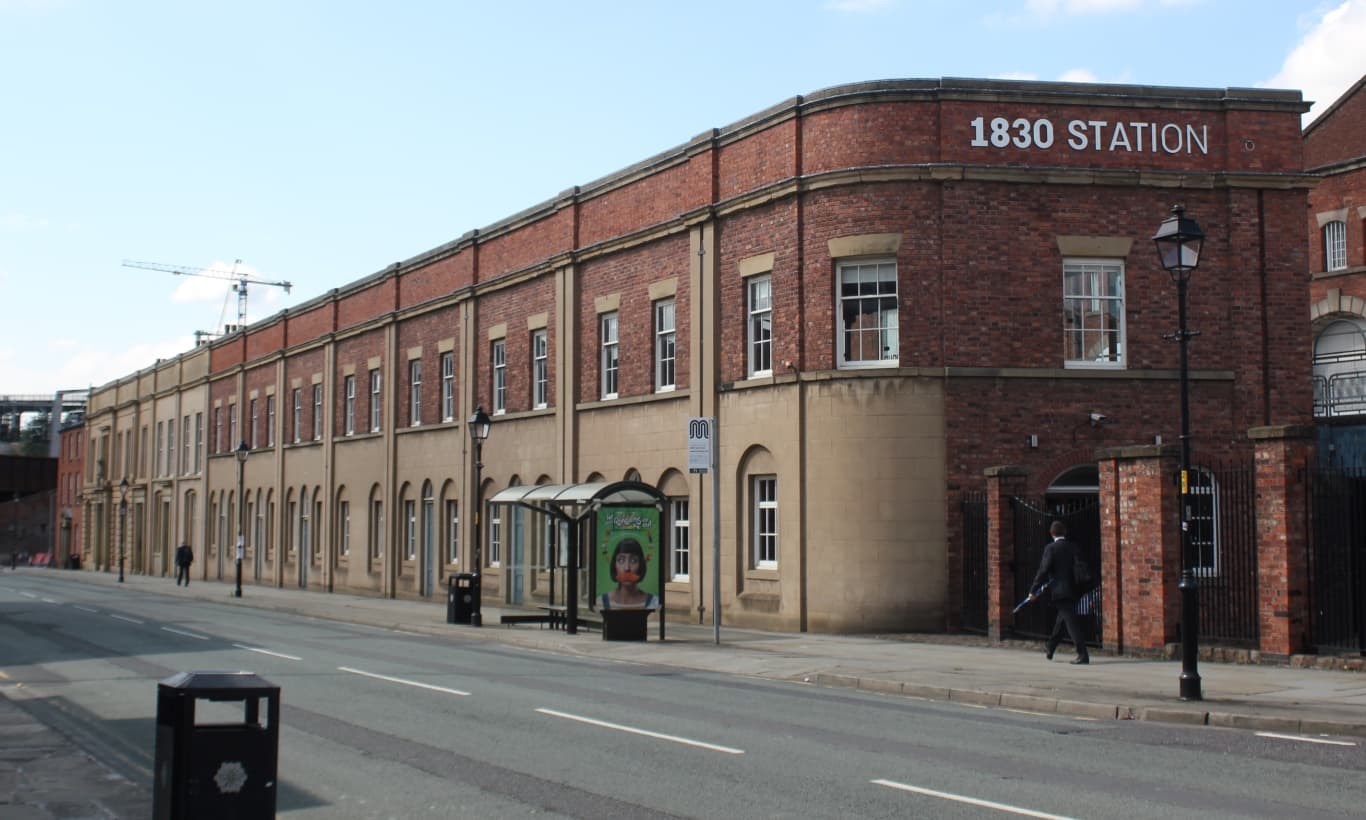
Then came the rail. Liverpool Road Station opened on 15 September 1830 as the Manchester terminus of the Liverpool and Manchester Railway, the world's first inter-city passenger railway hauled entirely by timetabled steam. The building still stands, the oldest surviving purpose-built passenger railway station anywhere, and its story is worth a stop of its own, which is why we wrote a full piece on Liverpool Road Station.
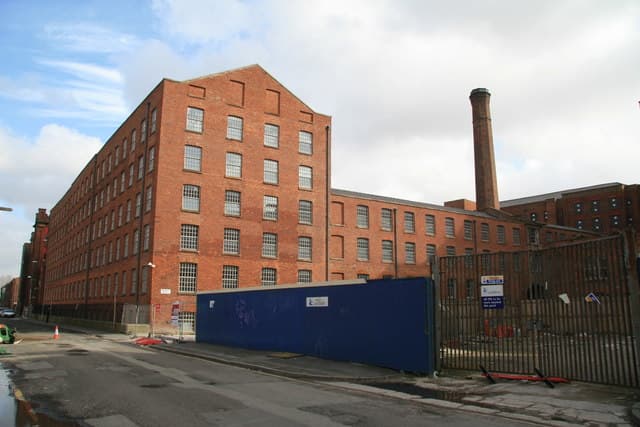
Then came the mills. A mile northeast, in Ancoats, Murrays' Old Mill was completed in 1798 as the world's oldest surviving urban steam-powered cotton spinning factory. By 1806 the Murrays' complex was the largest mill enterprise on earth. Ancoats around it became, in the phrase historians use with care, the world's first industrial suburb: a dense grid of mills, chimneys, and back-to-back housing built at a scale and speed no city had attempted before.
The cost, written down in the same decades
Hear a stop from this walk
Murrays' Mills: The Largest Mill Complex in the World by Eighteen Oh Six
Here is where Manchester becomes more than a list of firsts. The city that built the economy also produced the first sustained documentary account of what the economy cost the people inside it.
Friedrich Engels arrived in Manchester at the end of 1842 to work in his family's textile firm, Ermen and Engels. For two years he walked Ancoats and Little Ireland, interviewed workers, and read the factory reports and mortality figures, and in 1845 he published The Condition of the Working Class in England, drawn from what he had seen in these streets. The invention and the record of its human price were produced in the same city, in the same decade, by people who sometimes passed each other on the same pavements.
That tension has a monument. On 16 August 1819, before any of the mills reached full scale, a crowd of about 60,000 gathered on St Peter's Field to demand the vote. Cavalry charged. Around 18 people died and hundreds were injured, and the day was named Peterloo in bitter reference to Waterloo. The Civic Victorian Gothic tour walks the Free Trade Hall, built on that exact ground in 1856. The building that celebrated free trade stands on the field where people were killed asking for representation. Manchester tends to put its arguments in stone rather than resolve them.
The civic argument with London
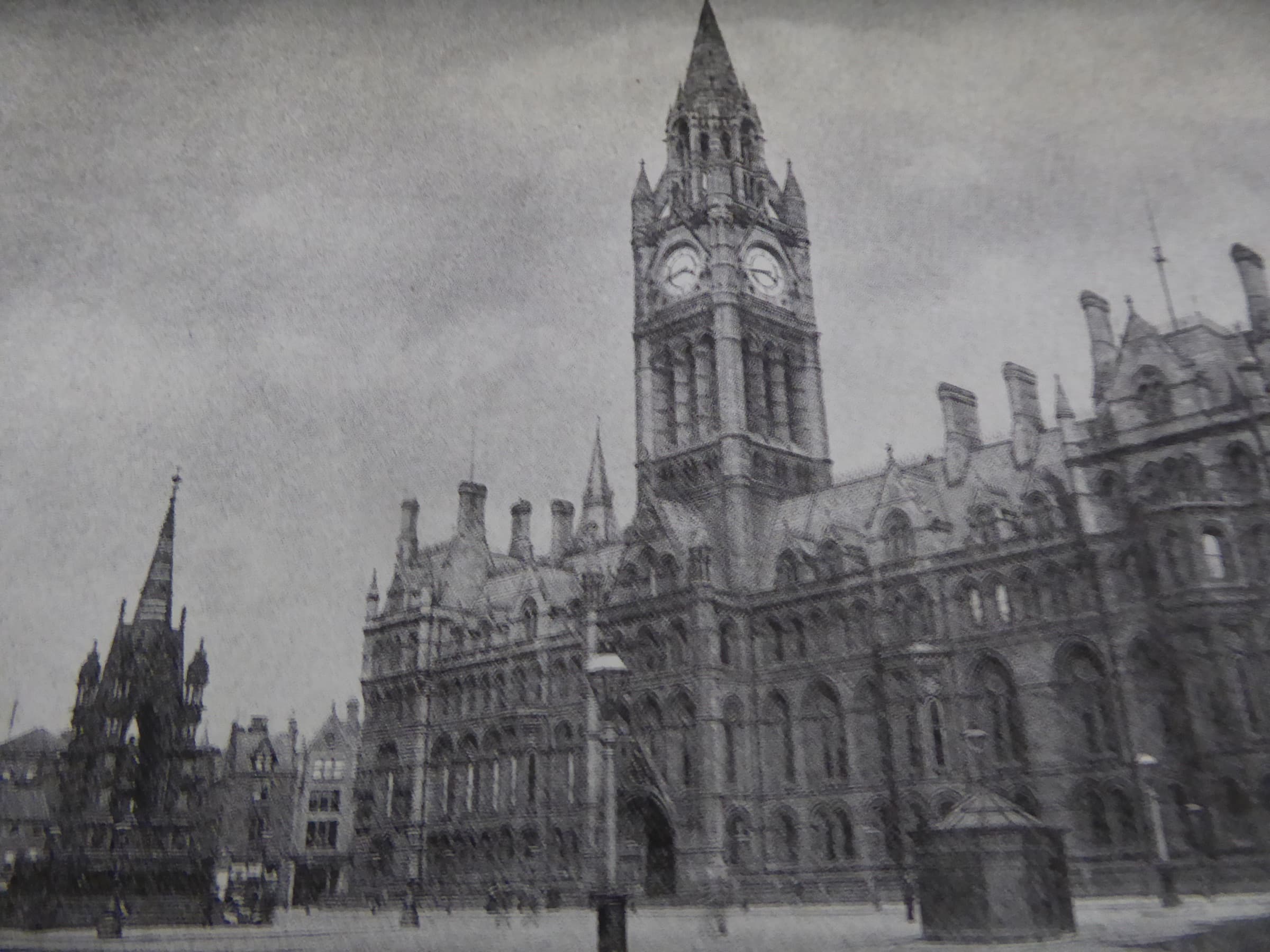
The cotton money did not stay in the mills. It built a city centre designed as a claim to equal standing with the imperial capital. Albert Square is the loudest sentence in that argument, and it is the spine of our architecture walk. The Town Hall, won by Alfred Waterhouse in an 1868 national competition and opened in 1877, is Gothic Revival at civic scale, a building meant to measure against Westminster. We treat it in a dedicated piece on Manchester Town Hall. The Albert Memorial here predates London's. The Lincoln statue commemorates the 1862 letter Manchester cotton workers sent to the American president supporting the Union blockade even as it starved their own trade. Every stop on that square is a stone paragraph in the same case: the North is not a province.
The second act: the sound the warehouses made
Then the cotton trade collapsed, and the city had to become something else.
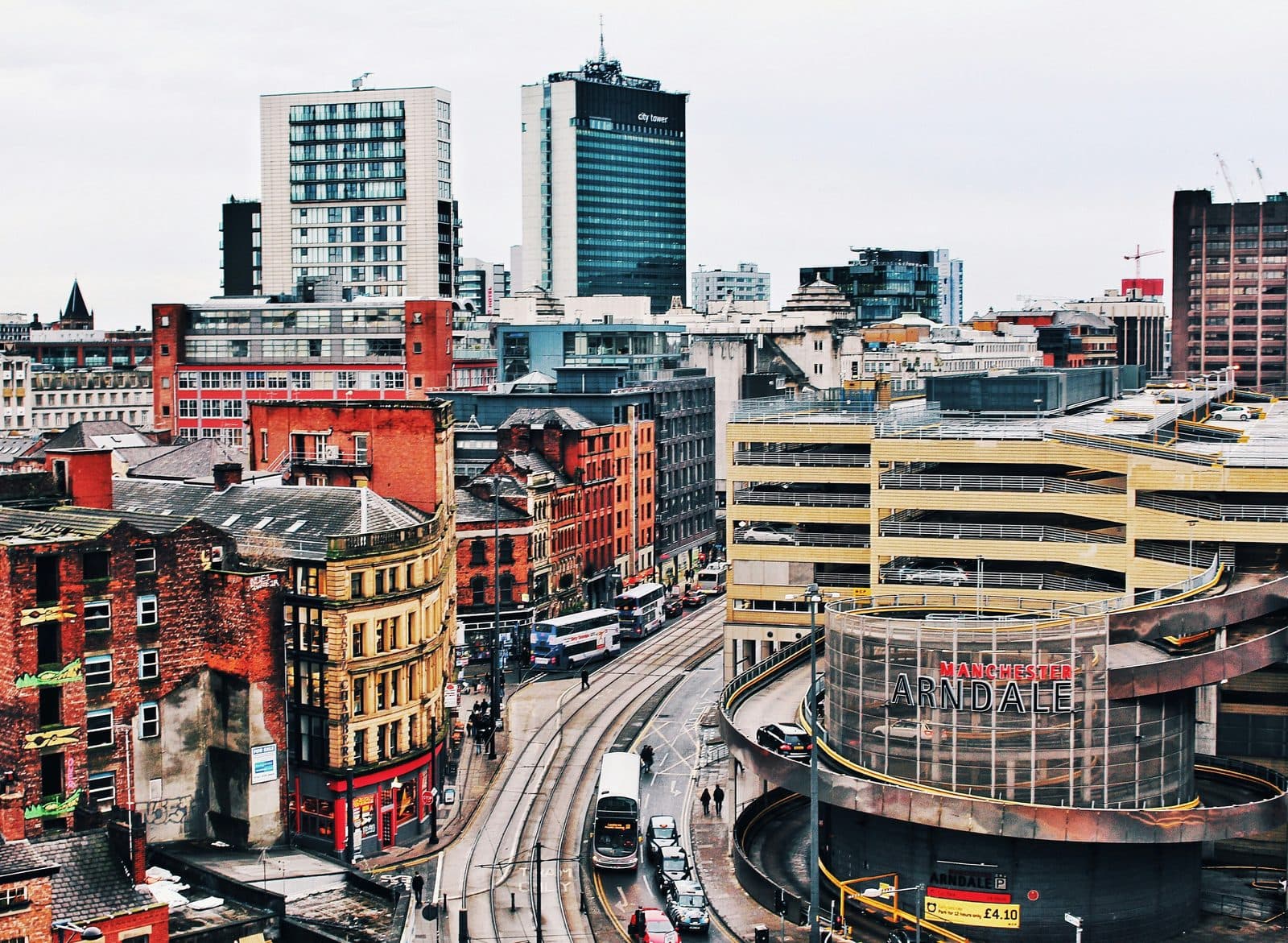
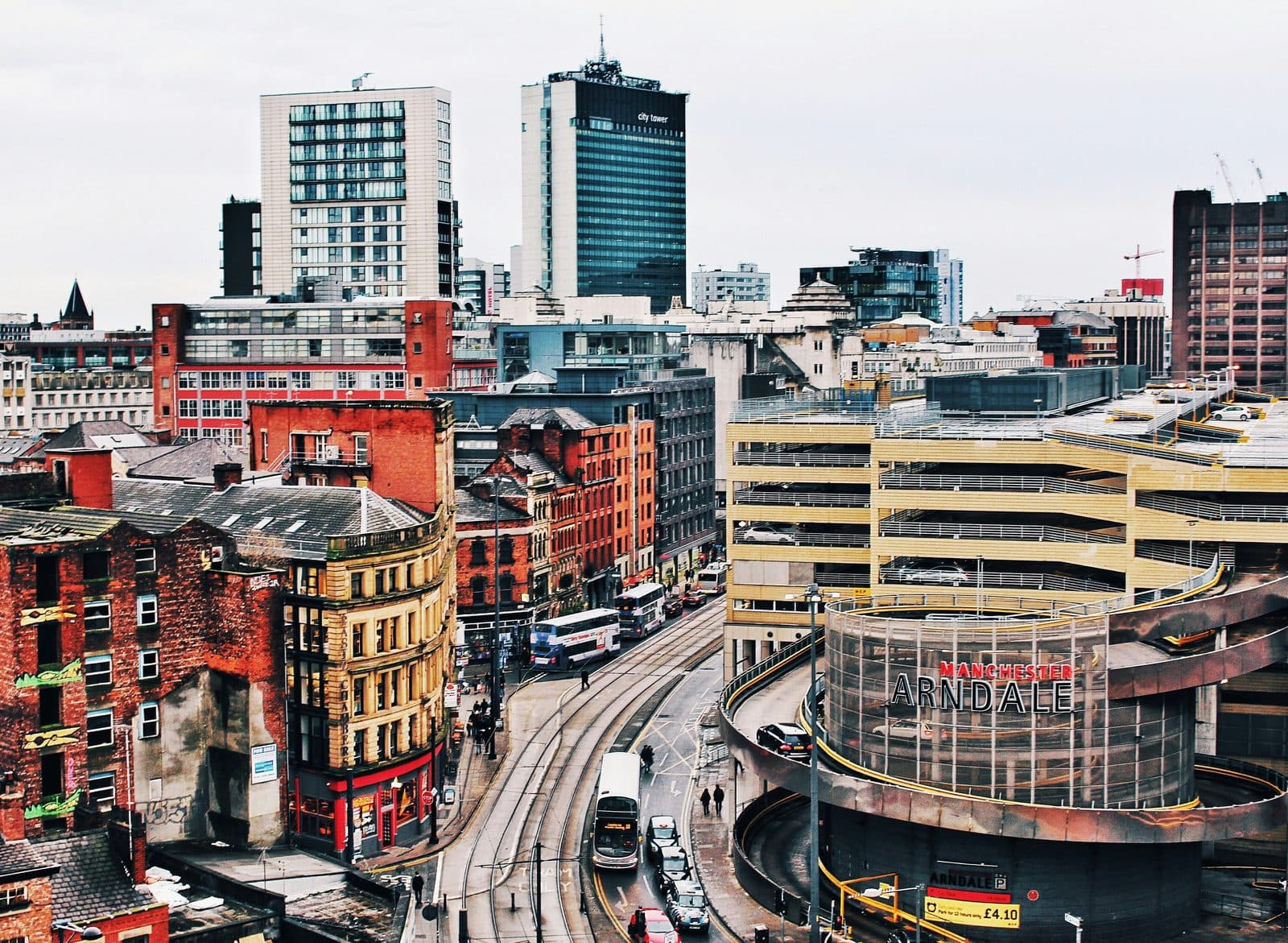
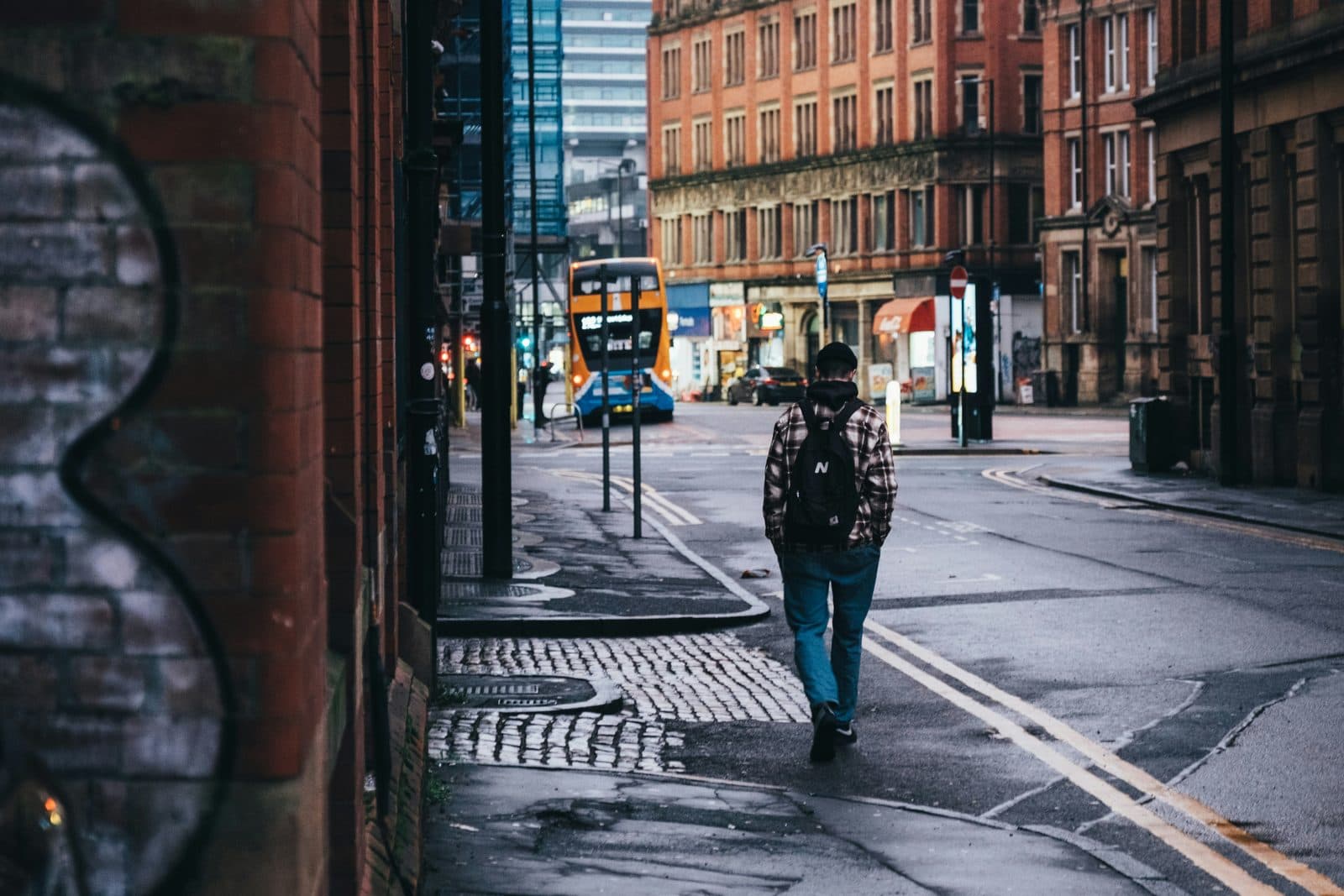
The warehouses of the Northern Quarter emptied between the late 1960s and the late 1970s as the cotton and rag trades left. The grid sat half-derelict, with cheap rent, in the exact centre of a large city. That is the setting the music came out of. It did not grow from a picturesque creative district. It grew from abandoned industrial retail stock nobody else wanted. The Northern Quarter Sound tour walks this precisely: Afflecks reopened in 1982 inside the shell of the old Affleck and Brown department store, the first commercial proof the emptied buildings could carry a second life; Oldham Street became the record-shop spine; and Factory Records opened the Haçienda in 1982 a short walk south. The clubs and the record shops were the second act of the same buildings.
That is the whole thesis in one image. Raw cotton went into these warehouses in 1850. A hundred and thirty years later, records came out of them.
How to read the three walks together
The three Manchester tours are one argument delivered from three angles. Take the Industrial Revolution Core for the economy and its cost, the Civic Victorian Gothic for the civic claim the cotton money bought, and the Northern Quarter Sound for the reinvention. If you only have time to compare the ends of the story, walk the mill ridge in Ancoats and then the warehouse grid off Oldham Street. Same brick, same era, two centuries apart in what it was asked to hold.
For the practical comparison of routes, lengths, and stops, see our guide to the best self-guided walking tours in Manchester.
Frequently asked questions
- Was Manchester the first industrial city in the world?
- Manchester holds a stack of documented industrial firsts: the world's first industrial canal at Castlefield (Bridgewater Canal, 1761), the world's oldest surviving passenger railway station (Liverpool Road, opened 15 September 1830), and the world's oldest surviving urban steam-powered cotton mill (Murrays' Old Mill, completed 1798). The broader claim of first industrial city is institutional shorthand rather than a single provable fact, which is why careful histories use the qualified forms and Asa Briggs called Manchester the shock city of the age.
- What was the Peterloo Massacre?
- On 16 August 1819, a crowd of around 60,000 gathered on St Peter's Field in central Manchester to demand parliamentary reform. Cavalry charged the crowd, killing roughly 18 people, including women and a child, and injuring several hundred. The name was a bitter echo of Waterloo, fought four years earlier. The Free Trade Hall was later built on the same ground.
- What is Cottonopolis?
- Cottonopolis was the nickname for Victorian Manchester as the world centre of the cotton trade. By the mid-nineteenth century the city and its region spun, finished, financed, and traded cotton at a scale no other place matched, which is what paid for the civic architecture on Albert Square and filled the warehouse grid that later became the Northern Quarter.
- Why is Manchester famous for music?
- When the cotton trade emptied the Northern Quarter warehouses from the late 1960s onward, the cheap space filled with rehearsal rooms, record shops, and clubs. Joy Division, the Smiths, the Stone Roses, Happy Mondays, and Oasis came out of that grid, and Factory Records opened the Haçienda in 1982. The music is the second life of the industrial buildings, not a separate story.
Ready to experience it?
Cottonopolis: The City That Invented the Modern Economy
110 min · 3.5 km · easy
More from Manchester
Explore more at your own pace.
The Corridor That Built the Modern Economy: A Companion to the Industrial Revolution Core Walk
The Square That Argued the North Was London's Equal: A Companion to the Civic Victorian Gothic Walk
The Warehouses That Became a Sound: A Companion to the Northern Quarter Walk
Liverpool Road Station: The Building That Defined the Railway Station
Manchester Town Hall and the Argument Alfred Waterhouse Won