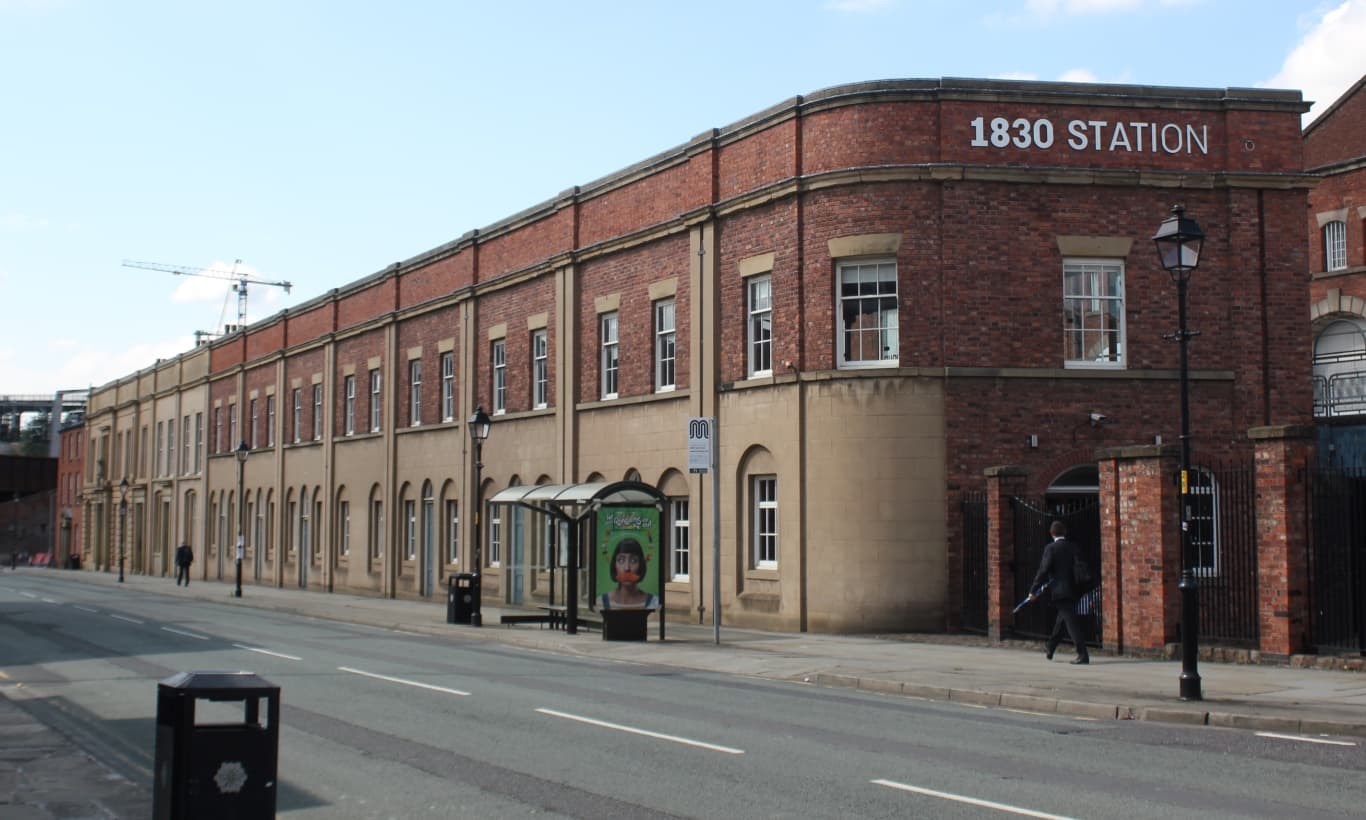
The most important building on Manchester's Industrial Revolution Core walk is the one you would walk straight past. Liverpool Road Station reads, from the street, as an unremarkable yellow-brick block, a warehouse among warehouses in Castlefield. That plainness is the whole story. This is the oldest surviving purpose-built passenger railway station anywhere in the world, and it is the building that defined what a railway station is.
What opened here on 15 September 1830
Liverpool Road was the Manchester terminus of the Liverpool and Manchester Railway, which opened on 15 September 1830. That railway was the first inter-city passenger line in the world on which every service was hauled by timetabled steam locomotives. Before it, railways moved coal and goods, and passengers rode where they could. The Liverpool and Manchester was the first railway conceived, from the start, as a scheduled public passenger service between two cities.
That meant it needed a kind of building that did not yet exist. There was no template for a passenger railway terminus, because there had never been one. The people who built Liverpool Road had to invent the arrangement from scratch: separate entrances and waiting areas for first and second-class passengers, a booking office, a platform raised to carriage-floor height, all resolved into a street-facing frontage that looked more like a Georgian house and warehouse than anything we would now call a station. Every terminus built afterward, everywhere, descends in some way from the decisions made here.
The opening day that killed a politician
Hear a stop from this walk
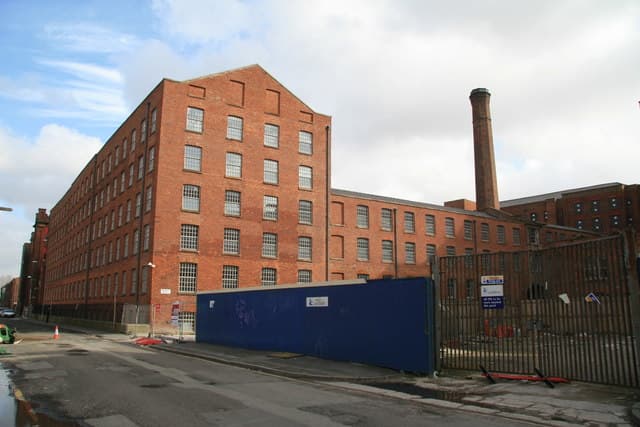
Murrays' Mills: The Largest Mill Complex in the World by Eighteen Oh Six
The opening was also one of the most famous days in railway history for the wrong reason. During the ceremonies on 15 September 1830, William Huskisson, the Member of Parliament for Liverpool, was struck by Stephenson's locomotive Rocket and fatally injured, becoming one of the first widely reported railway fatalities. The technology that was about to reorganise the world announced itself, on day one, with a death. The tour treats this with the weight it deserves rather than as a curiosity.
Why it survived: because it stopped being a station
Here is the part that makes the building a jewel rather than a footnote. Liverpool Road closed to passengers on 4 May 1844, when the line was extended to join the network at Hunt's Bank, the site of today's Manchester Victoria. It had been a passenger station for less than fourteen years.
Ordinarily that would have been the end of it. Redundant stations get cleared. Liverpool Road survived precisely because it was demoted. It became a goods depot, and goods depots are useful for a very long time, so the building was kept in work rather than knocked down. The canonical first passenger station outlived its passenger service by more than a century because it had a second job. Preservation here was an accident of continued usefulness, not reverence. Nobody saved it as a monument. It simply never became worthless.
What you are looking at on the walk
Stand in front of it and read the frontage as a document. The Georgian-warehouse plainness is not a failure of ambition. It is the look of a building type that had not yet learned to announce itself, because it was the first of its type. There were no grand Victorian trainsheds yet to imitate, no St Pancras, no grammar of the great station. This is the station before the idea of the station had a style.
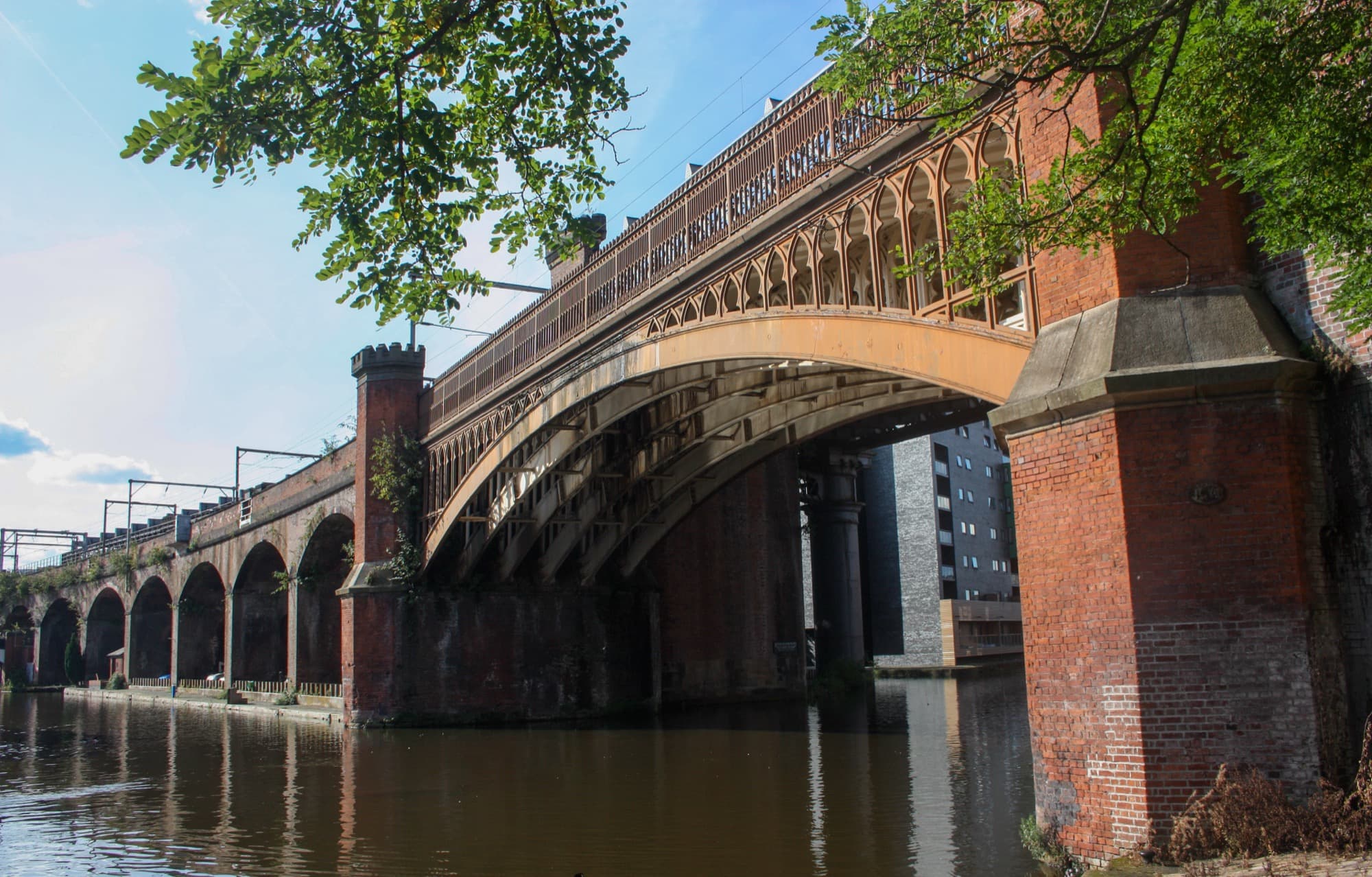
The building and the adjacent 1830 warehouse and viaduct now form the core of the Science and Industry Museum, which is the institutional steward of the site. The Roamer walk is complementary to the museum: read the building from the street on the tour, then go inside for the machines and the full railway story.
Where it sits in the corridor
Liverpool Road is stop three on the walk, and its placement is deliberate. It comes after the Bridgewater Canal, because cheap coal and cheap water transport had to arrive before the railway made economic sense, and before the Ancoats mills, because the railway is part of the infrastructure that let Cottonopolis operate at scale. For that mill scale, see our piece on Murrays' Mills and the making of Ancoats, and for the argument that ties the whole corridor together, how Manchester built the modern economy and then its sound. The full stop-by-stop read is in our companion to the Industrial Revolution Core walk.
Ready to experience it?
Cottonopolis: The City That Invented the Modern Economy
110 min · 3.5 km · easy
More from Manchester
Explore more at your own pace.
Cottonopolis: How Manchester Built the Modern Economy and Then Its Sound
The Corridor That Built the Modern Economy: A Companion to the Industrial Revolution Core Walk
The Square That Argued the North Was London's Equal: A Companion to the Civic Victorian Gothic Walk
The Warehouses That Became a Sound: A Companion to the Northern Quarter Walk
Manchester Town Hall and the Argument Alfred Waterhouse Won