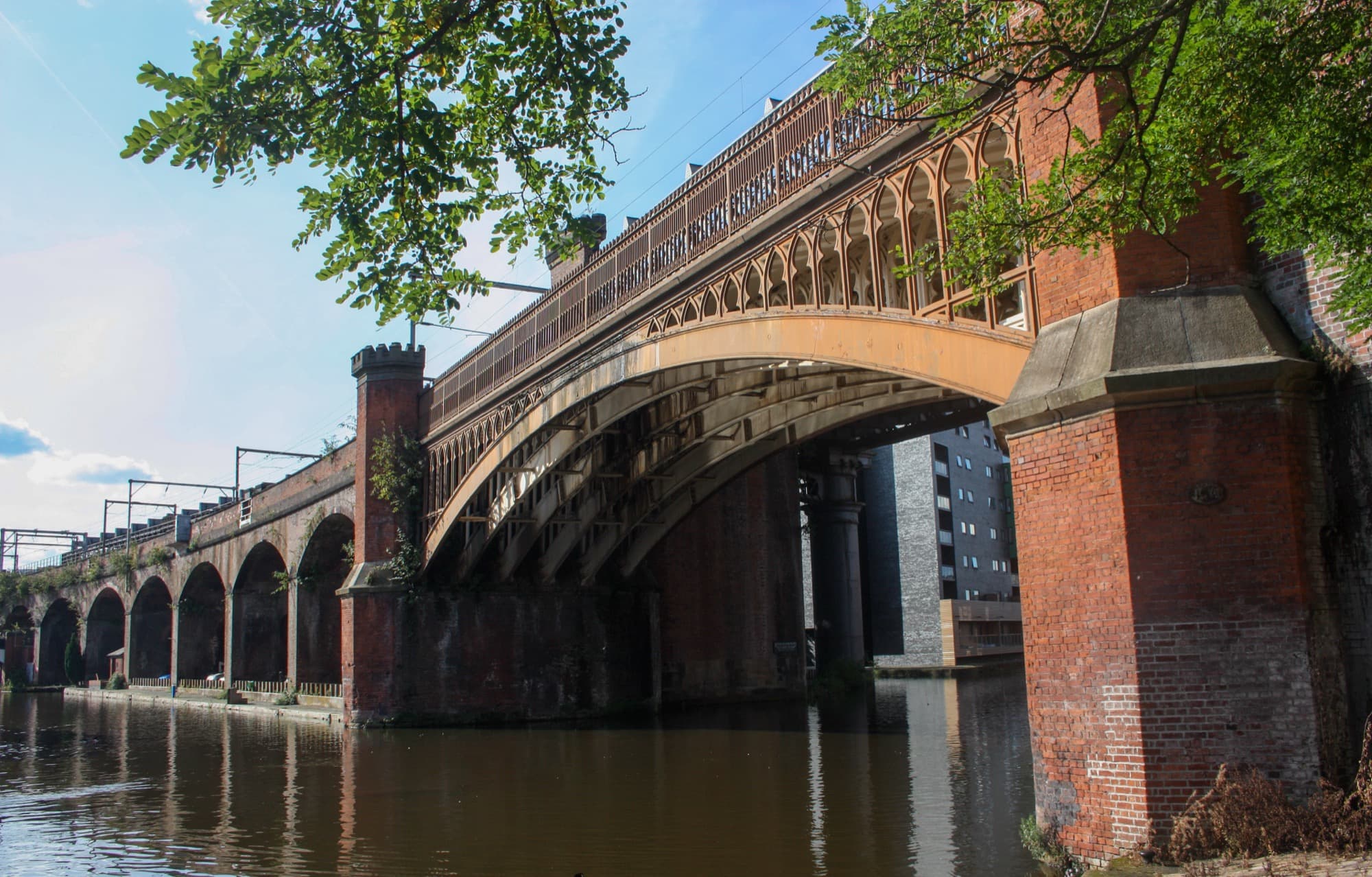
One canal in seventeen sixty-one, one railway station in eighteen thirty, one mill complex by eighteen oh six, and one German manager between them, watching the modern industrial economy be built at city scale.
Start · Castlefield Roman Fort: Nineteen Centuries on the Edge of Something
DirectionsStops
- 1
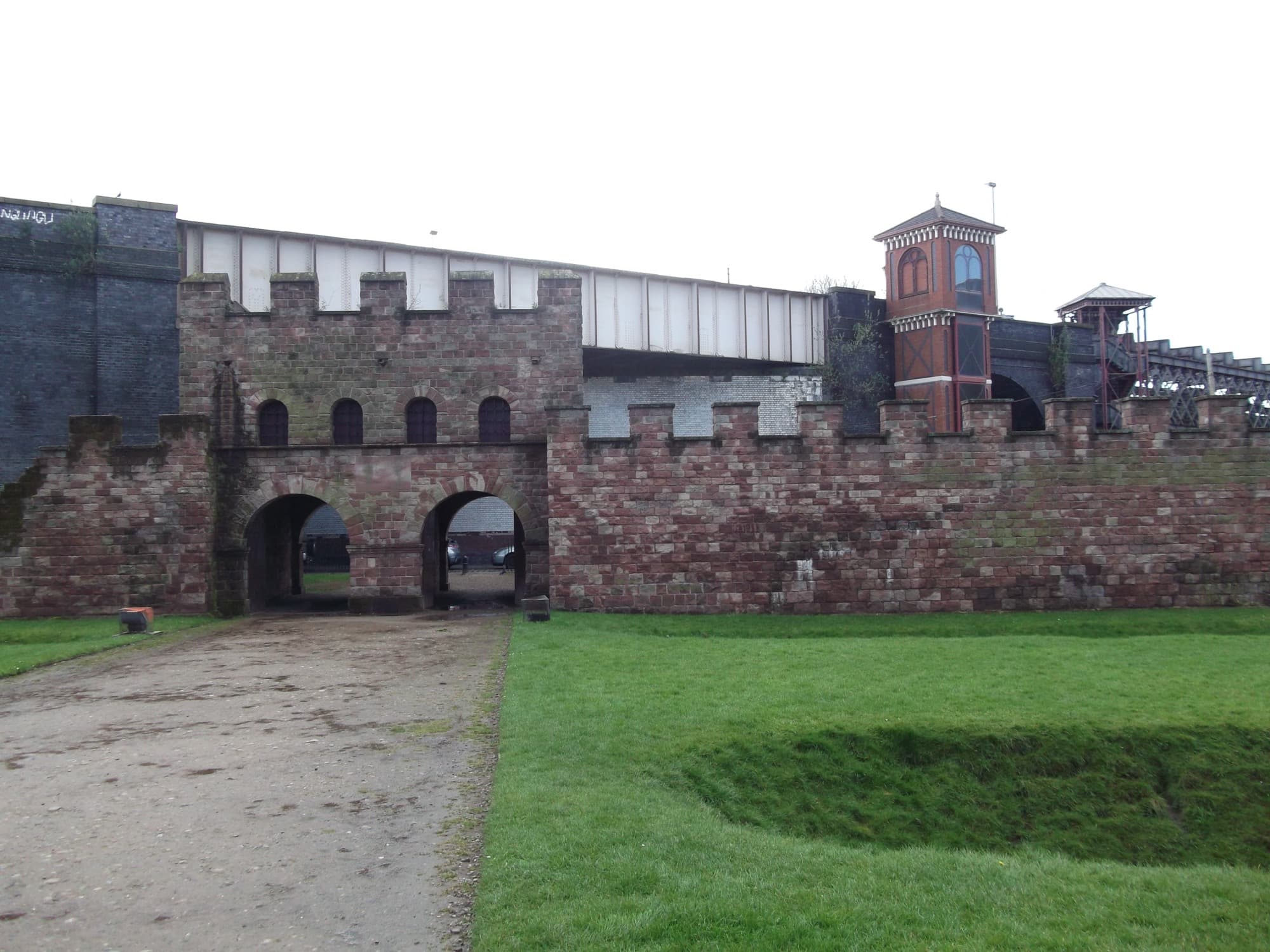
Castlefield Roman Fort: Nineteen Centuries on the Edge of Something
Mamucium, founded around AD seventy-nine during Agricola's campaigns. North gate reconstructed nineteen eighty-four on the original footprint. Castlefield became the UK's first Urban Heritage Park in nineteen eighty-two.
- 2
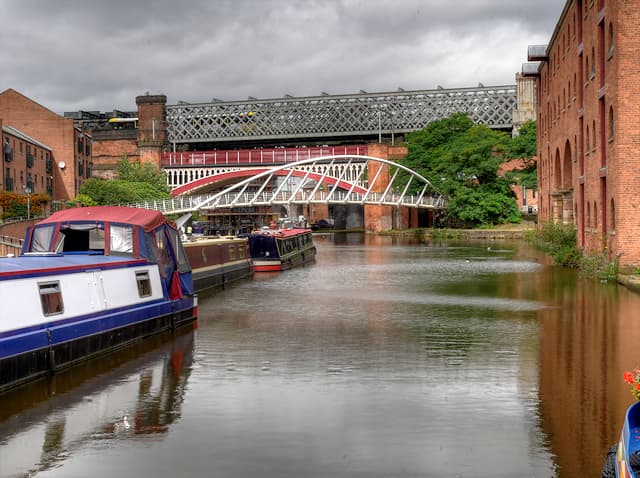
Bridgewater Canal Basin: The Engineered Cut That Started Everything
Opened seventeenth of July, seventeen sixty-one. First canal in Britain not to follow an existing river. Francis Egerton, Third Duke of Bridgewater, commissioned. James Brindley engineered. Coal price in Manchester fell by about half within a year.
- 3
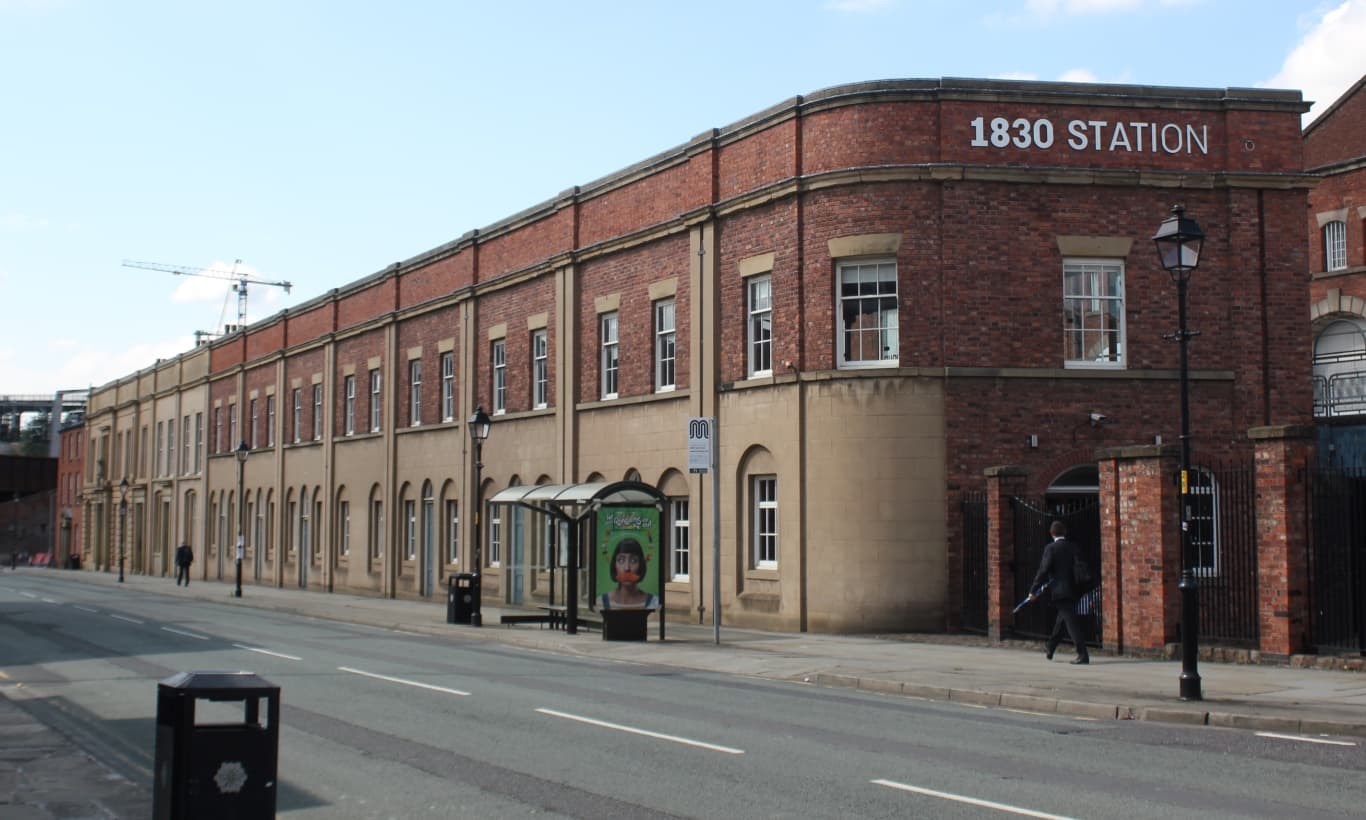
Liverpool Road Station: The Building That Defined the Railway Station
Opened fifteenth of September, eighteen thirty. World's first steam-powered, inter-urban, passenger-scheduled twin-track railway. Closed to passengers fourth of May, eighteen forty-four. Oldest surviving purpose-built passenger railway station in the world, per the Science and Industry Museum.
- 4
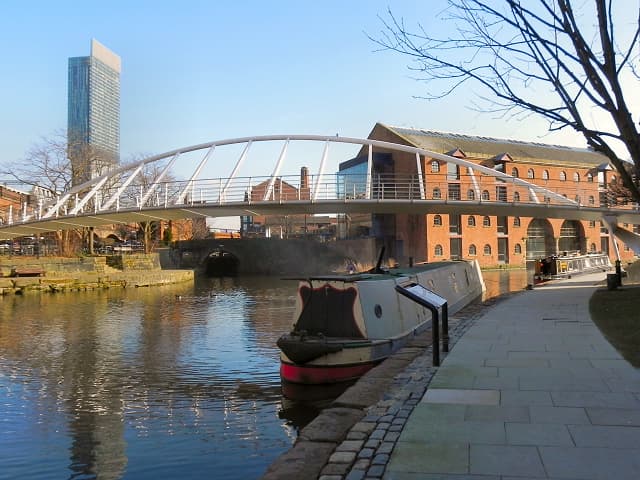
Merchants' Warehouse and Merchants' Bridge: The Canal Economy and Its Echo
Merchants' Warehouse, eighteen twenty-five, four-storey canal warehouse with two shipping holes. Merchants' Bridge, nineteen ninety-five, Whitby Bird Limited. Tilted white-arch footbridge inspired by Santiago Calatrava's nineteen ninety-one La Devesa bridge.
- 5
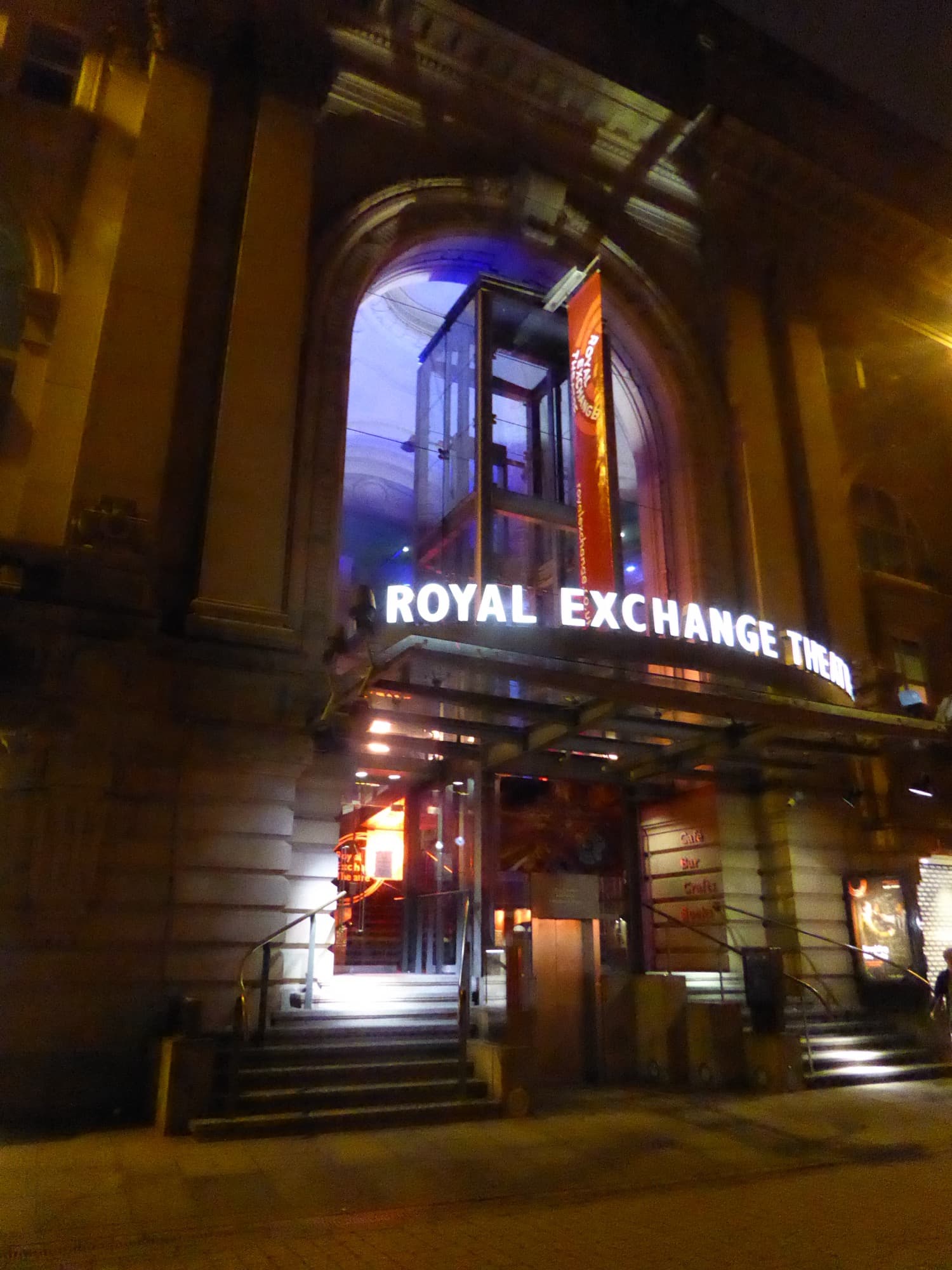
St. Ann's Square and the Royal Exchange: Where Cottonopolis Was Traded
St. Ann's Church consecrated seventeenth of July, seventeen twelve. Royal Exchange first building eighteen oh nine, current building eighteen sixty-seven to eighteen seventy-four, Mills and Murgatroyd architects. Trading floor closed nineteen sixty-eight; Royal Exchange Theatre opened nineteen seventy-six.
- 6
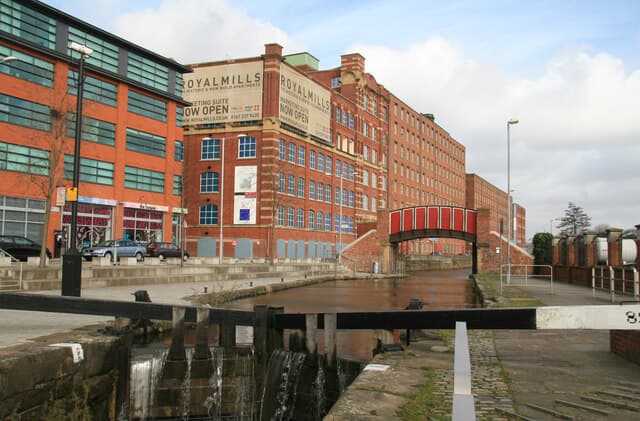
Ancoats Mill Ridge: The World's First Industrial Suburb
First mills around seventeen ninety. Rochdale Canal cut through Ancoats opened eighteen oh four. By eighteen fifteen the most populous district in Manchester; by eighteen fifty-one, population fifty-three thousand seven hundred and thirty-seven. Friedrich Engels walked Ancoats with Mary Burns between eighteen forty-two and eighteen forty-four.
- 7
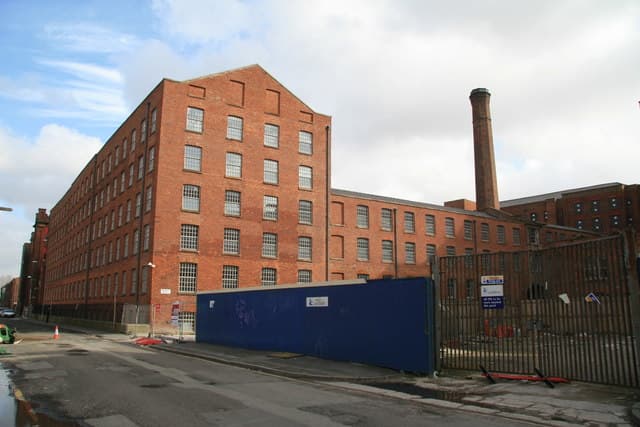
Murrays' Mills: The Largest Mill Complex in the World by Eighteen Oh Six
Old Mill begun seventeen ninety-seven, complete by about seventeen ninety-eight, Grade II star. Decker Mill begun by eighteen oh one, completed eighteen oh two, Grade II star. New Mill probably completed eighteen oh four, Grade II star. Adam Murray died eighteen eighteen; George Murray died eighteen fifty-five. About one thousand workers at peak.
Details
Best Time to Visit
Tuesday through Sunday, late morning to early afternoon. The Science and Industry Museum at Stop three opens at ten in the morning and closes at five, so an eleven o'clock start at Castlefield lets you reach Liverpool Road inside museum hours if you want to add the interior to the audio anchor. The Ancoats stops at six and seven read most fully in good daylight so the brick facades, the canal water, and the chimney lines are legible. Avoid Manchester rain by checking the forecast; the Castlefield basin and the Ancoats canal towpath are exposed and slippery when wet.
Pro Tips
- •Plan the walk Tuesday through Sunday so the Science and Industry Museum at Stop three is open. The audio anchors on the exterior of Liverpool Road, so the stop works without entry, but the museum's interior holds the original eighteen thirty Warehouse, the rolling stock, and the Manchester Baby reconstruction, and is worth an extra hour. The museum has been undergoing capital works since twenty twenty-two; verify current hours and which galleries are open at scienceandindustrymuseum.org.uk before you go. General admission is free; some special exhibitions are ticketed.
- •Chetham's Library is acknowledged at Stop five but is not on the tour route. If you want to see the Marx and Engels alcove and the four-sided desk, the library is about fifteen minutes' walk north of St. Ann's Square at Long Millgate near Manchester Cathedral. The Reading Room is open by appointment for visitors; check library.chethams.com for current visitor policy.
- •The Murrays' Mills courtyard at Stop seven is now mixed residential and commercial use. The audio anchors on Redhill Street outside; brief courtyard entry during daylight hours is appropriate, but the apartment blocks above are private homes. Stand off the doorways and keep moving.
- •Castlefield basin and the Ancoats canal towpath are both exposed to weather. Manchester rain is real. Bring a waterproof jacket; the canal towpaths get slippery and the cobblestone access points around the basin are uneven when wet.
- •The walk from St. Ann's Square at Stop five to the Ancoats mill ridge at Stop six is about one and a half kilometres, twenty to twenty-five minutes. Cross Great Ancoats Street at the signalled crossing on Henry Street; the road is a four-lane arterial.
- •Little Ireland is mentioned at Stop six but is not on the tour route. The site sat in a loop of the River Medlock about half a kilometre south of where you stand at Stop six, between the rail line, the Rochdale Canal, and the river curve. Almost nothing of the slum survives. The Manchester Geographical Society holds a published feature on the site if you want to walk the location after the tour.
- •The Royal Exchange Theatre at Stop five operates inside the former trading floor. If you want to see the in-the-round theatre inside the Great Hall, theatre tours and box office hours are listed at royalexchange.co.uk. The audio anchors in the square outside, so the stop works at any hour.
Safety & Precautions
- •The walking route is three and a half kilometres with some uneven cobblestone at Castlefield and a long stretch of canal towpath at Ancoats. Wear flat closed shoes. Listeners with mobility constraints should know that the Castlefield basin approaches and the Ancoats Rochdale Canal towpath both involve cobble, brick, and the slight gradient up from the canal to street level.
- •The basin water at Castlefield and the Rochdale Canal at Ancoats are both open and unfenced along the towpath. Keep clear of the edge, especially with children. The Canal and River Trust posts safety guidance at the basin.
- •Great Ancoats Street between Stops five and six is a four-lane arterial road with active traffic. Cross only at the signalled crossings on Lever Street or Henry Street.
- •The Science and Industry Museum at Stop three has been undergoing capital works since twenty twenty-two. Some galleries and the eighteen thirty Warehouse interior may be closed on your walk day. The audio anchors on Liverpool Road outside so the stop works regardless.
- •Manchester weather is changeable. The Castlefield basin and the Ancoats canal towpath are both exposed to wind and rain. Bring a waterproof layer; the brick paving gets slippery when wet.
- •The Murrays' Mills complex at Stop seven contains private apartment blocks above ground-floor commercial use. The courtyard is open during daylight hours but residents live above; keep noise down and stay off the building doorways.
Travel advisory: Exercise Increased Caution (Level 2).
Gallery
Related Reading
Go deeper on what you'll see, hear, and walk through.
Overview
Best Self-Guided Walking Tours in Manchester (2026)
3 min
Thematic
Cottonopolis: How Manchester Built the Modern Economy and Then Its Sound
6 min
Companion
The Corridor That Built the Modern Economy: A Companion to the Industrial Revolution Core Walk
5 min
Deep dive
Liverpool Road Station: The Building That Defined the Railway Station
4 min
Deep dive
Murrays' Mills and the Making of Ancoats, the World's First Industrial Suburb
4 min
Read the walk
The full story of Cottonopolis: The City That Invented the Modern Economy, in words. Prefer to listen? Play it narrated, from home or on location.
Introduction
The water at the edge of the Bridgewater Canal basin in Castlefield was cut in seventeen sixty-one. It is the first canal in Britain that did not follow a river. Within a year of opening, the price of coal in Manchester fell by about half.
This corridor through Manchester, England, is where the modern industrial economy was first built at city scale, system by system between seventeen sixty-one and eighteen fifty. The world's first industrial canal at Castlefield. The world's first passenger railway station two hundred yards behind on Liverpool Road, opened the fifteenth of September, eighteen thirty. The densest concentration of cotton mills in human history at Ancoats. And Friedrich Engels' walking laboratory in the streets between them, where the working class and the documentary record of the working class were invented together.
The Science and Industry Museum holds the Liverpool Road site and runs the permanent industrial-Manchester exhibitions there; this Roamer walk is complementary. The scholarship carrying us through is Engels' eighteen forty-five book The Condition of the Working Class in England, Asa Briggs' Victorian Cities, and Mike Williams' Cotton Mills in Greater Manchester.
The walk is seven stops, about three point five kilometres and one hundred and ten minutes, climbing from Castlefield Roman Fort to Murrays' Mills in Ancoats. When you arrive at the Castlefield Roman Fort, begin with stop one.
1. Castlefield Roman Fort: Nineteen Centuries on the Edge of Something
You've arrived at the reconstructed walls of the Roman fort of Mamucium, your first stop. Stand at the north gateway and look back south toward the canal basin. The stone gateway in front of you is a nineteen eighty-four reconstruction on the original footprint, incorporating some of the original Roman stone the Greater Manchester Archaeological Unit recovered from the site.
The documentary line, per the Greater Manchester Archaeological Unit excavation record and the Manchester City Council Castlefield Conservation Area history, is this. A Roman fort was built here around AD seventy-nine during the campaigns of the governor Julius Agricola against the Brigantes. The fort was abandoned by the late fourth century. The site sat as fields and then as eighteenth-century industrial yards for fourteen hundred years. The fort was levelled during the canal and railway construction of the late seventeen hundreds and early eighteen hundreds. The north gate and the partial walls you see in front of you were reconstructed in nineteen eighty-four. In nineteen eighty-two, Castlefield was designated the United Kingdom's first Urban Heritage Park.
What to hold. The name of the modern city descends from the Latin Mamucium, through medieval Mamceaster. That is name continuity, not place continuity. There is no documentary evidence that the Roman fort was continuously occupied between its fourth-century abandonment and the medieval re-establishment of Manchester as a market town. So this is not, despite the easy line, where Manchester began.
What it is, is the scale-frame. This patch of ground has been the edge of something for nineteen centuries. The edge of the Roman empire's north-west frontier. The edge of the medieval town. And then, in the seventeen sixties, the edge of the engineered system we are about to walk through. Mamucium was here before Manchester. Manchester was built around what was left of it.
Walk south one block to the canal basin. The water and the warehouses are your next stop.
2. Bridgewater Canal Basin: The Engineered Cut That Started Everything
You've arrived at the Bridgewater Canal basin. Stand on the towpath at the south side of the basin, looking north across the water. The basin you are standing beside is the Manchester terminus of the canal. The cut, the basin walls, and the towpath are all on their original seventeen sixty-one footprint.
Per the Canal and River Trust institutional record and the published Bridgewater Canal Act of seventeen fifty-nine, here is what this water is. The Bridgewater Canal opened on the seventeenth of July, seventeen sixty-one, between Worsley and Manchester, ten miles long. It was commissioned by Francis Egerton, the Third Duke of Bridgewater, who needed to move coal from his mines at Worsley to the Manchester market. He hired James Brindley as the engineer, and John Gilbert, the Duke's estate manager, assisted with the initial planning.
Three things to hold about this water. First, it is the first canal in Britain that did not follow an existing river or tributary. A fully engineered cut across country. Second, where the canal crossed the River Irwell on the way to Manchester, Brindley built the Barton Aqueduct, the first navigable aqueduct in England, carrying boats over water on a stone bridge. Third, the documentary economic effect, per the Canal and River Trust record. Within a year of the canal's opening, the price of coal in Manchester fell by about half. The Worsley to Manchester to Mersey system, completed in stages through the seventeen seventies, cost roughly two hundred and twenty thousand pounds.
The Industrial Revolution had no single starting line, but if you wanted to pick a documentary date and a documentary place, this canal on this day is defensible. Asa Briggs called Manchester the shock city of the age. The shock began at the price of coal.
Now walk north up Lower Castle Street one block to Liverpool Road. The yellow brick station building on the south side of the road is the world's oldest surviving purpose-built passenger railway station.
3. Liverpool Road Station: The Building That Defined the Railway Station
You've arrived at Liverpool Road Station. Stand on the pavement of Liverpool Road, looking south at the yellow brick station facade. The two-storey building in front of you is the original eighteen thirty station building. The brick warehouse behind it, on the same site, is the eighteen thirty Warehouse. Both are now part of the Science and Industry Museum complex.
Here is the doubling at this stop. Most visitors walk past this building. It looks like a slightly grand Georgian warehouse on an unremarkable road. The reveal, per the Science and Industry Museum's institutional history and Wikipedia's record of the Manchester Liverpool Road station, is that this is the world's oldest surviving purpose-built passenger railway station. It opened on the fifteenth of September, eighteen thirty, as the Manchester terminus of the Liverpool and Manchester Railway. The line was the world's first steam-powered, inter-urban, twin-track railway built explicitly to carry passengers on scheduled services.
The qualifier purpose-built is load-bearing. Broad Green station in Liverpool also opened on the fifteenth of September, eighteen thirty and is still in active passenger use. What Liverpool Road has that Broad Green does not is the original station building, intact, on its original site.
The operational figures, per the Science and Industry Museum. Within weeks of opening, the line was carrying nearly eight hundred passengers a day. By the second year, up to two thousand five hundred a day. The journey from Manchester to Liverpool collapsed from twelve hours by canal, or three hours by stagecoach, to one hour and forty-six minutes by rail. The station closed to passengers on the fourth of May, eighteen forty-four, when the line was extended to Manchester Victoria. It survived intact only because it was kept on as a goods depot. That accident of disuse is why the building still stands.
What this building defined is what a railway station IS. Separate first-class and second-class passenger entrances. A ticket office. Separate departures and arrivals platforms. The architectural language of every railway station built after it descended from this yellow brick facade.
Now walk back south to the canal basin and follow the towpath west around the basin toward the tilted white footbridge.
4. Merchants' Warehouse and Merchants' Bridge: The Canal Economy and Its Echo
You've arrived at Catalan Square, facing the Merchants' Warehouse and the Merchants' Bridge. Stand on the towpath with the basin water in front of you. The four-storey red brick warehouse on the far bank is the eighteen twenty-five Merchants' Warehouse. The tilted white-arch…
Full narration for this stop unlocks with the tour.
5. St. Ann's Square and the Royal Exchange: Where Cottonopolis Was Traded
You've arrived at St. Ann's Square. Stand in the centre of the pedestrianised square. The white stone tower of St. Ann's Church is to your south. The long sandstone facade of the Royal Exchange is on the east side of the square, between you and Cross Street. Per Wikipedia's…
Full narration for this stop unlocks with the tour.
6. Ancoats Mill Ridge: The World's First Industrial Suburb
You've arrived at the Ancoats mill ridge. Stand on the Rochdale Canal towpath on Redhill Street, with the canal water in front of you and the long brick mill facade running east to west on the north side of the street. The chimneys above the rooflines are real industrial…
Full narration for this stop unlocks with the tour.
7. Murrays' Mills: The Largest Mill Complex in the World by Eighteen Oh Six
You've arrived at Murrays' Mills, the resolution of this walk. Stand on Redhill Street in front of the courtyard entrance. The brick range on your right with the long row of small windows is the Old Mill. Beside it stands Decker Mill. The third block at the eastern end of the…
Full narration for this stop unlocks with the tour.