To understand Manchester, walk one neighborhood through its whole life. Ancoats, a mile northeast of the city centre and the climax of the Industrial Revolution Core walk, was built by industry, emptied by industry's collapse, and is now being rebuilt on the same brick. Its anchor is Murrays' Mills, and the neighborhood around it is the clearest place in the city to see the full three-phase arc: boom, abandonment, reinvention.
The mill that started the density
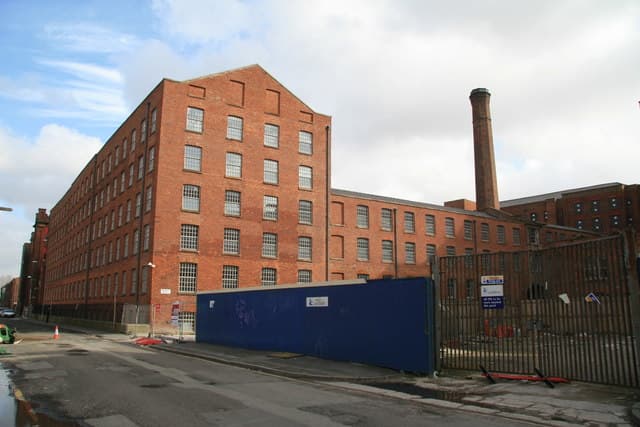
Murrays' Mills sits on the land between Jersey Street and the Rochdale Canal. Old Mill, the first block, was completed in 1798, and it is the world's oldest surviving urban steam-powered cotton spinning factory. That single fact is why Ancoats exists in the form it does. The mill was built for the brothers Adam and George Murray, powered by a Boulton and Watt steam engine, its narrow six-storey brick structure the shape that came to define the Manchester mill.
The complex did not stop at one block. Decker Mill opened in 1802, New Mill in 1804, and by 1806 the Murrays' works was the largest mill enterprise in the world, employing around a thousand people at its peak. When the Ancoats section of the Rochdale Canal was completed in 1804, coal and raw cotton could be moved straight into a private basin inside the complex, and the canal also supplied the water the steam engines needed. The mill was, in effect, a self-contained industrial machine plugged directly into the transport network.
The first industrial suburb
Hear a stop from this walk
Murrays' Mills: The Largest Mill Complex in the World by Eighteen Oh Six
Around mills like Murrays', Ancoats filled in at a speed and density no place had attempted before. Careful historians call it the world's first industrial suburb, and the phrase is doing real work. This was not a city centre that grew industrial over centuries. It was a district built more or less from scratch, fast, as a dedicated zone of factories, chimneys, and tightly packed workers' housing, all serving the mills. Stand on the mill ridge on the walk and the density is the thing you feel: brick blocks rising six storeys, canal below, chimneys once crowding the skyline. This is what industrial capitalism looked like when it was brand new and building its own habitat.
It is also where the human cost was recorded. Friedrich Engels walked Ancoats between 1842 and 1844, working for his family's textile firm and studying the district's mortality figures and living conditions, and Ancoats is one of the places he described in The Condition of the Working Class in England in 1845. The neighborhood was both the engine of the new economy and the evidence of what it cost the people inside it, at the same time, on the same streets.
The long emptying
Then the trade left. Over the twentieth century, and sharply from the mid-century on, cotton spinning drained out of Manchester, and Ancoats emptied with it. The mills fell silent, the housing was cleared, and for decades the district was one of the most visibly derelict inner areas of any British city, a grid of magnificent, roofless brick shells with the economy that built them gone. This is the middle phase every Manchester neighborhood seems to pass through, and Ancoats went through it more starkly than most.
The rebuild on the same brick
Ancoats today is one of the most talked-about regeneration stories in the country. The surviving mills, Murrays' among them, have been consolidated and converted, and the district around them has filled with apartments, independent restaurants, and cafes. The brick that once held spinning machines now holds flats and dining rooms. It is worth being clear-eyed about this: regeneration brings its own arguments about who a rebuilt neighborhood is for. But the physical pattern is unmistakable, and it is the same pattern the whole city runs. Industrial buildings, emptied, given a second life.
That arc, boom to abandonment to reinvention, is exactly what happens on the other side of the centre in the Northern Quarter, where cotton warehouses became record shops and clubs. Ancoats is the same story told with mills and restaurants instead of warehouses and music. For the argument that this reuse is Manchester's defining move, read how Manchester built the modern economy and then its sound.
Where it sits on the walk
Murrays' Mills is the climax of the Industrial Revolution Core walk, and it earns the position, because it is where the scale of Cottonopolis becomes physical. To read the full corridor that leads here, from the Bridgewater Canal through Liverpool Road Station to the mill ridge, see our companion to the Industrial Revolution Core walk.
Ready to experience it?
Cottonopolis: The City That Invented the Modern Economy
110 min · 3.5 km · easy
More from Manchester
Explore more at your own pace.
Cottonopolis: How Manchester Built the Modern Economy and Then Its Sound
The Corridor That Built the Modern Economy: A Companion to the Industrial Revolution Core Walk
The Square That Argued the North Was London's Equal: A Companion to the Civic Victorian Gothic Walk
The Warehouses That Became a Sound: A Companion to the Northern Quarter Walk
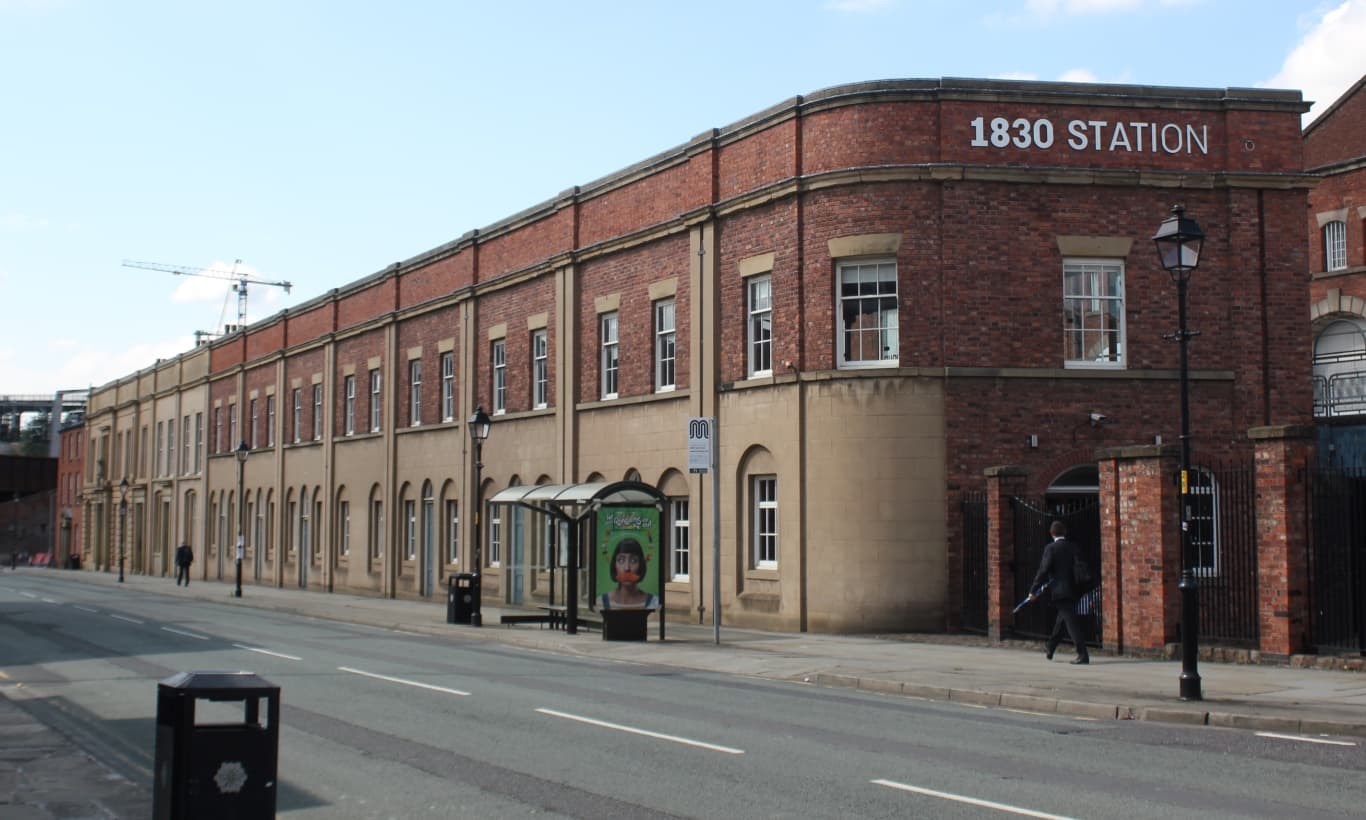
Liverpool Road Station: The Building That Defined the Railway Station