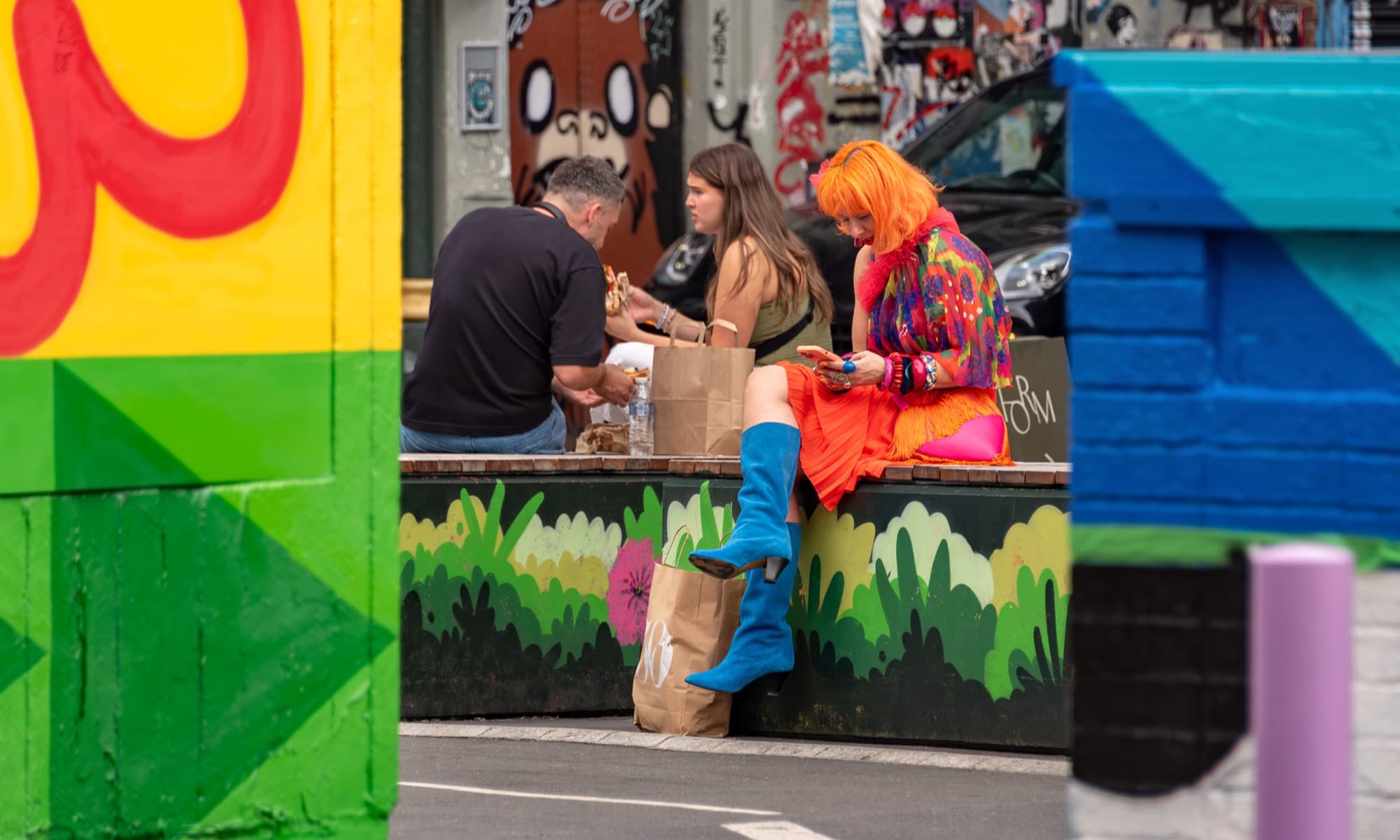
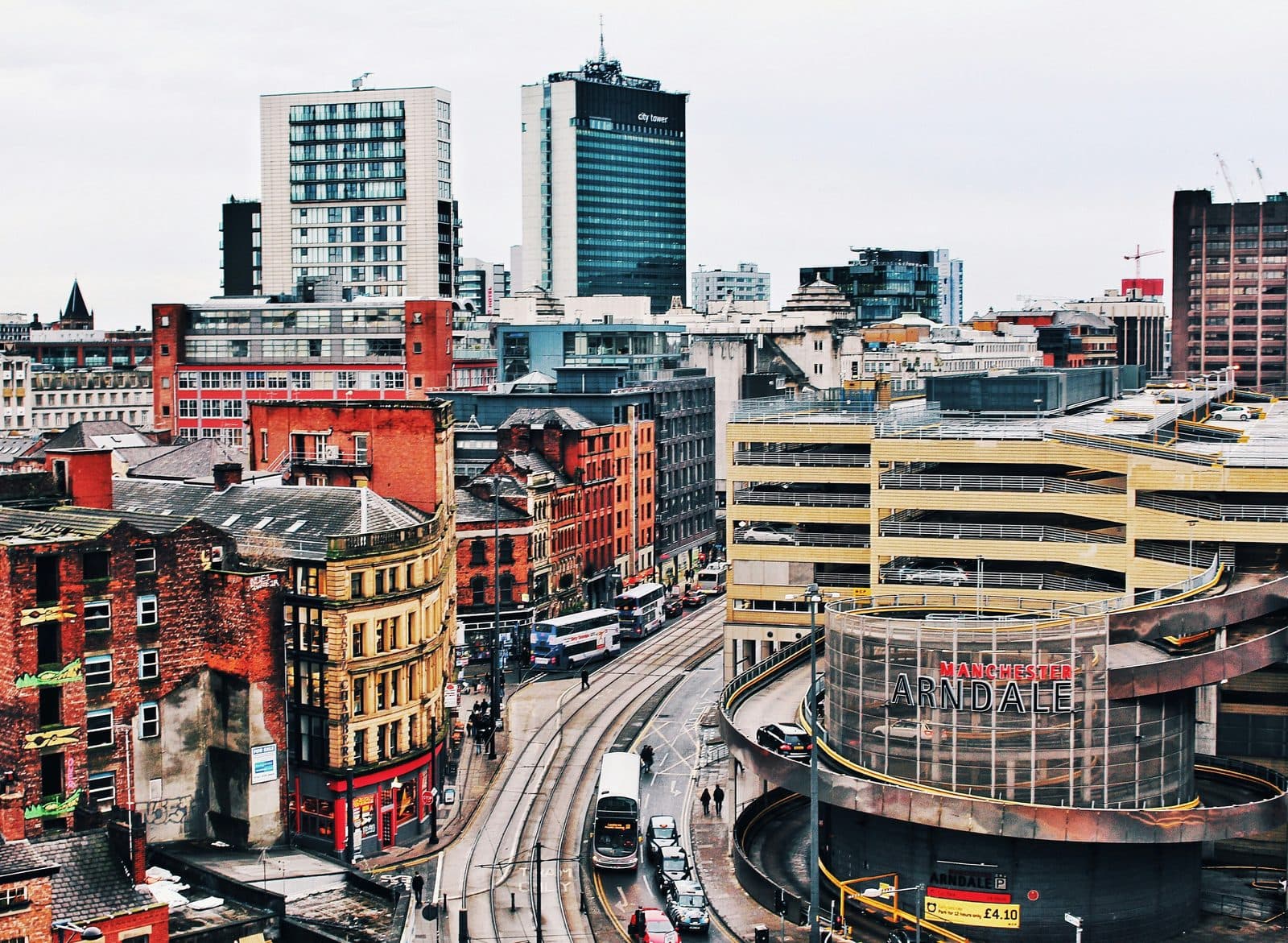
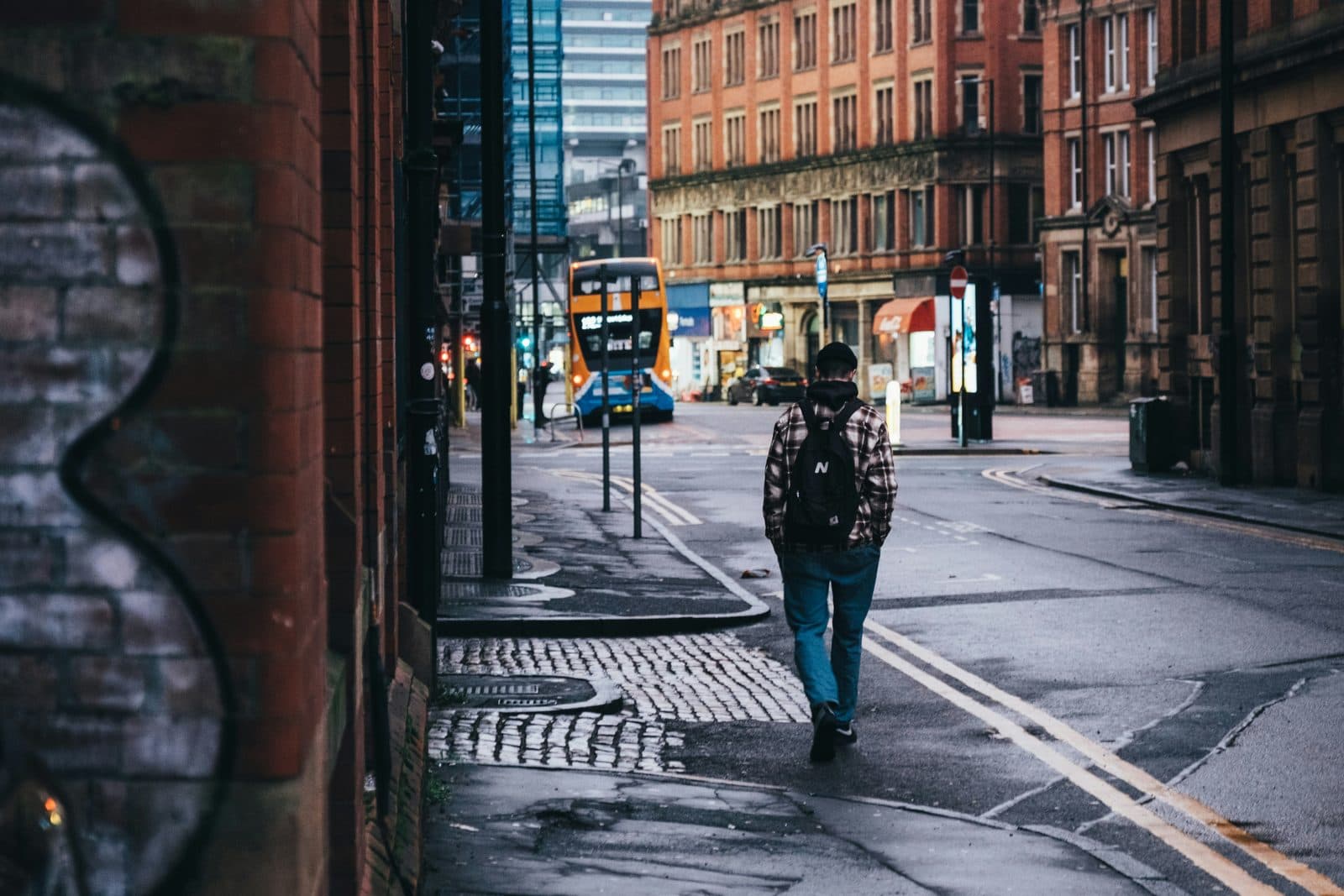
The same red-brick warehouse grid the cotton trade emptied in the late nineteen sixties became the record shops, rehearsal rooms, and clubs Manchester music came out of. Cotton out, music in, regeneration on top.
Start · Stevenson Square: The Eighteenth-Century Plan
DirectionsStops
- 1
Stevenson Square: The Eighteenth-Century Plan
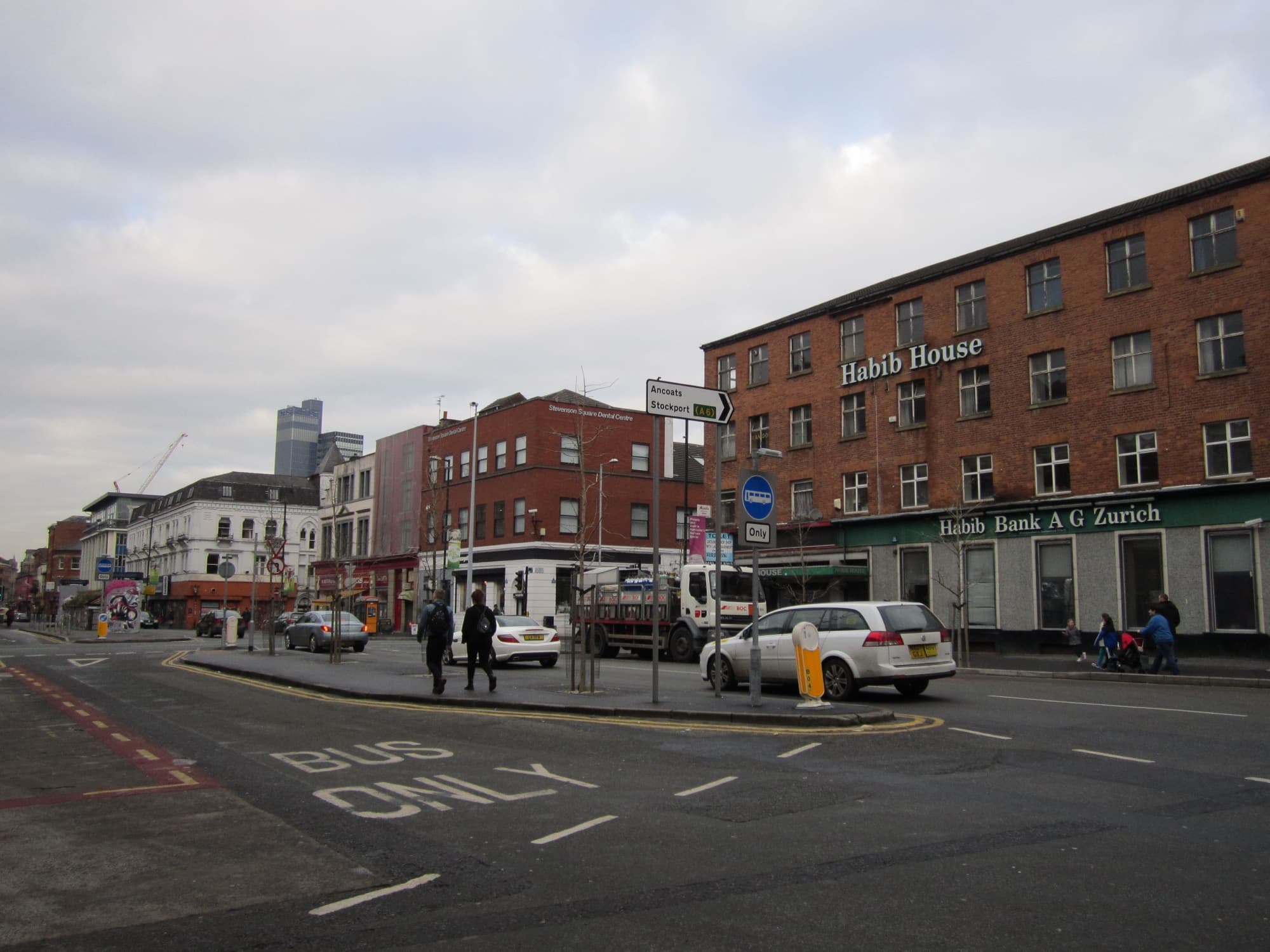
Laid out around seventeen eighty by developer William Stevenson on land bought from Sir Ashton Lever. The wholesale-warehouse anchor that became the Northern Quarter's main public space.
- 2
Afflecks: The Department Store That Became an Alternative Market
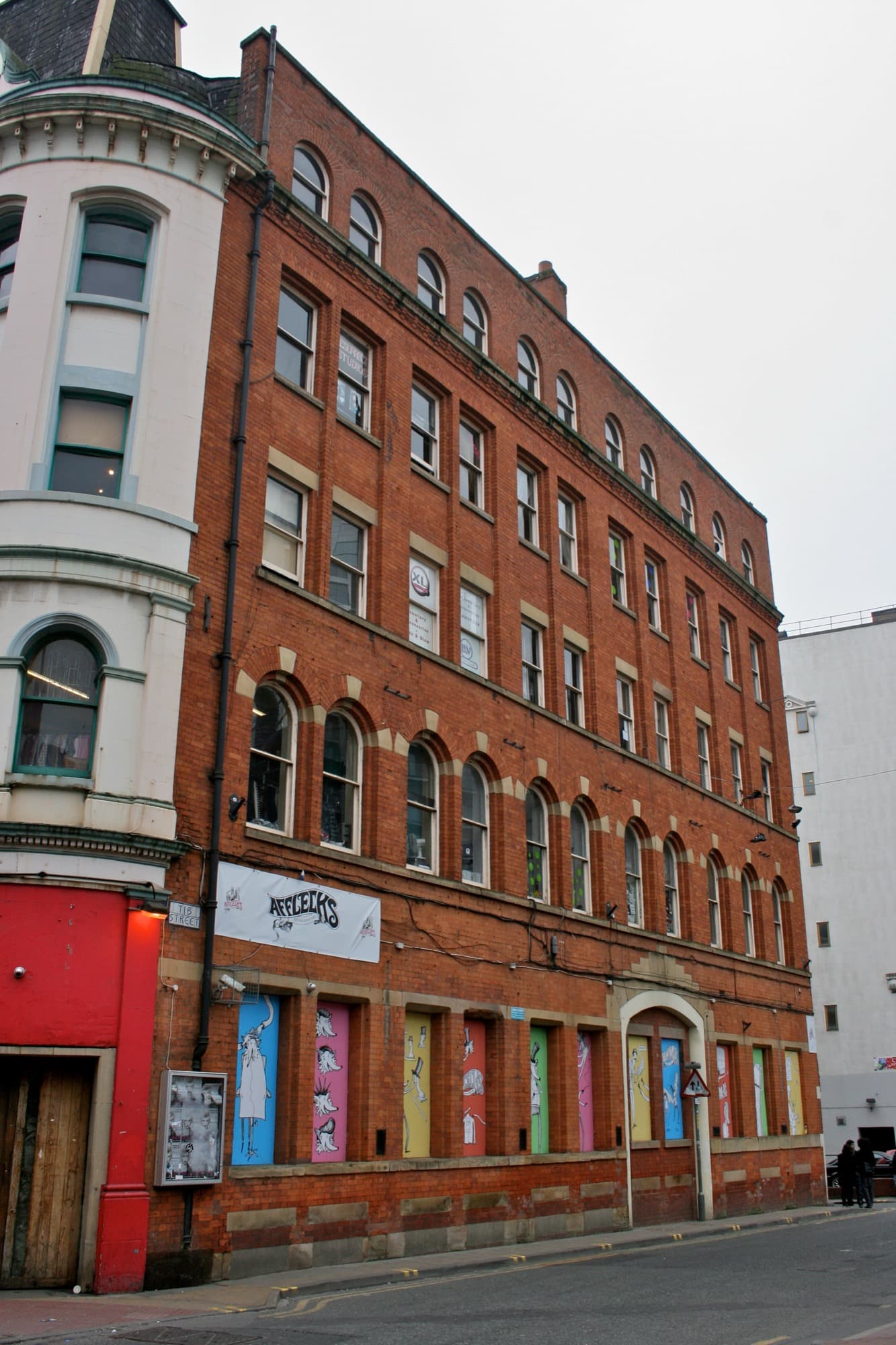
Affleck and Brown department store from the eighteen sixties to nineteen seventy-three. Reopened nineteen eighty-two as Afflecks Palace by James and Elaine Walsh. The first commercial proof the abandoned warehouse stock could carry a second life.
- 3
Oldham Street: The Record-Shop Spine
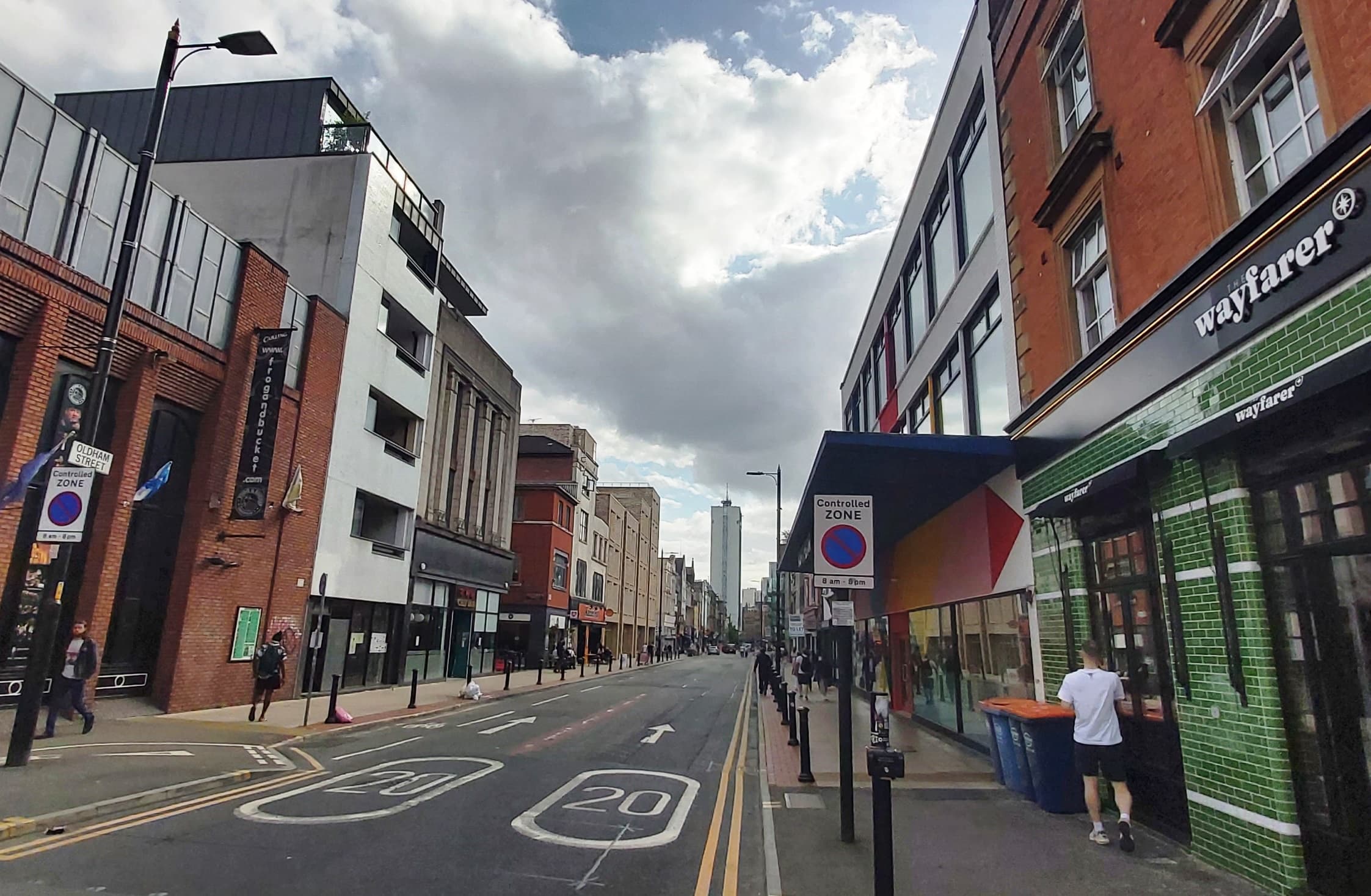
Piccadilly Records at fifty-three Oldham Street, Vinyl Exchange at eighteen, Night and Day Cafe at twenty-six, the former Dry Bar at twenty-eight to thirty. Four institutions, four decades, four warehouse conversions.
- 4
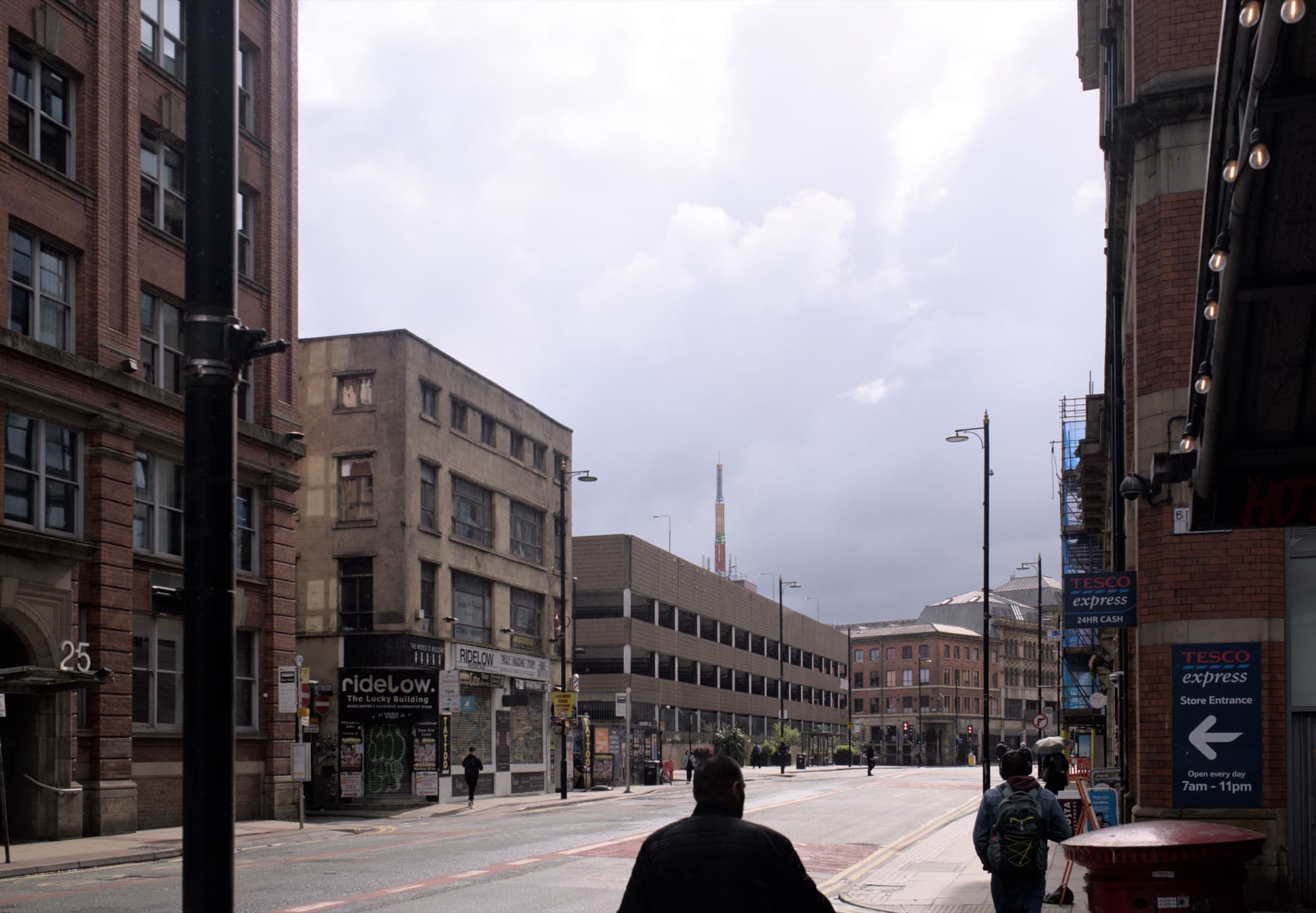
Tib Street: The Pet-Shop Strip the Regeneration Replaced
Manchester's pet-shop row from the early twentieth century until two thousand and two, when Walter Smith's, the last pet shop, closed. Named for the underground River Tib.
- 5
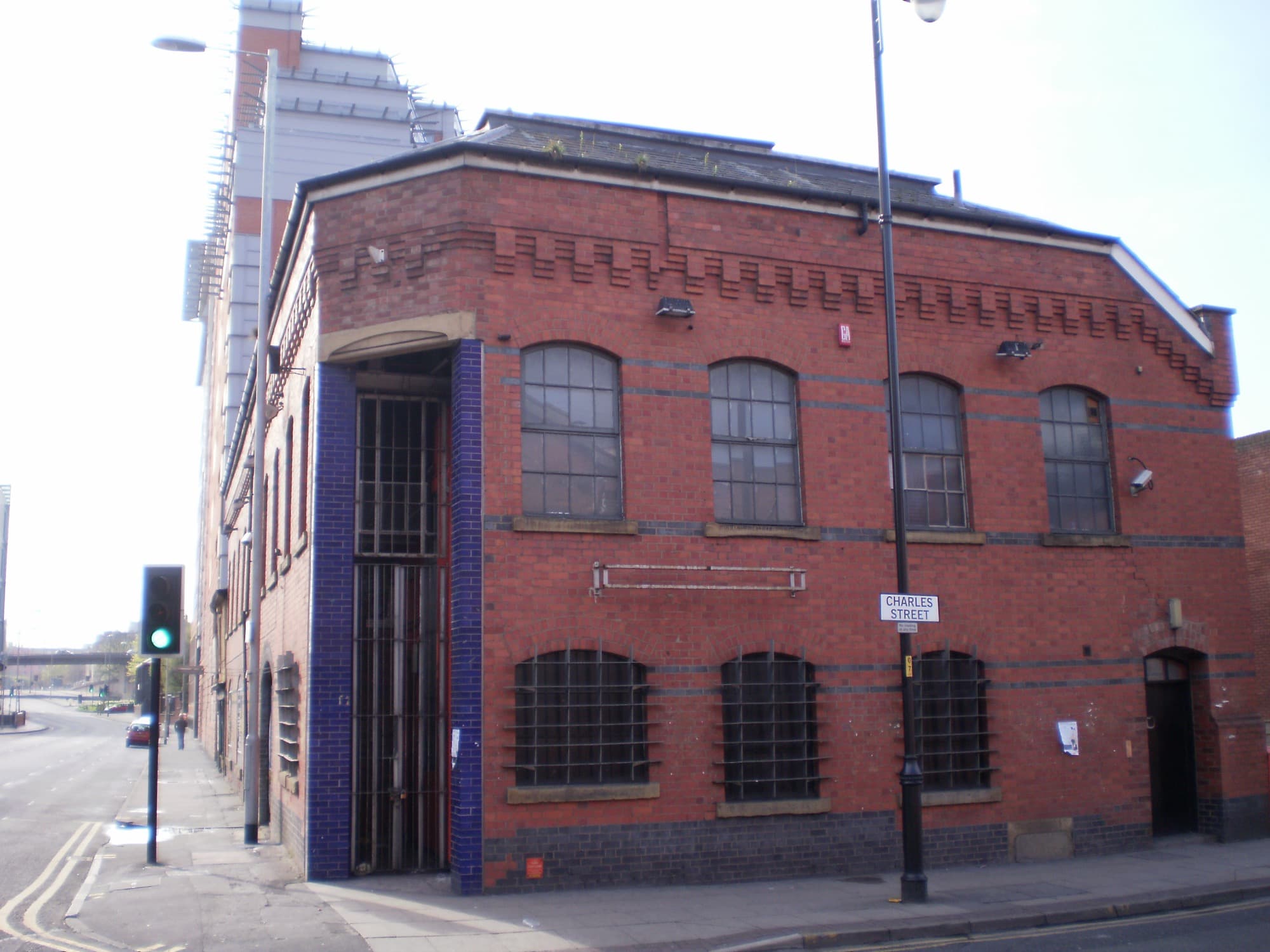
FAC 251: The Headquarters Factory Built and Lost
One Charles Street. Designed by Ben Kelly. Acquired by Factory Records in October nineteen eighty-eight. Opened twenty-ninth of September nineteen ninety. Closed November nineteen ninety-two when Factory went bankrupt. Reopened as the FAC 251 nightclub in two thousand and eight.
- 6
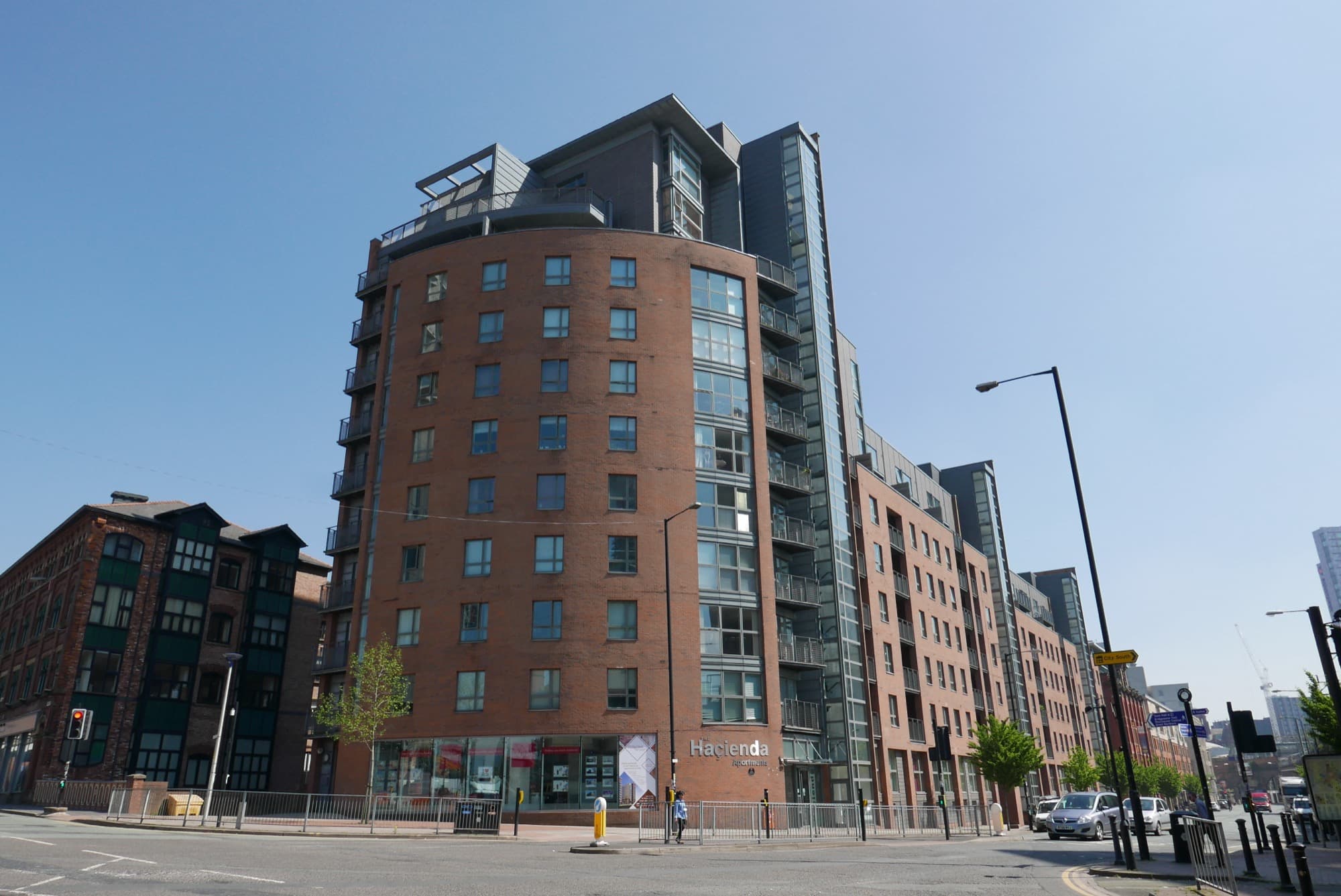
The Former Haçienda Site: The Apartments That Kept the Name
Eleven to fifteen Whitworth Street West. The Haçienda opened twenty-first of May nineteen eighty-two in a converted yacht showroom. Closed twenty-eighth of June nineteen ninety-seven. Demolished two thousand and two. Replaced by Hacienda Apartments, one hundred and sixty-one units, name licensed from Peter Hook of New Order.
Details
Best Time to Visit
Daytime, Tuesday through Saturday, mid-morning to mid-afternoon. The Oldham Street record shops at Stop 3 keep daytime hours and read best when Piccadilly Records, Vinyl Exchange, and Night and Day Cafe are open and trading on the corner you are anchored at. The Stevenson Square mural at Stop 1 reads better in daylight. The FAC 251 building at Stop 6 is anchored on the Charles Street exterior, so the daytime walk works while the nightclub interior is closed. The former Haçienda site at Stop 7 is a residential building, so a daytime exterior anchor is the appropriate read.
Pro Tips
- •Stop 1, Stevenson Square: the rotating mural on the central kiosk block changes roughly once a year. If the mural on your walk day looks different from the photographs online, that is normal, the surface is curated by local artists.
- •Stop 2, Afflecks: the building is free to enter and worth the ten-minute interior detour. Four floors of independent stalls, vintage clothing, tattoo studios, records, and comics. The audio is anchored on the exterior corner of Church Street and Oldham Street, so the stop works without entering.
- •Stop 3, Oldham Street: Piccadilly Records, Vinyl Exchange, and Night and Day Cafe are all working independent businesses. Stop in, browse, buy a record. The audio anchors at the Hilton Street junction so the cluster is visible without entering any one shop.
- •Stop 3 again: Dry Bar at twenty-eight to thirty Oldham Street closed in two thousand and twenty-four. The shopfront may be hoarded or under refit on your walk day. The audio reads the building as the Factory Records project it was, not the bar trading today.
- •Stop 5, Cotton Field Park: the New Islington Metrolink tram stop is about fifty metres from the park entrance. If the fifteen-minute walk east from Tib Street feels long, the tram is a five-minute ride from Piccadilly Gardens.
- •Stop 6, FAC 251 One Charles Street: the building operates as a nightclub in the evenings. Daytime, the exterior is what reads. The catalogue number FAC 251 is on the façade signage.
- •Stop 7, the former Haçienda site: this is a residential building. The audio anchors on the Whitworth Street West sidewalk. Do not approach the doors or buzz the intercoms.
- •The Manchester Digital Music Archive at mdmarchive.co.uk is the canonical community archive of the city's music heritage. The Dave Haslam book Manchester, England, The Story of the Pop Cult City is in most Manchester bookshops and at the Central Library. Both are referenced in the intro and are the best companion readings for this walk.
Safety & Precautions
- •The Oldham Street and Tib Street stretches sit on cobble and brick paving in places. Wear flat closed shoes.
- •The Cotton Field Park detour adds about six hundred metres east of the Northern Quarter dense corridor. If time is short, the park at Stop 5 can be referenced from the Tib Street anchor and skipped on the walk, then visited on a separate trip via the New Islington tram stop.
- •The walk from Cotton Field Park back south to FAC 251 on Charles Street is about a kilometre across Piccadilly Gardens. Pace accordingly, or use the Metrolink tram to Piccadilly Gardens and walk the final ten minutes south.
- •The former Haçienda site at Stop 7 sits on a busy stretch of Whitworth Street West with traffic on both sides. Stand on the south-side sidewalk facing the building. Cross at the signalled crossings.
- •Stevenson Square at Stop 1 hosts intermittent street events and small market days. If a stage or stalls are up on your walk day, the audio still anchors from the centre of the Square.
Travel advisory: Exercise Increased Caution (Level 2).
Gallery
Related Reading
Go deeper on what you'll see, hear, and walk through.
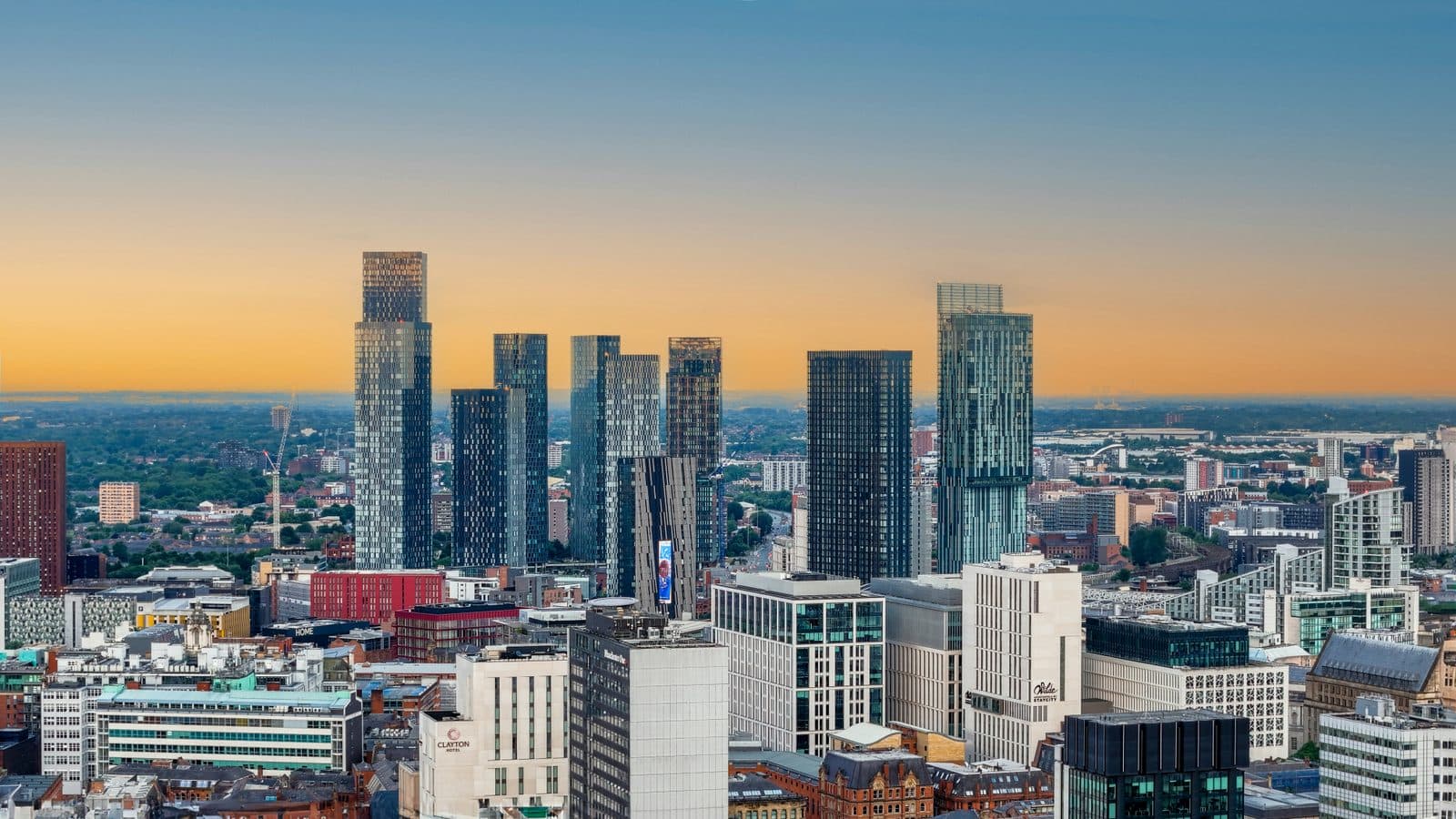
Read the walk
The full story of Northern Quarter: The Warehouses That Became a Sound, in words. Prefer to listen? Play it narrated, from home or on location.
Introduction
Four-storey red brick. Large lower windows for loading, smaller upper windows for storage, cast-iron lintels, lettered signage from a trade that left this part of Manchester decades ago. Stevenson Square, in central Manchester, England, is a cotton warehouse grid.
The thesis is simple. The Northern Quarter is the same red-brick warehouse-and-market grid the cotton trade emptied between nineteen sixty-eight and the late nineteen seventies, and the rehearsal rooms, record shops, and clubs that filled the space across the nineteen eighties and nineties were the second act of the same buildings, not a separate cultural event.
By the eighteen fifties these blocks held warehouses for Cottonopolis. By nineteen sixty-eight the Royal Exchange had closed; by the early seventies the Smithfield wholesale market was gone; by the late seventies the rent was on the floor. That is when the records moved in. Piccadilly Records in nineteen seventy-eight, Afflecks in nineteen eighty-two. The name Northern Quarter was a nineteen ninety-five council strategy. The music followed the buildings, not the other way around.
The walk is six stops, about two and a half kilometres and eighty minutes, starting at Stevenson Square and ending at the former Haçienda site across the Rochdale Canal. When you arrive at Stevenson Square, begin with stop one.
1. Stevenson Square: The Eighteenth-Century Plan
You've arrived at Stevenson Square, your first stop. Stand in the centre of the Square, near the small kiosk block. Look at the buildings on all four sides. Brick. Four storeys. The first-floor windows are deeper than the upper ones, sized for loading goods off carts.
First, who named it. According to the Manchester City Council Conservation Area history, William Stevenson bought this ground from Sir Ashton Lever in the mid-eighteenth century. The Square was laid out around seventeen eighty. Stevenson intended it as a residential rival to Saint Ann's Square on the other side of the city. It did not become residential. The cotton trade arrived. The warehouses you are looking at went up across the nineteenth century. By the eighteen-fifties, this was the wholesale and packing district that fed the cotton trade out to the docks at the western end of the city.
Walk back to that kiosk in the middle. The brick block in the centre of the Square was built in nineteen thirty-seven as a combined public toilets and cab-shelter. It is one of the few inter-war pieces of street furniture surviving in the city centre. Today the exterior is a rotating outdoor mural surface, curated by local artists. The mural changes roughly once a year. So does the conversation it carries.
This is the Square in three layers. The seventeen-eighties street plan. The nineteenth-century warehouses that filled it in. The nineteen thirties public block that now carries a twenty-first-century mural. Four eras, same paving. The Northern Quarter the council named in nineteen ninety-five is the most recent of those layers, not the oldest.
Walk one block north on Tib Street. At Church Street, look east. The four-storey corner building with the large signage is Afflecks. That is your next stop.
2. Afflecks: The Department Store That Became an Alternative Market
You've arrived at Afflecks. Stand at the corner of Church Street and Oldham Street, looking up at the four-storey Victorian commercial building. The mosaic of Manchester worker bees runs along the side wall. The alternative-market signage covers the upper façades.
First, what this building used to be. Per Wikipedia's entry on Afflecks, Affleck and Brown was a department store. It occupied this entire block from the eighteen sixties until it closed in nineteen seventy-three, the same window in which the cotton trade was leaving the city.
The building stood underused for nine years. Then, in nineteen eighty-two, James and Elaine Walsh opened Afflecks Palace inside it. Their model, according to the same Wikipedia entry, was London's Kensington Market: a hundred and seventy small independent stalls offered weekly low-rent leases with one-week notice termination. Vintage clothes. Tattoo studios. Records. Comics. The kind of small trade that could not afford a high street.
The word Palace was dropped from the name in two thousand and eight. The model has not changed. Today the building holds roughly seventy independent traders across four floors.
Here is the year to hold. Nineteen eighty-two is also the year the Haçienda opened, across the canal on Whitworth Street West. Same year, same logic: cheap floor space in an abandoned cotton-era building, an alternative use, no long-term commitment. Two different rooms, the same building cycle. That cycle is the tour.
Walk one block south on Oldham Street. Stop at the junction with Hilton Street. You are about to stand at the centre of the record-shop spine.
3. Oldham Street: The Record-Shop Spine
You've arrived at the Oldham Street record-shop spine, your third stop. Stand at the junction of Oldham Street and Hilton Street. Look north up Oldham Street. The shopfronts on both sides are short, two and three storeys above ground level, with original Victorian fenestration…
Full narration for this stop unlocks with the tour.
4. Tib Street: The Pet-Shop Strip the Regeneration Replaced
You've arrived at Tib Street. Stand at the junction with Church Street and look north up Tib Street. The street is narrower than Oldham Street, one block west of where you stood at Afflecks. The shopfronts are smaller. Bars. Vintage. Tattoo. Small creative businesses. Murals on…
Full narration for this stop unlocks with the tour.
5. FAC 251: The Headquarters Factory Built and Lost
You've arrived at FAC 251, your fifth stop. Stand on the Charles Street side of the building, looking up at the corner. Four storeys of dark cladding and angular fenestration, sited on the inner ring road between Princess Street and Oxford Road. The BBC building is visible to…
Full narration for this stop unlocks with the tour.
6. The Former Haçienda Site: The Apartments That Kept the Name
You've arrived at the former Haçienda site, the resolution of this walk. Stand on the Whitworth Street West sidewalk, facing the apartment building. The licensed Hacienda name is on the façade. The Rochdale Canal is one block north of you. Stevenson Square, where you started, is…
Full narration for this stop unlocks with the tour.