A Victorian civic square in central Manchester, built in the eighteen sixties and seventies with cotton money as a deliberate argument for equal standing with the imperial capital. The Town Hall, the Albert Memorial, the Free Trade Hall, and the Lincoln statue, read across one corridor.
Start · Albert Square: The Civic Argument as Tableau
DirectionsStops
- 1
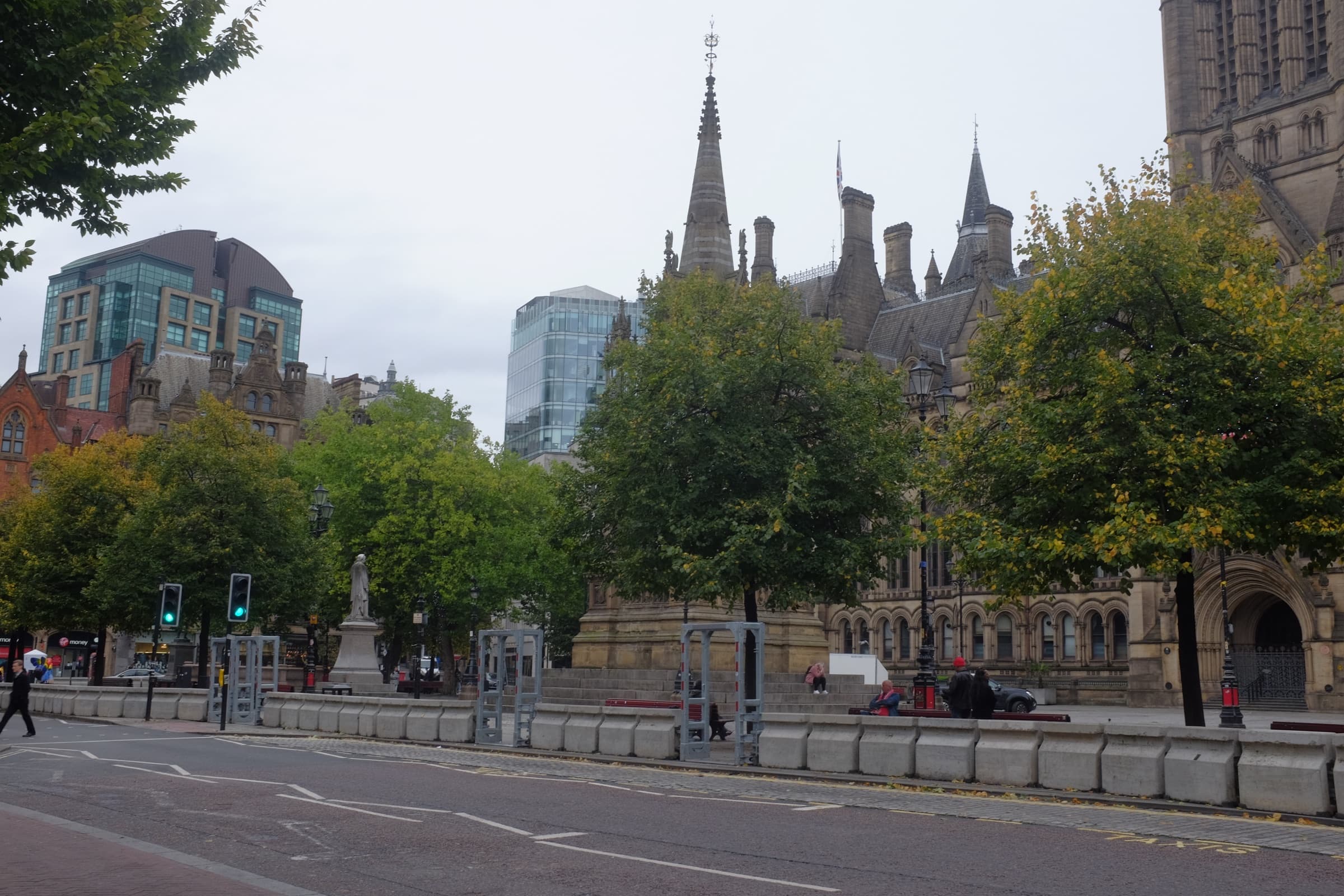
Albert Square: The Civic Argument as Tableau
Conservation area since April nineteen seventy-two. The Town Hall on the east side, the Albert Memorial at the south end, four Grade-II-listed Victorian bronzes on the cobbles.
- 2
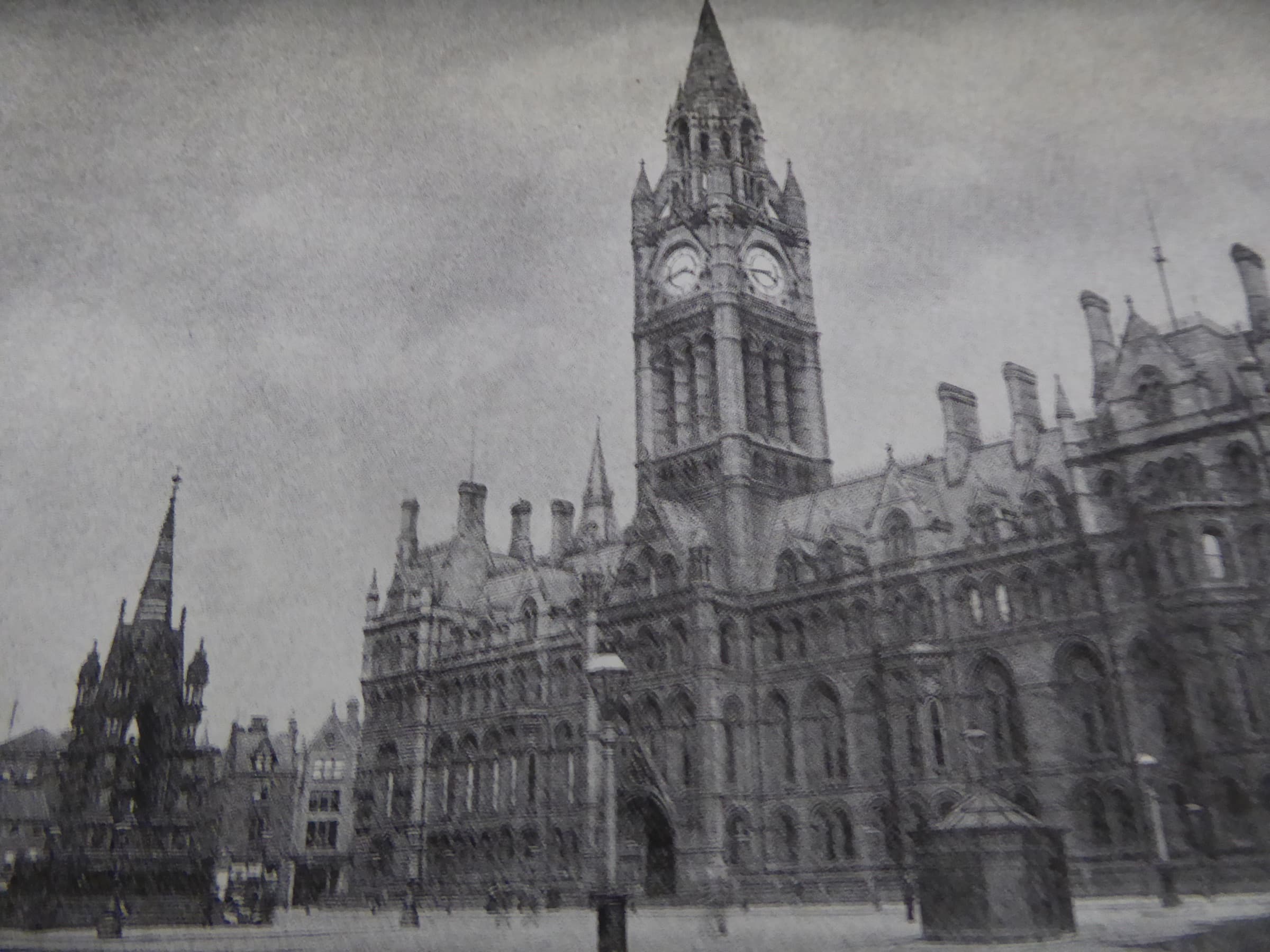
Manchester Town Hall: The Building That Won the Competition
Alfred Waterhouse, eighteen sixty-eight to eighteen seventy-seven. Grade I, Historic England List Entry 1207469. The architectural climax of the civic argument. Exterior-only during the Our Town Hall restoration; reopening Spring twenty-twenty-seven.
- 3
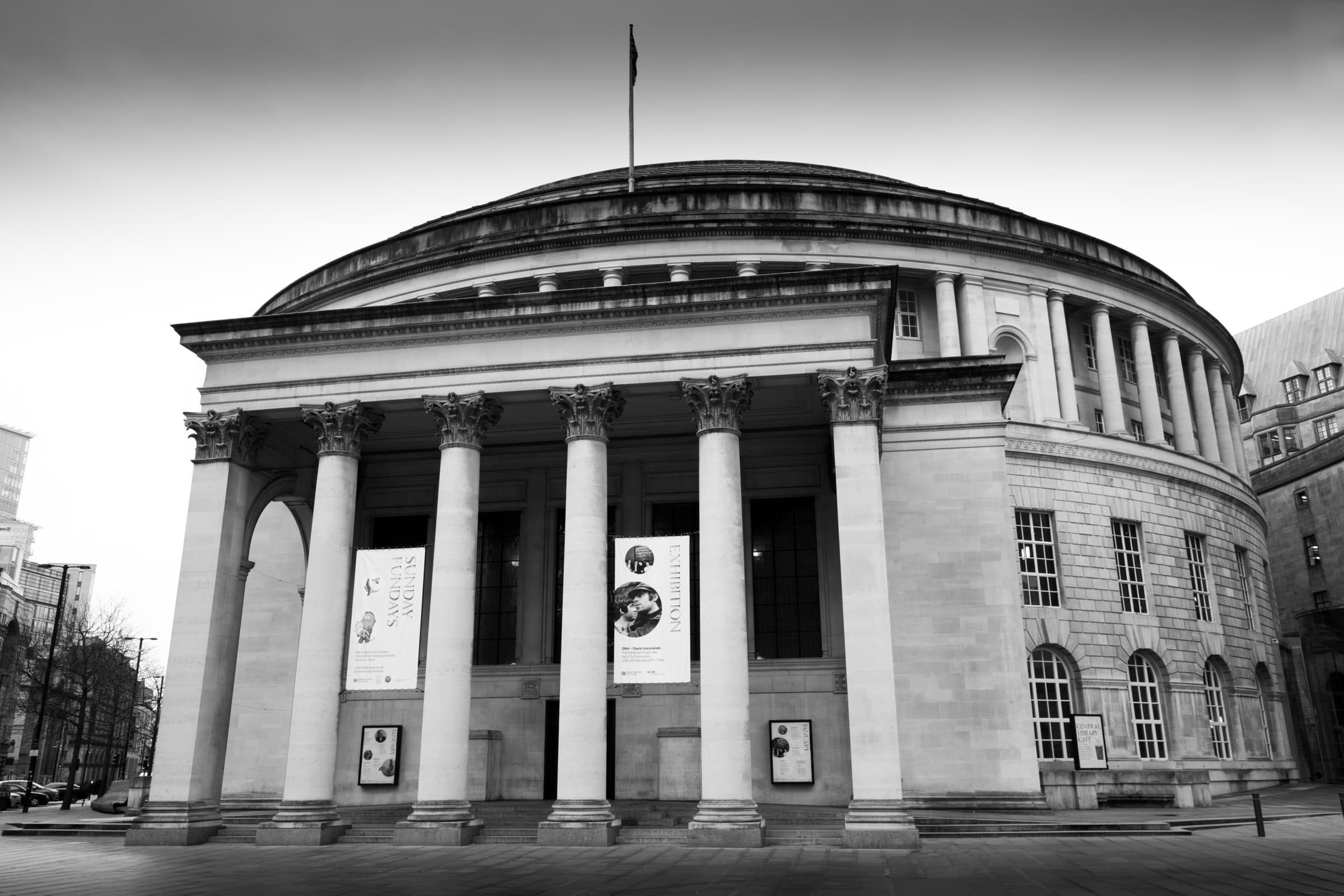
Manchester Central Library and St. Peter's Square: The Twentieth-Century Continuation
E. Vincent Harris, nineteen thirty to nineteen thirty-four. Opened by King George V on the seventeenth of July, nineteen thirty-four. Grade II*, listed October nineteen seventy-four. The Pantheon-inspired rotunda anchoring civic Manchester into the inter-war period.
- 4
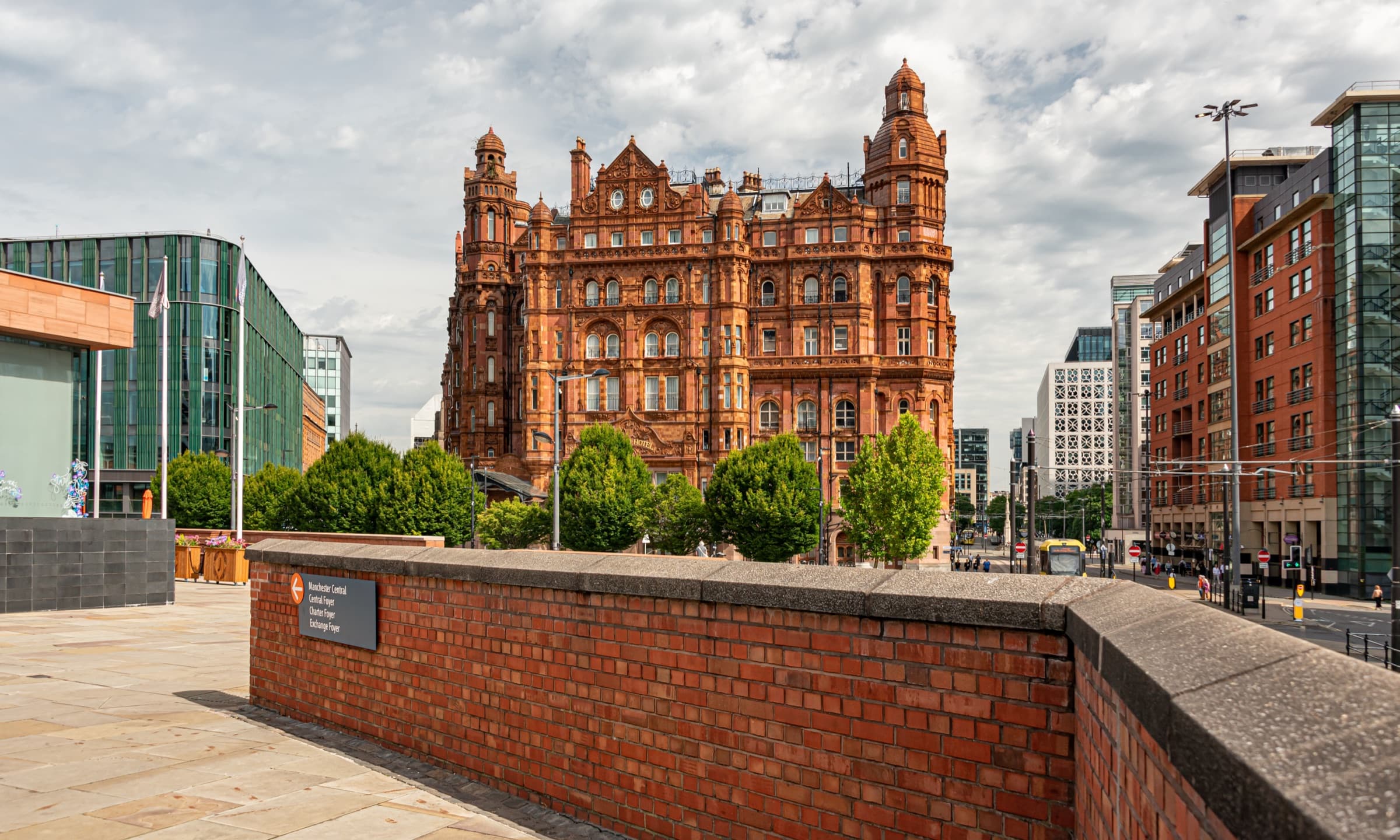
Midland Hotel: Edwardian Manchester at the Industrial-Elite Peak
Charles Trubshaw, eighteen ninety-eight to nineteen oh three. Opened the fifth of September, nineteen oh three. Grade II*, listed October nineteen seventy-four. By tradition, the venue of the fourth-of-May, nineteen oh four lunch meeting that founded Rolls-Royce.
- 5
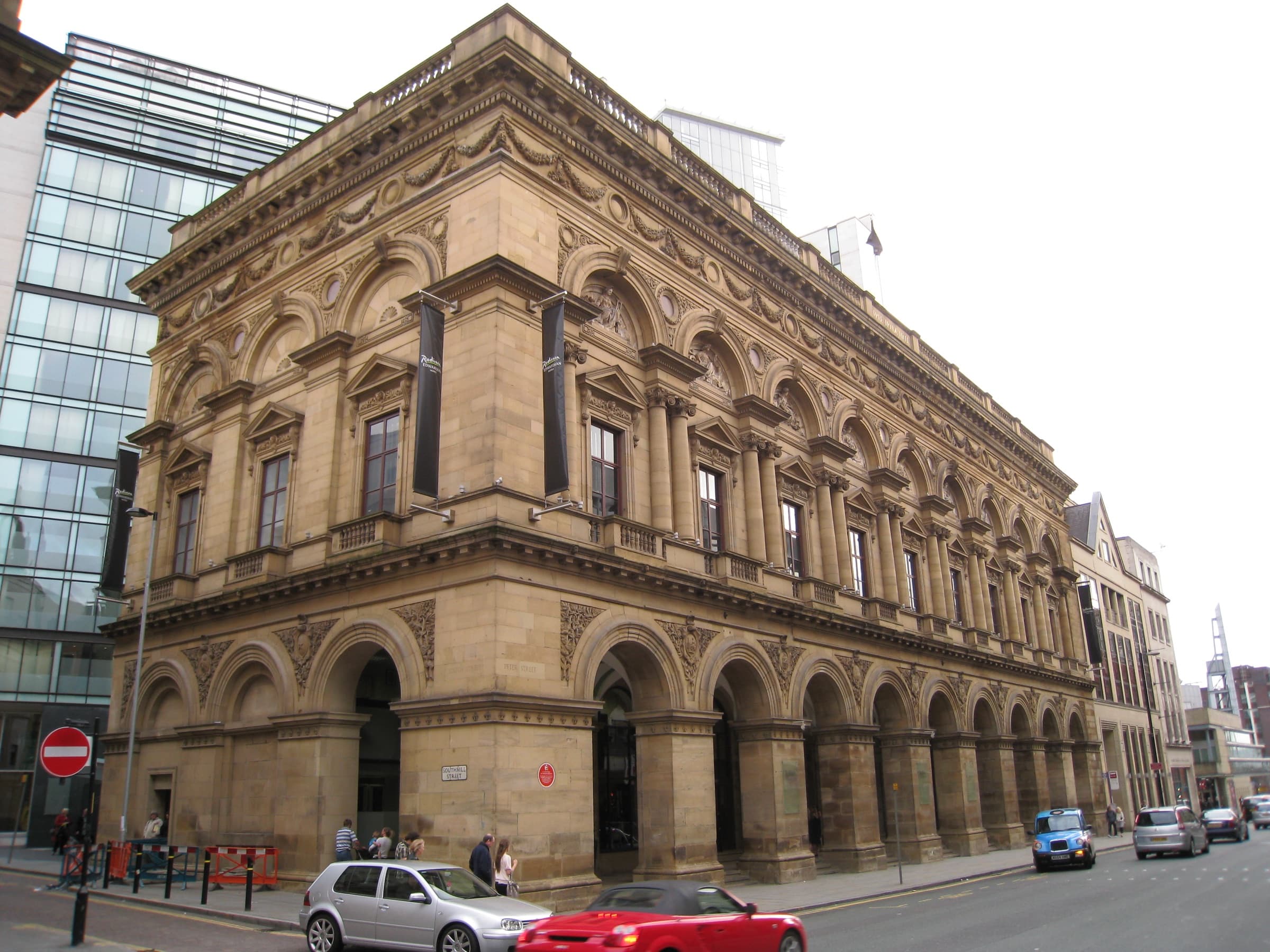
Free Trade Hall: One Hundred and Seventy Years of Argument on One Site
Edward Walters, eighteen fifty-three to eighteen fifty-six, on the site of the sixteenth-of-August, eighteen nineteen Peterloo Massacre. Grade II*, Historic England List Entry 1246666. Walters facade preserved through the nineteen forty Blitz and the two thousand and four hotel conversion.
- 6
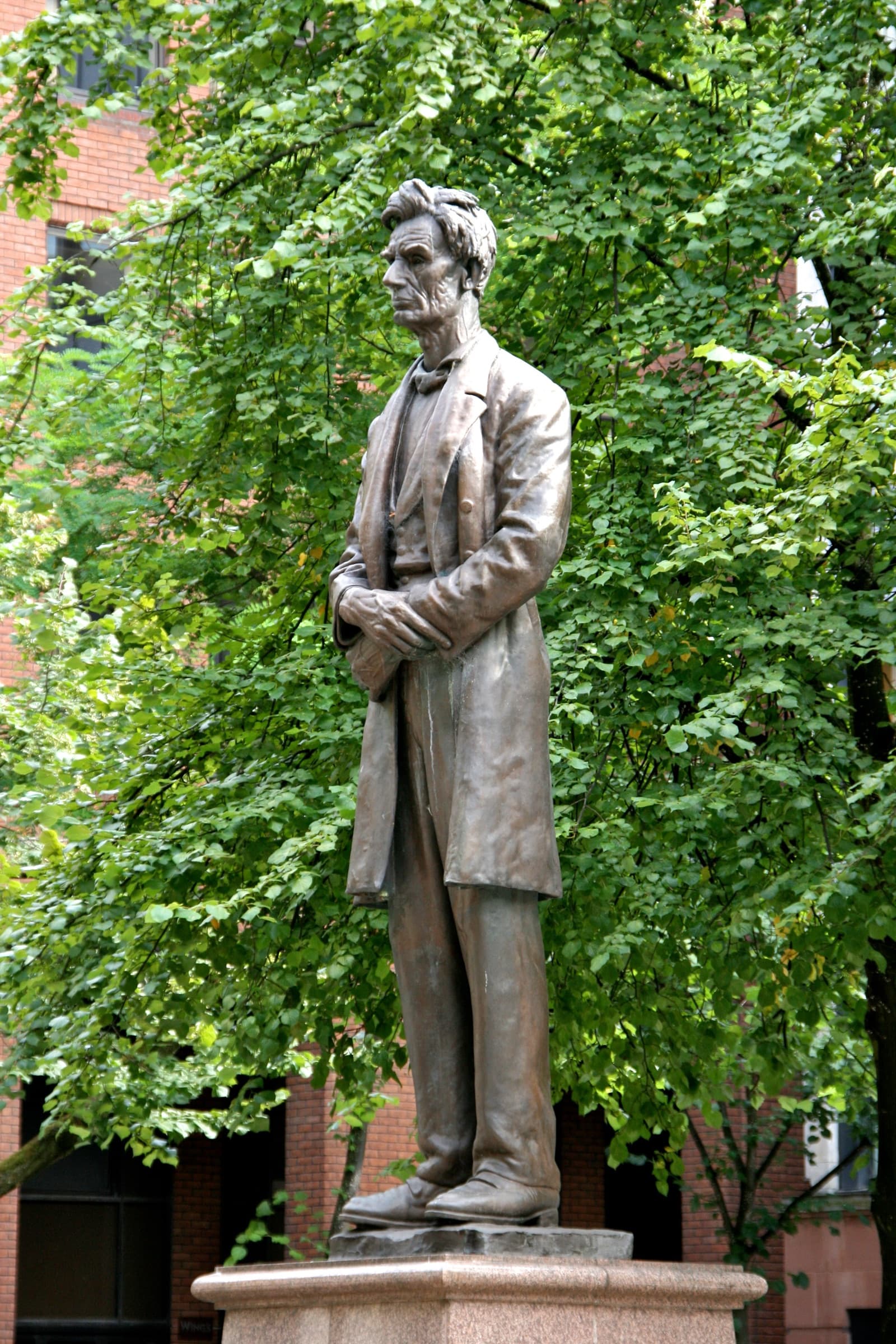
Lincoln Square: The American President on a Manchester Plinth
George Grey Barnard, bronze. Presented to Manchester in nineteen nineteen by Charles Phelps Taft, half-brother of US President William Howard Taft, with the Sulgrave Institution. Moved from Platt Fields to Lincoln Square in nineteen eighty-six.
- 7
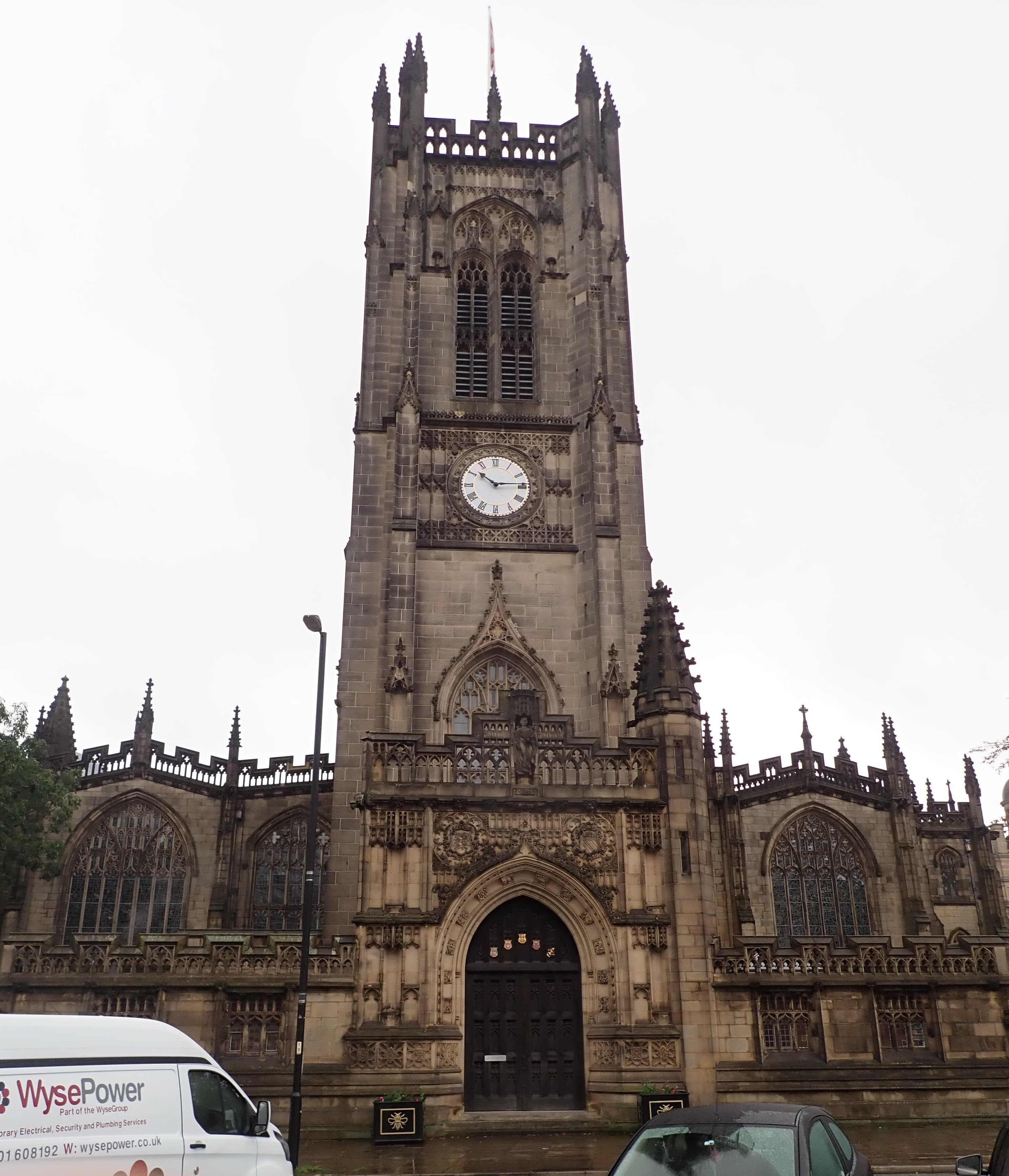
Manchester Cathedral: The Medieval Underneath the Victorian Argument
Collegiate church founded fourteen twenty-one by Thomas de la Warre under royal licence from King Henry V and papal licence from Pope Martin V. Cathedral status granted eighteen forty-seven. Grade I, designated January nineteen fifty-two.
Details
Best Time to Visit
Tuesday through Saturday, mid-morning to early afternoon. The Central Library at Stop Three is open Monday through Saturday and reads best when the Great Hall reading room is accessible. Albert Square is undergoing public-realm works through the Our Town Hall restoration window (Spring twenty-twenty-seven reopening), so the Town Hall exterior at Stop Two may be partially hoarded; the audio anchors on the west kerb of the square and remains workable through the works. The Cathedral at Stop Seven has variable hours by day and Sunday service constraints, so weekday late mornings are the cleanest. The Peter Street corridor at Stops Four and Five is quieter before the lunch hour. The Lincoln statue at Stop Six is accessible any hour but the plaza reads best in daylight.
Pro Tips
- •Plan the walk Tuesday through Saturday so the Central Library at Stop Three is open. Entry is free; the Great Hall reading room on the first floor is the architectural payoff. Open Monday to Saturday, with Sunday hours variable; verify on the Manchester City Council Central Library page on the day of the walk.
- •The Town Hall is closed to the public until Spring twenty-twenty-seven. The audio is anchored entirely on the exterior; you do not need to enter the building. Albert Square public-realm works are ongoing through the Our Town Hall restoration window; pedestrian flow through the square is open but parts of the perimeter may be hoarded.
- •The Midland Hotel is an active hotel; the audio anchors on the Peter Street and Lower Mosley Street corner exterior. The lobby is accessible to non-guests during normal hours if you want to see the marble interior, but the tour does not route through it to keep the walking pace continuous.
- •The Free Trade Hall is now The Edwardian Manchester, A Radisson Collection Hotel. The audio anchors on the Walters facade across Peter Street. Inside, the interior is a two thousand and four conversion by Stephenson Bell; the original Lesser Free Trade Hall room where the Sex Pistols played in nineteen seventy-six did not survive the conversion. Do not go in expecting to see the room.
- •The Jeremy Deller Peterloo Memorial, eleven concentric circles of local stone unveiled in twenty-nineteen on the two-hundredth anniversary of the massacre, sits behind Manchester Central, the conference centre, about five minutes south of the Free Trade Hall. It is named in the Stop Five audio but not on the main walking route. Add the detour if Peterloo specifically matters to you.
- •Lincoln Square at Stop Six is a small public plaza off Brazenose Street, fully accessible at street level. The Barnard bronze is a replica of his standing Lincoln; the original is in Cincinnati, Ohio. The statue was moved to this plaza in nineteen eighty-six from its original Platt Fields location.
- •Manchester Cathedral at Stop Seven is an active cathedral with free entry. Donation suggested. Hours vary by day and Sunday service schedule; check the Cathedral website before the walk. Chetham's Library, the oldest free public reference library in the English-speaking world, is across the Cathedral grounds and operates on its own hours; entry by booked tour.
Safety & Precautions
- •Manchester city-centre streets are paved and generally level, but Albert Square is cobbled and the corner of Charles Trubshaw's Midland Hotel sits on a sloped pavement. Wear closed shoes with grip in wet weather; Manchester rain is frequent and the cobbles get slick.
- •Albert Square is undergoing public-realm works for the Our Town Hall restoration (Spring twenty-twenty-seven completion). Pedestrian routing through the square is open but parts of the perimeter are hoarded. Follow site signage and allow extra time at Stop One and Stop Two.
- •Peter Street, at Stops Four and Five, carries active vehicle and tram traffic. Cross at signals. The Midland Hotel and the Edwardian Manchester are on opposite sides of the road; the audio asks you to cross once between them.
- •The Free Trade Hall and the Midland Hotel are both active hotels. Do not block the entrances during the audio dwell at Stop Four and Stop Five. The audio anchors on the public pavement opposite each building so you are out of the doorways.
- •Manchester Cathedral at Stop Seven holds regular services. If you arrive during a service the nave may be closed to visitors; the exterior west-front view from Victoria Street remains accessible. Sunday and major-feast schedules are on the Cathedral website.
Travel advisory: Exercise Increased Caution (Level 2).
Gallery
Related Reading
Go deeper on what you'll see, hear, and walk through.
Overview
Best Self-Guided Walking Tours in Manchester (2026)
3 min
Thematic
Cottonopolis: How Manchester Built the Modern Economy and Then Its Sound
6 min
Companion
The Square That Argued the North Was London's Equal: A Companion to the Civic Victorian Gothic Walk
5 min
Deep dive
Manchester Town Hall and the Argument Alfred Waterhouse Won
4 min
Read the walk
The full story of Albert Square: The Town Hall That Argued the North Was London's Equal, in words. Prefer to listen? Play it narrated, from home or on location.
Introduction
Albert Square, in central Manchester, England, is not a town square. It is a civic argument in stone. A Gothic civic palace in sandstone with a clock tower two hundred and eighty feet tall. A stone canopy on slender columns at the south end. Four bronze Victorian figures around the cobbles. A Diamond Jubilee fountain. The buildings and the statues are sentences in the argument.
The argument is with London. By the eighteen sixties Manchester was the second-largest city in Britain. Cotton money. Free-trade Liberalism. Nonconformist energy. The Town Hall, Waterhouse eighteen seventy-seven. The Albert Memorial, eighteen sixty-five, completed seven years before London's Albert Memorial in Kensington Gardens. The Free Trade Hall, eighteen fifty-six, on Peterloo ground. The Lincoln statue, nineteen nineteen, commemorating Manchester's eighteen sixty-two cotton-famine letter to the American president. They argue not that Manchester is a second London. They argue that a city of this scale and consequence has earned equal dignity with the imperial capital to the south.
One working note. The Town Hall closed in January twenty-eighteen for the Our Town Hall restoration, with a spring twenty-twenty-seven reopening planned. The building is read from the outside. The scholarship carrying us is the Pevsner Manchester guide, Tristram Hunt's Building Jerusalem, and Wyke and Cocks's Public Sculpture of Greater Manchester.
The walk is seven stops, about two kilometres and ninety-five minutes, from Albert Square to Manchester Cathedral. When you arrive at Albert Square, begin with stop one.
1. Albert Square: The Civic Argument as Tableau
You have arrived at Albert Square. You are standing on the cobbles, facing east, with the Town Hall facade in front of you and the Albert Memorial canopy at the south end behind your right shoulder.
First, the dates that fix what you are standing in.
The square was laid out in the eighteen sixties as the civic forecourt to the new Town Hall. The Albert Memorial was the first piece in place. Designed by the Manchester architect Thomas Worthington, a Gothic Revival man. The marble figure of Prince Albert is by Matthew Noble, worked on between eighteen sixty-two and eighteen sixty-seven. The canopy completed in eighteen sixty-five. Officially unveiled in January, eighteen sixty-seven. Per Wyke and Cocks's Public Sculpture of Greater Manchester, two thousand and four, the canopy form was inspired by the medieval ciborium at Santa Maria della Spina in Pisa.
The timing detail matters and the discipline of this tour holds it carefully. London's Albert Memorial at Kensington Gardens, designed by George Gilbert Scott, was completed in eighteen seventy-two, with the gilded figure of Albert by John Henry Foley installed in eighteen seventy-six. Manchester's was completed before London's by approximately seven years. The claim is timing-specific. The two memorials are different works. Manchester did not build the original Albert Memorial in Britain. Manchester finished its Memorial first.
The square is a designated conservation area, April nineteen seventy-two, extended in nineteen eighty-one to include Lincoln Square. Two Grade One listed buildings sit within it: the Town Hall and the Albert Memorial canopy.
Now read what the square is doing. A Victorian civic square, like a Victorian civic Town Hall, is not decoration. It is a sentence. The square names Albert, the Prince Consort, dead in eighteen sixty-one. It names Manchester's bishop. It names Manchester's Liberal MP. It names Manchester's philanthropist. It names Britain's Prime Minister. And it places them in a square with a Memorial that beat London's to completion.
Now walk toward the east side of the square. The Town Hall is your next stop.
2. Manchester Town Hall: The Building That Won the Competition
You have arrived at Manchester Town Hall. You are standing on the west kerb of Albert Square, looking east at the facade. The clock tower above you stands two hundred and eighty feet, eighty-five metres, and is the building's vertical anchor against the sky.
The facts the standard guidebook gives you are Alfred Waterhouse, eighteen sixty-eight to eighteen seventy-seven, Gothic Revival, Grade One listed, opened on the thirteenth of September, eighteen seventy-seven. Hold them. Now here is what makes the building load-bearing for the civic argument of this tour.
The Town Hall was the winning entry of a national open competition. Per the Building magazine archive of the eighteen sixty-seven to eighteen sixty-eight competition, one hundred and thirty-seven design entries were submitted. The Manchester Corporation appointed two professional assessors: Professor T. L. Donaldson, and George Edmund Street, the Gothic Revival architect later responsible for the Royal Courts of Justice in London. Eight finalists went through to a second round. They included Thomas Worthington, the same Worthington you just heard about at the Albert Memorial, and Cuthbert Brodrick of Leeds Town Hall fame. On the first of April, eighteen sixty-eight, Waterhouse was announced the winner.
This competition is the mechanism of the civic argument. A municipal corporation does not stage a one-hundred-and-thirty-seven-entry national open competition assessed by professionals of George Edmund Street's stature for a quiet provincial commission. Per Tristram Hunt's Building Jerusalem, two thousand and four, this is the Manchester civic project at its most explicit. The competition is the argument. The building is its consequence in stone. Per Hartwell, Hyde, and Pevsner, two thousand and one, this is the most architecturally ambitious civic project of Victorian England outside Westminster.
A note on what you cannot see. The building has been closed since January twenty-eighteen for the five-hundred-and-twenty-four-point-eight-million-pound Our Town Hall restoration. Manchester City Council confirms Spring twenty-twenty-seven for the reopening, timed to the one-hundred-and-fiftieth anniversary of the eighteen seventy-seven opening. When the doors are open again, the Great Hall on the first floor contains the climactic interior beat: twelve murals by Ford Madox Brown, painted between eighteen seventy-nine and eighteen ninety-three, depicting Manchester history from Roman Mamucium through John Wycliffe to the nineteenth-century civic chapters. Brown completed all twelve in the year of his death. Today they are sealed in conservation. Come back in twenty-twenty-seven.
Walk south now, down Mount Street, one block. You are heading for the rotunda on the next square.
3. Manchester Central Library and St. Peter's Square: The Twentieth-Century Continuation
You have arrived at St. Peter's Square. The Central Library is in front of you, on the south side: a circular rotunda fronted by a two-storey Corinthian portico in Portland stone.
The architect is E. Vincent Harris. The foundation stone was laid by King George V. Constructed between nineteen thirty and nineteen thirty-four. King George V opened the library on the seventeenth of July, nineteen thirty-four, and per institutional record declared it the largest library in this country provided by a local authority. Grade Two-star listed, designated on the third of October, nineteen seventy-four. The most recent refurbishment ran from twenty-ten to twenty-fourteen at forty million pounds, with the library reopening on the twenty-second of March, twenty-fourteen.
The form is the point. Per Hartwell, Hyde, and Pevsner, two thousand and one, Vincent Harris designed the rotunda loosely after the Pantheon in Rome: a domed circular reading room on the first floor, the Great Hall, fronted by a columned portico, surrounded by Corinthian columns. Step inside (the library is free, open Monday to Saturday) and look up at the dome. The form is not casual quotation. It is a deliberate civic argument made in the inter-war period, that public knowledge belongs in a building whose architectural vocabulary is the most recognisable civic-public form in the Western tradition.
Around you, St. Peter's Square is the other half of the city-centre civic plaza. North across the square sits the Manchester Town Hall Extension, by the same Vincent Harris, nineteen thirty-four to nineteen thirty-eight, in a Portland-stone register that converses with Waterhouse's Gothic Town Hall and Harris's own Library. East of you sits the Cenotaph by Edwin Lutyens, dedicated nineteen twenty-four. The Metrolink tramway runs through the centre, the tracks on the cobbles a modern overlay on the inter-war plan.
The argument the Library makes is structural. Waterhouse's Town Hall of eighteen seventy-seven is the argument's Victorian peak. Vincent Harris's Library of nineteen thirty-four extends it forward by fifty-seven years: the civic project of cotton-money Manchester is not a one-generation phenomenon. It is a continuing public commitment.
Now walk west across St. Peter's Square, across the tram tracks, to Peter Street. Turn left. The tall Edwardian stone facade on your left is your next stop.
4. Midland Hotel: Edwardian Manchester at the Industrial-Elite Peak
You have arrived at the Midland Hotel. You are standing on Peter Street, looking up at the Edwardian Baroque facade. The corner is at Lower Mosley Street. Red brick, pale carved stone on the upper storeys, wrought-iron balconies, carved heads above the ground-floor windows. The…
Full narration for this stop unlocks with the tour.
5. Free Trade Hall: One Hundred and Seventy Years of Argument on One Site
You have arrived at the Free Trade Hall, now the Edwardian Manchester, A Radisson Collection Hotel. You are standing on Peter Street, looking at the Walters facade. Renaissance vocabulary. Pale stone. Arched window bays with carved shields between them: each shield carries the…
Full narration for this stop unlocks with the tour.
6. Lincoln Square: The American President on a Manchester Plinth
You have arrived at Lincoln Square. The statue in front of you is Abraham Lincoln, in bronze, standing on a plinth at street level. The sculptor is the American George Grey Barnard, eighteen sixty-three to nineteen thirty-eight. The figure is a replica of Barnard's standing…
Full narration for this stop unlocks with the tour.
7. Manchester Cathedral: The Medieval Underneath the Victorian Argument
You have arrived at Manchester Cathedral. You are standing on Victoria Street, facing the medieval west front. Across the Cathedral grounds to your left, the dark sandstone buildings are Chetham's Library and Chetham's School of Music. They were once the domestic buildings of…
Full narration for this stop unlocks with the tour.