Karnak and Luxor Temple: The Great Sanctuaries of Ancient Thebes
200 min · 4.2 km · moderate
Luxor is ancient Thebes, and for roughly fifteen hundred years it was the religious capital of Egypt, a city split across the Nile into two opposed halves. On the East Bank, where the sun rose, the living gods kept their temples: the colossal temple-city of Karnak and the elegant Luxor Temple, once linked by a processional avenue of sphinxes. On the West Bank, where the sun set, the pharaohs built their land of the dead, hiding their bodies in rock-cut tombs behind the desert cliffs while their mortuary temples blazed out on the open plain to keep their names alive. To read Luxor is to move between these two banks at your own unhurried pace: the temples of the living gods on one side of the river, the hidden city of the royal dead on the other.
That river is the organizing fact. Every day the Egyptians watched the sun cross from the East Bank of the living to the West Bank of the dead, and they built their sacred landscape to match. Both banks together make up a single UNESCO World Heritage site, Ancient Thebes with its Necropolis, inscribed in nineteen seventy-nine, and UNESCO records Thebes as the city of the god Amun, capital of Egypt through the Middle and New Kingdoms. It also calls the temple complexes of Karnak and Luxor two of the largest religious structures ever built. Understanding the two banks as one argument, sunrise and sunset, memory and concealment, is the through-line that ties the whole city together.
The east bank: the temples of the living gods
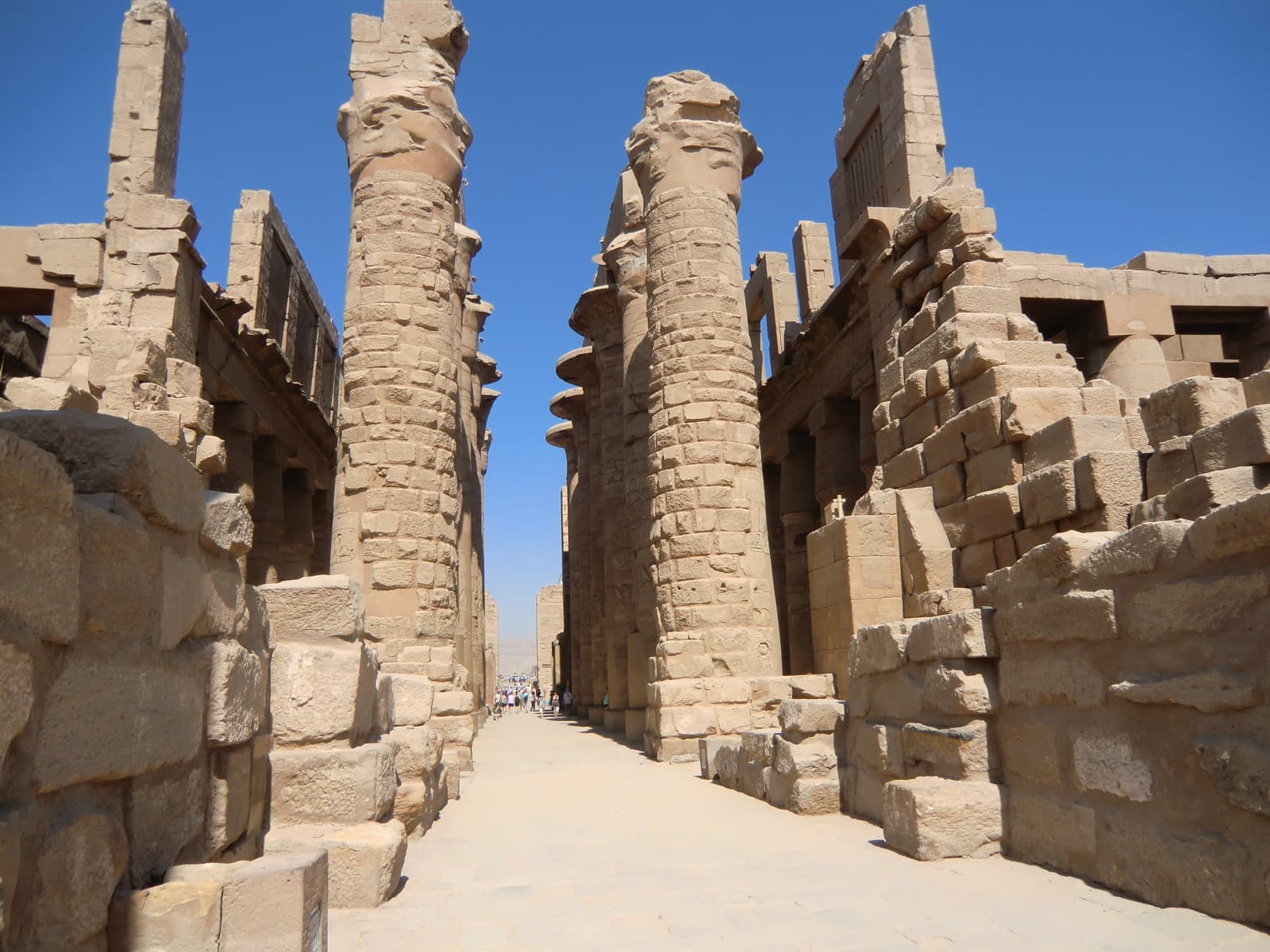
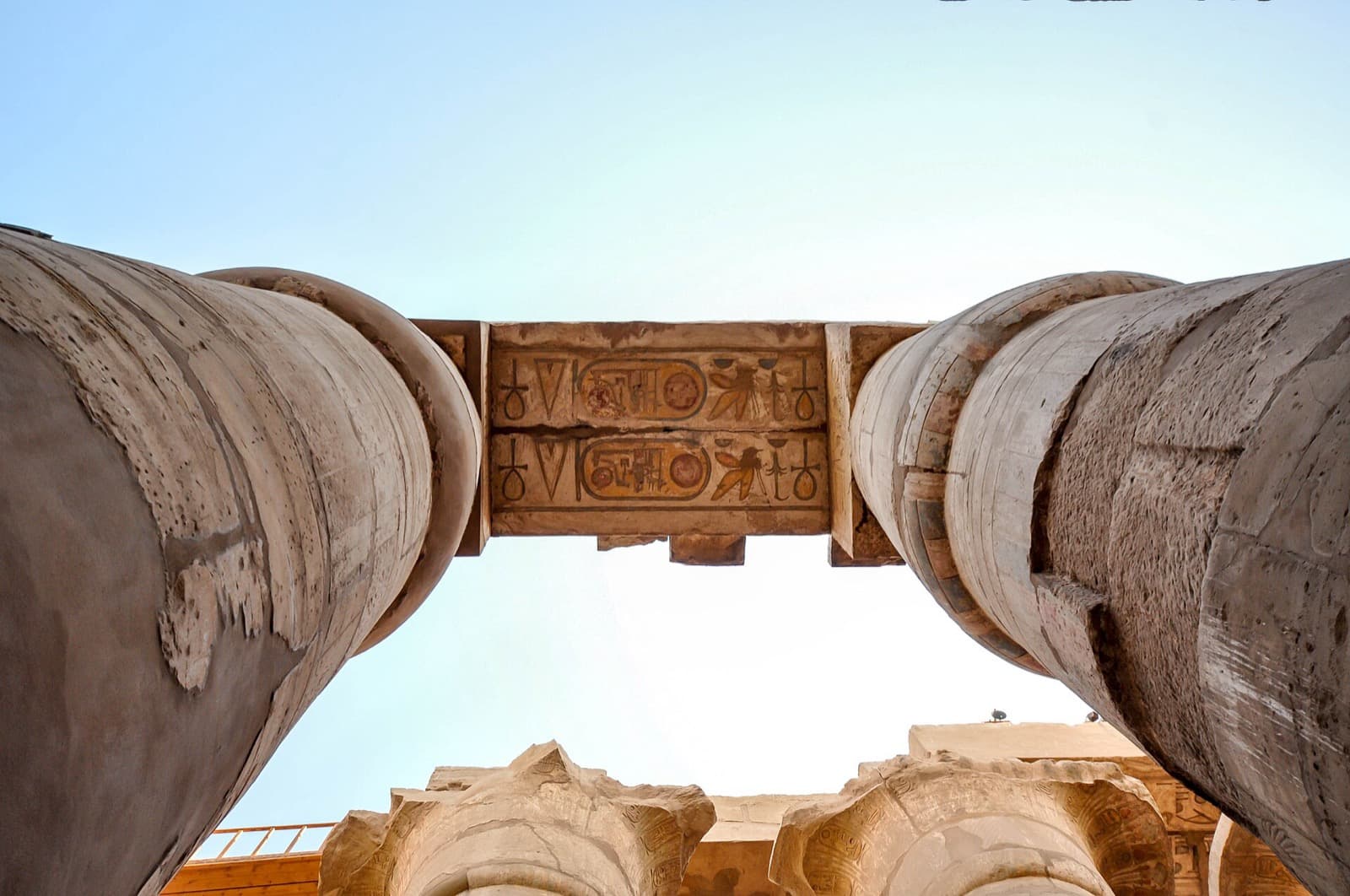
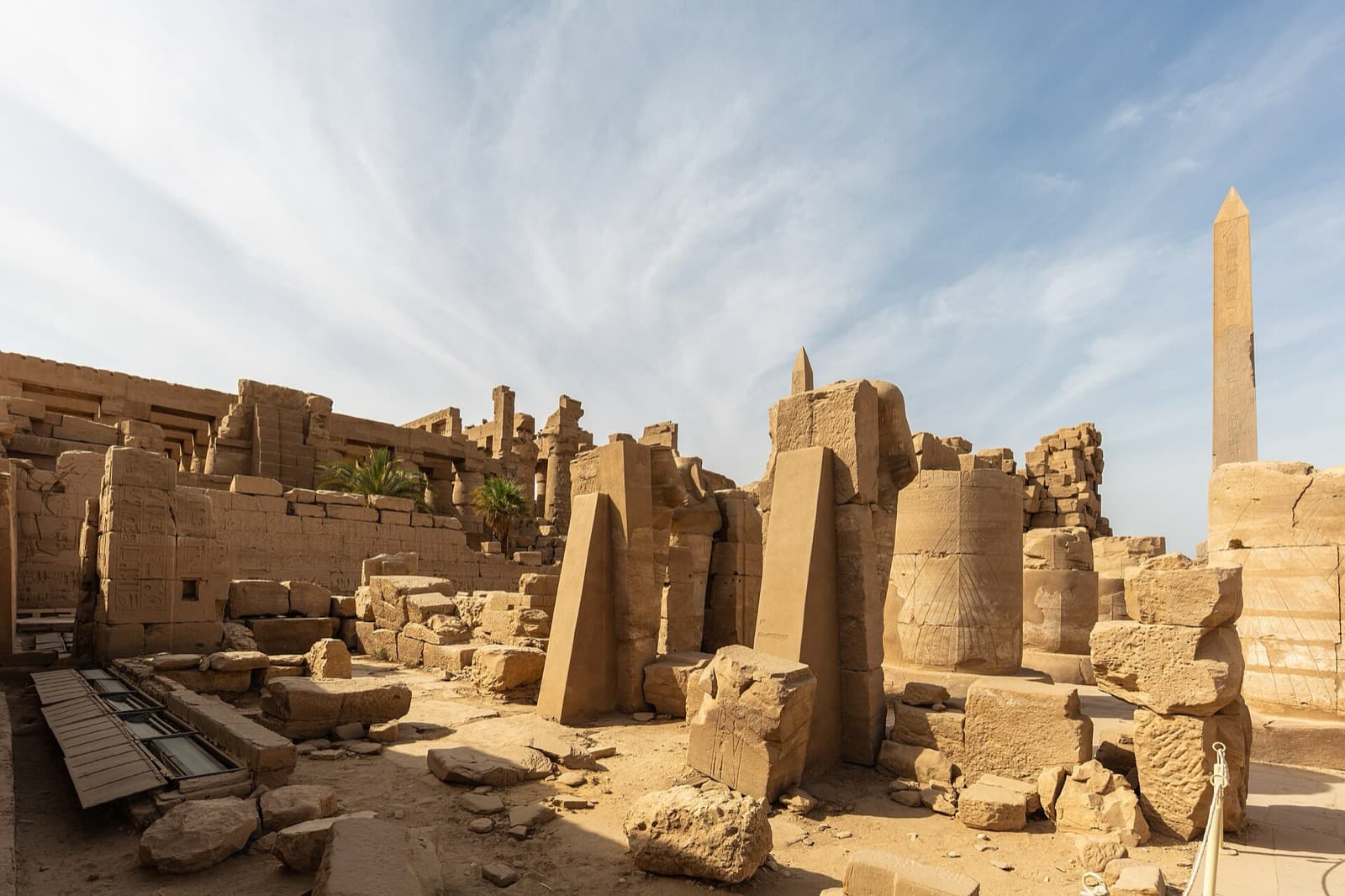
Start where the sun rose. Karnak is not one temple but a city of them. Its largest section, the Precinct of Amun-Re, was built and rebuilt by roughly thirty pharaohs over about two thousand years, from the Middle Kingdom down to the age of the Ptolemies, into a forest of colossal columns, obelisks, and gateway walls. The point of that architecture was scale, engineered to make a human body feel small before the divine. The Karnak and Luxor Temple tour reads it slowly across seven stops, and the Great Hypostyle Hall is where scale stops being a fact and becomes overwhelming: one hundred and thirty-four columns over about five thousand square metres, the central twelve rising some twenty-one metres, built chiefly by Seti the First and his son Ramesses the Second in the Nineteenth Dynasty. High on the columns, where the sun has never reached, traces of the original blue and red and gold paint still survive.
Karnak also holds the tallest surviving ancient obelisk in Egypt, about twenty-nine and a half metres of single-piece red granite quarried at Aswan and raised whole by Hatshepsut, one of the very few women to rule Egypt as pharaoh, in the Eighteenth Dynasty. After her death, her successor Thutmose the Third walled the obelisks in an attempt to erase her from memory. The obelisk outlasted the erasure, a small foretaste of the argument the West Bank makes at full scale.
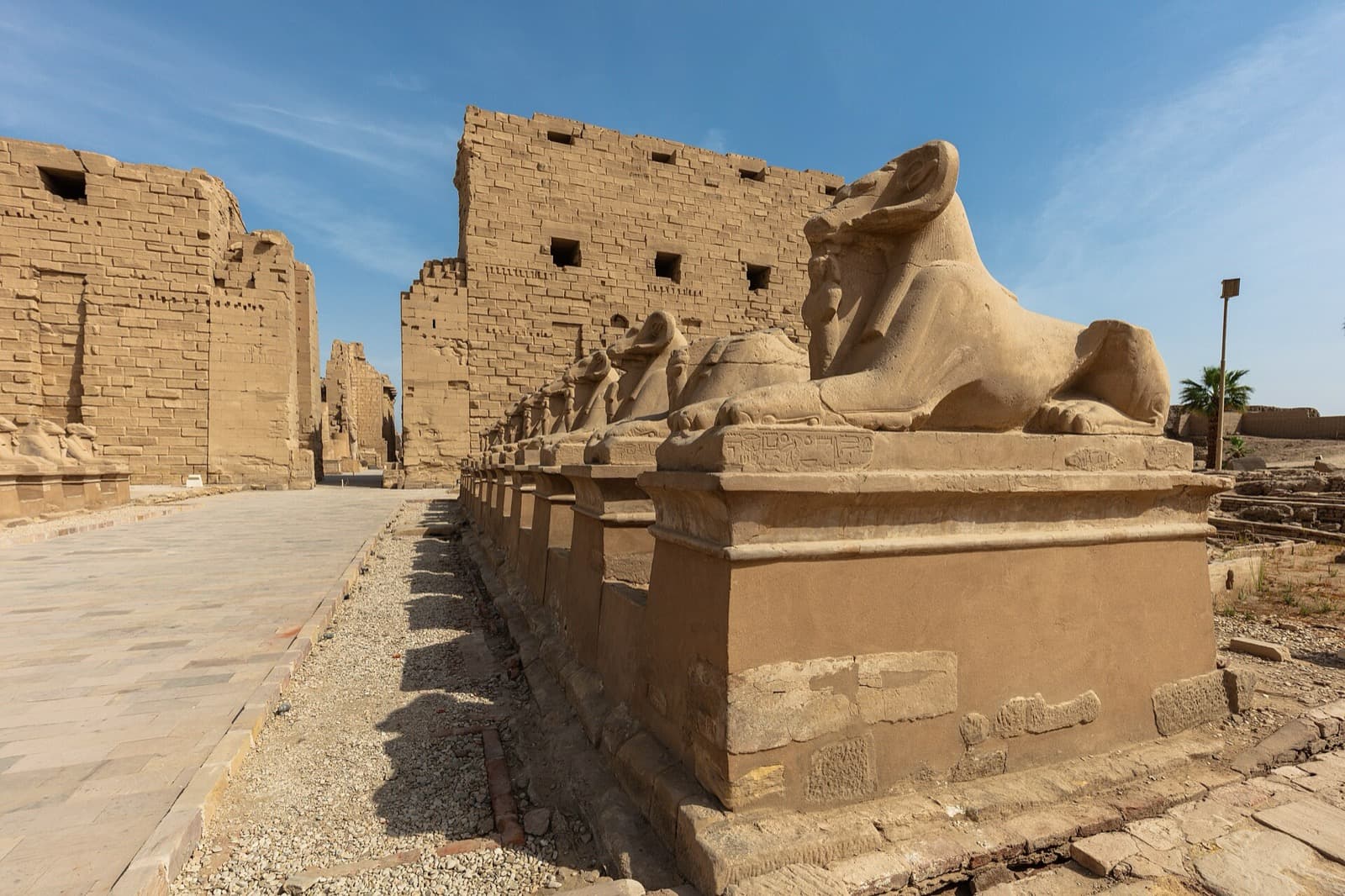
From Karnak the gods travelled. The Avenue of Sphinxes runs nearly three kilometres straight through the modern town to Luxor Temple, once lined with one thousand and fifty-seven statues. This was not a street for people but the road the god Amun travelled once a year, carried in procession during the great Opet festival. The avenue vanished under sand and houses for centuries and was ceremonially reopened only on the twenty-fifth of November, twenty twenty-one, with a televised parade. Walk it and you walk a road that spent centuries underground and came back into the light in living memory.
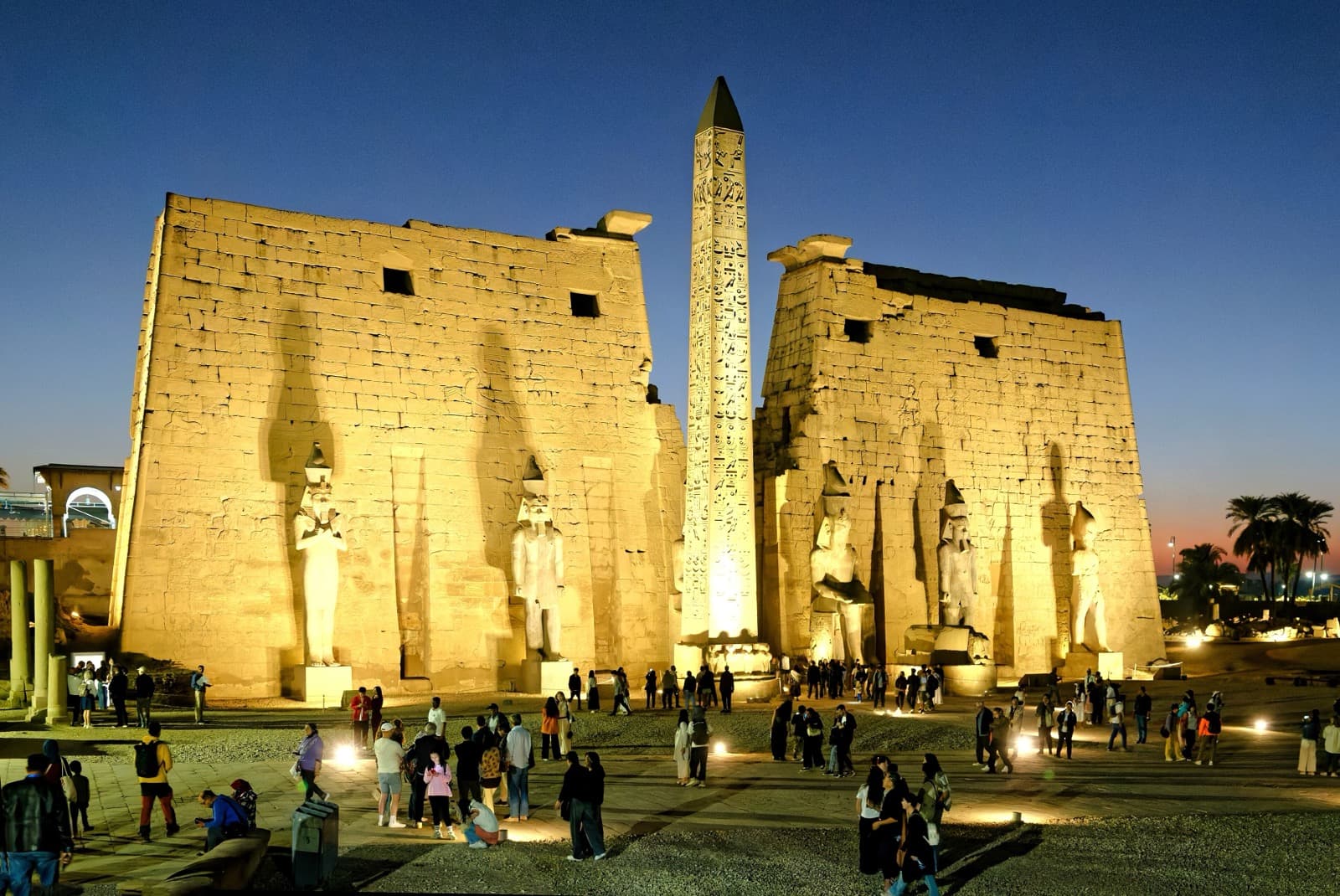
The road ends at Luxor Temple, where worship never stopped. The ground has been sacred for more than three thousand four hundred years, pharaonic, then Roman, then Christian, and now Islamic, an unbroken chain. High on one wall stands the living Mosque of Abu al-Haggag, its floor marking exactly how deep the temple once lay buried in sand. Before the temple's first pylon stands a single red-granite obelisk, once one of a matched pair carved for Ramesses the Second. Its twin was given to France in eighteen thirty and raised in the Place de la Concorde in Paris in eighteen thirty-six. One obelisk here at the gate where it was made, one on the banks of the Seine.
The west bank: the hidden city of the royal dead
Hear a stop from this walk
The First Pylon of Karnak: Through the Gate into the City of the God
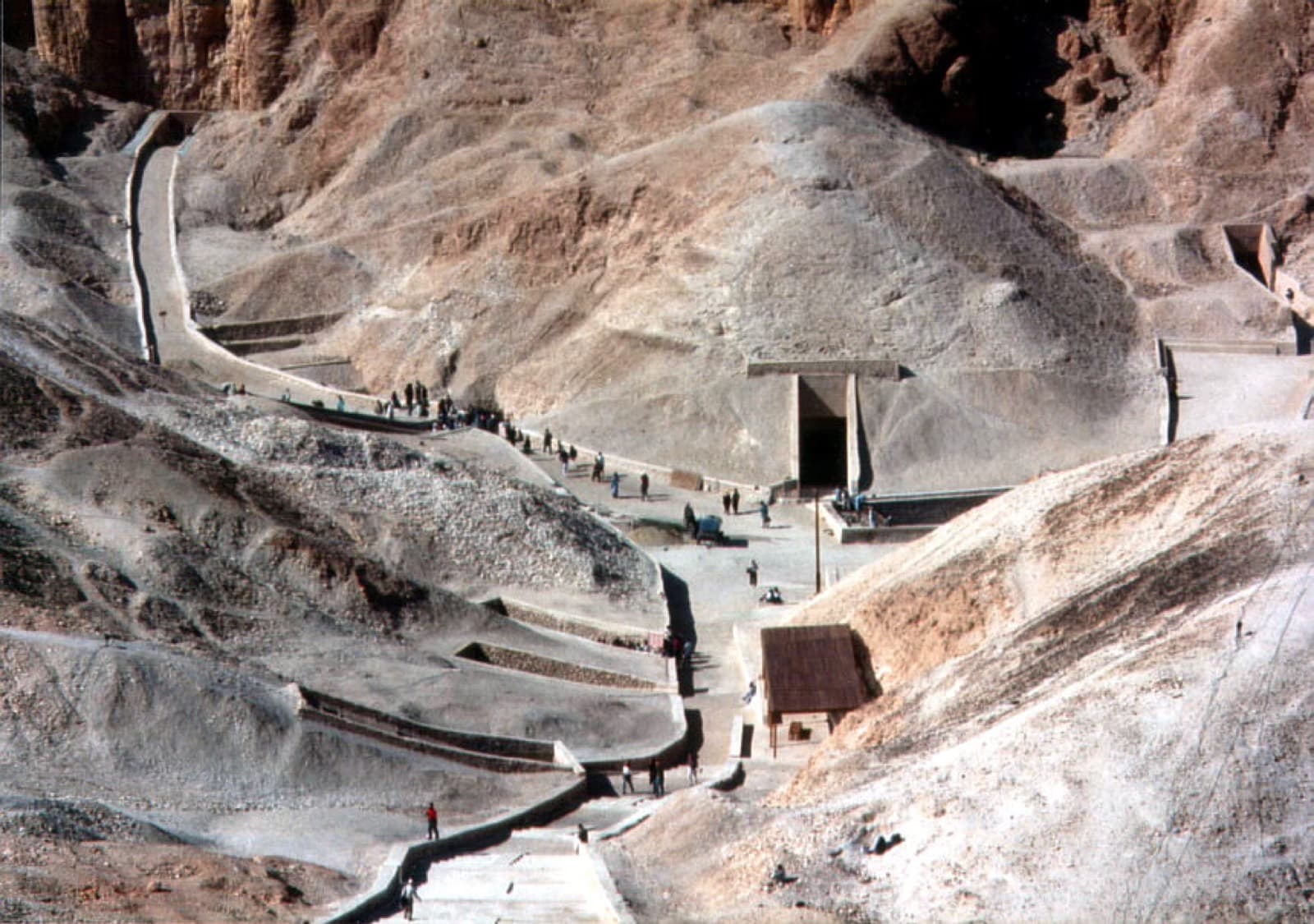
Cross the Nile to where the sun set, and the logic inverts. For roughly five centuries the pharaohs of the New Kingdom split their monuments in two: grand mortuary temples out on the plain to keep their names alive forever, and secret rock-cut tombs tunnelled deep into a hidden desert valley behind the cliffs. The temples shout, the tombs whisper. Because every pyramid ever built had already been robbed, remembrance on the surface was surrendered underground for the sake of concealment. The Valley of the Kings tour reads that contradiction across seven stops and about twelve kilometres.
It opens on the plain with the Colossi of Memnon, two eighteen-metre seated statues of Amenhotep the Third, carved around thirteen fifty B C, all that stands above ground of what was once described as the largest mortuary temple in the whole Theban necropolis. An earthquake and centuries of Nile flooding took the rest. Nearby, three colonnaded terraces climb into a sheer cliff at Deir el-Bahari: the mortuary temple of Hatshepsut, the same woman who ruled as king on the East Bank, whose name Thutmose the Third again tried to chisel out and never finished.
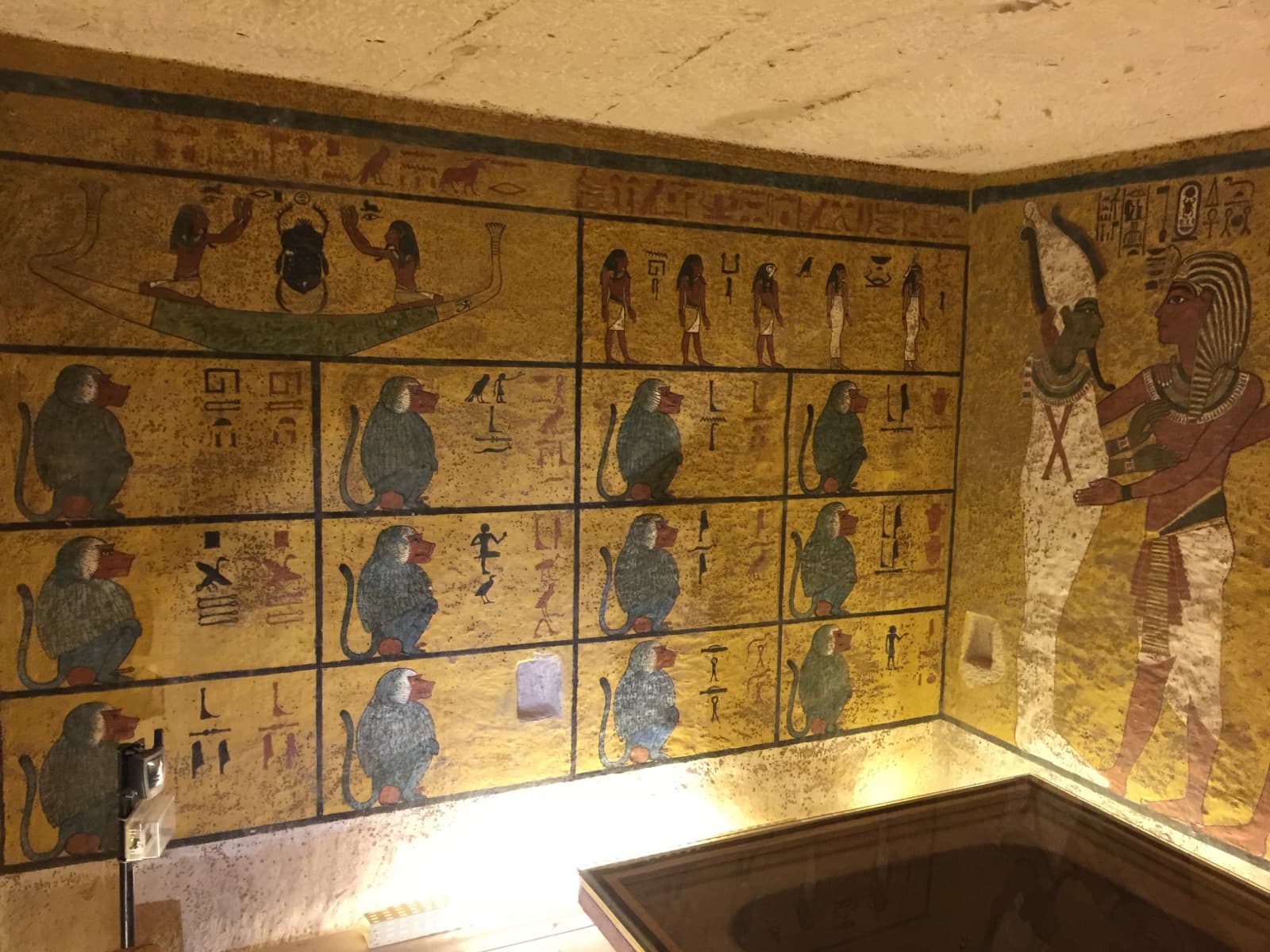
Then the valley itself, where the pharaohs hid. It is known to contain sixty-five tombs and chambers, labelled K V for Kings' Valley under a numbering system set in eighteen twenty-seven by the English Egyptologist John Gardner Wilkinson. Nearly every royal tomb here was still robbed in antiquity, which makes K V sixty-two remarkable: the small tomb of the boy pharaoh Tutankhamun, found by Howard Carter in nineteen twenty-two with roughly five thousand three hundred and ninety-eight objects almost intact, the one royal burial that came down to us essentially whole. Deeper in the valley, the great decorated tombs such as K V nine or the tomb of Seti the First (K V seventeen, about a hundred and thirty-seven metres long, historically the longest in the valley) cover their walls and ceilings edge to edge in painted maps of the sun god's night journey through the underworld.
Back on the plain, remembrance and its failure stand side by side. The Ramesseum, the mortuary temple of Ramesses the Second, holds a shattered colossal statue whose Greek name, Ozymandias, gave Percy Bysshe Shelley the title of his eighteen eighteen sonnet on the vanity of empire. The walk ends at Medinet Habu, the best-kept temple on the West Bank, where more than seven thousand square metres of deep-carved relief still hold much of their original color. After all the hiding and robbery, remembrance quietly won here.
Reading Luxor at your own pace
The reward of a self-guided reading is that the two banks stop being a checklist and become one connected argument you can take slowly. You can linger under a single painted ceiling or move straight on, cross the river when you choose, and hold sunrise and sunset in the same day. See the full route set on the Luxor walking tours hub, then let the temples of the living gods and the hidden tombs of the royal dead unfold on your own schedule.
Sources
- UNESCO World Heritage Centre, Ancient Thebes with its Necropolis (inscribed 1979)
- Roamer tour: Karnak and Luxor Temple, The Great Sanctuaries of Ancient Thebes
- Roamer tour: Valley of the Kings, The Hidden Tombs of the West Bank
- Egyptian Ministry of Tourism and Antiquities, Luxor West Bank and Valley of the Kings site administration
Frequently asked questions
- Why is Luxor divided into an East Bank and a West Bank?
- The ancient Egyptians built their sacred landscape to follow the sun. The East Bank of the Nile, where the sun rose, held the temples of the living gods, Karnak and Luxor Temple. The West Bank, where the sun set, held the land of the dead, including the Valley of the Kings and the pharaohs' mortuary temples. Both banks together form the single UNESCO site Ancient Thebes with its Necropolis.
- What was Luxor called in ancient times?
- Luxor stands on the site of ancient Thebes. UNESCO records Thebes as the city of the god Amun and the capital of Egypt through the Middle and New Kingdoms. It was the religious capital of the ancient world for roughly fifteen hundred years.
- How are Karnak and Luxor Temple connected?
- They were linked by the Avenue of Sphinxes, a processional way running nearly three kilometres straight through the modern town. It was once lined with one thousand and fifty-seven statues and served as the road the god Amun travelled during the annual Opet festival. Buried for centuries, it was ceremonially reopened on the twenty-fifth of November, twenty twenty-one.
- Why did the pharaohs hide their tombs in the Valley of the Kings?
- Every pyramid ever built had already been robbed, so New Kingdom pharaohs surrendered visible remembrance for concealment. For roughly five centuries they cut secret tombs deep into a hidden desert valley behind the cliffs, keeping their mortuary temples out on the plain to preserve their names while hiding their bodies from robbers.
- How much time do you need to see both banks of Luxor?
- The East Bank temple route covers about four kilometres and takes roughly three to four hours at an easy pace. The West Bank route covers about twelve kilometres and needs a full unhurried day of about five to seven hours including taxi travel between sites, since the temples and the valley sit far apart.
Ready to experience it?
Karnak and Luxor Temple: The Great Sanctuaries of Ancient Thebes
200 min · 4.2 km · moderate
More from Luxor
Explore more at your own pace.
Luxor Travel Guide: Days, Transport, Season, Safety, Budget
One Day in Luxor: A Walkable Morning-to-Evening Itinerary
Inside Karnak's Great Hypostyle Hall: Reading a Whole Temple-City Through One Room
The Valley of the Kings: Reading Luxor's Hidden Tombs and the Temples They Answer
Luxor Temple: The One Egyptian Sanctuary Worship Never Left