Karnak and Luxor Temple: The Great Sanctuaries of Ancient Thebes
200 min · 4.2 km · moderate
One day in Luxor works best as two halves split by the Nile: spend the morning on the West Bank among the royal tombs and mortuary temples, then cross back to the East Bank for an afternoon and evening at Karnak and Luxor Temple. The distances are real (the two banks are a river apart, and the West Bank sites are spread across several kilometres of desert edge), so you will not walk the whole day. You walk each site, and ride between them. This guide sets out the sequence, the current opening hours and ticket needs, and where each stretch connects to a self-guided Luxor walking tour you can follow at your own pace.
The short answer: how to structure one day in Luxor
Start on the West Bank at first light, because the tombs and temples there open at 6:00 AM and the desert heat climbs fast. Cover the Valley of the Kings, the Temple of Hatshepsut, and one or two mortuary temples before midday. Cross back to the East Bank for lunch and a rest through the hottest hours. In the late afternoon walk Karnak as the light softens, follow the Avenue of Sphinxes toward town, and finish at Luxor Temple after dark, when it is floodlit and open late. If you only have energy for one bank, the East Bank (Karnak plus Luxor Temple) is the more walkable, self-contained half and the natural default for a single day.
Two Roamer tours map directly onto this shape. The Valley of the Kings self-guided tour carries the West Bank morning, reading the necropolis the way its builders meant it: temples of remembrance on the plain, painted tombs hidden in the cliffs behind. The Karnak and Luxor Temple tour carries the East Bank afternoon and evening, walking the great sanctuaries of ancient Thebes from Karnak's colossal gates along the reopened Avenue of Sphinxes to Luxor Temple and its standing obelisk.
Morning: the West Bank, from tombs to mortuary temples
Hear a stop from this walk
The First Pylon of Karnak: Through the Gate into the City of the God
Cross the Nile early. The public ferry runs frequently through the day (roughly every fifteen minutes or so) from the East Bank landing near Luxor Temple, takes about ten minutes, and costs only a few Egyptian pounds. On the far side, the sites sit several kilometres apart with no reliable taxi ranks at the tomb valleys themselves, so the standard move is to hire a taxi for the half or full day and have the driver wait between stops. Agree the total price before you get in. This is the single most common source of friction in Luxor, and settling it up front removes it.
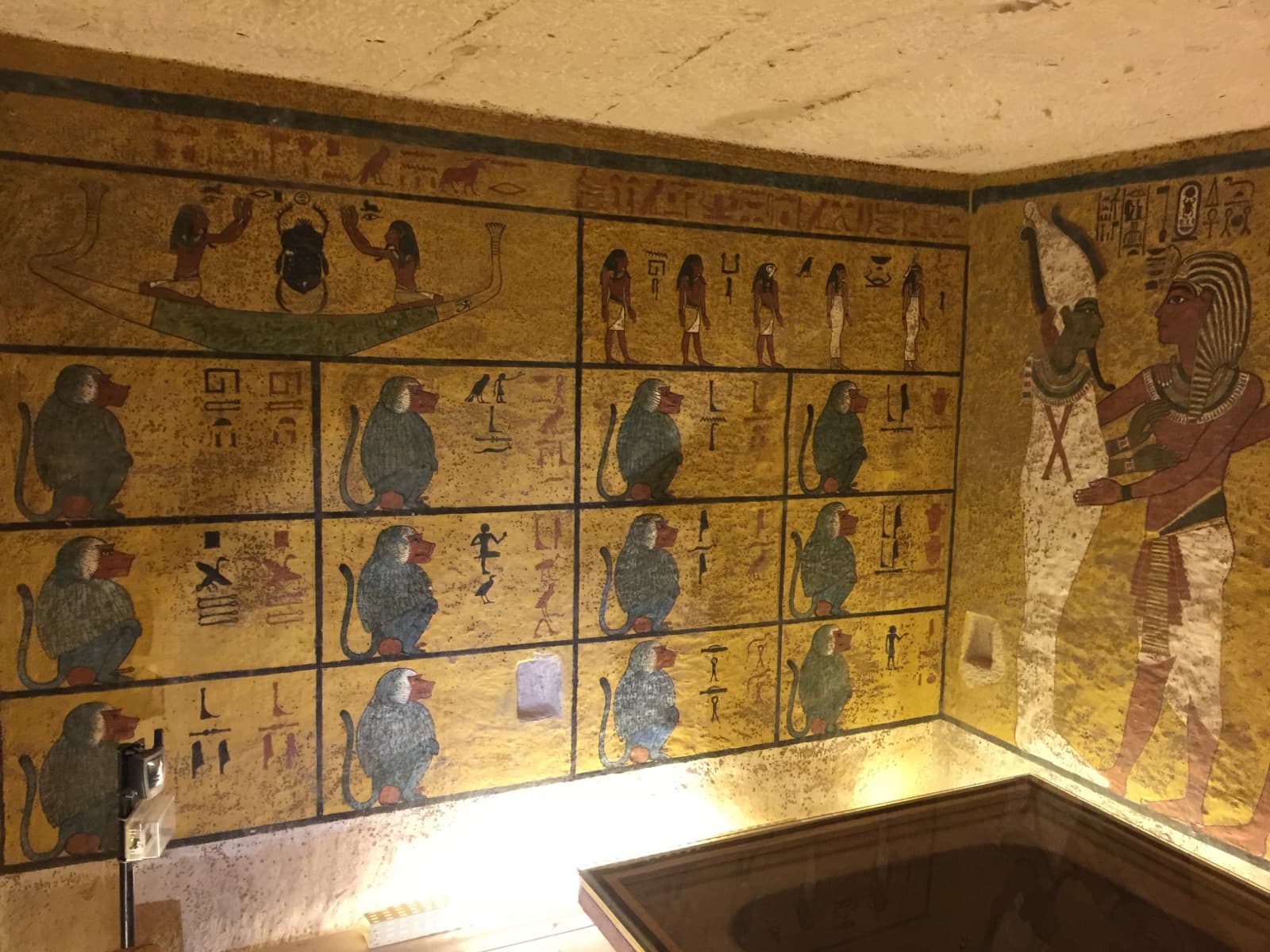
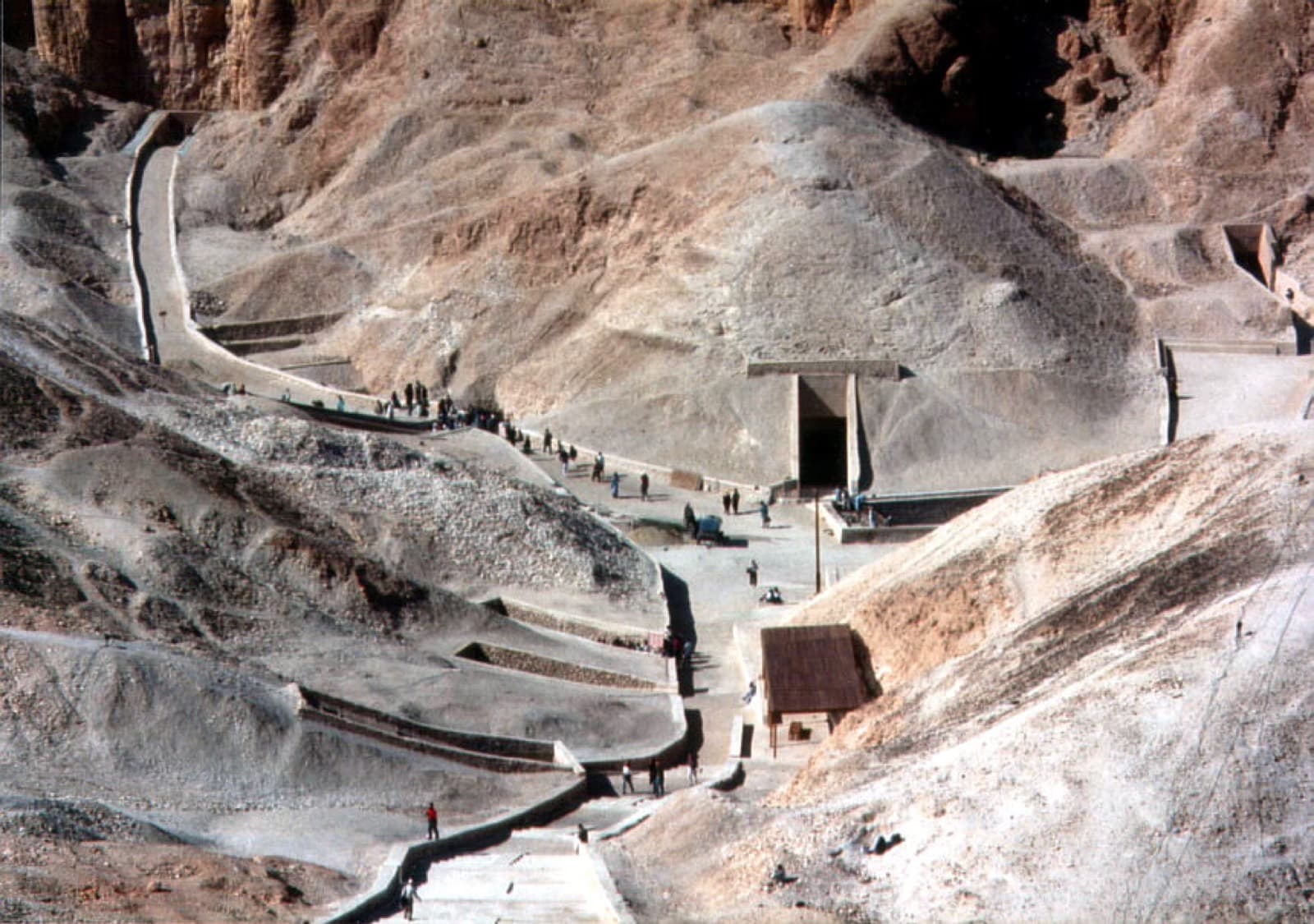
The Valley of the Kings opens at 6:00 AM (closing around 5:00 PM), and arriving at opening is the difference between a quiet tomb and a queue. The standard entry ticket admits you to three tombs from the rotating open list. The tomb of Tutankhamun (KV62) and the tomb of Seti the First (KV17) each need a separate premium ticket on top of the base entry, with Seti's being by far the most expensive of the add-ons. Decide before you go whether the extras are worth it for you: the standard three-tomb ticket alone shows you deeply carved, brightly painted chambers.
From the valley, most itineraries continue to the Temple of Hatshepsut at Deir el-Bahari, its terraces rising against the cliff, then to the Ramesseum or Medinet Habu (the mortuary temple of Ramesses the Third), each a separate paid site ticket. The Colossi of Memnon, two seated stone giants beside the road, are free and open, a natural first or last pause. This is the ground the Valley of the Kings self-guided tour covers stop by stop, so you can stand in front of each temple and hear its story without a group setting your pace.
Midday: cross back and rest
Recross to the East Bank in the late morning and stop. Midday in Luxor, roughly eleven to three, is punishing for much of the year, and Karnak in particular has almost no shade. Use the heat of the day for lunch, water, and shade rather than pushing through it. Luxor is genuinely hot most of the year, and the comfortable window runs November to March; if you are visiting in summer, treating midday as downtime is not optional.
Afternoon and evening: Karnak, the Avenue of Sphinxes, and Luxor Temple
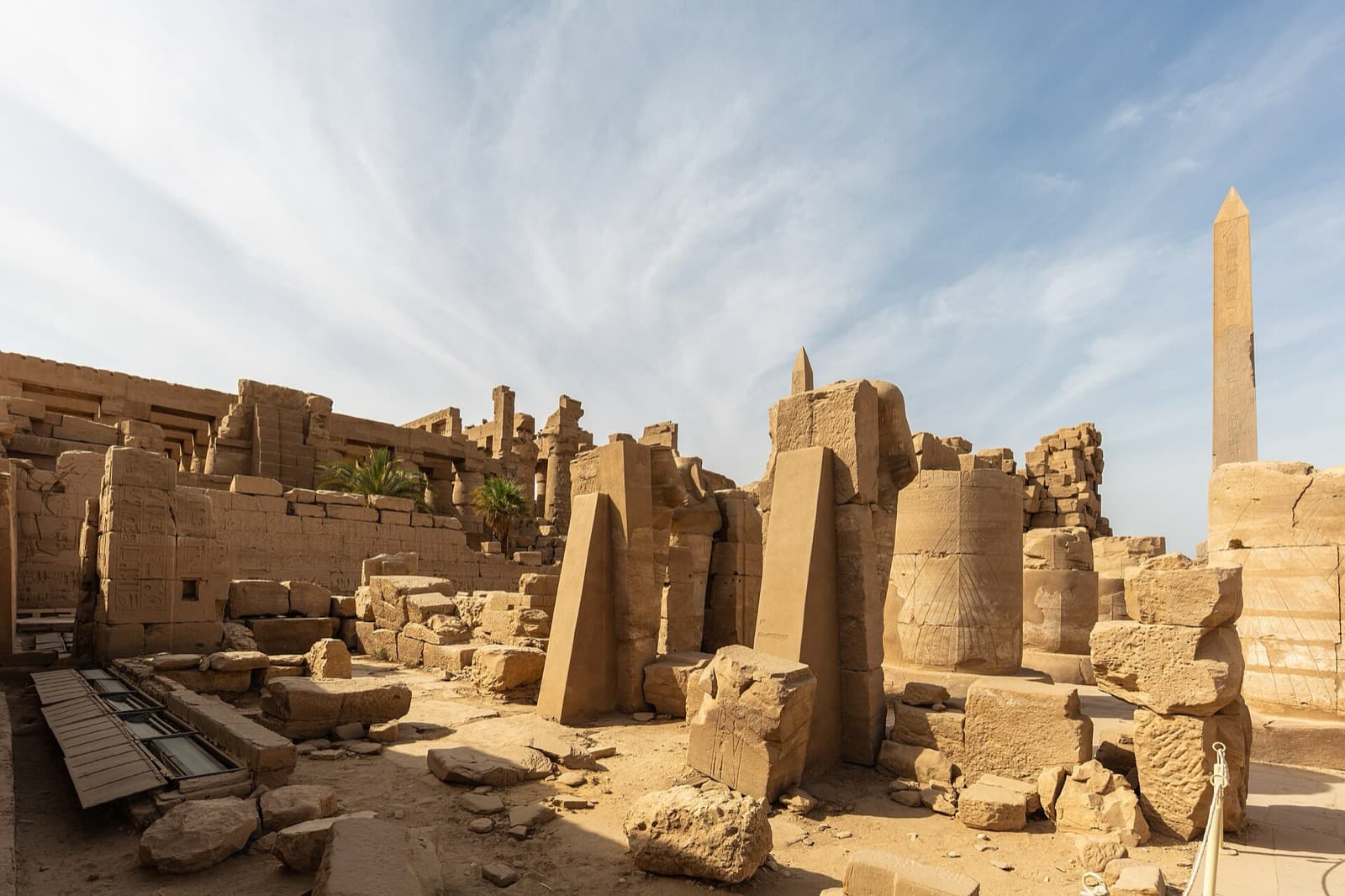
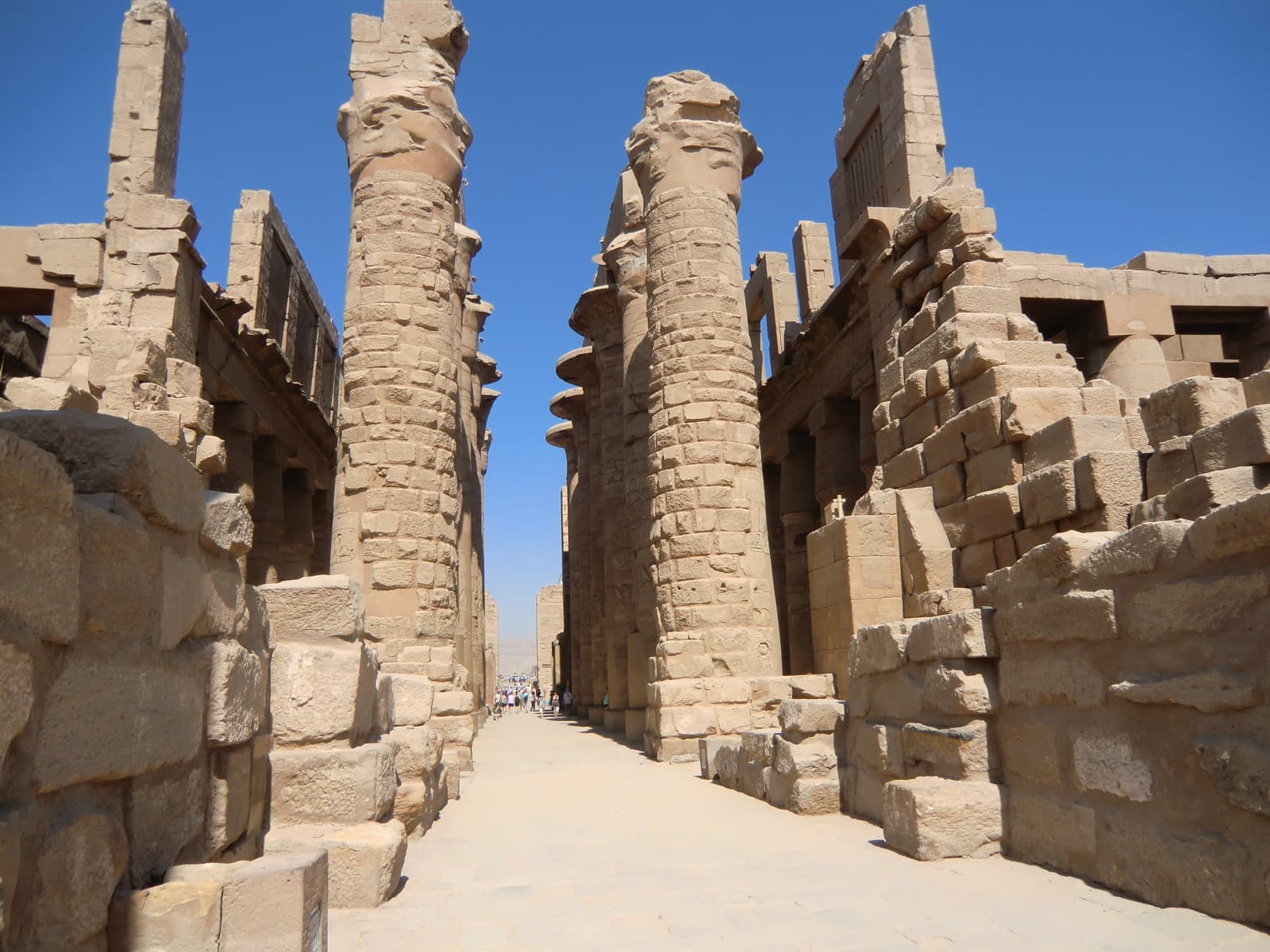
Return to the temples in the late afternoon. Karnak opens at 6:00 AM and closes around 5:00 PM, so aim to be inside by mid-afternoon with at least ninety minutes to spare. It is not one temple but a walled city of them, its Great Hypostyle Hall a forest of one hundred and thirty-four columns, its standing obelisk of Hatshepsut the tallest surviving ancient obelisk in Egypt at about twenty-nine and a half metres. Give it room. The scale is the entire point, and rushing defeats it.
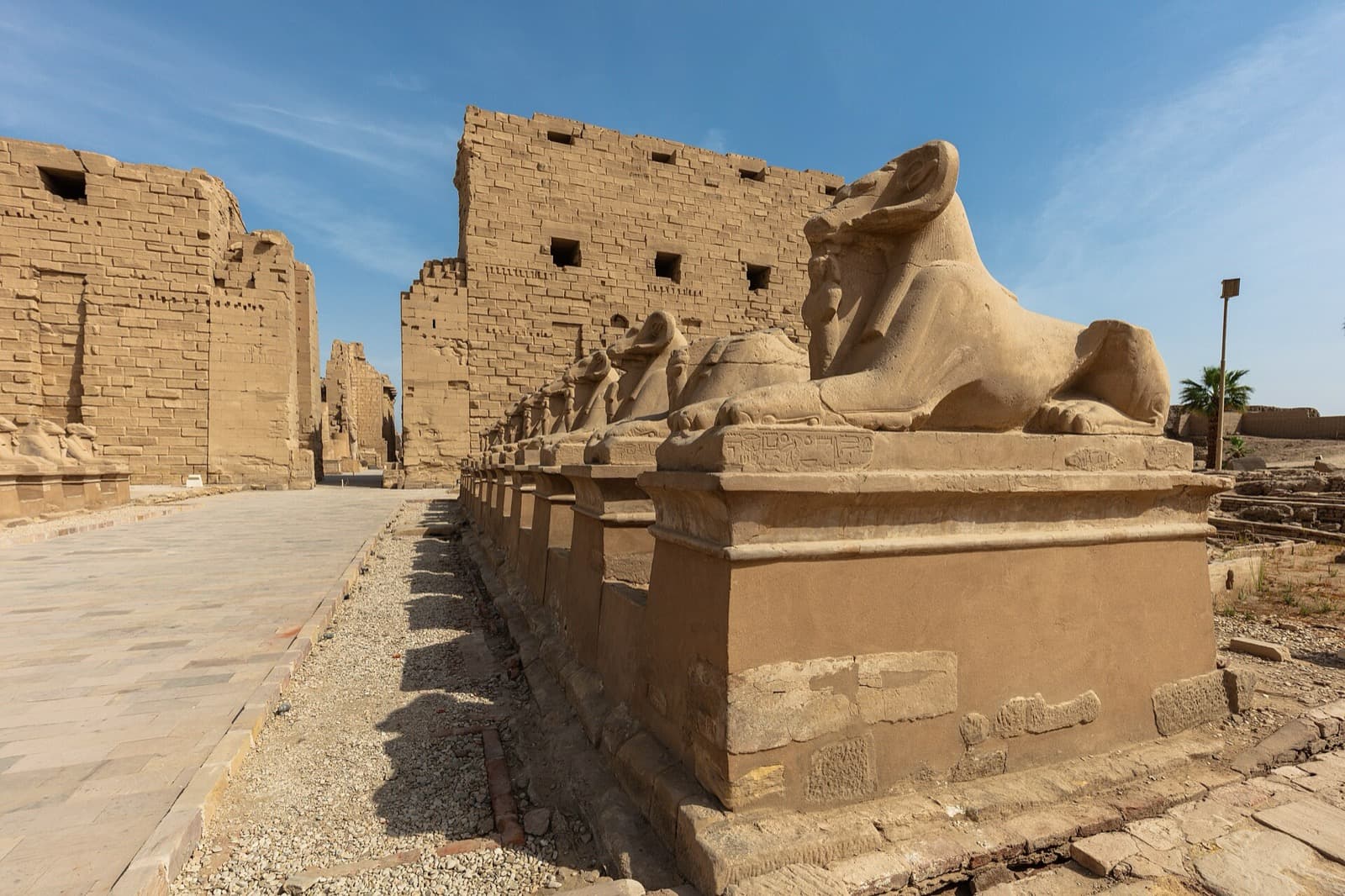
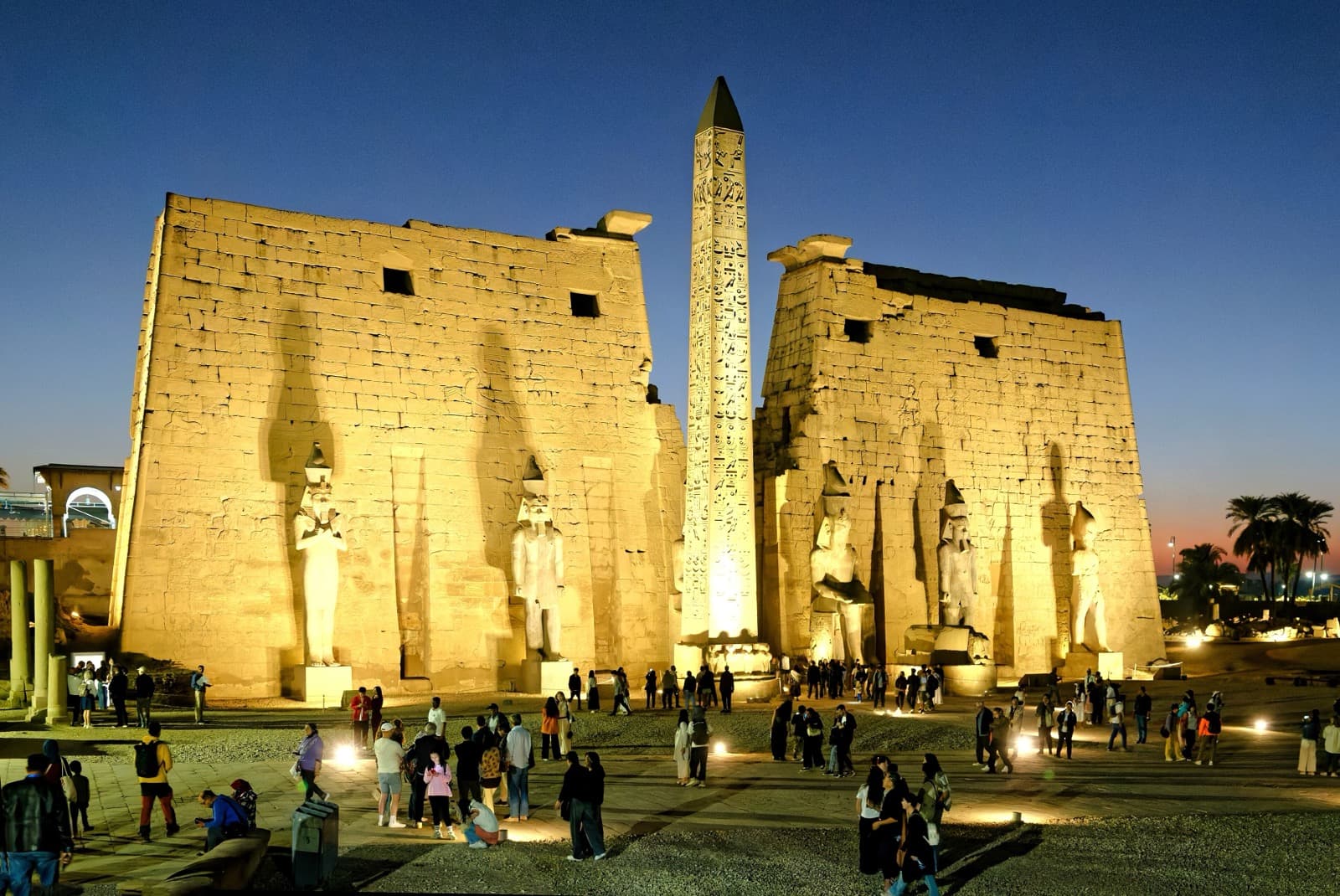
From Karnak, the Avenue of Sphinxes runs nearly three kilometres straight toward Luxor Temple, buried for centuries and ceremonially reopened in November 2021. You can walk the full length in cooler months, or take a short taxi if the sun is still high; carry water either way. It ends at Luxor Temple, which stays open into the evening (well past the other sites) and is floodlit after dark, making it the right place to end the day. Its ticket is separate from Karnak's. Look up inside and you will see the Mosque of Abu al-Haggag, a living mosque built high on the temple wall, marking how deeply the ruins were once buried. Because it is an active place of worship, dress modestly and keep quiet nearby.
If you still have energy, the Luxor Museum on the Corniche between the two temples runs a second evening session (typically reopening around 5:00 PM) and makes a cool, calm close after the stone and sun. The whole East Bank arc, Karnak to the avenue to Luxor Temple to the museum, is the route the Karnak and Luxor Temple self-guided tour walks, and it is designed to end in the evening light.
Tickets, money, and getting around
Ticket prices at the major sites are set for foreign visitors in Egyptian pounds and were, as of 2026, roughly EGP 600 for Karnak, EGP 500 for Luxor Temple, EGP 400 for the Luxor Museum, and EGP 750 for the base Valley of the Kings ticket, with the premium tomb tickets extra. Prices change, so treat these as a planning guide and confirm at the gate. Most site ticket windows now take bank cards, and several are card-only, so bring a card. Keep small Egyptian-pound cash as well, for the ferry, toilets, tips, and the occasional guardian who opens a gate. Buy each site's ticket as you arrive: Karnak, Luxor Temple, and the museum are three separate tickets, as are each of the West Bank temples.
Is Luxor safe to walk on your own?
Yes, with ordinary caution. Violent crime against visitors is rare and the tourist areas have a heavy security presence. The thing you will actually notice is persistent hustling: inflated taxi and carriage quotes, unofficial guides at temple gates, and pressure to buy. None of it is dangerous, and a firm, polite no is enough. Agree every taxi and carriage price before you accept the ride, and you owe no one an explanation for walking away. Carrying your own audio guide on your phone also quietly removes the "you need a guide at the entrance" pitch, since you already have one.
Sources
- Karnak Temple Complex, Luxor: Visitor Guide 2026 (Audiala)
- Valley of the Kings Entrance Fee 2026 (Valley of the Kings Website)
- Luxor Attractions Entrance Fees (Explore Luxor)
- Valley of the Kings Location and Getting There 2026 (Valley of the Kings Website)
- Is It Safe to Travel to Egypt Right Now? 2026 Advisory (Jetpac Global)
Frequently asked questions
- Can you see Luxor in one day?
- Yes, if you plan around the Nile and the heat. Spend the morning on the West Bank (Valley of the Kings, Temple of Hatshepsut, a mortuary temple or two), rest through midday, then walk the East Bank in the late afternoon and evening (Karnak, the Avenue of Sphinxes, and floodlit Luxor Temple). You will ride between the spread-out sites rather than walk the whole day.
- What are the opening hours for Karnak and the Valley of the Kings?
- Both open early, around 6:00 AM, and close about 5:00 PM, so arriving at opening avoids both crowds and midday heat. Luxor Temple is the exception: it stays open into the evening and is floodlit after dark, which makes it the natural place to end the day. The Luxor Museum runs a separate evening session, typically reopening around 5:00 PM.
- How much do tickets cost in Luxor in 2026?
- As of 2026, foreign-visitor tickets were roughly EGP 600 for Karnak, EGP 500 for Luxor Temple, EGP 400 for the Luxor Museum, and about EGP 750 for the base Valley of the Kings ticket (three tombs). The tombs of Tutankhamun and Seti the First need separate premium tickets on top. Prices change, so confirm at the gate, and bring a bank card since many windows are card-only.
- How do you get from Luxor to the West Bank and the Valley of the Kings?
- Take the public ferry across the Nile, which runs frequently through the day (roughly every fifteen minutes or so), takes about ten minutes, and costs only a few Egyptian pounds. On the West Bank the sites are several kilometres apart with no reliable taxi ranks at the tomb valleys, so hire a taxi for the half or full day and have the driver wait. Agree the total price before you get in.
- Is Luxor safe to visit on your own?
- Generally yes. Violent crime against tourists is rare and security is heavy in the tourist areas. The main issue is persistent hustling: inflated taxi and carriage quotes, unofficial guides at temple gates, and sales pressure. It is not dangerous, and a firm, polite no handles it. Always agree taxi and carriage prices before accepting the ride.
- Should you visit the East Bank or West Bank if you only have half a day?
- If you have to choose, the East Bank (Karnak plus Luxor Temple, linked by the Avenue of Sphinxes) is the more walkable and self-contained half and the better single-session choice. The West Bank tombs and temples are more spread out and need taxi hire between stops, which suits a dedicated morning rather than a rushed half-day.
Ready to experience it?
Karnak and Luxor Temple: The Great Sanctuaries of Ancient Thebes
200 min · 4.2 km · moderate
More from Luxor
Explore more at your own pace.
Luxor Travel Guide: Days, Transport, Season, Safety, Budget
Luxor: Ancient Thebes and the Two Banks of the Nile
Inside Karnak's Great Hypostyle Hall: Reading a Whole Temple-City Through One Room
The Valley of the Kings: Reading Luxor's Hidden Tombs and the Temples They Answer
Luxor Temple: The One Egyptian Sanctuary Worship Never Left