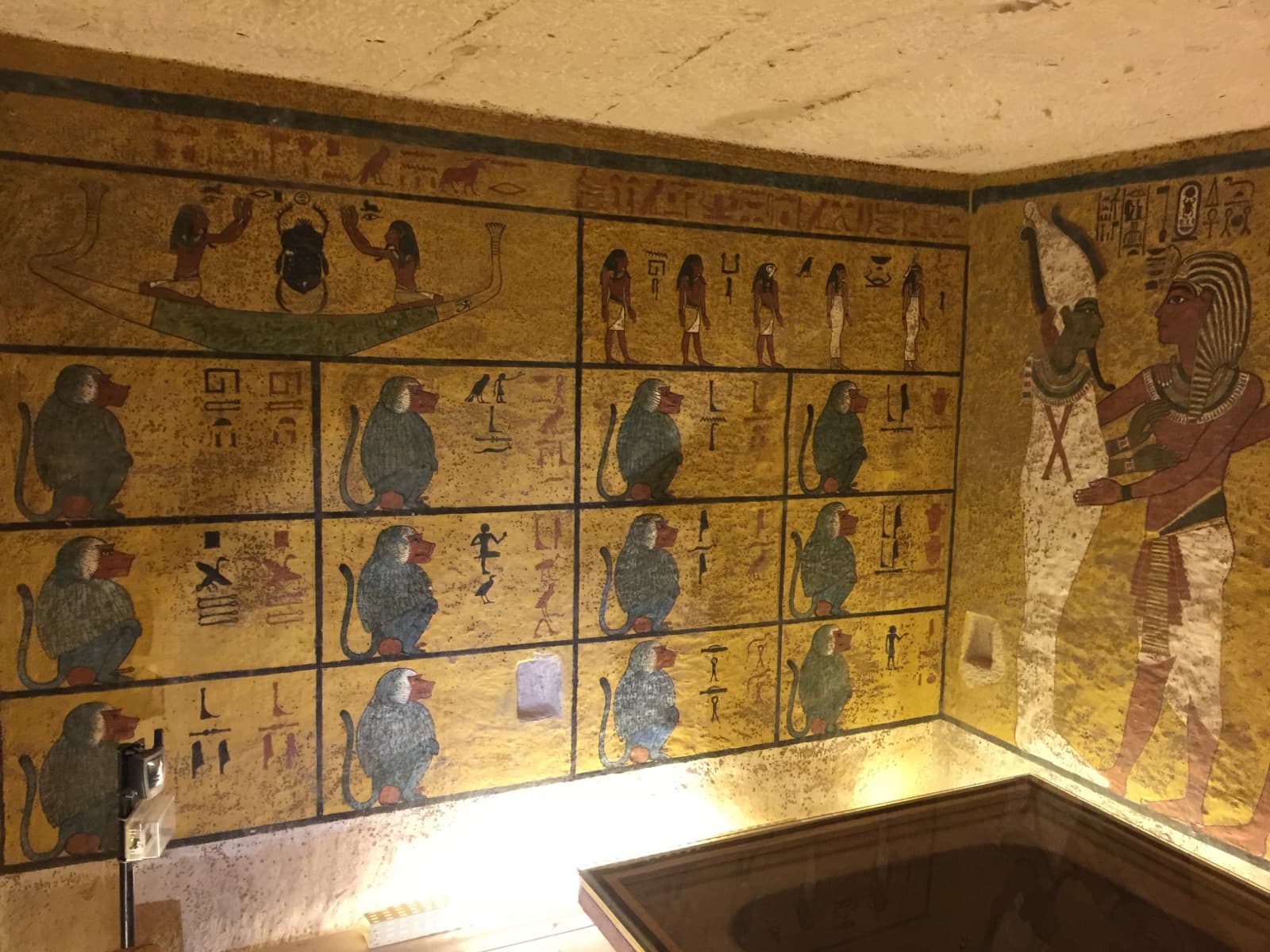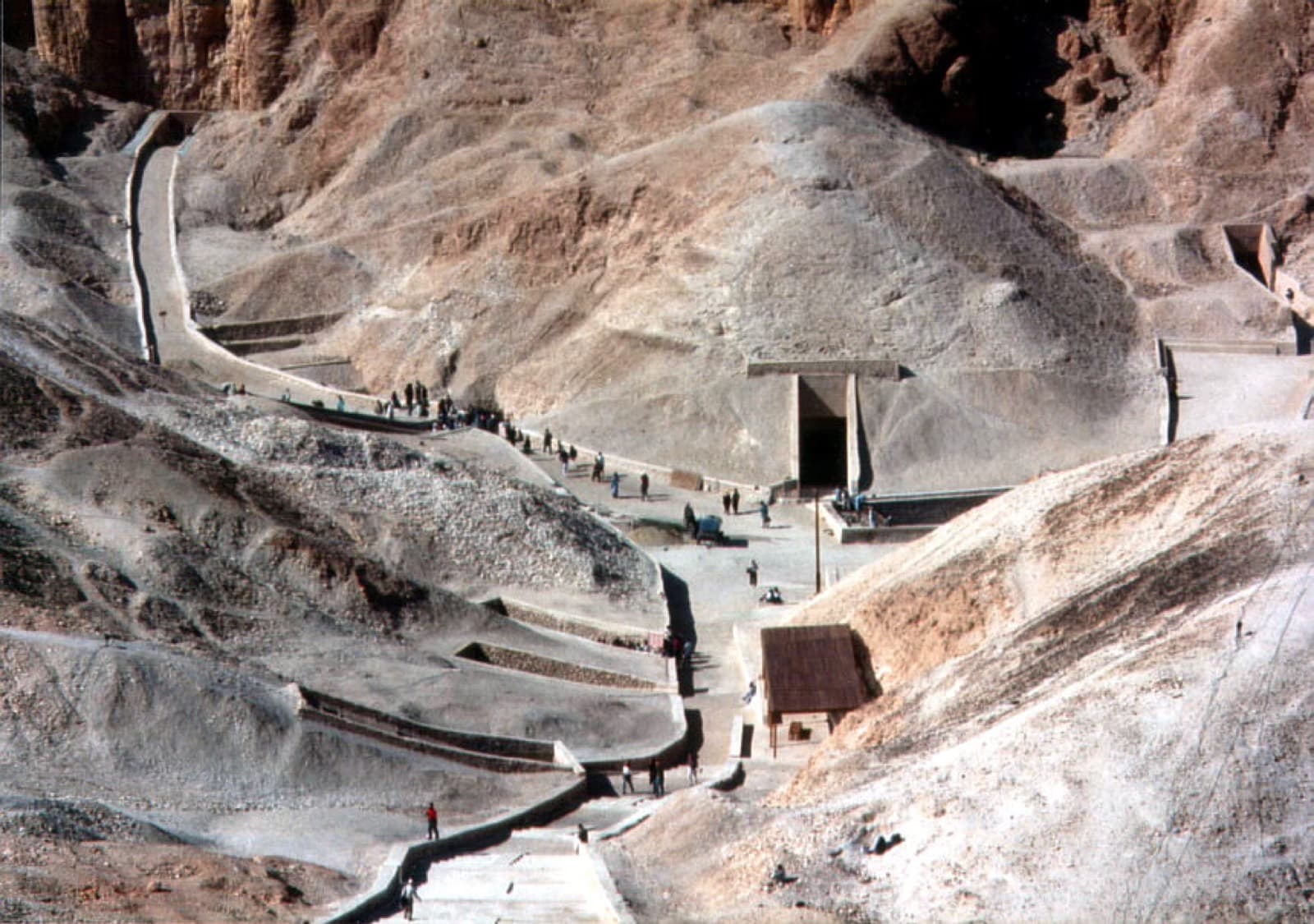
Across the Nile from Luxor, the ancient Egyptians split a pharaoh in two. His name went onto the open plain, carved into vast mortuary temples meant to blaze his memory forever. His body went the other way, tunnelled deep into a hidden desert valley behind the cliffs, sealed in a painted rock-cut tomb where no one was supposed to find it. The Valley of the Kings is where that second decision was made, and understanding it is the key that opens the whole West Bank. The temples shout. The tombs whisper. Once you can read that contradiction, every stop on this route starts to make sense.
Why the pharaohs decided to hide
For roughly five hundred years, from the Eighteenth through the Twentieth Dynasty, New Kingdom kings were buried in this dry, sun-hammered valley behind the Theban cliffs. Their entrances were concealed, often unmarked, cut straight down into the rock. This was a radical break. Every pyramid ever built was, in effect, a giant sign pointing at the treasure, and every one of them had already been robbed. So the pharaohs surrendered visibility for concealment. They gave up the surface monument in exchange for the hope of being left alone underground.
The valley is known to contain sixty-five tombs and chambers, ranging from a bare burial pit to a sprawling complex with more than a hundred and twenty chambers built for the many sons of Ramesses the Second. Each tomb carries the label KV, for Kings' Valley, followed by a number. That numbering system was set in eighteen twenty-seven by the English Egyptologist John Gardner Wilkinson, who painted the numbers over the entrances he could find. Today the Egyptian Ministry of Tourism and Antiquities administers the site, and a rotating selection of tombs is open on any given day, so exactly which ones you can enter changes from visit to visit.
Here is the sober fact that gives the valley its drama: despite all the hiding, nearly every royal tomb here was still robbed in antiquity. The concealment mostly failed. Which is what makes the one great exception so extraordinary.
The one tomb the robbers missed
Hear a stop from this walk
A Great Decorated Tomb: The Painted Map of the Underworld
That exception is KV62, the tomb of the boy pharaoh Tutankhamun. It is small and plainly decorated compared with the great royal tombs around it, and that modesty is exactly why it survived. In nineteen twenty-two, an excavation led by the archaeologist Howard Carter, funded by his patron George Herbert, the fifth Earl of Carnarvon, found the entrance nearly intact under later debris. Inside was the most complete set of royal burial goods ever recovered from the valley, roughly five thousand three hundred and ninety-eight catalogued objects.
The tomb had actually been broken into twice shortly after the burial, but the robbers were interrupted, the entrance was resealed, and later rubble buried it, so almost everything stayed put. There is a beautiful piece of accident in this. The workmen who cut the neighbouring tomb KV9 piled their construction huts and debris over the ground above, and that pile is a large part of what sealed and hid Tutankhamun below. The tomb next door protected it.
As for the famous curse: when Lord Carnarvon died in April nineteen twenty-three, newspapers spun a story of a pharaoh's curse striking down those who disturbed the tomb. That is press sensation, not history. What is actually here is quieter and more remarkable. Tutankhamun's mummy and sarcophagus remain on display in the tomb itself, while most of the treasures have moved to the Grand Egyptian Museum. Carter's meticulous records and Harry Burton's photographs are kept at the Griffith Institute at the University of Oxford.
The painted maps of the underworld
Walk down the long, steep corridor of one of the great decorated tombs and the plain rock gives way to walls and ceilings covered edge to edge in painted figures, hieroglyphs, and stars. This is what the concealment was protecting. Not just a body, but a painted map of the journey through the underworld. KV9, built for Ramesses the Fifth and Ramesses the Sixth, carries funerary texts with names like the Book of Gates, the Book of Caverns, the Amduat, and the Book of the Dead, beneath astronomical ceilings that chart the passage of the hours. The tomb of Seti the First, KV17, was found by the explorer Giovanni Belzoni on the sixteenth of October, eighteen seventeen. At about a hundred and thirty-seven metres, it was historically the longest tomb in the valley, its vaulted ceiling painted with golden stars on deep blue.
These texts are essentially guidebooks for the dead pharaoh, mapping the sun god's nightly voyage through darkness toward rebirth at dawn. They reward slowing down, and on a self-guided walk nobody is rushing you back to a bus.
Why the valley is only half the story
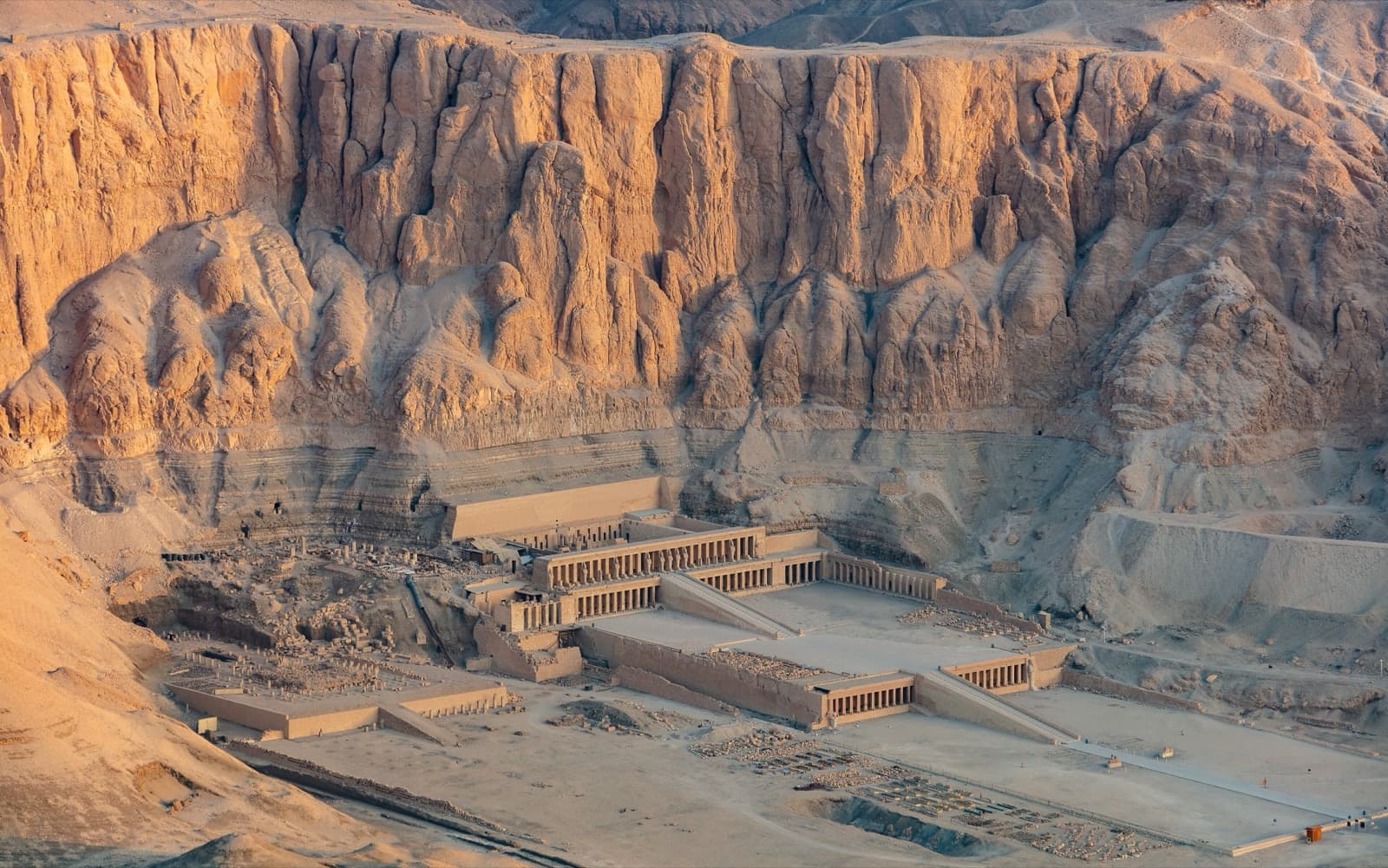
The Valley of the Kings is the turn in a larger argument, and the rest of this route completes it. The walk begins on the open plain at the Colossi of Memnon, two eighteen-metre statues of Amenhotep the Third that are almost all that survives of what was once described as the largest mortuary temple in the Theban necropolis. It climbs to the three-terraced temple of Hatshepsut at Deir el-Bahari, the woman who ruled as king and whose name a successor later tried to chisel away. It ends among the fallen fragments of the Ramesseum, whose shattered colossus of Ramesses the Second gave the Greek name Ozymandias to Shelley's sonnet on the vanity of empire, and at Medinet Habu, the best-kept temple on the West Bank, where more than seven thousand square metres of deep-carved relief still hold their original reds, blues, and golds.
Read as a single sequence, the seven stops stage a contest. Remembrance on the plain, concealment in the cliffs, and the long question of which one actually lasted. The tombs were hidden and almost all emptied. The great statues fell. And yet at Medinet Habu the paint still speaks. All of it belongs to the UNESCO World Heritage site, Ancient Thebes with its Necropolis, inscribed in nineteen seventy-nine.
The full route covers about twelve kilometres of the West Bank across an unhurried day, with the sites far enough apart that you move between them by taxi. For the wider set of routes here, see our Luxor walking tours and the city page for Luxor. Come in the cooler months, start early while the cliffs are still in soft light, and let the Valley of the Kings set the terms for everything you see after it.
Sources
- Valley of the Kings, Wikipedia. Overview of the necropolis, tomb count, and the shift from pyramids to hidden rock-cut tombs.
- Tomb Numbering Systems in the Valley of the Kings, Theban Mapping Project. Documents the KV numbering established by John Gardner Wilkinson in 1827.
- Tomb of Tutankhamun, Wikipedia. Discovery by Howard Carter and Lord Carnarvon in 1922 and the near-intact burial assemblage.
- Tomb of Seti I, Wikipedia. Belzoni's 1817 discovery, the tomb's length, and its funerary-text decoration.
- UNESCO World Heritage List, Ancient Thebes with its Necropolis. Inscription of the Theban West Bank sites in 1979.
Ready to experience it?
Valley of the Kings: The Hidden Tombs of the West Bank
360 min · 12 km · challenging
More from Luxor
Explore more at your own pace.
Luxor Travel Guide: Days, Transport, Season, Safety, Budget
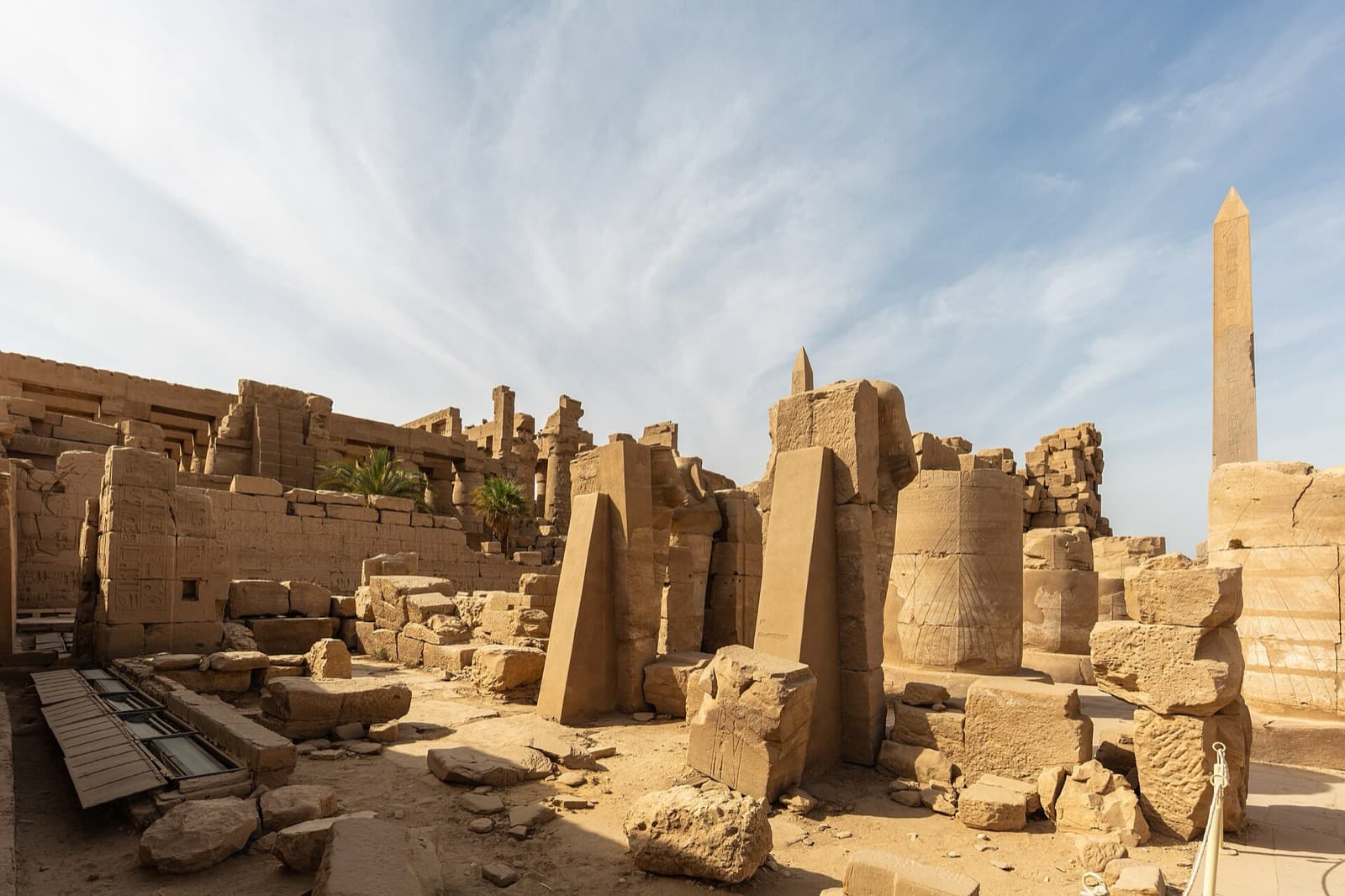
One Day in Luxor: A Walkable Morning-to-Evening Itinerary
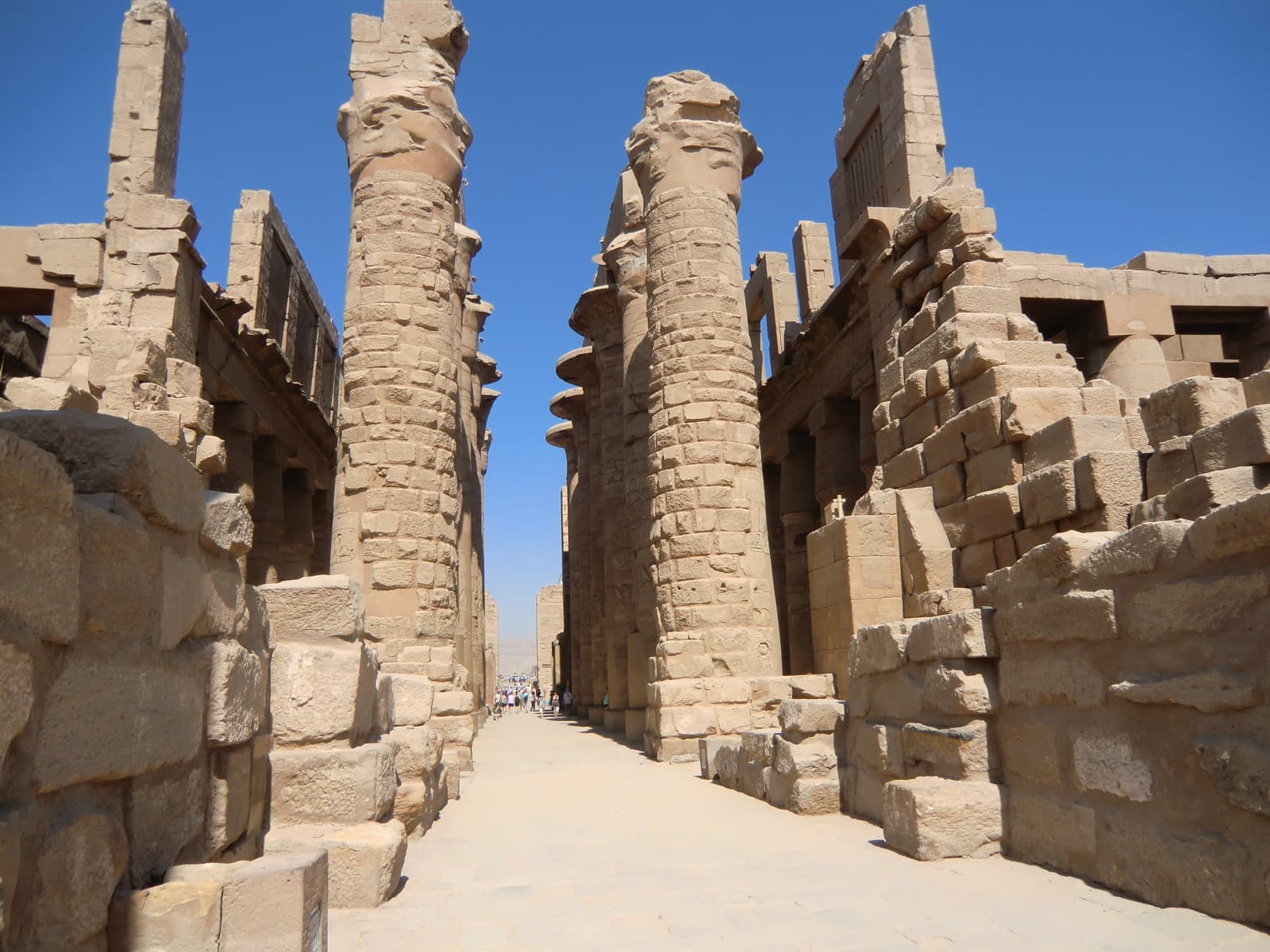
Luxor: Ancient Thebes and the Two Banks of the Nile
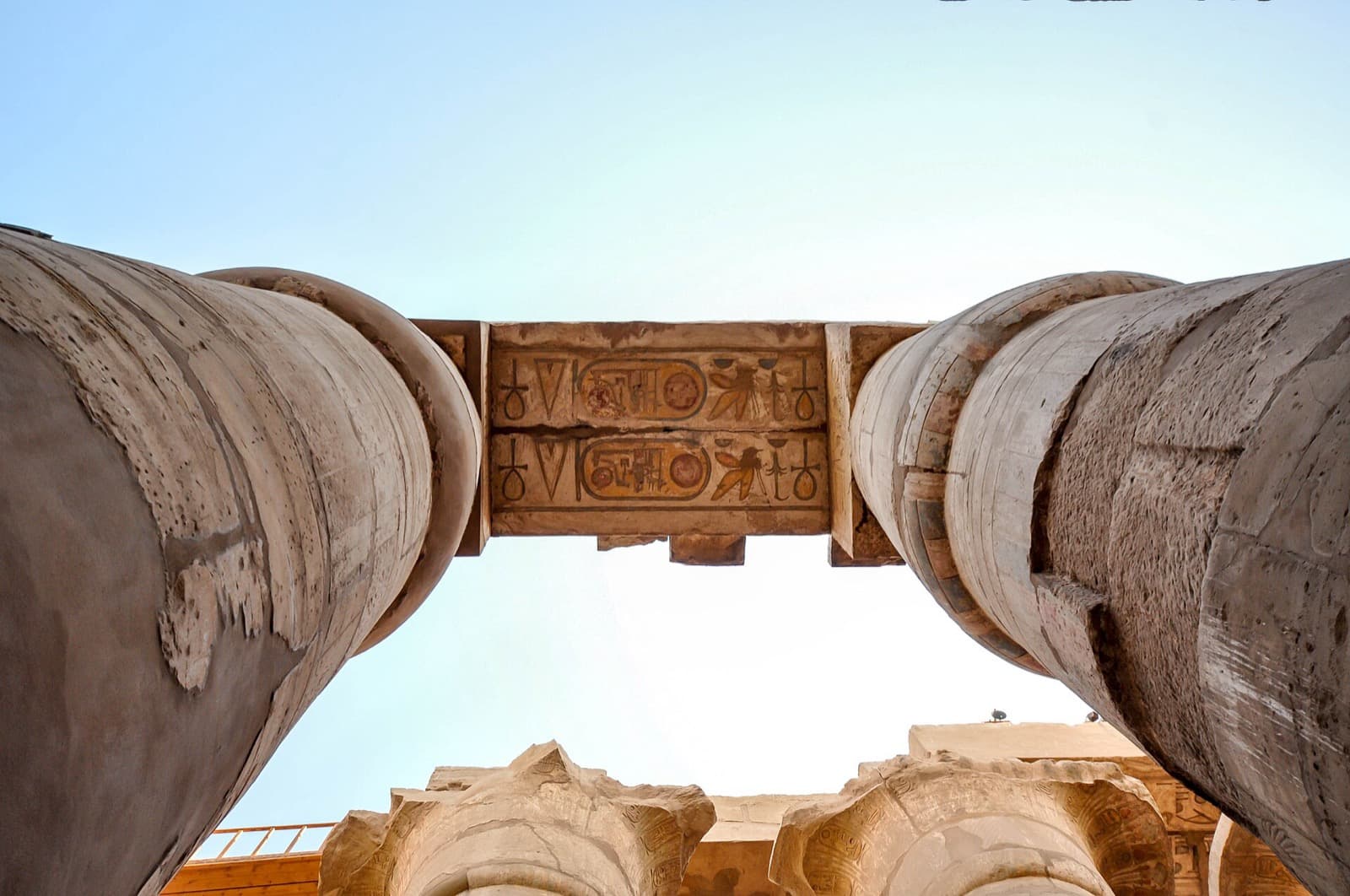
Inside Karnak's Great Hypostyle Hall: Reading a Whole Temple-City Through One Room
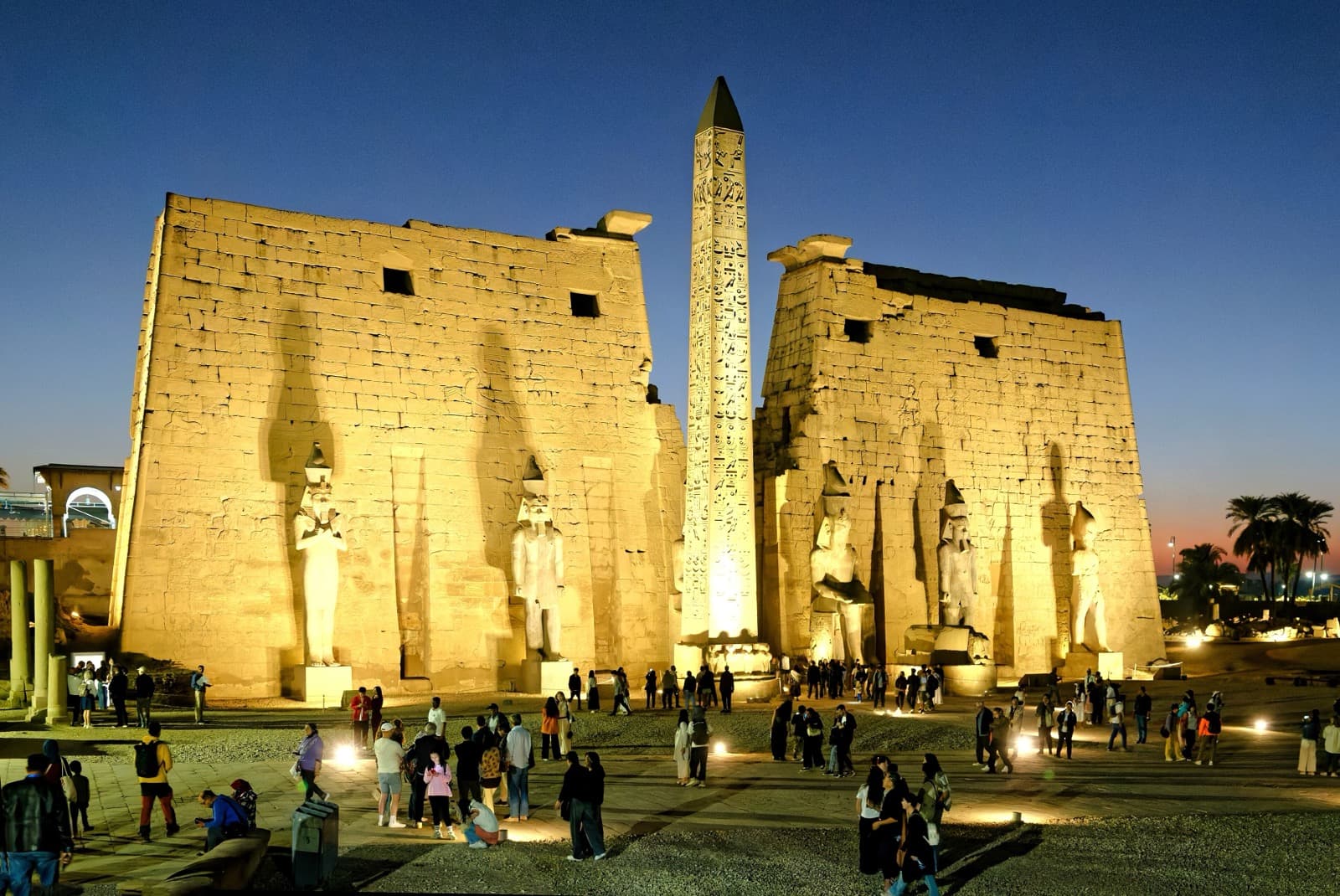
Luxor Temple: The One Egyptian Sanctuary Worship Never Left