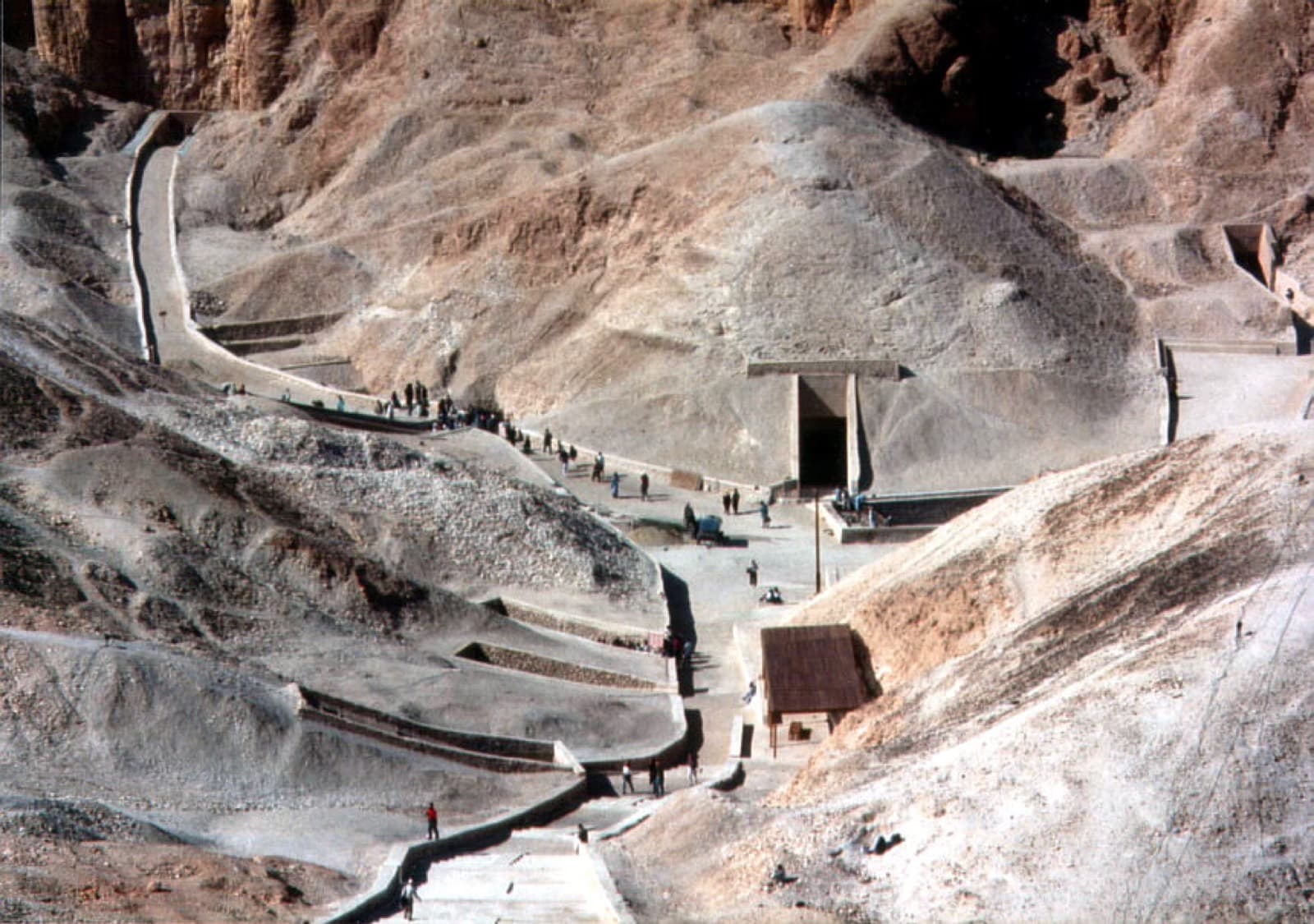
The Tomb of Tutankhamun, catalogued as KV62 in the Valley of the Kings, survived nearly intact for one plain reason: it was small, modestly decorated, and buried under the rubble of a later royal tomb, so the robbers who emptied every grander burial around it overlooked what came down to us essentially whole. Stand at its entrance on the West Bank of the Nile at Luxor and the lesson is immediate. In a valley where kings hid their bodies to defeat thieves and almost all of them lost anyway, this one modest hole in the rock is the single exception, and its modesty is the reason.
The tomb the valley was built to protect, and rarely did
For roughly five centuries, from the Eighteenth through the Twentieth Dynasty, the pharaohs of the New Kingdom abandoned the pyramid. A pyramid announces exactly where the treasure lies, and every pyramid ever built had already been robbed. So the kings went underground and out of sight, cutting their tombs straight down into a dry desert valley behind the Theban cliffs, entrances concealed and often unmarked. The strategy was concealment over remembrance. It mostly failed. Nearly every royal tomb in the Valley of the Kings was still robbed in antiquity, sometimes within a generation of the burial.
KV62 is where the strategy finally worked, and it worked almost by accident. The tomb is small and rather plainly decorated compared with the great multi-corridor tombs nearby. It has only four chambers off a short entrance stair and corridor, an unusually cramped footprint for a king. One widely held view among Egyptologists is that it was not built as a royal tomb at all, but began as a private or non-royal tomb, possibly intended for the courtier Ay, and was hurriedly enlarged when the boy pharaoh died young and needed a burial. That improvised, second-hand quality is part of why it looks so unlike the kingly tombs around it.
Why the robbers missed it
Hear a stop from this walk
A Great Decorated Tomb: The Painted Map of the Underworld
The tomb was not, in fact, untouched. It was broken into twice shortly after the burial. Both times the robbers were interrupted, the entrance was resealed by necropolis officials, and almost everything was left in place. Then time did the rest. When workmen later cut the large decorated tomb of Ramesses the Fifth and Ramesses the Sixth (KV9) directly above, they piled the debris from their stone huts over the entrance to KV62 below. That rubble buried the small tomb completely and hid it for more than three thousand years. The grander tomb above, the one meant to be impressive, is exactly what protected the humbler one beneath.
So when the excavation reached it in the twentieth century, KV62 held the most complete set of royal burial goods ever found in the valley: roughly five thousand three hundred and ninety-eight catalogued objects, from the gilded shrines and the famous mask down to sandals, board games, and dried food. In a valley stripped nearly bare, this is the one royal burial that survived essentially intact.
Carter, Carnarvon, and the discovery
The find belongs to the archaeologist Howard Carter, backed by his patron George Herbert, the fifth Earl of Carnarvon. Carter had searched the valley for years and Carnarvon was close to withdrawing his funding. On the fourth of November, nineteen twenty-two, Carter's workers uncovered a single cut step beneath later debris. Clearing downward revealed a sealed doorway. On the twenty-sixth of November, Carter made a small breach in an inner sealed door, held up a candle, and looked in. In the account that has echoed ever since, Carnarvon asked whether he could see anything, and Carter answered, "Yes, wonderful things." What followed was a decade of painstaking work: Carter recorded and conserved the contents object by object, and the excavation is still regarded as the best-documented archaeological discovery in Egyptology.
Then came the story that will not go away. When Lord Carnarvon died in April nineteen twenty-three, newspapers spun a tale of a pharaoh's curse striking down those who disturbed the tomb. It is worth being plain about this, because it clings to KV62 more than any fact does: the curse is press sensation and popular legend, not history. Carnarvon died of an infected mosquito bite. The people most exposed to the tomb, Carter chief among them, lived on for years. What is actually in front of you here is the dead, and the careful science that recovered them, not a horror story.
What you actually see today, and what has moved
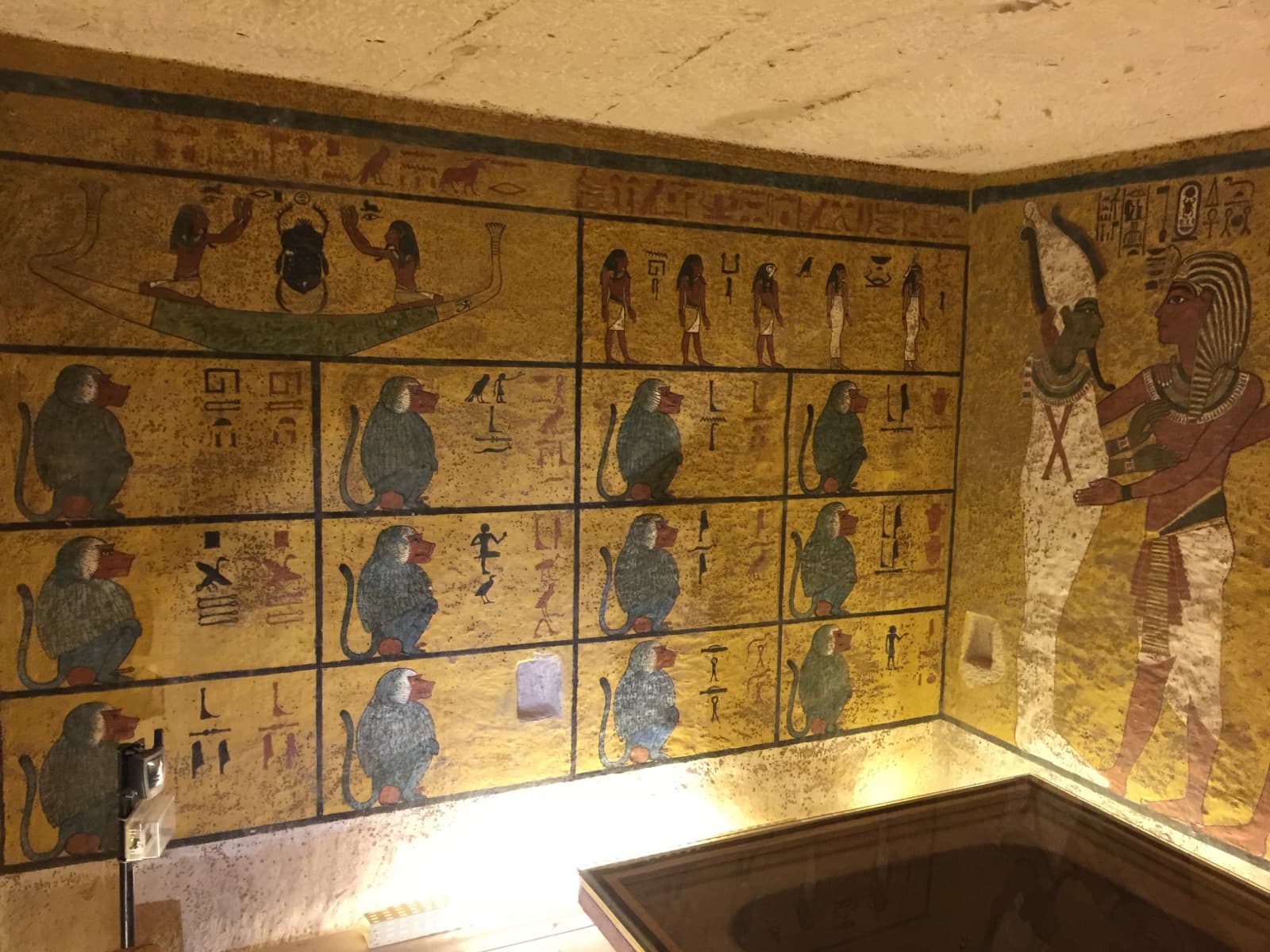
The tomb still holds Tutankhamun himself. His mummy and outermost sarcophagus remain in the burial chamber, on display in the tomb rather than removed to a museum, which is unusual and quietly powerful: the king is still where he was laid. The painted walls of the burial chamber are simpler than the sprawling underworld texts in the great tombs elsewhere in the valley, but that plainness is the point, and it rewards a slow look.
Almost everything else has left. The full treasure, all those thousands of objects, has been moved to the Grand Egyptian Museum, where the complete find is displayed together for the first time. Carter's meticulous excavation records and Harry Burton's celebrated photographs of the clearance are preserved at the Griffith Institute at the University of Oxford. So the tomb you visit is deliberately emptied of its gold. What remains is the space itself, the king, and the extraordinary fact of a survival that turned on nothing grander than being overlooked.
Walk it in context
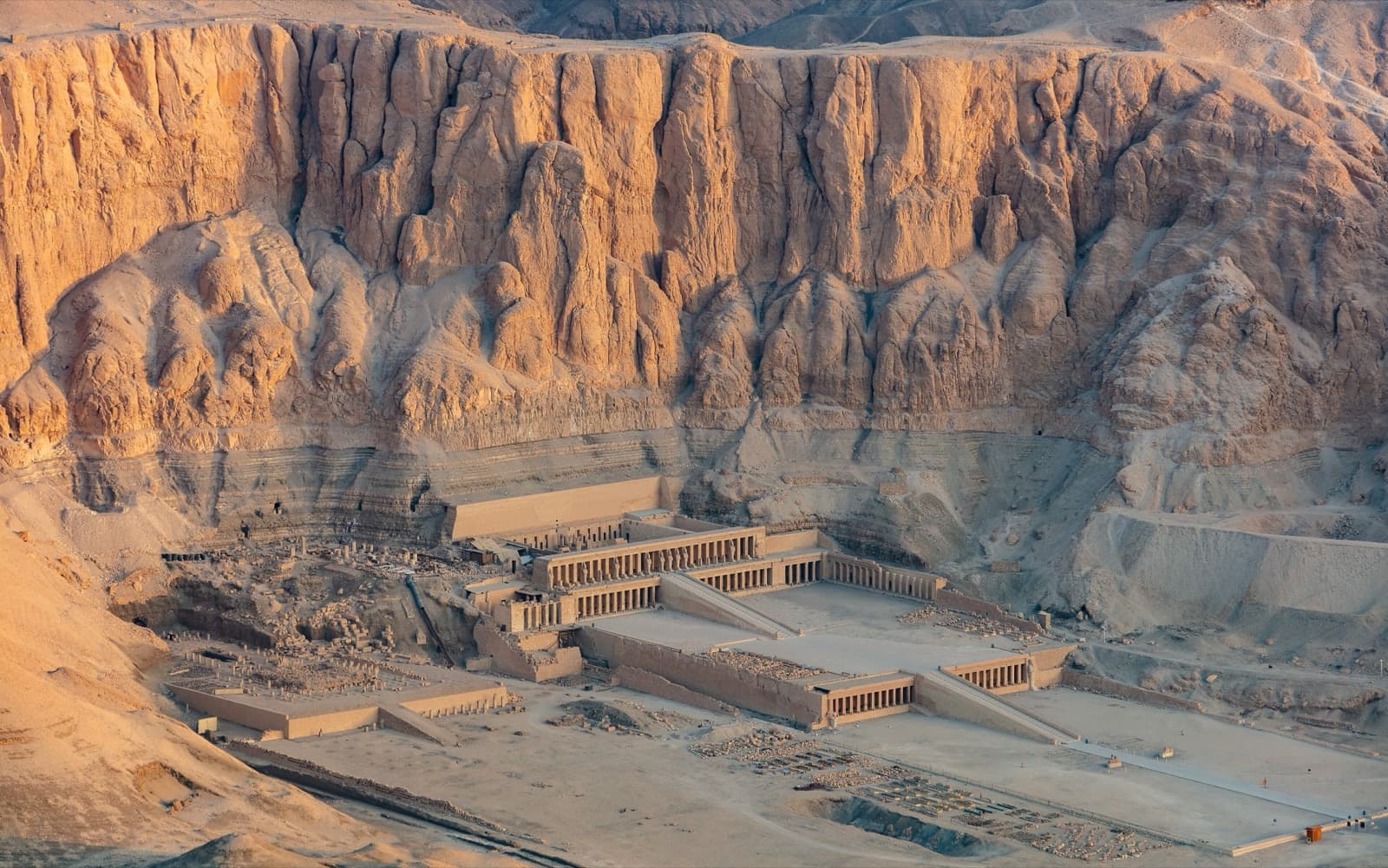
KV62 makes far more sense seen against its neighbors, which is exactly what this tour is built to do. The route reads the whole West Bank the way its ancient builders meant it: the great mortuary temples out on the plain shouting a king's name to the living, and the painted royal tombs hidden in the cliffs behind them. Walking from the vanished temple of the Colossi of Memnon, up to Hatshepsut's terraces, into the valley, and past a great decorated tomb like KV9 whose builders unknowingly sealed Tutankhamun below, you feel why this one small tomb matters so much. Entry to KV62 is a separate premium ticket on top of the Valley of the Kings admission, and it is worth deciding in advance whether the boy king is one of your splurges.
To plan the full day, browse Luxor walking tours and the wider Luxor city guide, then let the self-guided audio tour carry you across the West Bank at your own unhurried pace.
Sources
- Tomb of Tutankhamun, Wikipedia: chamber count, the ~5,398 objects, and the theory that KV62 began as a non-royal tomb possibly intended for Ay.
- Wonderful Things: Howard Carter's Discovery of Tutankhamun's Tomb, World History Encyclopedia: the fourth and twenty-sixth of November nineteen twenty-two dates and the "wonderful things" exchange.
- The Griffith Institute, University of Oxford (Tutankhamun Archive): Howard Carter's excavation records and Harry Burton's photographs, and the tomb plan.
- Grand Egyptian Museum coverage (Artnet news): the transfer and display of the full Tutankhamun find, catalogued at 5,398 objects.
- Valley of the Kings and the Theban Mapping Project: the KV numbering system and the necropolis context for how KV62 was buried and preserved.
Ready to experience it?
Valley of the Kings: The Hidden Tombs of the West Bank
360 min · 12 km · challenging
More from Luxor
Explore more at your own pace.
Luxor Travel Guide: Days, Transport, Season, Safety, Budget
One Day in Luxor: A Walkable Morning-to-Evening Itinerary
Luxor: Ancient Thebes and the Two Banks of the Nile
Inside Karnak's Great Hypostyle Hall: Reading a Whole Temple-City Through One Room
The Valley of the Kings: Reading Luxor's Hidden Tombs and the Temples They Answer