A slow walk through the greatest temple-city of antiquity, from the colossal gates of Karnak along the reopened Avenue of Sphinxes to Luxor Temple and its lone surviving obelisk.
Start · The First Pylon of Karnak: Through the Gate into the City of the God
DirectionsStops
- 1
The First Pylon of Karnak: Through the Gate into the City of the God
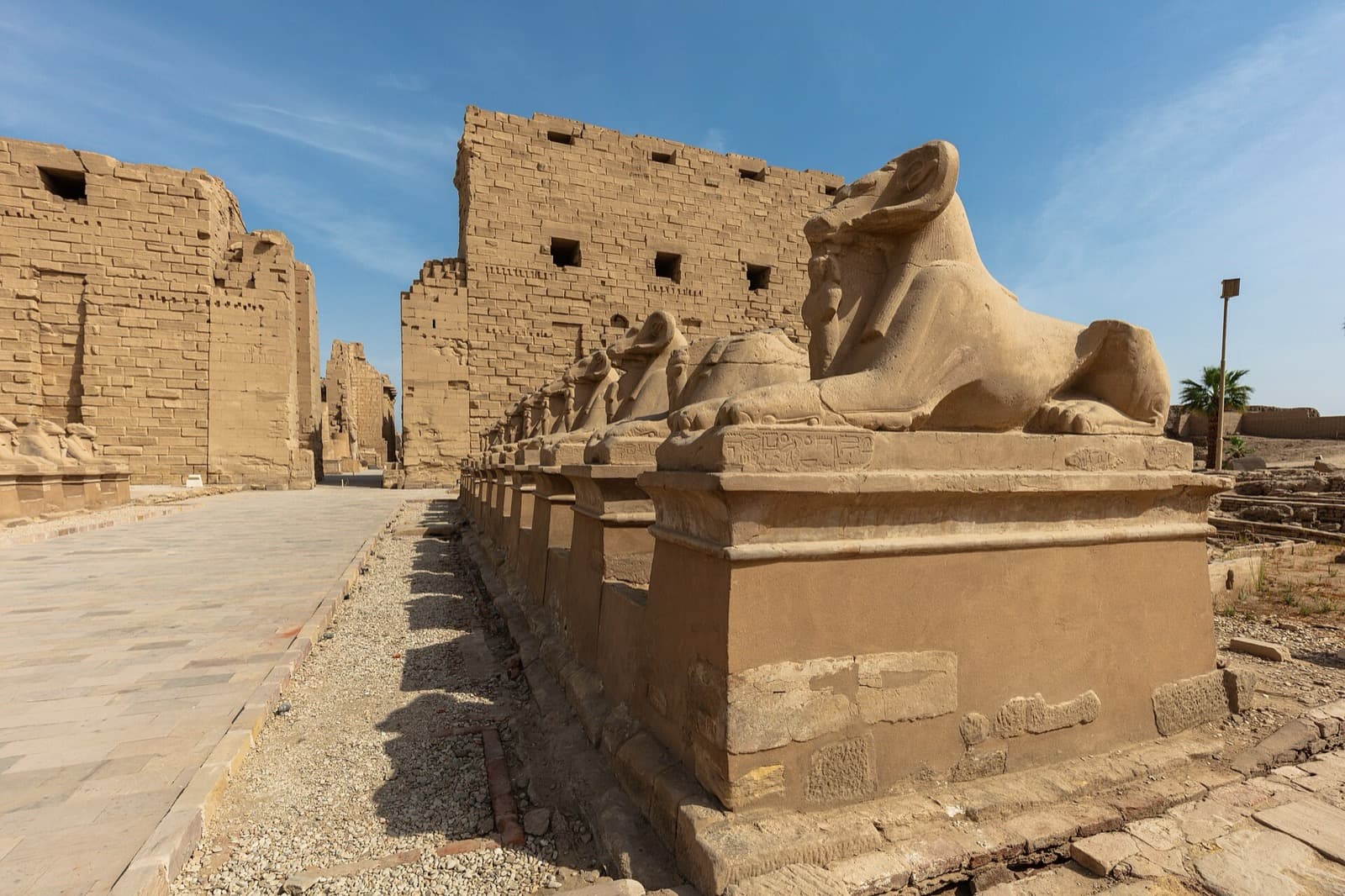
The massive, unfinished gateway wall of Karnak, where a short avenue of ram-headed sphinxes leads into the vast forecourt of the largest temple complex in Egypt.
- 2
The Great Hypostyle Hall: A Forest of Stone Trees
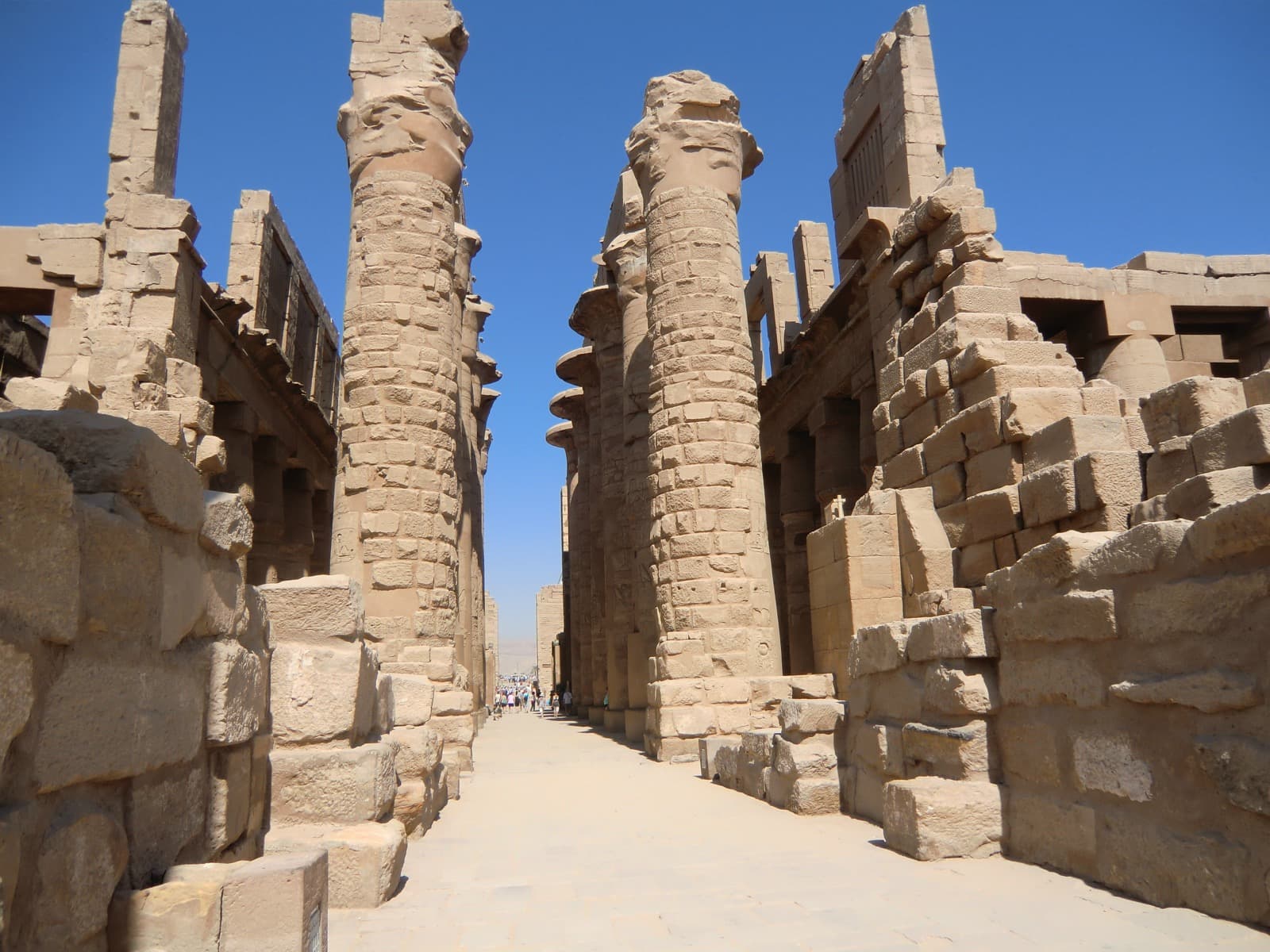
A roofed hall of one hundred and thirty-four columns over about five thousand square metres, the central twelve rising some twenty-one metres, built chiefly by Seti the First and Ramesses the Second.
- 3
Hatshepsut's Obelisk and the Sacred Lake: The Woman Who Ruled as King
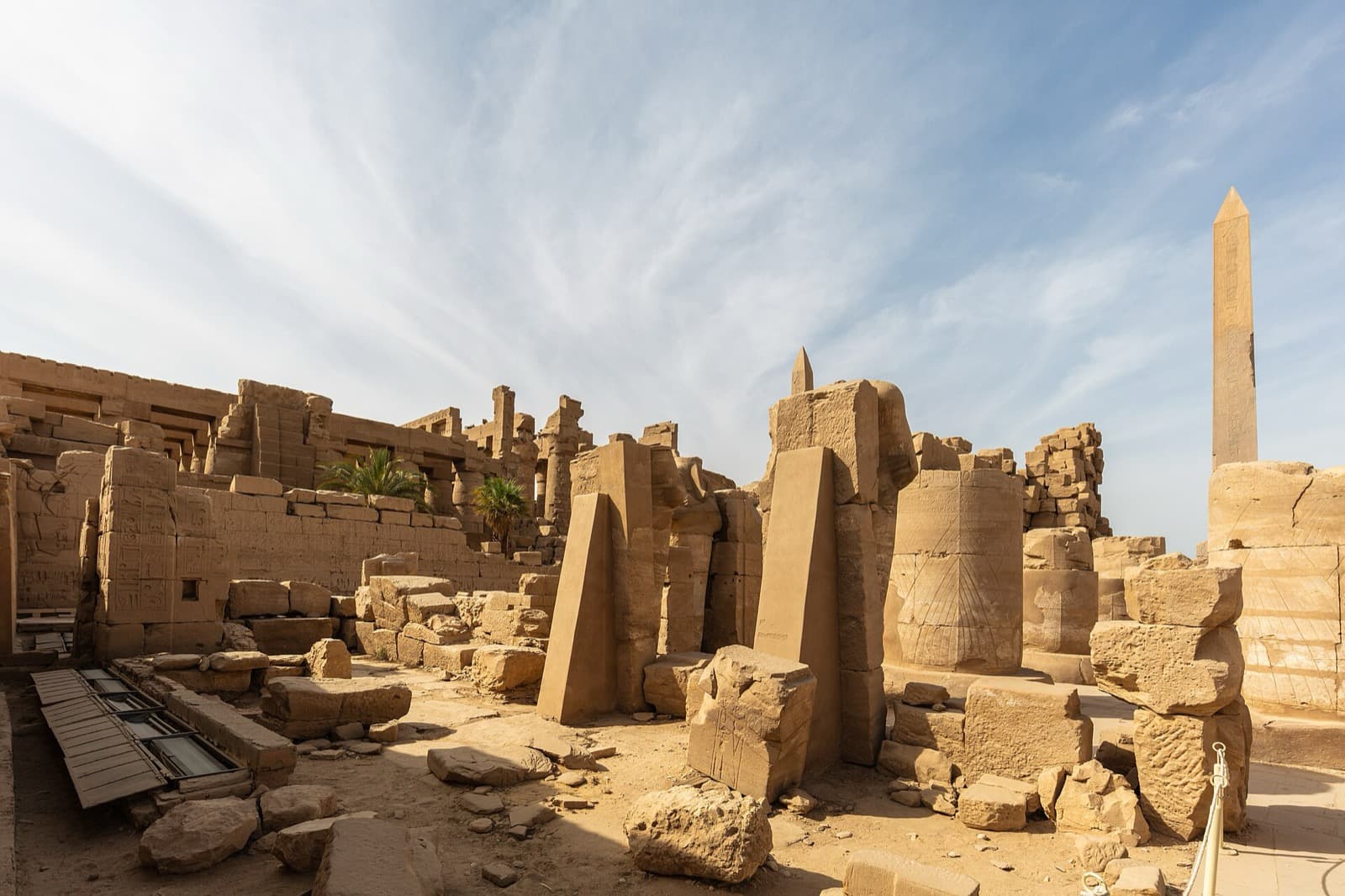
The tallest surviving ancient obelisk in Egypt, about twenty-nine and a half metres of single-piece red granite raised by the female pharaoh Hatshepsut, beside the great sacred lake.
- 4
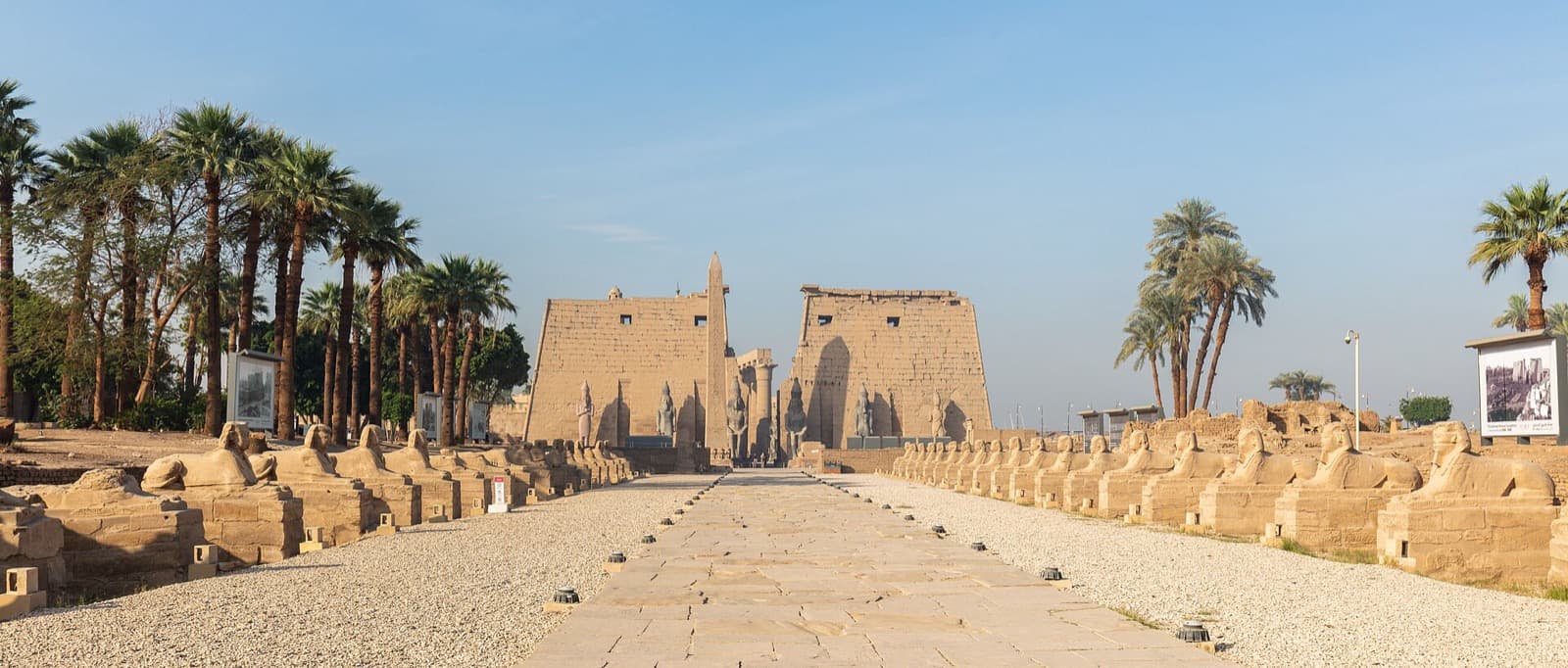
The Avenue of Sphinxes: The Road the Gods Walked, Buried and Reborn
The processional way of over a thousand statues running nearly three kilometres between Karnak and Luxor Temple, buried for centuries and ceremonially reopened in twenty twenty-one.
- 5
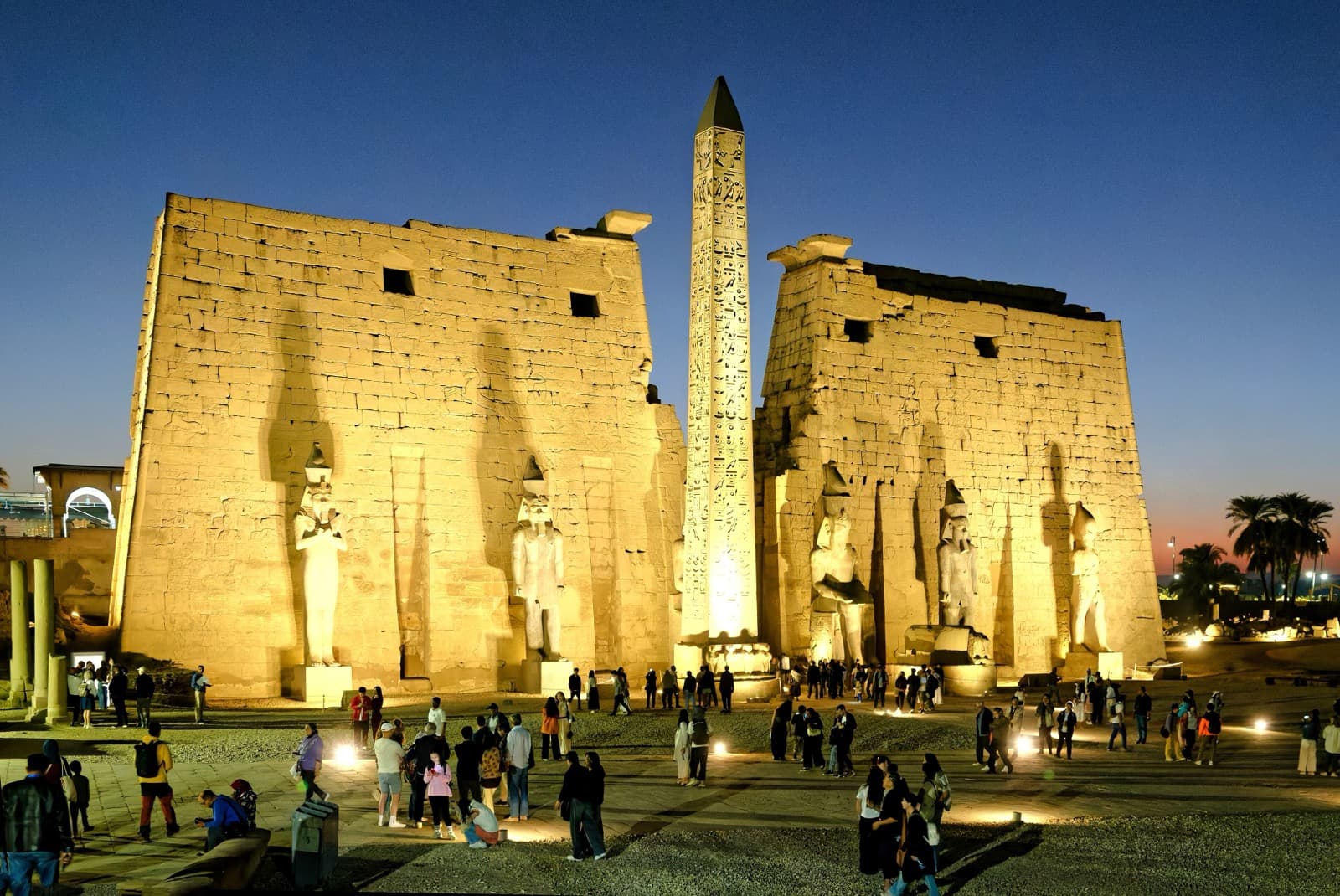
Luxor Temple: The Temple That Never Stopped Being Sacred
The destination of the Opet procession in the heart of town, built chiefly by Amenhotep the Third and Ramesses the Second, still crowned by the living Mosque of Abu al-Haggag.
- 6
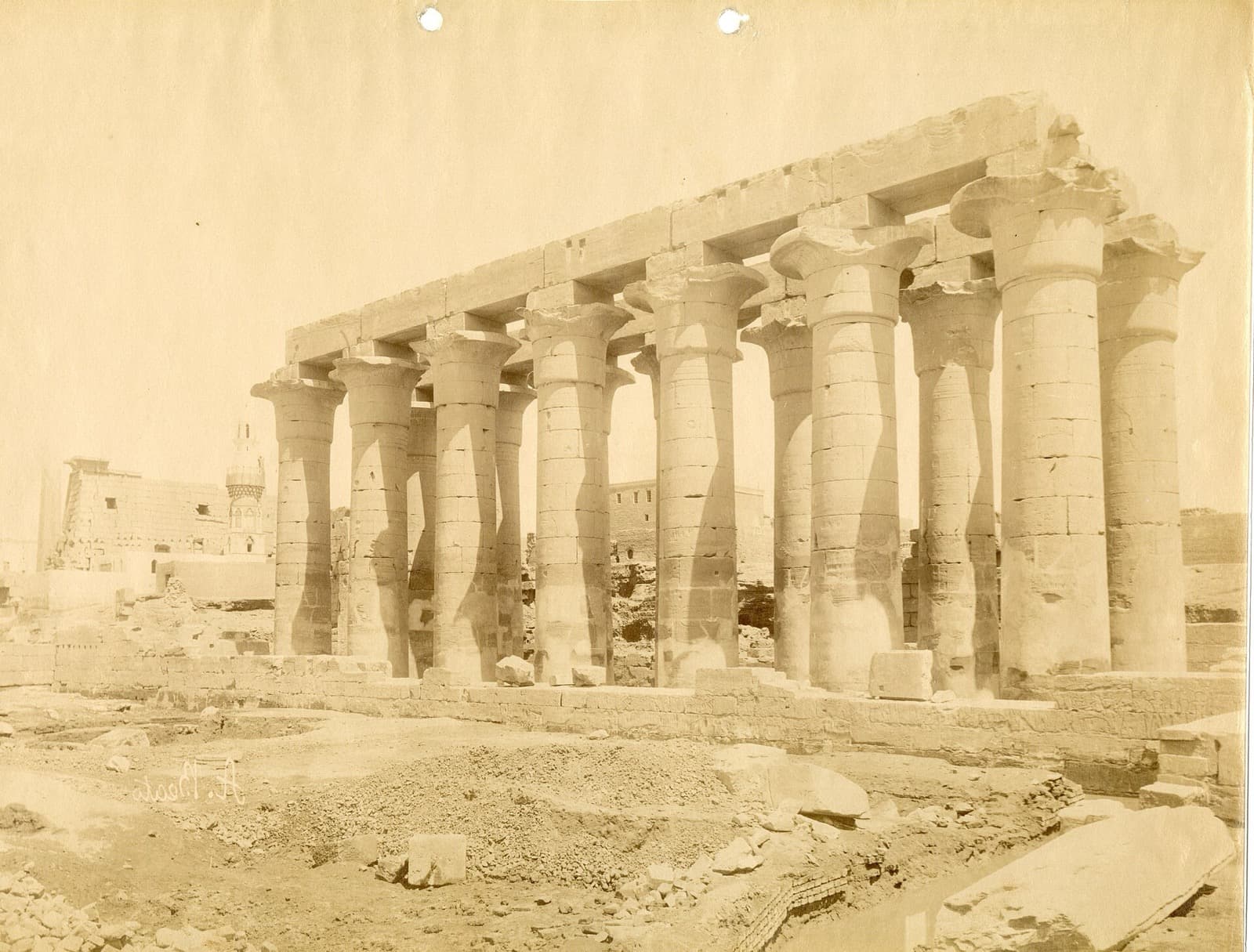
The Luxor Obelisk and Its Twin in Paris: One Here, One on the Seine
The single red-granite obelisk still standing before Luxor Temple's first pylon, whose twin was given to France in the nineteenth century and now stands in the Place de la Concorde.
- 7
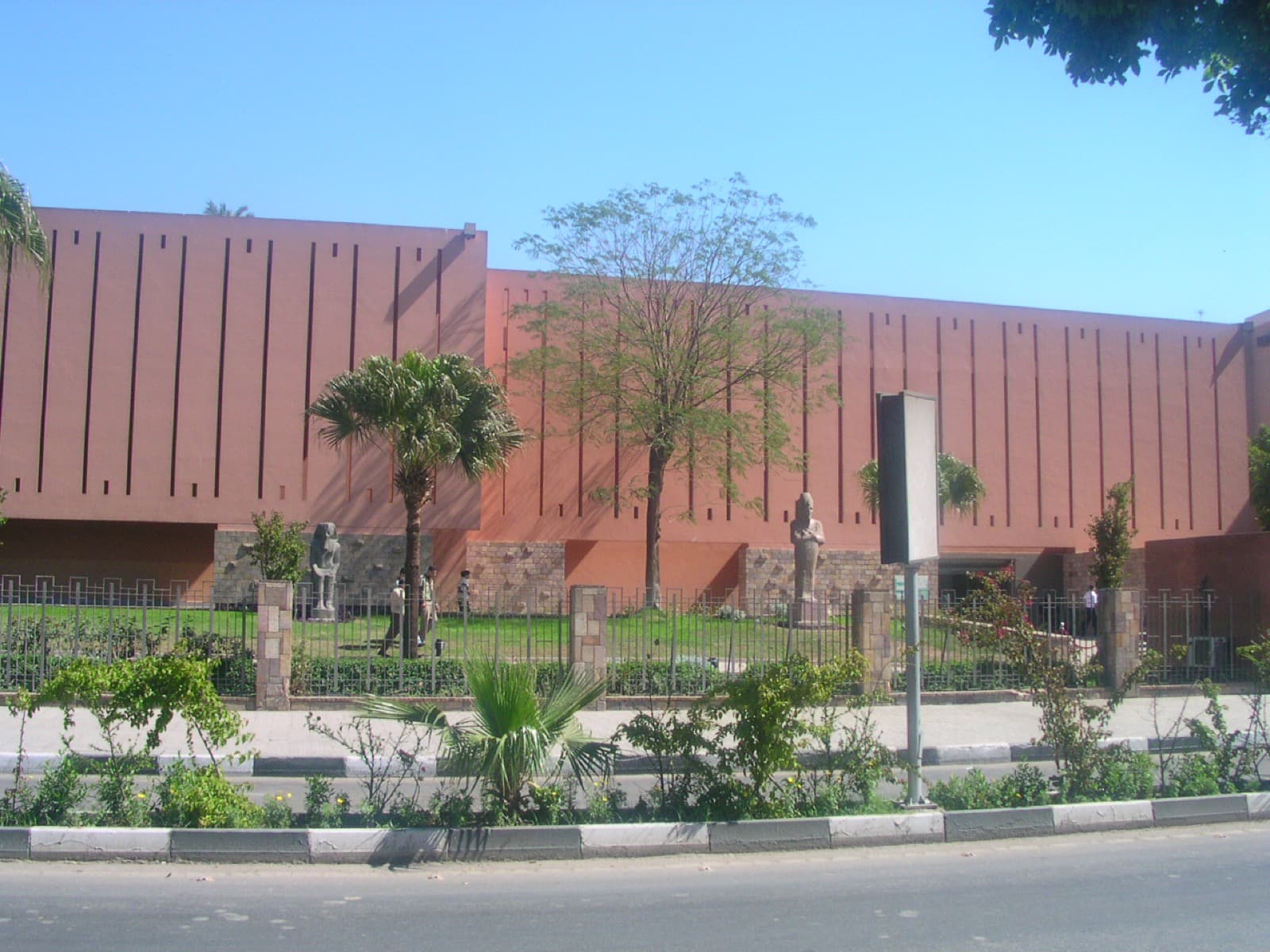
The Luxor Museum: The Finest of Thebes, Gathered and Lit
A small, beautifully lit museum on the Corniche holding Theban masterpieces, a cache of New Kingdom statues found in nineteen eighty-nine, and the royal mummies of two pharaohs.
Details
Best Time to Visit
Come early in the morning, ideally right at opening around six, when the light rakes low across the columns and the heat is still bearable. Luxor is genuinely hot for most of the year, so the cooler months from November to March are the most comfortable, and late afternoon before closing is a good second window as the stone turns gold. Midday between roughly eleven and three is punishing in summer, with little shade at Karnak.
Pro Tips
- •Buy tickets at each site as you go, as Karnak, Luxor Temple, and the Luxor Museum are three separate tickets, and bring a bank card since most ticket windows are now card-only.
- •Start at Karnak and work back toward town, so the sun is behind you for much of the walk and you finish in the air-conditioned museum rather than out in the open temples.
- •Give Karnak at least ninety minutes on its own, as the Precinct of Amun-Re is vast and rushing it defeats the entire experience of scale.
- •The Avenue of Sphinxes between the two temples is nearly three kilometres, so decide honestly whether to walk it in the heat or take a short taxi ride, and carry water either way.
- •The Luxor Museum on the Corniche is small, quiet, and beautifully lit, so save it for last as a calm, cool close after the sun and distance of the temples.
- •Keep small Egyptian-pound cash on hand for tips, toilets, and the occasional guardian who opens a gate, and settle any price before accepting a service.
Safety & Precautions
- •Luxor Temple sits beneath the active Mosque of Abu al-Haggag, and Luxor's working mosques require modest dress, shoes removed, quiet, and awareness of prayer times when non-worshippers may be asked to wait, and women may be asked to cover their hair, so dress and behave accordingly near any place of worship.
- •Karnak and the open temples are largely without shade and the sun is strong, so carry water and sun protection, and pace yourself across the long, exposed distance of the Avenue of Sphinxes.
- •The temples and the museum are spread apart along the Corniche and are most easily reached on foot or by short taxi, and persistent vendors, caleche drivers, and would-be guides work the gates, so a firm, polite no is your friend and you owe no one an explanation.
- •Keep ordinary big-city awareness of your bag and valuables in crowds and at busy ticket gates, and the currency is the Egyptian pound, so small cash is useful for tickets, tips, and taxis.
- •The Corniche and the streets between the temples carry brisk car traffic and horse-drawn caleche convoys, which tend to keep moving and give way to no one, so cross only at clear gaps, watch both directions, and stay to the pavement side wherever there is one.
Travel advisory: Exercise Increased Caution (Level 2).
Gallery
Related Reading
Go deeper on what you'll see, hear, and walk through.

Overview
Best Self-Guided Walking Tours in Luxor (2026)
3 min
Overview
Luxor Travel Guide: Days, Transport, Season, Safety, Budget
6 min
Overview
One Day in Luxor: A Walkable Morning-to-Evening Itinerary
7 min
Thematic
Best History Walking Tours in Luxor (2026)
2 min
Thematic
Luxor: Ancient Thebes and the Two Banks of the Nile
7 min
Companion
Inside Karnak's Great Hypostyle Hall: Reading a Whole Temple-City Through One Room
6 min
Deep dive
Luxor Temple: The One Egyptian Sanctuary Worship Never Left
7 min
Read
What to Eat in Luxor: Upper Egyptian Dishes and How to Order Them
7 min
Read the walk
The full story of Karnak and Luxor Temple: The Great Sanctuaries of Ancient Thebes, in words. Prefer to listen? Play it narrated, from home or on location.
Introduction
For roughly fifteen hundred years the city of Thebes, on the site of modern Luxor in Egypt, was the religious capital of the ancient world, and its gods lived here on the East Bank of the Nile, where the sun rose each morning. UNESCO records Thebes as the city of the god Amun, capital of Egypt through the Middle and New Kingdoms, and calls the temple complexes of Karnak and Luxor two of the largest religious structures ever built. This route reads that world in seven stops across roughly four kilometres, taking about three to four hours at an easy pace, though it is entirely yours to shape. Karnak is not one temple but a city of them, enlarged by pharaoh after pharaoh over roughly two thousand years into a forest of colossal columns, obelisks, and gateway walls. A processional avenue of sphinxes, buried for centuries and reopened only in twenty twenty-one, runs nearly three kilometres to Luxor Temple in the heart of town, the road along which the gods travelled once a year in festival. The whole point of this architecture is scale, engineered to make a human body feel very small before the divine, so let it work on you slowly. There is no group here, no schedule, no one hurrying you past a column or a carving. You linger where the light is good and move on when you are ready, keeping the through-line of Amun and procession in view the whole way. When you arrive at the first pylon of Karnak, begin with stop one.
1. The First Pylon of Karnak: Through the Gate into the City of the God
You are standing before the first pylon of Karnak, the great gateway wall that opens the city of the god. UNESCO records Thebes as the city of the god Amun, capital of Egypt through the Middle and New Kingdoms, and calls this complex and Luxor Temple two of the largest religious structures ever built. Karnak is not a single temple. It is a city of them, and its largest section, the Precinct of Amun-Re, was built and rebuilt by roughly thirty pharaohs over about two thousand years, from the Middle Kingdom down to the age of the Ptolemies. As you come in, you pass a short avenue of ram-headed sphinxes. The ram was sacred to Amun, the chief god of the Theban Triad, so these crouching figures are the god's own animal, lining his approach. The pylon itself is a wall of staggering size, and if you look at its inner face you can still see the remains of a mud-brick construction ramp, because this gateway was never actually finished. Beyond it opens the Great Court, and the scale is the first thing you feel, before any single detail. That is the point. This architecture was engineered to make a human body feel small before the divine. Now, Karnak is the second most visited historical site in Egypt after Giza, and the gate can be busy and full of people offering to guide you. You do not have to accept any of it. This is your walk. Enter at your own pace, stand in the shadow of the pylon as long as you like, and when the scale has settled into you, move on into the court.
2. The Great Hypostyle Hall: A Forest of Stone Trees
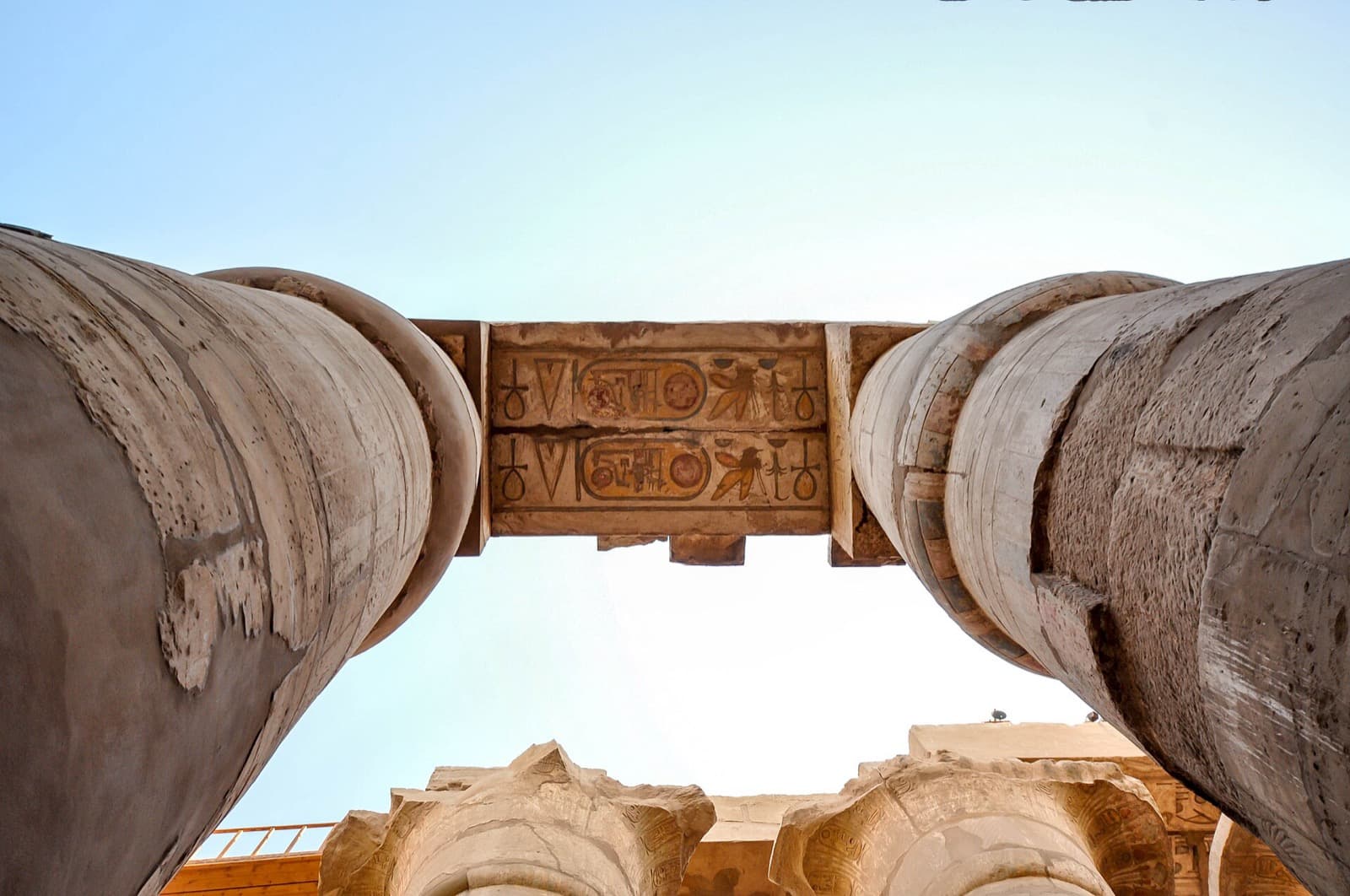
Now you enter the Great Hypostyle Hall, and this is where the scale of Karnak stops being a fact and becomes overwhelming. There are one hundred and thirty-four columns here, arranged in sixteen rows, covering about five thousand square metres. The twelve columns down the central aisle rise some twenty-one metres, roughly the height of a modern building, each more than three metres across. The remaining one hundred and twenty-two outer columns stand about ten metres. Together they make a forest of stone trees, and a human being walking among them is reduced to nothing. That was exactly the intention. This hall was built chiefly under Seti the First and his son Ramesses the Second, in the Nineteenth Dynasty, around the thirteenth century B C. Every column, every wall, was carved in relief and once painted in strong colours. Look up high, near the tops of the columns where the sun has never reached directly, and you can still find traces of that original paint, blues and reds and golds that once covered everything you see. Imagine the whole hall lit not by open sun but filtered through stone window grilles, painted from floor to ceiling, filled with incense and the low sound of priests. It is often called one of the most awe-inspiring interiors ever built, and standing inside it, you understand why. There is no one herding you through. Stand as long as the light and the scale hold you. Walk the aisles slowly, tip your head back, and let the forest close over you before you go looking for the way out.
3. Hatshepsut's Obelisk and the Sacred Lake: The Woman Who Ruled as King
Ahead of you rises a single needle of stone, and it is the tallest surviving ancient obelisk in Egypt, about twenty-nine and a half metres tall. It was cut from one single piece of red granite quarried at Aswan, far to the south, floated down the Nile, and raised here whole. Think about that. One stone, this tall, standing since the fifteenth century B C. It was raised by Hatshepsut, one of the few women who ruled Egypt as pharaoh, in the Eighteenth Dynasty. Her reign is dated to about fourteen seventy-three through fourteen fifty-eight B C. Its companion obelisk broke in antiquity, and you can see the top section, about eleven metres of it, set up over by the sacred lake. By tradition the tips of these obelisks were once sheathed in electrum, a natural alloy of gold and silver, to catch the sun, though how brightly they truly gleamed we can only imagine. Now, here is the harder part of the story. After Hatshepsut died, her successor Thutmose the Third had walls built around these obelisks, trying to hide them and erase her memory from the record, an attempt to unmake a king who happened to be a woman. The obelisk outlasted the erasure. To the south lies the great sacred lake, where the priests of Amun purified themselves before entering the god's presence. Walk to the water's edge, look back at the standing obelisk, and hold both things at once: the ambition that raised it, and the effort to make it forgotten.
4. The Avenue of Sphinxes: The Road the Gods Walked, Buried and Reborn
You have left the gates of Karnak behind, and now you are on the road itself: the Avenue of Sphinxes, also called the Rams Road. It runs nearly three kilometres, straight through the modern town, linking Karnak to Luxor Temple. Originally it was lined with one thousand and…
Full narration for this stop unlocks with the tour.
5. Luxor Temple: The Temple That Never Stopped Being Sacred
You have reached Luxor Temple, and this is where the road ends, the destination of the whole procession. Once a year, in the Opet festival, the god Amun journeyed here from Karnak along the avenue you just walked, to this temple in the heart of the city. It was built chiefly by…
Full narration for this stop unlocks with the tour.
6. The Luxor Obelisk and Its Twin in Paris: One Here, One on the Seine
Before the first pylon of Luxor Temple stands a single obelisk of red granite, and it was once one of a matched pair. Both were carved for this very gateway in the reign of Ramesses the Second, around twelve fifty B C, each cut from a single block of granite quarried at Aswan.…
Full narration for this stop unlocks with the tour.
7. The Luxor Museum: The Finest of Thebes, Gathered and Lit
Your last stop is the Luxor Museum, on the Corniche overlooking the Nile, roughly midway between the two great temples you have walked between. After the overwhelming scale of Karnak and Luxor, this is a deliberate change of key: intimate, cool, quiet, and beautifully lit. It…
Full narration for this stop unlocks with the tour.