Wat Xieng Thong, the Temple of the Golden City, is the royal monastery that bracketed the entire Lao monarchy. King Setthathirath built it between 1559 and 1560, and Lao kings were crowned inside it. Four centuries later, after the monarchy fell in 1975, the same compound came to hold the funeral urns of the last king. If you understand one thing standing at its gate near the tip of the Luang Prabang peninsula, understand that: this single temple opens and closes the story of the kings.
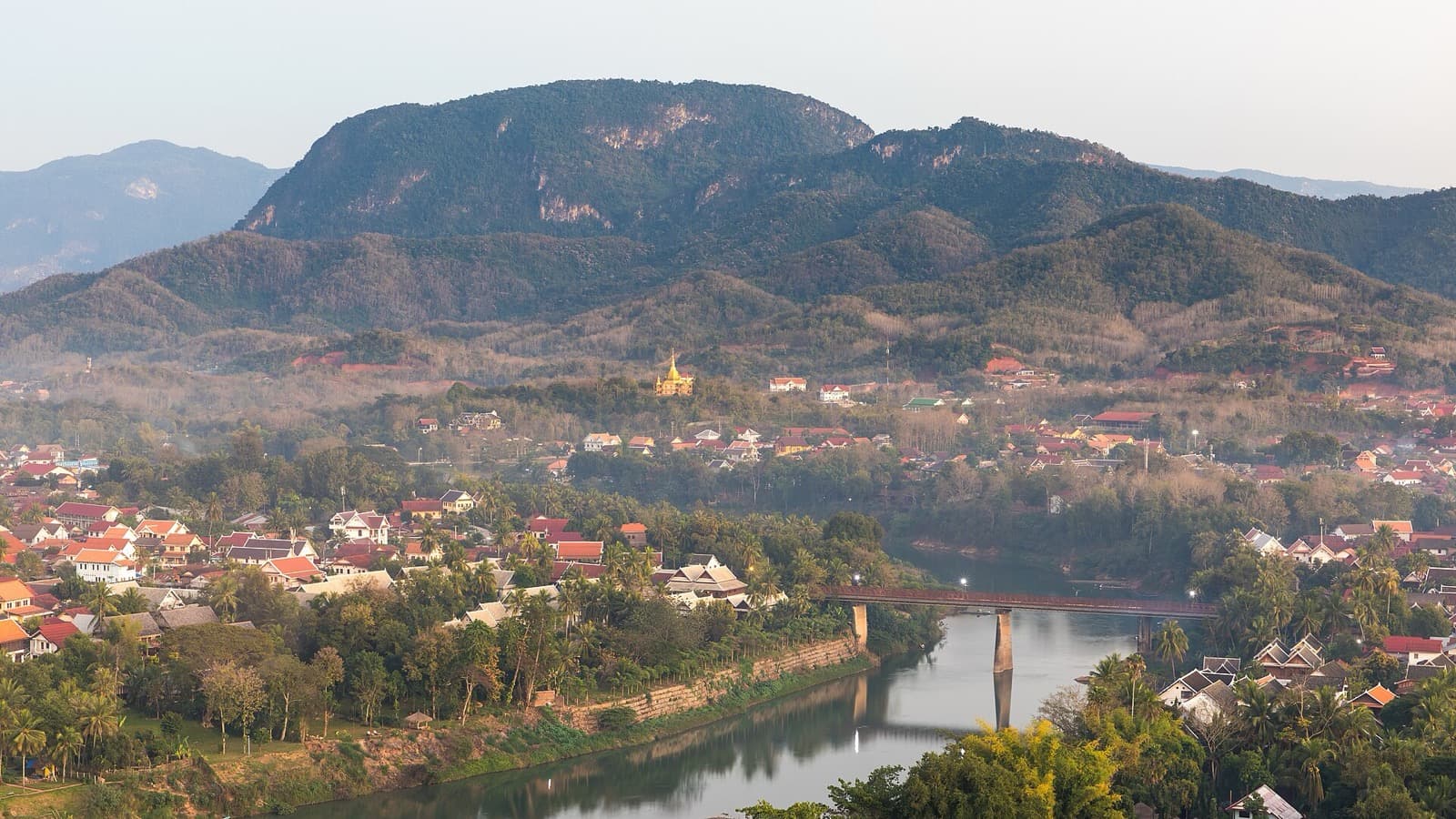
The temple sits close to the point where the Nam Khan flows into the Mekong, at the far end of the old-town spine. Its position is not accidental. A coronation temple belonged near the confluence, on the defensible spur of land where the royal town narrowed to nothing. Everything upstream on the peninsula, the palace, the shrine of the Prabang, the temple-lined main street, leads here. This is the climax of the old town, and it has long been counted among the most important monasteries in Luang Prabang.
Read the roofline first
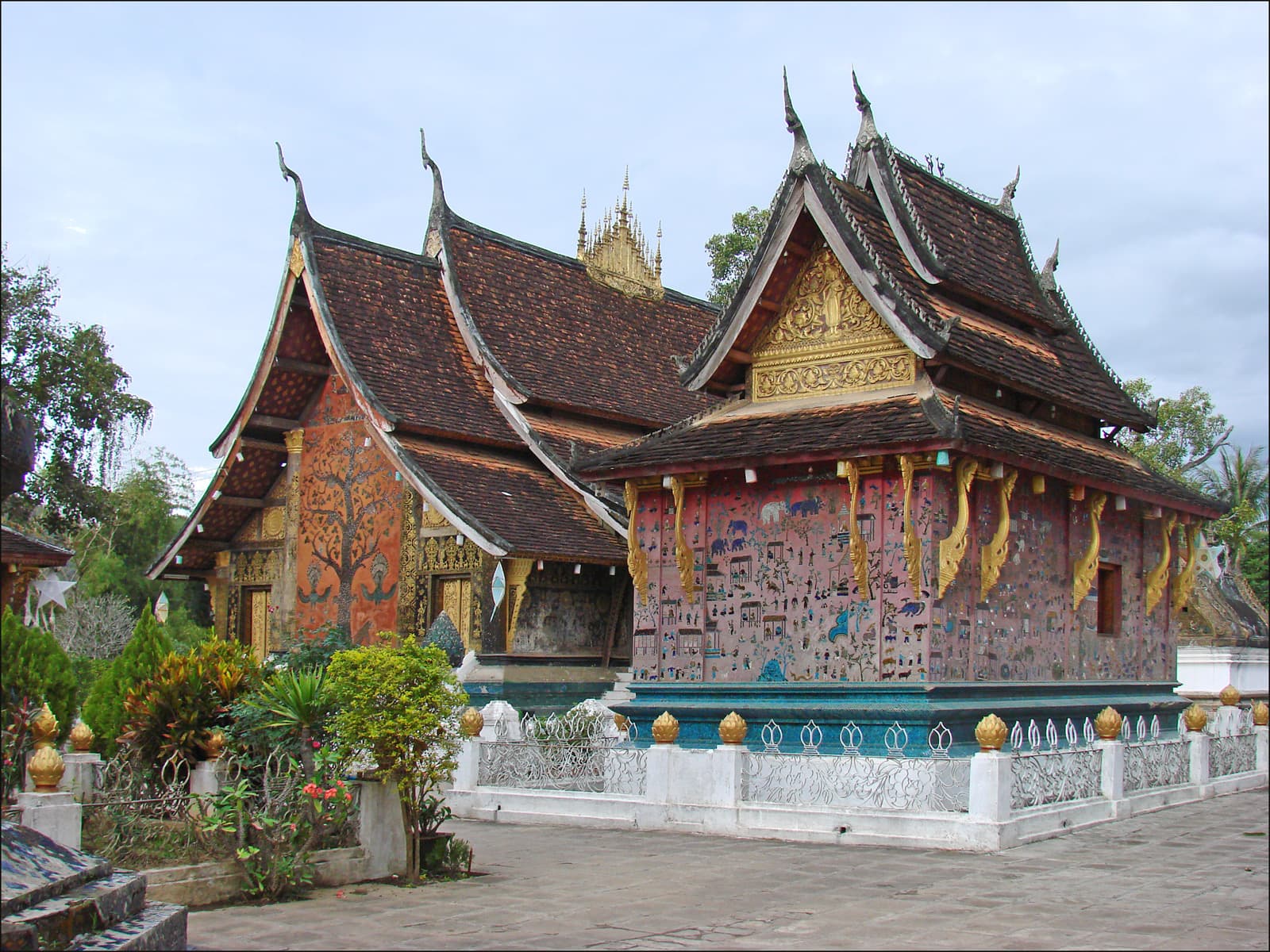
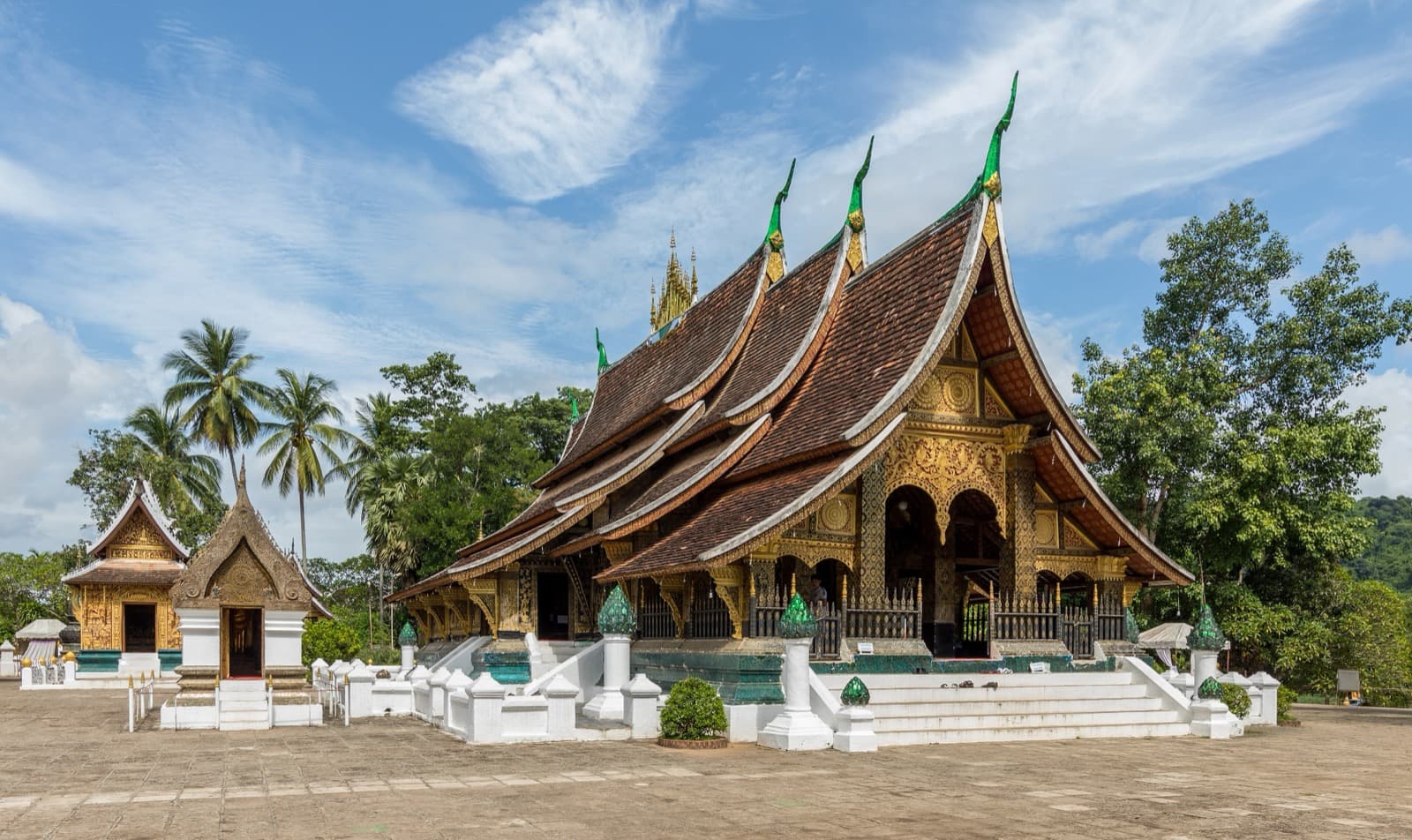
Before you go looking for the famous mosaic, stand back and read the roof of the sim, the ordination hall. It is the clearest example anywhere of the Luang Prabang style. The roofs are layered, stacked one below the next, sweeping so low they seem almost to brush the ground. The line is gentle and heavy at once, tipped with gold stenciling and finished with a central ornament running along the ridge. Where temples elsewhere in the region reach upward, this one settles down toward the earth. Once you have seen this profile, you will recognize it on temple after temple back along the street, but Wat Xieng Thong is the source, the building the style is named for.
That the hall has kept this shape since the sixteenth century is itself the point. The peninsula survived intact, and its oldest royal temple survived with it, so the roofline you are looking at is not a reconstruction of an idea but the idea itself, standing where it was raised.
The Tree of Life
Hear a stop from this walk
Where Two Rivers Meet: The Point of the Peninsula
Walk around to the rear gable of the sim and look up. Set into the wall is the Tree of Life, a shimmering glass mosaic added in the mid-twentieth century. Colored fragments, cut small and fitted close, form a great sacred tree spreading across the exterior wall. It reads best from a few steps back, where the individual pieces dissolve into a single glowing image and then, as you approach, resolve again into thousands of separate shards of glass.
The mosaic is younger than the hall it decorates by roughly four hundred years, and that gap is worth holding in mind. Wat Xieng Thong is not one moment frozen in place. It is a working monastery that each century has added to, the old bones of Setthathirath's hall carrying newer skin. The Tree of Life is the newer skin, and it has become the temple's most photographed single feature.
The chapel that holds the last king
The quiet heart of the visit is the funeral-carriage chapel. Inside stands a gilded royal funeral carriage about twelve metres high, once used to carry royal ashes in procession. With it are urns holding the remains of King Sisavang Vatthana and members of his family.
Sisavang Vatthana was the last king of Laos. The monarchy that began with the founding of Lan Xang around 1353 was abolished after the Pathet Lao came to power, and the Lao People's Democratic Republic was proclaimed on the second of December, 1975. The king abdicated, the royal family were later taken to re-education camps, and the king is widely reported to have died in detention in the years that followed, though the full circumstances were never publicly documented. The record is genuinely incomplete, and it is better to carry that gap honestly than to fill it with certainty.
This is the thing to understand standing in front of the chapel. Wat Xieng Thong crowned the first kings of a line that ran for roughly six centuries, and now it shelters the ashes of the last. The temple where kingship began is also the temple where kingship ended. Treat the chapel with the weight that deserves, not as a sight to tick off. There is no group at your back and no queue for the door, which is exactly what lets you stand there for as long as the moment asks.
A Buddha that went to Paris
The temple keeps one more object with a long biography: a rare reclining Buddha that left Laos for an exhibition in Paris in 1931 and did not return home until 1964. That is thirty-three years abroad, across a stretch of the twentieth century that reshaped the whole region, before the image came back to the compound it belongs to. It is a small reminder that even a temple this rooted has sent pieces of itself out into the world and drawn them back.
Why this stop anchors the walk
Wat Xieng Thong rewards the unhurried visitor more than almost any monument in Laos. The marquee circuits run on packed group schedules and sunset queues, but the roofline, the mosaic, and above all the funerary chapel only give up their meaning when you can move through the compound at your own speed. Dress for it before you arrive: shoulders and knees covered, shoes easy to slip off, since you will remove them to enter the halls. Entry runs around twenty thousand kip, so carry small cash.
This temple is the sixth of seven stops on a walk down the royal peninsula, from the former Royal Palace where the small golden Prabang is enshrined, along the temple-lined main street, to the point where the two rivers meet. Reaching Wat Xieng Thong on foot, in sequence, is what gives the funerary chapel its full weight: you have already walked past the palace where the monarchy began before you arrive at the chapel where it ends.
You can see the full route, timing, and the other six stops in our guide to Luang Prabang walking tours, and browse what else there is to do in Luang Prabang. The self-guided Old Town audio tour walks you here at your own pace, with the narration keyed to each courtyard, so you can stand alone in the chapel of the last king for as long as you need to.
Sources
- Wat Xieng Thong, Wikipedia. Construction dates (1559 to 1560), King Setthathirath, the coronation function, the twelve-metre funeral carriage, the reclining Buddha's 1931 to 1964 loan to Paris, and the roughly 20,000 kip entry fee.
- Official Tourism Luang Prabang, Wat Xiengthong page. The Tree of Life glass mosaic, the funeral-carriage chapel, and the urns holding the ashes of King Sisavang Vatthana and his family.
- Town of Luang Prabang, UNESCO World Heritage Centre (List entry 479). The peninsula geography formed by the Mekong and Nam Khan, and the 1995 inscription of the town.
- Sisavang Vatthana, Wikipedia. The last king of Laos, his 1975 abdication, and the family's removal to re-education camps.
Ready to experience it?
Old Town: The Buddha That Named a City
90 min · 2.2 km · easy
More from Luang Prabang
Explore more at your own pace.
Luang Prabang Travel Guide: Days, Transport, Season, Safety, Budget
Luang Prabang: The Fusion Royal Town Between Two Rivers
That Chomsi Stupa: Why the Golden Point Above Luang Prabang Reads the Whole Town
The Colonial Shophouses of Luang Prabang: The Fusion UNESCO Chose to Protect
The Royal Palace of Luang Prabang: Where a Kingdom Kept Its Last Throne