The Expo 98 site was built out of what it demolished, and that is the first thing to know before you walk Parque das Nações. Its steel went to the furnaces and its concrete went under the new streets. Then each of its buildings was built to become something after the fair closed. Roamer's walk here asks of each one, stop by stop, whether it did.
A riverfront nobody visited
In 1993 this stretch of the Tagus held a refinery, fuel tanks, thousands of useless containers, an abattoir, an armaments depot and a waste tip. The fair's official report to the international exhibitions bureau lists all of it, on 340 hectares. Lisbon had won the right to hold a world's fair for 1998, five hundred years after Vasco da Gama reached India, and its theme was the oceans.
The builders took the old land apart and used it. About 35,000 tons of steel went to the furnaces. About 1.1 million tons of concrete was crushed into gravel for the new streets, so the avenues you walk on are partly made of what stood here. About 100,000 square meters of old granite cobbles were laid again. The soil is the part still argued over: about 400,000 cubic meters of contaminated earth went into sealed cells, and in 2019 an environmental group reported a new hydrocarbon deposit in the district. The honest word is not "cleaned". It is "reworked".
One piece of the refinery stayed. Its tower, which the city archive dates to 1939, was kept as a gate for the fair. The walk looks for it down the avenue at stop 4, and tells you plainly that trees and offices may hide it.
Built to be taken over
Hear a stop from this walk
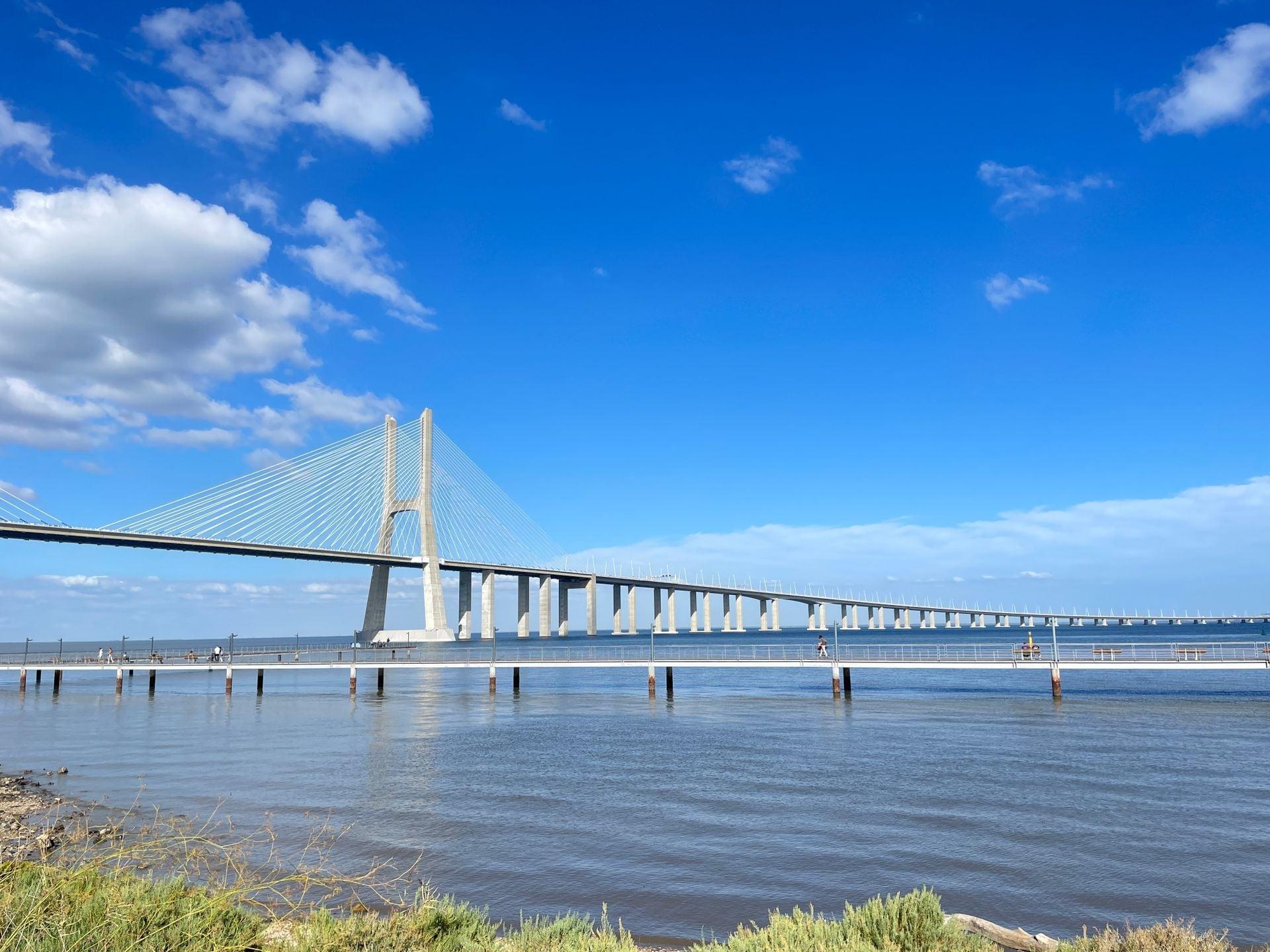
Torre Vasco da Gama and the Bridge
The fair ran from May to September 1998 and counted more than ten million visits. Most world's fairs pack up when they end. This one planned the reverse: permanent buildings as the landmarks of a future district, with the temporary halls around them. That plan turns every stop into a test.
Gare do Oriente, at stop 1, passes it easily. Santiago Calatrava's station opened three days before the fair, as its main entrance, and it was never only for the fair. Read it from the bottom up: a glazed shell over the hall, a line of platforms, and above them a roof of white steel and glass his office calls trees, on a grid of about seventeen meters. The bigger idea is underneath. The railway ran on an embankment that walled the Olivais district off from the river, and Calatrava lifted the platforms onto arches so the building lets you through.
The Pavilhão do Conhecimento, stop 6, passes too. At the fair it was the pavilion of the knowledge of the seas, but the fair's own report already called it the future science museum, and it reopened as a science center in 1999. Its architect wanted a pause after the noise of the avenue, and the plain white volume still reads that way. The Oceanário across the dock, stop 7, was built as the Oceans Pavilion and opened for good weeks after the fair closed, with a central tank of about five million liters. The arena at stop 9, built as the Utopia Pavilion, is now the city's big indoor venue, with laminated Swedish pine ribs hidden under a zinc skin.
Then there is the one that waited. Álvaro Siza's Pavilhão de Portugal, stop 8, hangs a sheet of prestressed concrete over a ceremonial plaza. It was meant for government offices after the fair. Instead its director has described more than two decades of abandonment, until the University of Lisbon took it over in 2015 and it reopened in April 2025. Of all the answers on this walk, it took the longest.
What the set pieces cost
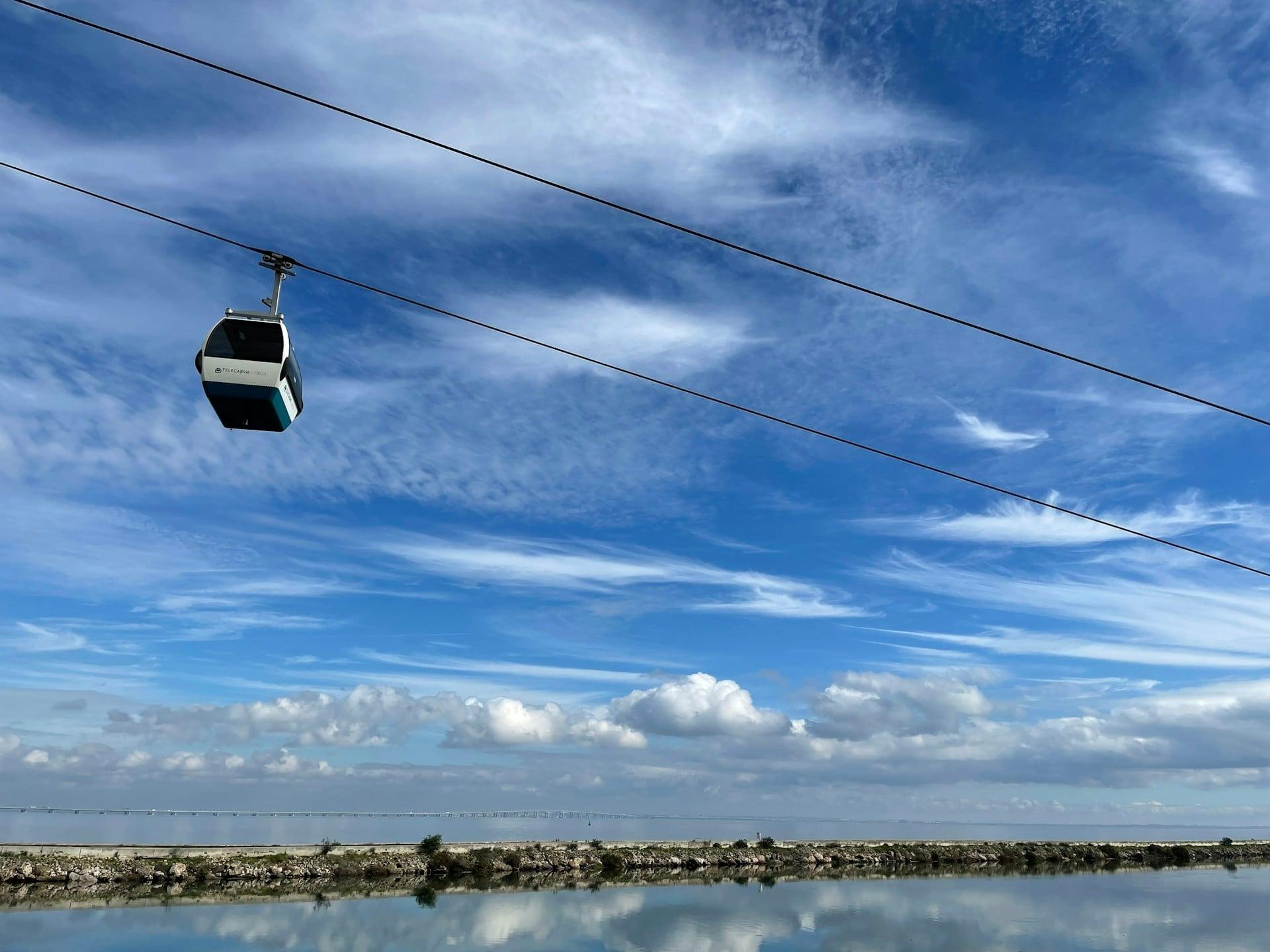
Some things were built for five months of crowds. The six water volcanoes on the Alameda dos Oceanos, cones of glazed tile running from deep red to blue, were made to erupt every twenty-five seconds. A local architecture firm found them dry and breaking at the end of 2023, and photos from March 2025 show this cone dry in the morning and running by afternoon. The tile keeps its color either way. A fair needs a spectacle, and a neighborhood has to pay for it every year after.
The gardens make a quieter argument. The Jardim das Ondas at stop 5 shapes the ground into waves a short way from the real river, on land that once held fuel. The Jardins Garcia de Orta at stop 11, named for the sixteenth-century physician who studied the plants of India, divide one riverside strip into plots for Goa, Timor, Macau's Coloane, Brazil and Africa, stocked mostly with gifts from Portuguese-speaking countries. It is an empire told in plants, and the walk leaves you to decide how gentle it looks.
How to walk it
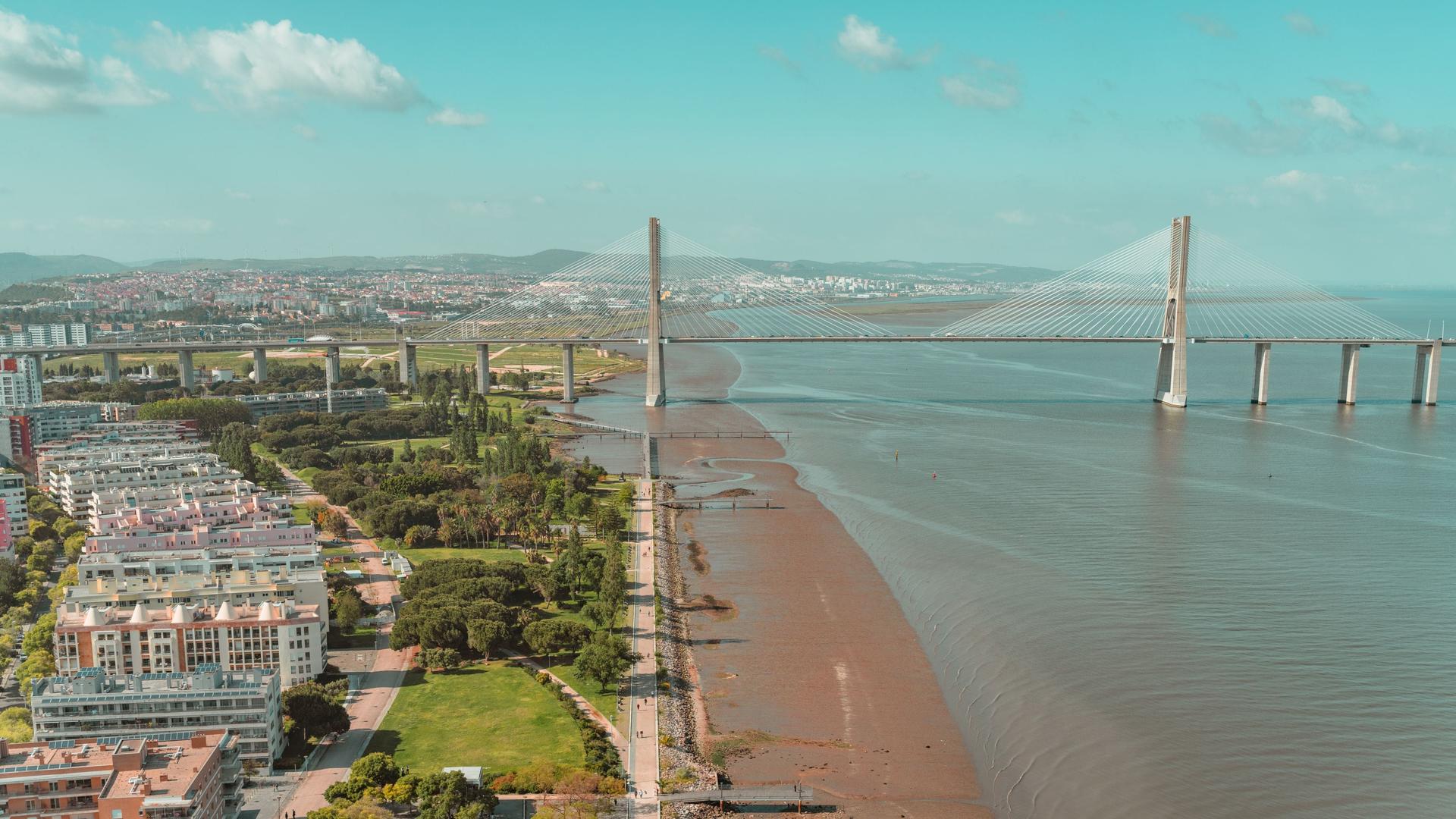
The route is twelve stops over about 2.8 kilometers, roughly seventy-five minutes, and almost entirely flat. It runs from across the avenue at Oriente station, down the Alameda, round the dock in a U, past the arena and the lake of the Tágides, through the gardens, to the Vasco da Gama Tower on the water. The Oceanário and the science center are ticketed, and every stop works from outside, so you can go in, skip them, or stop for lunch whenever it suits you, on your own schedule.
At the end, look back over what you have walked: a hole cut through a railway embankment, streets laid on crushed concrete, one tower kept and one built new, and a hanging roof that finally found its job. Since 2012 it has all been a parish of its own, with people living in it.
Start at stop 1 of Parque das Nações: Built Out of What It Demolished. For the rest of the city's walks, see the Lisbon page.
Sources
- Parque Expo, official report of the 1998 Exposition (via Wayback): the 1993 site, 340 hectares, steel, concrete, cobbles and contaminated soil figures, the future uses planned for each pavilion, the visit count.
- Calatrava's office, Oriente Station: the pierced embankment, the arches and the steel-and-glass trees.
- University of Lisbon, Pavilhão de Portugal: Siza's prestressed concrete visor, the paper on two bricks, ULisboa since 1 August 2015.
- Time Out Lisboa, the reopened Pavilhão de Portugal (2025): the years of abandonment and the reopening.
- LNEC, monitoring the MEO Arena roof: the laminated timber arch.
- Junta de Freguesia do Parque das Nações, places to visit: the Jardim das Ondas and the Garcia de Orta plots.
Ready to experience it?
Parque das Nações: Built Out of What It Demolished
75 min · 2.8 km · easy
More from Lisbon
Explore more at your own pace.
Best Architecture Walking Tours in Lisbon (2026)
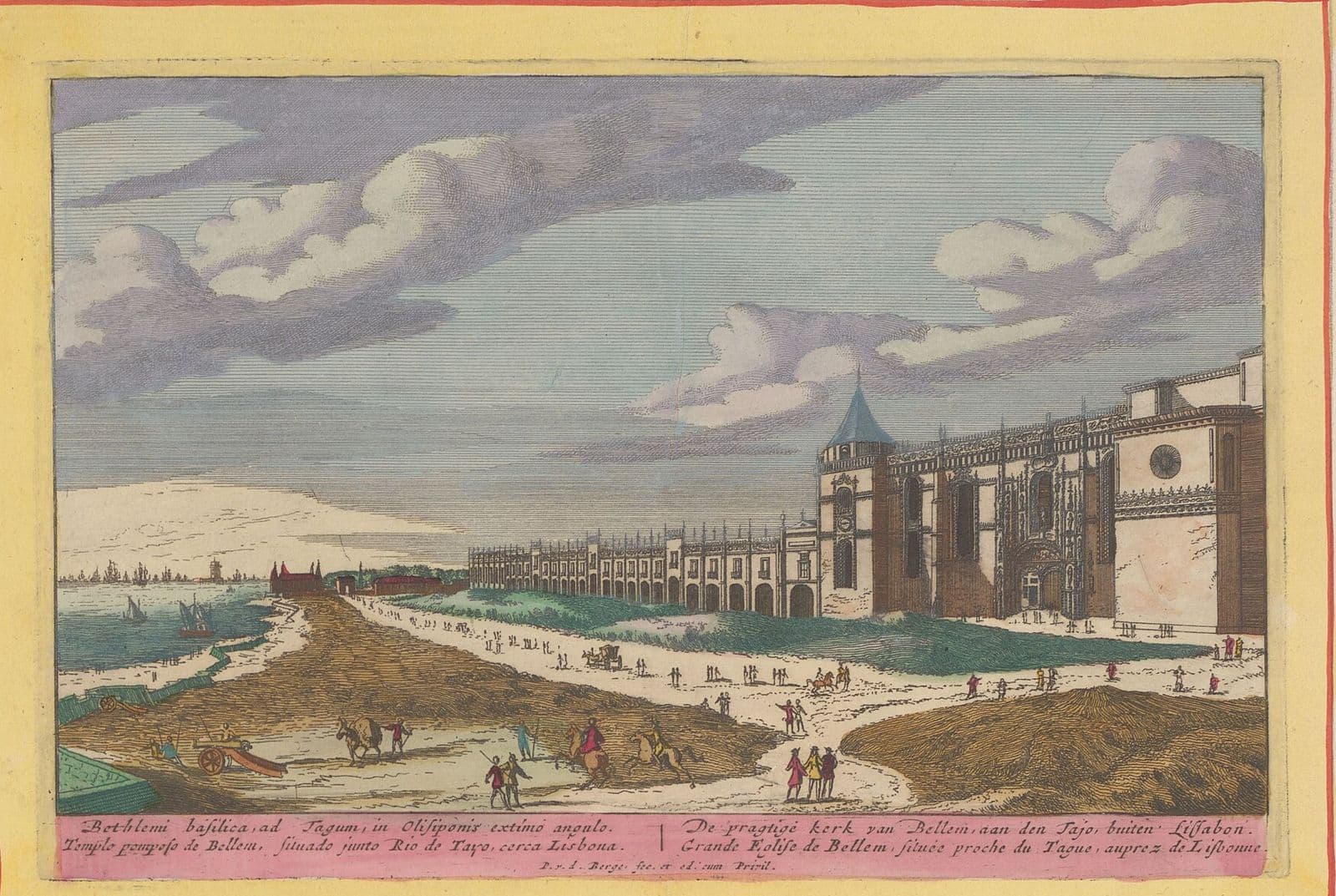
Camões's Tomb at the Jerónimos: The Poet and the Doubt
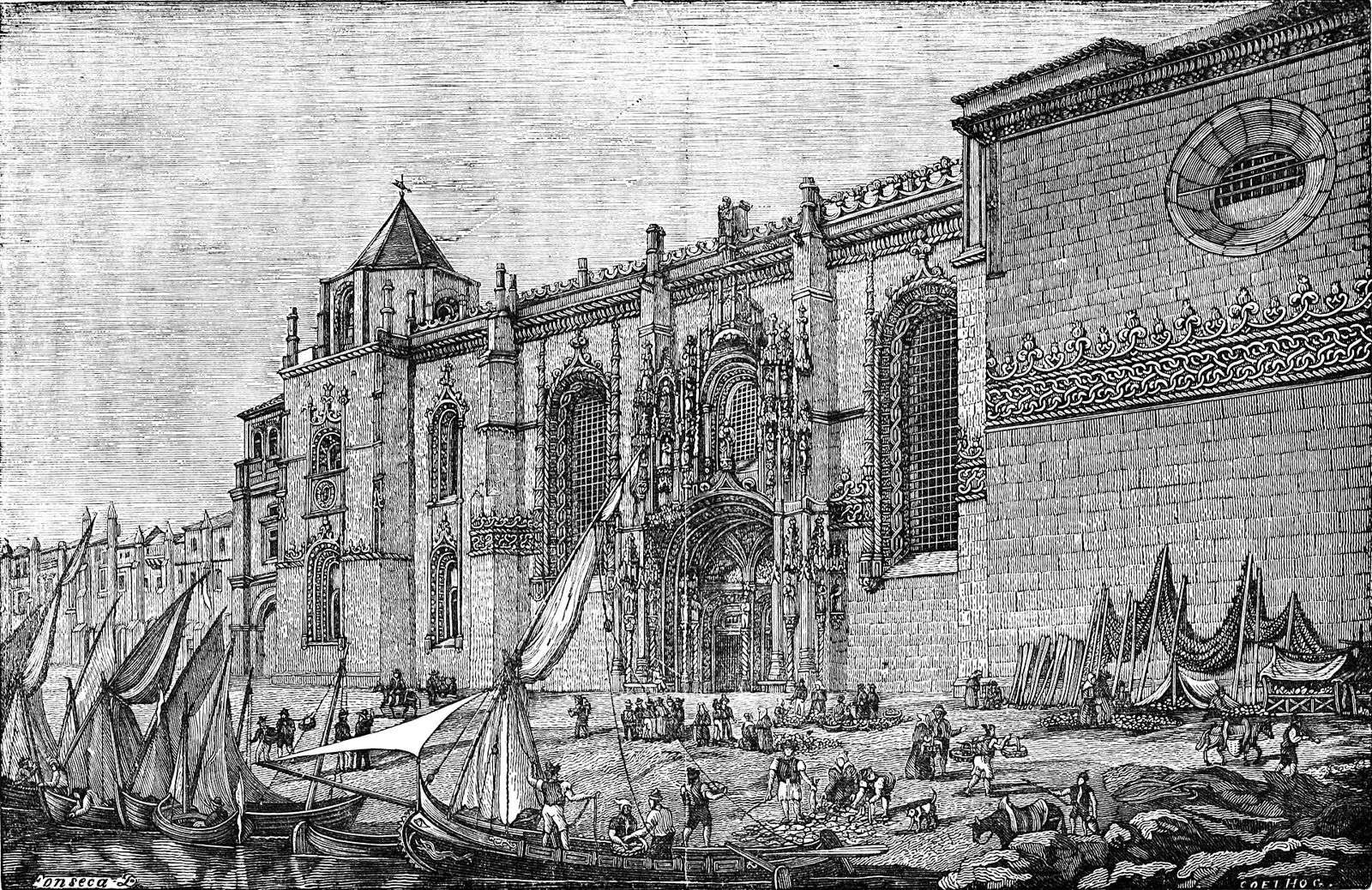
The Jerónimos Monastery in Lisbon: What to See, Space by Space
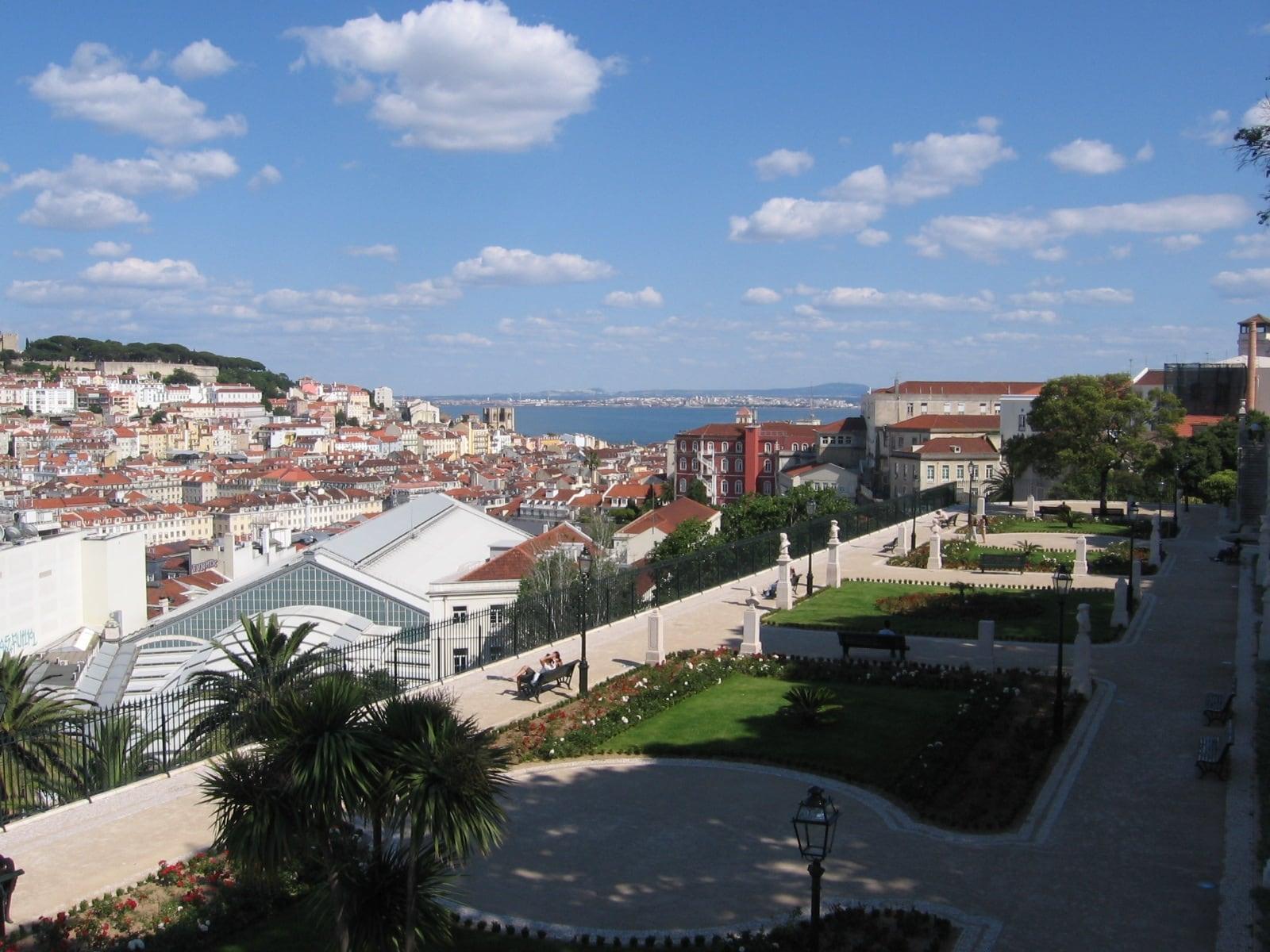
Bairro Alto and Príncipe Real: Reading a Lisbon Hill That Was Planned Twice
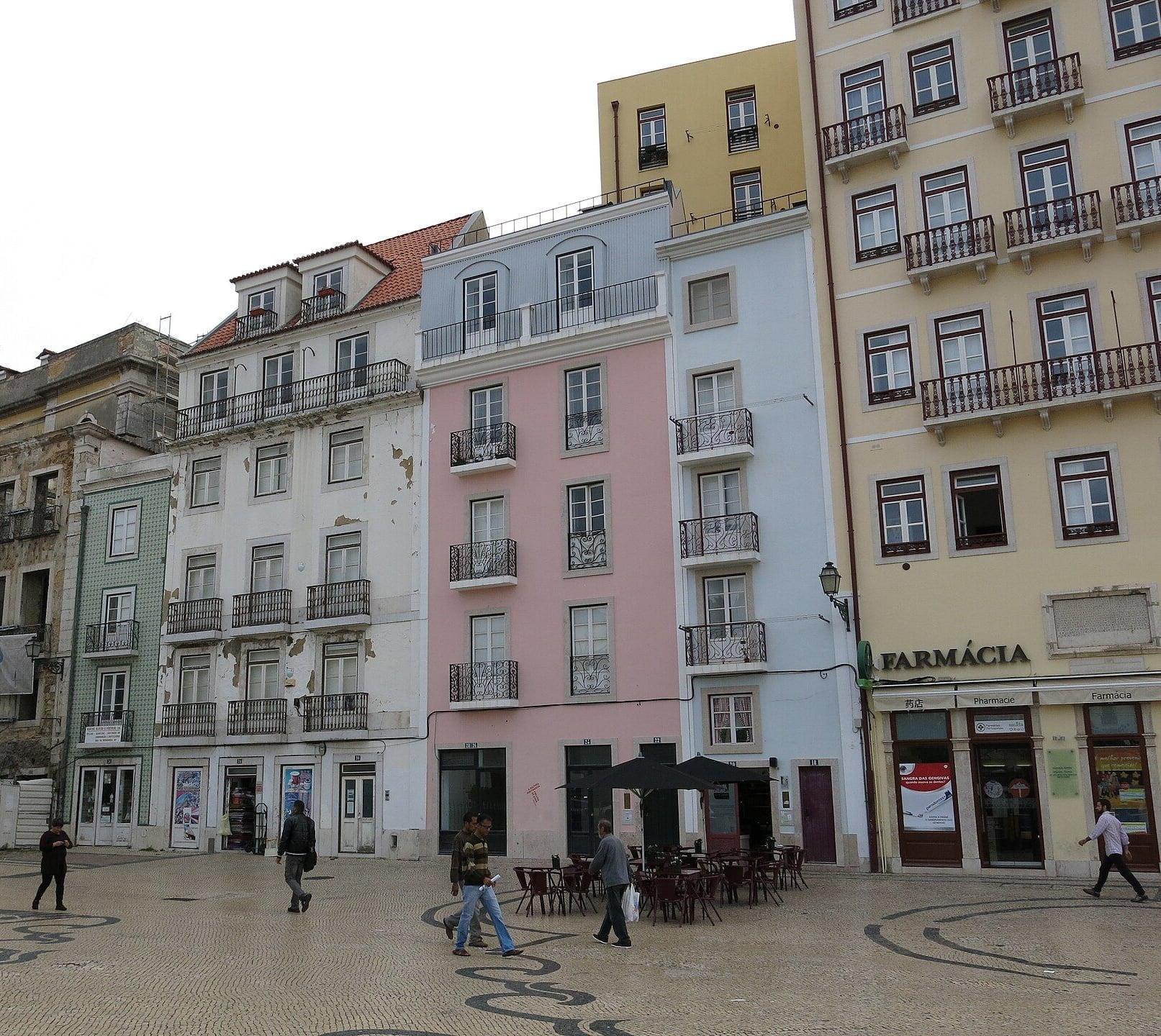
São Jorge Castle and Mouraria: A Lisbon Hill That Sorted Its People