Plan the Jerónimos Monastery in three parts. The two portals are outside and need no ticket. The church of Santa Maria is free, with the tombs of Vasco da Gama and Camões just inside the west door, and the royal tombs in the transepts and chancel. The two-storey cloister, with the refectory and the chapter room, needs a paid timed ticket, and tickets often sell out and cannot be bought on the day, so book before you travel. The monastery is closed on Mondays. It provides no audio guide, and Roamer's independent English audio guide is not a ticket.
The Jerónimos Monastery in Belém is a church, a cloister and a long wing, built for Manuel I and his dynasty in the 1500s and finished, in parts, in the 1900s. If you are asking what to see, the short answer is the south portal outside, the three-aisled church with the tombs of Vasco da Gama and Camões, the royal tombs on their elephants, and the carved cloister. The part that costs a ticket is the cloister, and that is the part that sells out.
A plain word first: this guide is not a ticket
Roamer's audio guide to the Jerónimos is independent. It is not run by the monastery, and it does not get you through any door. The monastery says on its own visit page that it provides no audio guides or audio systems, so there is no guide of its own to choose against. Our guide is in English only. It does not include the cloister ticket, which you buy separately, and it works anywhere in and around the monastery, including outside, where no ticket is needed.
Bring headphones. The monastery's rules forbid loud talking, and nothing in them says whether a visitor may listen to a phone, so headphones are the safe way.
Before you go: tickets, hours and what is free
Hear a stop from this walk
Torre de Belém: Once in the River
The monastery has three tiers of access.
- Outside, no ticket. The west portal and the south portal can be seen from public space, and the long front of the wing can be read from the pavement.
- The church of Santa Maria, free. The church has its own line. The monastery says access can be limited at times.
- The cloister, paid and timed. The lower and upper cloister, the refectory and the chapter room are inside the ticketed visit. Entry is by timed slot, most of them an hour long, checked by QR code or barcode, with at most 300 people in the cloister at once and 3,500 in the monastery a day. Those limits are why the monastery warns that tickets often sell out and cannot be bought on the day. Book before you travel.
The hours the monastery gives:
- Cloister: Tuesday to Sunday, 09:30 to 17:30, last entry 17:00. Ticket offices close at 16:30.
- Church: Tuesday to Saturday, 10:30 to 17:00. Sundays and religious holidays, 14:00 to 17:00.
- Closed on Mondays, 1 January, Easter Sunday, 1 May, 13 June and 25 December, and possibly for state events.
The upper cloister has no wheelchair access. Children under 12 enter free. We read all of this on the monastery's site on 2 November 2026, so check the visit page again before you go.
One caution on works: some reseller pages say the church is closed for construction, but none is dated, and the monastery's own page shows normal hours and no notice. A programme of vault and wall repairs has run from 2012 to about 2026 as an open site, with services continuing, so some scaffolding in the church is possible. We have not checked on site.
How long it takes
The monastery itself gives no visiting time, and we do not have a sourced one for the whole visit. Roamer's building route, nine stops on how the monastery was made twice, takes about 40 minutes, and five of its stops are outside on the pavement. Allow more if you go through the whole cloister at a comfortable pace.
Outside: the two portals
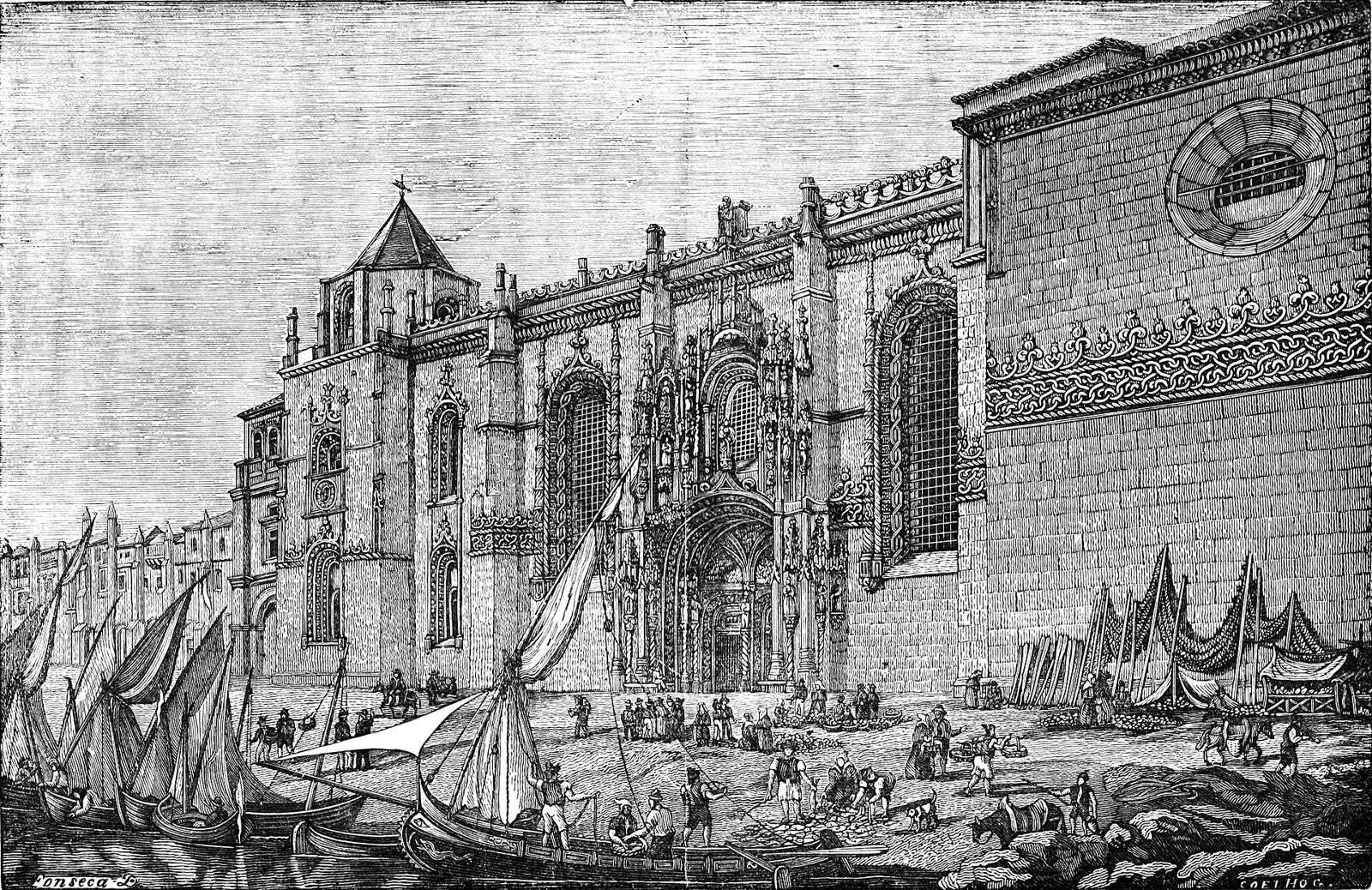
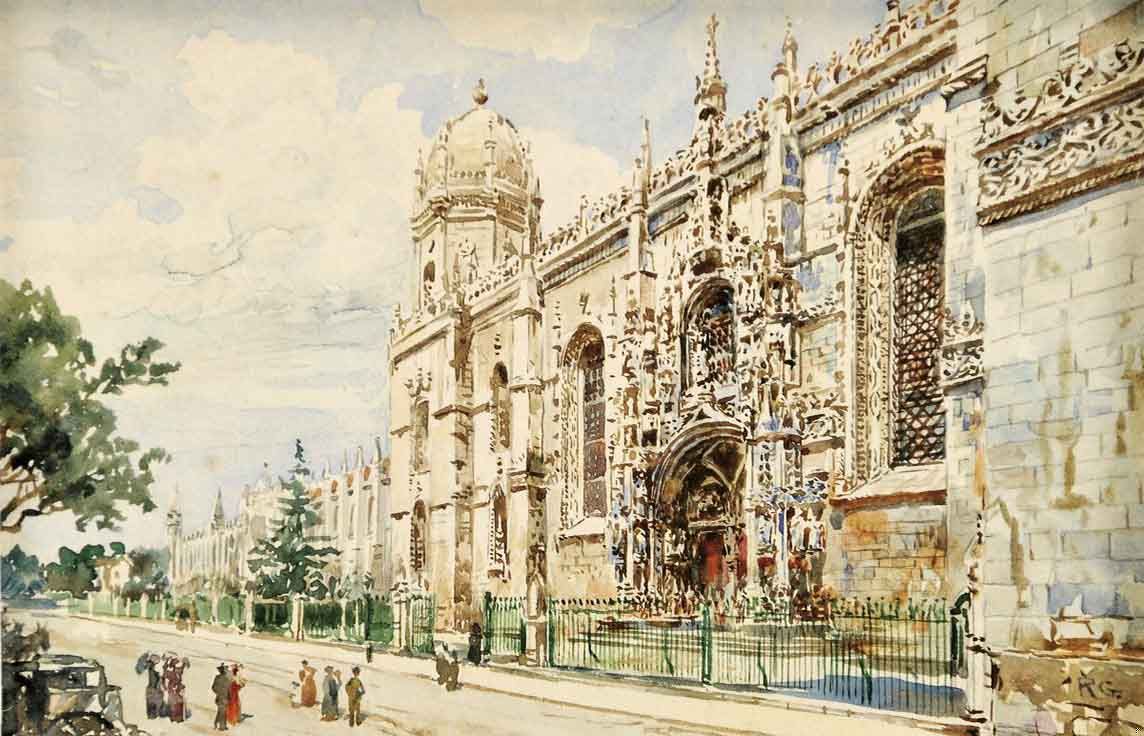
The west portal, the church's main door, is half hidden by a vaulted passage. On the left, Manuel I kneels with Saint Jerome, and on the right his queen, Maria, kneels with Saint John the Baptist. The monastery dates it to 1517 and calls it the first work of the Renaissance in Portugal. The royal couple are there because the church was meant as their burial place. Above the arch are three scenes, the Annunciation, the Nativity and the Adoration of the Magi, and on the pilasters six apostles. The heritage inventory notes the scenes show signs of reuse.
The south portal, finished in 1518 under João de Castilho and his team, is the show-piece on the street side. Saint Michael stands at the top, the Virgin and Child at the centre, and between the twin doors an armoured figure identified as Prince Henry the Navigator. Over the doors, two panels show Saint Jerome pulling a thorn from a lion's paw and doing penance in the desert. Below the arch niches hold apostles, then prophets, doctors and martyrs.
The church of Santa Maria
Under the choir. Just inside the west door the ceiling drops under the monks' upper choir. A chapel opens each side: the gilded woodwork of the Lord of the Steps on the left, the baptismal chapel on the right. Then come the two tombs people look for, Vasco da Gama's on the left and Camões's on the right. Both were finished in 1894 by Costa Mota and moved here around 1940.
The nave. Three aisles of equal height stand under one ribbed vault with no arches between bays, so it reads as one huge room. The octagonal pillars are carved with grotesques and rise about 16 metres. Ten small doors in the north wall led to confessionals, and the stained glass in the south windows is 20th-century work from cartoons by Abel Manta, dated 1936 to 1939.
The crossing. One vault, nearly 30 by 20 metres, spans the middle of the church with no support in the centre. It rests on stone brackets and on two thickened pillars. Two carved stone pulpits stand either side of the arch to the chancel.
The transepts. At the end of the north arm stands the tomb of Cardinal-King Henrique, and at the end of the south arm that of King Sebastião, each on elephants and dated 1682. The monastery says the remains of Henrique were moved here that year. Sebastião's Latin epitaph says the tomb holds him "if the report is true", and some historians have asked for the bones to be tested. Along the sides, plain tombs hold children of Manuel I and of João III.
The chancel. Queen Catarina's chancel is plain and classical after the carved nave: a coffered marble vault, a silver tabernacle shaped like a small temple, and the tomb chests of Manuel I, Maria, João III and Catarina of Austria, all resting on marble elephants.
The cloister
The cloister needs the ticket. The ground floor was finished by 1519. Every surface is carved, with four arches to a walk. Read one arch slowly: royal badges, the cross of the Order of Christ, Passion medallions on the piers, plants and strange beasts. It is mostly secular, closer to a palace than a place of prayer.
Walk the four sides:
- South walk, against the church, with the confessional doors.
- West walk, with the doors to the refectory and the gatehouse, and a small basin and carved lion in the corner. Accounts of 1840 and 1925 describe it, and the corner was rebuilt in 1939 to 1942.
- North walk, with the tomb of the poet Fernando Pessoa, moved here in 1985, a column by Lagoa Henriques.
- East walk, with the Passion medallions, the Jerome reliefs and the doors to the sacristy and chapter room.
The garden in the middle is seen from the walks only. It once held a square pool with an island and fountain, built 1567 to 1570 and dismantled in 1859, according to the inventory. The inner corners are cut to make an octagon inside the square.
The rooms around the cloister
- The refectory, built 1517 to 1518 under one low vault, with a twisted stone cord running round it and tile panels of Joseph in Egypt dated about 1780 to 1785.
- The chapter room, planned for monks' meetings and never used for them. It was finished from the 1880s to hold the tomb of the historian Alexandre Herculano.
- The great stair to the upper storey, on the west side beside the reception. The hall it once led to, the Hall of Kings, was pulled down in the 1860s.
Two spaces are uncertain. The monastery's plan names the sacristy, with its single central column of 1517 to 1520, and the upper choir, with stalls of 1548 to 1550. We could not find a dated source saying either is open to ticket holders, so do not plan around them. The old library and the offices on the upper floor are not visitor spaces.
The upper cloister
The upper arches are round where the lower ones are flattened. The ground floor and two walks above it were complete by 1519, and the rest was taken up again from 1540. Much of what you see up here, from the gargoyles to the columns dividing the arches, was restored in 1886. Gargoyles with a channel cut in them are the originals of the 1500s, and those without one were added in the 1800s. The parapet of medallions and busts is by Diogo de Torralva and dates from the 1540s.
What is real, and what is revival
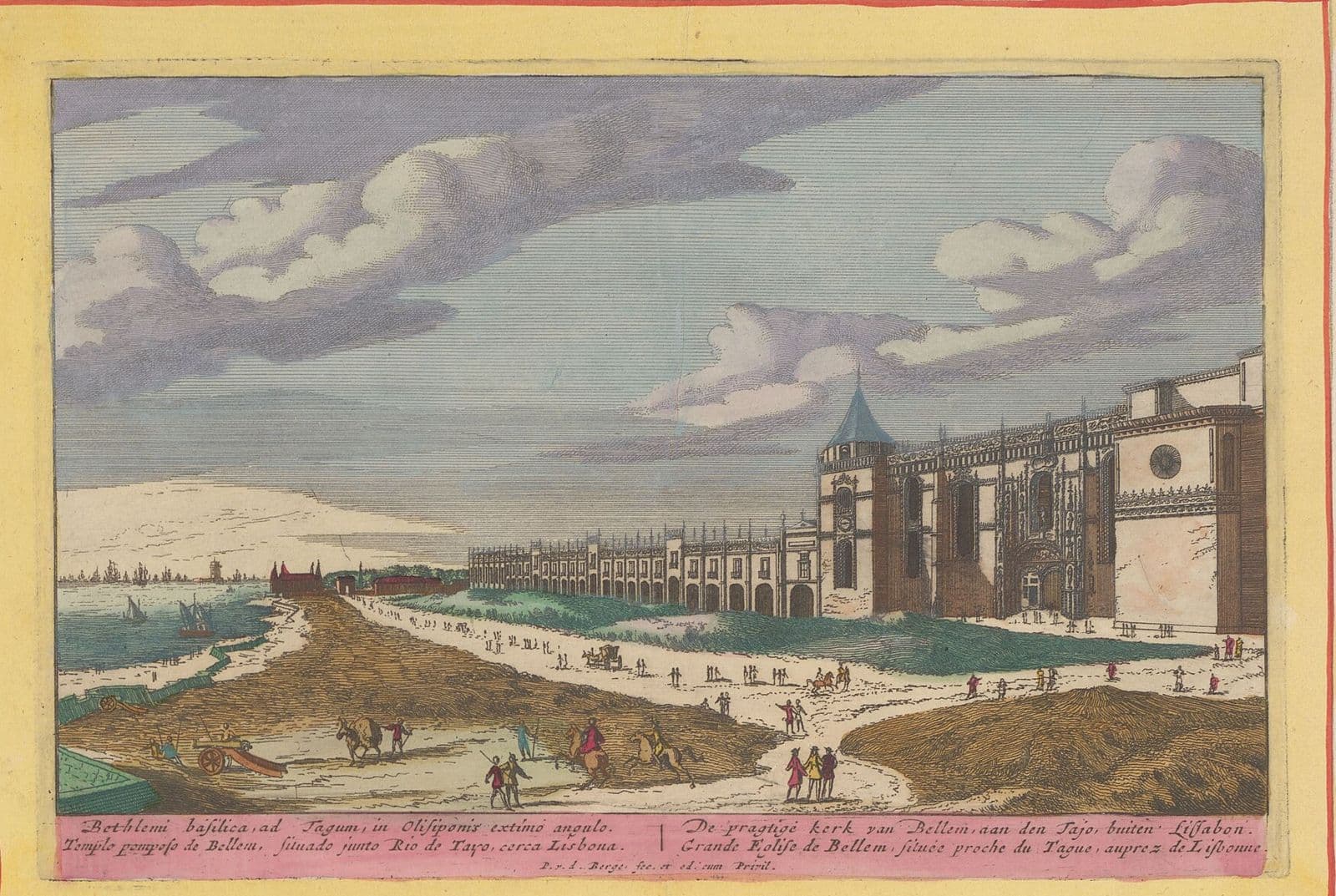
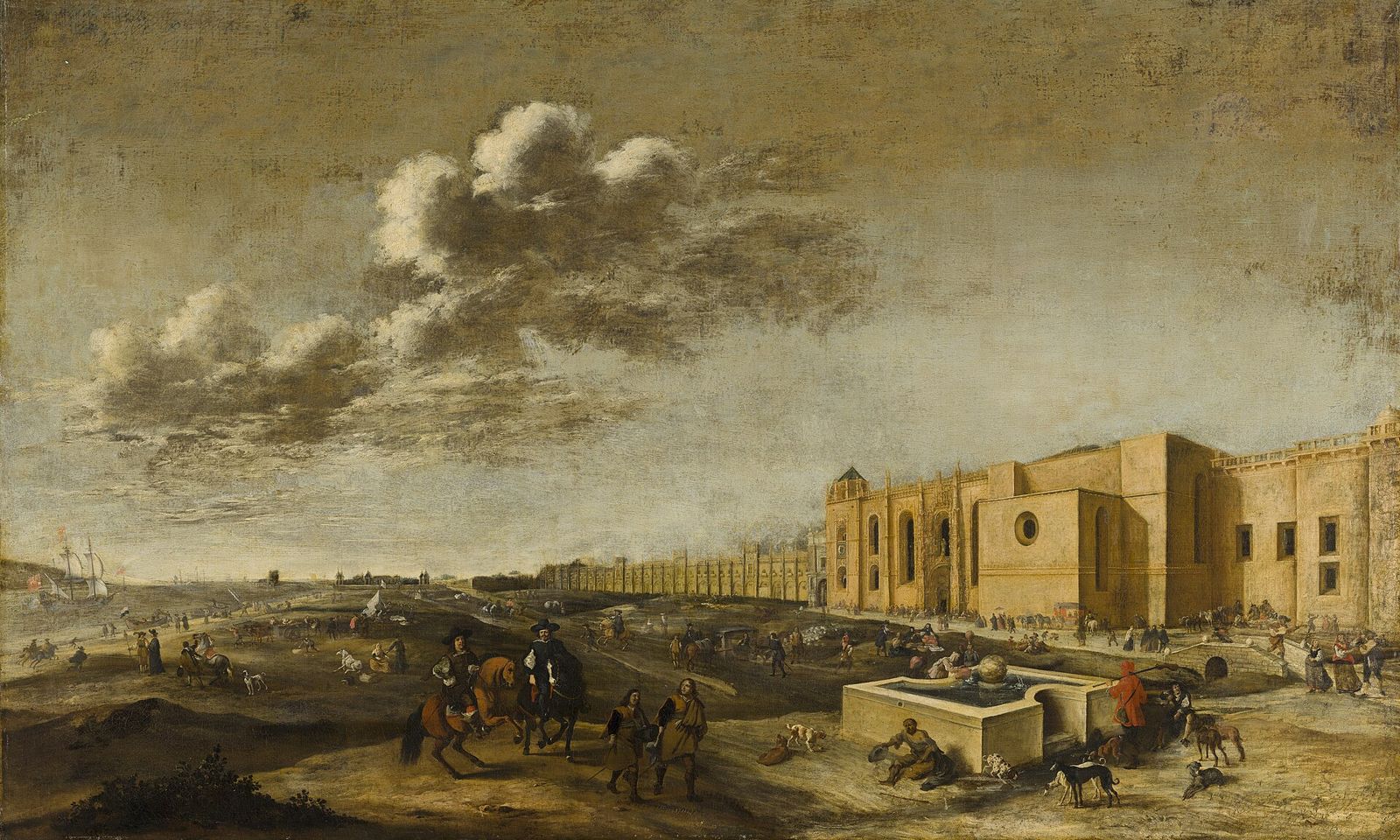
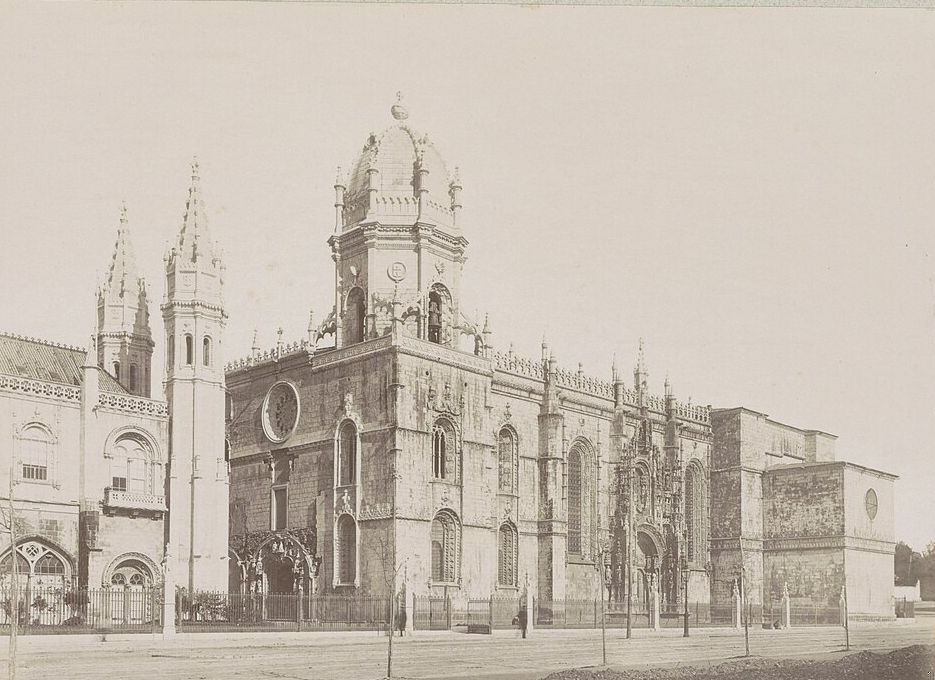
The church, cloister, sacristy and refectory are Manueline, in the heritage inventory's classification. The tower's domed top, the old dormitory wing and the chapter room as seen are neo-Manueline, a romantic revival of the 1800s. The wing's central block was meant to carry a huge spire and collapsed on 18 December 1878, killing ten workers. How to tell the two buildings apart by eye is worth a few minutes on the pavement before you go in.
What is not in this guide
Two museums sit in the same complex, the National Archaeology Museum and the Maritime Museum. They are separate, they have their own entrances, and Roamer's guide does not cover them.
How this fits Roamer
Roamer's guide to the Jerónimos works space by space, in English, at your own pace with no group. Open the portal, the tombs or a cloister walk, hear the story, and skip what you do not want. It is independent and not affiliated with the monastery, and admission is separate. You can find it here: the Jerónimos Monastery guide. For the streets outside, see the Belém walk.
Cover: the church front and south portal seen across Praça do Império. Photograph by Igor Passchier, Pexels.
Frequently asked questions
- Is the Jerónimos Monastery church free?
- Yes. The monastery's own rules give the church its own entrance line with no ticket. The church is open Tuesday to Saturday from 10:30 to 17:00, and on Sundays and religious holidays from 14:00 to 17:00. It is a working parish church, so if a service is on, wait quietly until it ends. The monastery says access to the church can be limited at times. The cloister, the refectory and the chapter room are a separate paid visit.
- When is the Jerónimos Monastery closed?
- On Mondays, on 1 January, Easter Sunday, 1 May, 13 June and 25 December, and possibly for state events. The cloister is open Tuesday to Sunday from 09:30 to 17:30 with last entry at 17:00, and the ticket offices close at 16:30. These hours were read on the monastery's site on 2 November 2026, so check the visit page before you go.
- Do you need to book tickets for the Jerónimos Monastery cloister?
- Yes, book ahead. The monastery says its tickets often sell out and cannot be bought on the day. Entry is by timed slot, mostly an hour long, with a limit of 300 visitors in the cloister at one time and 3,500 a day. The church needs no ticket, so a missed slot still leaves you the portals and the church.
- Is there an audio guide at the Jerónimos Monastery?
- The monastery says it does not provide audio guides or audio systems. Roamer's guide is independent, in English only, and is not a ticket: it does not get you into the cloister. Listen on headphones, because loud talking is forbidden inside and no rule in the monastery's regulations mentions phones or headphones either way.
- How much of the Jerónimos Monastery is original?
- The church, the cloister, the sacristy and the refectory are classed as Manueline work of the 1500s. The domed top of the bell tower, the long wing and the chapter room as you see it are revival work of the 1800s, and the cloister's upper storey was restored in 1886. Most of the monastery's ropes, fish, anchors and ships are in the restored parts.
Ready to experience it?
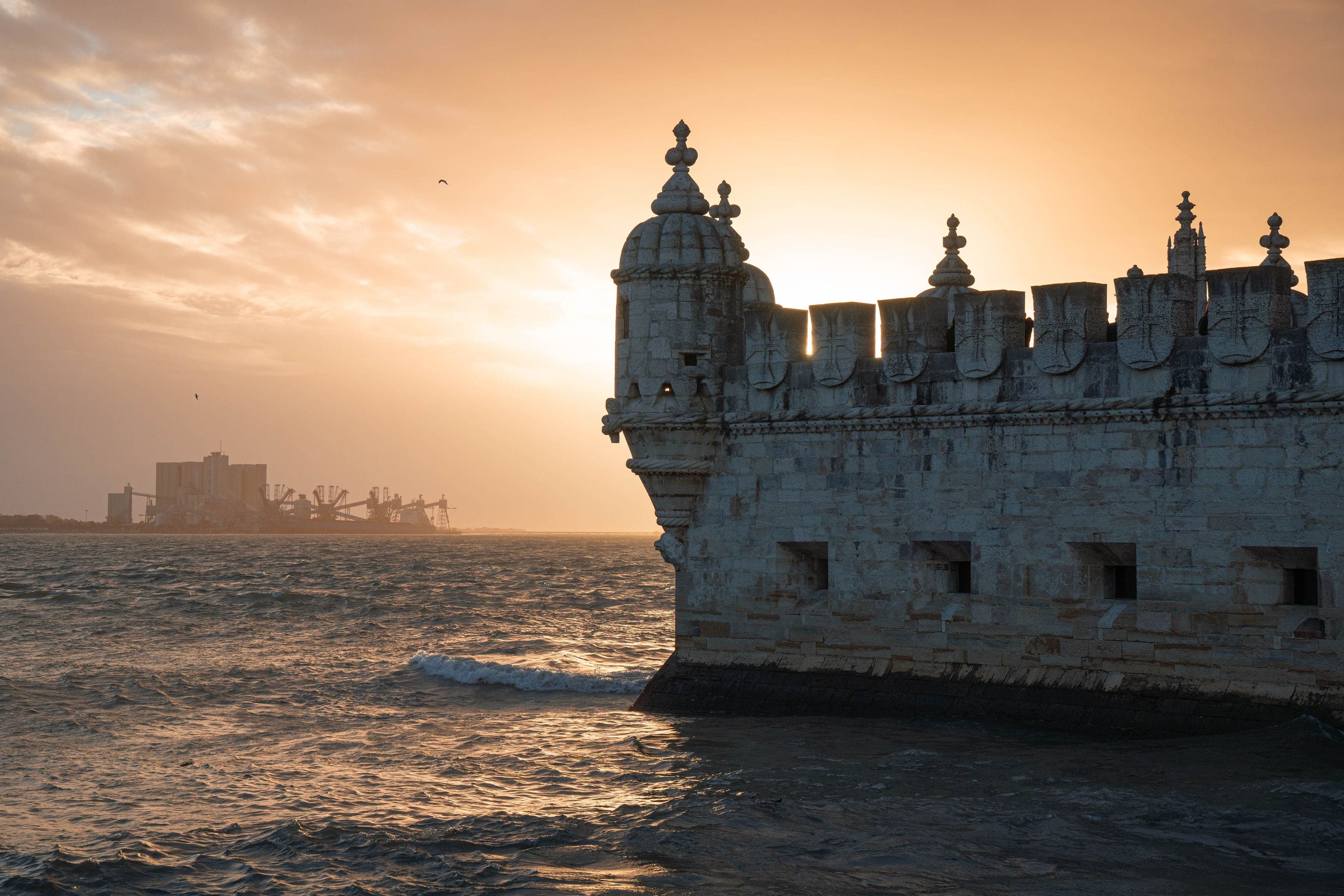
Belém: The Shore That Moved
100 min · 3.9 km · easy
More from Lisbon
Explore more at your own pace.
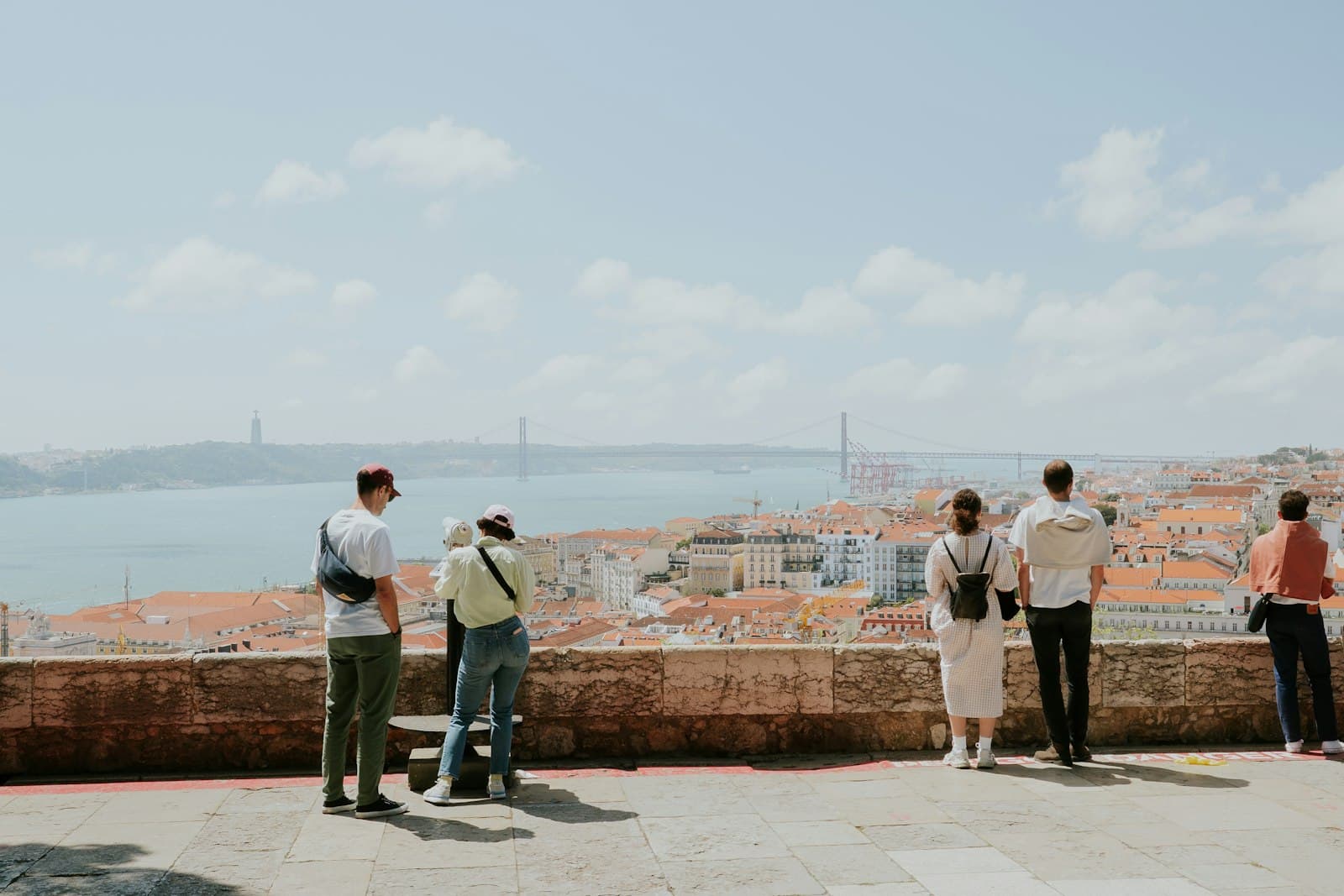
Best Architecture Walking Tours in Lisbon (2026)
Camões's Tomb at the Jerónimos: The Poet and the Doubt
Real or Revival: How to Tell the Jerónimos of the 1500s from the 1800s
Vasco da Gama's Tomb at the Jerónimos: Whose Bones Are Inside?
What the Jerónimos Cloister Carving Really Shows