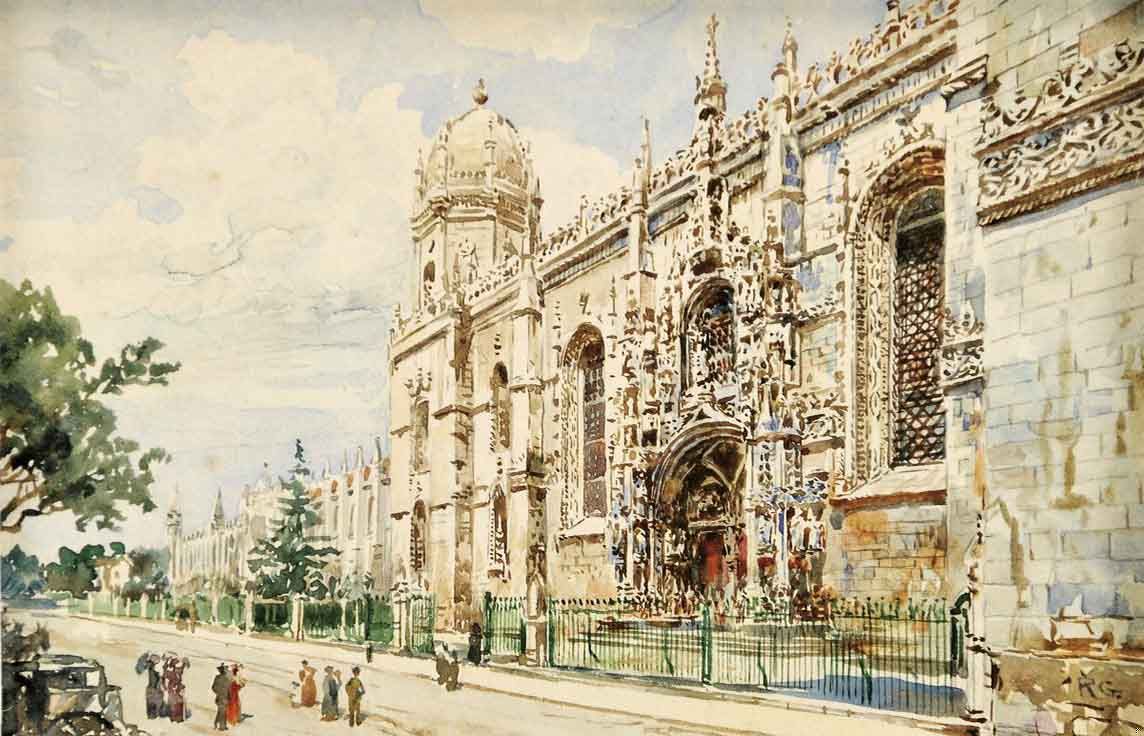
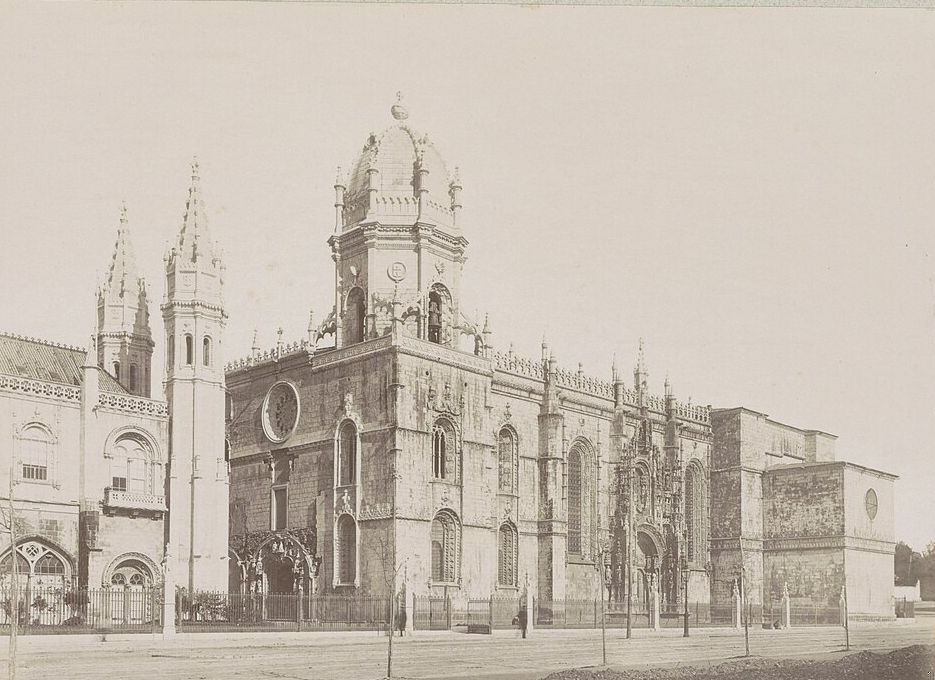
The church, cloister, sacristy and refectory of the Jerónimos are Manueline work of the 1500s, in the heritage inventory's classification. The domed top of the bell tower, the long wing (the old dormitory) and the chapter room as you see it are neo-Manueline revival of the 1800s. The wing's new central block, three storeys under a great spire, collapsed on 18 December 1878 and killed ten workers, and the wing was finished without the spire in 1903 to 1904. Tell them apart by shape (a long flat church against a domed tower and end towers), by subject (royal badges and faith against ropes, fish, anchors and ships) and by humility, because a rope alone proves nothing.
This monastery was built twice: once in the 1500s and again, on its surface, in the 1800s. You can learn to read both from the pavement, without a ticket. Three tests do most of the work.
Test one: read the shape
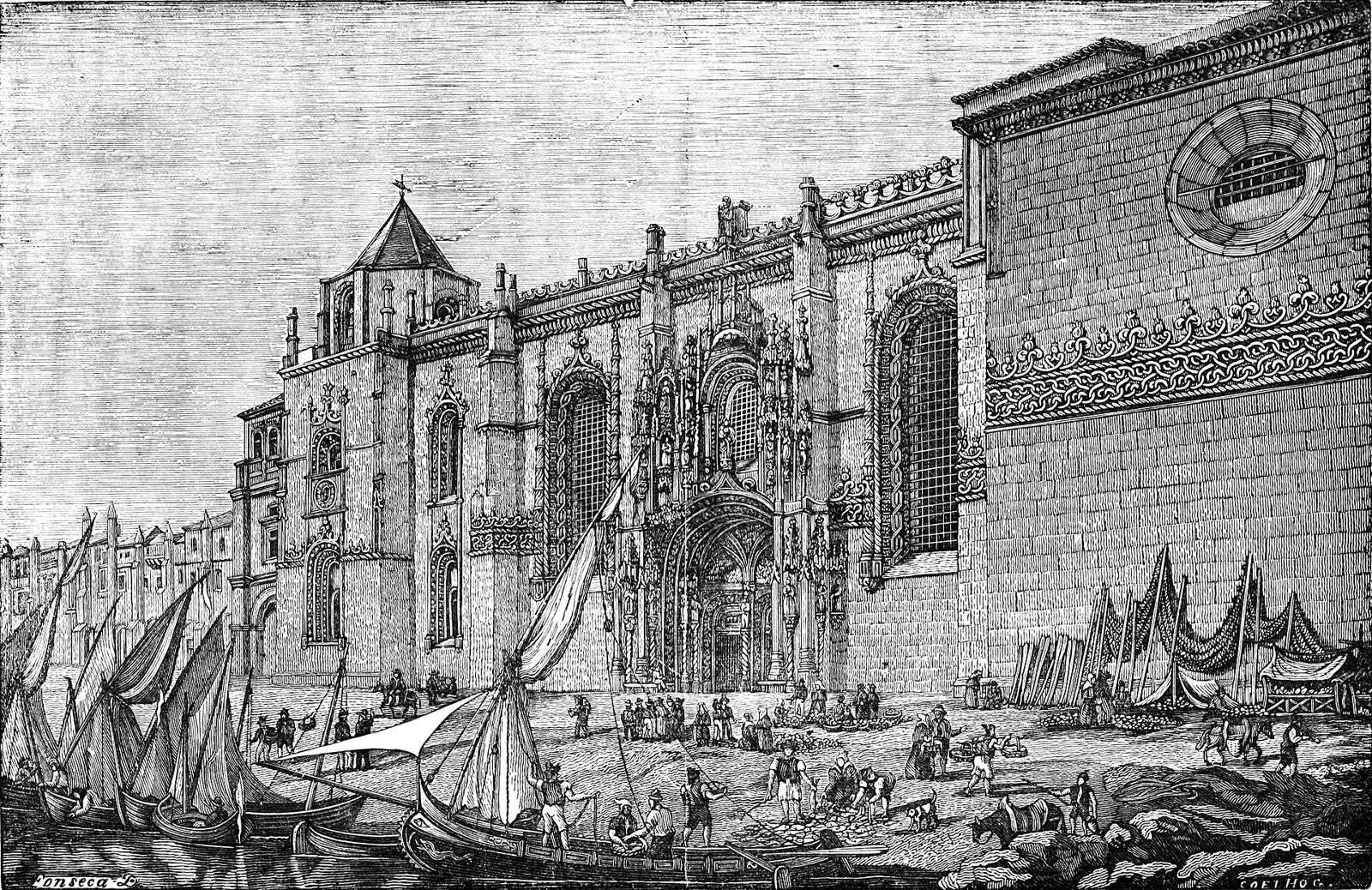
The church of the 1500s is one long, flat block under a single roof. What leaps above it is mostly the 1800s: the domed top of the bell tower with its flying buttresses, and the end towers and stone tracery of the long wing. The dome on the tower, dated 1877 to 1878 and credited to the architect Cinatti, is a good place to start. The heritage inventory sorts the monastery for us. It classes the church, cloister, sacristy and refectory as Manueline, and the tower top, the old dormitory and the chapter room as revivalist.
Test two: read the subject
Hear a stop from this walk
Torre de Belém: Once in the River
Ropes, fish, anchors, ships. People call this the sea turned to stone and credit the voyagers. But the monastery itself says that most of the maritime ornament seen in the building is in the parts restored in the 1800s. The Manueline of the 1500s speaks more of the king and the faith: royal badges and arms, the cross of the Order of Christ, plants and strange creatures. The full story of the cloister's carving is in what the cloister carving really shows.
Test three: stay humble
Twisted stone cord does appear in true work of the 1500s. A thick stone cord runs round the refectory of 1517 to 1518, and the south front has twisted colonnettes. So one rope proves nothing, and this guide does not claim to date any particular one.
And the revival reached the best-preserved parts. The south portal was carved in 1517 and 1518, but the niche above it was raised in 1877 to 1878. Neo-Manueline was no fraud. It was a romantic revival, and the monastery's own account says it brought in nautical motifs.
The wing that fell
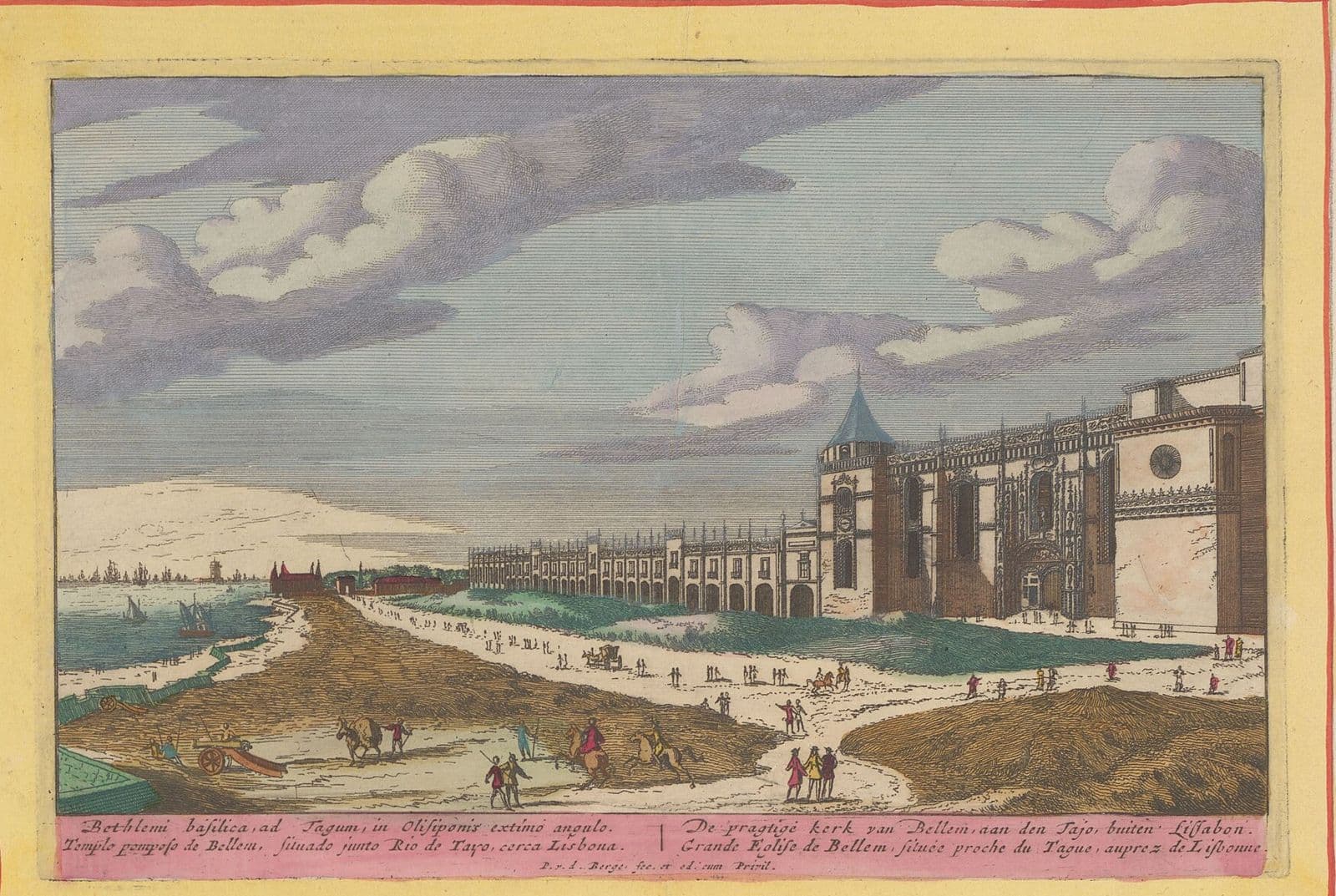
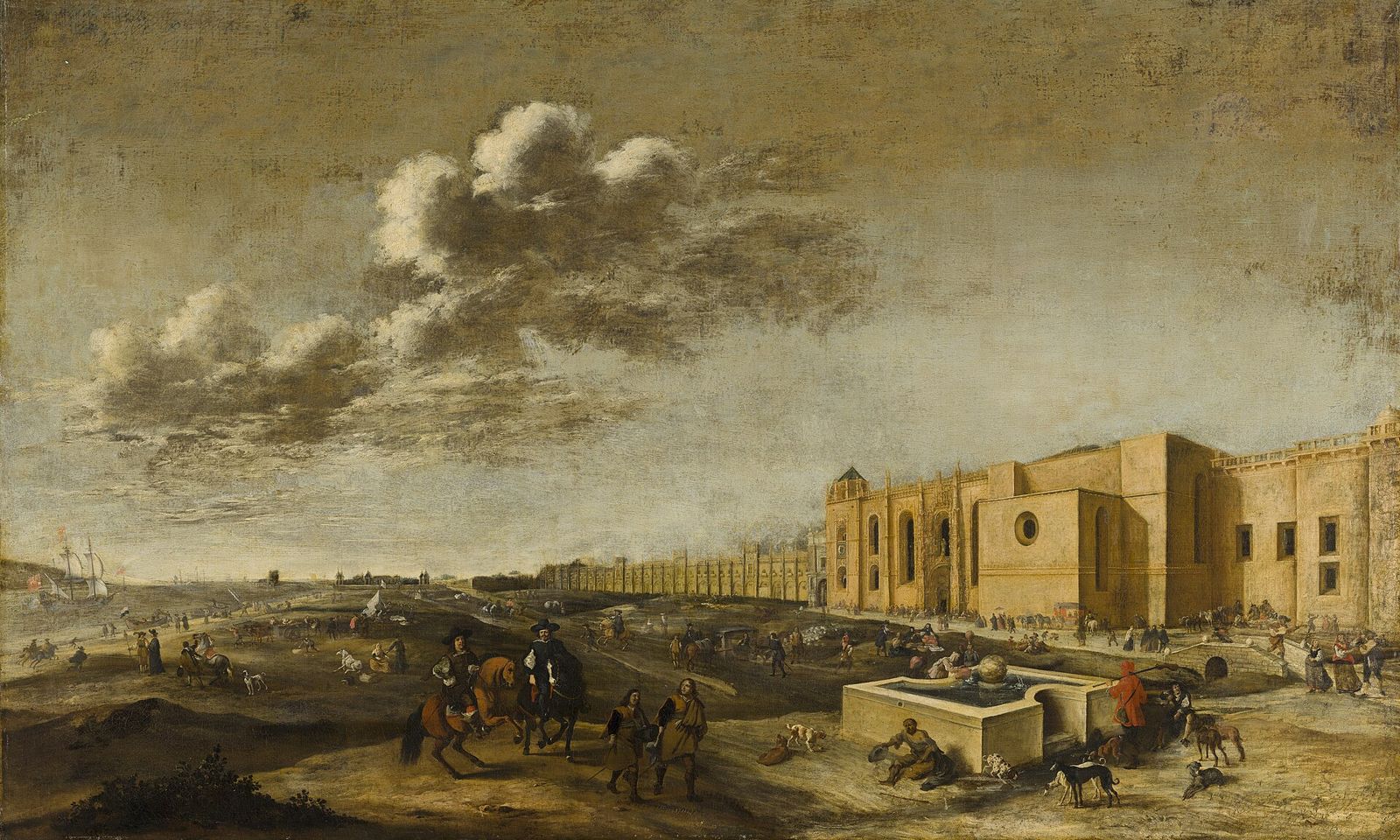
Walk along the pavement to where the church ends and look along the long front running on from it. This was the monks' dormitory of the 1500s, and the revival of the 1800s deeply altered its face. In 1859 and 1860 the head of the Casa Pia, the charity that occupied the monastery from 1834, wanted the unfinished house completed, and designers came and went.
In 1867 the work passed, by the inventory's and Cunha Leal's dating, to Rambois and Cinatti, Italians who first made their names as set designers at the São Carlos opera house (the monastery's own term). One more historian, Moreira, dates their work to 1874 to 1878, so the start date is not settled. They crowned the church tower with its dome, then raised a new central block here, three storeys under a huge spire, on sandy ground.
In July 1878, as the spire rose, it showed signs of instability. On 18 December 1878 it collapsed and ten workers died. This is confirmed in four sources. Cinatti died the following year. An inquiry followed, then twelve schemes in 1880 and years of argument. In 1896 Domingos Parente da Silva won a competition, and the wing was finished in 1903 to 1904 without the spire. The central block's top was altered again in 1942.
The central block now houses the National Archaeology Museum, with the Maritime Museum to the west. Neither is part of Roamer's guide.
Inside, the same story
The revival also reached indoors, and you can spot it on the same three tests.
- The upper cloister was restored in 1886: gargoyles, small buttresses, niche tops and the shafts splitting the arches, on a design by Raimundo Valadas. Gargoyles with a channel cut in them are originals, and those without one are decoration added in the 1800s.
- The chapter room, planned for monks' meetings and never used for them, was handed to the Herculano monument committee in 1884 and its vault and decoration finished from 1886. Its doorway of 1517 to 1518 is much older than the room behind it.
- The upper arcades had been walled up in the early 1800s while soldiers were quartered in the galleries, and the Casa Pia's head ordered them opened in 1859.
Where sources disagree
- Rambois and Cinatti's start: 1867 in the heritage inventory and Cunha Leal, 1874 to 1878 in Moreira.
- The cloister's ground floor: finished by Boitaca, says the monastery; Castilho held the contract from 1517 and finished it by 1519, says the inventory.
- The 1755 earthquake: sources differ on what fell and when, and the popular story that the monastery came through untouched is false.
See it
The tower top, the wing and the south portal can all be read from public space, so no ticket is needed for most of this. Roamer's independent English audio guide has a building route, nine stops and about 40 minutes, that covers the beach chapel, the money, the revival and the wing that fell, and it needs the cloister ticket only for its last stop. Start with the Jerónimos Monastery guide or read the whole visit in the Jerónimos, space by space. The guide is not affiliated with the monastery and admission is separate.
Cover: the dark pinnacled church end and dome beside the pale front. Photograph by Efrem Efre, Pexels.
Frequently asked questions
- Is the Jerónimos Monastery original?
- Mostly the 1500s in its core, with a large 1800s overlay. The heritage inventory classes the church, cloister, sacristy and refectory as Manueline, and the tower top, the old dormitory and the chapter room as revivalist. The cloister's upper storey was restored in 1886, and even the south portal of 1517 to 1518 had its niche raised in 1877 to 1878.
- What happened to the long wing of the Jerónimos in 1878?
- Its new central block, three storeys under a huge spire, collapsed on 18 December 1878 and ten workers died. Signs of instability had shown in July, as the spire rose. An inquiry and twelve schemes followed, Domingos Parente da Silva won a competition in 1896, and the wing was finished in 1903 to 1904 without the spire.
- What is neo-Manueline?
- A romantic revival of the Manueline style in the 1800s, which added nautical motifs to the monastery. It was not a fraud: it was a revival, adding the sea it wished had been there. Most of the monastery's ropes, fish, anchors and ships are in the parts restored then.
- What occupies the long wing today?
- The National Archaeology Museum is in its central block, with the Maritime Museum to the west. Both are separate from the monastery, and Roamer's guide does not cover them.
Ready to experience it?
Belém: The Shore That Moved
100 min · 3.9 km · easy
More from Lisbon
Explore more at your own pace.
Best Architecture Walking Tours in Lisbon (2026)
Camões's Tomb at the Jerónimos: The Poet and the Doubt
The Jerónimos Monastery in Lisbon: What to See, Space by Space
Vasco da Gama's Tomb at the Jerónimos: Whose Bones Are Inside?
What the Jerónimos Cloister Carving Really Shows