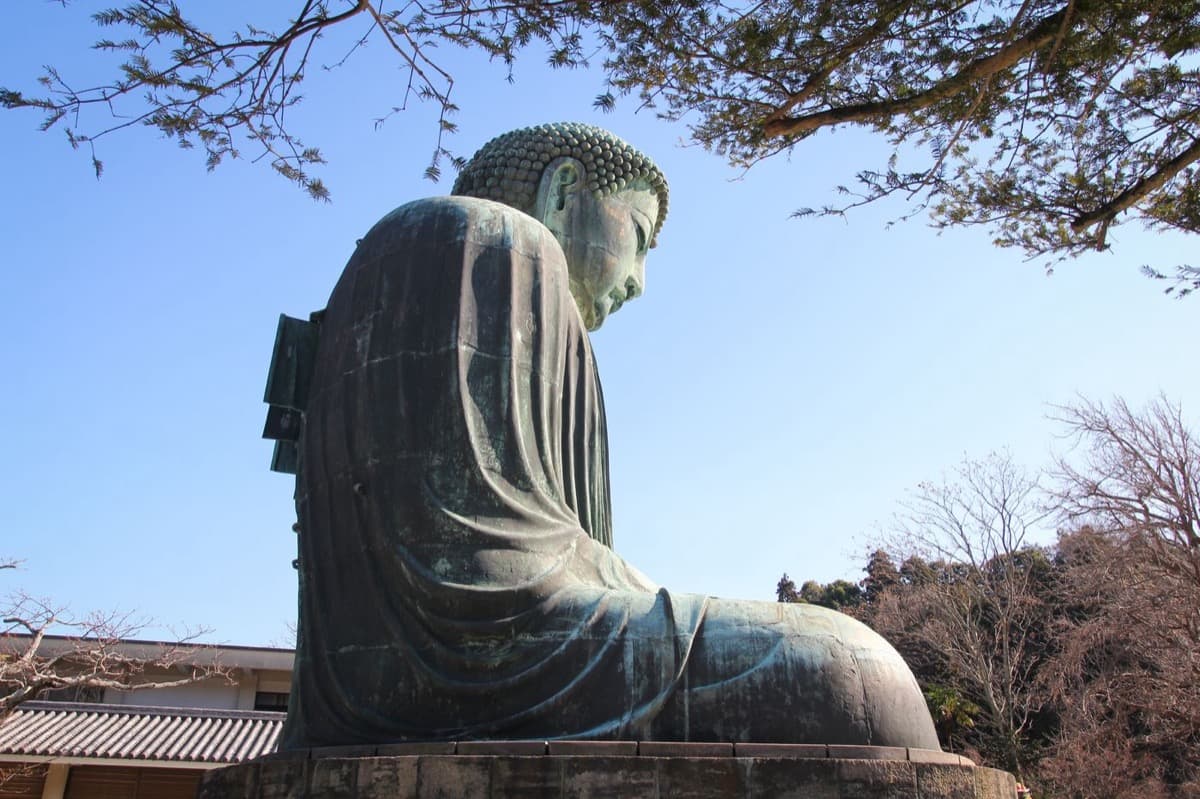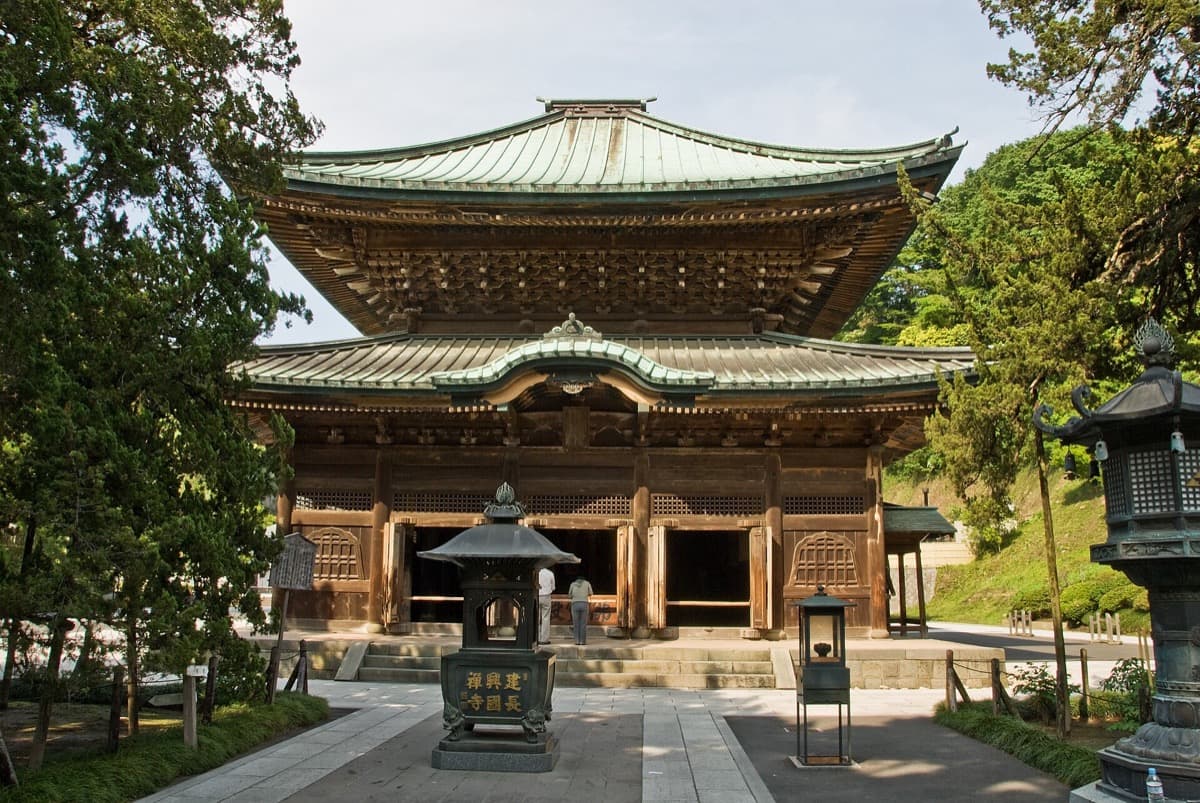
In the temple valleys of northern Kamakura stands the monastery where Zen, as Japan came to practice it, took institutional root. Kencho-ji is the oldest dedicated Zen training monastery in Japan, founded in 1253 for a Chinese master who brought the discipline to the samurai capital, and it ranks first among the great Zen temples of Kamakura. Read it not just as an old temple but as a beginning, the point where imported Chinese Zen became a Japanese institution under the patronage of the warriors who ruled the country, and the whole landscape of temple-filled valleys around it comes into focus.
A Chinese master and a samurai regent
The founding is a story of import at the highest level. In the thirteenth century, the Hojo regents who governed Japan from Kamakura were drawn to Zen, the austere, meditative form of Buddhism then flourishing in Song-dynasty China, as a discipline suited to the warrior class. The regent Hojo Tokiyori invited a Chinese monk of the Song, Lanxi Daolong, known in Japan as Rankei Doryu, to establish a proper Zen training monastery in Kamakura. Built on the orders of Emperor Go-Fukakusa, the temple was completed in 1253, in the fifth year of the Kencho era, and it took its name from that era. So Kencho-ji is precisely dated and precisely purposed: Japan's first temple built specifically as a Zen dojo, a training center for meditation, under a Chinese master and a samurai patron.
That combination is the key to Kamakura itself. This was the capital of the warrior government, and Zen was the warriors' chosen path, so the city became studded with Zen monasteries in its wooded valleys. Kencho-ji is the eldest and the greatest of them.
First among the Five Mountains
Hear a stop from this walk
The Kamakura Gozan: The Five Mountains
Kencho-ji sits at the very top of a formal hierarchy. The Hojo regents organized the leading Zen temples into a ranked network known as the Five Mountains system, the Gozan, and Kencho-ji ranked first among the Five Great Zen Temples of Kamakura. That primacy was not honorary. It meant Kencho-ji was the leading center of Zen training and authority in the eastern capital, the model the others followed. It was built on a grand scale, originally laid out with a full temple compound and dozens of subtemples, a monastic city devoted to meditation.
Traces of its founding endure in living things as well as buildings. Ancient Chinese junipers on the grounds are said to have been brought as saplings from Song-dynasty China by the founder Rankei Doryu himself, so that the trees are, in a sense, contemporaries of the temple's beginning, rooted here since Zen first arrived.
Why it anchors the temple valleys
Roamer's The Temple Valleys: Zen in the Northern Hills reads the quiet, wooded northern district of Kamakura as a landscape shaped entirely by Zen, and Kencho-ji is its keystone. The walk moves among temples that belong to the same world Kencho-ji founded: the import temple of Engaku-ji, the round window of Meigetsu-in, the divorce temple of Tokei-ji where women could escape their marriages. Understanding that Kencho-ji is where Zen training first became a Japanese institution gives the whole valley its meaning. These are not scattered old temples. They are the descendants of a single imported discipline that entered Japan, at scale, right here in 1253.
Reading it in place
Walk through Kencho-ji along its main axis, from the great gates toward the meditation hall, and let the scale register: this was built as a monastic city for training the mind. Find the ancient junipers and remember they are said to descend from saplings the Chinese founder carried across the sea. Hold the date, 1253, and the fact that this is where Zen first became a Japanese institution, then carry that frame into the other temples of the northern valleys. The temple is calmest and most contemplative early in the day, which suits it.
The monastery anchors Roamer's The Temple Valleys: Zen in the Northern Hills. To plan a day, see one day in Kamakura, and for the full set of routes, browse Kamakura walking tours.
Sources
- Wikipedia, Kencho-ji: the temple as the oldest Zen training monastery in Japan, ranking first among Kamakura's Five Great Zen Temples, built on the orders of Emperor Go-Fukakusa and completed in 1253 in the fifth year of the Kencho era from which it takes its name, founded by the Chinese Song-dynasty monk Lanxi Daolong (Rankei Doryu) at the invitation of the regent Hojo Tokiyori, its place at the top of the Five Mountains (Gozan) system organized by the Hojo regents, its original large layout with subtemples, and the ancient Chinese junipers brought as saplings by the founder.
- Roamer tour transcript, The Temple Valleys: Zen in the Northern Hills (kamakura-zen-valleys), fact-audited: Kencho-ji as the oldest training monastery among the Kamakura Zen temples.
Ready to experience it?
The Temple Valleys: Zen in the Northern Hills
100 min · 3 km · moderate
More from Kamakura
Explore more at your own pace.
Kamakura Travel Guide: Day Trip from Tokyo, Getting Around, When to Go (2026)
One Day in Kamakura: The Perfect Day Trip from Tokyo (2026)
What to Eat in Kamakura: A Food Guide (2026)
Hase-dera: The Kamakura Temple of a Giant Kannon That Washed Ashore From the Sea
The Great Ginkgo of Tsurugaoka Hachimangu: The Tree, the Legend, and the Shogun Killed on the Steps