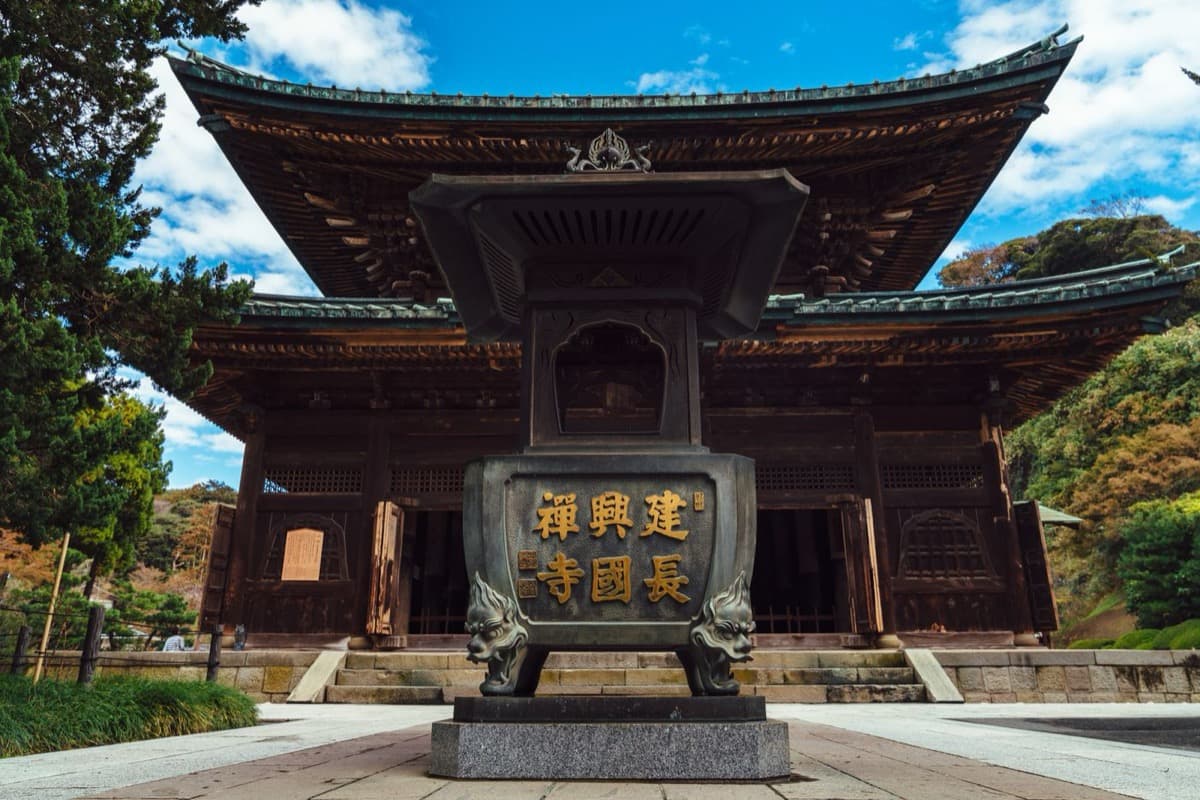
A linear walk down the wooded Kita-Kamakura valley, where thirteenth-century warrior rulers imported Zen from China and built its training monasteries like a government ministry. From the second-ranked Engaku-ji to the first-ranked Kencho-ji, you follow how a foreign meditation practice became the discipline of the samurai.
Start · Engaku-ji: The Import Temple
DirectionsStops
- 1
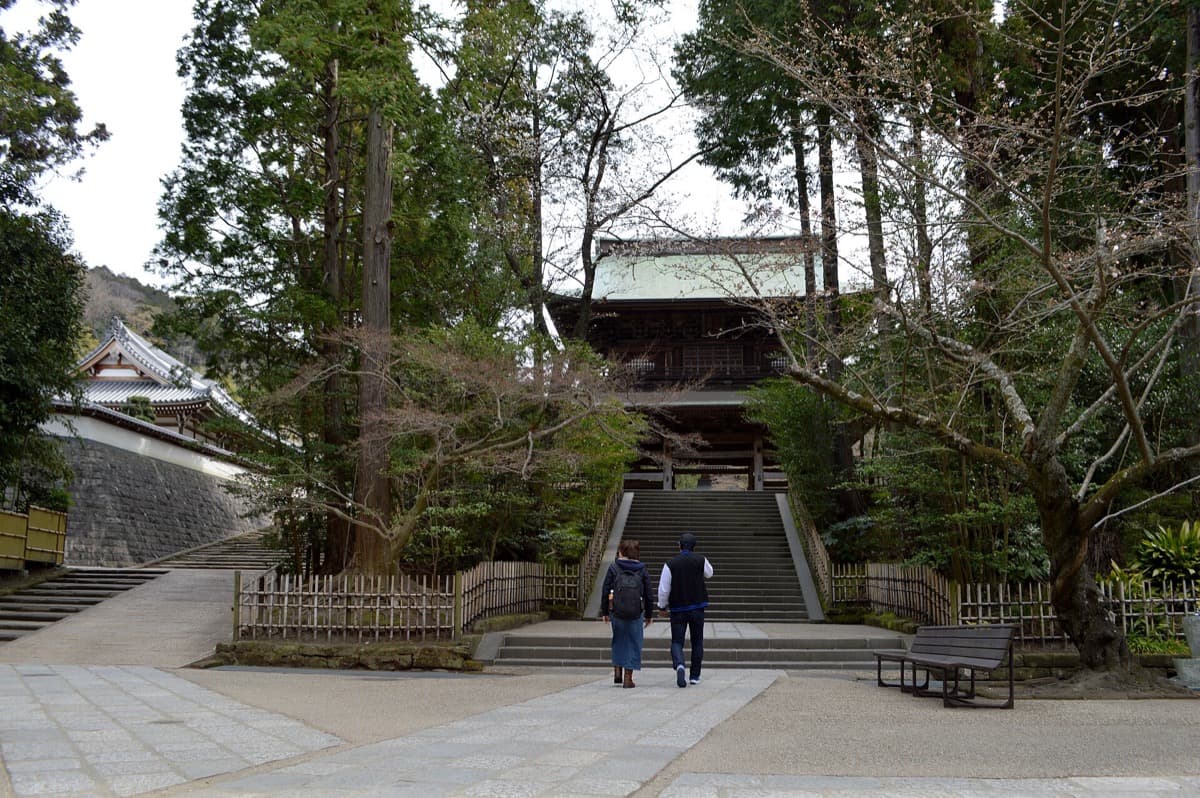
Engaku-ji: The Import Temple
A great Rinzai head temple raised by a Hojo regent and a Chinese master to honor the dead of the Mongol invasions, ranked second among Kamakura's Five Mountains.
- 2
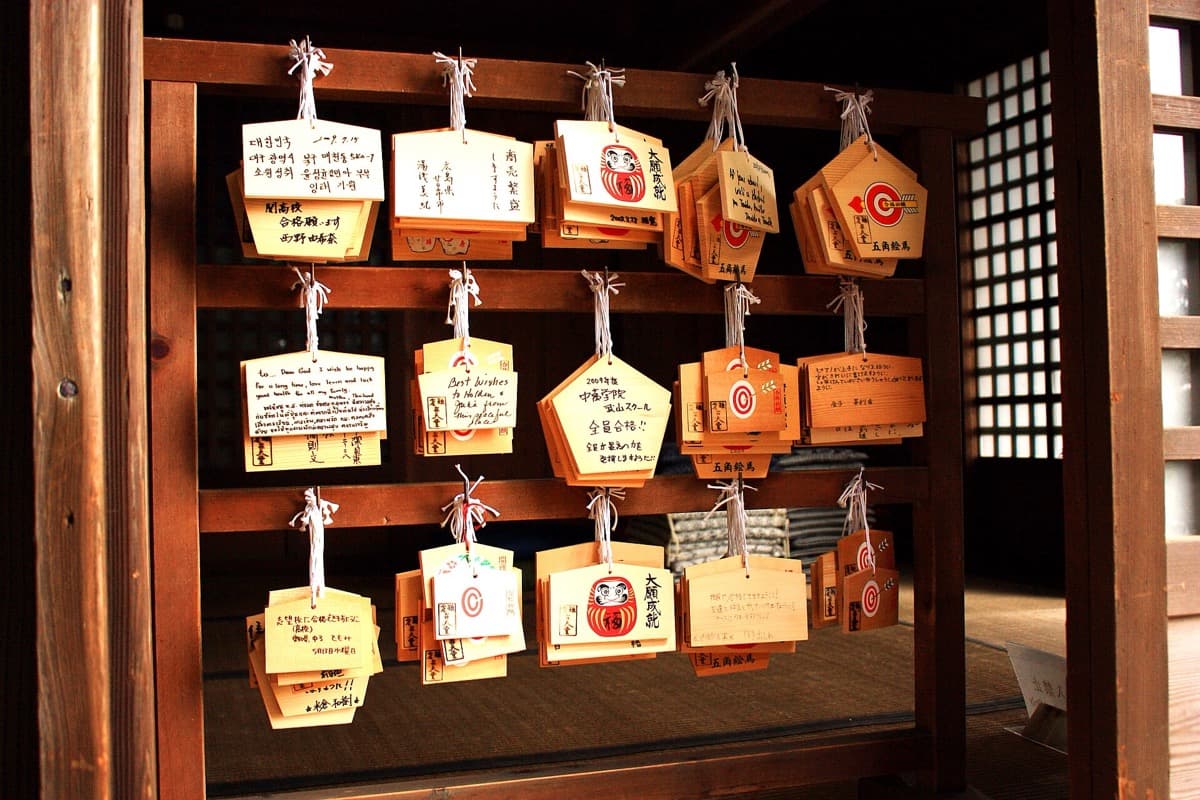
Tokei-ji: The Divorce Temple
A convent founded by a regent's widow that for centuries served as a legal refuge where women could win an official divorce.
- 3
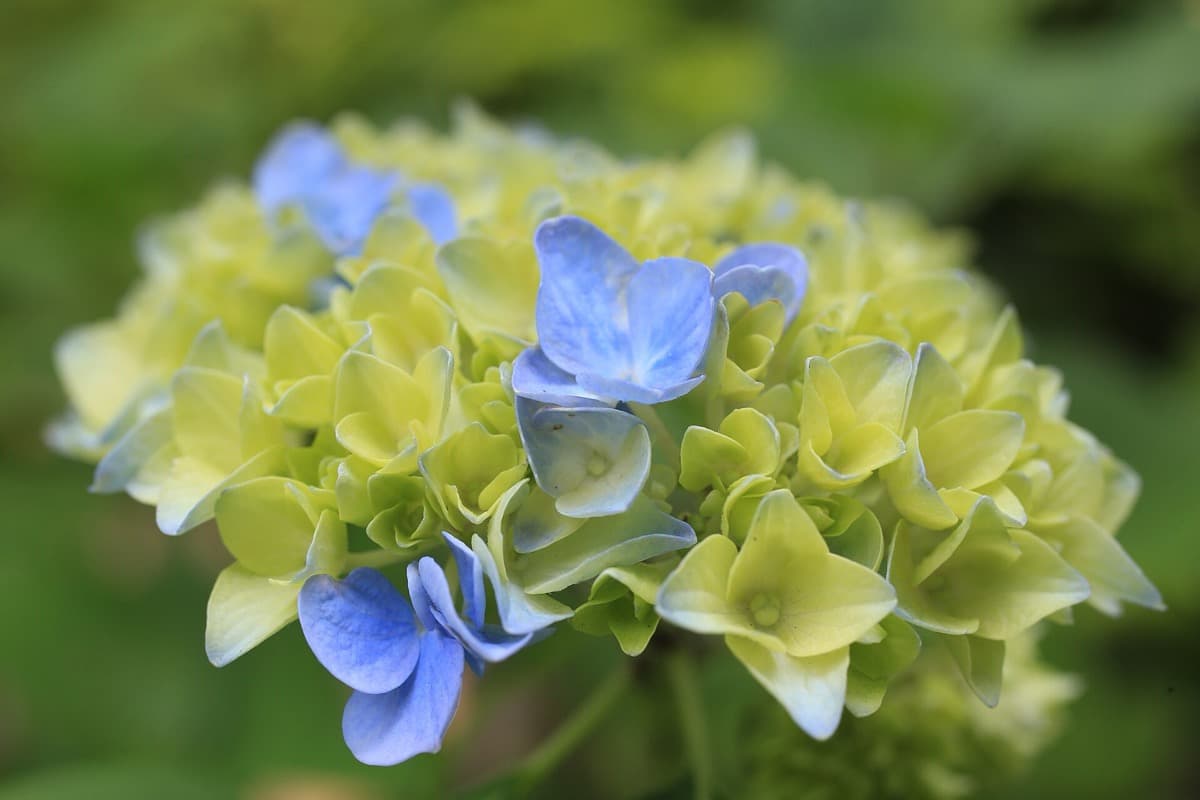
Meigetsu-in: The Round Window
A small Rinzai hall of the Kencho-ji school, famous for a circular Window of Enlightenment and for seas of early-summer hydrangeas.
- 4
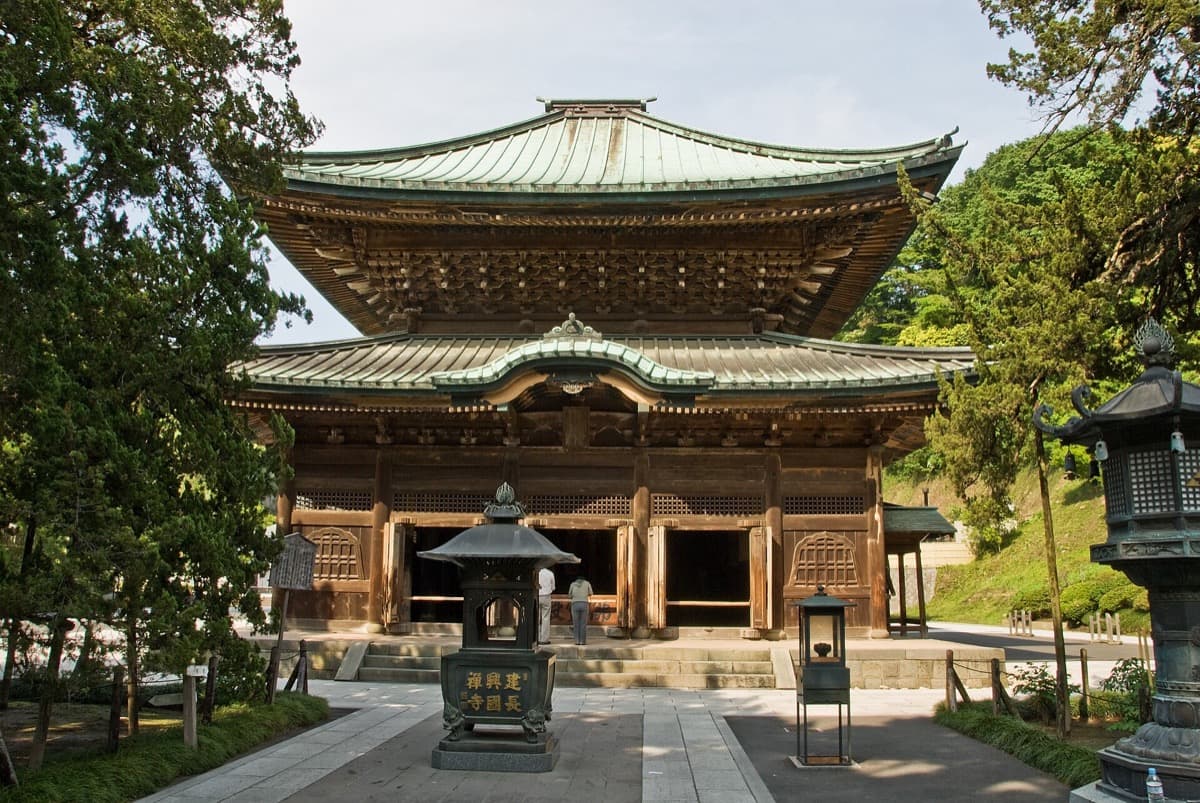
Kencho-ji: The Oldest Training Monastery
The first-ranked temple of the Kamakura Five Mountains, founded by a regent and a Chinese master and described as the oldest Zen training monastery in Japan.
- 5
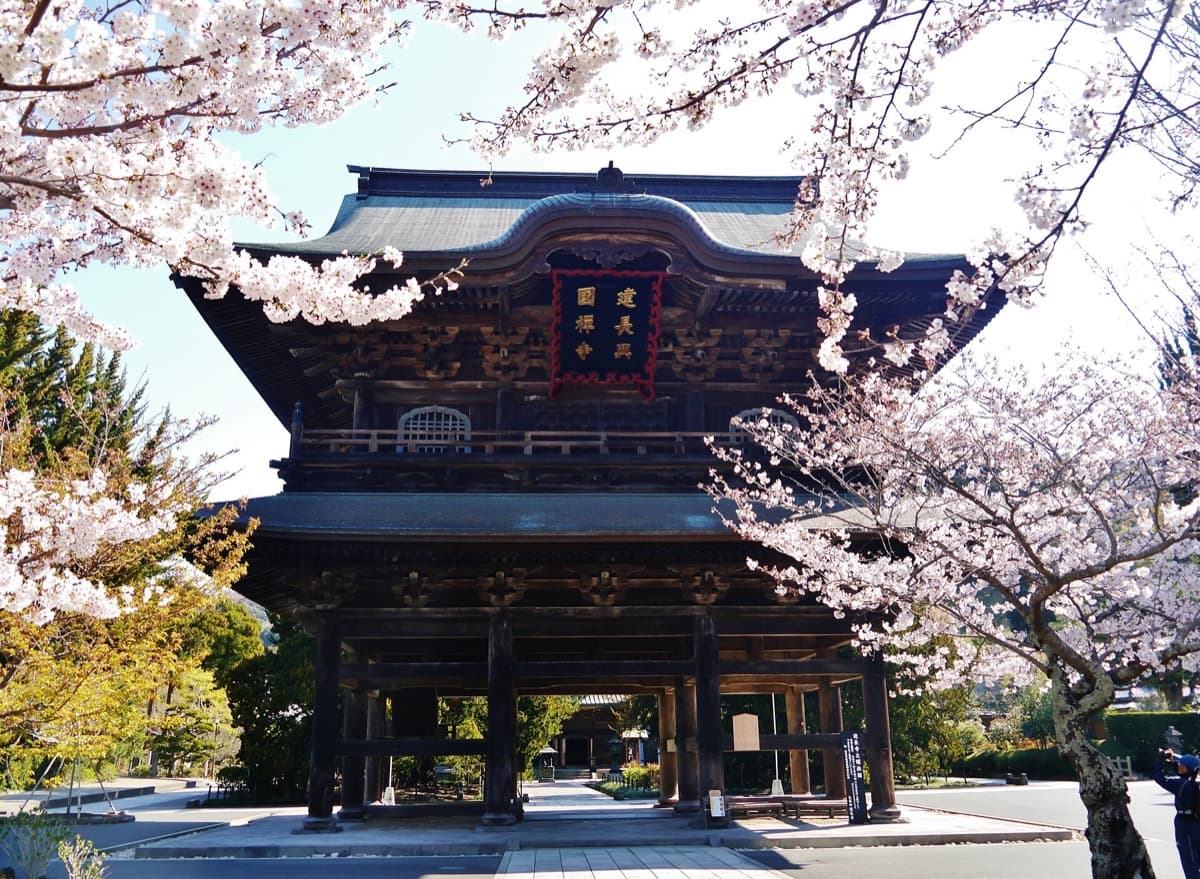
The Meditation Hall and Sanmon Gate
The great gate and halls along Kencho-ji's Chinese-style axis, where a living Rinzai community still practices behind a meditation hall closed to visitors.
- 6
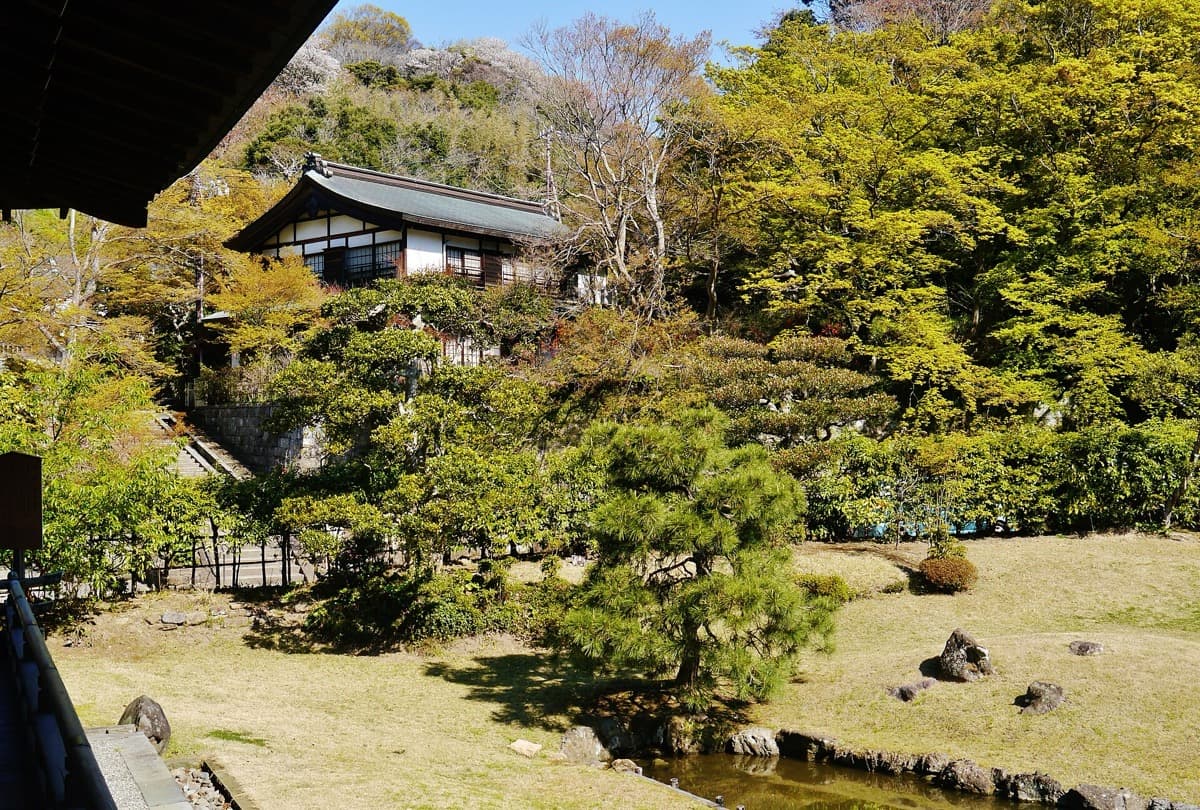
The Kamakura Gozan: The Five Mountains
The capstone idea, delivered inside the first-ranked temple: how Kamakura's Zen monasteries were later sorted into a formal ranking borrowed from China.
Details
Best Time to Visit
Early morning on a weekday, soon after the temples open around eight thirty, gives you the quietest grounds and the softest light in the valley. June brings the hydrangeas at Meigetsu-in into full bloom, which is beautiful but draws the heaviest crowds of the year, so arrive at opening if you come then. Late autumn offers fiery foliage framed in Meigetsu-in's round window with thinner crowds than hydrangea season.
Pro Tips
- •Start at Kita-Kamakura station and walk the valley downhill toward Kamakura; the whole route runs about two and a half kilometres and stays gently downhill in this direction.
- •Carry coins and small bills. Each temple charges its own admission, roughly five hundred yen at Engaku-ji, Meigetsu-in, and Kencho-ji, and around two hundred yen at Tokei-ji, and not all booths take cards.
- •Your Kencho-ji ticket covers the entire precinct, so stops four and five share one five hundred yen admission; keep the stub in hand as you walk the central axis.
- •If you want the round Window of Enlightenment at Meigetsu-in without a wall of people, arrive right at opening; the single window creates a natural bottleneck once tour groups appear.
- •Wear shoes you can slip off easily, since entering certain temple halls means removing them, and pack a small bag for them.
- •Budget more time than the distance suggests. The gardens, the cemetery at Tokei-ji, and the halls of Kencho-ji reward slow wandering, so two and a half to three hours is realistic.
Safety & Precautions
- •These are working temples with set hours and individual entry fees; most open around eight thirty in the morning and close in the mid to late afternoon, so plan the valley before closing time rather than arriving late in the day.
- •In June the hydrangea season at Meigetsu-in draws dense crowds and queues along the narrow approach lanes; come at opening, be patient, and keep to single file where paths are tight.
- •The valley and temple grounds involve stone steps, sloping paths, and uneven ground, some of it damp and mossy under the trees, so wear stable shoes and take care in the rain.
- •Kencho-ji is an active Rinzai training monastery where monks still practice, and its meditation hall is closed to the public; keep your voice low, follow posted no-entry and no-photography signs, and treat the halls and cemetery at Tokei-ji as places of quiet respect.
Travel advisory: Exercise Normal Precautions (Level 1).
Gallery
Related Reading
Go deeper on what you'll see, hear, and walk through.
Overview
Best Self-Guided Walking Tours in Kamakura (2026)
3 min
Overview
Kamakura Travel Guide: Day Trip from Tokyo, Getting Around, When to Go (2026)
5 min
Overview
One Day in Kamakura: The Perfect Day Trip from Tokyo (2026)
5 min
Thematic
Best Culture Walking Tours in Kamakura (2026)
2 min
Deep dive
Kencho-ji: Japan's Oldest Zen Training Monastery, Founded by a Chinese Monk in 1253
5 min
Deep dive
Tokei-ji: The Kamakura Convent Where Women Won Their Freedom
6 min
Read the walk
The full story of The Temple Valleys: Zen in the Northern Hills, in words. Prefer to listen? Play it narrated, from home or on location.
Introduction
This is Kamakura, in Japan, and this walk follows one narrow valley in the northern hills where a meditation practice imported from China became the spiritual style of Japan's warrior rulers. There are six stops, spread over roughly two and a half kilometres of mostly gentle downhill walking. If you move at your own pace, lingering where you like and skipping what does not hold you, plan on about two and a half to three hours, more if you stop for the gardens. Every stop stands on its own, so you can pause between temples, sit on a bench, or turn back whenever you please. Here is the thread that ties them together. In the thirteenth century the Hojo regents, the men who actually ran the warrior government, were drawn to Zen's austerity and discipline. They invited Chinese masters across the sea, gave them land in these quiet valleys, and built training monasteries in a concentration found nowhere else in the east of Japan. You will pass an import temple raised to honor the dead of a foreign war, a convent that once functioned as a legal escape hatch for women, a small hall famous for a single round window, and the oldest Zen training monastery in the country. At the end, standing inside the highest-ranked temple of all, you will hear how these places were later sorted into a formal ranking called the Five Mountains, a system borrowed straight from China. At each stop there is a hidden layer to find, the state project or the foreign import behind the calm. When you arrive at Engaku-ji, begin with stop one.
1. Engaku-ji: The Import Temple
Step off at Kita-Kamakura station and you are already at the gate. Engaku-ji sits right beside the tracks, which makes it the natural first stop as you head down the valley. It was founded in twelve eighty-two by the regent Hojo Tokimune, together with a Chinese Zen monk named Mugaku Sogen, known in Chinese as Wuxue Zuyuan, who lived from twelve twenty-six to twelve eighty-six. Here is the layer beneath the calm. Japan had just survived two attempted Mongol invasions, in twelve seventy-four and again in twelve eighty-one. Tokimune raised this temple not as a victory monument but to honor those of both sides who died in the war, the defenders and the invaders alike. That is a striking thing to build with a foreign master, in a foreign style of Buddhism, right after a foreign attack. Engaku-ji became the head temple of its own branch of Rinzai Zen, and it was ranked second among the Kamakura Five Mountains. Keep that number in mind, because the first-ranked temple waits at the bottom of this walk. As you wander the grounds, two treasures are worth seeking out. The Shariden, the reliquary hall, carries National Treasure status, and according to Japan's cultural property listings it is the only building with that designation in all of Kanagawa Prefecture. Deeper in stands the Ogane, the great bell, cast in thirteen oh one, two point six metres tall, and also a National Treasure. Take your time on the cedar-shaded steps. Admission is around five hundred yen. When you are ready, the next stop lies just a short way down toward the station.
2. Tokei-ji: The Divorce Temple
A short walk from Engaku-ji, on the other side of the valley, sits a much quieter temple with a remarkable secret. Tokei-ji was founded in twelve eighty-five by an abbess named Kakusan-ni, the widow of the same regent Hojo Tokimune you just met, along with her son, the reigning regent Hojo Sadatoki. It looks like a small, plain nunnery. Its real function was legal. In an age when a husband could cast off a wife almost at will, but a wife had no such power, Tokei-ji became a sanctioned refuge. According to the temple's own history, a woman who fled here and completed a term of religious service, three years at first, later reduced to two, could obtain an official divorce. That protection made this a genuine escape hatch. During the Tokugawa era, roughly two thousand women are recorded as having sheltered within these walls. The temple held that authority until eighteen seventy-three, when the new civil courts took over jurisdiction over divorce. There is another quiet distinction here. Tokei-ji was the only surviving convent of a five-temple network of Kamakura nunneries, and it remained led by women for more than six hundred years, until nineteen oh two. Wander back into the wooded cemetery and you can find the graves of two figures who shaped modern Japanese thought, the philosopher Kitaro Nishida and the Zen scholar Daisetz Suzuki, often written as D. T. Suzuki. Admission is small, around two hundred yen, sometimes described simply as a donation. Take a slow moment among the mossy stones before you continue down the valley.
3. Meigetsu-in: The Round Window
Turn up a side lane deeper into the valley and you reach Meigetsu-in, a small temple that trades on two images. The first is a single round opening called the Satori no Mado, the Window of Enlightenment, which frames the rear garden like a living painting. Sit before it and the…
Full narration for this stop unlocks with the tour.
4. Kencho-ji: The Oldest Training Monastery
Now the valley opens onto its climax. Kencho-ji is the temple all the others answer to. It was completed in twelve fifty-three, in the fifth year of the Kencho era, which is exactly where its name comes from, built by the regent Hojo Tokiyori together with a Chinese monk named…
Full narration for this stop unlocks with the tour.
5. The Meditation Hall and Sanmon Gate
Walk inward along Kencho-ji's central axis and the scale of the place reveals itself. Straight ahead rises the Sanmon, the enormous main gate, in its present form rebuilt in seventeen fifty-four. Passing beneath it is meant to be a symbolic act, a threshold between the ordinary…
Full narration for this stop unlocks with the tour.
6. The Kamakura Gozan: The Five Mountains
Stand still for a moment inside Kencho-ji, because the last idea of this walk is not a building. It is a system. The Kamakura Gozan, the Five Mountains, is the formal ranking of the five great Zen temples of this city, and the order runs like a ministry's org chart. First,…
Full narration for this stop unlocks with the tour.