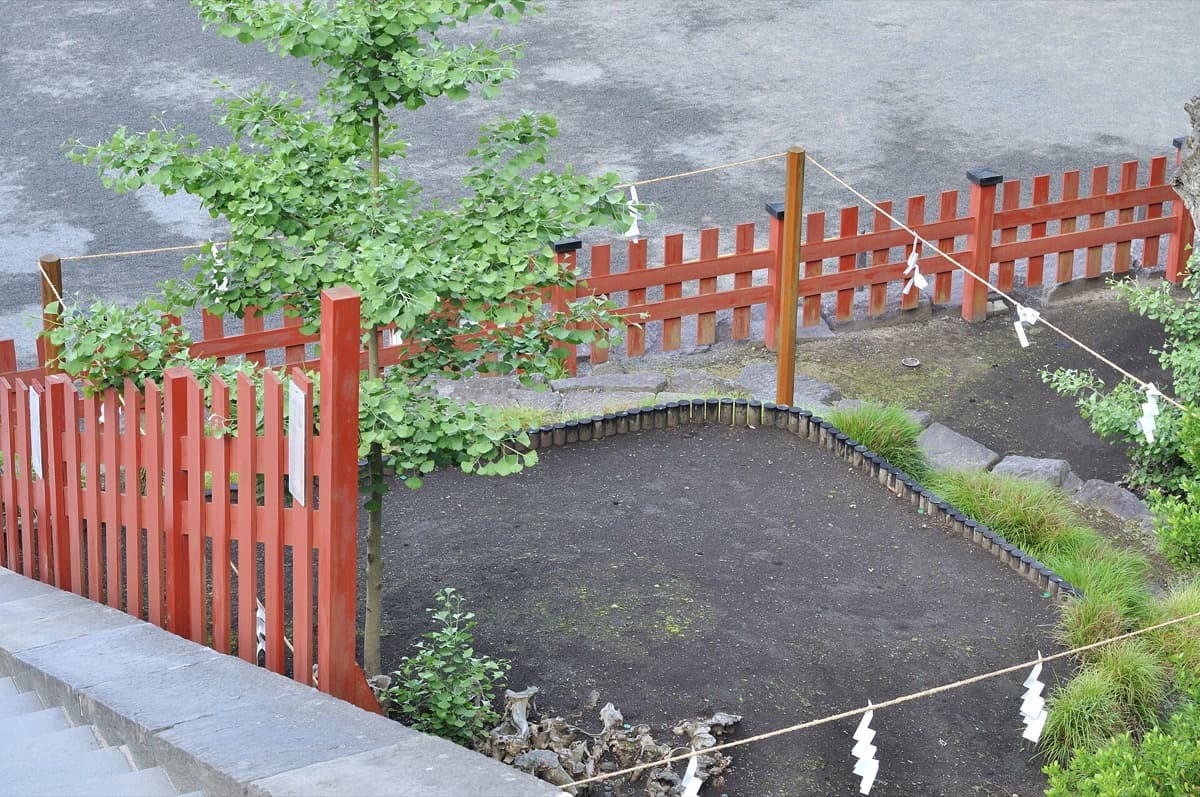
The great ginkgo that once grew beside the stone steps at Tsurugaoka Hachimangu is famous for a legend it never earned, while the real event on those steps is one of the darkest turns in samurai history: in 1219 the third shogun of Kamakura, Minamoto no Sanetomo, was killed here by his own nephew, and the founding warrior clan destroyed its own line at the foot of its war god's stairs. The tree, the myth, and the murder sit on the same few square metres, and pulling them apart is the whole reward of standing here.
Start with the tree, because it is the thing people come to see. For centuries a giant ginkgo stood next to the great staircase below the shrine's senior hall, thought to be roughly a thousand years old and to have grown there almost from the shrine's founding. Then, at forty minutes past four on the morning of March 10, 2010, a storm uprooted it completely and toppled it. That would normally be the end of a very old tree. It was not. The stump and a section of the trunk replanted nearby both put out new leaves, and the base is still sending up shoots today. So what you are looking at is not a monument to a dead tree but an ancient organism that fell and began again. That fact alone is worth the climb.
The legend that grew after the fact
Ask almost anyone in Kamakura about the ginkgo and you will hear the same story. Long ago, they say, an assassin hid behind this very trunk, waiting in its shadow to strike down a shogun as he descended the steps. It is a vivid picture. It is also almost certainly untrue.
No contemporary account of the killing mentions the tree at all. The oldest sources describe the attacker coming out from near the stone stairway of the shrine, with no ginkgo anywhere in the scene. The hiding-tree detail appears to be an Edo-period invention, first surfacing in the Shinpen Kamakurashi, a topography of Kamakura compiled under the patronage of Tokugawa Mitsukuni, the scholarly daimyo of Mito. That is centuries after the event. The shrine's own account treats the hiding tree as later folklore rather than fact, and the plain reading of the medieval record supports that.
This is a common shape for a good historical site. A real, well-documented event gets a decorative detail bolted on generations later, and the decoration becomes more famous than the truth. Holding the two apart does not diminish the place. It sharpens it. The tree is genuinely ancient and genuinely resilient. The assassin simply did not need it.
What actually happened on the steps
Hear a stop from this walk
Minamoto no Yoritomo's Grave
The killing itself is not legend. It is one of the best-recorded political murders of medieval Japan. On the snowy evening of February 12, 1219, Minamoto no Sanetomo, the third Kamakura shogun, came down from the senior shrine after a ceremony marking his promotion to a high court rank. His nephew Kugyo was waiting near the stone stairway. Kugyo was not a stranger to this place. He was a son of the second shogun, Sanetomo's elder brother Yoriie, and he served as the head priest, or betto, of Tsurugaoka Hachimangu itself. The man who struck down the shogun of the warrior capital did so on the grounds he administered as its senior clergyman.
Kugyo killed Sanetomo on the steps and, by most accounts, believed the deed avenged his father and might make him shogun in turn. It did the opposite. Within a few hours Kugyo was himself hunted down and beheaded. Two men of the ruling house were dead before the next day, and the direct male line of the Minamoto shoguns, the Seiwa Genji line that had ruled Kamakura, was finished.
Trace the timeline and the weight of the moment lands. Minamoto no Yoritomo had entered Kamakura in 1180 and built the first government run by and for warriors. He installed the war god Hachiman at the head of the valley in 1191 to bless that government, and he died in 1199 after a fall from his horse. His son Yoriie ruled and fell. His son Sanetomo ruled and died here on the steps in 1219. Three generations, and the founding family had extinguished itself in the very shrine built to make its rule feel eternal.
Why the murder mattered
Sanetomo's death did not create a vacuum for long. Real power passed to the Hojo, the family of Yoritomo's widow, Hojo Masako, and they governed Kamakura as regents behind figurehead shoguns for more than a century afterward. In other words, the assassination on these steps was not just a family tragedy. It was the hinge on which control of the samurai government swung from the Minamoto who founded it to the Hojo who inherited it. The clan that designed the arrow-straight avenue up from the sea, the raised path, the war god on his terrace, could not hold the throne it had built. Its own nephew ended it at the base of the stairs.
That is the reason to stand at the ginkgo and read the two stories together. The tree teaches you to be careful with beloved detail: the hiding trunk is a later flourish, however satisfying it sounds. The steps teach you that the real history here is harder than any legend. A shogun descended these stairs after his own promotion ceremony and was cut down by his brother's son, the shrine's own priest, and with him went the bloodline of the man who had willed the whole capital into being.
The ginkgo, still sprouting from its fallen base, outlived them all. It is the one survivor at the scene, and it never touched the crime.
To walk the full ceremonial spine of the samurai capital, from the first torii at the beach up the avenue to these steps and on to Yoritomo's quiet grave in the woods, explore Kamakura.
Sources
- Tsurugaoka Hachimangu, Wikipedia: dates the ginkgo's uprooting to 4:40 a.m. on March 10, 2010, records its near-thousand-year age and regeneration, attributes the hiding-tree detail to Tokugawa Mitsukuni's Edo-period Shinpen Kamakurashi, and documents the February 12, 1219 assassination of Sanetomo by his nephew Kugyo.
- Kugyo (priest), Wikipedia: records that Kugyo was a son of the second shogun Yoriie, served as betto of Tsurugaoka Hachimangu, and was beheaded within hours, ending the direct male line of Yoritomo.
- Minamoto no Sanetomo, Samurai Archives Wiki: biography of the third Kamakura shogun and account of his killing and its dynastic consequences.
- Minamoto no Yoritomo, Wikipedia: the founder who set up Kamakura in 1180, died in 1199 after a fall from his horse, and whose widow Hojo Masako's family took power as regents.
Ready to experience it?
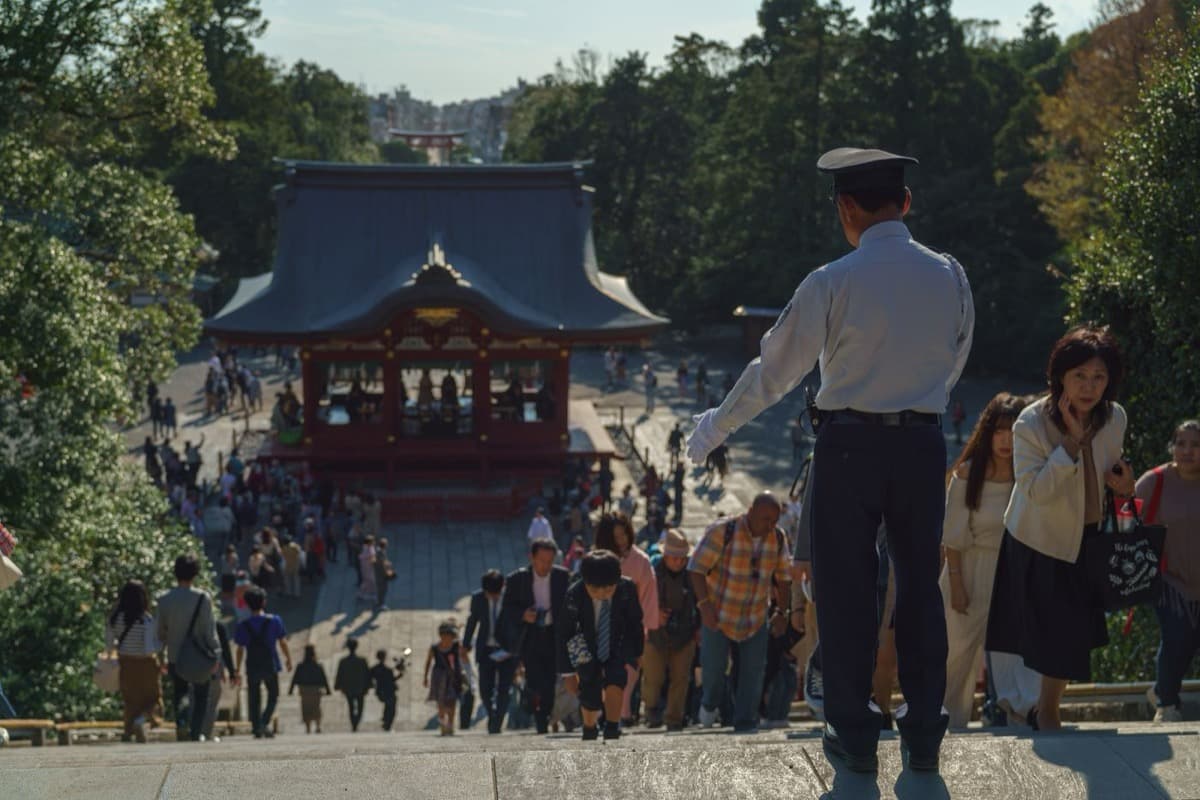
Tsurugaoka Hachimangu: The Samurai Capital
80 min · 3 km · easy
More from Kamakura
Explore more at your own pace.
Kamakura Travel Guide: Day Trip from Tokyo, Getting Around, When to Go (2026)
One Day in Kamakura: The Perfect Day Trip from Tokyo (2026)
What to Eat in Kamakura: A Food Guide (2026)
Hase-dera: The Kamakura Temple of a Giant Kannon That Washed Ashore From the Sea
Kencho-ji: Japan's Oldest Zen Training Monastery, Founded by a Chinese Monk in 1253