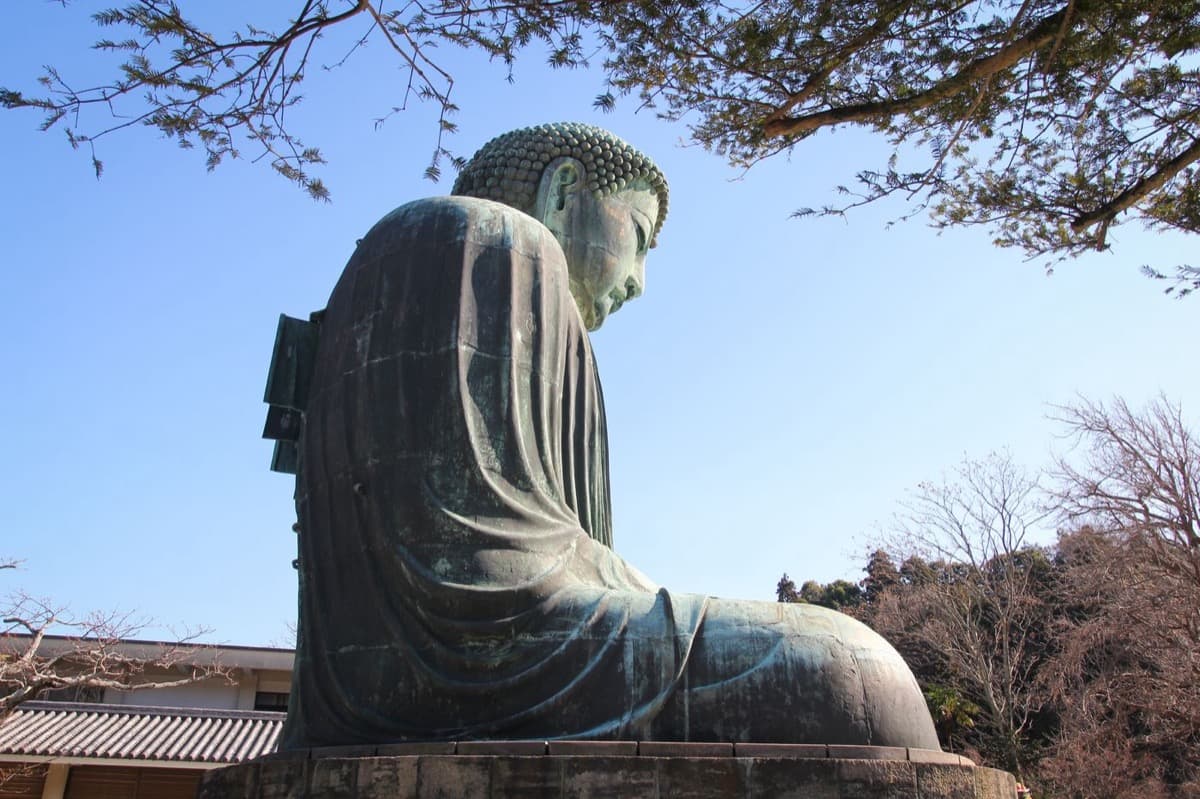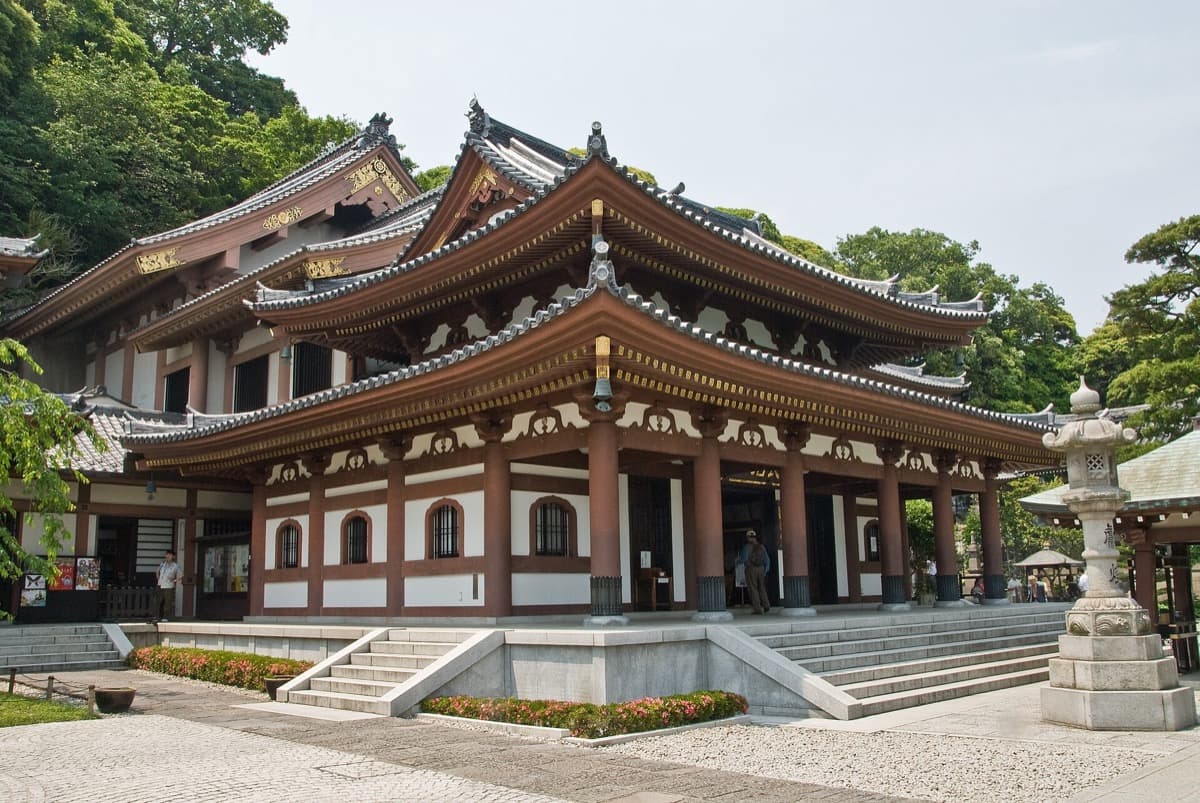
Before the Great Buddha, most walks through the Hase district of Kamakura pass through Hase-dera, and it deserves more than a passing glance. At its heart stands a towering wooden statue of Kannon, the bodhisattva of compassion, over nine meters tall, one of the largest wooden statues in Japan. But Hase-dera is not really a temple about size. It is a temple about compassion and the sea, bound to a strange and beautiful legend of a statue that was set adrift to find its own home, and filled with thousands of small stone figures placed by grieving parents. Read it that way and it becomes one of the most quietly moving places in Kamakura.
A statue carved from a single tree
The legend is specific. Around the year 721, a monk named Tokudo carved two images of the eleven-headed Kannon from a single great camphor tree. One was enshrined near Nara, at the original Hase-dera in that region. The other was set adrift on the sea, released to find, by karmic connection, the place where it belonged. According to tradition, that second statue drifted until it washed ashore on Nagai Beach on the Miura Peninsula, near Kamakura, in the year 736, and where it came ashore, this temple was founded to receive it. So the statue at the heart of Hase-dera is, in the temple's own account, not commissioned for this place but delivered to it by the sea, a Kannon that chose Kamakura.
The eleven heads of the statue each represent a stage on the path toward enlightenment, and the figure's great height, more than nine meters of carved and gilded wood, makes standing before it a genuinely overwhelming experience. It is compassion rendered at the scale of the sacred.
The Jizo for lost children
Hear a stop from this walk
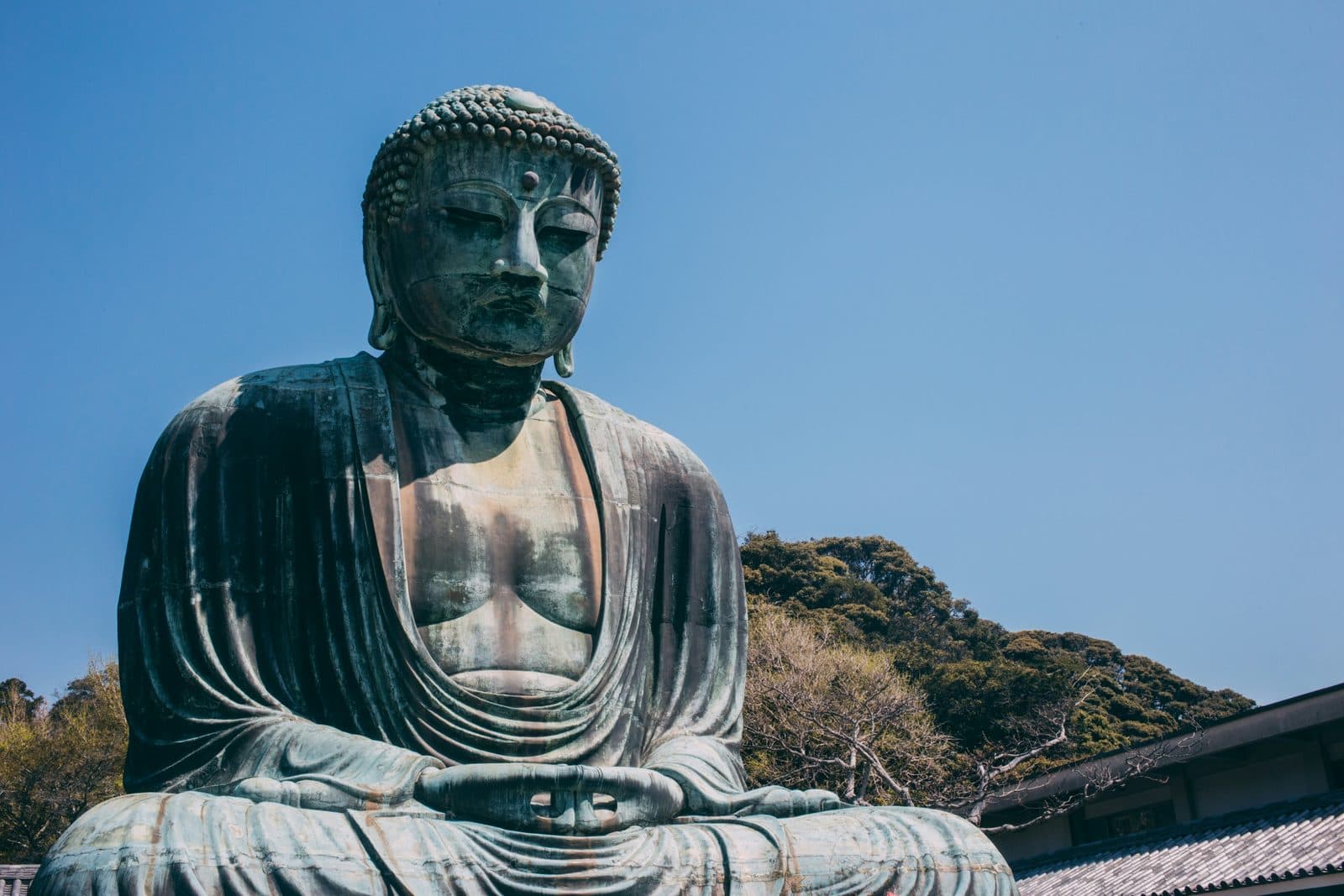
The Great Buddha: Kamakura Daibutsu
Hase-dera's most affecting feature is smaller and easy to miss the meaning of. Across the temple grounds stand hundreds of small stone Jizo statues, and their purpose is heartbreaking. Jizo is the guardian of children and travelers, and these figures are placed by parents mourning children who died, including through miscarriage and infancy, as an offering for the child's soul and its safe passage. Enormous numbers have been placed here since the Second World War. Walking among them, rows of small stone figures often dressed in red caps and bibs, is to walk through a landscape of private grief made gentle and communal. It is the compassion of Kannon expressed in the most human possible terms: the care of the smallest and most vulnerable.
The sea, the cave, and the view
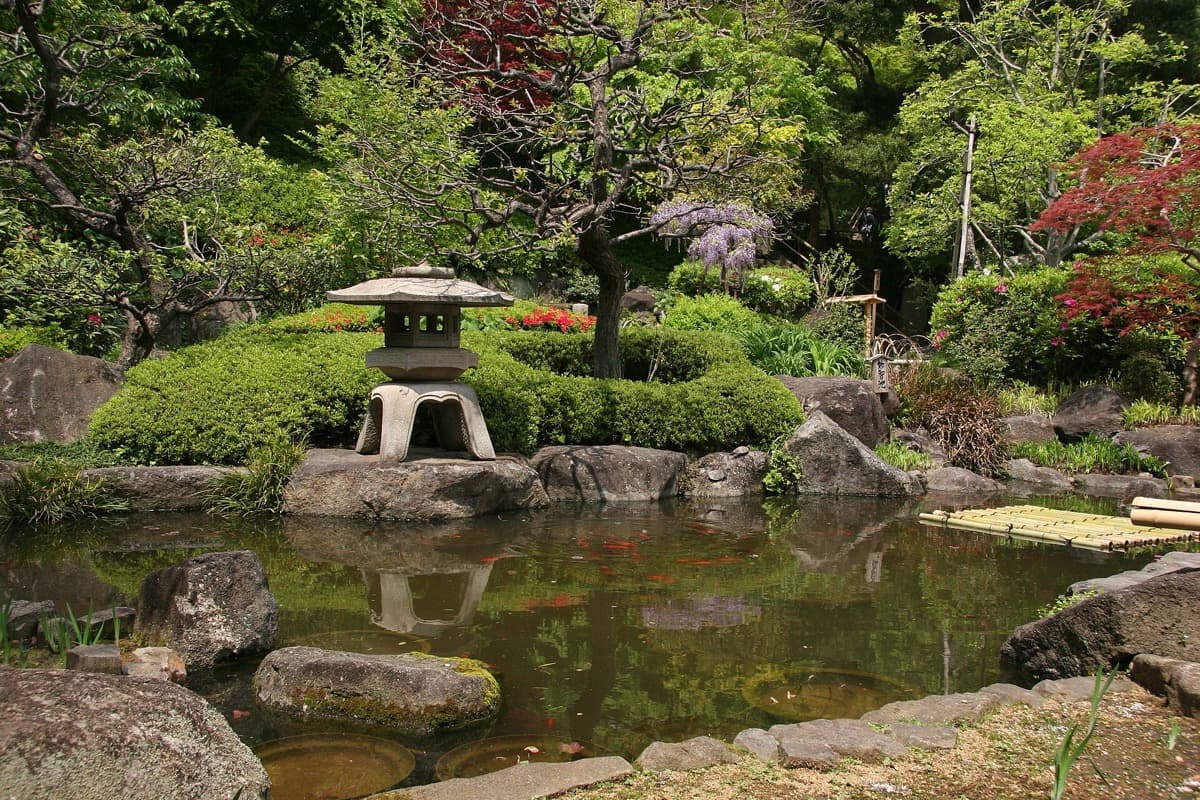
The temple keeps its connection to the sea that brought its statue. From the hillside grounds, Hase-dera commands a wide view over Yuigahama, the Kamakura shore, tying the temple back to the water in its founding legend. A cave on the grounds, the Benten-kutsu, holds carved figures honoring Benzaiten, a goddess associated with the sea and with music and fortune, deepening the temple's water theme. And in June and July the famous Hydrangea Path blooms along the hillside, drawing crowds to a temple that is beautiful in every season but spectacular then. Hase-dera sits within easy reach of the Great Buddha at Kotoku-in, and Roamer's The Great Buddha and Hase walk reads the two together, along the old Enoden railway line that threads the district.
Reading it in place
At Hase-dera, give the giant Kannon the time its scale asks for, and remember it is, by legend, a statue the sea delivered here. Then walk among the Jizo and understand what they are: offerings from grieving parents, a whole hillside of tenderness for lost children. Take in the view over the Kamakura shore, the same sea the founding statue crossed. If you come in June or July, the hydrangeas will be at their peak. Then walk on to the Great Buddha nearby. Early morning is quietest, especially in hydrangea season.
The temple opens Roamer's The Great Buddha and Hase. To plan a day, see one day in Kamakura, and for the full set of routes, browse Kamakura walking tours.
Sources
- Wikipedia, Hase-dera (Kamakura): the main eleven-headed Kannon statue at 9.18 meters, one of the largest wooden statues in Japan; the legend of the monk Tokudo carving two Kannon from a single camphor tree around 721, one enshrined near Nara and one set adrift to find its karmic home, washing ashore on Nagai Beach on the Miura Peninsula near Kamakura in 736; the hundreds of Jizo statues placed by parents mourning lost children with roughly 50,000 installed since the Second World War; the view over Yuigahama; the Benten-kutsu cave honoring Benzaiten; and the Hydrangea Path blooming in June and July, five minutes from Hase Station on the Enoden line.
- Roamer tour transcript, The Great Buddha and Hase (kamakura-great-buddha), fact-audited: Hase-dera and the sheltered Kannon on the route to the Great Buddha.
Ready to experience it?
Great Buddha: Hase and the Kamakura Daibutsu
80 min · 1.5 km · easy
More from Kamakura
Explore more at your own pace.
Kamakura Travel Guide: Day Trip from Tokyo, Getting Around, When to Go (2026)
One Day in Kamakura: The Perfect Day Trip from Tokyo (2026)
What to Eat in Kamakura: A Food Guide (2026)
Kencho-ji: Japan's Oldest Zen Training Monastery, Founded by a Chinese Monk in 1253
The Great Ginkgo of Tsurugaoka Hachimangu: The Tree, the Legend, and the Shogun Killed on the Steps