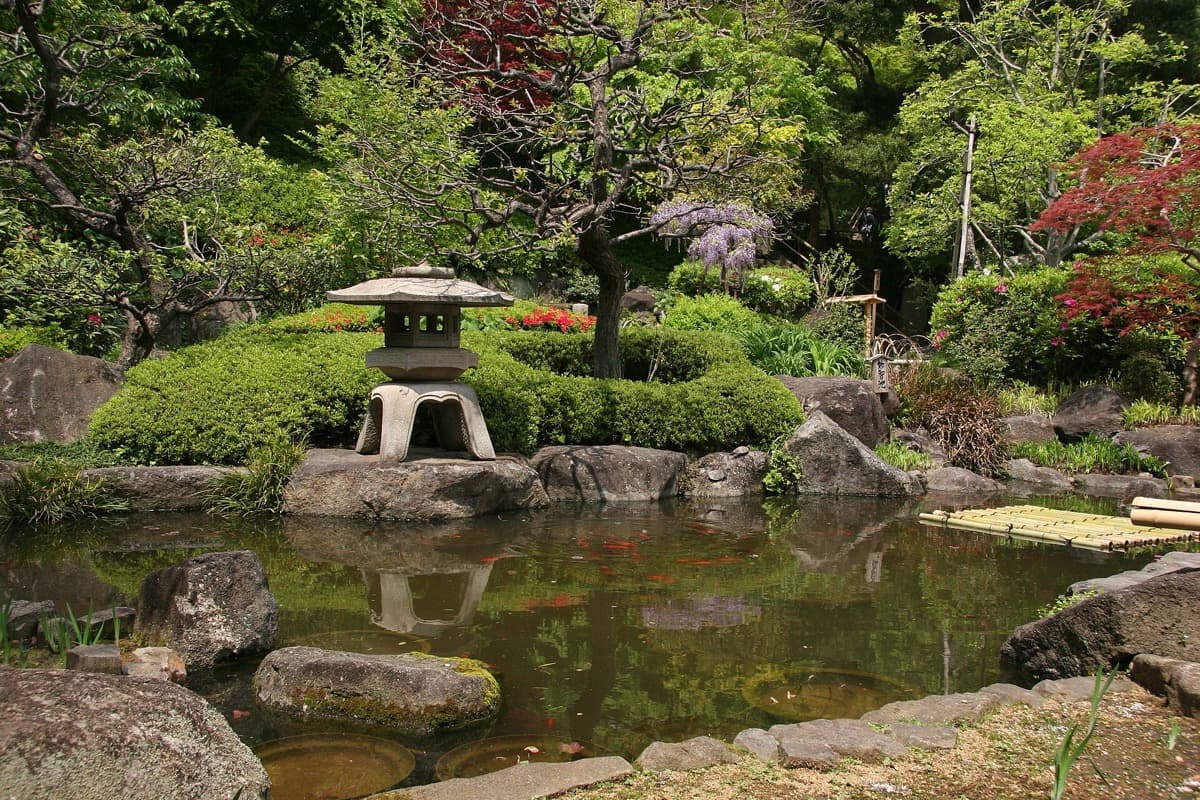
A short walk across one Kamakura hillside, from a temple that keeps its giant Kannon safe indoors to a bronze Buddha that lost its hall and let the sky become its roof. It ends inside the hollow statue itself, where the seams of its making are still there to see.
Start · Hase-dera Temple: The Sheltered Kannon
DirectionsStops
- 1
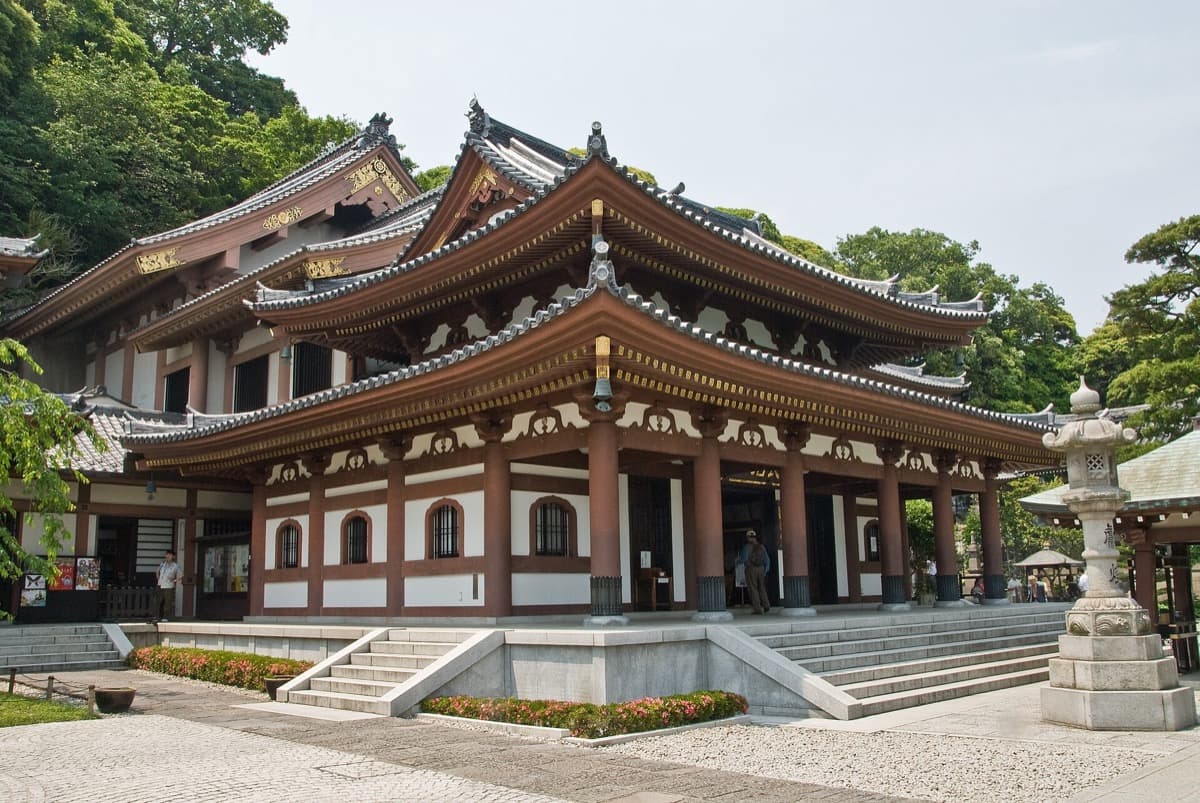
Hase-dera Temple: The Sheltered Kannon
A hillside temple whose gilded, eleven-headed wooden Kannon stands protected in the dim of its main hall.
- 2
The Kannon Hall and the Sea View
A hillside terrace where the sheltered temple opens onto Yuigahama beach and Sagami Bay, setting the walk's shelter-versus-exposure theme.
- 3

Hase and the Enoden Line
A small coastal tram line, more than a century old, that stitches the neighbourhood between the two great temples together.
- 4
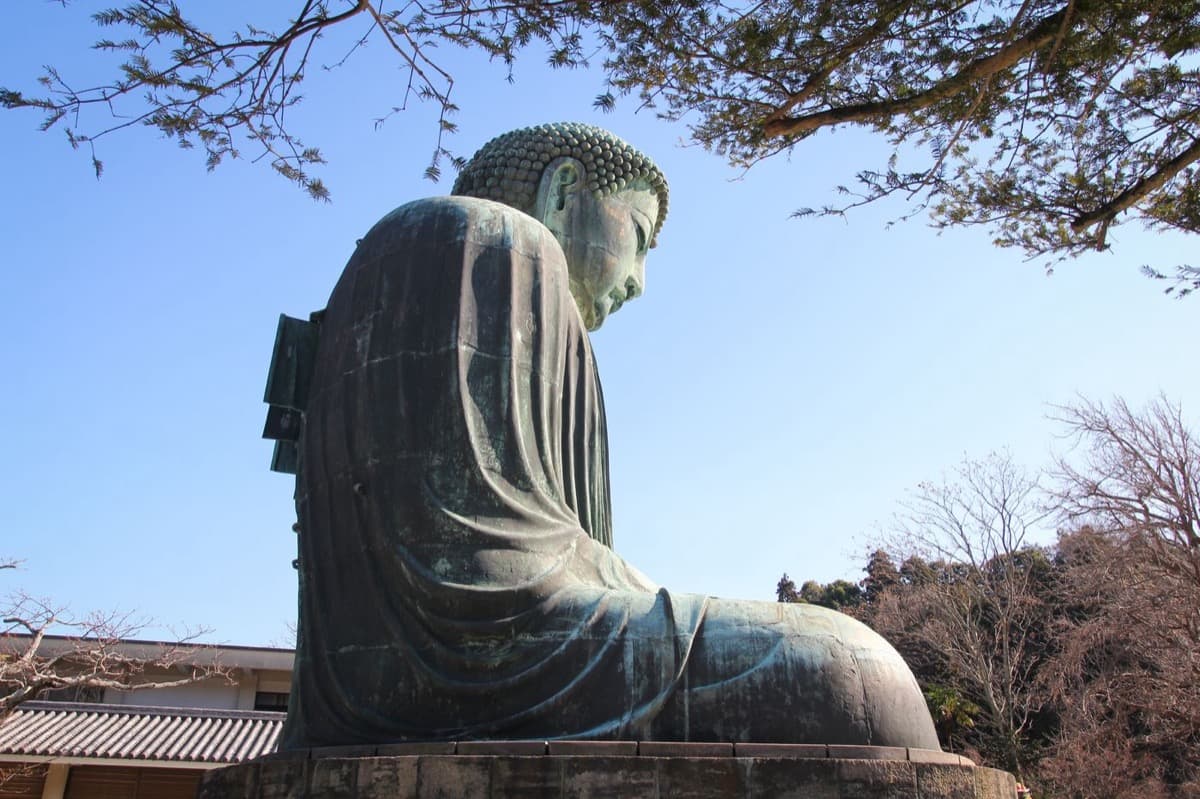
The Great Buddha: Kamakura Daibutsu
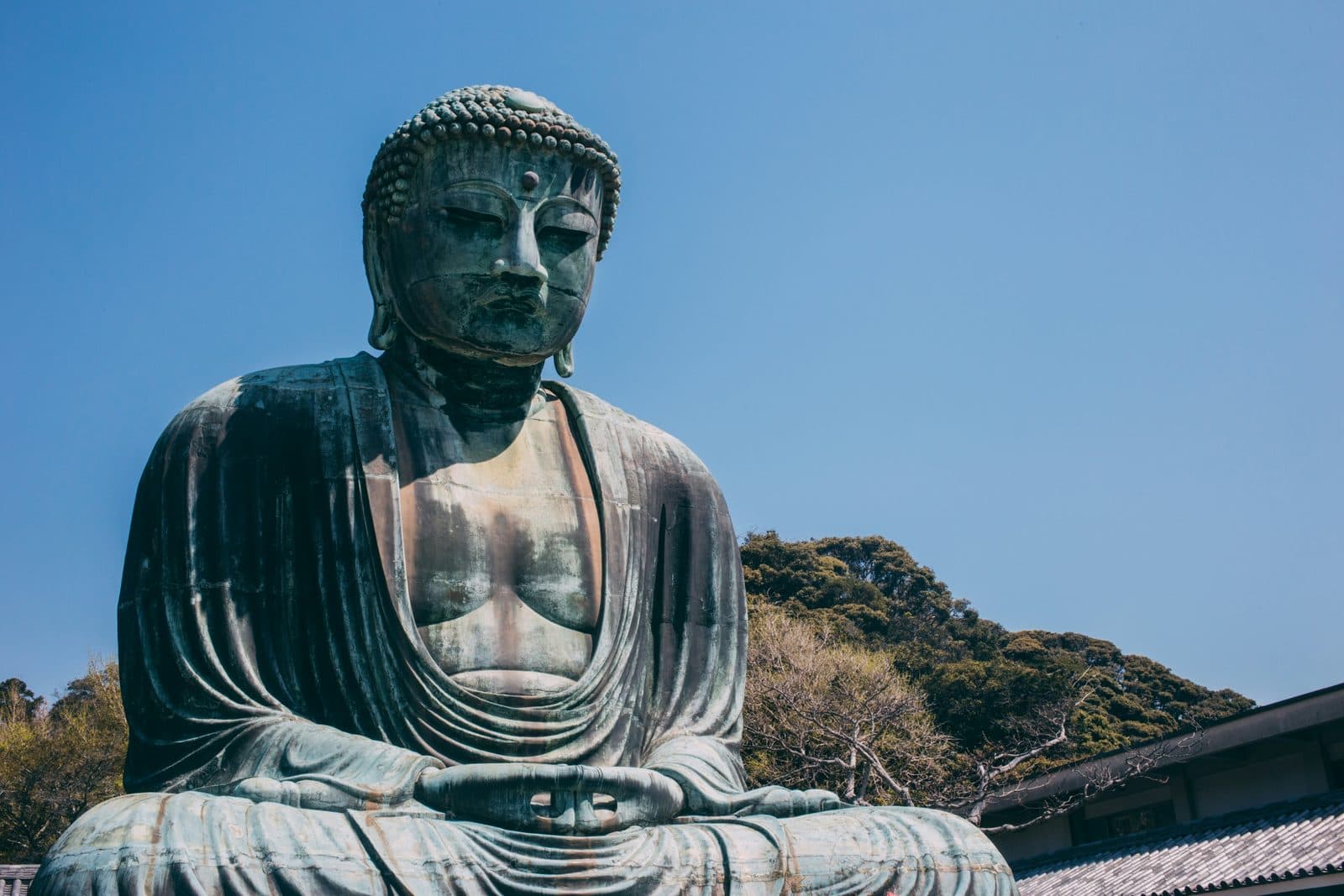
A monumental bronze Amida Buddha at Kotoku-in, cast around twelve fifty-two, sitting serenely in the open air.
- 5
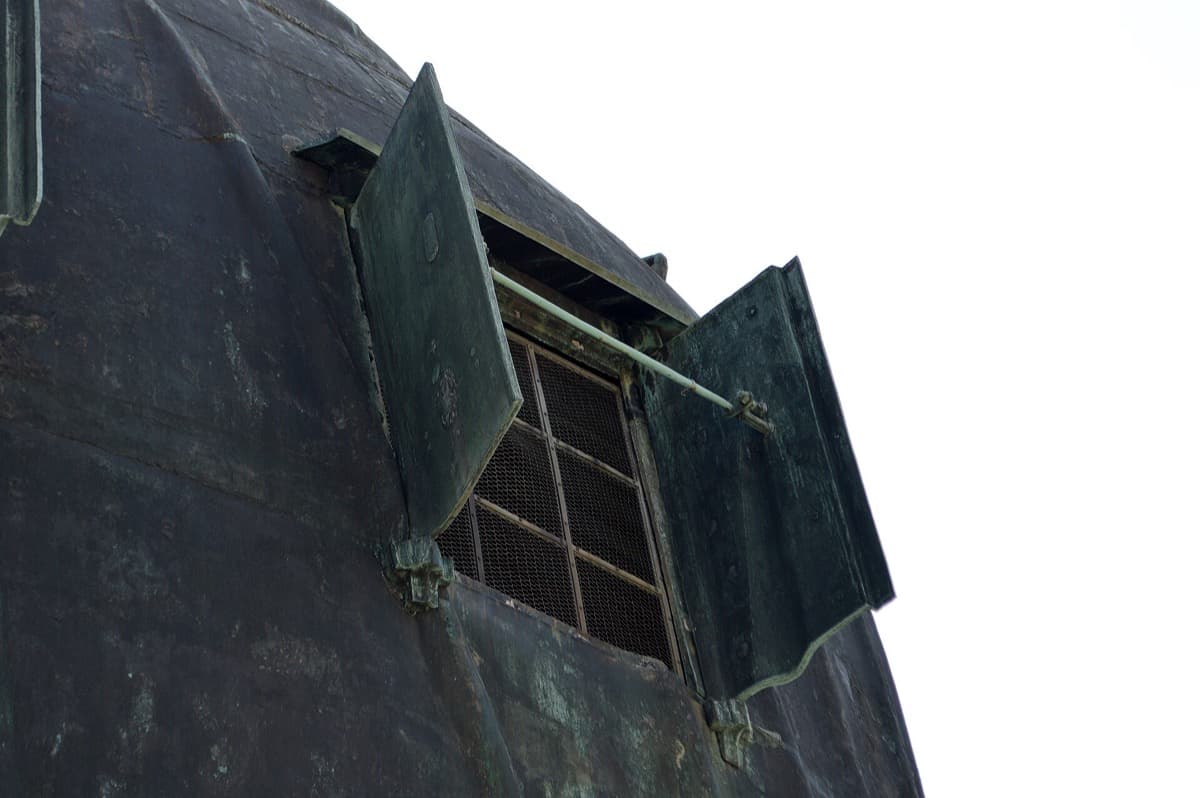
The Vanished Hall of Kotoku-in
The stone pillar bases of the lost wooden hall that once sheltered the Great Buddha, marking the moment the sky became its roof.
- 6
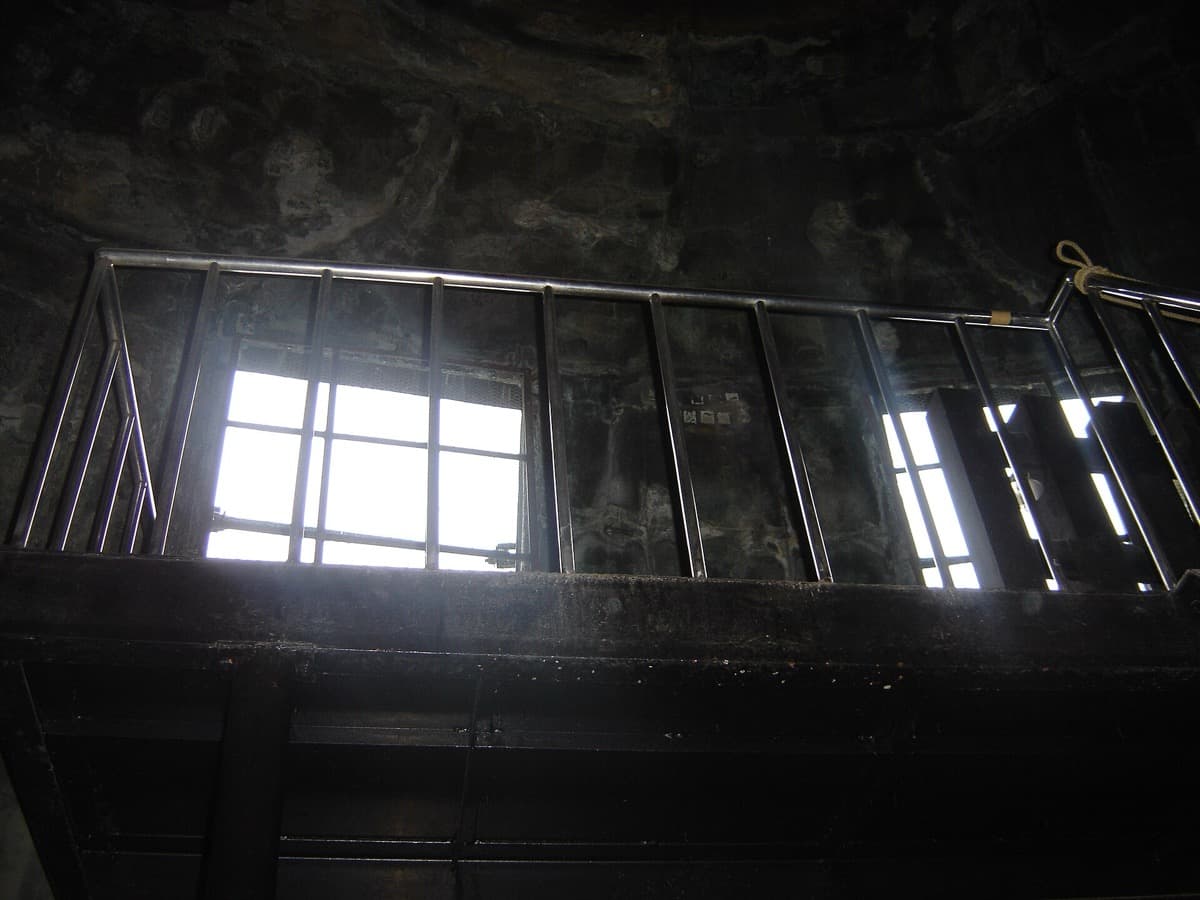
Inside the Great Buddha
The hollow interior of the bronze, entered for a small fee, where the seams of its section-by-section casting are still visible.
Details
Best Time to Visit
Early morning, soon after the temples open at eight, gives you the Great Buddha and Hase-dera before the day-trip crowds arrive from Tokyo. Weekday mornings are the calmest. June and early July bring the hydrangeas into bloom at Hase-dera, which is lovely but draws the year's heaviest crowds, so arrive right at opening if you come then. Clear afternoons light the sea view from the temple terrace beautifully.
Pro Tips
- •The two temples charge separate admissions. Hase-dera is four hundred yen for adults and two hundred for children, and Kotoku-in, home of the Great Buddha, is three hundred yen for adults and one hundred fifty for children.
- •To step inside the hollow Great Buddha, bring an extra fifty yen per person in coins. The interior is open only from eight in the morning until half past four in the afternoon.
- •Carry small change and coins generally. Temple admissions and the interior fee are modest, and cash moves the line along faster than cards.
- •Start at Hase-dera and finish at the Great Buddha, walking uphill, so the route builds toward the open-air statue rather than away from it.
- •Wear comfortable shoes. Hase-dera in particular is built up a hillside with several flights of stone steps, and the terrace view is worth the climb.
- •If you want to ride the Enoden, buy your ticket and expect it to be full at peak times. It is a short, scenic hop rather than fast transport, so treat it as part of the experience.
Safety & Precautions
- •Both sites are active places of worship. Keep your voice low inside the halls, follow the posted rules on photography, and do not touch the statues except where entry is expressly allowed, as with the interior of the Great Buddha.
- •The temple grounds, especially at Hase-dera, involve stone steps and uneven, sometimes slippery paths. Take the stairs carefully in wet weather and mind your footing on the hillside.
- •In June and early July, hydrangea season packs Hase-dera and its narrow flower path can slow to a shuffle. Arrive at opening, allow extra time, and be patient in the crowds.
- •The Enoden trains and Hase Station can become very crowded on weekends and holidays. Hold children close on the platforms and step well back from the street-running section where trains share the road.
Travel advisory: Exercise Normal Precautions (Level 1).
Gallery
Related Reading
Go deeper on what you'll see, hear, and walk through.
Overview
Best Self-Guided Walking Tours in Kamakura (2026)
3 min
Overview
Kamakura Travel Guide: Day Trip from Tokyo, Getting Around, When to Go (2026)
5 min
Overview
One Day in Kamakura: The Perfect Day Trip from Tokyo (2026)
5 min
Thematic
Best Culture Walking Tours in Kamakura (2026)
2 min
Thematic
What to Eat in Kamakura: A Food Guide (2026)
4 min
Deep dive
Hase-dera: The Kamakura Temple of a Giant Kannon That Washed Ashore From the Sea
5 min
Deep dive
Why the Great Buddha of Kamakura Sits Under the Open Sky
6 min
Read the walk
The full story of Great Buddha: Hase and the Kamakura Daibutsu, in words. Prefer to listen? Play it narrated, from home or on location.
Introduction
The town of Kamakura sits on the coast of Japan, about an hour south of Tokyo, tucked between wooded hills and the sea. This walk stays on one of those hills, in the Hase district, and it holds six stops. The walking is gentle and short, a little under one kilometre from start to finish, roughly twenty to thirty minutes on your feet. Give yourself two hours or more, though, because two great temples bracket this route and each one rewards a slow visit. The idea that ties the six stops together is a simple one about roofs. At the first temple, a towering wooden Kannon stands gilded and glowing inside a dim hall, kept safe from the weather for centuries. A short climb away, a giant bronze Buddha sits in the open air with nothing over its head at all. It was not always so. That Buddha once had a great wooden hall of its own, and when the hall was lost, the people here let the sky become its roof. So this is a walk about shelter and exposure, about what a statue keeps and what it gives up. You will move from the protected to the open, past a small coastal tram line stitching the neighbourhood together, and end by stepping inside the hollow bronze itself. Go at your own pace. Every stop stands on its own, so you can linger where you like and skip what you do not need. When you arrive at Hase-dera Temple, begin with stop one.
1. Hase-dera Temple: The Sheltered Kannon
Hase-dera spreads across a wooded hillside, a temple of ponds and stairs and small shrines climbing the slope. Its heart is a single figure. Inside the main hall stands a wooden statue of Kannon, the bodhisattva of compassion, carved with eleven heads and standing nine point one eight metres tall. English Wikipedia calls it one of the largest wooden statues in Japan, and the scale is hard to take in until you are beneath it. It is cut from camphor wood and covered in gold leaf, so in the low light of the hall it seems to hold a glow of its own. Look closely and you will see the eleven heads. Each one, by the temple's telling, marks a different phase in the search for enlightenment, so that the single figure carries a whole path within it. The temple traditionally dates its founding to the year seven thirty-six. The story handed down here says the statue washed ashore at Nagai Beach and a temple was raised to honour it. Treat that as legend rather than record, a founding tale rather than a fact you could pin to a calendar. For now, notice the choice this place has made. The Kannon is kept indoors, sheltered, gilded, protected from wind and salt air by walls and a roof. That care is the whole point of the building. Hold onto that feeling of an image kept safe inside, because a short walk from here you will meet a different giant that made the opposite choice. Take your time in the hall first. The rest of the hillside, and the sea, can wait a moment.
2. The Kannon Hall and the Sea View
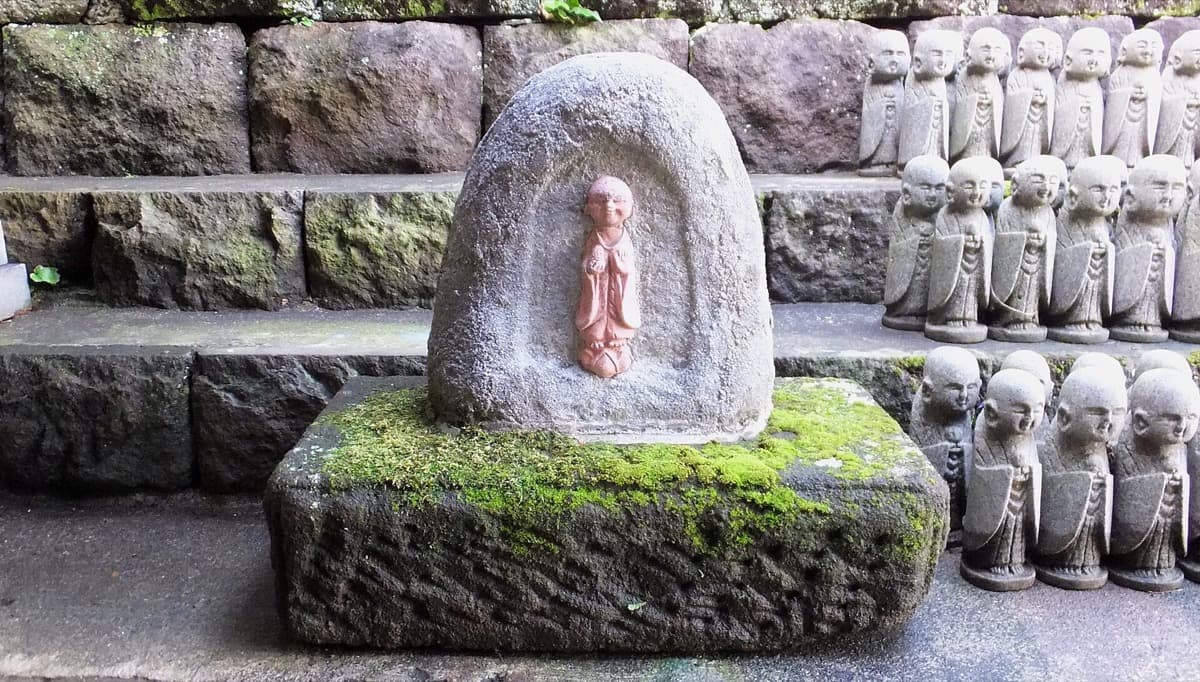
Climb to the upper level of the Hase-dera grounds and the hill gives you the sea. From the terrace here the view opens over Yuigahama beach and out across Sagami Bay, the same water that, by legend, once carried the temple's Kannon to shore. It is a plain and wonderful contrast: behind you the dim hall and its gilded figure, in front of you nothing but open horizon. That contrast is the quiet argument of this whole walk. Inside, holiness is kept safe under a roof. Outside, it is handed to the weather. Stand here long enough and the two feelings sit side by side, the sheltered and the exposed, and neither cancels the other. The hillside around you holds another kind of devotion. Since the years after the Second World War, some fifty thousand small Jizo statues have been placed on these grounds by parents mourning children lost before or shortly after birth. Jizo is the guardian of children and travellers, and the little figures, often dressed in red, gather in rows and clusters across the slope. It is a tender, human counterweight to the grandeur of the great Kannon indoors. If you come in June or early July, the temple's hydrangea path is in bloom, banks of blue and violet flowers threading up the hillside. It is beautiful and, in those weeks, very popular, so the path can move slowly. When you are ready, carry that pairing with you: the protected image and the open sea. The walk now drops back toward the neighbourhood and a small tram line, before it climbs to a giant that chose the sky.
3. Hase and the Enoden Line
Between the two temples the walk crosses ordinary Kamakura, streets of houses and small shops, and somewhere near here you will meet the tracks of the Enoden. The Enoshima Electric Railway is a small coastal tram line, and it is more than a century old. According to Wikipedia it…
Full narration for this stop unlocks with the tour.
4. The Great Buddha: Kamakura Daibutsu
There he is, in the open air. The Great Buddha of Kamakura, the Daibutsu, sits cross-legged at the temple of Kotoku-in, a bronze figure of Amida Buddha with the sky for a ceiling. Temple records date the casting to around the year twelve fifty-two, in the Kamakura period, and…
Full narration for this stop unlocks with the tour.
5. The Vanished Hall of Kotoku-in
Walk the ground around the Great Buddha and look down. Set into the earth around the statue you will find low stone blocks, worn and square. These are the bases that once held the wooden pillars of a great hall, the Daibutsu-den, a building raised to house the bronze the way a…
Full narration for this stop unlocks with the tour.
6. Inside the Great Buddha
There is one more thing you can do here, and it is easy to miss. The Great Buddha is hollow, and for a small extra fee, fifty yen, you can step inside the bronze itself. The interior is open from eight in the morning until half past four in the afternoon. Duck through the low…
Full narration for this stop unlocks with the tour.