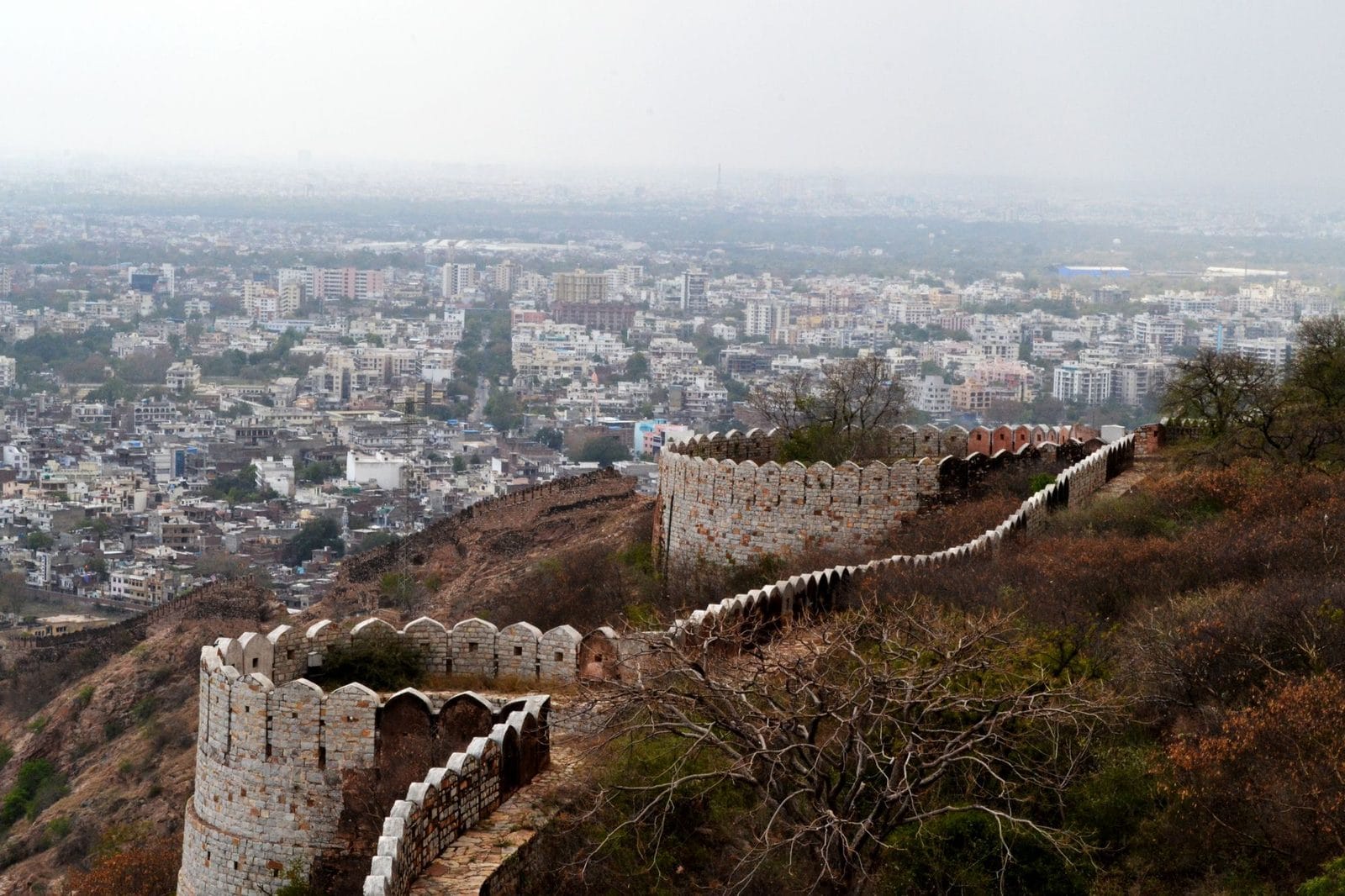
Nahargarh Fort, on the ridge north-west of Jaipur, was completed in 1734 by Sawai Jai Singh II, seven years after he founded the city below. First named Sudarshangarh, it held the hill for the new capital and lived on stored water. In the late nineteenth century the Madhavendra Bhawan, a palace of nine apartments, was added; from its roof the walled city reads as one grid.
Pink City: The Grid Built for Trade
75 min · 2.2 km · easy
Nahargarh sits at the end of the ridge north-west of Jaipur. The Imperial Gazetteer of 1908 put it about 500 feet above the city, on a rock face "so scarped as to be inaccessible on the south or city side". India's Ministry of Tourism records that Sawai Jai Singh the Second completed it in 1734, seven years after he founded the city on the plain, and that it was first named Sudarshangarh. It held the hill for the new capital. The Nahargarh walk goes inside it, at your pace, from the water the fort lived on to the roof where the city it guarded lies below.
Water first
A fort on dry rock has one problem before all others. The walk begins at the Nahargarh Baori, the great stepwell just outside the walls, where the stepped path up from the old city arrives: a stepped tank, wide at one end and deepening toward the water at the other. Inside the walls, opposite the palace entrance, is a second, smaller kund, a square stepped tank. Two stores of water, one outside and one inside, are the fort's whole logic in miniature. Keep to their rims: going down the steps is not part of the walk.
Three forts, one ridge
Hear a stop from this walk
Hawa Mahal: The Palace of Winds
From Sunrise Point, the round platform at the fort's east end, the wall walk runs along the rock to the main gate. The Ministry of Tourism describes Nahargarh as a defense for Jaipur alongside its neighbors on these hills, Amber and Jaigarh: three forts holding the high ground above the plain.
The name comes with two stories. Nahargarh means abode of tigers, and some say tigers once lived in these hills, while others tie the name to the courage of the Rajput rulers. Inside the gate, a temple honors the rulers of Jaipur, and further in stands a shrine to Nahar Singh Bhomia, a Rathore prince whose spirit, by legend, haunted the fort while it was being built. Both are living places of worship: be quiet and respectful.
Treaties and shelter
The fort's record is not one of battles. By the Ministry's account it was where treaties were signed with the Maratha forces in the eighteenth century, and in 1857, during the uprising India also calls the First War of Independence, it sheltered European refugees. Two old cannons stand at the palace's corner where the walk tells that story.
The palace years
In the late nineteenth century the fort became a royal retreat. The Madhavendra Bhawan was commissioned, the Ministry says, by Sawai Madho Singh, and it credits Sawai Ram Singh with adding palace buildings in the same century; no source settles a single year, so the walk gives none. The Bhawan is a two-story building "with suites for the king and his queens", divided into nine apartments, each with its own lobby, bedrooms, toilets, kitchen and storerooms. You may read elsewhere that each apartment belonged to one of nine queens. The official description does not say that.
The courts open one into another, and from the central court the matching blocks of suites line both long sides.
The grid below
A stair climbs to the roof terrace. Below, on a clear day, lies the walled city: the long straight bazaars and the squares where they cross, the plan you can walk on the Pink City walk. The Gazetteer was struck by "the regularity and width of its streets". Winter mornings can be hazy, so the view varies with the day's air.
The west end
The walk leaves the palace along the fort's south wall, where the forest of the Nahargarh sanctuary presses close; the Ministry lists leopards, sloth bears and nilgai among its animals. It ends at the bastions of the far west end, Kali Burj among them, where visitors gather as the light goes. The fort itself closes at 5:30 pm, but visitor guides report that the sunset spots at the west end stay open later.
Before you go
- The walk is 10 stops over about 1 km, about an hour, starting at the stepwell about 170 m down the service road from the car park. Nahargarh is not on the metro: come by taxi, auto-rickshaw or a ride-hailing app.
- The entry ticket is separate: 100 rupees Indian adult, 600 foreign adult (students 50 and 300; under 7 free), or the Jaipur composite ticket (550 and 1,700). Prices as of November 2026.
- Hours on the Ministry's page are 10:00 am to 5:30 pm. In winter, start by about 3:30 pm to finish the palace before closing and reach the west end for sunset, about 5:33 pm in early December.
- A stepped stone path climbs from the old city to the stepwell, about 890 m, but forest trails round the fort were reported closed after a leopard sighting in July 2025: ask locally, use it only in daylight and never walk it down after dark.
Nahargarh was built to watch over the city in the Pink City companion; the Jaipur travel guide fits it into a longer stay.
Ready to experience it?
Pink City: The Grid Built for Trade
75 min · 2.2 km · easy
More from Jaipur
Explore more at your own pace.
Best Culture Walking Tours in Jaipur (2026)
Best History Walking Tours in Jaipur (2026)
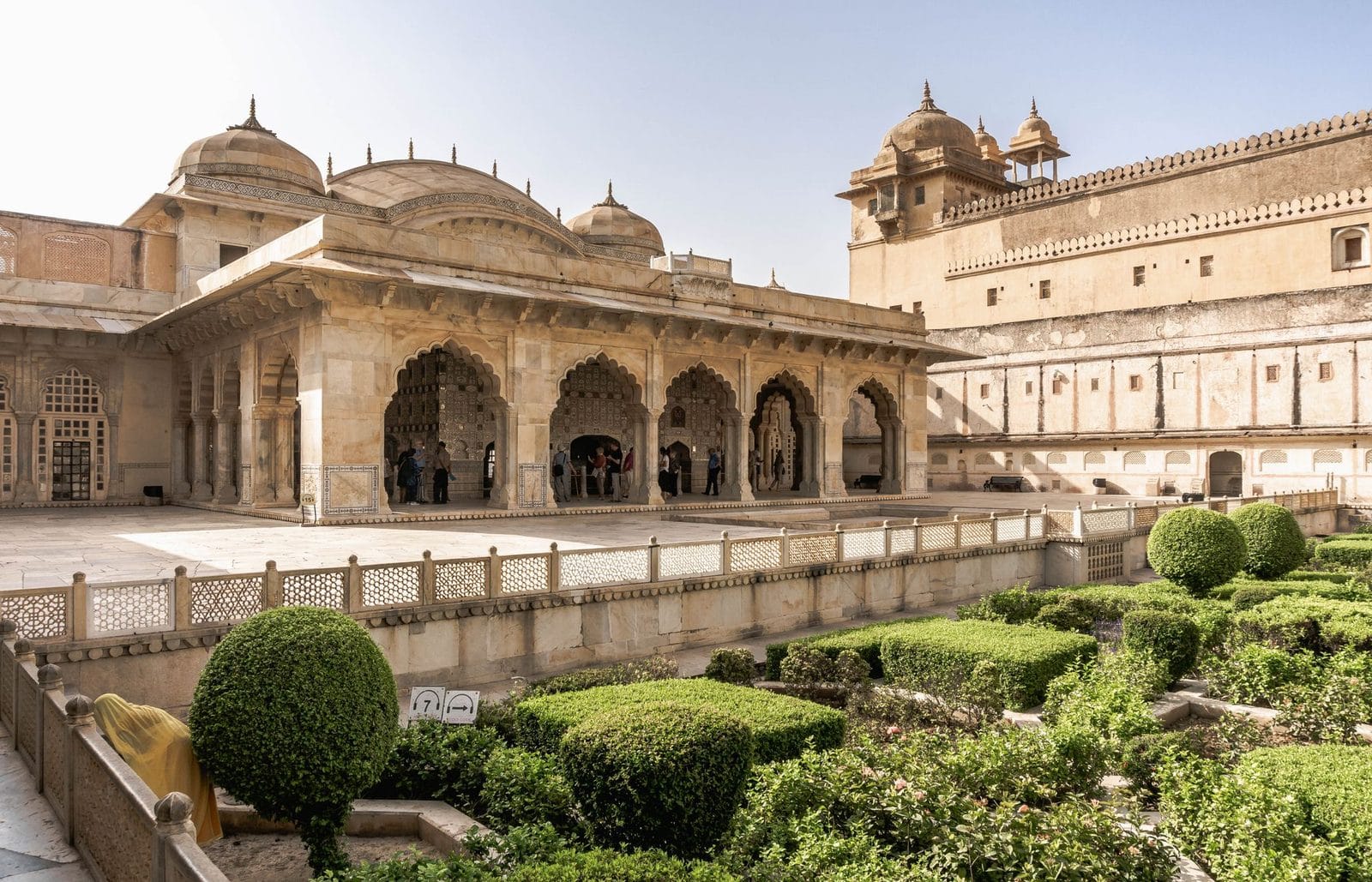
Amber Fort: Up the Ridge, Back in Time
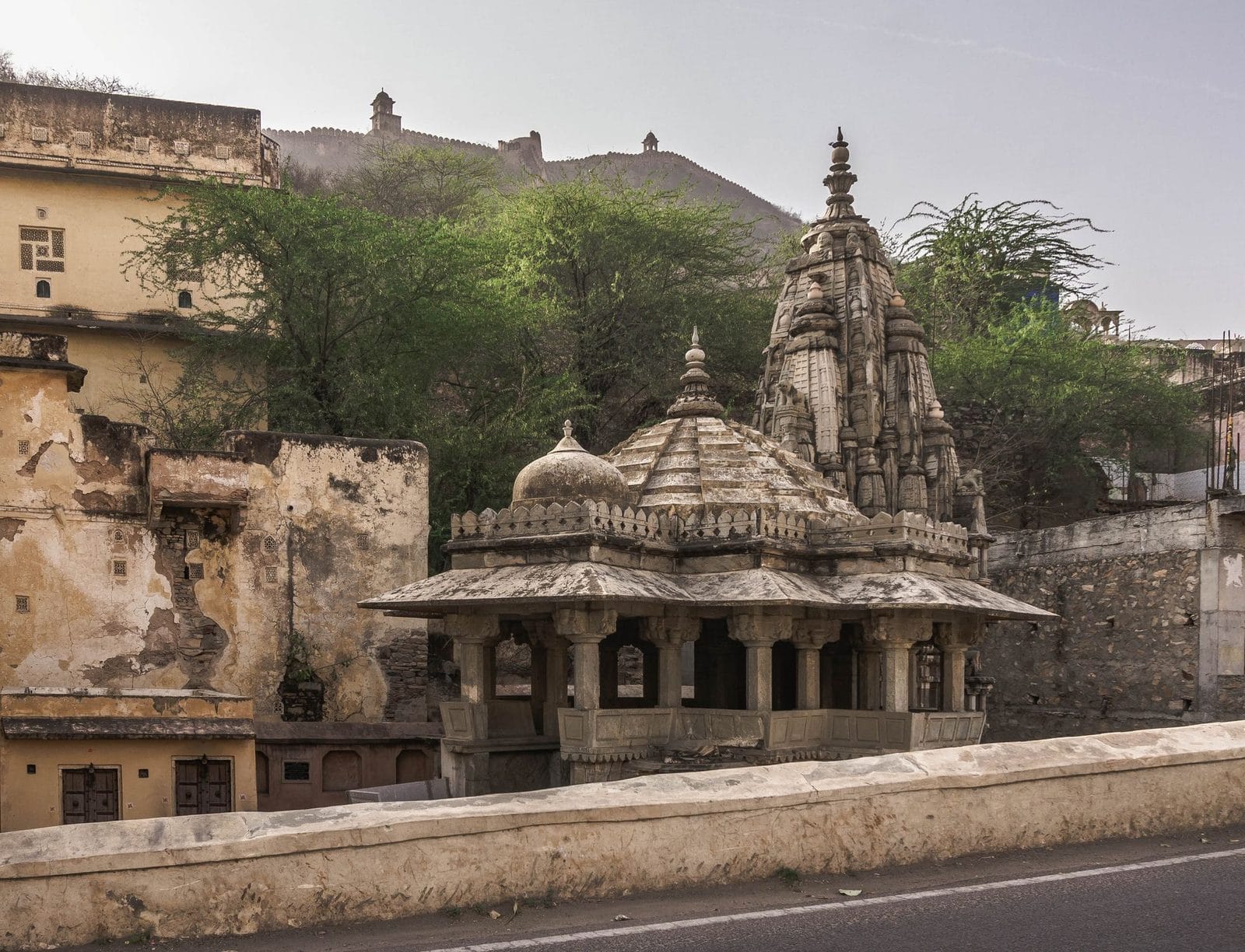
Amer: The Capital Below the Fort
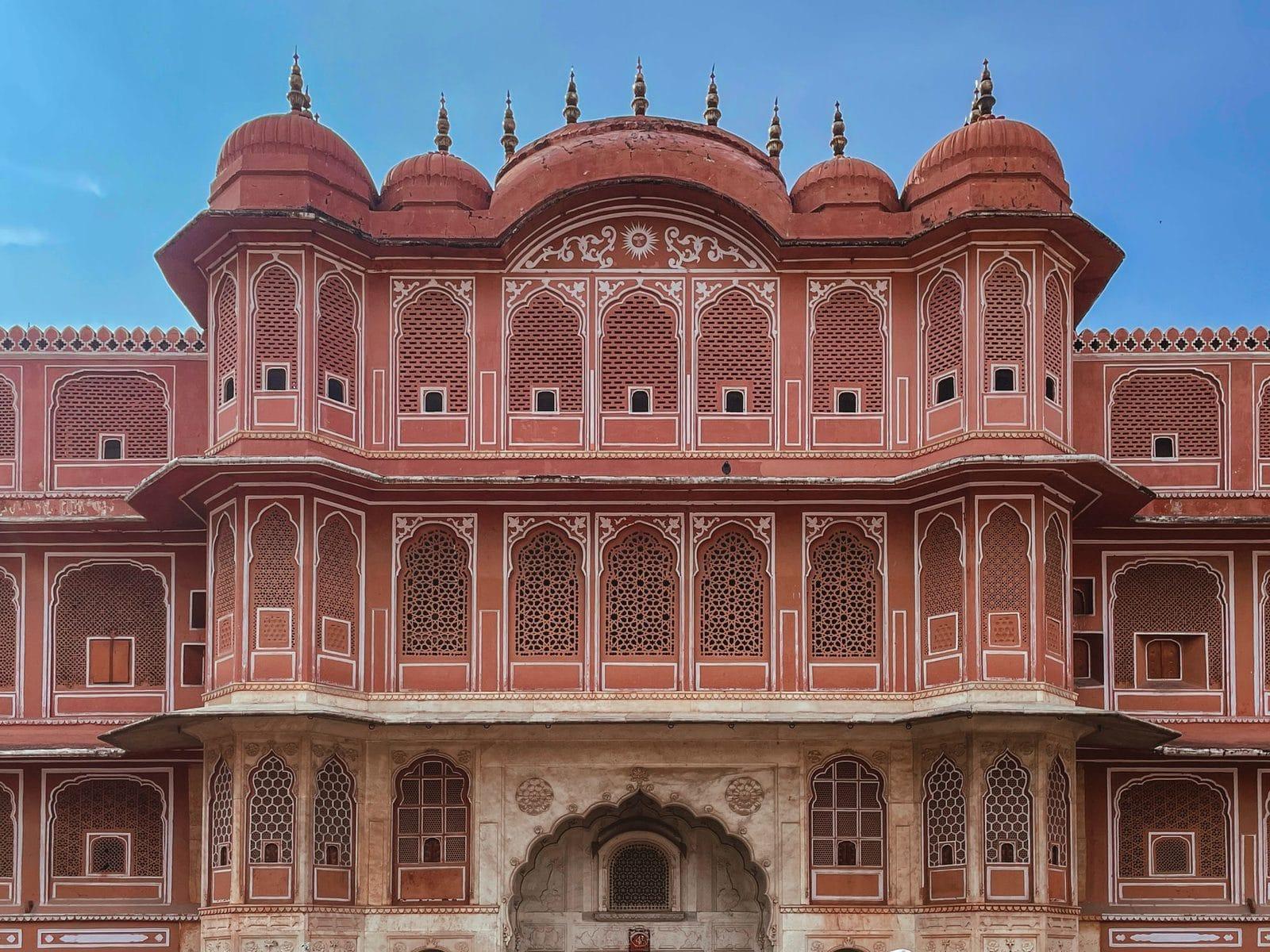
City Palace: The Museum Built Around a Home