Amer, the town at the foot of Amber Fort, was the capital of the Kachhwaha rulers until Jaipur was founded in 1727. The court left, but the town kept what a capital had built: Maota Lake, temples including the Jagat Shiromani of 1599 to 1608, the Panna Meena ka Kund stepwell, merchants' houses, ridge walls and a mosque of 1569 whose inscription records the Mughal alliance.
Amber Fort: Up the Ridge, Back in Time
75 min · 0.6 km · moderate
Most people come to Amer for the fort and leave by the same road. Below the palace walls is the town that served it. The Archaeological Survey of India puts it plainly: Amer, "anciently known as Ambavati", was the capital of the Kachhwaha rulers "before Jaipur was founded in 1727". The court went down to the new city on the plain. The town stayed, and kept what a capital had built for itself. The Amer town walk loops through it from the lake, at your own pace, with no ticket needed for any stop.
The water at the fortress's foot
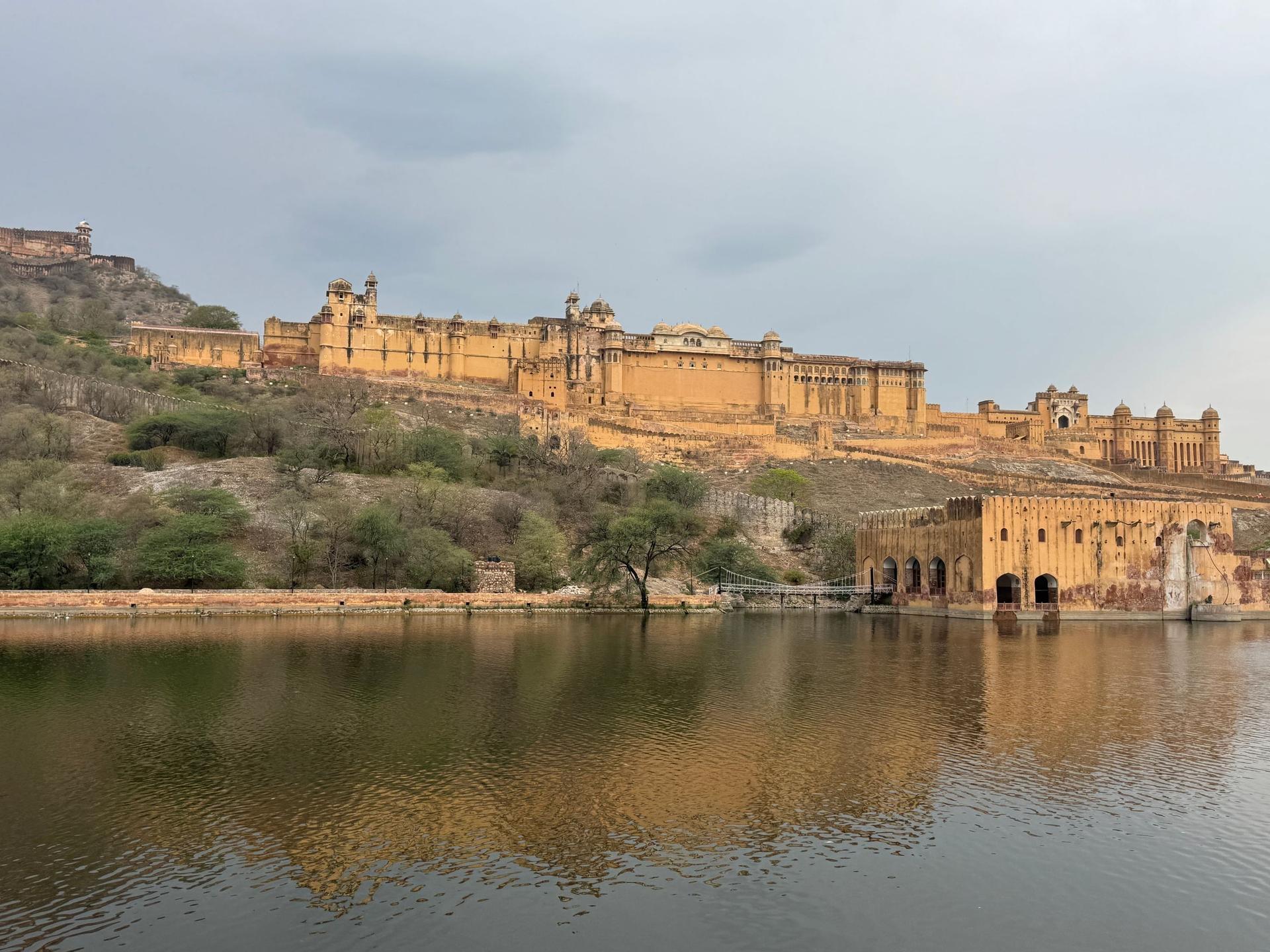
The walk begins at Maota Lake, below the fort, with the walled island garden of the Kesar Kyari in it, the palace on the ridge above and the walls of Jaigarh higher still. Between the road and the lake lies the Dil-e-Aaram Bagh, a terraced garden of channels and pavilions; the name means, roughly, heart's ease. The lake's level rises and falls with the monsoon, so do not count on water. At Gandhi Chowk the main road bends away toward Delhi and the old town's own street begins.
Two faiths on one temple
Hear a stop from this walk
West Courts
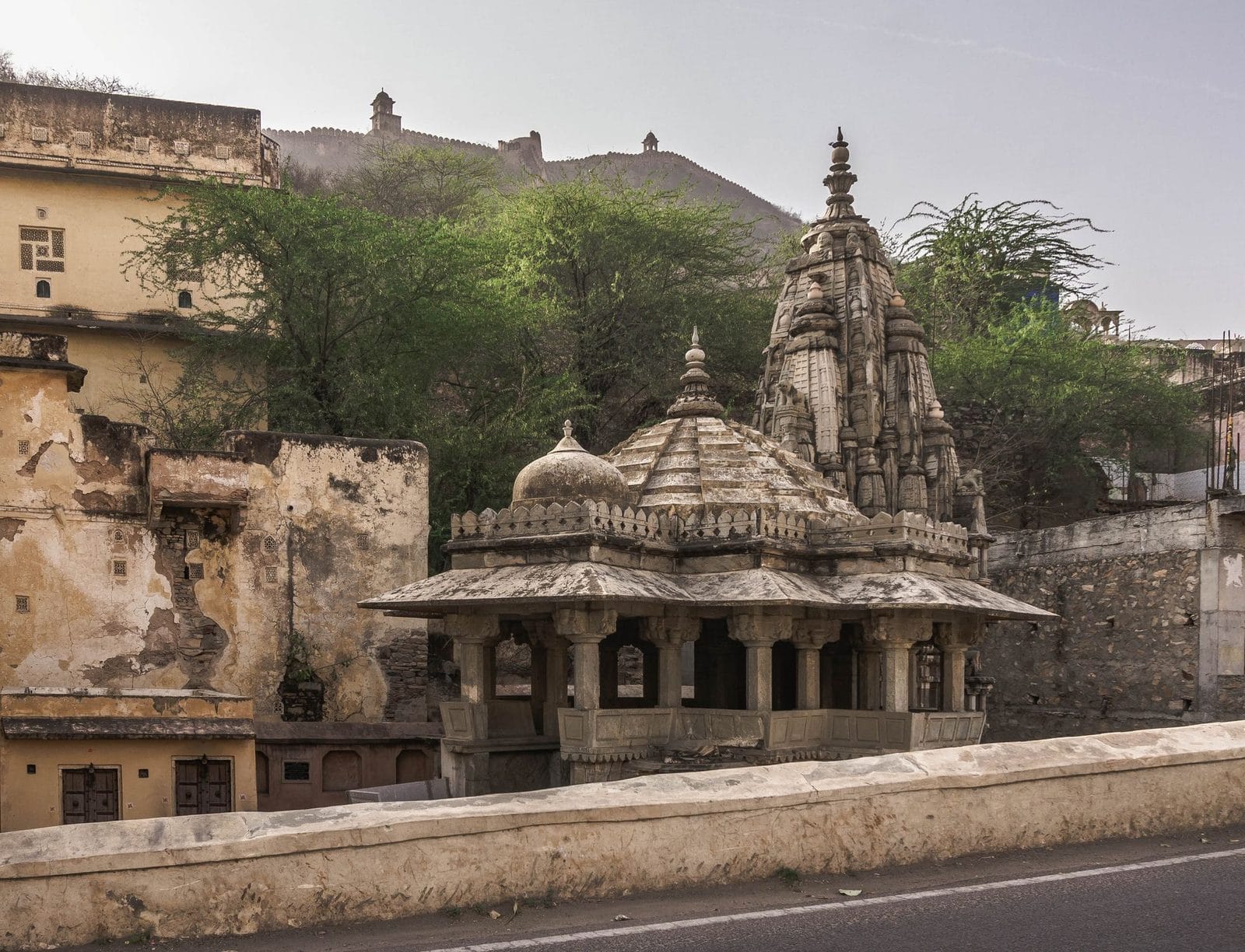
Just off the street, three tapering spires and a round dome rise over a wall. Lettering calls this the temple of Rudra Mahadev, a name of Shiva, and it is worshipped as a temple of Shiva; the town calls it Sanghi Jhuntharam's temple, sanghi being an honorary title for a leader of a Jain community. Over the entrance, if the gate is open, small marble reliefs show seated Jinas, the liberated teachers of the Jain faith. A stone inscription dated 1657 records that the Jain chief minister of Amer's king, Jai Singh the First, built a temple to one of the Jinas at Amer; a guide to Jaipur and Amer published in 1955 recorded that the plate once lay in this temple. Jain merchants and ministers served the court, and their gifts are part of the town.
A royal mother's temple
Up the street, the Jagat Shiromani temple faces west behind a carved marble gateway, with a small shrine for Garuda and a tall spire over the sanctum. The Survey records that it was built by Sringar Devi Kankawat, the mother of Jagat Singh, begun in 1599 and completed in 1608, and dedicated to Radha and Krishna. By tradition it is named for her son. It is protected by the Survey, with no entry fee, and it is a working temple: cover shoulders and knees, and take off your shoes if you go in.
Further on, the Ambikeshwar temple's court and sanctum sit below the level of the street; the lingam is reported to fill with water in Shravan, the monsoon month. Amer is said to take its name from this temple's god, or from the mother goddess Amba. These are traditions, and they need not agree with the Survey's older Ambavati.
The stepwell
Beside a lane, a square pit drops away and flights of steps zigzag down its sides in a pattern of small triangles. This is Panna Meena ka Kund. A stepwell catches the monsoon rain and holds it through the dry months; as the water sinks, the steps let you reach it at any depth, so the famous pattern is engineering first. India's Ministry of Tourism describes it as the neighborhood's main water source, where people came for water, for talk and for shade. It is centuries old, and two traditions give its name, a Meena chief or a man of the royal household. It is open from sunrise to sunset; recent visitors report the steps are closed, so look from the railing. It lies about half a kilometer below the fort's back gate, not a kilometer away as some guides say.
The haveli and the old street
At Kheri Gate a plain-fronted townhouse, the Chanwar Palkiwalon ki Haveli, has been restored as the Anokhi Museum of Hand Printing, a private museum with its own hours. Beyond it runs the old main street, with shopfronts and haveli doorways and the town walls on the ridges above. A capital needs merchants and craftsmen, priests and clerks, houses for all of them, temples and water. When the court left, the town shrank around them into something closer to a village, but it kept a capital's streets. People live here: ask before you photograph anyone.
The mosque and the alliance
The walk ends at the Jama Masjid, Amer's Friday mosque, five arches across with a courtyard entered from three sides. A Persian inscription beside the central arch, the Survey records, says it was built by Bharmal, king of Amber, by the order of the emperor Akbar, in 1569. Seven years earlier Bharmal's daughter had married Akbar, and the alliance between Amer and the Mughals had begun. In his own capital, the king of Amer built a mosque at the emperor's order, and put it in writing. It is a working mosque, told from outside.
Before you go
- The walk is 11 stops over about 2.1 km, about 70 minutes, looping from the "Amer Fort" bus stop by Maota Lake. Amer is about 11 km by road north of Jaipur's walled city; there is no metro.
- Every stop is free and seen from the street. The Anokhi museum opens Tuesday to Saturday 10:30 am to 5:00 pm and Sunday 11:00 am to 4:30 pm, closed Mondays and from 31 May to 15 July (checked November 2026).
- Amer Road has no sidewalk at the start: keep to the lake side in single file. Traffic keeps to the left.
- Pair it with the fort: the Amber Fort walk starts at the foot of the steps on the same lakeshore, and its ticket is separate.
Ready to experience it?
Amber Fort: Up the Ridge, Back in Time
75 min · 0.6 km · moderate
More from Jaipur
Explore more at your own pace.
Best Culture Walking Tours in Jaipur (2026)
Best History Walking Tours in Jaipur (2026)
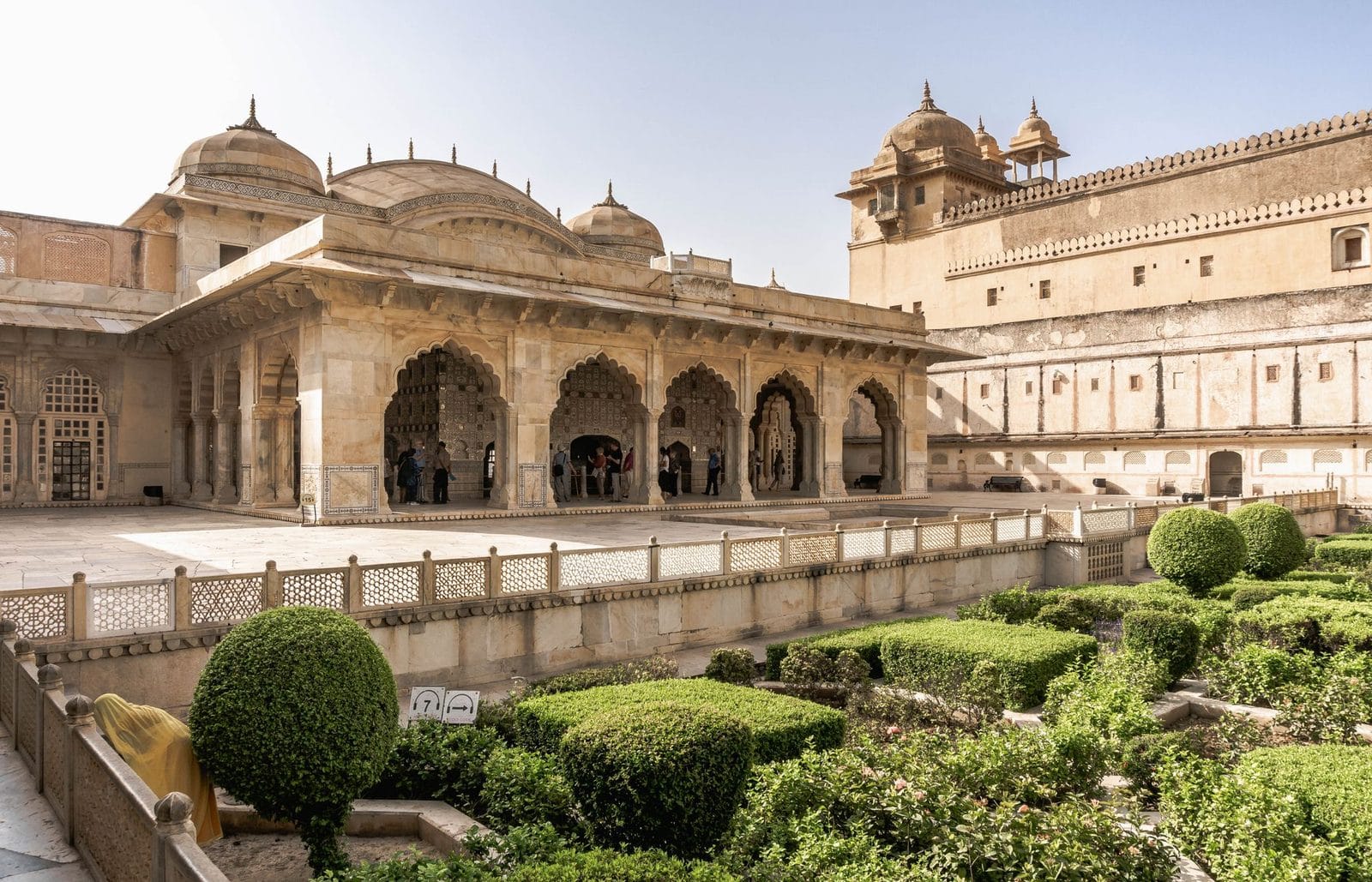
Amber Fort: Up the Ridge, Back in Time
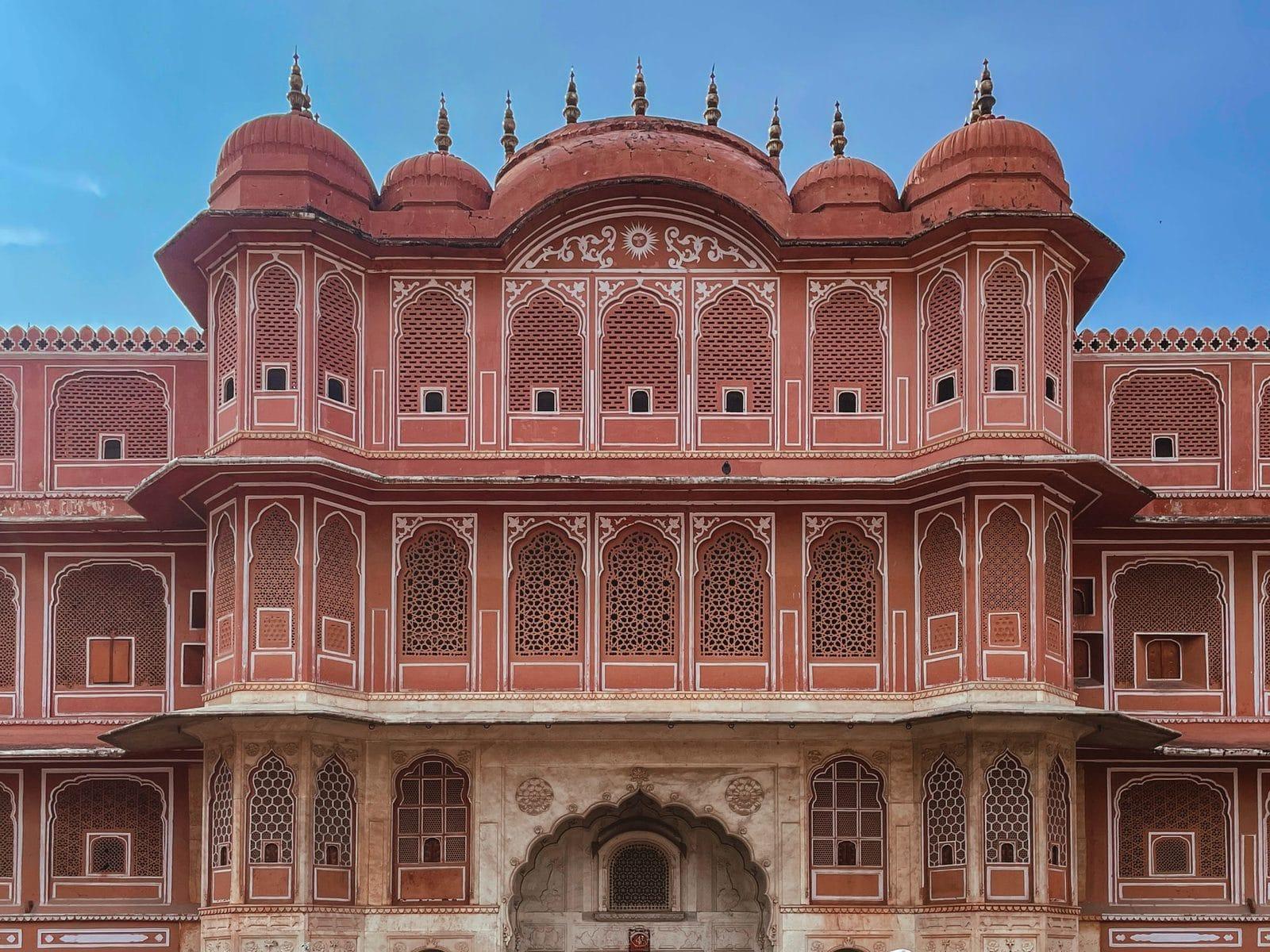
City Palace: The Museum Built Around a Home
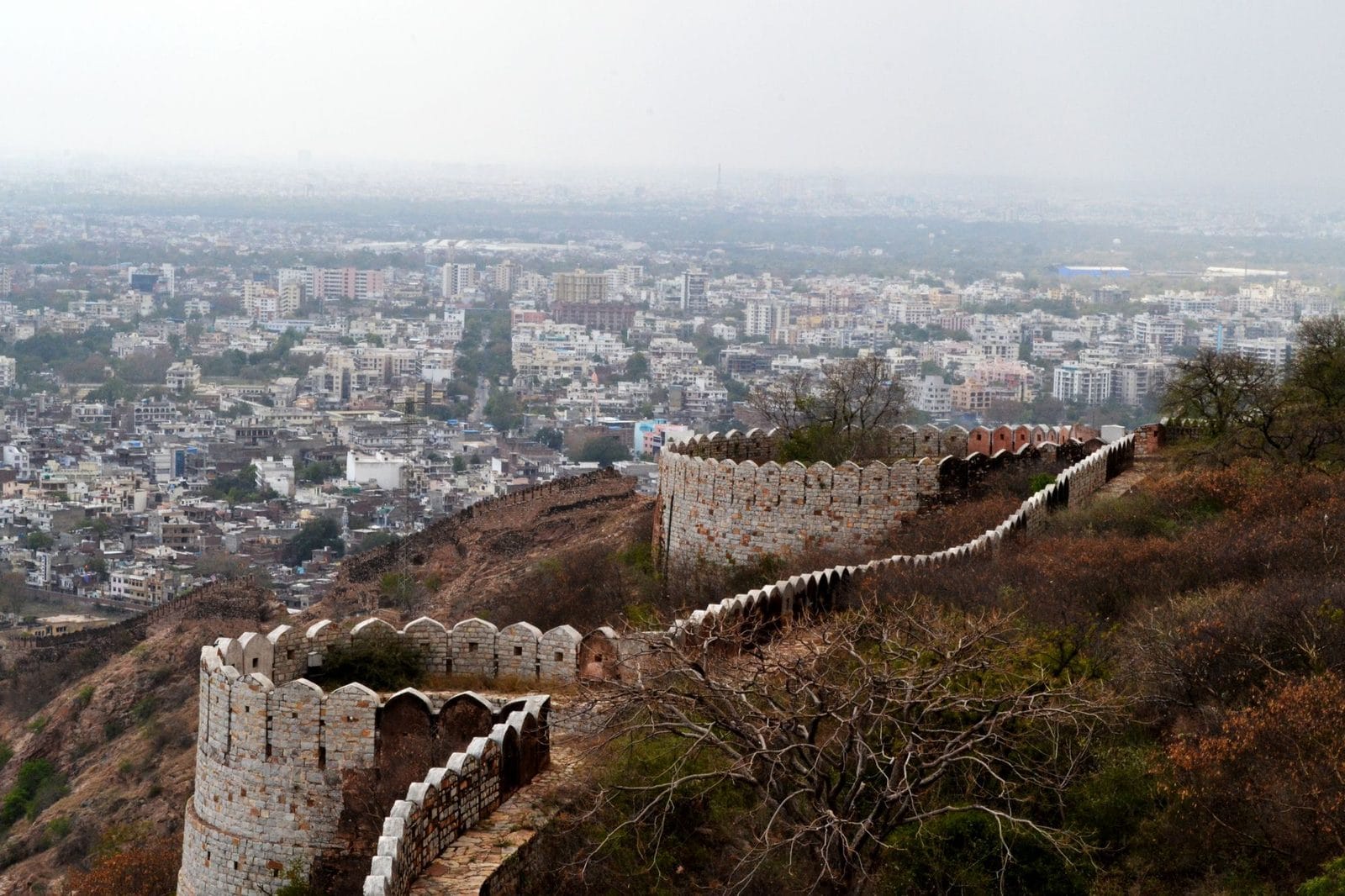
Nahargarh Fort: The Ridge Above the Grid