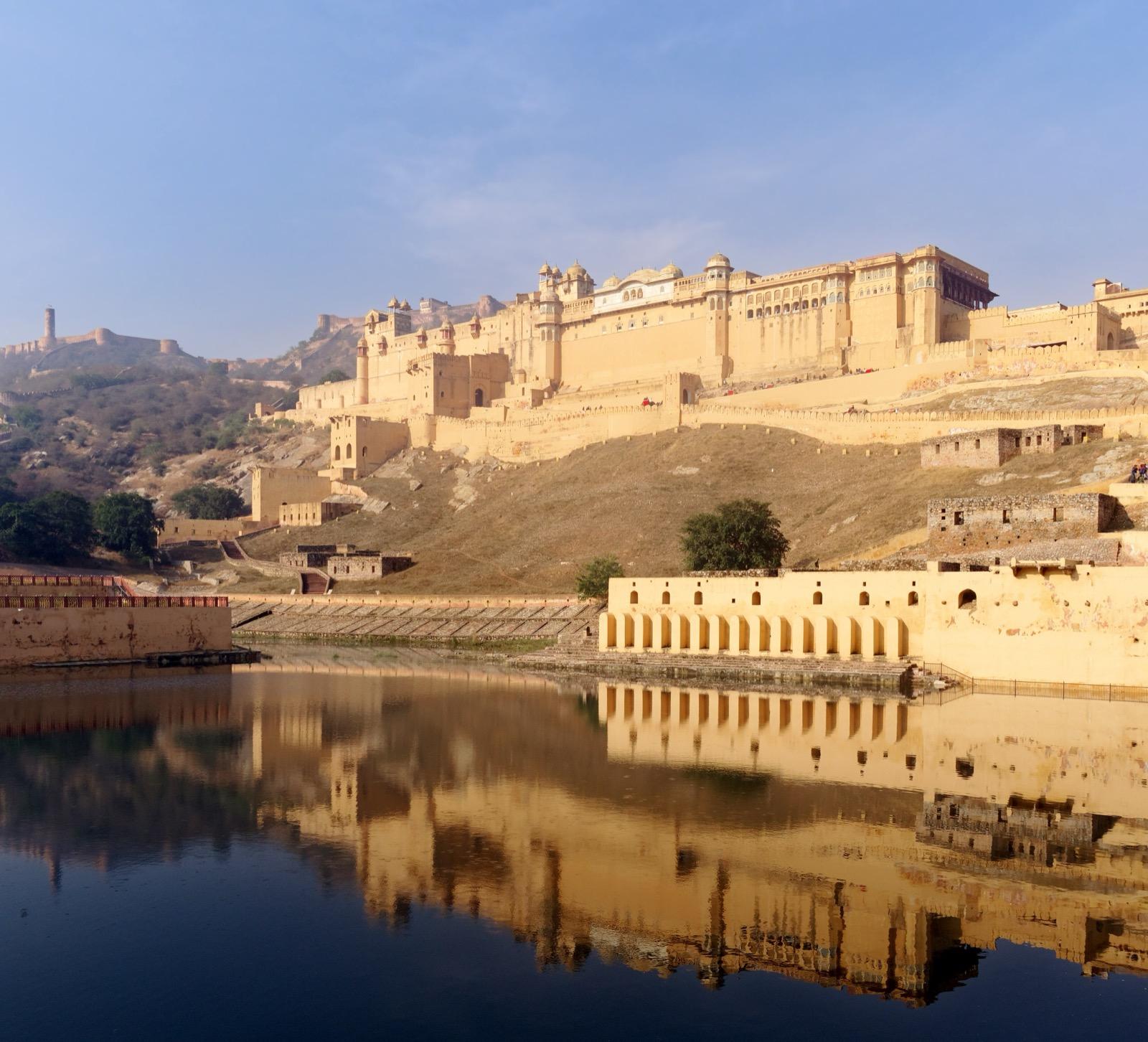
Climb the pale sandstone and marble palace the Kachhwaha Rajput kings raised above a lake, from its army courtyard to the Sheesh Mahal, where a single flame becomes a sky of stars.
Start · The Suraj Pol and the Jaleb Chowk: The Gate the Army Came Home Through
DirectionsStops
- 1
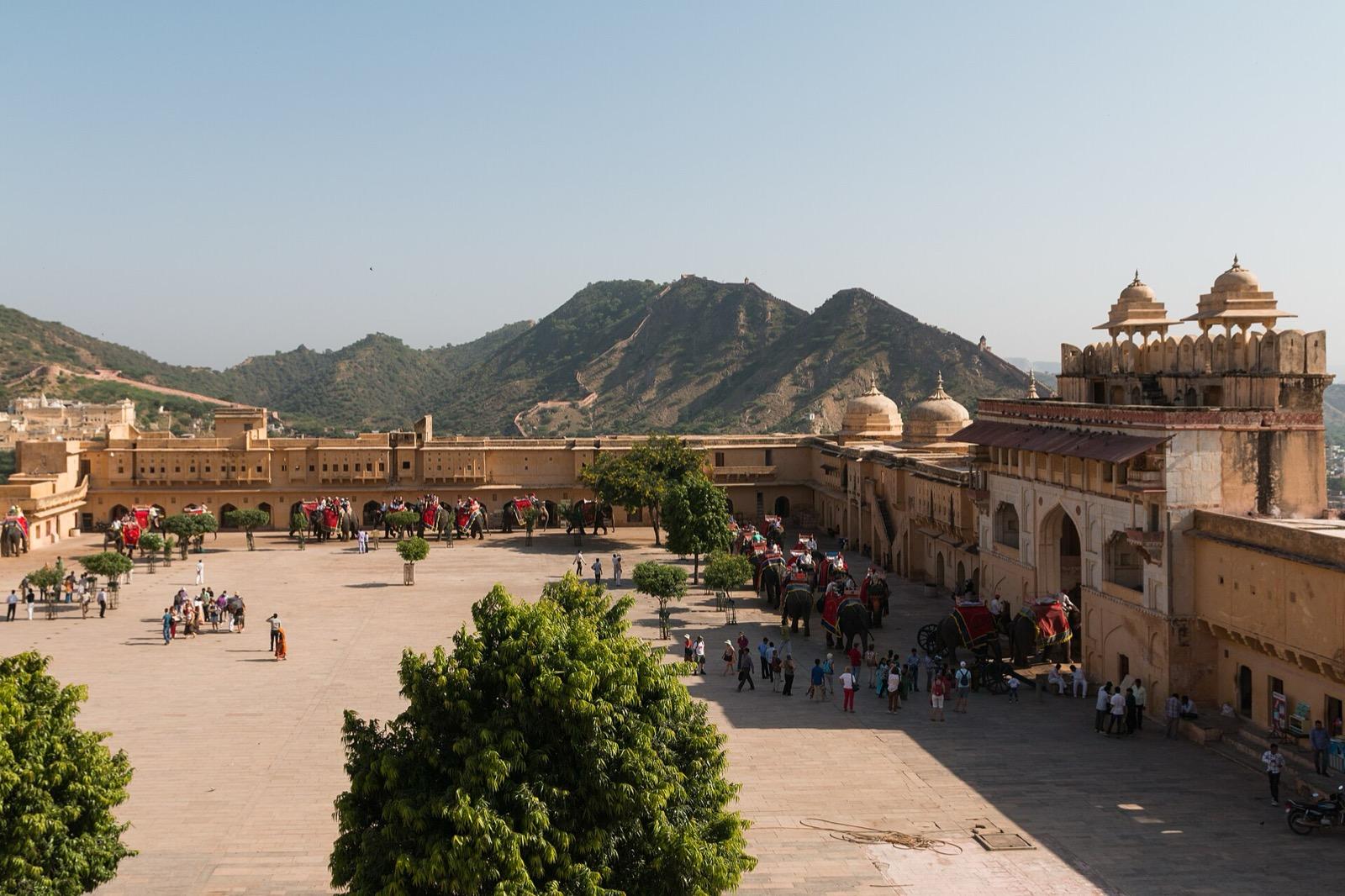
The Suraj Pol and the Jaleb Chowk: The Gate the Army Came Home Through
The eastern Sun Gate opens onto the great first courtyard where the army's returning troops assembled above the lake below.
- 2
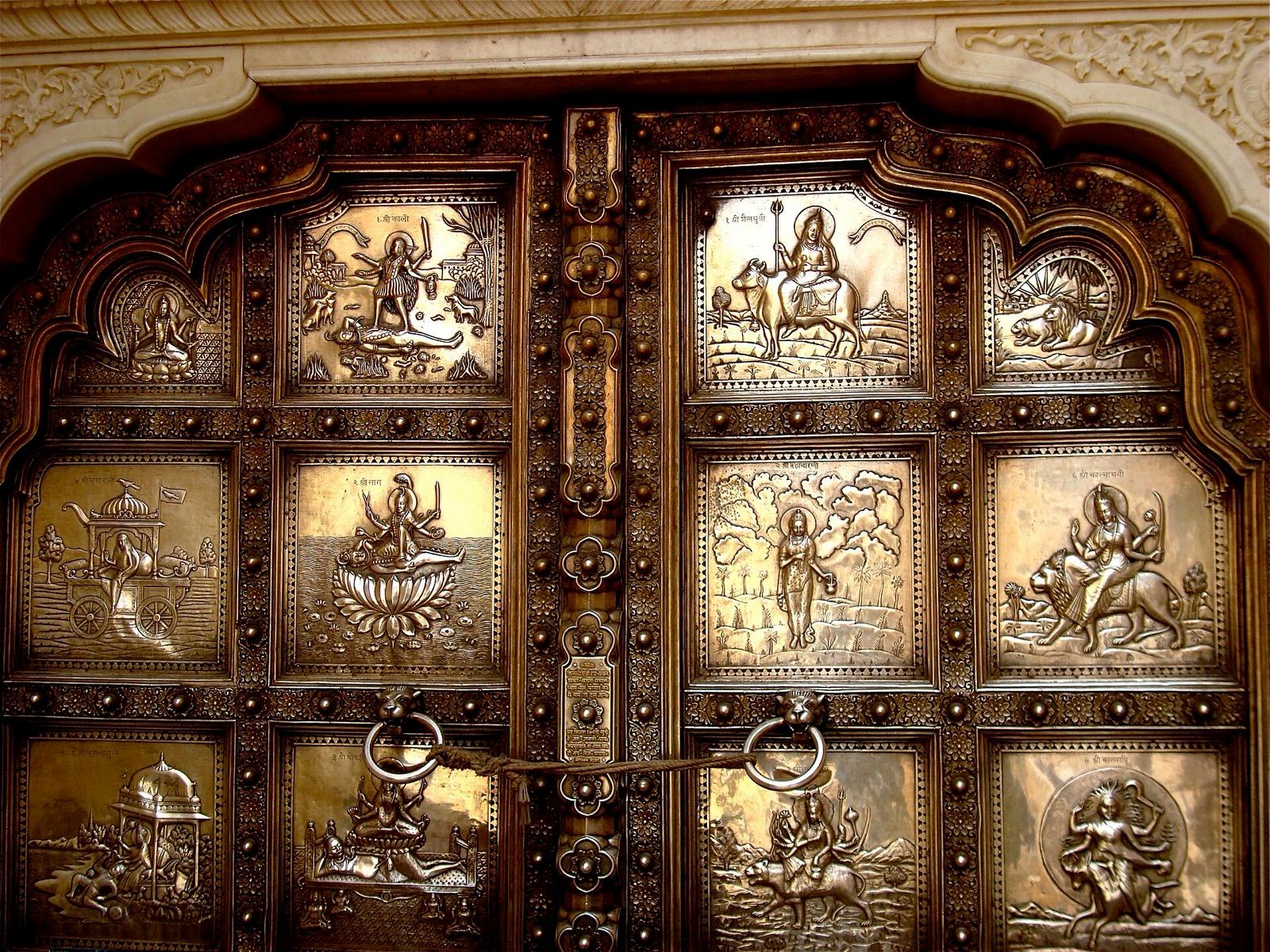
The Shila Devi Temple: The Warrior Kings' Goddess
A shrine off the first courtyard to the Kachhwaha family goddess, established by Raja Man Singh the First.
- 3
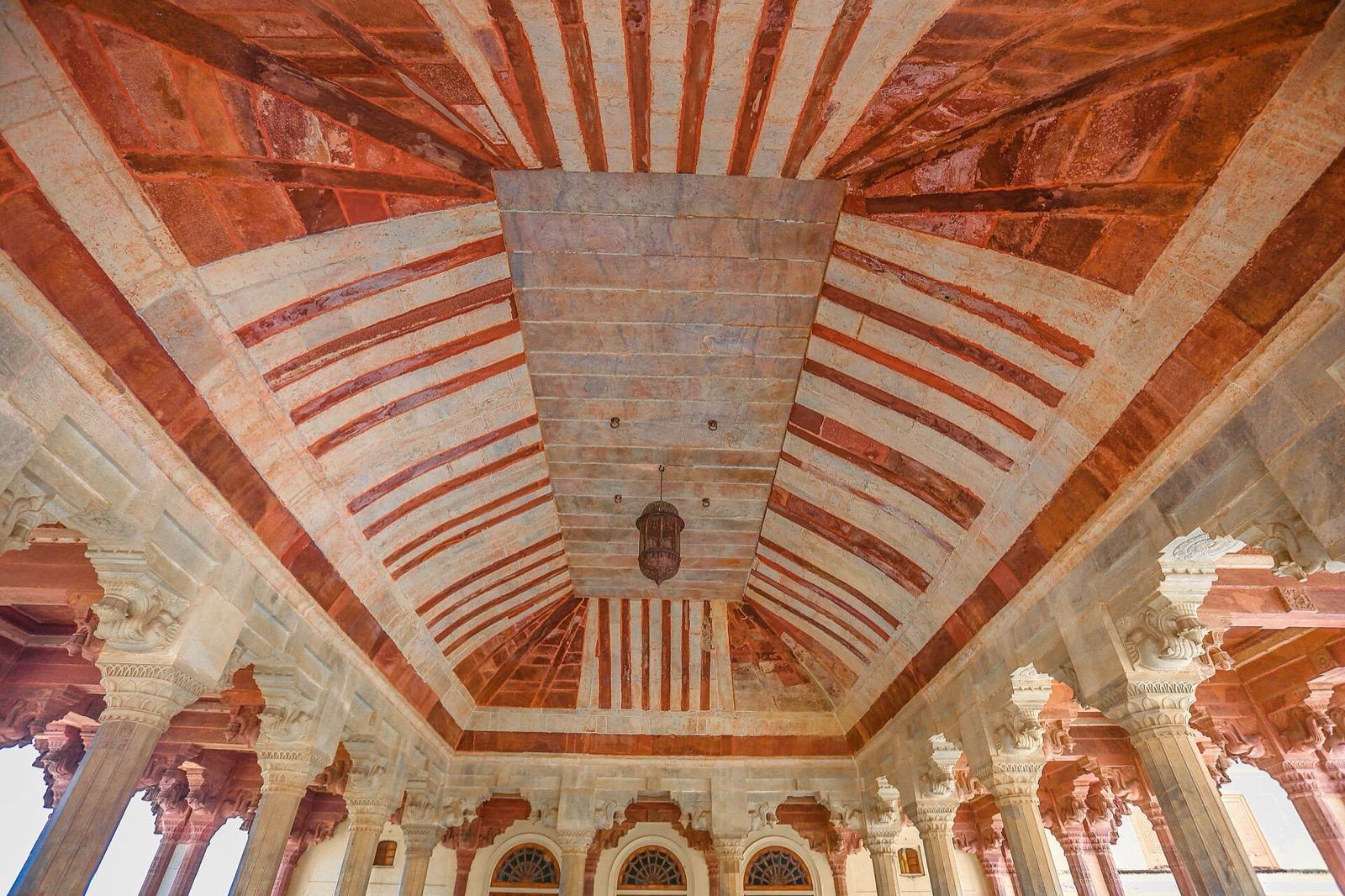
The Diwan-i-Am: The Hilltop Hall of Audience
An open colonnaded pavilion of red sandstone and marble where the Rajput king heard his people's petitions above the hills.
- 4
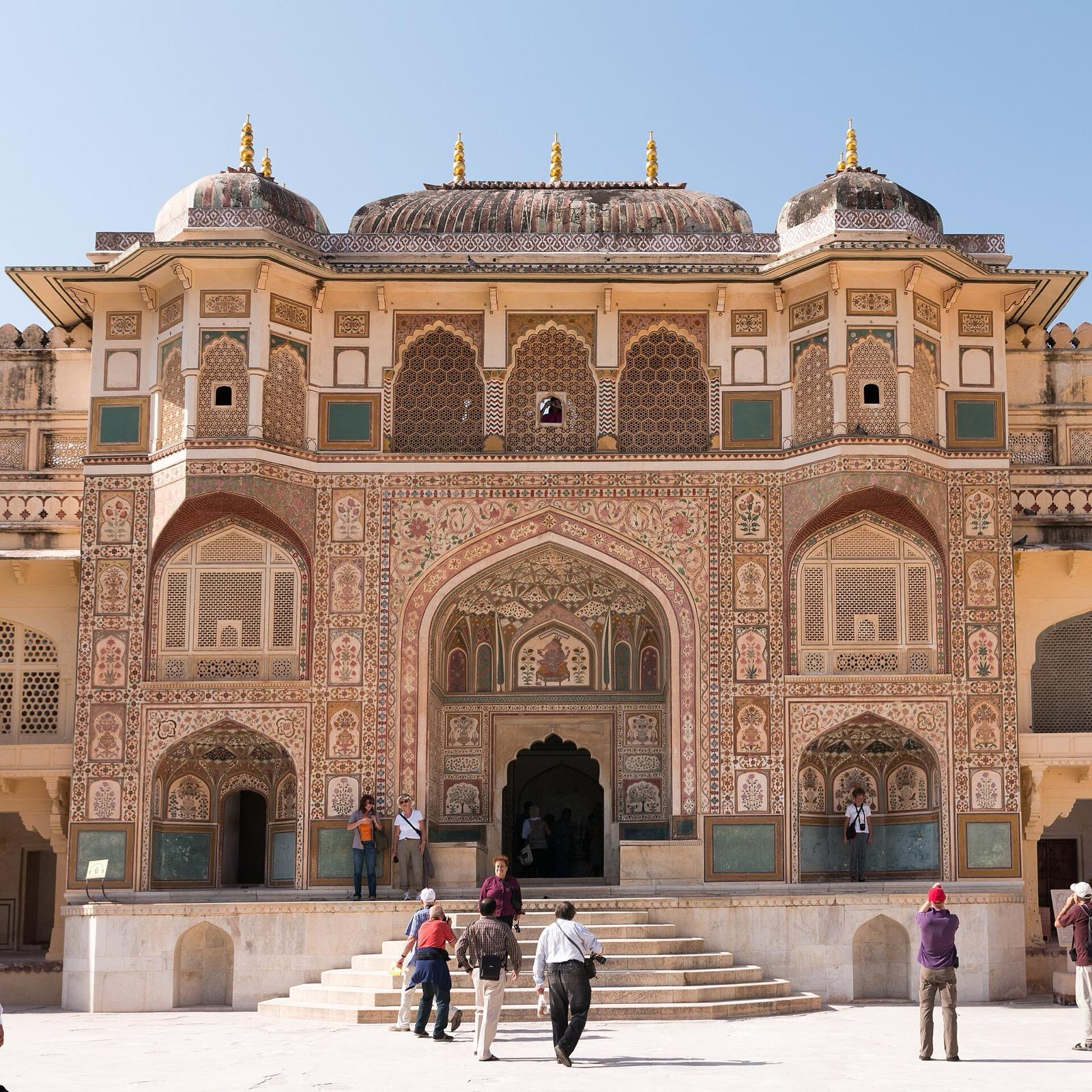
The Ganesh Pol: The Painted Gate of Good Beginnings
A tall three-level gateway richly painted with frescoes, guarding the threshold between the public palace and the private royal quarters.
- 5
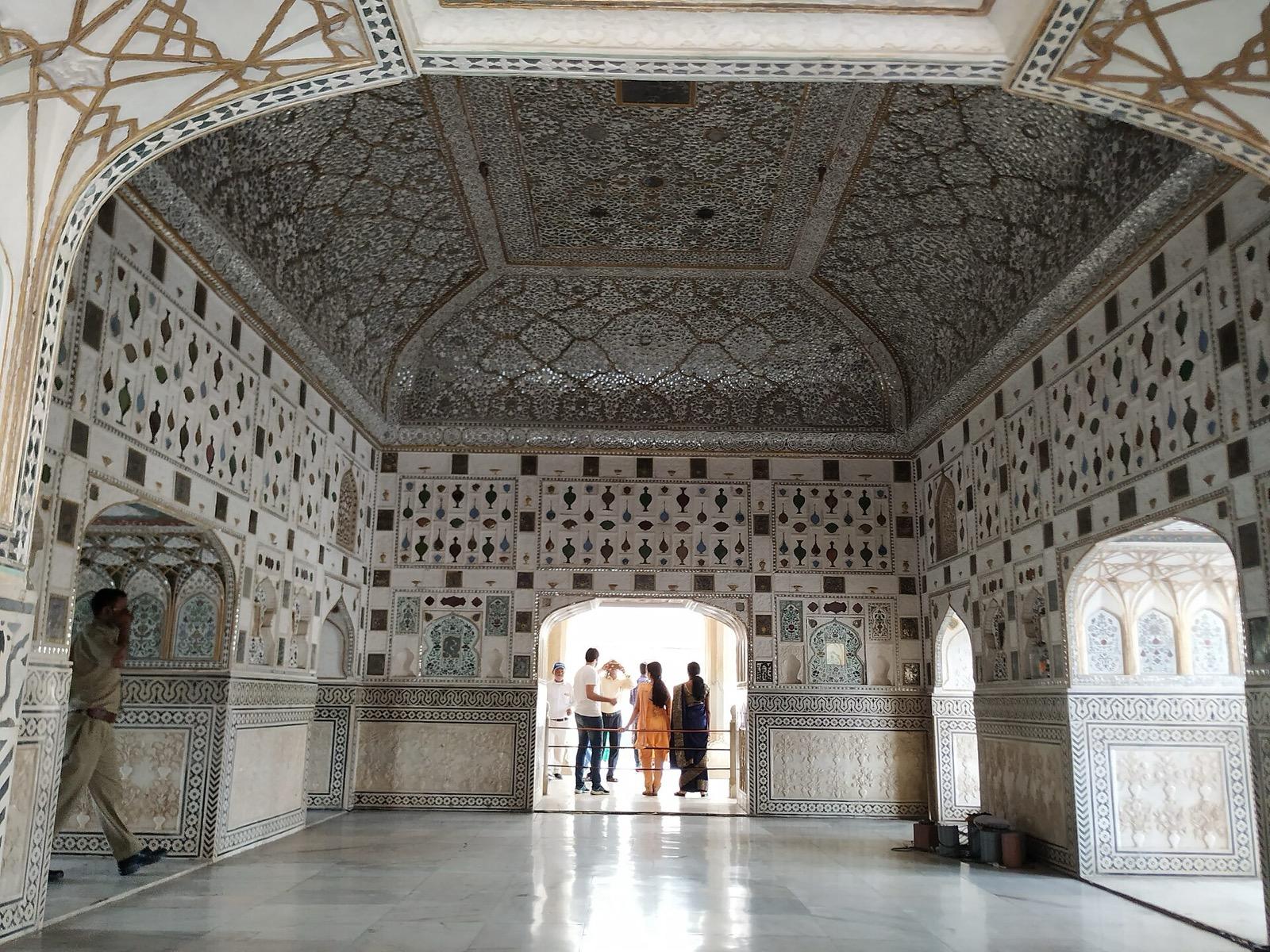
The Sheesh Mahal and the Jai Mandir: Where One Flame Becomes a Galaxy
The private mirror palace whose walls and ceiling of tiny convex mirrors scatter a single flame into a sky of stars.
- 6
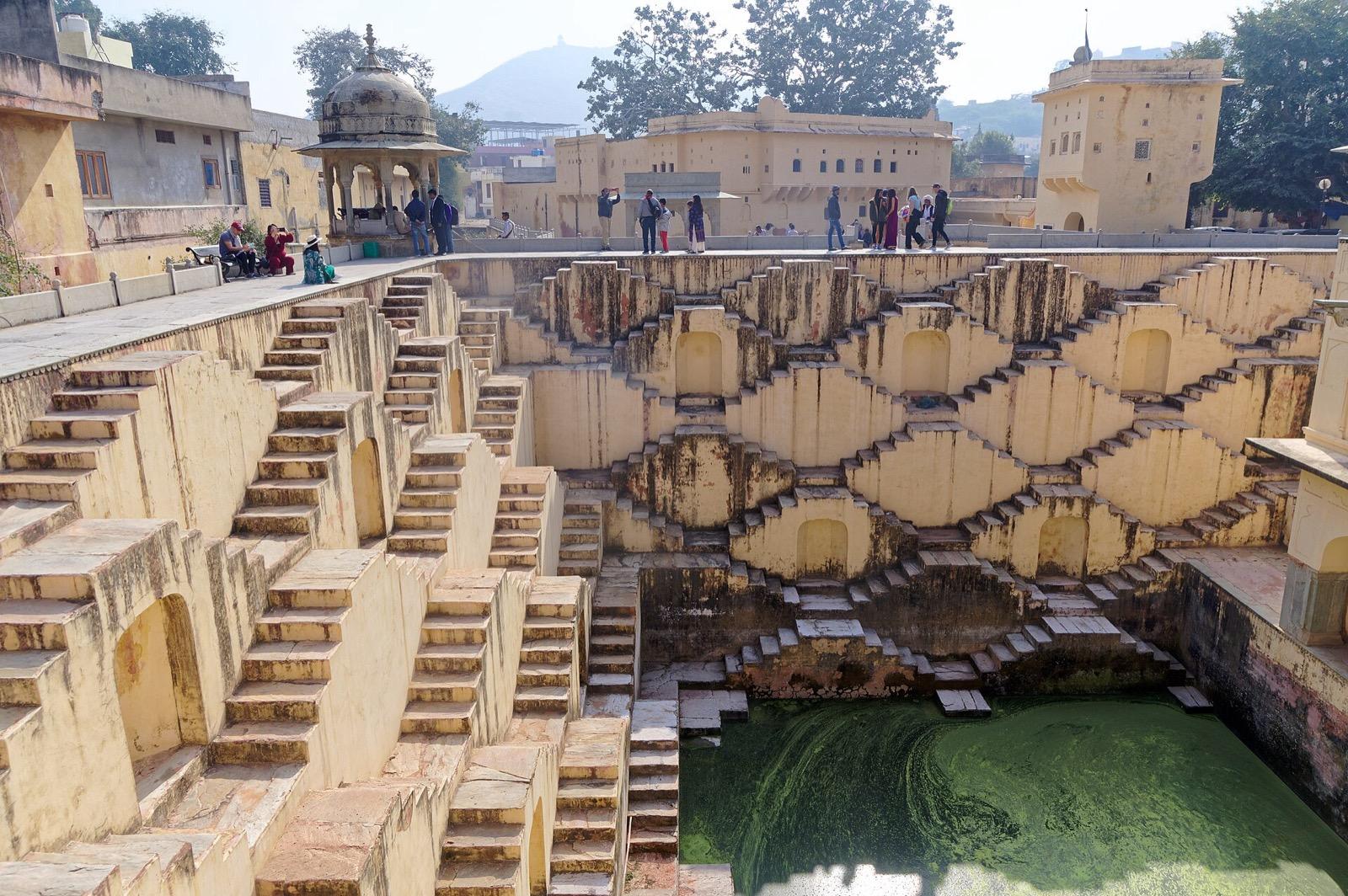
The Sukh Niwas, the Zenana and the Panna Meena ka Kund: The Cooled Court and the Stair-Well Below
The water-cooled pleasure hall, the older women's quarters, and a symmetrical stepwell of crossing stairs in the town below.
Details
Best Time to Visit
Arrive early, right at opening around eight in the morning, or in the late afternoon before closing around five thirty. Early light is soft on the pale stone, the day is coolest, and you beat the thickest crowds and the touts, who build up through the mid-morning tour-bus rush. October to March is the comfortable season; the heat from April to June is severe on the exposed ramps.
Pro Tips
- •Reach the fort on your own terms by taxi or auto-rickshaw from the center, about eleven kilometres north; agree the fare or ask for the meter before you set off, and there is no need to wait for a group van.
- •This is a paid monument with a foreign-visitor ticket higher than the Indian rate, open roughly eight in the morning to five thirty in the evening; keep your ticket handy for inner sections.
- •Save the Sheesh Mahal for a slow, unhurried visit and stand in the middle to take in the mirror effect; you set the pace, so linger while others rush through.
- •At the Shila Devi temple, remove your shoes, dress modestly, and note that photography inside is restricted; you can also simply read it respectfully from the doorway.
- •Add the Panna Meena ka Kund stepwell in the town below the fort, about a kilometre away and free to visit, for the quiet counterpoint to the crowded palace.
- •Guides and hawkers will approach constantly; a polite, firm no is enough, and with your own audio map you never have to be steered toward a shop.
Safety & Precautions
- •The ramps and courtyards are steep, sunny, and largely without shade, and Amber draws heavy crowds with many photo-touts and guide-touts, so carry water, wear a hat, and expect to keep saying a firm no.
- •The site sits about eleven kilometres from the center and is reached by taxi or auto-rickshaw; agree the fare or use the meter before you ride, and keep small cash in rupees for the ticket and the return trip.
- •There are many steps and uneven stone throughout the climb, so wear sturdy shoes and take the ascent at your own pace, especially in the heat from April to June, when the sun is severe.
- •Inside active places of worship such as the Shila Devi temple, remove your shoes, dress modestly, and respect restrictions on photography and any darshan times.
Travel advisory: Exercise Increased Caution (Level 2).
Gallery
Related Reading
Go deeper on what you'll see, hear, and walk through.
Overview
Best Self-Guided Walking Tours in Jaipur (2026)
3 min
Overview
Jaipur Travel Guide: Days, Transport, Costs, Timing, and Safety
7 min
Overview
One Day in Jaipur: A Walkable Pink City and Amber Fort Itinerary
7 min
Thematic
Jaipur: The City That Was Drawn Before It Was Built
7 min
Companion
Amber Fort's Sheesh Mahal: Why One Candle Becomes a Galaxy
7 min
Deep dive
Sukh Niwas, the Zenana and Panna Meena ka Kund: Amber Fort's Water and Privacy Machines
6 min
Read
What to Eat in Jaipur: A Local Food Guide
6 min
Read the walk
The full story of Amber Fort: Hillfort of the Kachhwahas, in words. Prefer to listen? Play it narrated, from home or on location.
Introduction
Before the Kachhwaha Rajput kings built the planned city of Jaipur on the plain in seventeen twenty-seven, they ruled from Amber, a fortress-palace of pale sandstone and marble climbing a rocky hillside above a lake in Rajasthan, in northern India. This walk reads that hill-capital across six stops, over roughly ninety minutes and about one and a half kilometres of ramps, courtyards, and gates. A quick note on reaching it. Amber Fort sits about eleven kilometres north of the Pink City, in the old town of Amer, so the site is a short taxi or auto-rickshaw ride from the center. That is autonomy, not a chore: your own ride, your own clock, a few rupees, no group van and no one hurrying you to a shop along the way. This is one of India's most crowded and most touted monuments, thick with guides steering groups and touts steering shoppers. A good local guide here is genuinely wonderful company. What you are trading away is only the scheduled-group format and the commercial pressure, so you can set your own pace up the hill, linger under the mirrors, or press on. The story climbs with you. It begins in a great military courtyard by the water, turns aside to a warrior goddess's shrine, reads a Rajput king in his hilltop hall of audience, rises through a painted gate into the private palace, and reaches its marvel in a room whose walls turn one candle into a galaxy. When you arrive at the Suraj Pol, the Sun Gate, begin with stop one.
1. The Suraj Pol and the Jaleb Chowk: The Gate the Army Came Home Through
This is the Suraj Pol, which means the Sun Gate, the main eastern entrance to Amber Fort, and it opens onto the Jaleb Chowk, the wide first courtyard where the returning army once gathered. A pol is a gate, and a chowk is a square or crossroads. Picture the scene this courtyard was built to hold. Troops coming home from a campaign would assemble here in the open to be reviewed by the king, horses and elephants and men filling the paved expanse. According to the site's history, this courtyard was laid out during the reign of Sawai Jai Singh, and from here ramps and steps rise into the palace above. In earlier centuries the climb could be made on the back of an elephant, and elephant rides up to the fort still operate today. Turn to the view before you go higher. Below the fort lies the Maota lake, which was the main water source for both the fort and the town, and in its center floats a garden island called the Kesar Kyari Bagh, the saffron garden, a fourfold pattern of green set in the water. The whole hill-palace grew out of this relationship between stone and water, a defensible height with a reliable lake at its foot. UNESCO inscribed Amber Fort in twenty thirteen as one of the six Hill Forts of Rajasthan, a group of Rajput strongholds recognized as a World Heritage Site. Take your time in the courtyard. The crowds funnel through fast, but you set the pace, and the best of the palace is still above you.
2. The Shila Devi Temple: The Warrior Kings' Goddess
Off the first courtyard stands the Shila Devi temple, the shrine of the family goddess of the Kachhwaha kings. A mandir is a Hindu temple, and this one honors a form of the goddess associated with Durga, and in popular devotion sometimes with Kali, worshipped by warrior kings before they rode to battle. The name comes from the word shila, meaning a stone slab, because the idol is carved from a single piece of black stone. According to the site's history, the temple was established by Raja Man Singh the First, who reigned from fifteen eighty-nine to sixteen fourteen, and the idol was installed on the sixth day of Navratri, the great autumn festival of the goddess, in sixteen oh four. There is a story attached to this shrine, and it is worth telling as the tradition it is rather than as settled fact. Legend holds that Man Singh brought the black stone idol from Bengal, from the region of Jessore in what is today Bangladesh, after a military campaign there. Historians treat that origin as tradition, not documented history, so hold it lightly. What is plainly here is beautiful: the temple is entered through finely worked silver doors, and it remains an active place of worship. If you go in, remove your shoes as worshippers do, dress modestly, and note that photography inside is restricted. Animal sacrifice was once practiced here in the goddess's honor and was discontinued in the nineteen seventies. Whether you step inside or read it from the doorway, this is the spiritual heart of the warrior capital, a goddess kept close by kings.
3. The Diwan-i-Am: The Hilltop Hall of Audience
This open, airy pavilion is the Diwan-i-Am, the Hall of Public Audience. A diwan is a hall of audience, and this is where the raja sat to hear the petitions and grievances of ordinary people, in the open, under a roof held up by a double row of columns. Count the colonnade and…
Full narration for this stop unlocks with the tour.
4. The Ganesh Pol: The Painted Gate of Good Beginnings
Ahead rises the Ganesh Pol, the Gate of Ganesha, considered the most beautiful gate at Amber. A pol is a gate, and this one is named for Ganesha, the elephant-headed Hindu god of good beginnings, whose image sits above the central arch, set there to bless everyone who passes…
Full narration for this stop unlocks with the tour.
5. The Sheesh Mahal and the Jai Mandir: Where One Flame Becomes a Galaxy
This is the room the whole climb has been building toward: the Sheesh Mahal, the Mirror Palace. Mahal means palace or building, and this one adjoins the Jai Mandir, the Hall of Victory, the private audience chamber that lies just behind the painted Ganesh Pol. Look at the walls…
Full narration for this stop unlocks with the tour.
6. The Sukh Niwas, the Zenana and the Panna Meena ka Kund: The Cooled Court and the Stair-Well Below
The walk ends with three quieter marvels of comfort and water. First, facing the Sheesh Mahal across the garden courtyard, is the Sukh Niwas, the Hall of Pleasure. An open channel of water runs straight through the middle of it, and cool air moving over that falling and flowing…
Full narration for this stop unlocks with the tour.