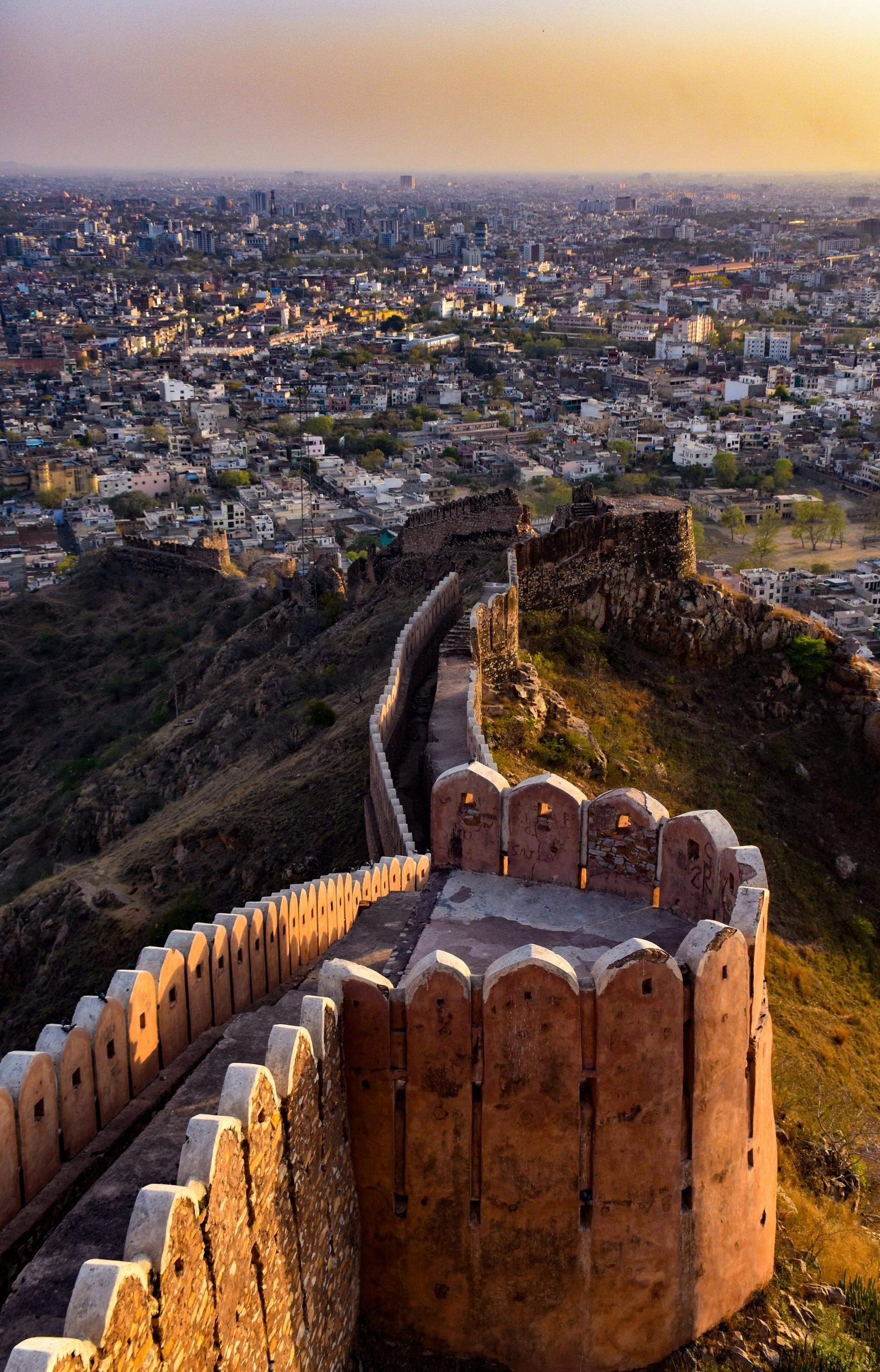
Inside Nahargarh Fort on the ridge above Jaipur: from the great stepwell outside the walls and the Sunrise Point platform, through the main gate and down the fort's one lane past the kund, into the Madhavendra Bhawan's courts and up to its roof over the walled city, then west along the sanctuary forest to the sunset bastions at Kali Burj.
Start · Nahargarh Baori: The Great Stepwell
DirectionsStops
- 1
Nahargarh Baori: The Great Stepwell
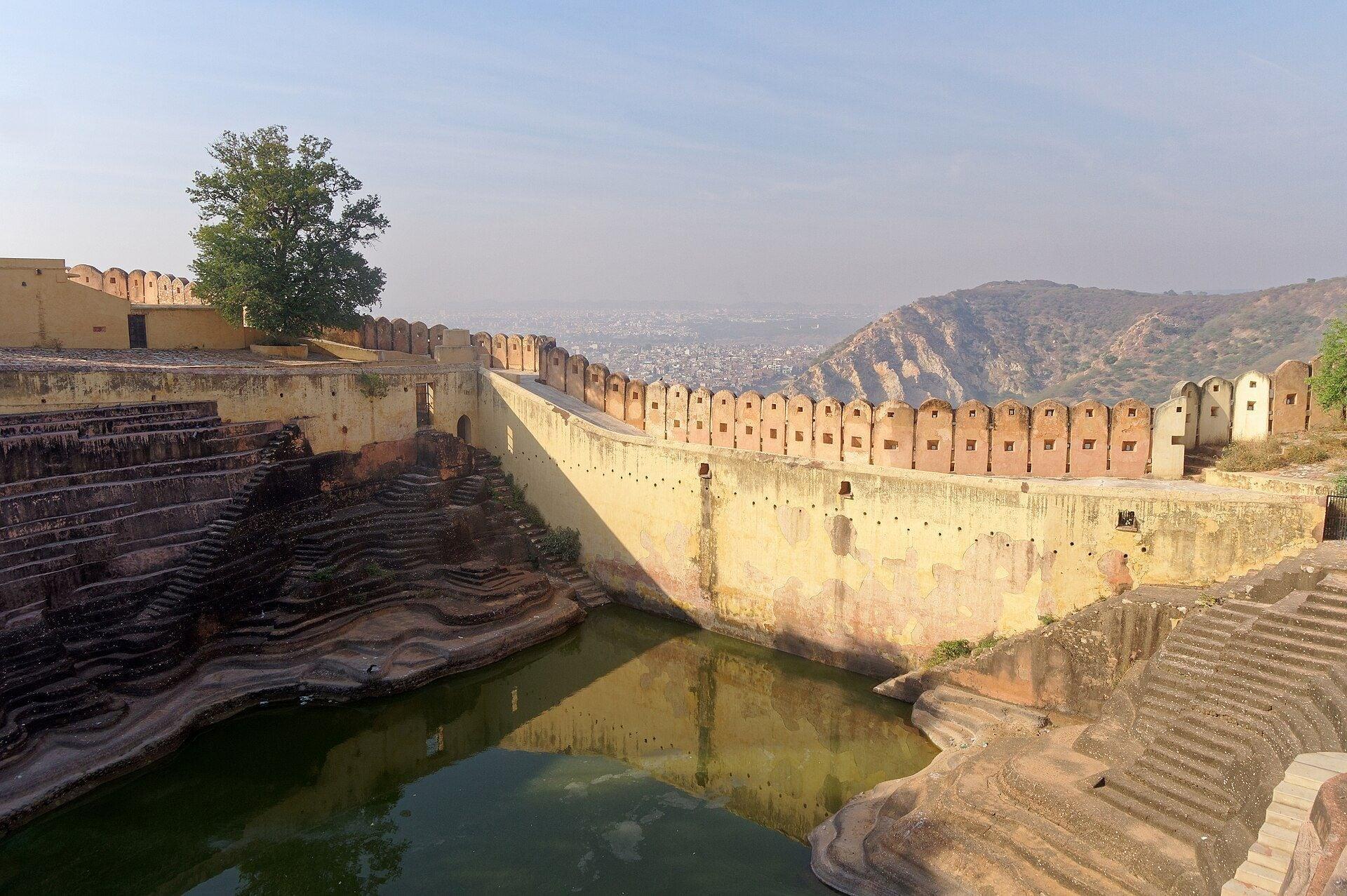
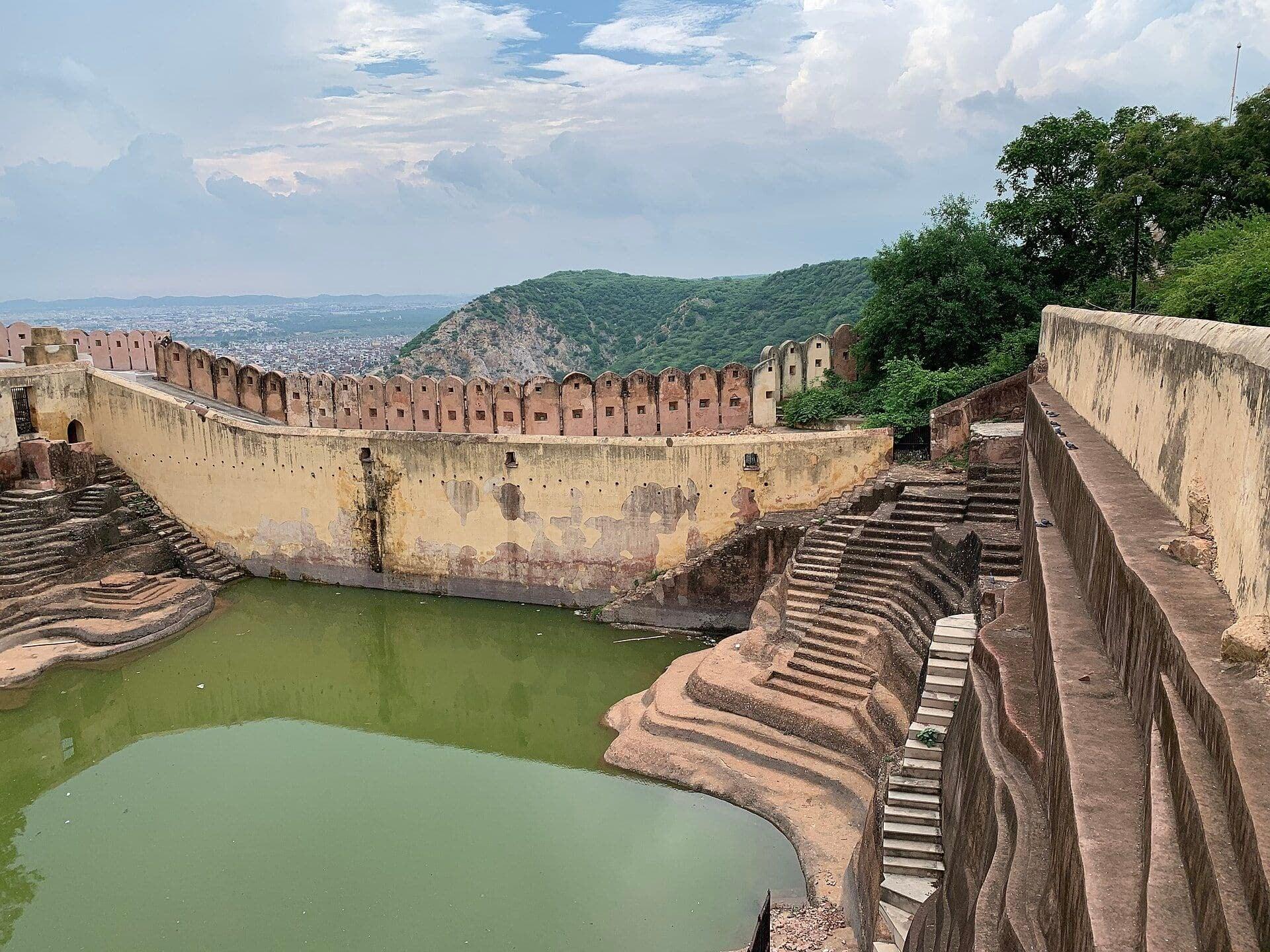
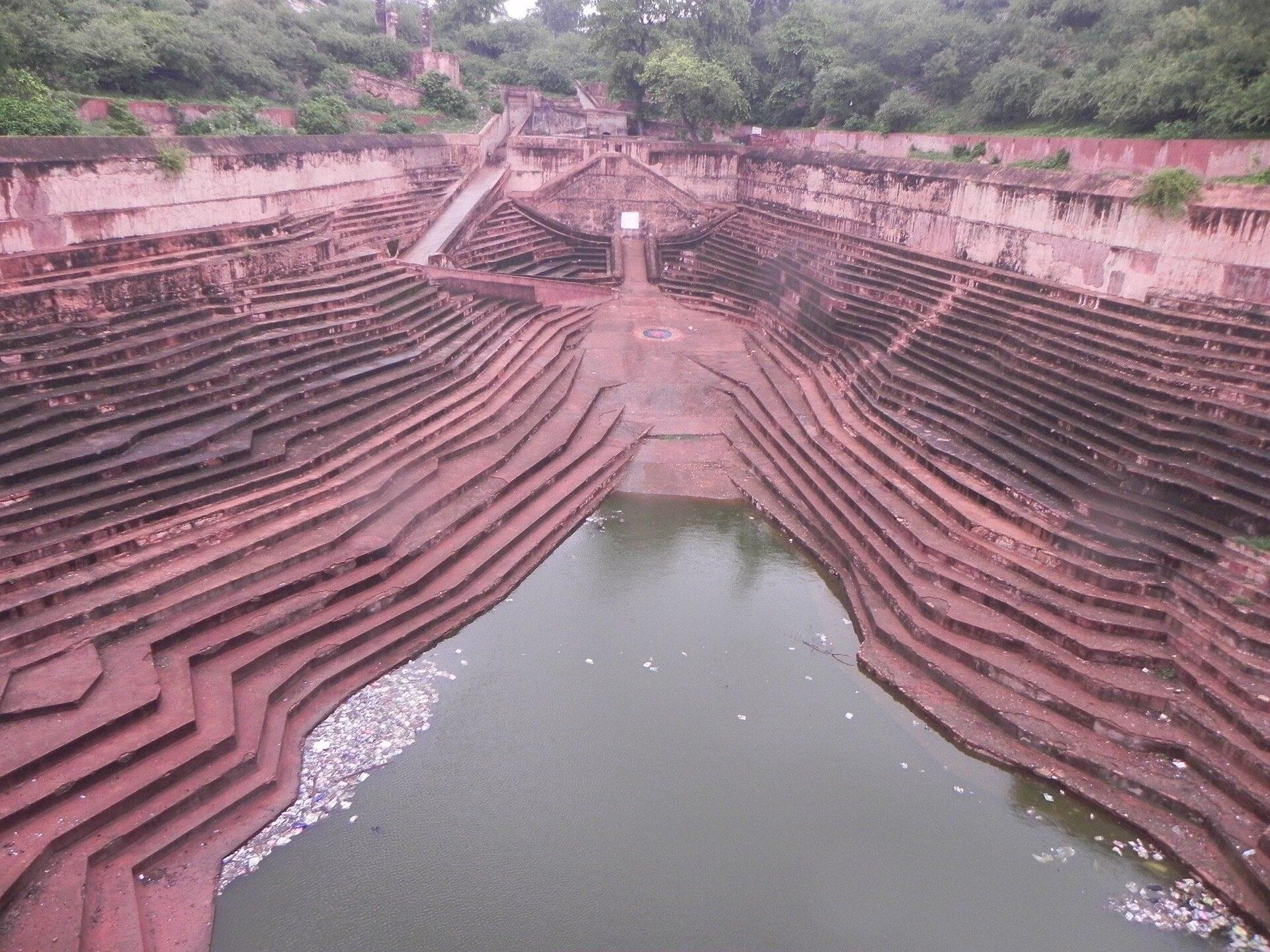
Water was the fort's first problem. Nahargarh Baori, the great stepwell just outside the fort's walls, where the stepped path up from the old city arrives.
- 2
Sunrise Point: Three Forts, One Ridge
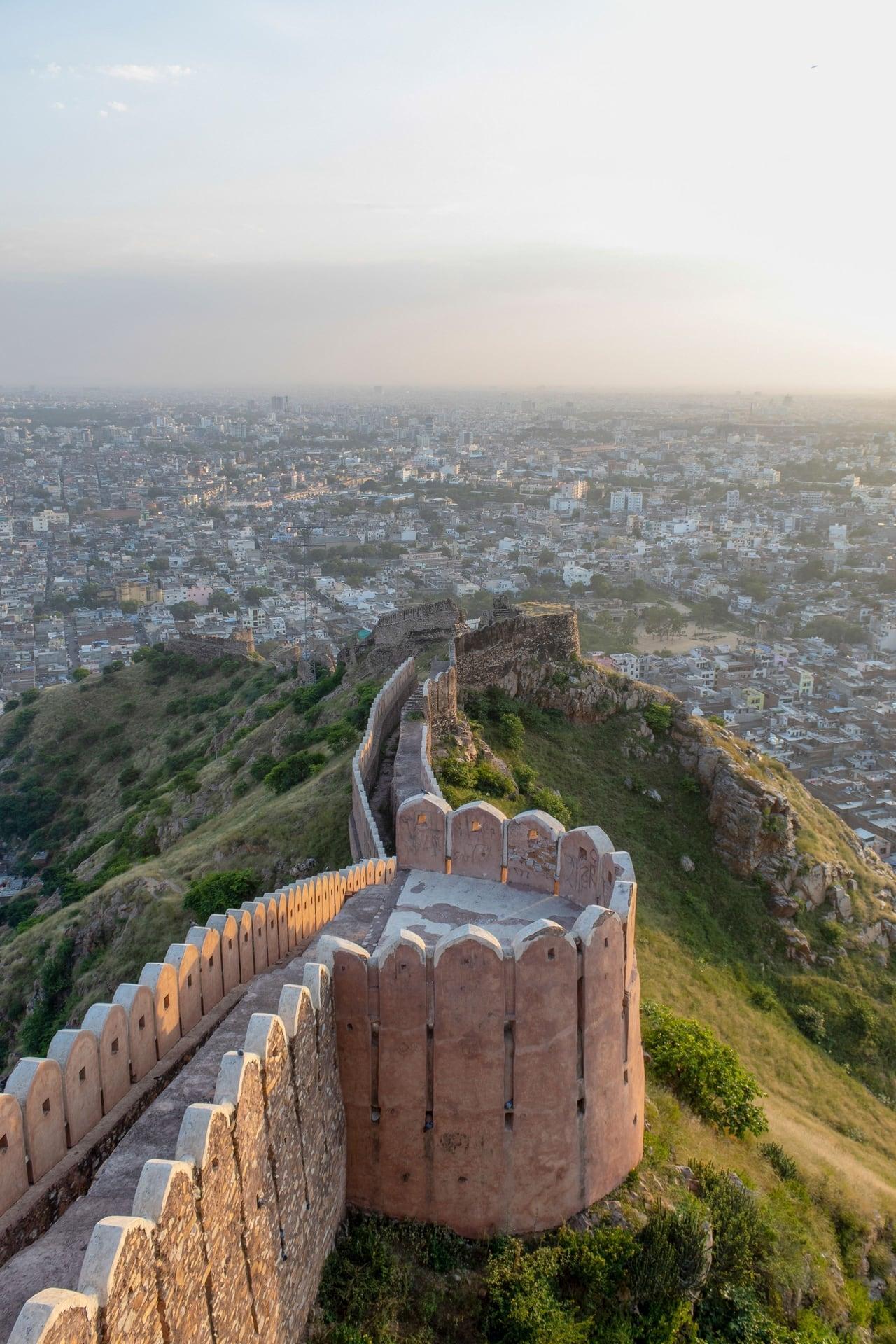
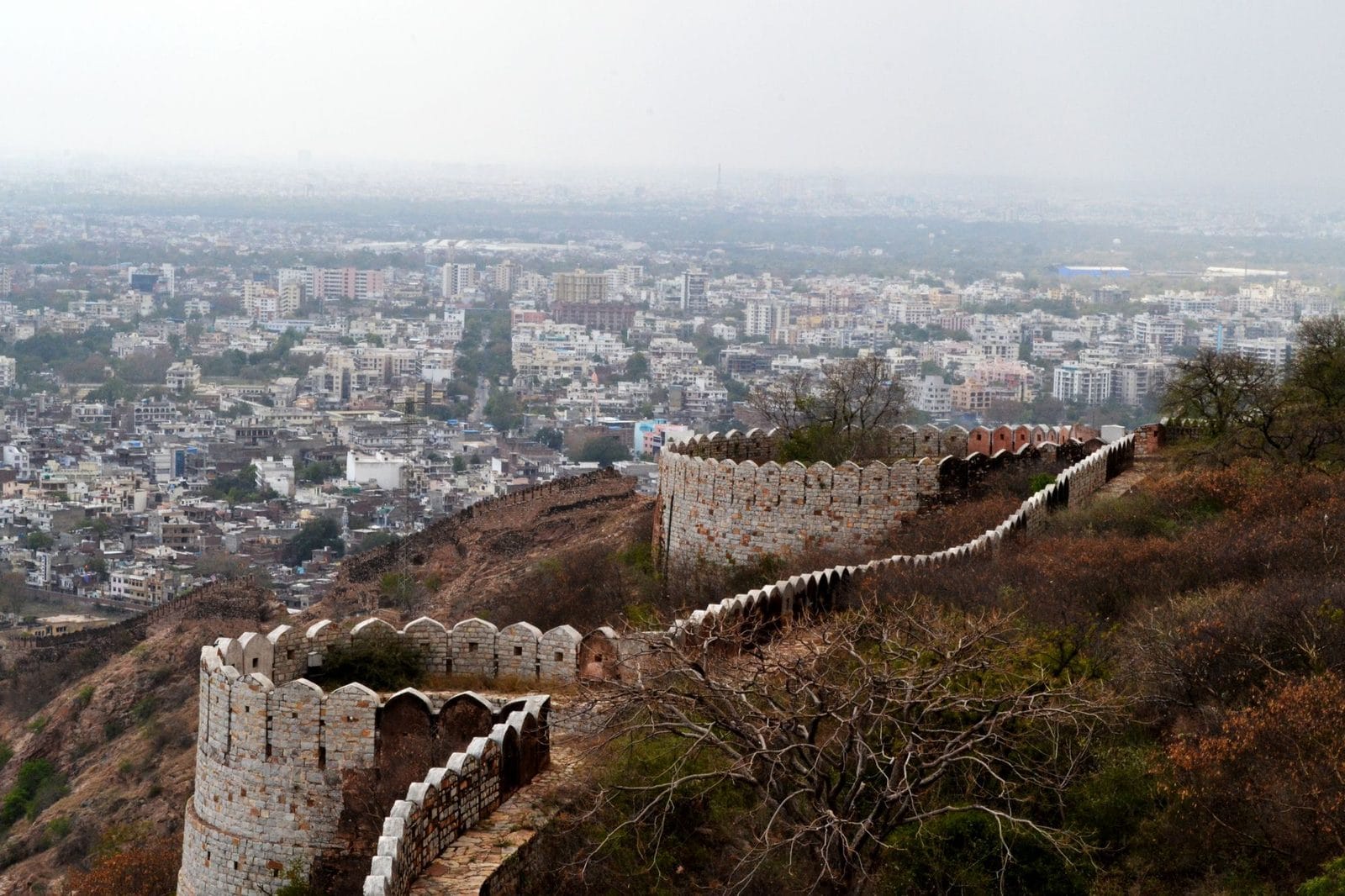
Three forts held these hills together. Sunrise Point, the round platform at the fort's east end, with the wall walk running along the rock to the main gate.
- 3
Main Gate: The Abode of Tigers
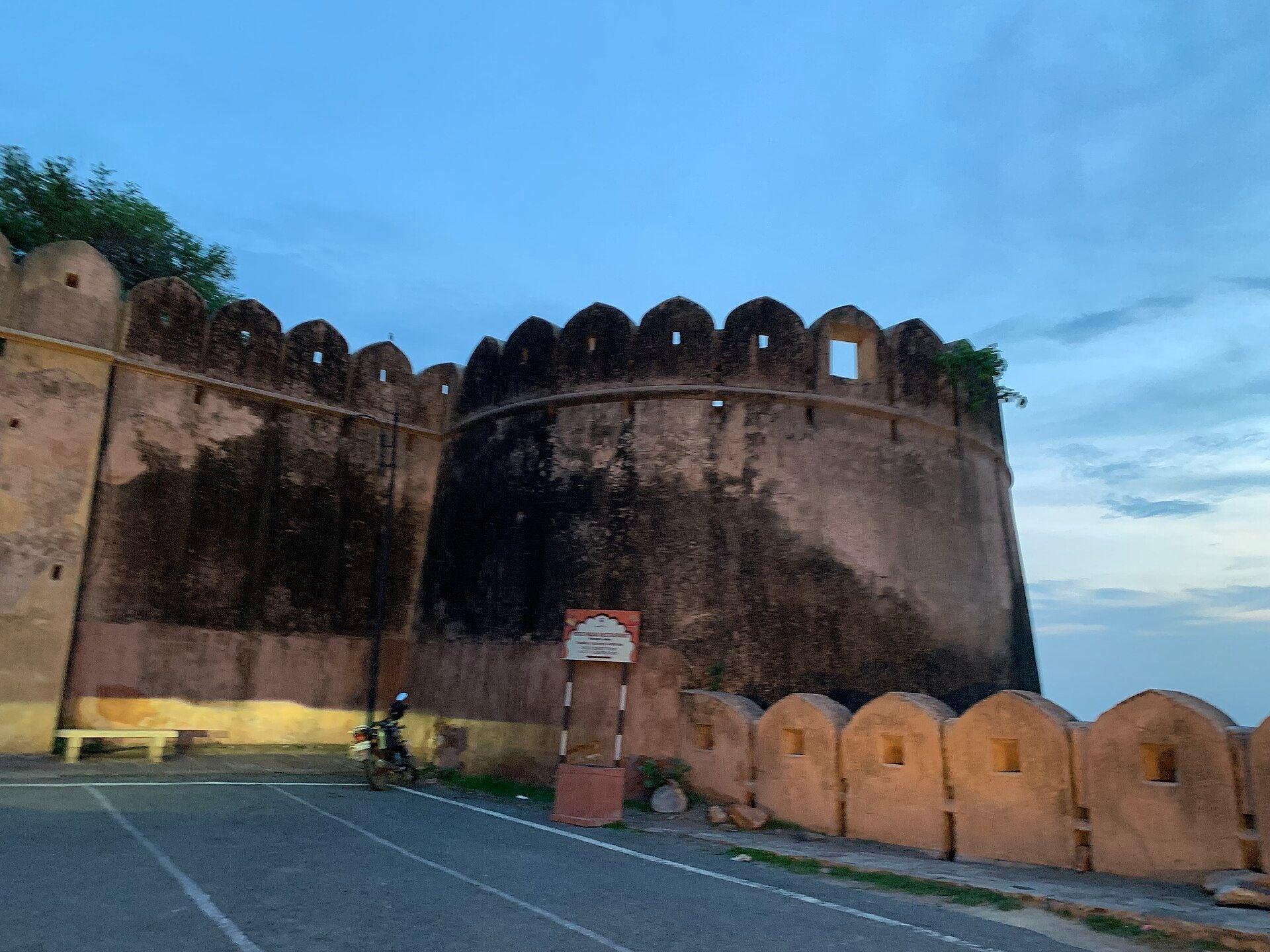
The fort's name comes with two stories. The main gate between its two round bastions, where the meaning of Nahargarh and the legend of a prince's shrine are told.
- 4
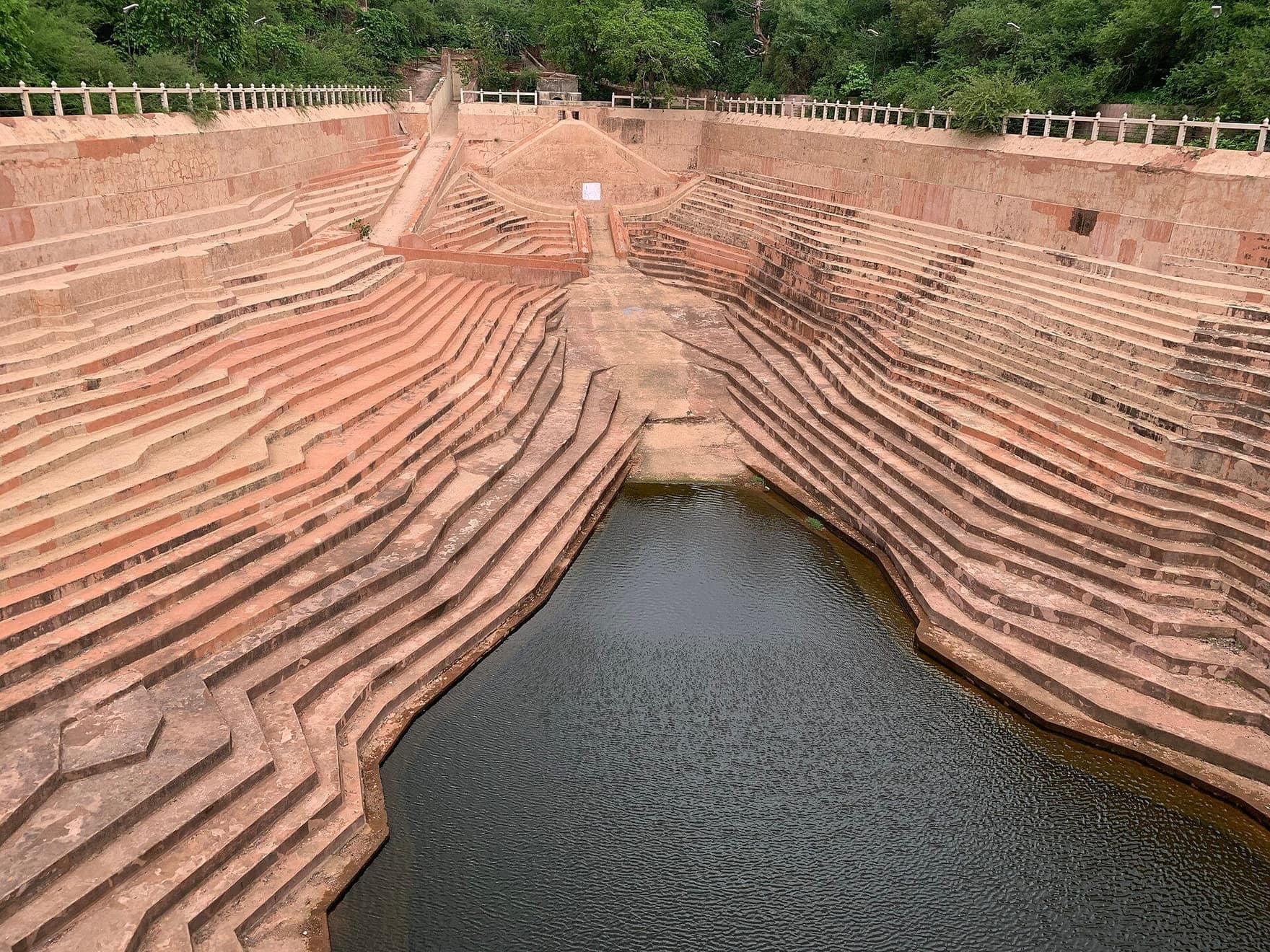
Fort Kund: Water Inside the Walls
A second store of water lies inside. The fort's kund, a square stepped tank beside the lane, across from the entrance to the palace.
- 5
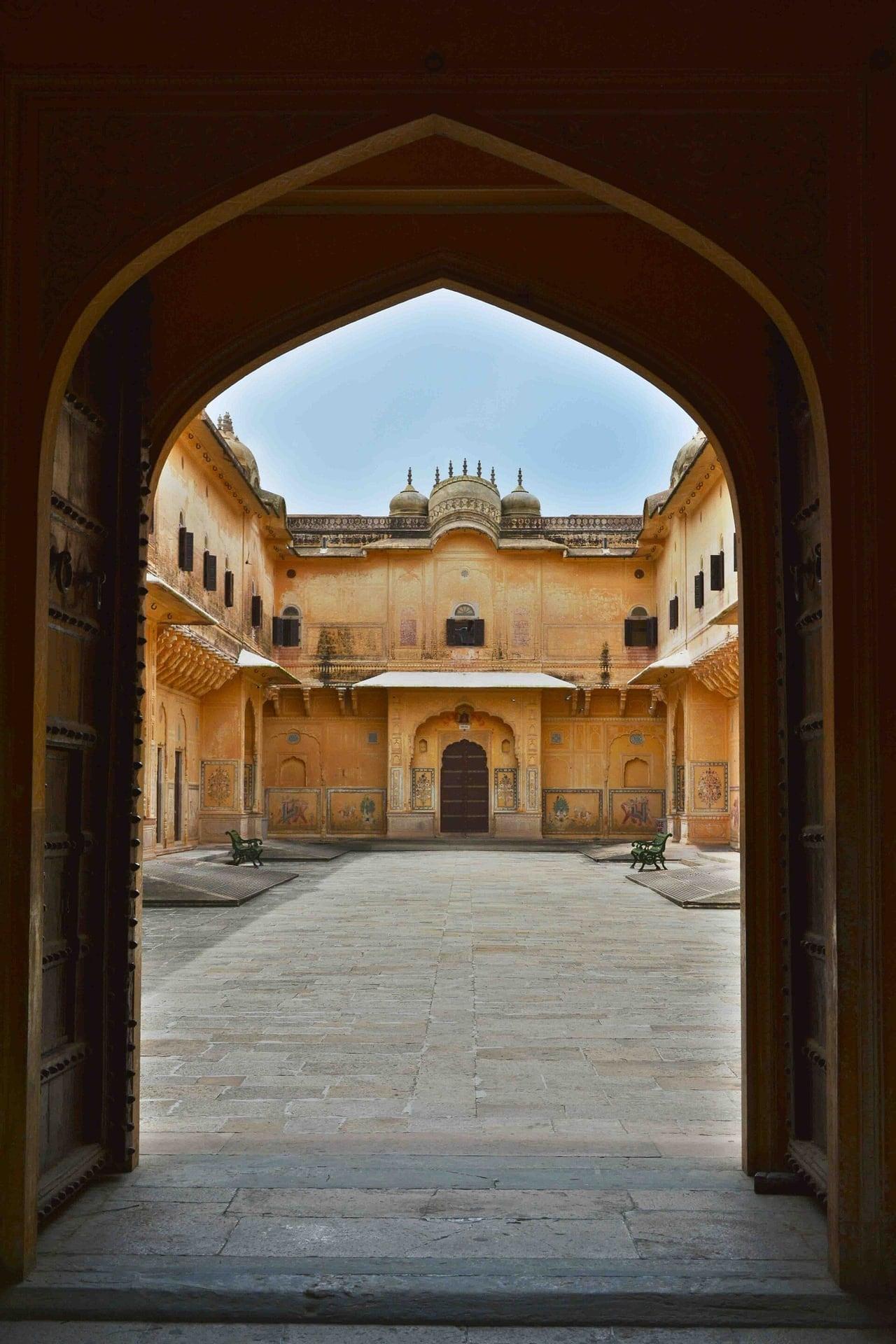
Entrance Court: The Palace Years
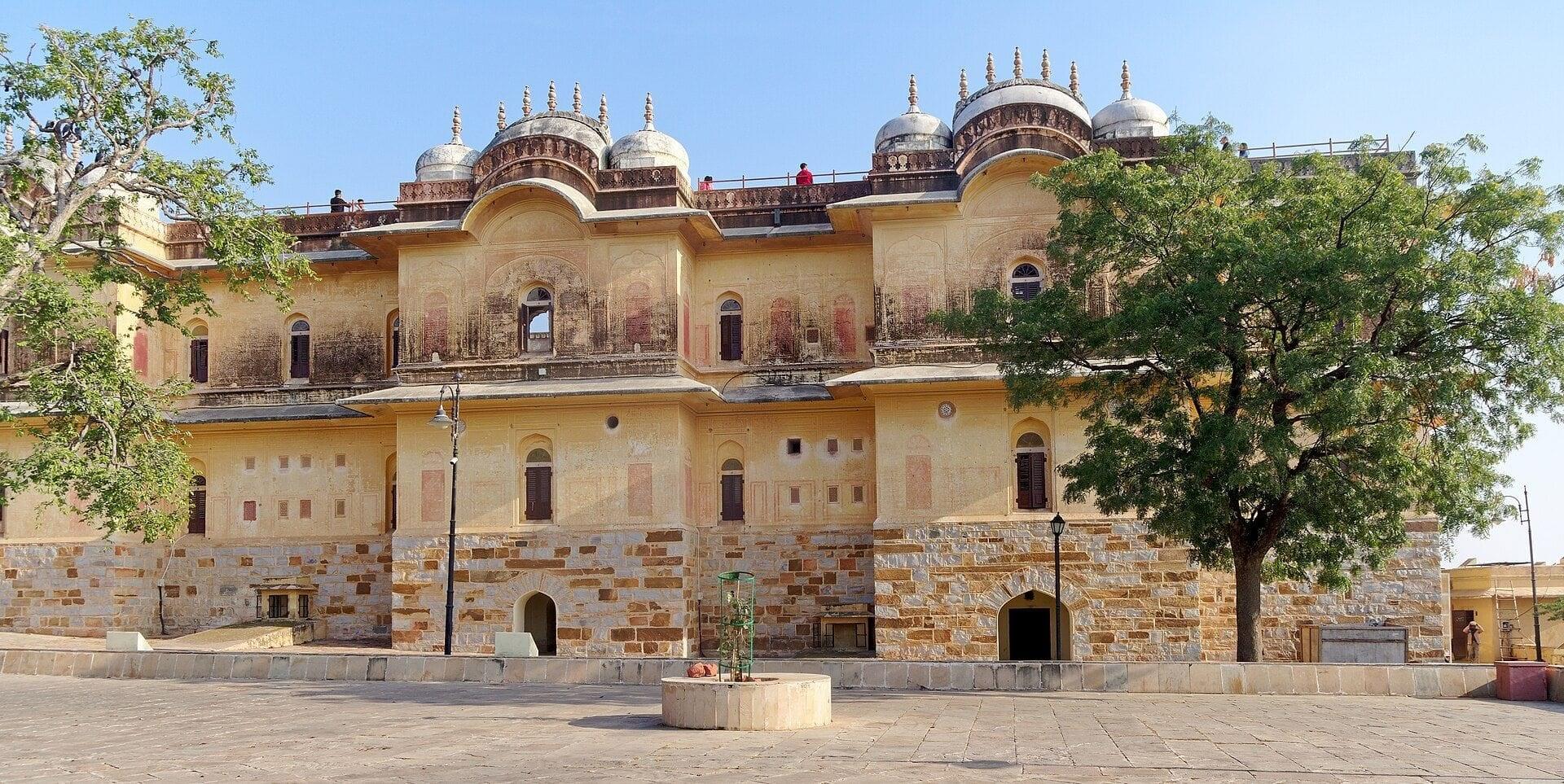
A palace was added to the old fort. The Madhavendra Bhawan's entrance court, late nineteenth century, where the courts open one into another.
- 6
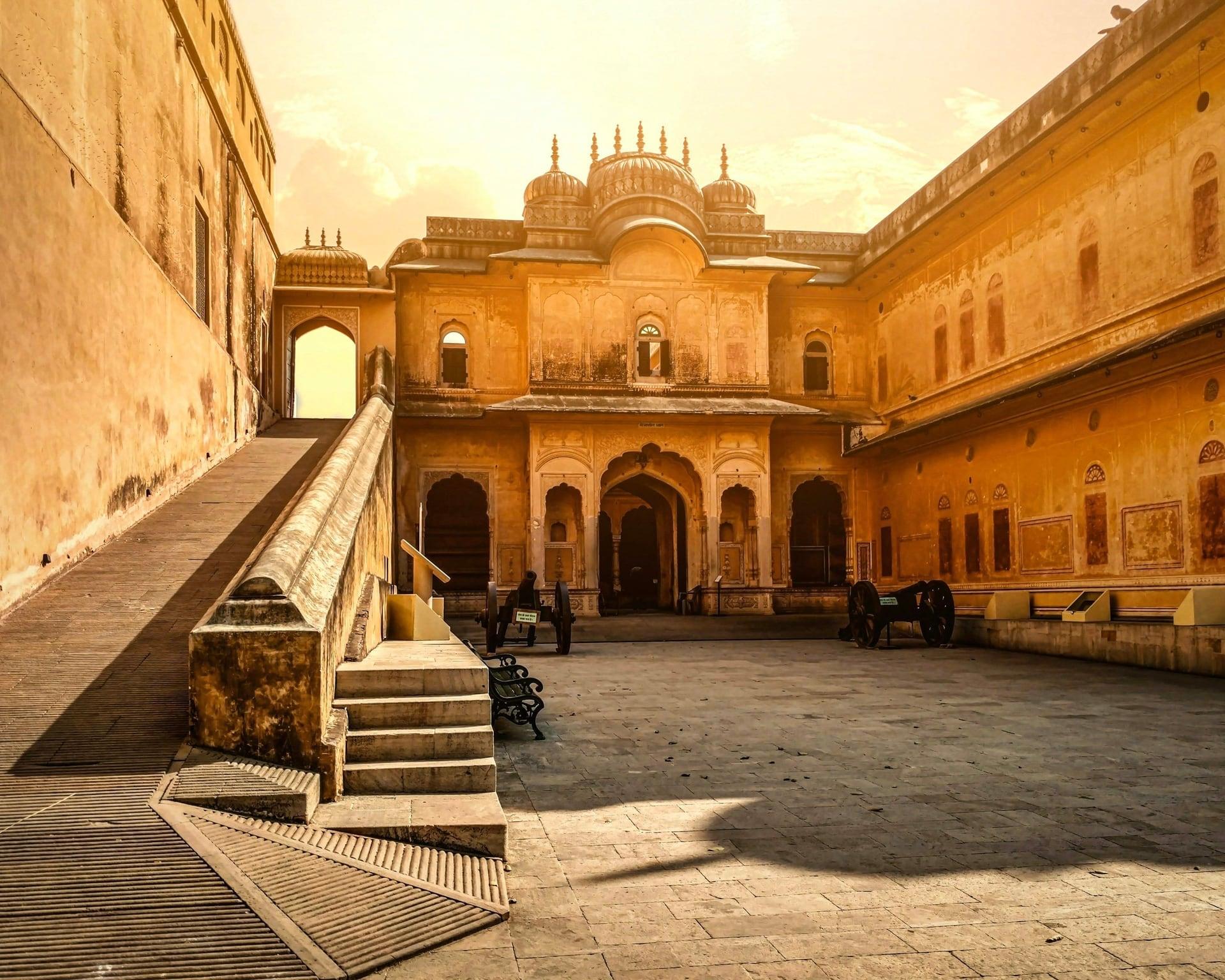
Forecourt: Treaties and Shelter
The fort's record is treaties and shelter. Open ground at the palace's corner, with two old cannons, where the Maratha treaties and the refuge of 1857 are told.
- 7
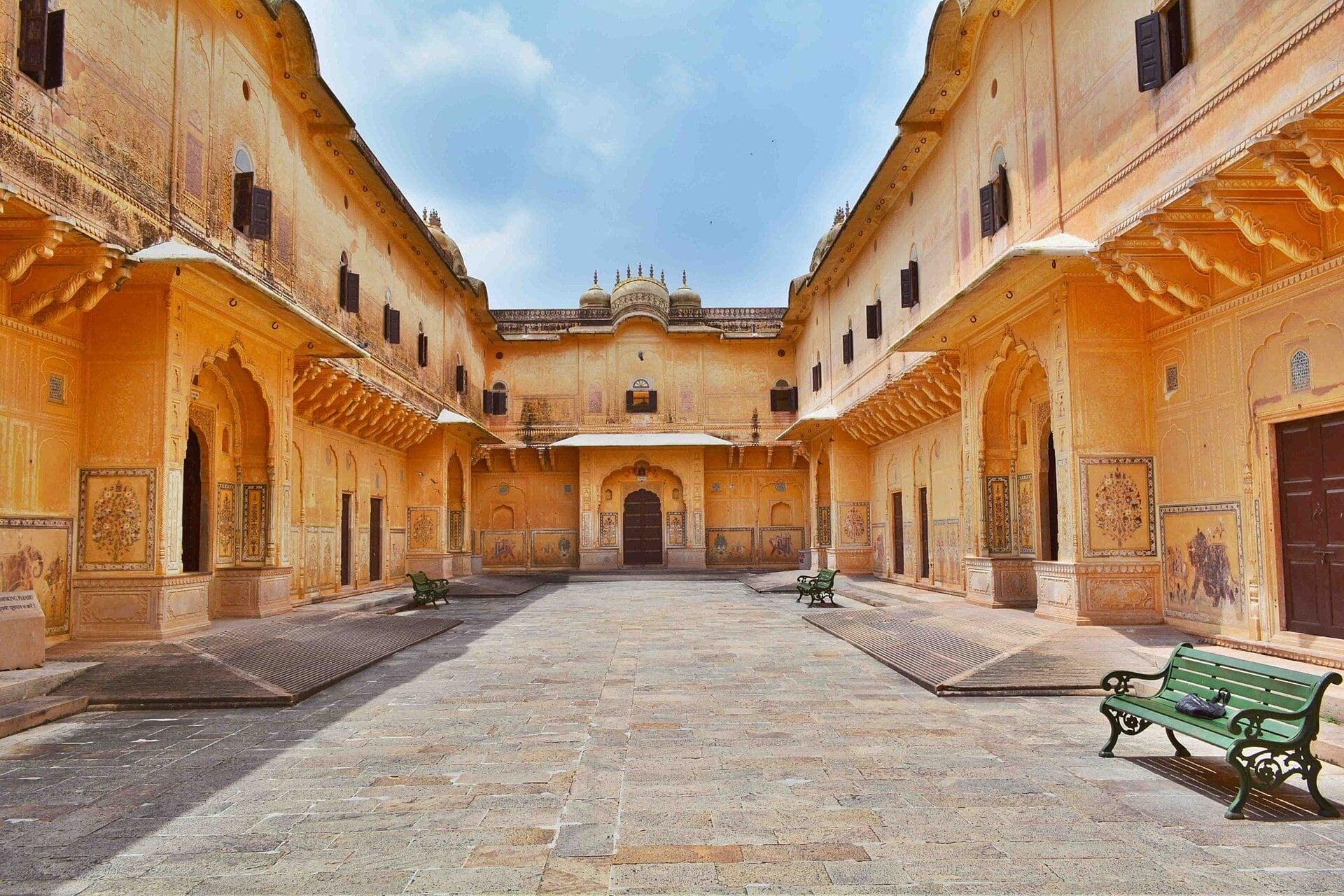
Central Court: Nine Apartments
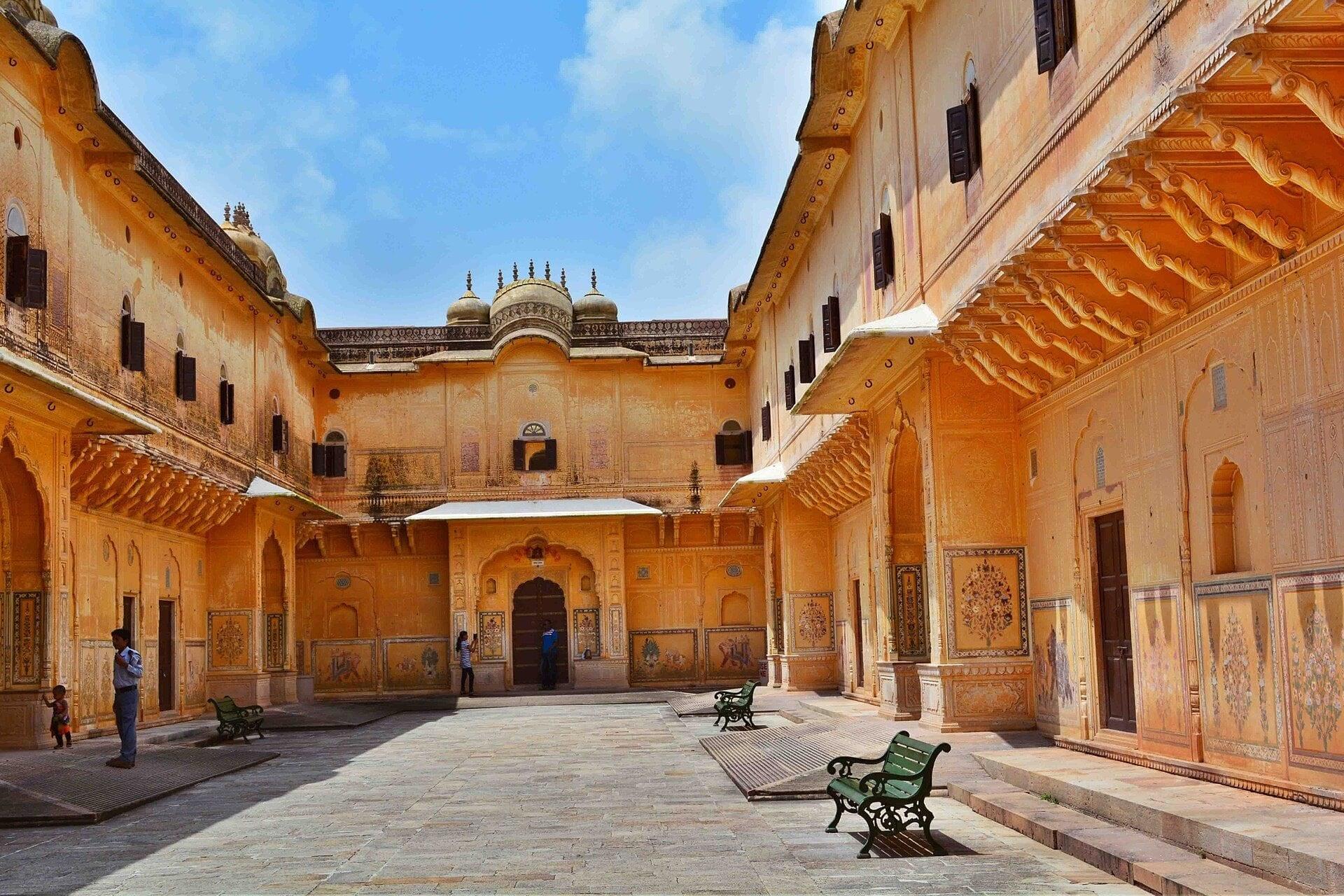
Nine apartments face one long court. The Madhavendra Bhawan's central court, two stories of suites for the king and his queens, set out in matching blocks.
- 8
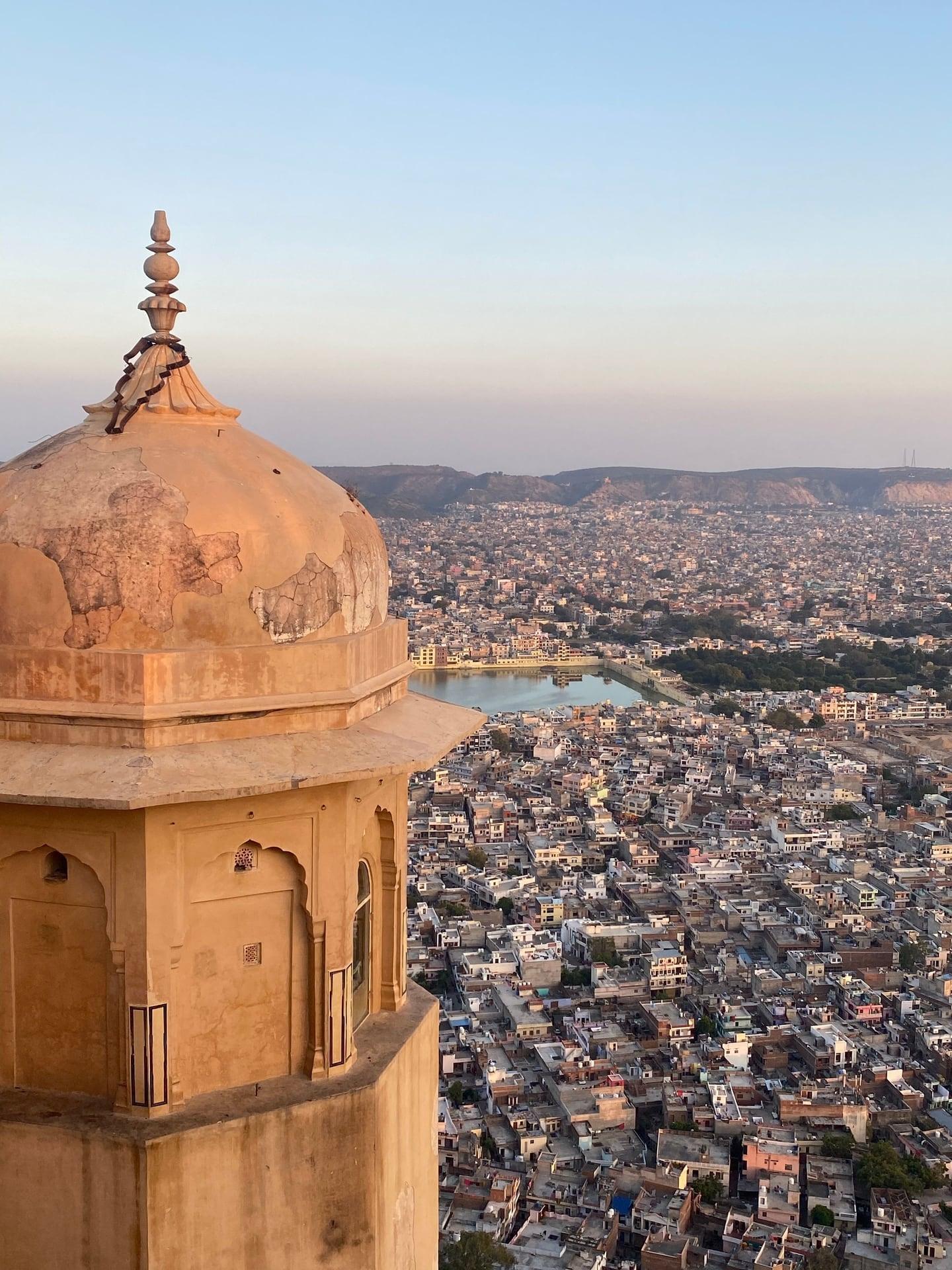
Roof Terrace: The Grid Below
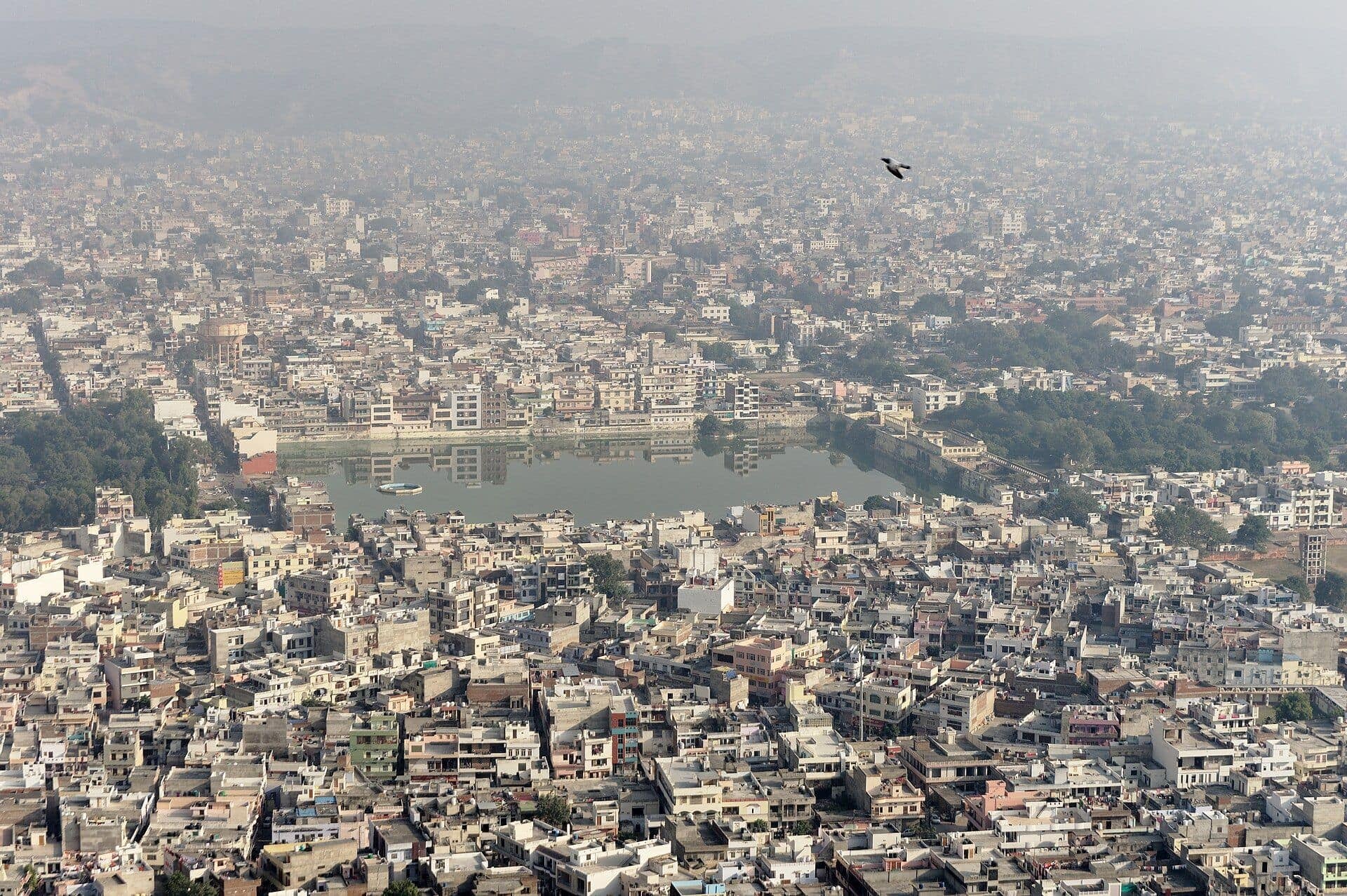
The planned city is laid out below. The palace roof terrace, high above Jaipur, where the walled city's regular streets can be read as one grid.
- 9
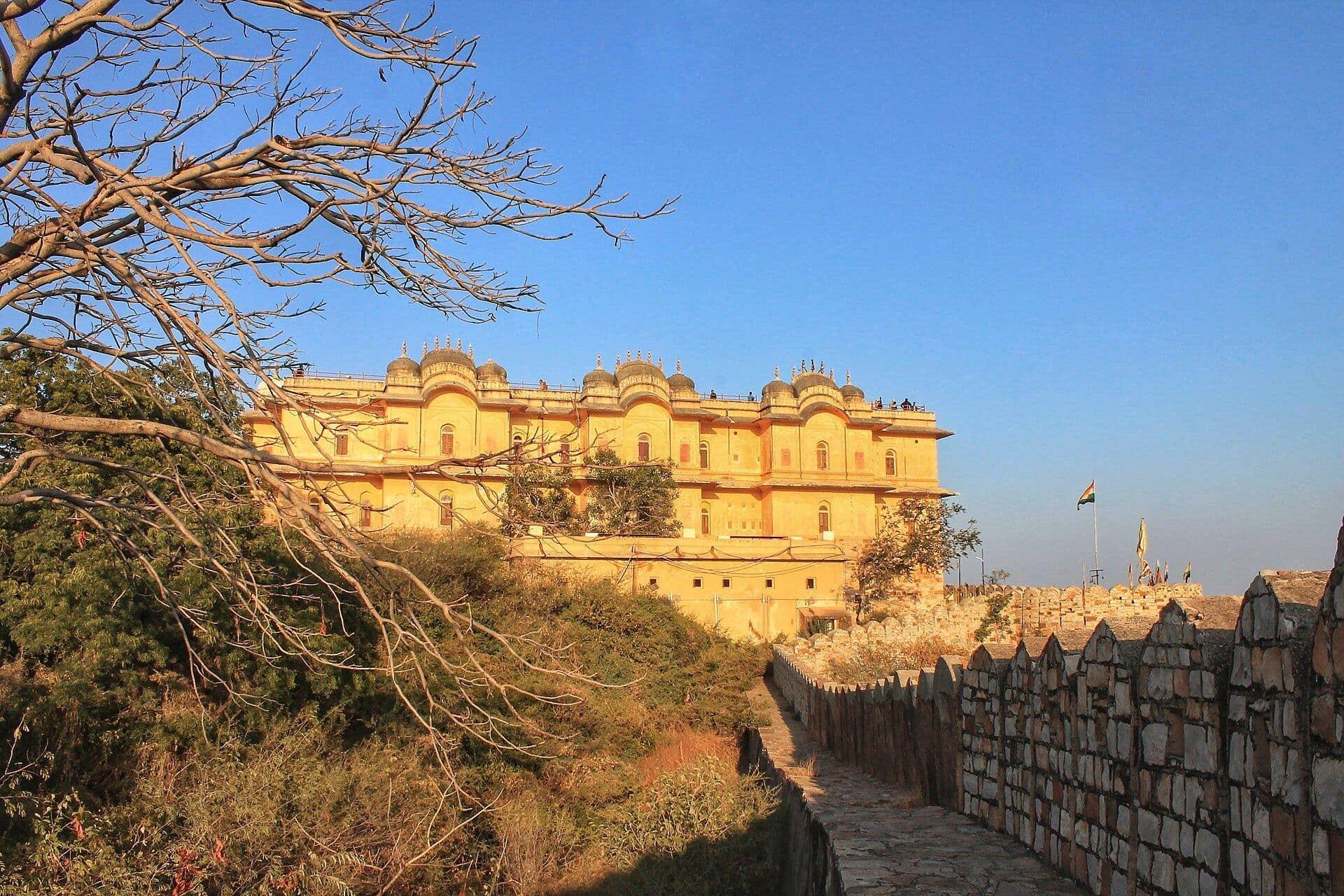
Ridge Wall: The Sanctuary Forest
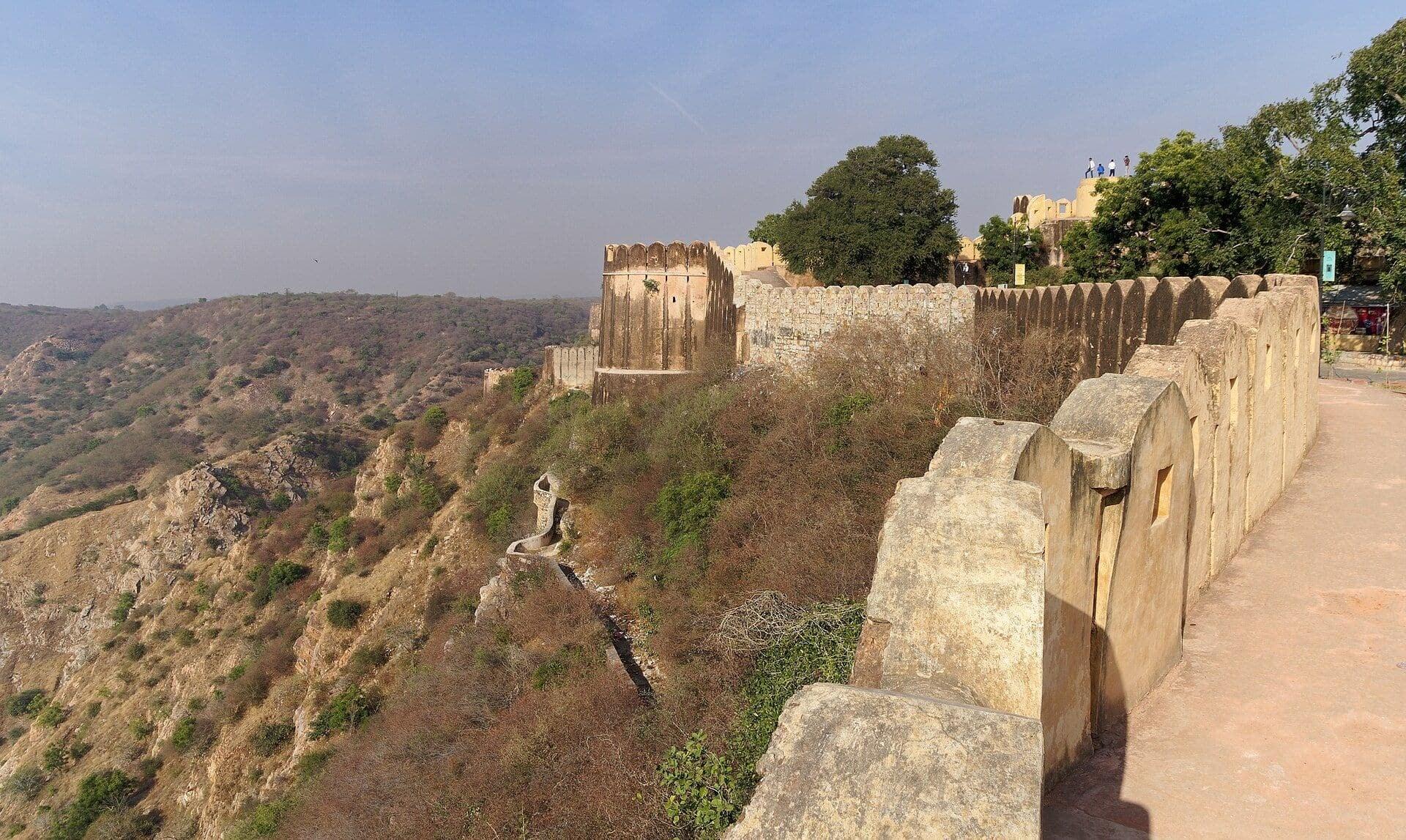
Forest presses close on both sides here. The lane along the fort's south wall, through the protected forest of the Nahargarh sanctuary.
- 10
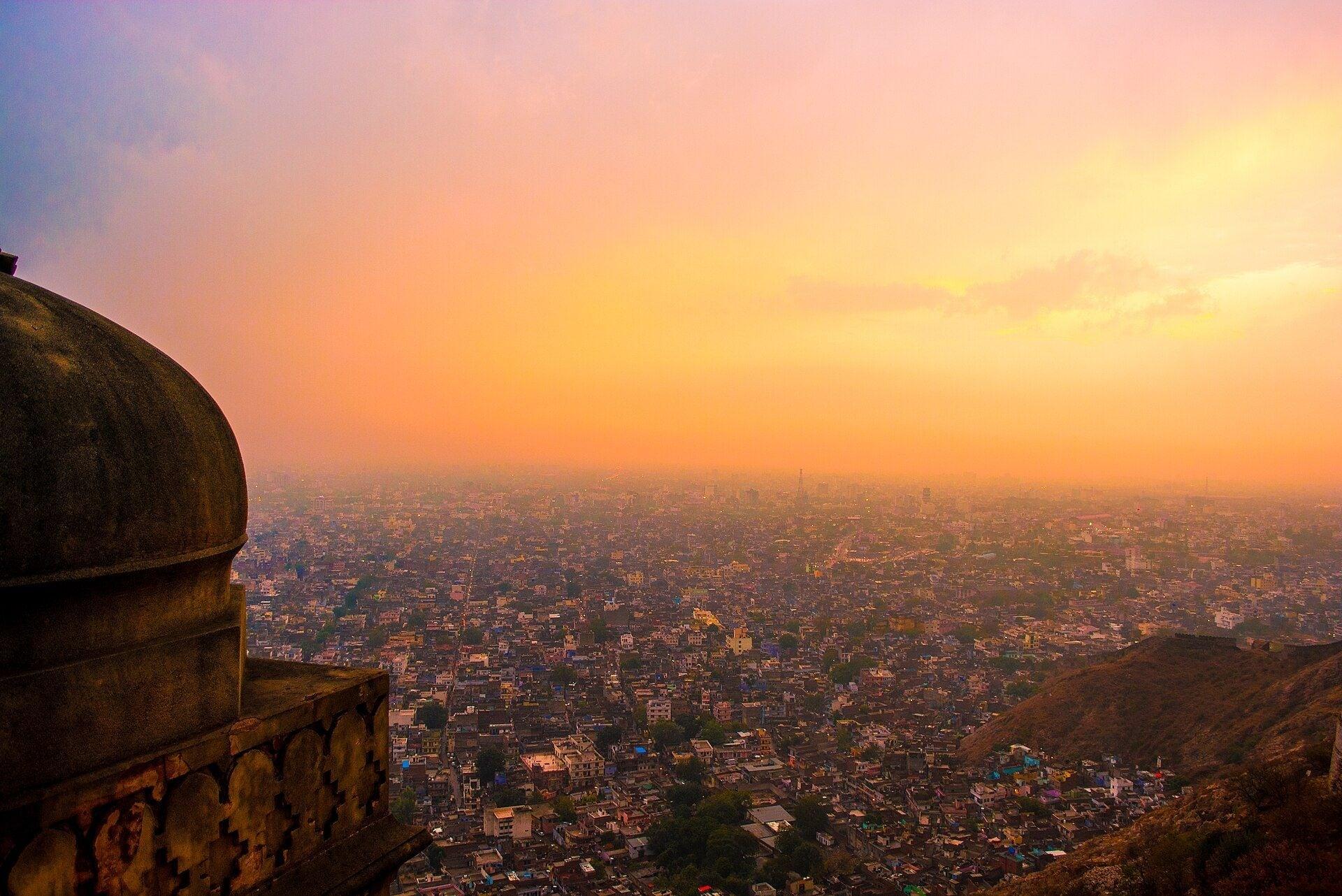
Kali Burj: The Sunset Bastion
The fort's west end faces the sunset. The bastions at the far end of the ridge, Kali Burj among them, where visitors gather as the light goes.
Details
Best Time to Visit
Mid-afternoon in winter: start by about 3:30 pm so the palace (stops 5 to 8) is done before 5:30 pm and the west end (stop 10) meets sunset, about 5:33 pm in early December, 5:43 pm on 1 January, 6:07 pm on 1 February and 6:27 pm on 1 March (computed for Jaipur). Mornings from the 10:00 opening are quieter, but winter haze can soften the view from the roof. Open daily; the closing time differs by source (5:30 pm Incredible India, 10:00 pm on the government's booking portal): check at the counter. December and January highs about 22 to 25 C, lows about 8 to 10 C (IMD normals). Checked 22 November 2026.
Pro Tips
- •Start at the Nahargarh Baori, the stepwell just outside the fort's walls. By taxi or a ride-hailing app, ask for the Nahargarh Fort car park, then walk about 170 m down the service road.
- •The fort road climbs to the car park from the Amer side; maps show a small toll booth on it (unverified). An auto-rickshaw can also take you up. Nahargarh is not on the Jaipur Metro. Checked 22 November 2026.
- •On foot from the old city: a stepped stone path climbs from Purani Basti, near the Nahargarh Palace Hotel, to the stepwell, about 890 m, 20 to 30 minutes uphill (The Common Wanderer, visitor guide). Daylight only: it runs through the sanctuary forest and is unlit. Forest trails round the fort were reported closed after a leopard sighting in July 2025 (Jaipur Stuff; no reopening found): ask locally before using it. Never walk it down after dark.
- •The entry ticket is NOT included. Nahargarh's own ticket (from 1 January 2026): Indian adult Rs 100, Indian student Rs 50, foreign adult Rs 600, foreign student Rs 300; children below 7 free. The Jaipur composite ticket (Rs 550 / 180 / 1,700 / 800) shows on Amber Fort, Hawa Mahal, Jantar Mantar, Nahargarh, the Albert Hall Museum and Isarlat; its validity is not on the portal. Buy at the counter or on the government's OBMS portal (obms-tourist.rajasthan.gov.in), which may not load from outside India. Where the ticket is checked (the gate or the palace door) is not confirmed: keep it with you. Decline unsolicited guides and ticket offers (Government of Canada travel advice, updated 6 November 2026). Checked 22 November 2026.
- •Hours: open daily from 10:00 am. Incredible India gives 5:30 pm as the closing time; the government's booking portal listed 10:00 pm (capture of 9 October 2026); the sunset spots at the west end are reported to stay open after the palace closes (visitor guides). Finish the palace before 5:30 pm. If the palace is shut, only stops 1 to 4 and 9 to 10 can be walked. Checked 22 November 2026.
- •Arrange your ride down before sunset (about 5:33 pm in early December, 6:07 pm on 1 February; computed). From the last stop, the lane leads back past the palace and out of the main gate to the car park; vehicles also come up the lane to the west end.
- •The wax museum, the cafes and the restaurants inside the fort are private businesses with their own tickets and charges: not part of this tour. Photography: no official personal-photography rule was found for Nahargarh; commercial filming needs the department's permission and fee. Ask before photographing anyone.
- •Our Pink City walk explores the walled city you see from the roof, a short ride down the hill; the City Palace and Jantar Mantar walks begin a few minutes apart in the same quarter. Amber Fort and Amer town lie to the north, a separate trip by road.
Safety & Precautions
- •Inside the walls there is no footway: the fort's lane is shared with cars, jeeps and motorbikes going to the palace and the west end. Keep to its edge; the one crossing (from the kund to the palace) has no signal, so look both ways.
- •Keep to the rims of the stepwell and the kund: going down the steps is not part of this tour, and the current rule is unknown.
- •Steps: the way down from the gate's bastion to the lane, and the stair to the palace roof. The stone is uneven and parapets may be low: take care with children on the wall walk and the roof.
- •The temples inside the fort, to the rulers of Jaipur and to Nahar Singh Bhomia, are living places of worship: be quiet and respectful, and follow any rule posted at the door.
- •The fort stands in the Nahargarh sanctuary forest, home to leopards, sloth bears and nilgai (Incredible India). Stay on the lane, and do not walk the forest or the stepped path after dark: neither is lit.
- •Weather and air: in December and January, highs about 22 to 25 C and lows about 8 to 10 C (IMD normals, Jaipur, 1991 to 2020); winter mornings are often hazy. Jaipur stations read AQI 220 to 285 on 6 to 7 November 2026 (station dashboards): check the day's air quality index, a mask helps, and take care with asthma. The platform, the lane and the roof are in open sun: carry water.
- •The palace roof and the court below are about 30 m apart, so stop 8 may start before you reach the top of the stair: listen as you climb.
Travel advisory: Exercise Increased Caution (Level 2).
Gallery
Related Reading
Go deeper on what you'll see, hear, and walk through.
Read the walk
The full story of Nahargarh Fort: The Ridge Above the Grid, in words. Prefer to listen? Play it narrated, from home or on location.
Introduction
Nahargarh Fort stands on the ridge above Jaipur, the city's guard on the hills. Its entry ticket is not included with this tour: buy the fort's own ticket, or Jaipur's composite ticket, at the official counter or on the state government's online booking portal. For foreign visitors the fort's own ticket is six hundred rupees.
The fort was completed in seventeen thirty four, seven years after the walled city of Jaipur was founded on the plain below. It held the ridge for the new city. About a century and a half later, a palace was added inside it, and the fort became a royal retreat.
This walk starts at the great stepwell just outside the walls, climbs to a round viewing platform, enters by the main gate and follows the fort's one lane to the palace, through its courts and up onto its roof, where the planned city lies below. It finishes at the bastions at the fort's west end, the place for the sunset. There are ten stops over about one kilometer, about two thirds of a mile, and it takes about an hour. There is a short climb at the start and a stair to the roof. Inside the walls there is no footway: you share the lane with cars and motorbikes, so keep to its edge.
The fort is open every day from ten in the morning. Official sources differ on the closing time, so plan to finish the palace before half past five. In winter, start by about half past three, and you meet the sunset at the end. The forest and the stepped path to the city are not lit after dark.
Winter days are mild and the mornings often hazy. Jaipur's winter air can be poor: check the day's air quality index, and a mask helps if you have asthma.
When you arrive at Nahargarh Baori, begin with stop one.
1. Nahargarh Baori: The Great Stepwell
On the rim of Nahargarh's great stepwell, the first thing to notice is how much stone went into holding water. Tier after tier of steps drops toward the water at the far end. A baori, or stepwell, is a tank you can walk down into, so that people could reach the water however low it fell.
This ridge is dry rock. The Imperial Gazetteer of nineteen oh eight describes its face toward the city as so steep that it could not be climbed. That made a strong fort, and a thirsty one. A garrison on a bare ridge lives by the water it can store when the monsoon rain comes, and this stepwell is one of its stores.
It is also the fort's best known picture, and it lies outside the fort's walls, before the ticketed ground begins. Keep to the rim: the steps are not part of this tour.
If you came up the stepped path from the old city, it ends just here. If you came by road, you have walked down from the car park, and the route now climbs back up the same road.
Follow the route back up the road to the round platform.
2. Sunrise Point: Three Forts, One Ridge
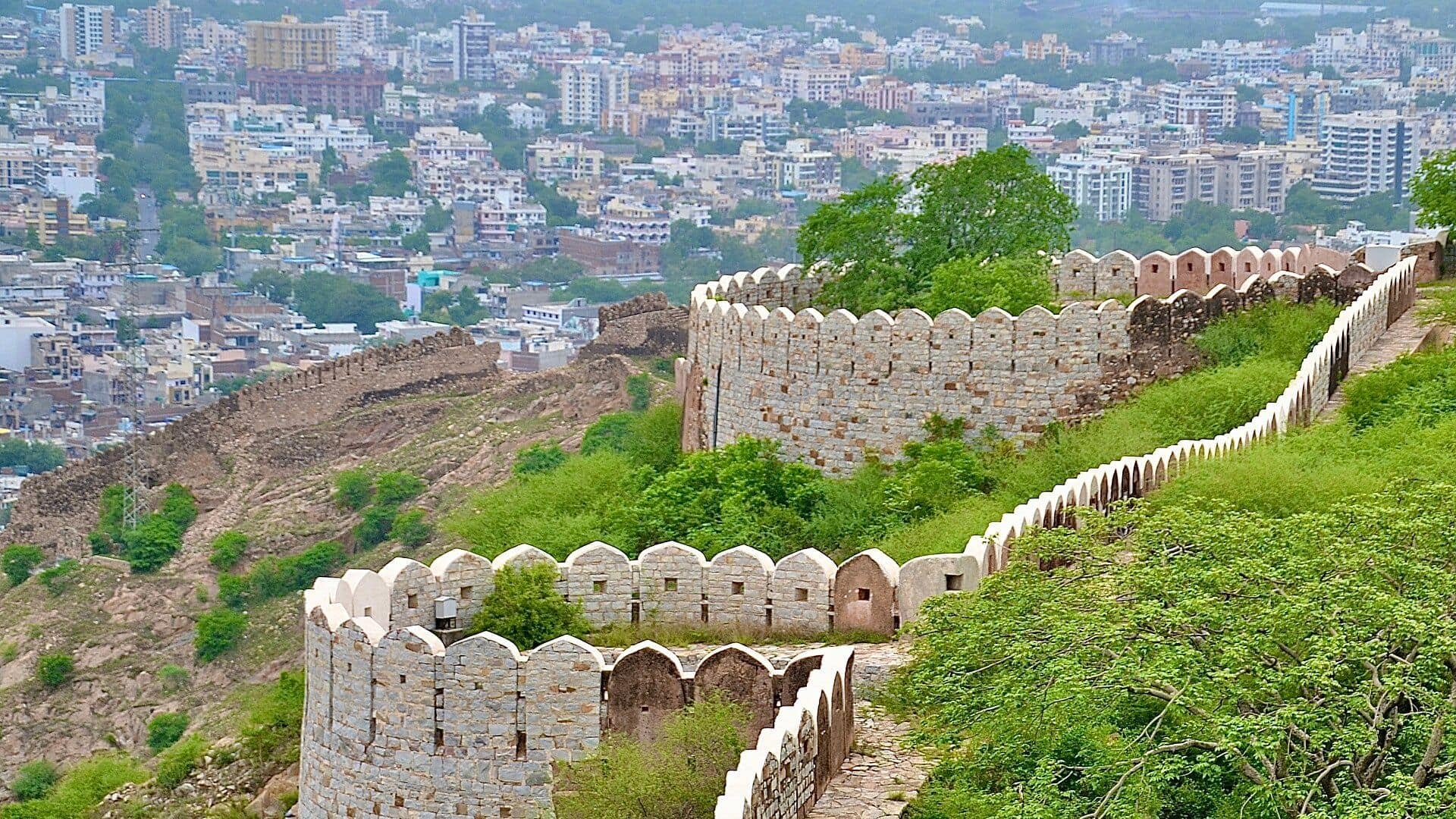
From this round platform, the ridge runs away to the north, and a wall walk leaves the platform toward the fort's main gate. Look along it. That line of wall, following the rock, is what this fort was.
It was built under Sawai Jai Singh the Second, the ruler who founded Jaipur on the plain below in seventeen twenty seven. Seven years later, in seventeen thirty four, the fort was complete. Its first name was Sudarshangarh. Only later did it come to be called Nahargarh.
It did not stand alone. India's tourism ministry describes it as one of three forts on these hills, with Amber Fort and Jaigarh, that together defended Jaipur. On its north side, the nineteen oh eight Gazetteer says, the ridge slopes down toward Amber, the old capital. The new city lay below to the south. Nahargarh held the ridge between them.
The platform is named for the sunrise. The fort's far end, where this walk finishes, is where people go for the sunset.
Follow the route along the wall walk and in through the main gate.
3. Main Gate: The Abode of Tigers
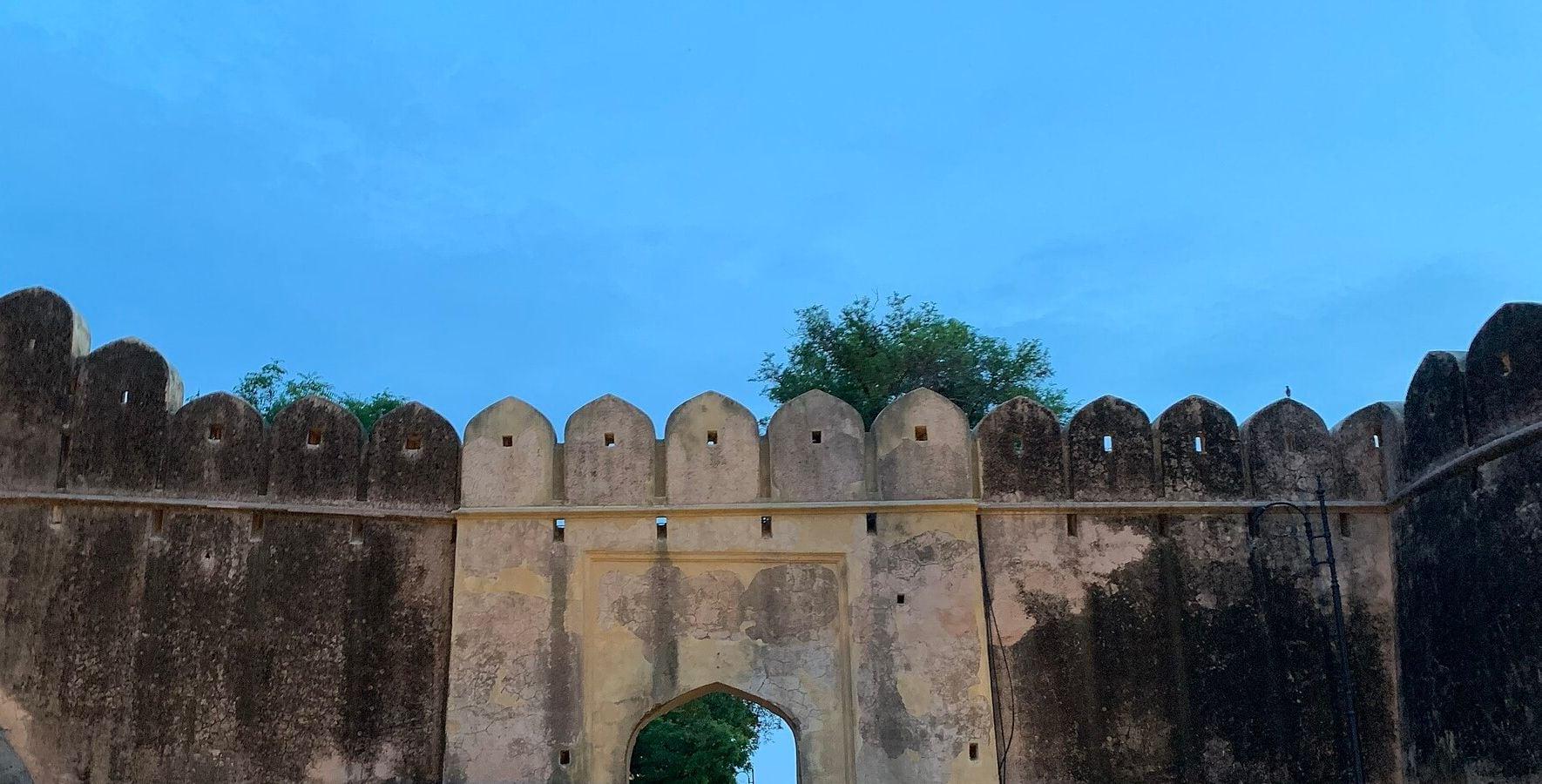
Turn round. Behind you, the main gate stands between its two round bastions. From here on you are inside the fort's walls, so keep your ticket with you.
The name over all of this, Nahargarh, means the abode of tigers, and there are two stories about why. Some say tigers once lived in these hills. Others say the name honors the Rajput kings who fought for their land with the strength of tigers.
A third story belongs to this ground. A legend told here says the spirit of a Rathore prince, Nahar Singh Bhomia, opposed the building of the fort, and was only appeased when a temple to him was raised inside its walls. His temple stands within the fort, and near the gate there is a temple dedicated to the rulers of Jaipur. Both are living places of worship. If you visit, go quietly and with respect.
Inside the walls, some of the old buildings now hold private businesses with their own tickets, a wax museum among them. They are not part of this tour.
Follow the route down the lane, keeping to its edge.
4. Fort Kund: Water Inside the Walls
In front of you, steps go down into a square tank of water. This is the fort's kund, a smaller stepped tank, and this one is inside the walls. It is the same idea as the great stepwell outside the gate, and it says the same thing about this place. On a ridge of bare rock, water…
Full narration for this stop unlocks with the tour.
5. Entrance Court: The Palace Years
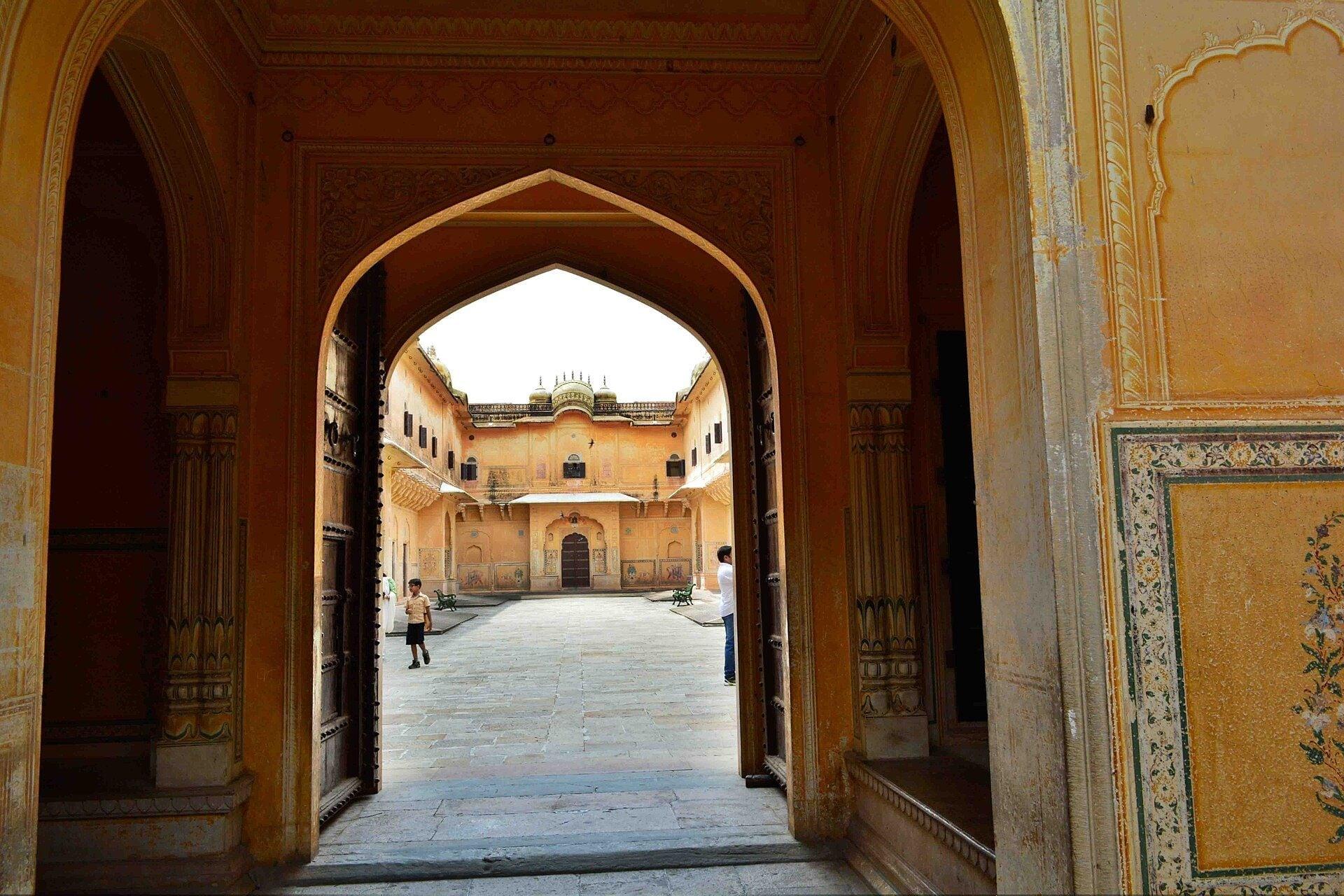
Now inside the palace's entrance court, look at how one court opens into the next. This part of Nahargarh is much younger than the walls you came through. In the late nineteenth century, about a century and a half after the fort was built, a range of palace buildings went up…
Full narration for this stop unlocks with the tour.
6. Forecourt: Treaties and Shelter
On this open ground at the palace's corner stand two old cannons. They are a fair reminder of what the fort was for. Yet the moments the ministry's account records are not battles. In the eighteenth century, India's tourism ministry records, Nahargarh became a place for signing…
Full narration for this stop unlocks with the tour.
7. Central Court: Nine Apartments
This long court is the heart of the Madhavendra Bhawan. Look along both sides: two stories of rooms face the court, set out in matching blocks. India's tourism ministry describes the building simply. It is a two story palace with suites for the king and his queens, divided into…
Full narration for this stop unlocks with the tour.
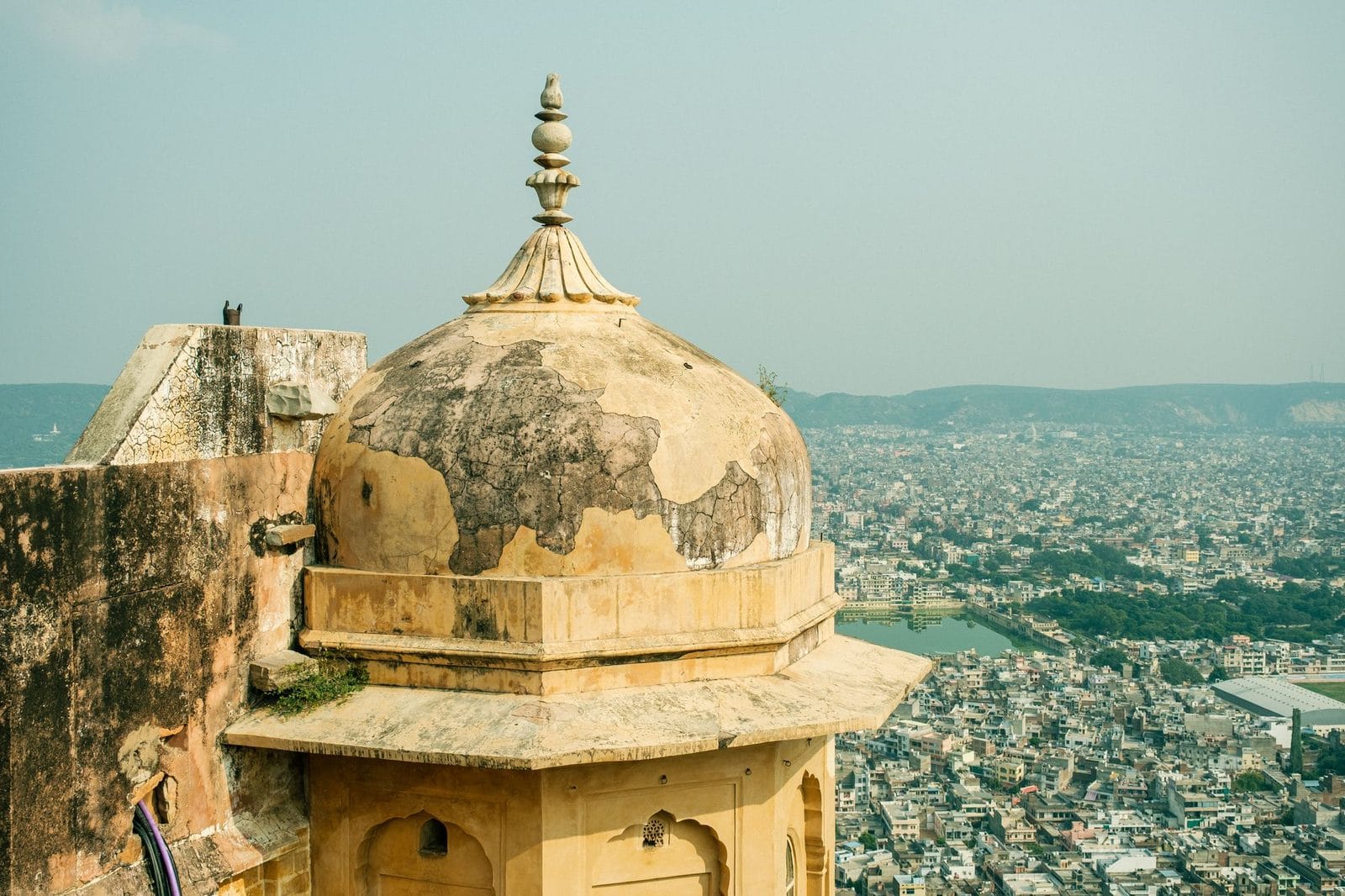
8. Roof Terrace: The Grid Below
Up on the roof, turn toward the city. Below lies Jaipur, and from up here you can read its plan. The Imperial Gazetteer of nineteen oh eight put this fort about five hundred feet above the city, about a hundred and fifty meters, at the end of the ridge on the north west. It…
Full narration for this stop unlocks with the tour.
9. Ridge Wall: The Sanctuary Forest
Along this lane, the fort's south wall runs beside you, and beyond the walls, on both sides of the ridge, there is forest. The hills around the fort are protected land, part of the Nahargarh sanctuary. India's tourism ministry lists leopards, sloth bears and nilgai, a large…
Full narration for this stop unlocks with the tour.
10. Kali Burj: The Sunset Bastion
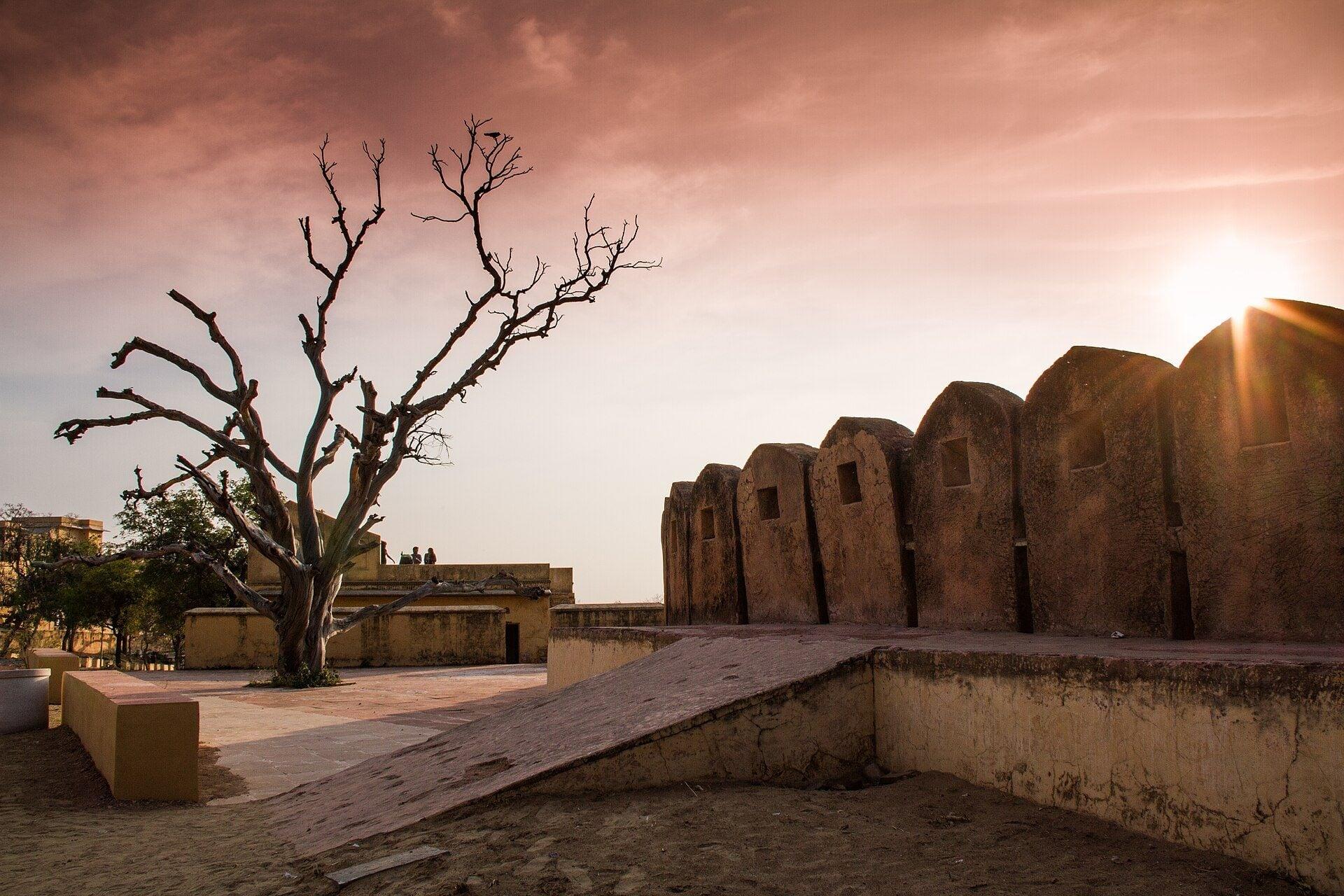
Ahead are the bastions at the fort's west end. One of them, Kali Burj, is where visitors gather for the sunset. Burj means a tower or bastion. This end of the ridge faces west, over the forest and the plains, and the sun goes down beyond them. The walk began at a platform named…
Full narration for this stop unlocks with the tour.
- Stepwell of Nahargarh Fort in Jaipur — Jakub Hałun, CC BY-SA 4.0 · source
- Nahargarh Stepwell — Chainwit., CC BY-SA 4.0 · source
- Jaipur City as seen from Nahargarh Fort’s walls — Harshil s mehta, CC BY 4.0 · source
- Nahargarh Fort — Chainwit., CC BY 4.0 · source
- Nahargarh Fort — Chainwit., CC BY 4.0 · source
- Nahargarh Stepwell — Chainwit., CC BY-SA 4.0 · source
- View of kund Nahargarh Fort — Babeeta kothari, CC BY-SA 4.0 · source
- Nahargarh 103.jpg — Anupamg, CC BY-SA 4.0 · source
- Nahargarh 101.jpg — Anupamg, CC BY-SA 4.0 · source
- Nahargarh Fort, Jaipur — Jakub Hałun, CC BY-SA 4.0 · source
- Nahargarh 080.jpg — Anupamg, CC BY-SA 4.0 · source
- Nahargarh 016.jpg — Anupamg, CC BY-SA 4.0 · source
- View from Nahargarh Fort in Jaipur — Jakub Hałun, CC BY-SA 4.0 · source
- Nahargarh Fort overlooks the city of Jaipur and was built in 1734 by Maharaja Sawai Jai Singh, the king of Jaipur who reigned during the ear — Wingedtree, CC BY-SA 4.0 · source
- Fortifications of Nahargarh Fort in Jaipur — Jakub Hałun, CC BY-SA 4.0 · source
- Sunset view from Nahargarh Fort — Tanmay Singh, CC BY-SA 4.0 · source
- Sunset, Nahargarh Fort.jpg — ShivaRajvanshi, CC BY-SA 4.0 · source
Images may be cropped or resized. Other photos via Unsplash and Pexels.