Historic Center: The Harbour City of Three Towers
60 min · 1.4 km · easy
Ghent is a medieval giant where the Leie and the Scheldt meet, a cloth town of tens of thousands of weavers that grew into one of the largest and richest cities in northern Europe and then spent centuries rising against its counts, its kings, and even the emperor born within its walls. Two forces run through the whole city and never fully reconcile: the vertical wealth of trade, town, and Church, gathered into a skyline of three towers, and the harder story underneath it, a rebel town that rioted, allied with a foreign king, cast a monster cannon, and turned its own punishment into a name of pride. Read Ghent at your own pace and you read both at once, grey and gritty and completely alive.
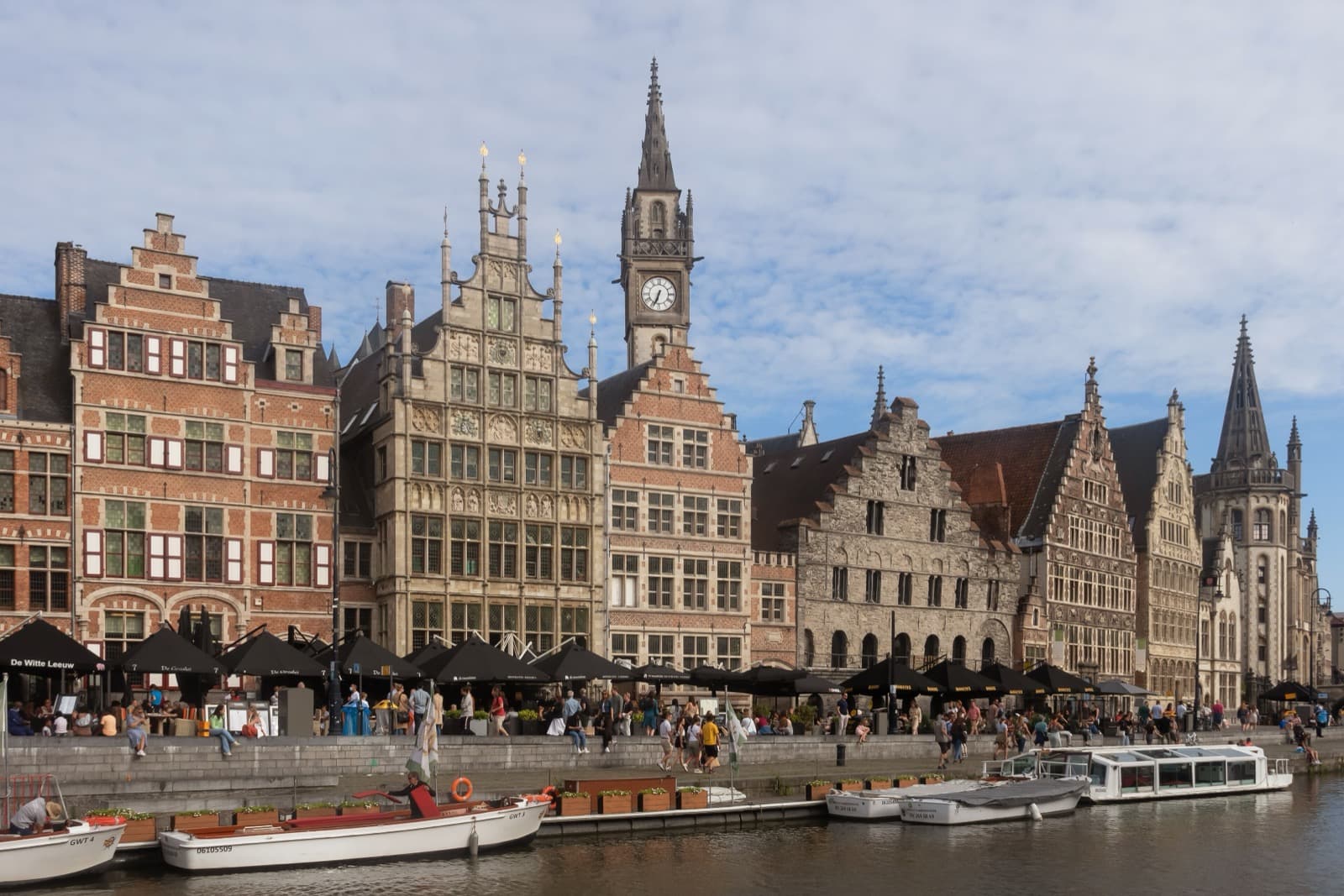
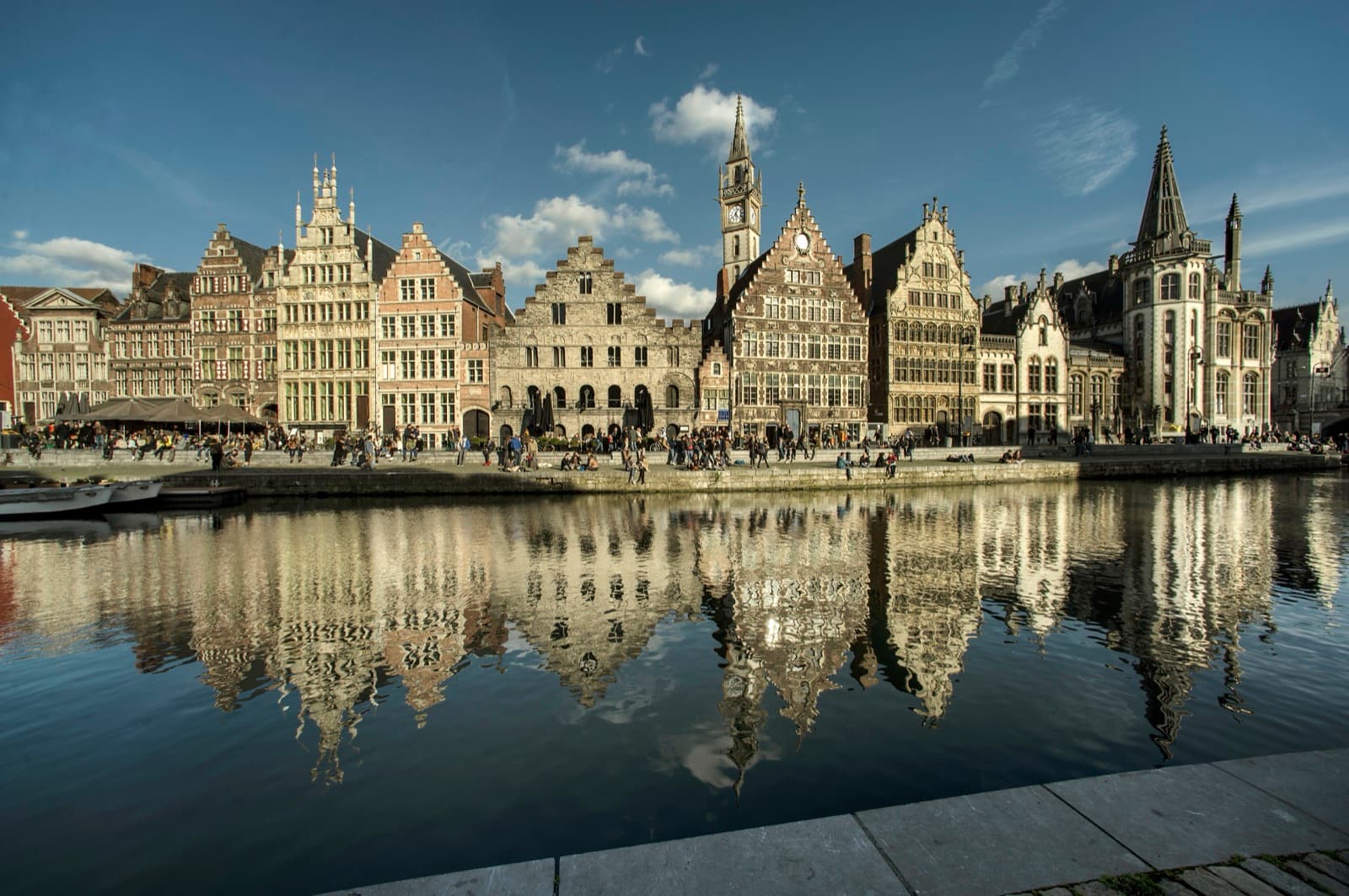
Start with the money, because the money built everything else. Around thirteen hundred, Ghent held perhaps fifty to sixty thousand people, and its wealth came from wool spun and woven into cloth and sold across a continent. You can see where that wealth arrived and where it went. Along the Graslei and Korenlei, two quays facing each other across the Leie, ships have docked since the eleventh century, and this was the grain-trade heart of the whole County of Flanders. The Spijker, the old Corn Store of about twelve hundred, still stands here in plain Romanesque round arches, one of the oldest buildings in the city, and the row of guild and merchant houses beside it runs unbroken from Romanesque to Baroque. Grain ships unloaded, measurers weighed the cargo, boatmen moved it, and the wealth flowed uphill.
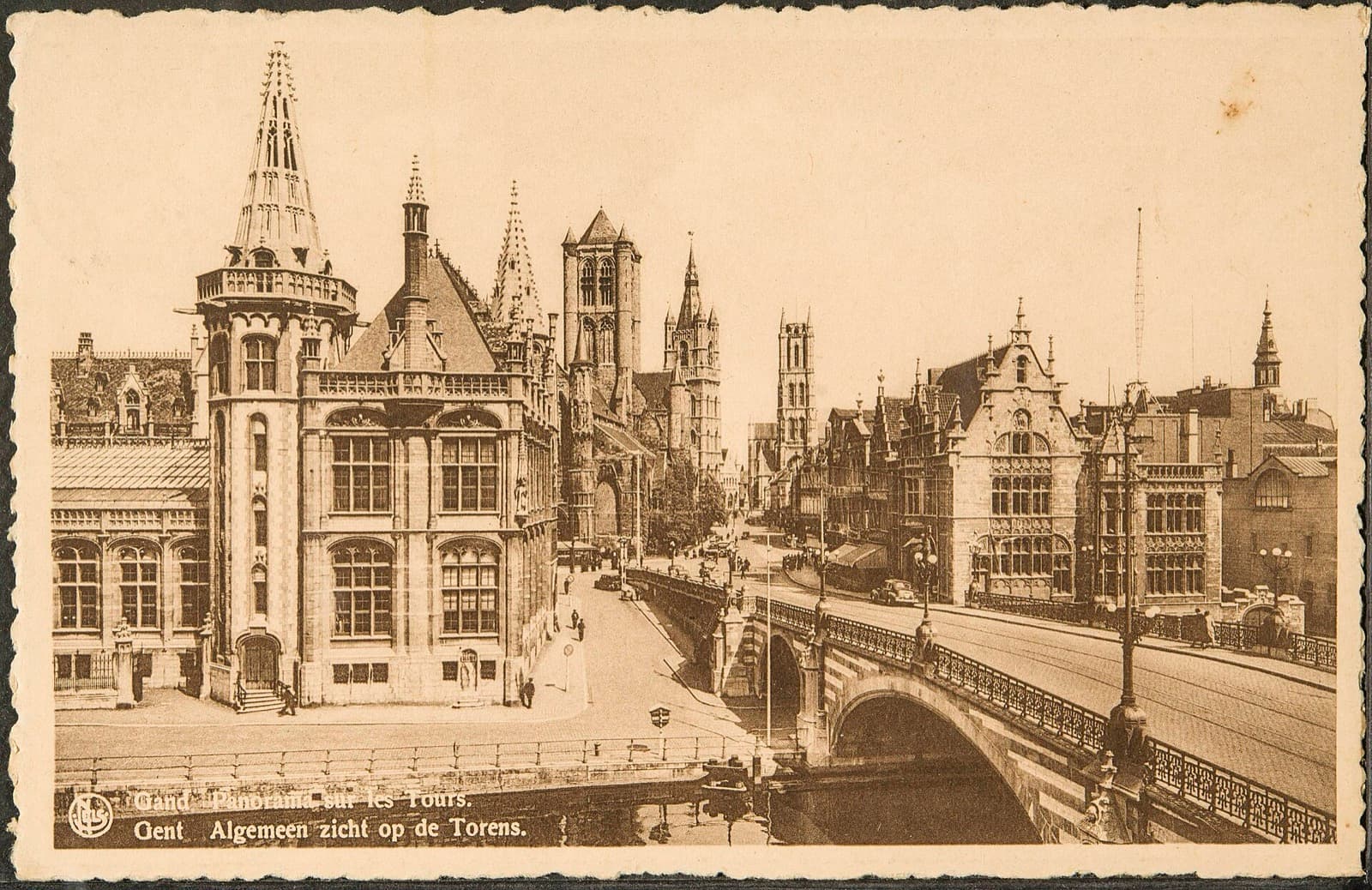
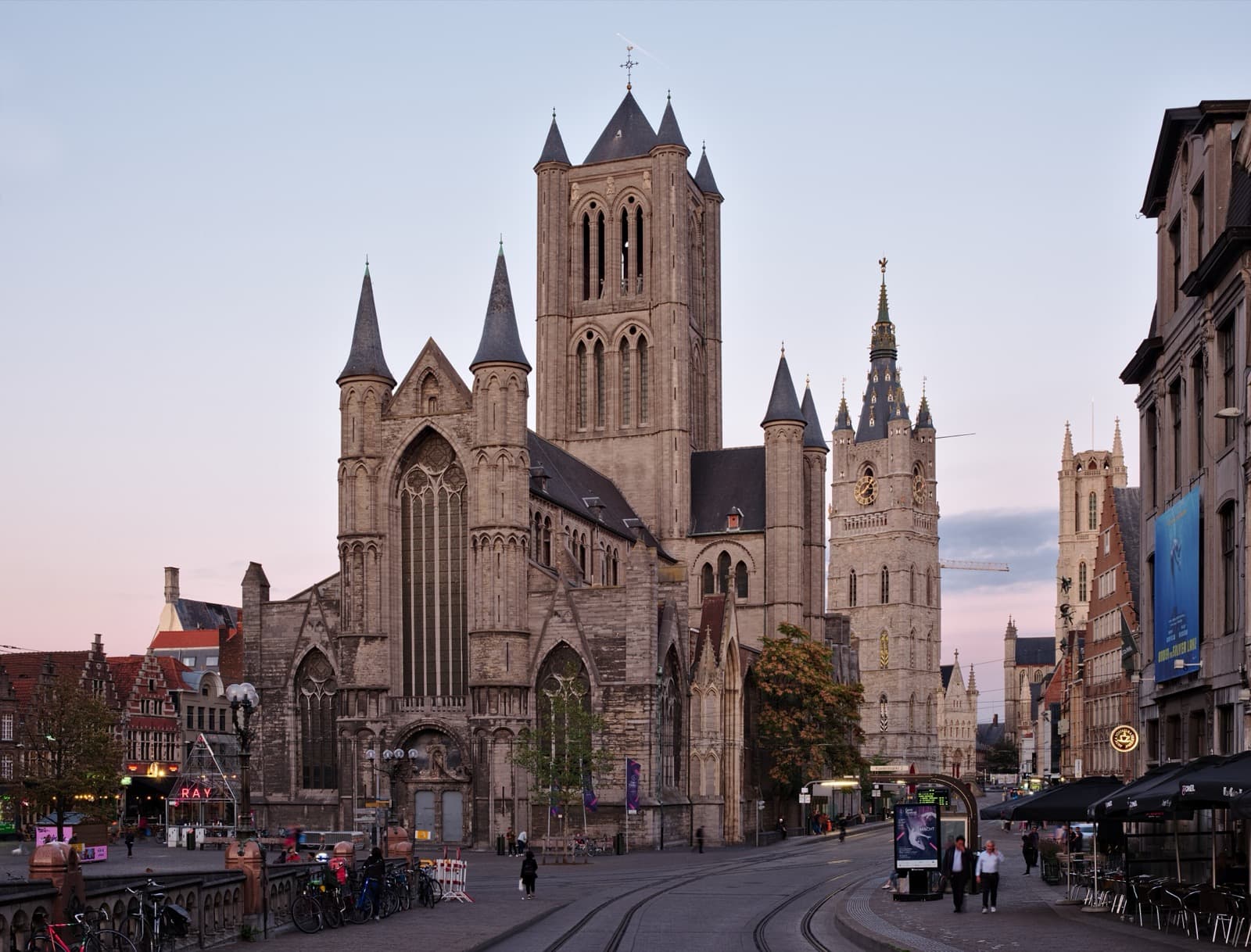
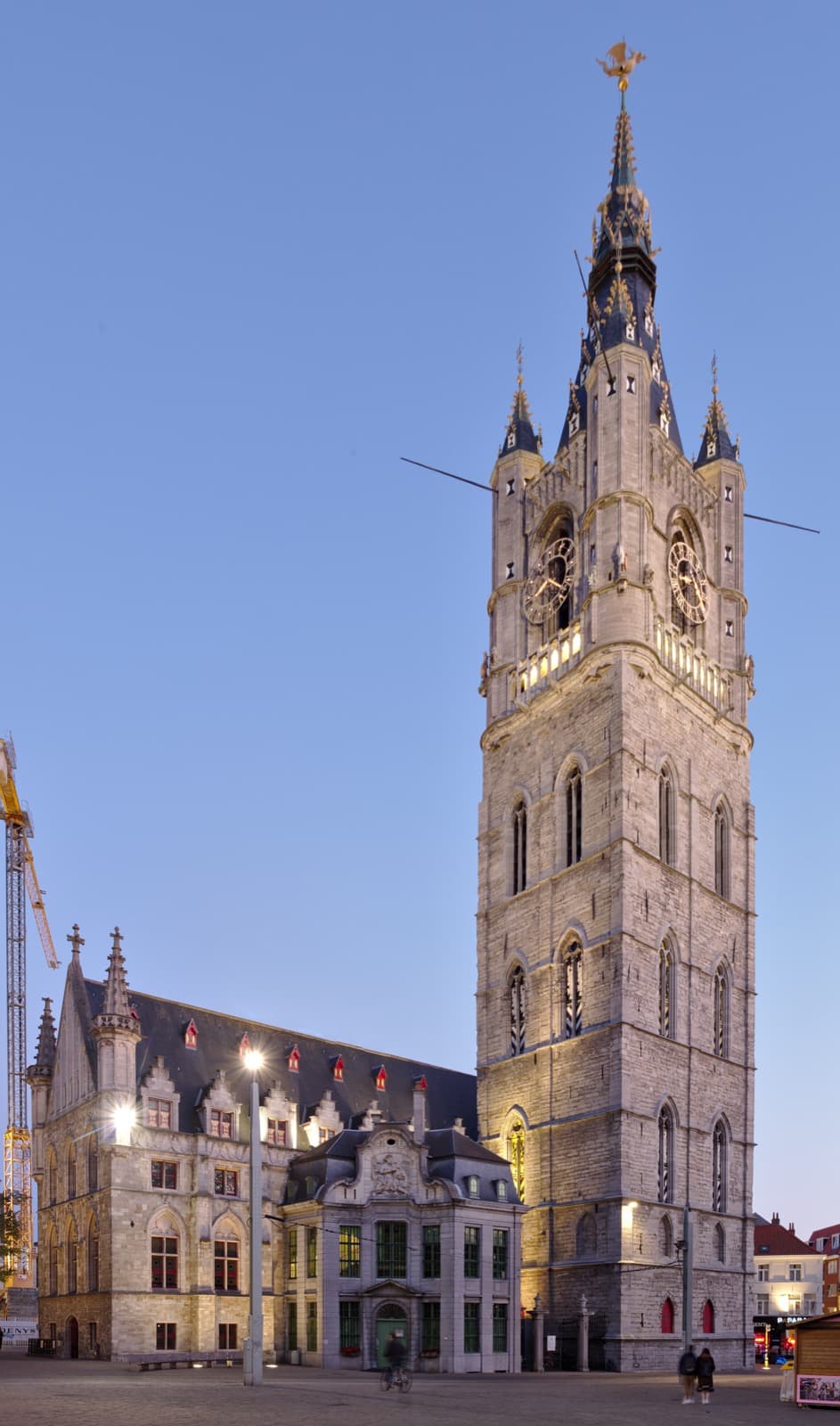
Uphill, it raised three towers in a single row, best read from Saint Michael's Bridge, the one point in the city where all three line up. Each belongs to a different master. Saint Nicholas's Church, built in blue-grey Tournai stone in the regional Scheldt Gothic style, is the merchants' church at the corn market, its lantern tower rising over the crossing rather than the door, its flanks lined with chapels the guilds endowed as they grew rich. The Belfry between the two churches is the town itself, ninety-one metres of civic power, begun in thirteen thirteen and finished in thirteen eighty, with a gilded copper dragon turning on its summit since thirteen seventy-seven. Inside it, Ghent locked its charters and privileges, the written proof of its liberties, and from it the bells rang the hours of work and market and alarm. At its foot the Cloth Hall, begun in fourteen twenty-five, is where the woollen cloth that made the city rich was inspected before it could be sold. The Belfry is inscribed on the UNESCO World Heritage List among the Belfries of Belgium and France, symbols of medieval urban self-government. The Historic Center walk reads the skyline exactly this way: trade, town, and Church balanced against one another, with the river beneath paying for all three.
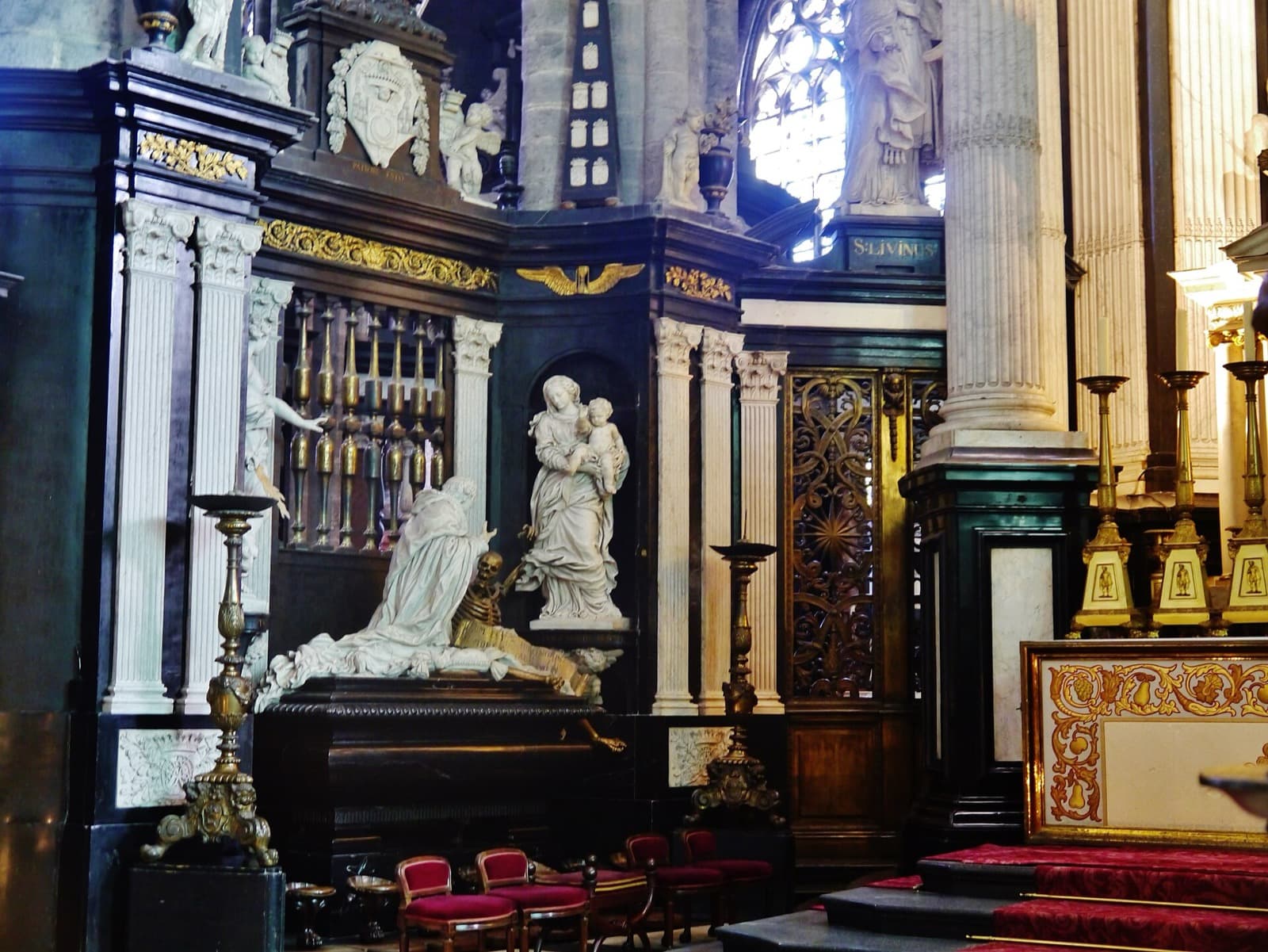
The third tower belongs to the Church, and it guards the object the world could not stop coveting. Saint Bavo's Cathedral, mother church of Ghent, holds the Ghent Altarpiece, the Adoration of the Mystic Lamb, designed by Hubert van Eyck in the early fourteen twenties and completed by his brother Jan van Eyck in fourteen thirty-two. Its interior panels are often called the first major work in oil paint, a founding masterpiece of Western art. It is also among the most stolen artworks in history: the art historian Noah Charney counts thirteen crimes and seven separate thefts against it, and one lower panel, the Just Judges, was taken in nineteen thirty-four and has never been recovered. In fifteen sixty-six, during the Beeldenstorm, when Calvinist crowds smashed church images across the Low Countries, the altarpiece was hidden and saved. A single painting carries six centuries of the city's danger and survival.
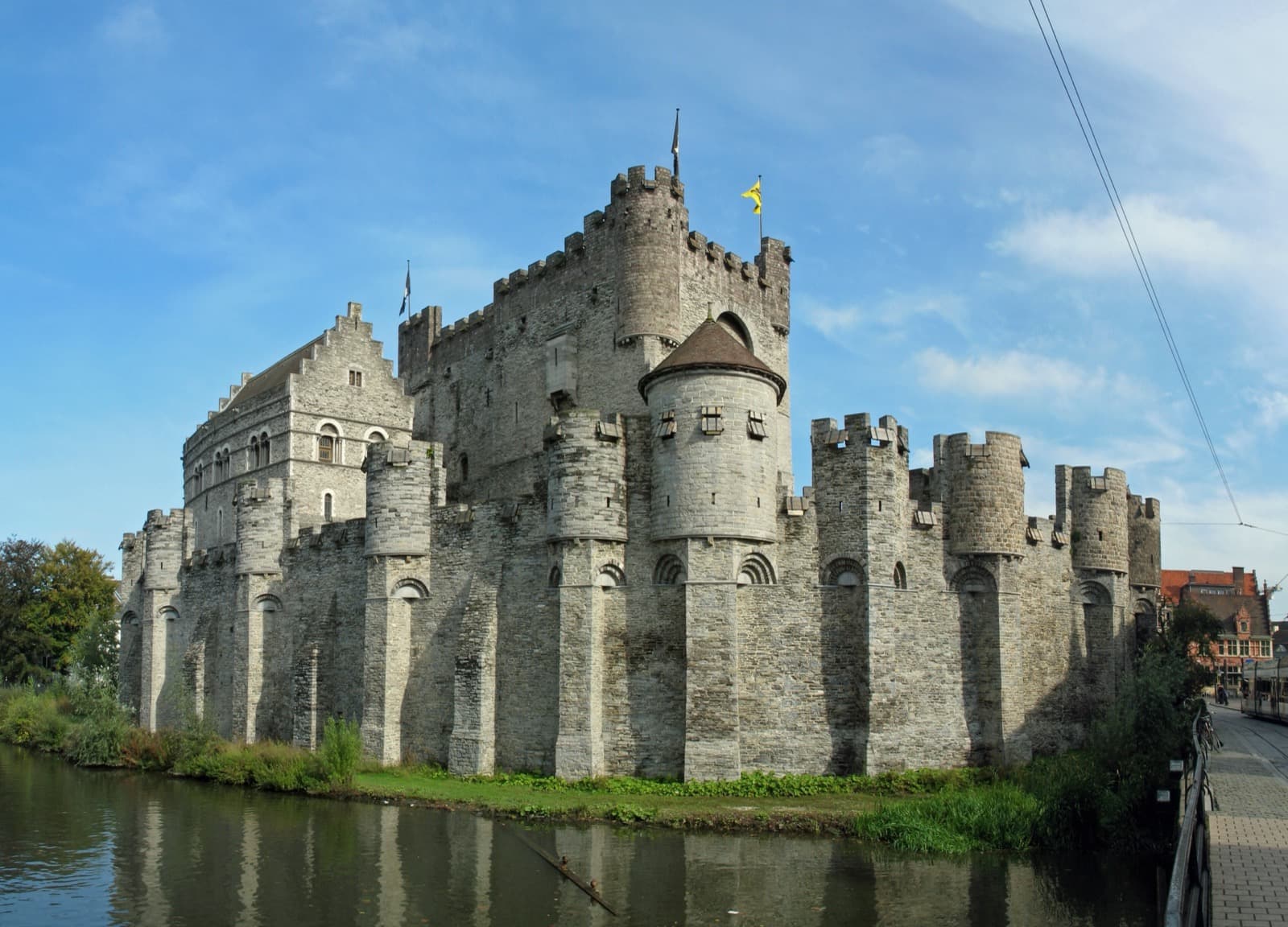
Now turn the city over. Behind the three towers stands the other Ghent, and the Gravensteen walk tells its harder story. The Castle of the Counts is the grey thing the counts of Flanders planted in the middle of a city that never much wanted them, rebuilt in stone in eleven eighty by Philip of Alsace with a keep, a ring wall, and a moat fed by the Leie. A castle inside a city, rather than out on a frontier, is a message to the weavers crowded in the lanes below: the count is here, and he is watching. Over the centuries it served as residence, then mint, then court and prison, and in the nineteenth century part of it worked as a cotton mill before its restoration between eighteen ninety-three and nineteen oh seven.
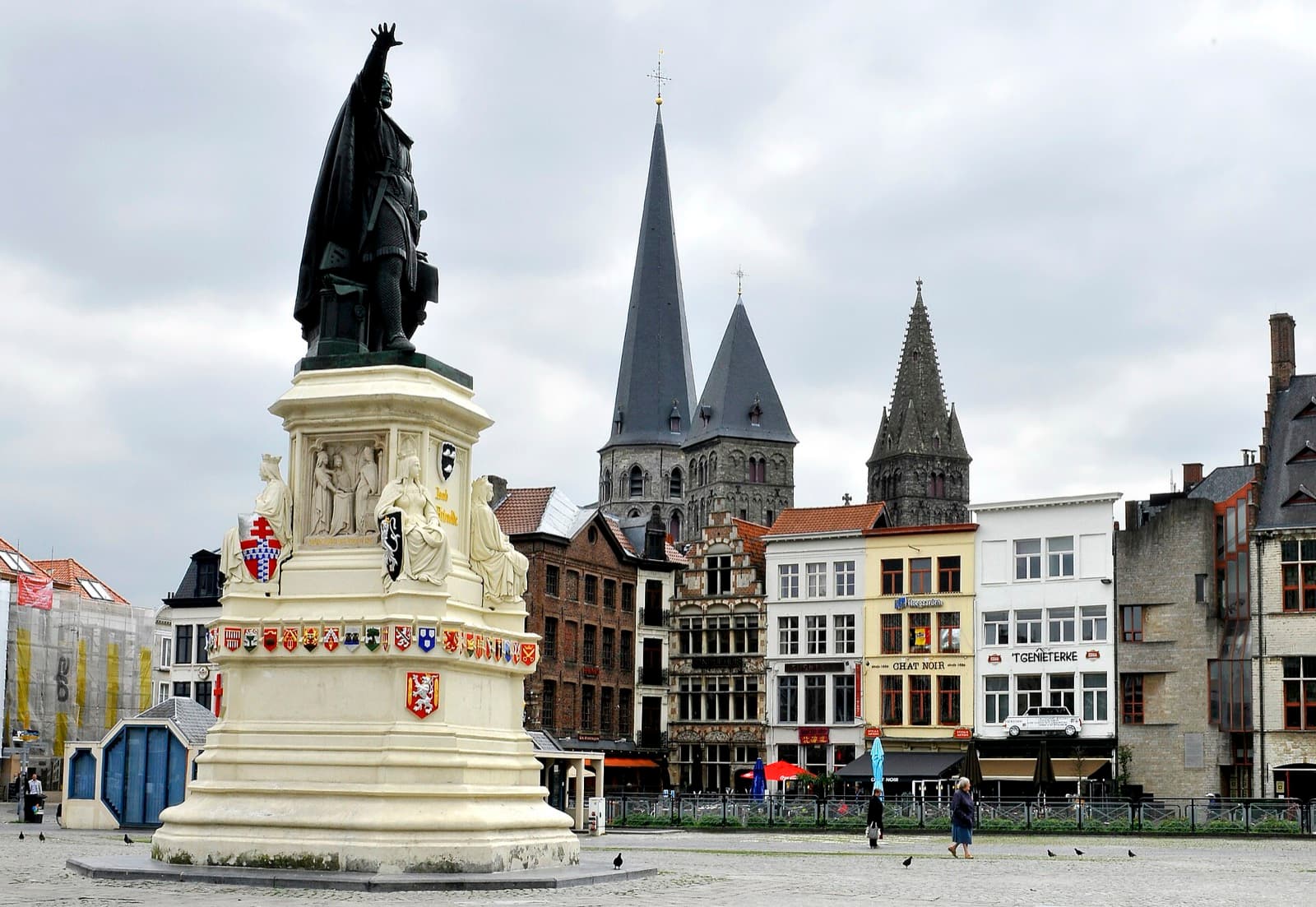
The people pushed back constantly, and they did their politics out loud on the Vrijdagmarkt, the Friday Market, where a market has run every Friday since eleven ninety-nine. Here the guilds mustered under their banners, new counts were sworn in, and the crowds rioted. Jacob van Artevelde, captain-general of Ghent in the late thirteen thirties, allied the Flemish towns with England to keep the wool flowing that the weavers depended on, and on the twenty-sixth of January, thirteen forty, on this square, he proclaimed Edward the Third of England king of France. It was a calculated gamble by a city that lived and died by its cloth. His end showed the square's darker face: in July of thirteen forty-five he was killed by a Ghent mob. Just off the square sits the Dulle Griet, Mad Meg, a wrought-iron bombard of the first half of the fifteenth century, built from thirty-two iron bars bound by sixty-one rings, about five metres long and roughly sixteen and a half tonnes, almost certainly too large to be a practical weapon. It was a statement: a defiant city making its martial pride visible in iron.
The defiance met its master in the city's own son. On the twenty-fourth of February, fifteen hundred, the future Emperor Charles the Fifth was born at the Prinsenhof, a palace now vanished except for the Donkere Poort, the Dark Gate. When Ghent revolted against his taxation, Charles the Fifth crushed the revolt in fifteen forty, abolished the city's privileges, and beheaded nine of its leaders on Sint-Veerleplein on the seventeenth of March that year. Then he forced the city's notables to process in penance with hangman's nooses around their necks. Ghent's answer was to take the insult and keep it: from that day the citizens have called themselves the Stroppendragers, the Noose-bearers, worn as a badge of resistance rather than shame. The walk ends fittingly at the Rabot, a twin-towered water-gate built between fourteen eighty-nine and fourteen ninety-one after Ghent withstood the fourteen eighty-eight siege by Maximilian of Austria, whose army withdrew after about forty days without taking the city.
That is the through-line. One Ghent rose in wealth and built three towers to hold its trade, its town, and its faith. The other refused to bow, and left behind a fortress it resented, a square of revolts, a monster cannon, and a proud nickname minted from humiliation. See both from Ghent walking tours, and read the city the way it was built, at your own pace, with no group and no clock but your own.
Sources
Frequently asked questions
- What are the three towers of Ghent?
- The three towers are Saint Nicholas's Church, the Belfry, and Saint Bavo's Cathedral, which line up in a single row when seen from Saint Michael's Bridge. Each represents a different medieval power: the merchants and guilds, the town's civic self-government, and the Church. The Belfry is the tallest at ninety-one metres, and Saint Bavo's holds the Ghent Altarpiece.
- What is the Ghent Altarpiece and where is it?
- The Ghent Altarpiece, also called the Adoration of the Mystic Lamb, is in Saint Bavo's Cathedral in Ghent. It was designed by Hubert van Eyck in the early fourteen twenties and completed by his brother Jan van Eyck in fourteen thirty-two, and is often called the first major work in oil paint. It is one of the most stolen artworks in history, and its Just Judges panel, taken in nineteen thirty-four, has never been recovered.
- Why are people from Ghent called Noose-bearers?
- After Ghent revolted against his taxation, the Emperor Charles the Fifth, who was born in the city in fifteen hundred, crushed the revolt in fifteen forty and forced the city's notables to walk in penance with hangman's nooses around their necks. Rather than accept the humiliation, the citizens adopted the name Stroppendragers, or Noose-bearers, as a badge of pride and resistance. They still use the nickname today.
- What is the Gravensteen?
- The Gravensteen, or Castle of the Counts, is a moated stone castle built in eleven eighty by Philip of Alsace, count of Flanders, in the middle of Ghent. It was placed inside the city rather than on a frontier, partly to overawe the restive weaving population. Over the centuries it served as a residence, a mint, a court, a prison, and even a cotton mill before being restored around nineteen hundred.
- Why was Ghent so wealthy in the Middle Ages?
- Ghent grew rich on wool spun and woven into cloth and sold across Europe, and around thirteen hundred it held perhaps fifty to sixty thousand people. Its wealth came through the old inner harbour along the Graslei and Korenlei, where ships had docked since the eleventh century and the grain trade of Flanders was concentrated. That commercial wealth paid for the three towers and the guild halls of the old core.
Ready to experience it?
Historic Center: The Harbour City of Three Towers
60 min · 1.4 km · easy
More from Ghent
Explore more at your own pace.
Ghent Travel Guide: How Many Days, Getting Around, and When to Go
One Day in Ghent: A Walkable Morning-to-Evening Itinerary
Sint-Baafskathedraal and the Mystic Lamb: The Last Word in Ghent's Skyline
The Gravensteen: Why the Counts of Flanders Planted a Castle Inside a Rebel City
Graslei and Korenlei: The Harbour That Paid for Ghent