Historic Center: The Harbour City of Three Towers
60 min · 1.4 km · easy
Ghent rewards a single walking day: the compact medieval core lets you cross the entire old city on foot, morning to evening, without a car or a group. Start on Saint Michael's Bridge for the three-tower skyline, thread the old harbour quays and the Castle of the Counts, and end by the water at dusk. This one-day itinerary ties each part of the day to a self-guided audio tour so the history plays as you walk, at your own pace. You can browse the full set on the Ghent walking tours hub, or open the city page at /belgium/ghent.
The short answer: how to spend one day in Ghent
Give the old core a full day and walk it in two loops. The morning belongs to the skyline and the harbour: Saint Michael's Bridge, the three great towers (Saint Nicholas's Church, the Belfry, and Saint Bavo's Cathedral), the Town Hall, and the Graslei and Korenlei quays. The afternoon belongs to the rebel city north of the water: the Castle of the Counts, the Patershol lanes, the Friday Market, the Dulle Griet cannon, and the Rabot water-gate. Both halves are short. The Three Towers route runs about 1.4 kilometres over roughly an hour; the Gravensteen route runs about 2.4 kilometres over roughly 70 minutes. Add museum stops, lunch, and coffee, and the two fill a comfortable day with room to linger.
Most of the day is free to walk. You pay only where you choose to go inside: the Belfry climb, the castle interior, and the timed ticket to view the Ghent Altarpiece.
Getting into the centre
Hear a stop from this walk
Graslei and Korenlei: The Golden-Age Harbour of the Cloth City
If you arrive by train at Gent-Sint-Pieters, the old core is a short ride away. Tram line 1 runs from the station toward the centre roughly every ten minutes; step off at Korenmarkt and you are beside the three towers. Buy tram tickets from the machines or the ticket shop at the stop before boarding. Walking from the station to the centre takes around 25 to 30 minutes along a fairly ordinary route, so the tram is the easier choice with luggage. Once you reach the Korenmarkt, put the tram away. Ghent's old city is built for feet, and the whole day below is walkable.
Morning: the three towers and the harbour
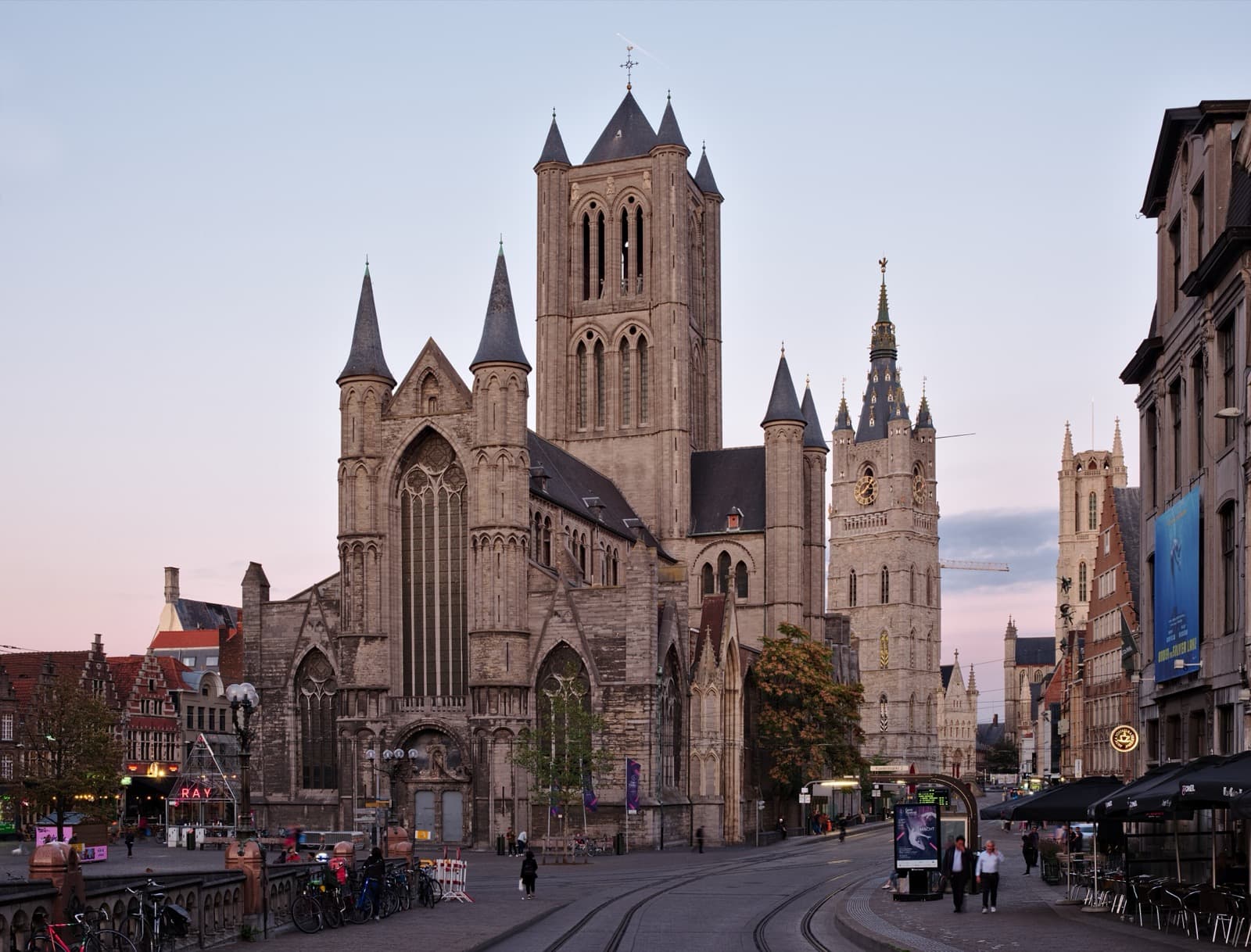
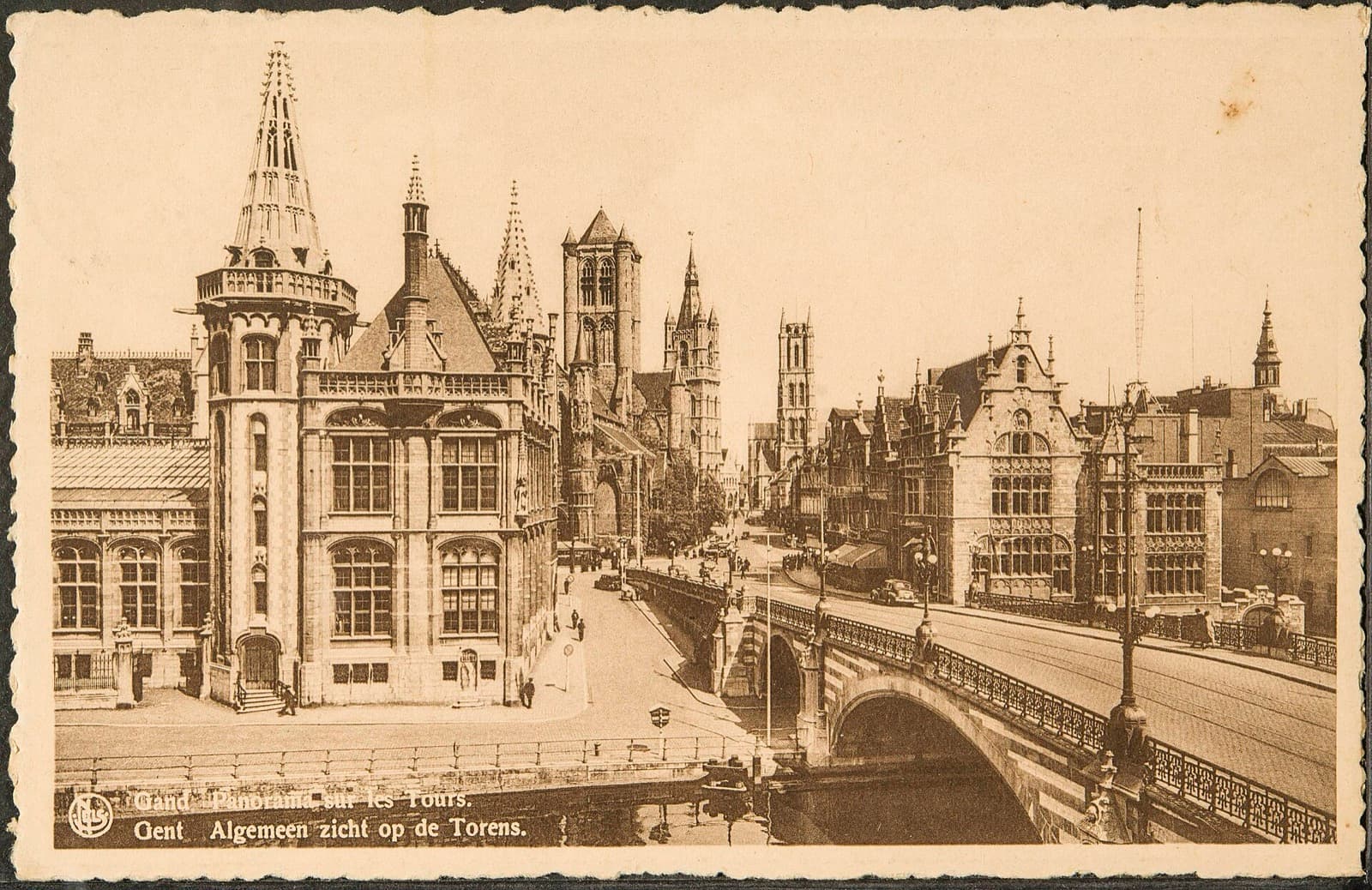
Begin on Saint Michael's Bridge, the stone arch over the River Leie. This is the one point in the city where all three medieval towers line up in a single view: Saint Nicholas's Church nearest, the Belfry rising tallest behind it, and Saint Bavo's Cathedral beyond. The Ghent walking tours app opens its Historic Center route here, and the framing is the whole idea: three towers for three kinds of power, trade, town, and Church, built on the wealth of the wool and cloth trade.
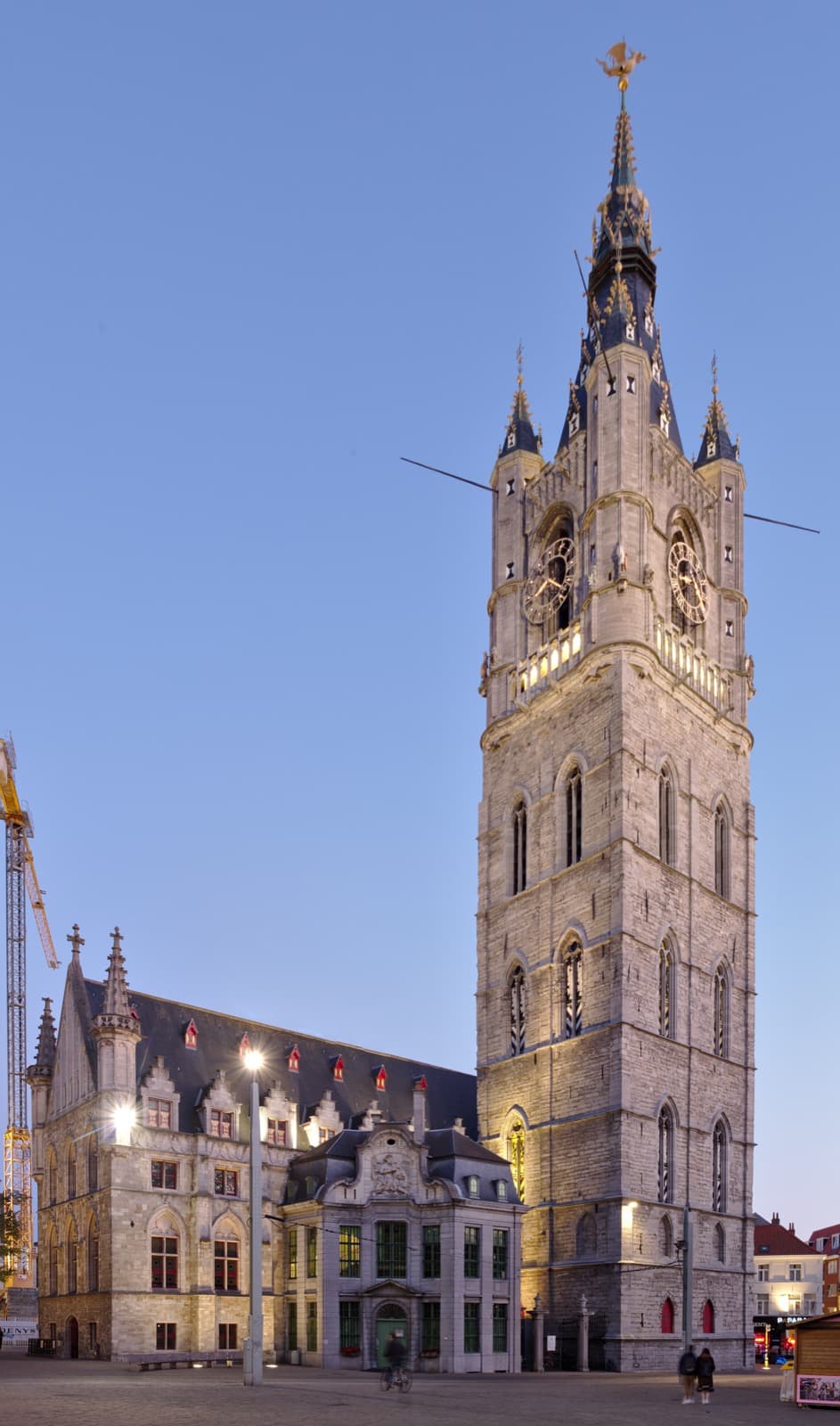
Walk to Saint Nicholas's Church on the Korenmarkt (the old corn market). It is free to enter, a working church, so keep your voice low. Its blue-grey Tournai stone and the central lantern tower over the crossing are the local Scheldt Gothic style. Next comes the Belfry, the tallest of the three and the civic tower that once guarded the city's charters. The exterior and the view are free; the climb is ticketed. The Belfry is open daily from 10am to 6pm, with the last tickets sold around 5pm, and the standard adult ticket is roughly 11 euros. There is a lift from the first floor, but reaching it involves stairs, so skip the climb if stairs are hard for you.
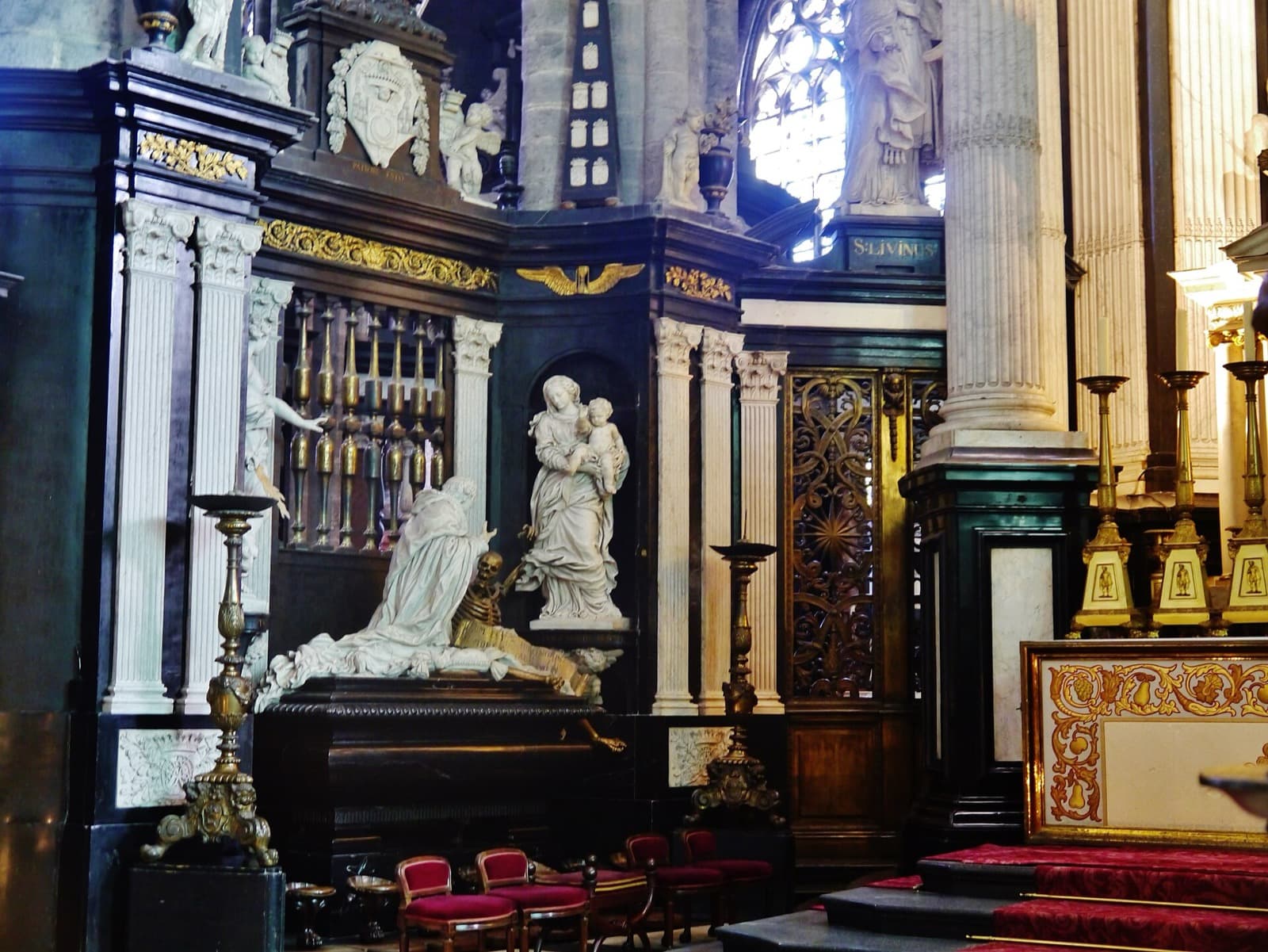
A short walk on stands Saint Bavo's Cathedral, the mother church of Ghent and home to the Ghent Altarpiece, the Adoration of the Mystic Lamb, finished by Jan van Eyck in 1432. The cathedral itself is free to enter. Viewing the altarpiece is separate: it is timed and ticketed, at roughly 12 euros for an adult, and booking a slot in advance is wise because it is popular. One honest note before you go: the altarpiece is undergoing a multi-year restoration, and during the work seven panels displayed in the cathedral are shown as high-quality photographic reproductions while the originals are conserved. The restoration is scheduled to finish in spring 2027, so check the cathedral's official booking page for the current state and price before you buy. Cathedral viewing generally runs Monday to Saturday from the morning and Sunday from the early afternoon, so plan the altarpiece for the morning of a weekday if you can.
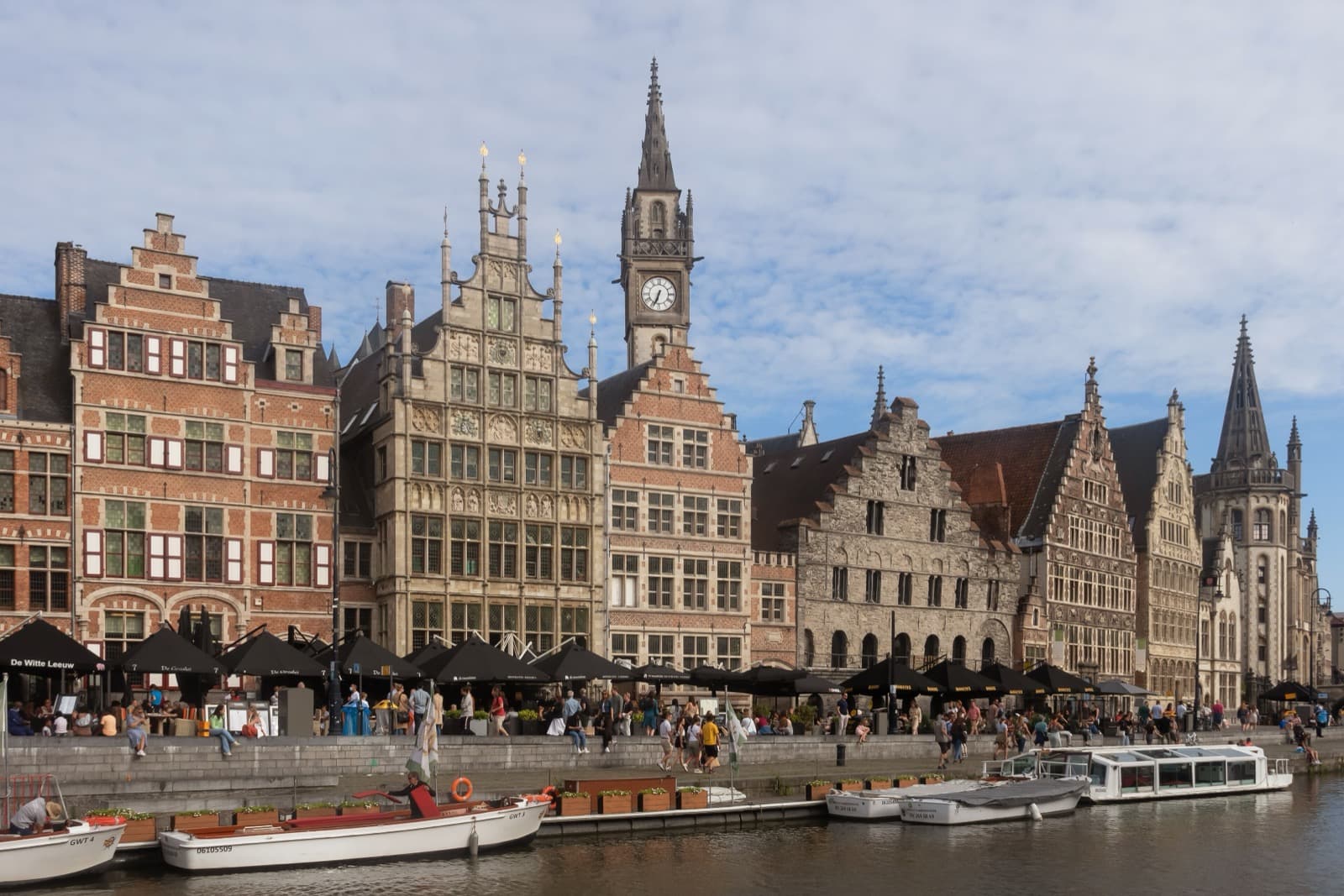
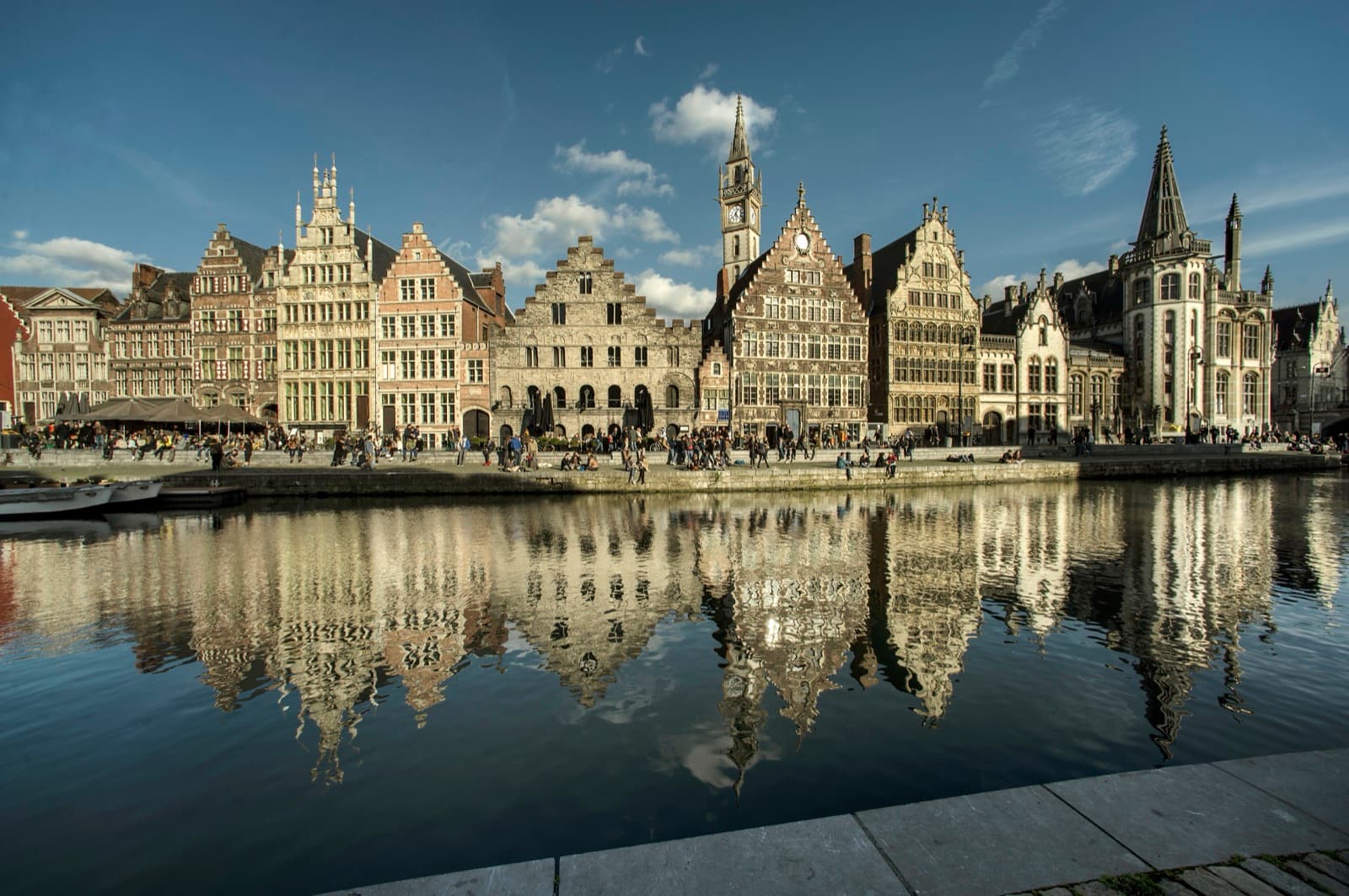
From the cathedral, loop back past the Town Hall (Stadhuis), whose two clashing fronts, one lavish Gothic and unfinished, one plain Renaissance and complete, record a boom cut short. Then drop to the Graslei and Korenlei, the two quays facing each other across the Leie at the old inner harbour. This is the best place to pause: a row of guild and merchant houses runs from Romanesque to Baroque, and the quays are free to sit on. Grab lunch or coffee here and let the morning settle.
Afternoon: the castle and the rebel city
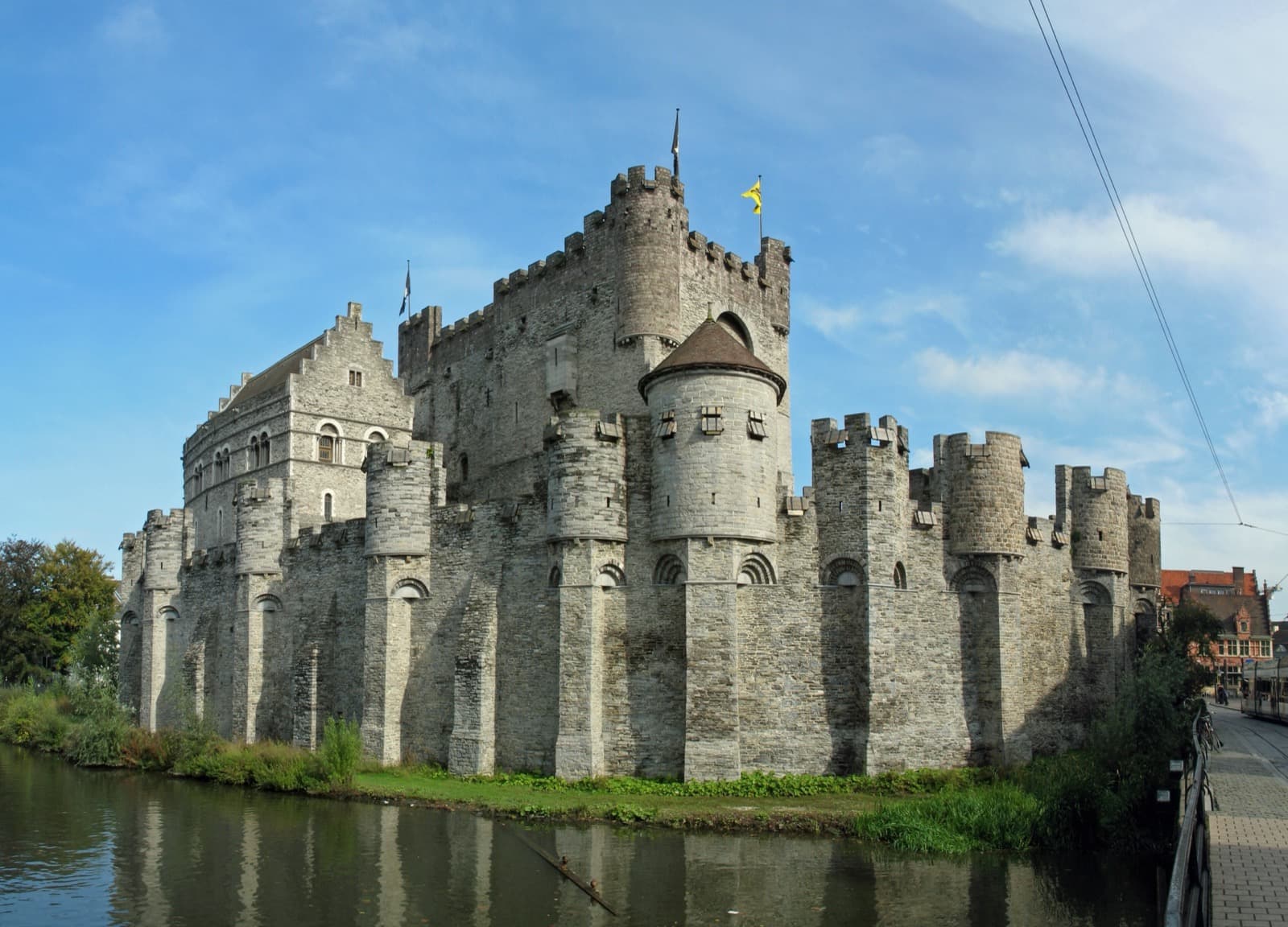
After lunch, cross north to the Castle of the Counts, the Gravensteen, the grey moated fortress the counts of Flanders built in 1180 in the middle of their own restless weaving city. The exterior and the surrounding squares are free. The interior, with its walls, dungeons, and an audio guide included, charges around 15 euros for an adult. The castle is open daily, generally 10am to 6pm, with last admission around 4:40pm and closures on 24, 25 and 31 December and 1 January, so aim to go inside earlier rather than at the end of the day. Booking online avoids the queue.
This is where the Ghent walking tours app switches to its Gravensteen route, which tells the harder story of a city that rioted against its counts and even its emperor. From the castle, wander the Patershol, a knot of narrow medieval lanes where the tanners and craftsmen who served the castle once lived. There is no single monument here; the point is the grain of the streets, and it is free to roam. The lanes are also full of restaurants if you want a slower, later meal.
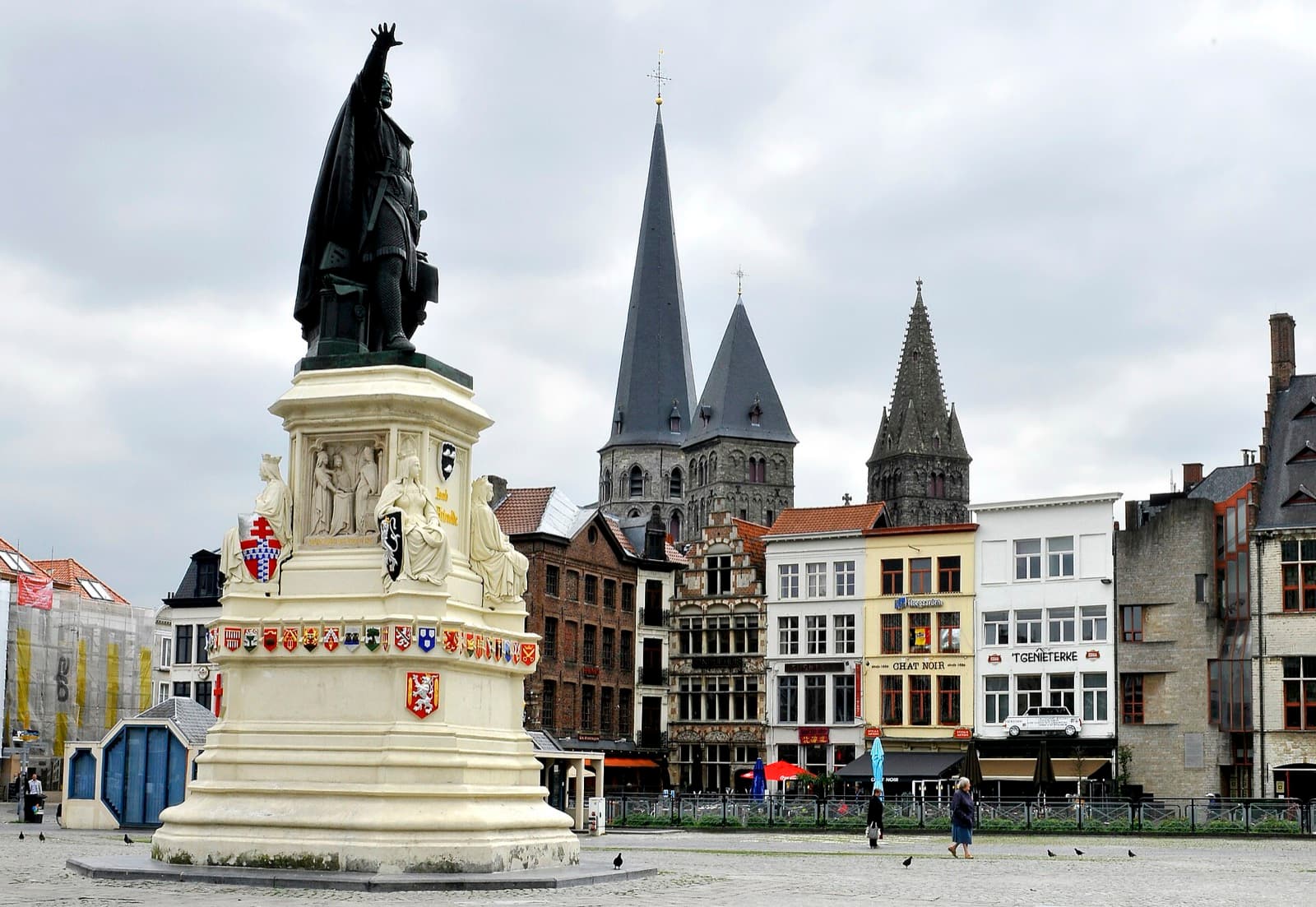
Continue to the Friday Market (Vrijdagmarkt), Ghent's great civic square, where a market has been held on Fridays since 1199 and where Jacob van Artevelde allied the city with England over wool in 1340. On this square, in January of that year, Artevelde proclaimed Edward the Third of England king of France. Just off it, on the Big Gun Square, sits the Dulle Griet, or Mad Meg, a giant wrought-iron medieval cannon painted dull red, an outdoor monument that is free to see. If you have the legs, finish at the Rabot, the twin-towered water-gate in the north of the old city, raised after Ghent held off a siege in 1488. It is a fitting last stop: a city that fought off its besiegers and never stopped remembering it.
Evening: the old town after dark
End back at the water. The Graslei and Korenlei, and the view of the three towers from Saint Michael's Bridge, are at their best in the hour before dusk and after the illuminations come on, and the quays are quieter once the day-trippers leave. Ghent lights its historic monuments in the evening, so an unhurried walk back along the Leie is a good way to close the day. Dinner in the Patershol or near the Korenmarkt keeps everything within a short stroll.
Practical notes
The old town is paved in cobbles, and many canal quays have no railing at the water's edge, so wear steady shoes and take care near the water, especially with children or a camera in hand. Bikes and trams share the streets throughout Flanders, so look carefully before crossing, since cyclists move quickly and quietly. Northern weather changes fast, so carry a waterproof layer year-round; cobbles turn slippery in the rain. Ghent is a calm, walkable city by day and evening, with the usual big-city advice to keep an eye on your belongings in crowded squares and on trams.
If you plan to go inside several attractions, the CityCard Ghent bundles entry to the Gravensteen, the Belfry, and other sites along with public transport, which can pay for itself on a full day like this. The two self-guided routes that thread this whole itinerary, the Three Towers and the Gravensteen walk, are both on the /belgium/ghent city page, so you can start either one the moment you reach its first stop and let the story play as you go.
Sources
- Castle of the Counts (Gravensteen), information and prices, Historische Huizen Gent (official)
- Belfry of Ghent, practical info, Historische Huizen Gent (official)
- Ghent Altarpiece tickets, Saint Bavo's Cathedral (official)
- Public transport in Ghent, Visit Gent (official)
- History on the Graslei and Korenlei, Visit Gent (official)
Frequently asked questions
- Can you see Ghent in one day?
- Yes. Ghent's historic core is small and flat, and the main sights sit within a short walk of one another. A full day is enough to cover Saint Michael's Bridge, the three towers, the Graslei and Korenlei quays, the Castle of the Counts, the Patershol lanes, the Friday Market, and the Rabot, with time for lunch and a museum or two. Two self-guided walking routes cover the whole day: a roughly 1.4 kilometre towers-and-harbour loop and a roughly 2.4 kilometre castle-and-rebel-city loop.
- How do you get from Gent-Sint-Pieters station to the city centre?
- Tram line 1 runs from the station toward the centre about every ten minutes; get off at Korenmarkt, right by the three towers. Buy tram tickets from the machines or the ticket shop at the stop before boarding. Walking takes around 25 to 30 minutes along a fairly plain route, so the tram is easier with luggage.
- How much does it cost to visit Ghent's main sights?
- Most of the day is free to walk, including the bridges, squares, quays, and the exteriors of the towers and castle. You pay only to go inside: the Belfry climb is around 11 euros for an adult, the Castle of the Counts interior is around 15 euros with an audio guide included, and viewing the Ghent Altarpiece in Saint Bavo's Cathedral is around 12 euros on a timed ticket. The cathedral itself is free to enter. The CityCard Ghent can bundle these with transport.
- Do you need to book the Ghent Altarpiece in advance?
- Booking a timed slot in advance is recommended because viewing is ticketed and the altarpiece is popular. Note that the altarpiece is undergoing a multi-year restoration scheduled to finish in spring 2027, and during the work seven panels shown in the cathedral are high-quality photographic reproductions while the originals are conserved. Check the official Saint Bavo's Cathedral booking page for the current state and price before you buy.
- What are the opening hours for Gravensteen and the Belfry?
- Both are generally open daily from 10am to 6pm. The Belfry sells its last tickets around 5pm. The Gravensteen's last admission is around 4:40pm, and it closes on 24, 25 and 31 December and 1 January. Aim to visit the interiors earlier in the day and book online to skip the queue.
- Is Ghent a good city for walking?
- Yes. Ghent's medieval centre is compact, largely pedestrian-friendly, and best explored on foot, which is why self-guided audio walking tours work so well there. Streets are paved in cobbles and some canal quays have no railing, so wear steady shoes and watch your footing near the water. Bikes and trams share the streets, so look before crossing.
Ready to experience it?
Historic Center: The Harbour City of Three Towers
60 min · 1.4 km · easy
More from Ghent
Explore more at your own pace.
Ghent Travel Guide: How Many Days, Getting Around, and When to Go
Ghent: The Medieval Giant of Three Towers and Endless Revolts
Sint-Baafskathedraal and the Mystic Lamb: The Last Word in Ghent's Skyline
The Gravensteen: Why the Counts of Flanders Planted a Castle Inside a Rebel City
Graslei and Korenlei: The Harbour That Paid for Ghent