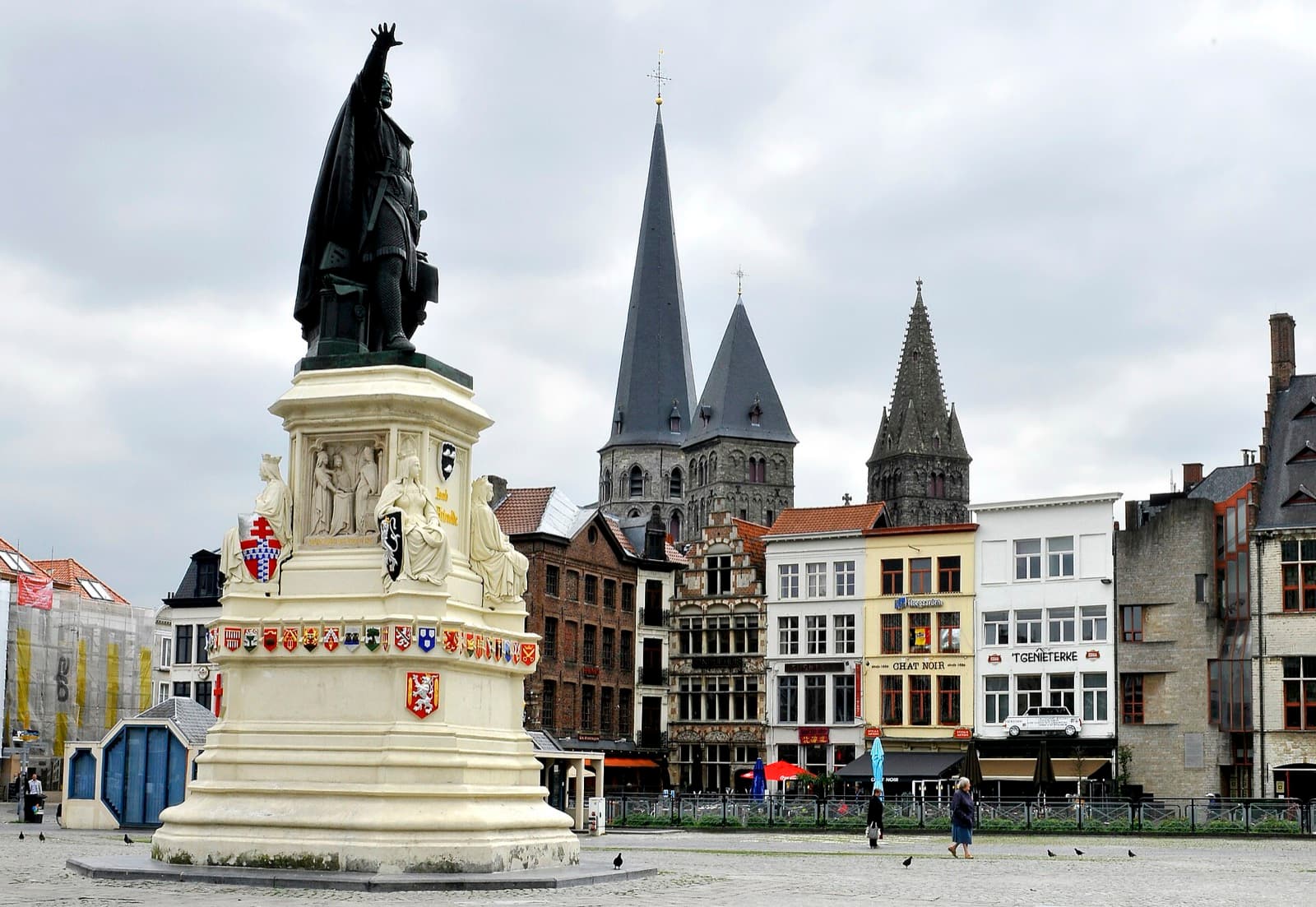
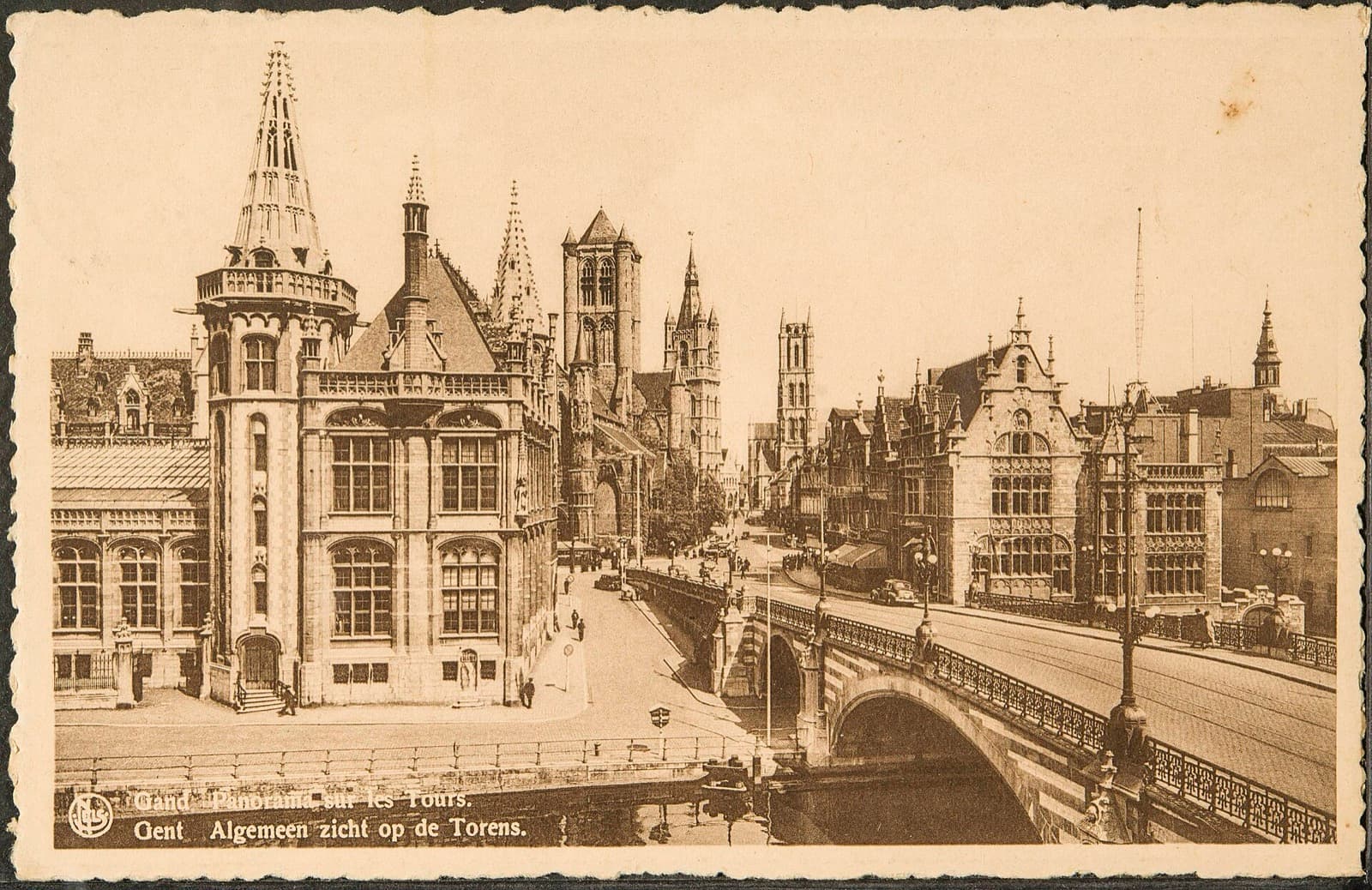
Sint-Baafskathedraal is the third tower in a row of three, and reading it as the last word of a sentence is the key to the whole of Ghent's historic center. From one stone bridge over the River Leie, three great medieval towers line up in a single view: Saint Nicholas's Church nearest, the Belfry rising tallest behind it, and Saint Bavo's Cathedral beyond. Each belongs to a different master. The merchants' church, the civic tower of the guilds, and the cathedral of God. Saint Bavo's closes the line, and inside it hangs a painting the world could not stop coveting. Understand why that painting sits in a cathedral at the end of a merchant city's skyline, and you understand the argument the whole walk is making.
Three towers, three powers
Ghent grew where the Leie and the Scheldt meet, and in the Middle Ages it swelled into one of the largest and richest cities in northern Europe, home to perhaps fifty to sixty thousand people around thirteen hundred. That wealth came from wool spun and woven into cloth and sold across a continent. It is often said the city was second only to Paris north of the Alps, a claim repeated so often it has almost hardened into fact, though historians handle it with care.
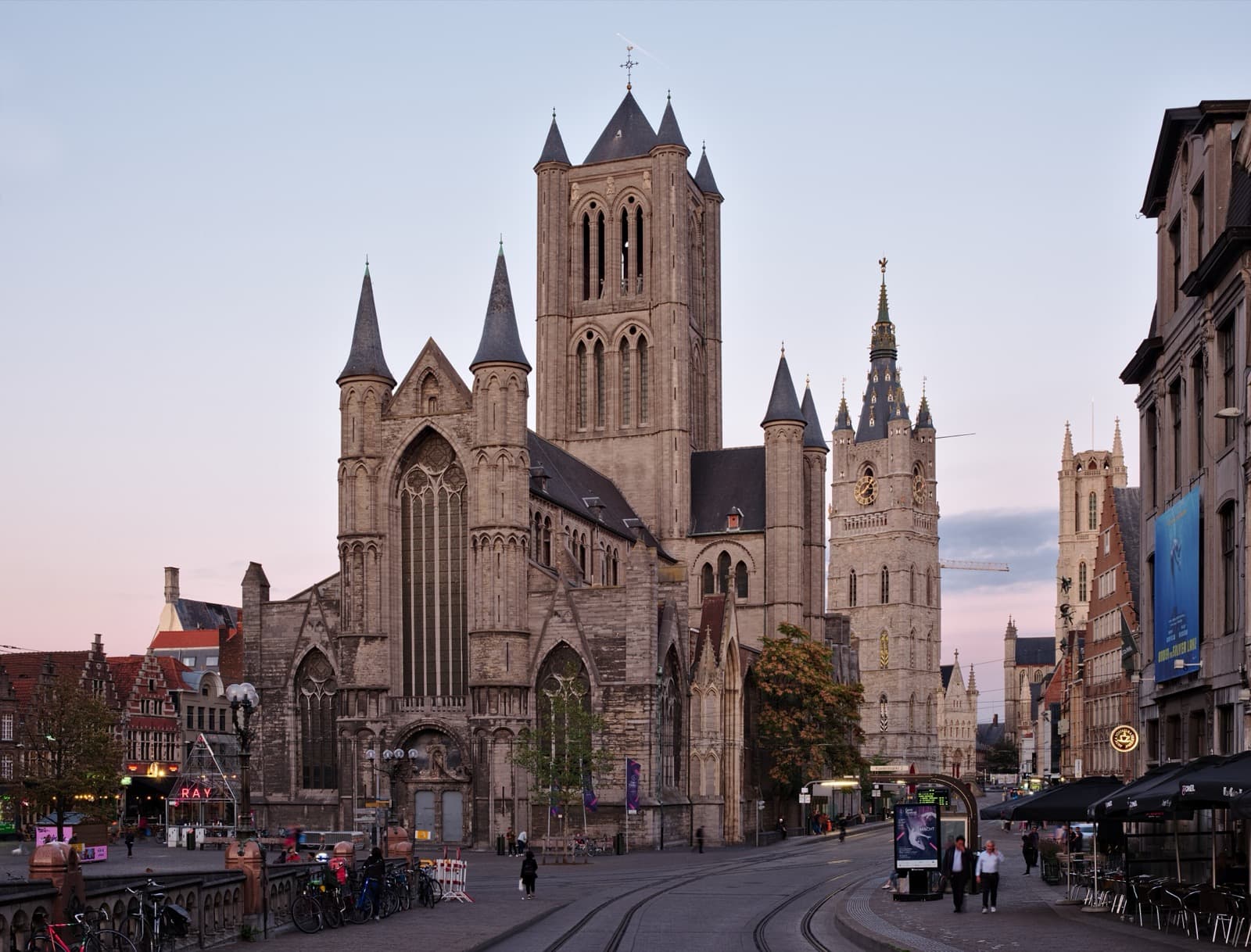
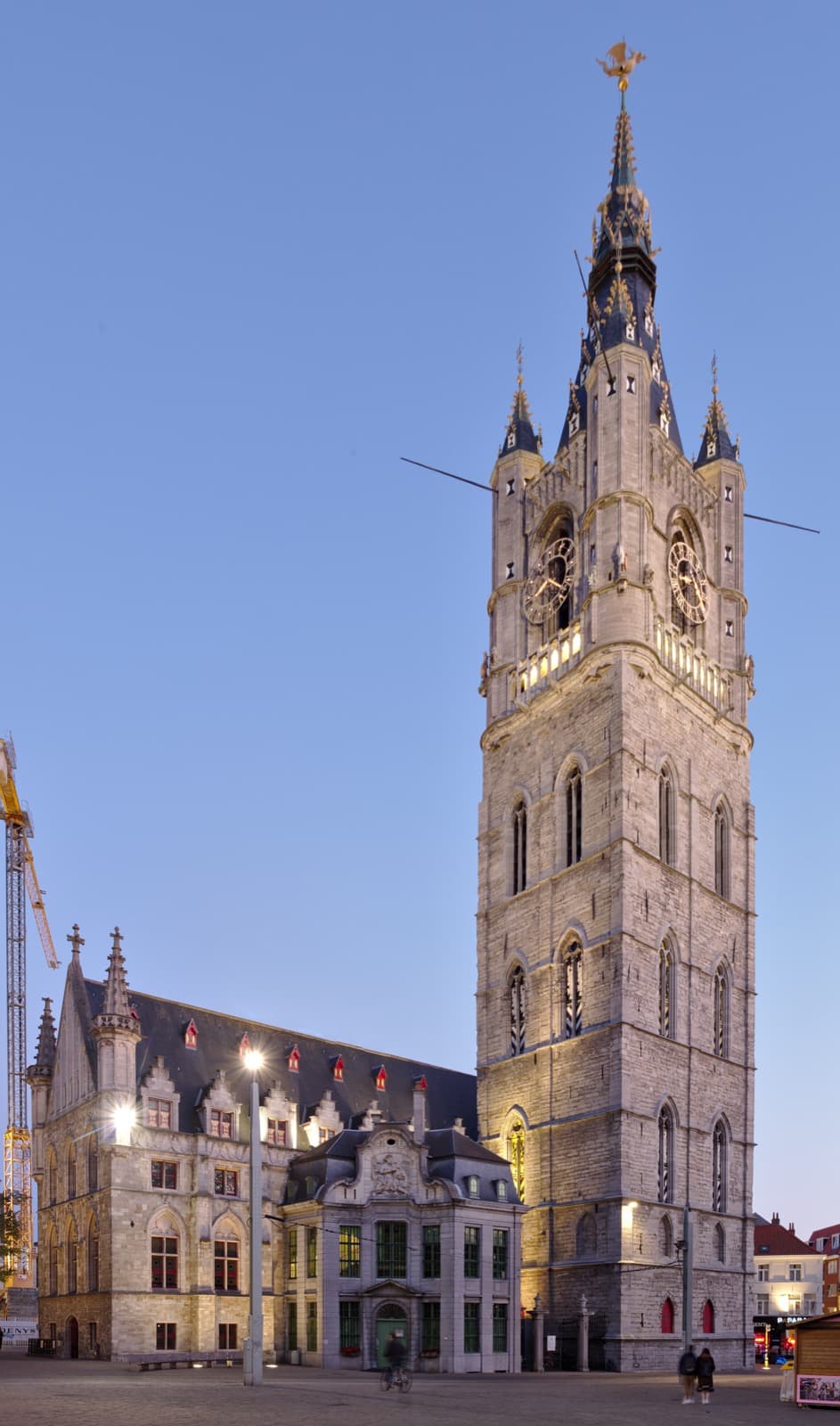
What the money bought, it bought for three different owners. Saint Nicholas's Church, built through the thirteenth century in the blue-grey Tournai stone of the Scheldt Gothic style, stands on the Korenmarkt, the corn market. Its tower rises not over the door but over the crossing, dropping daylight straight into the church, and its side chapels were endowed one by one as the guilds grew rich. That is trade. The Belfry, begun in thirteen thirteen and finished in thirteen eighty at ninety-one metres, is the town itself, set deliberately between the two churches. In a strongroom high inside it, Ghent guarded its charters and privileges, the written proof of its liberties, and from it the bells rang the hours of work, market, and alarm. That is civic power. Saint Bavo's is the third term. The Church.
The last word on the skyline
Hear a stop from this walk
Graslei and Korenlei: The Golden-Age Harbour of the Cloth City
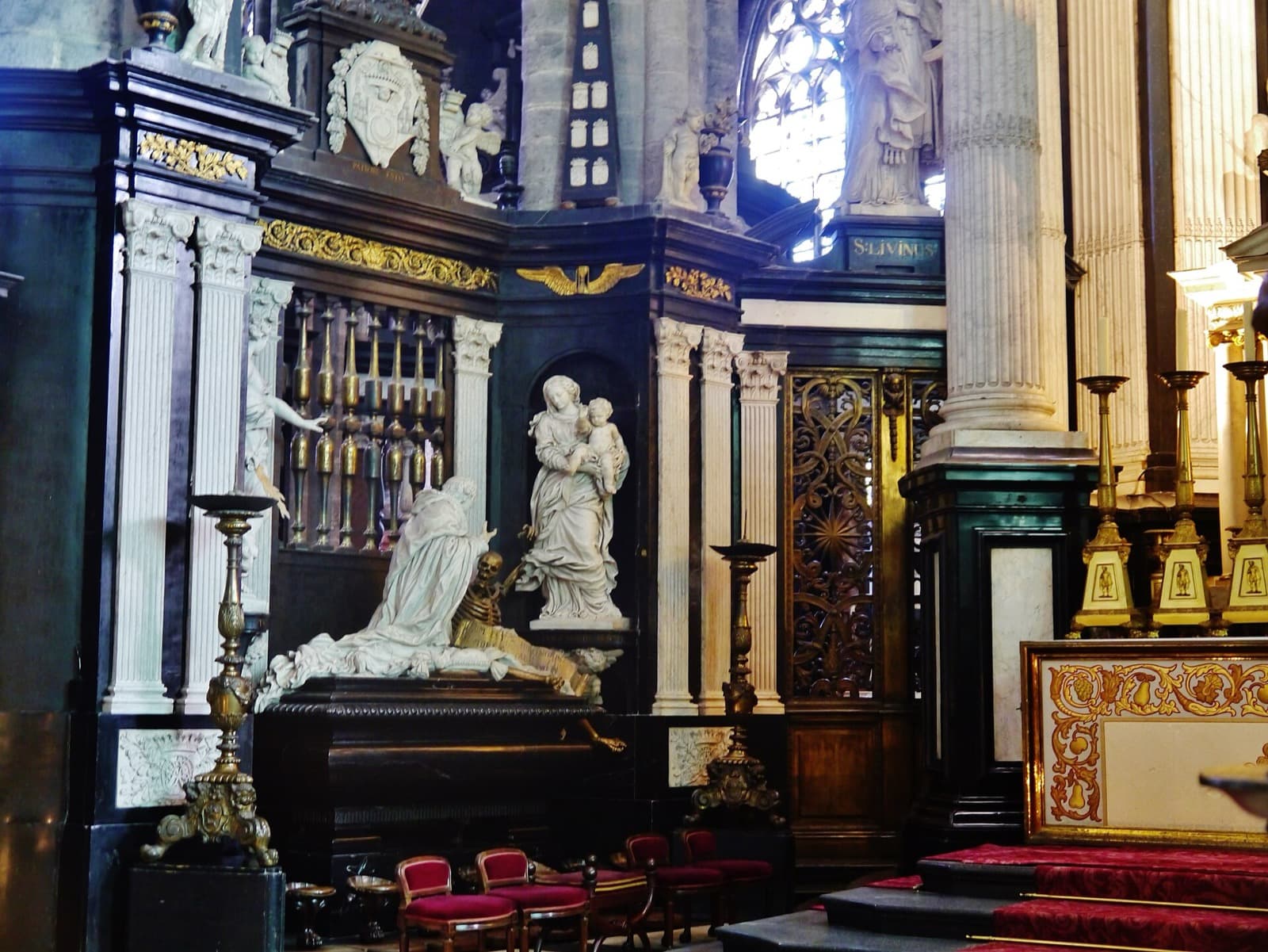
Saint Bavo's rises eighty-nine metres in Gothic stone as the mother church of Ghent. Building began around twelve seventy-four over the site of an older chapel of Saint John the Baptist that had been consecrated back in nine forty-two, and traces of that Romanesque past still survive in the crypt. It became a cathedral only in fifteen fifty-nine, when the Diocese of Ghent was founded, and construction concluded in fifteen sixty-nine. So the building you approach is older than its title. A parish church for centuries, promoted to a cathedral in the middle of the religious upheavals that would define the region's next hundred years.
That timing matters, because the treasure inside nearly did not survive those upheavals. In fifteen sixty-six, during the Beeldenstorm, the iconoclastic fury when Calvinist crowds smashed church images across the Low Countries, the cathedral's great altarpiece was hidden away and saved. Had it stayed on the wall, the founding masterpiece of Western oil painting might have gone the way of countless statues and panels broken that year.
The most coveted painting in the world
The Ghent Altarpiece, the Adoration of the Mystic Lamb, was designed by Hubert van Eyck in the early fourteen twenties and completed by his brother Jan van Eyck in fourteen thirty-two. Its twelve interior panels are often called the first major work in oil paint, a founding masterpiece of Western art. What makes it more than a technical milestone is its afterlife. This is among the most stolen artworks in history. The art historian Noah Charney counts thirteen crimes and seven separate thefts against a single painting.
One theft has never been undone. The lower left panel, the Just Judges, was taken in nineteen thirty-four and has never been recovered. It is still missing today, a gap on the altarpiece that no investigation, confession, or reward has closed in nearly a century. The Royal Institute for Cultural Heritage, which has studied every panel of the work, records how narrowly it has survived across six centuries of theft, war, and iconoclasm.
To stand before the Mystic Lamb is to see why a merchant city put its greatest object here rather than in the Belfry or the guild church. Commerce raised the towers, but the Church was where the city's most ambitious statement of permanence and faith was staked, and where it has been fought over ever since. The cathedral is free to enter. The Altarpiece is viewed on a timed, ticketed basis, so it rewards a weekday and a slot booked in advance rather than a hopeful walk-up.
Why the anchor sends you back down to the water
Read Saint Bavo's alone and it is a great Gothic cathedral with a famous painting. Read it as the third tower, and it becomes an argument. Three towers in a row are not an accident of skyline. They are a diagram of who held power in a medieval Flemish city, trade and town and Church balanced against one another. And the moment you have parsed all three, the tour drops you off the ridge of towers and down to the water that paid for them.
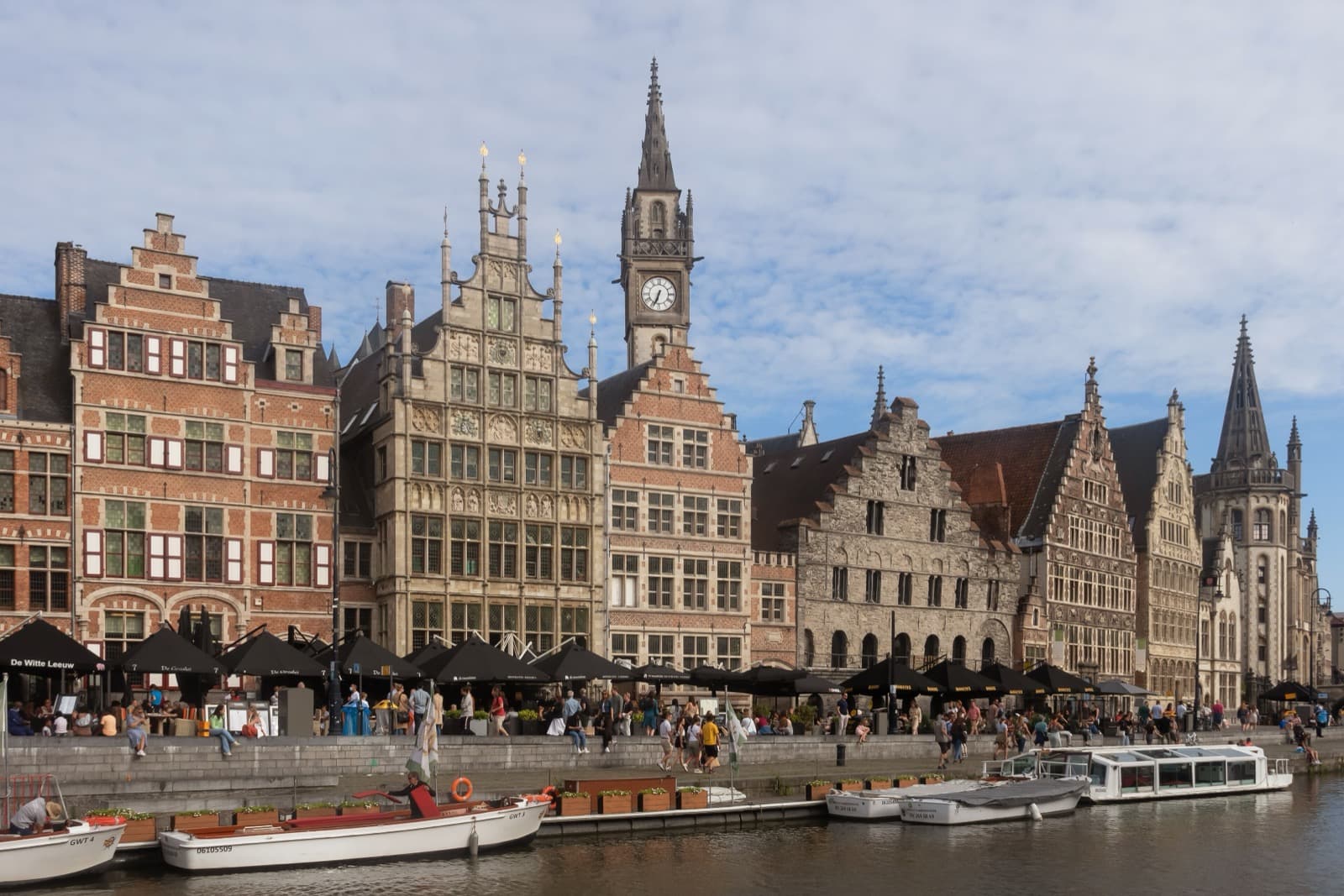
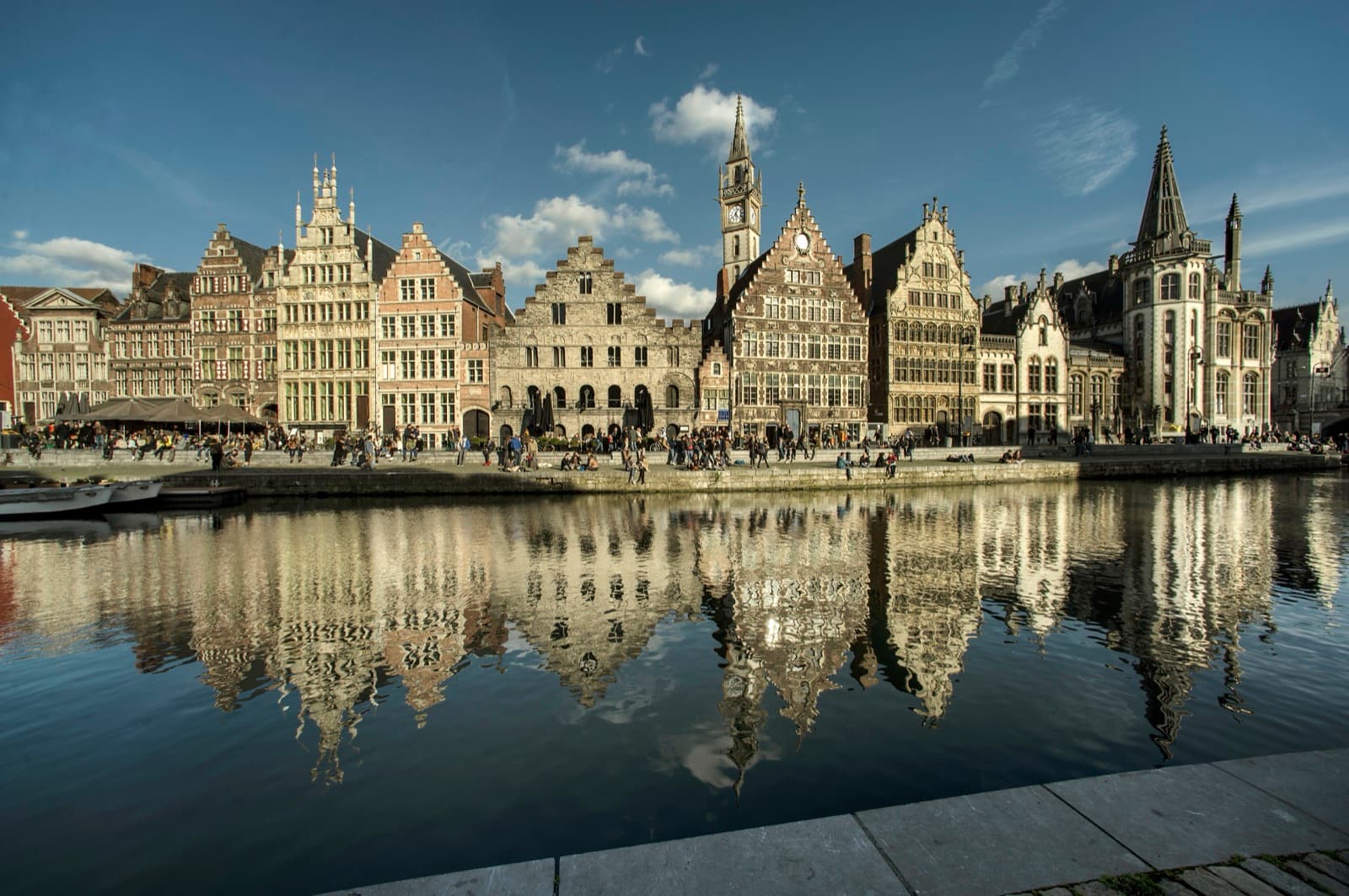
The route runs a compact one and a half kilometres on foot through the old core, roughly an hour at your own pace, and it ends at the Graslei and Korenlei, two quays facing each other across the Leie. Ships have docked here since the eleventh century, and this was the grain harbour of the whole County of Flanders. The Spijker, or Corn Store, dating from about twelve hundred, is the oldest building on the quay and one of the oldest in the city. Grain ships unloaded, measurers weighed the cargo, boatmen moved it, and the wealth flowed uphill to raise three towers into the sky. Saint Bavo's is the climax of that sentence. The quay is where it began.
If you want the full context before you walk, browse the other Ghent walking tours or start planning from the Ghent city page. Then meet the three towers on Saint Michael's Bridge, and let the cathedral be the last word you read on the skyline.
Sources
- Saint Bavo's Cathedral, Ghent, Wikipedia: cathedral founding date of fifteen fifty-nine, dimensions, and construction history.
- The disappearance of the Just Judges panel, Visit Gent (official city tourism): the nineteen thirty-four theft and the unrecovered panel.
- Belfry of Ghent, Wikipedia and Visit Gent: the ninety-one metre civic tower, its thirteen thirteen to thirteen eighty construction, and UNESCO World Heritage status.
- Graslei, Wikipedia and Visit Gent: the medieval inner harbour, guild houses, and the Spijker of about twelve hundred.
- Noah Charney, Stealing the Mystic Lamb: the tally of thirteen crimes and seven thefts against the Ghent Altarpiece.
Ready to experience it?
Historic Center: The Harbour City of Three Towers
60 min · 1.4 km · easy
More from Ghent
Explore more at your own pace.
Ghent Travel Guide: How Many Days, Getting Around, and When to Go
One Day in Ghent: A Walkable Morning-to-Evening Itinerary
Ghent: The Medieval Giant of Three Towers and Endless Revolts
The Gravensteen: Why the Counts of Flanders Planted a Castle Inside a Rebel City
Graslei and Korenlei: The Harbour That Paid for Ghent