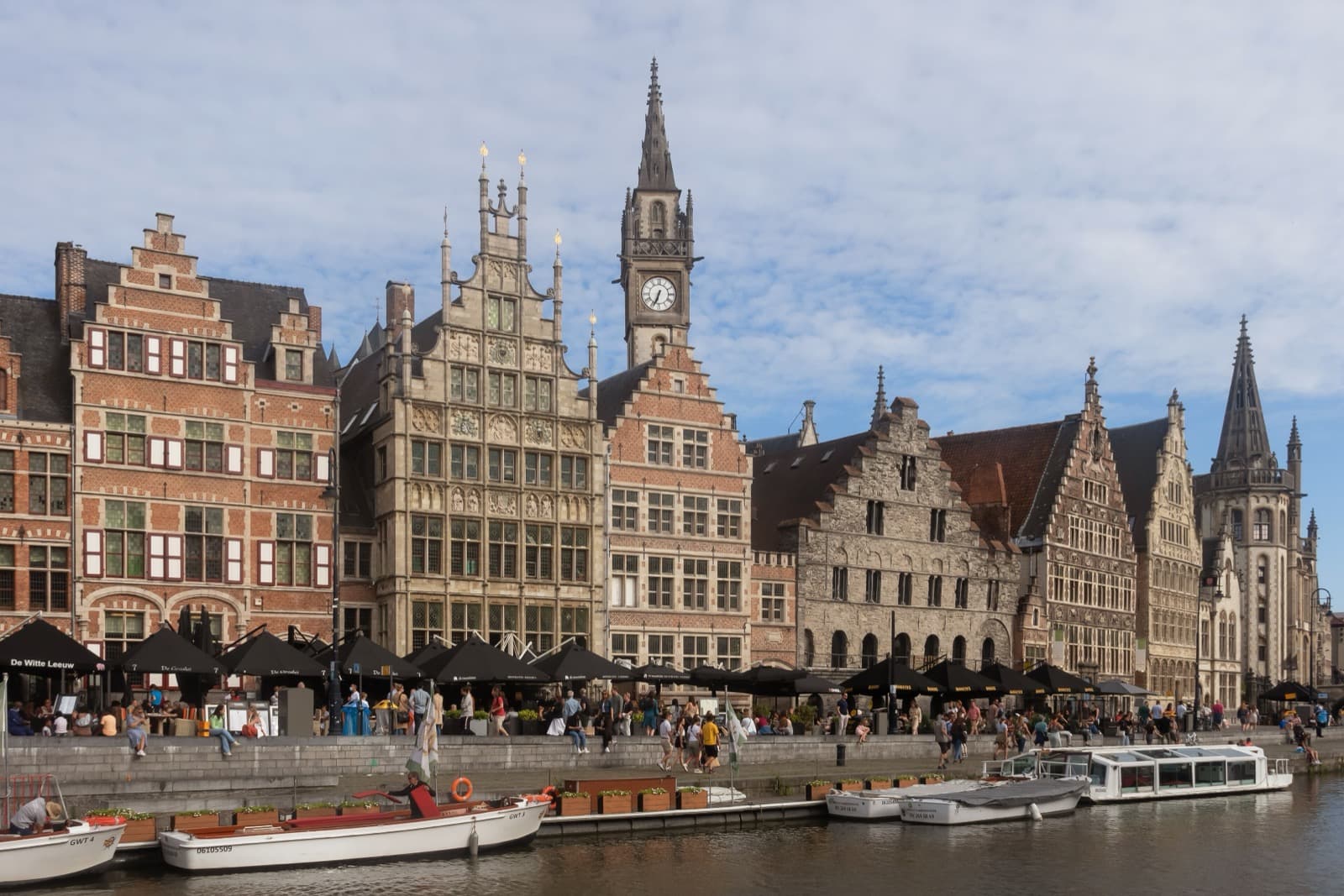
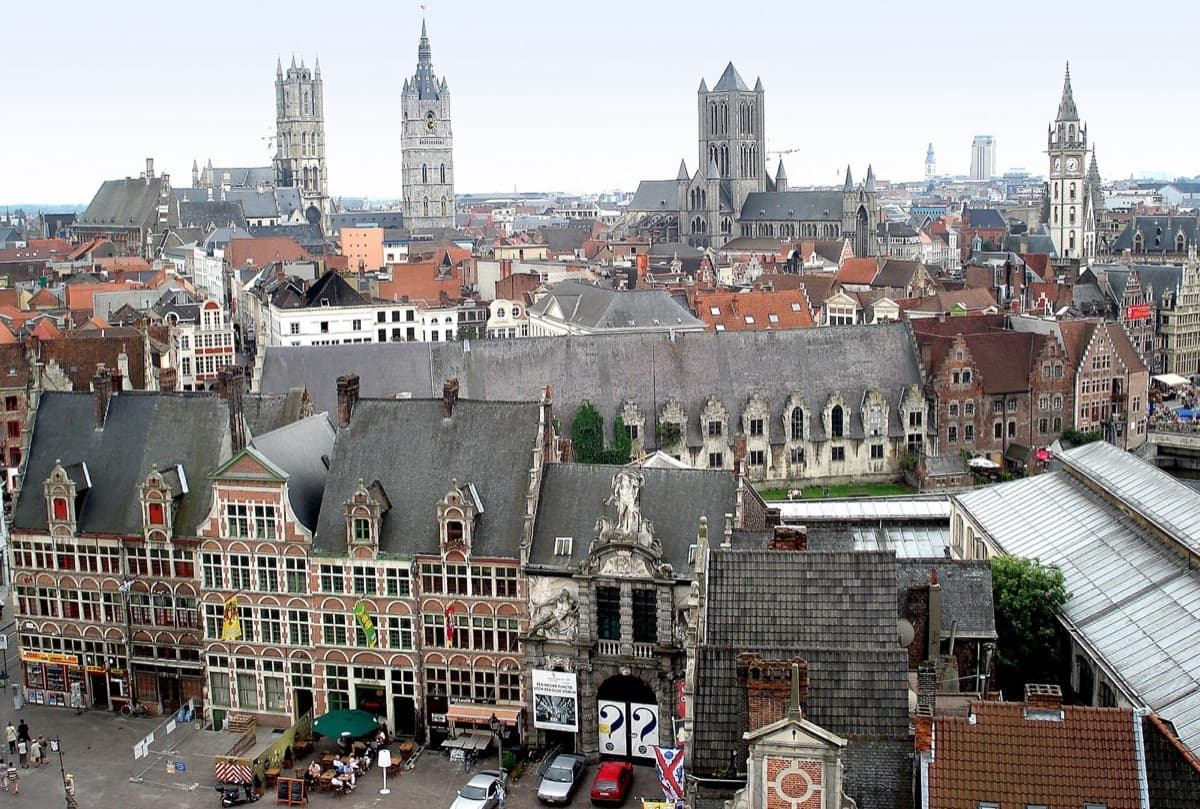
Read Ghent's medieval skyline like a sentence, three towers in a single row, then drop to the old inner harbour whose wool-and-cloth wealth raised them all.
Start · Saint Michael's Bridge: The Three Towers in a Row
DirectionsStops
- 1
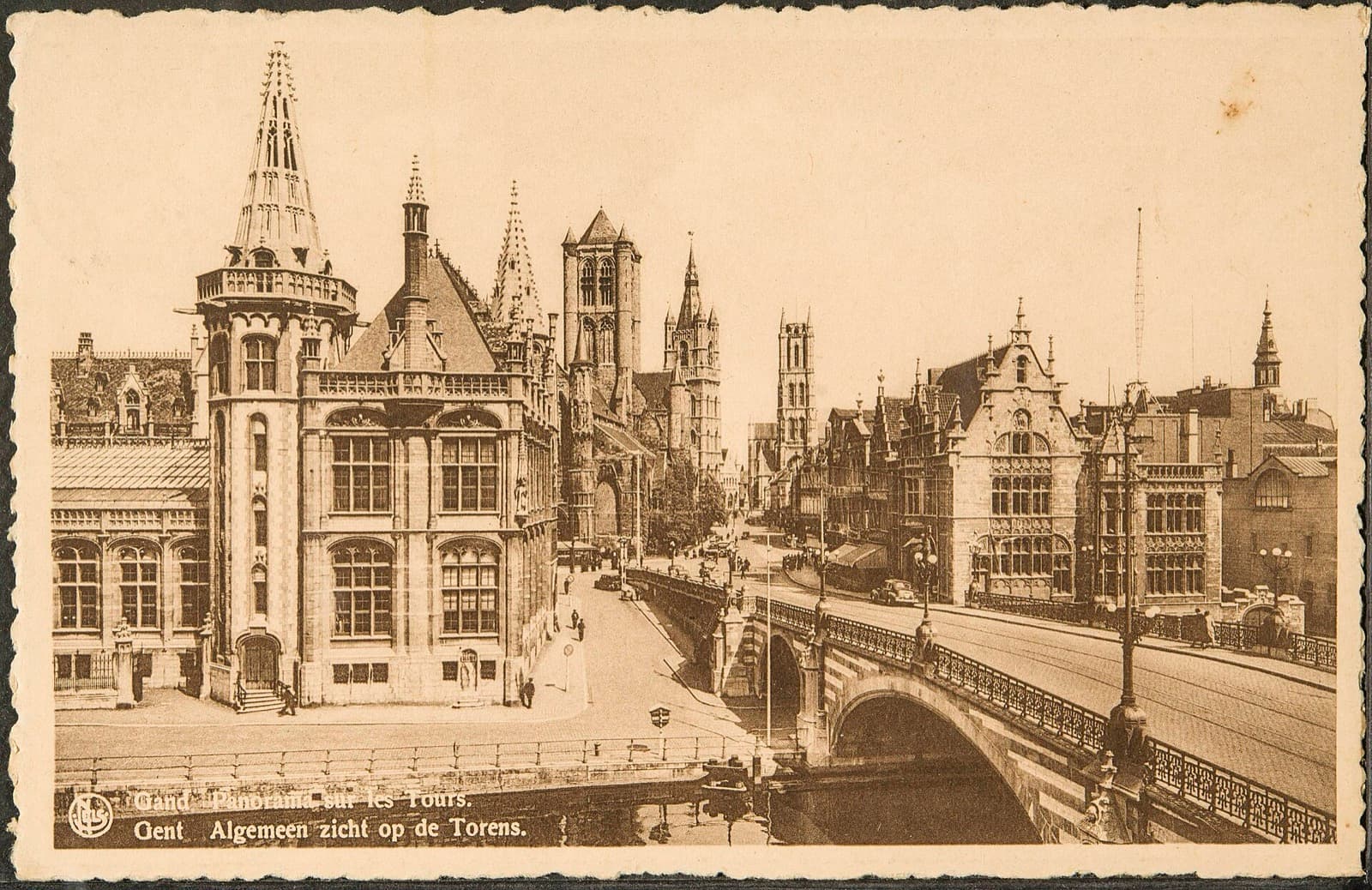
Saint Michael's Bridge: The Three Towers in a Row
The one stone bridge over the Leie from which all three of Ghent's medieval towers line up in a single view.
- 2
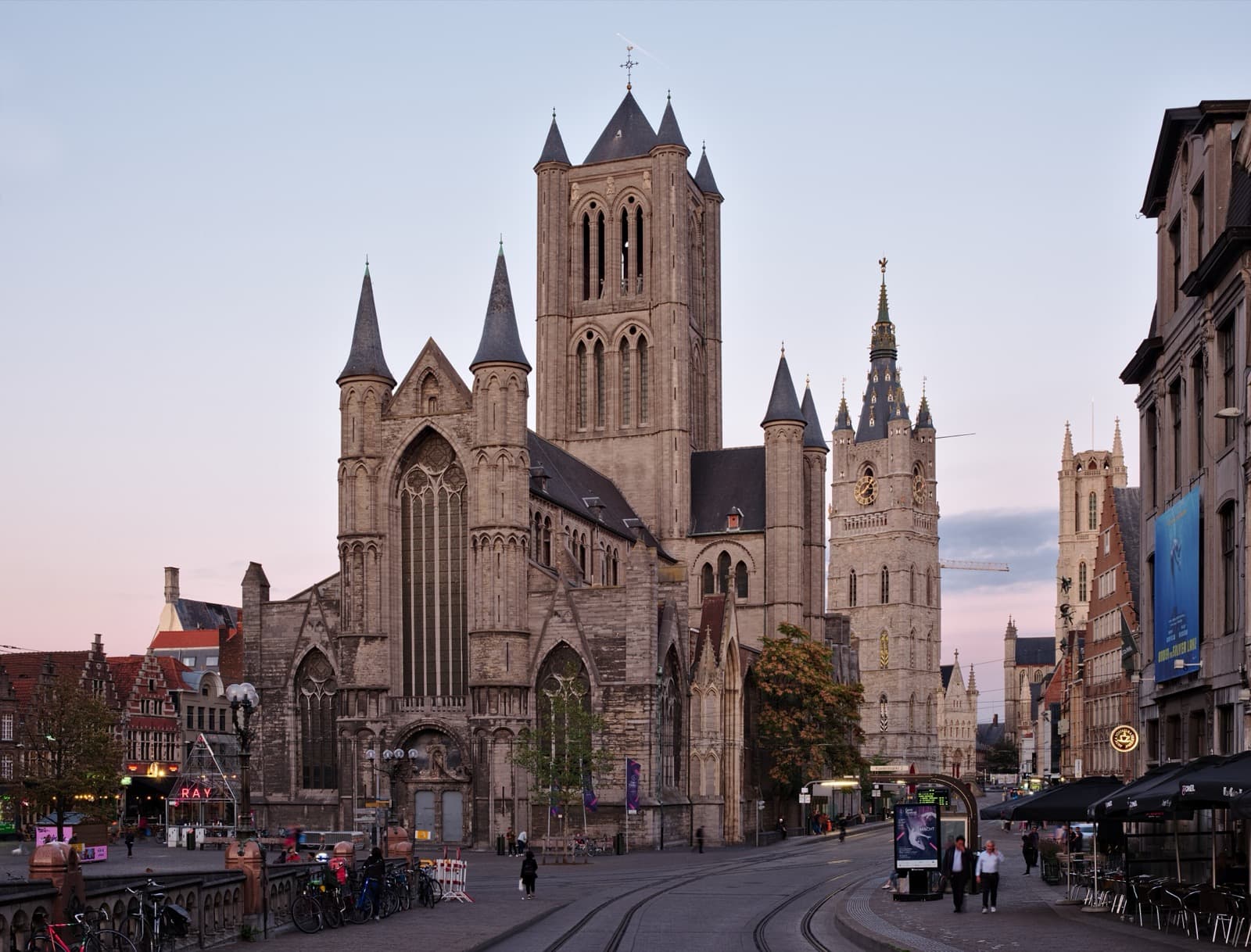
Sint-Niklaaskerk: The Merchants' Tower at the Corn Market
The grey Scheldt Gothic church of Ghent's merchants and guilds, its lantern tower rising over the crossing at the old corn market.
- 3
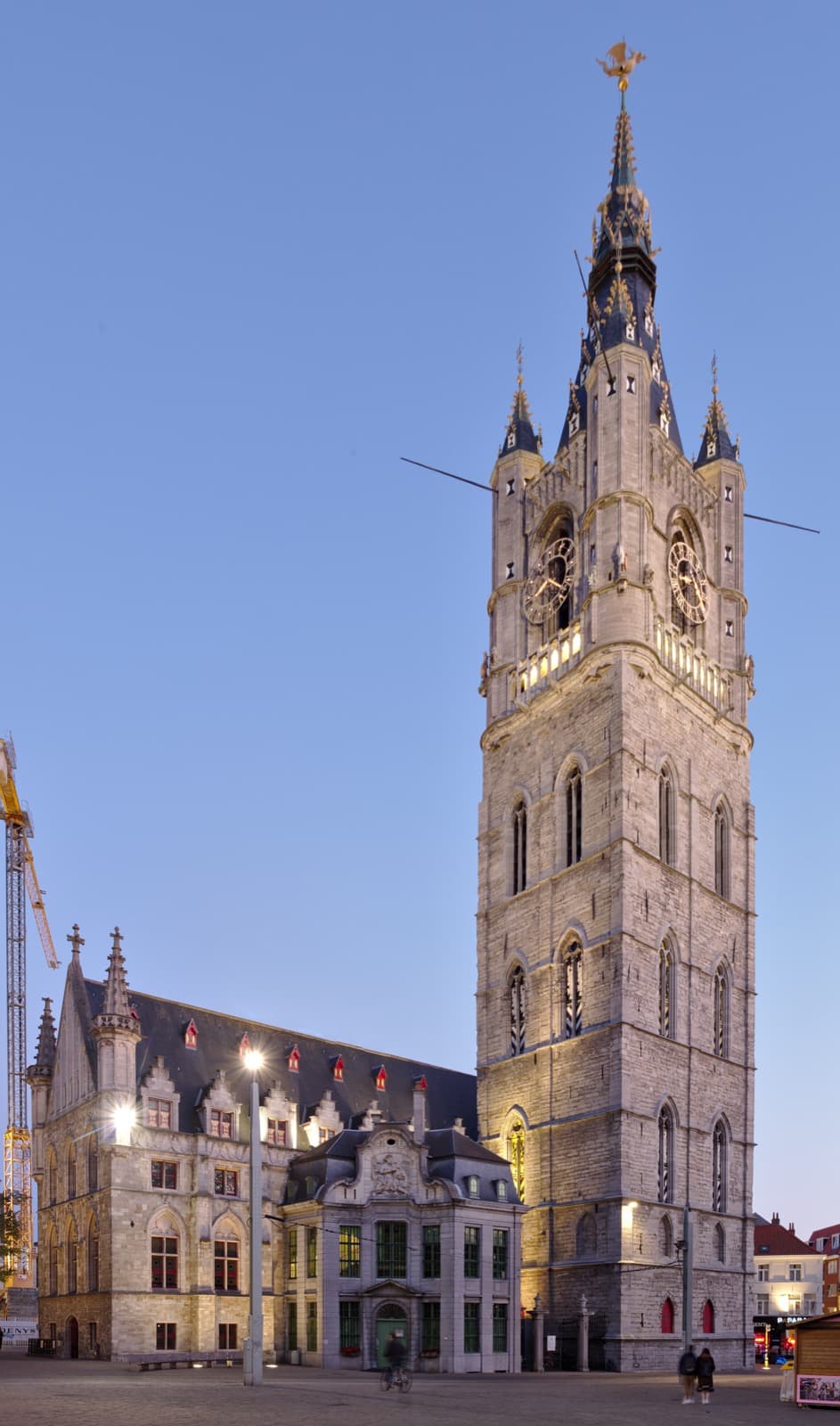
The Belfry: The Tower of the Guilds and the City's Charters
Ghent's civic tower, tallest of the three, which guarded the city's charters and rang the bells that ordered town life.
- 4
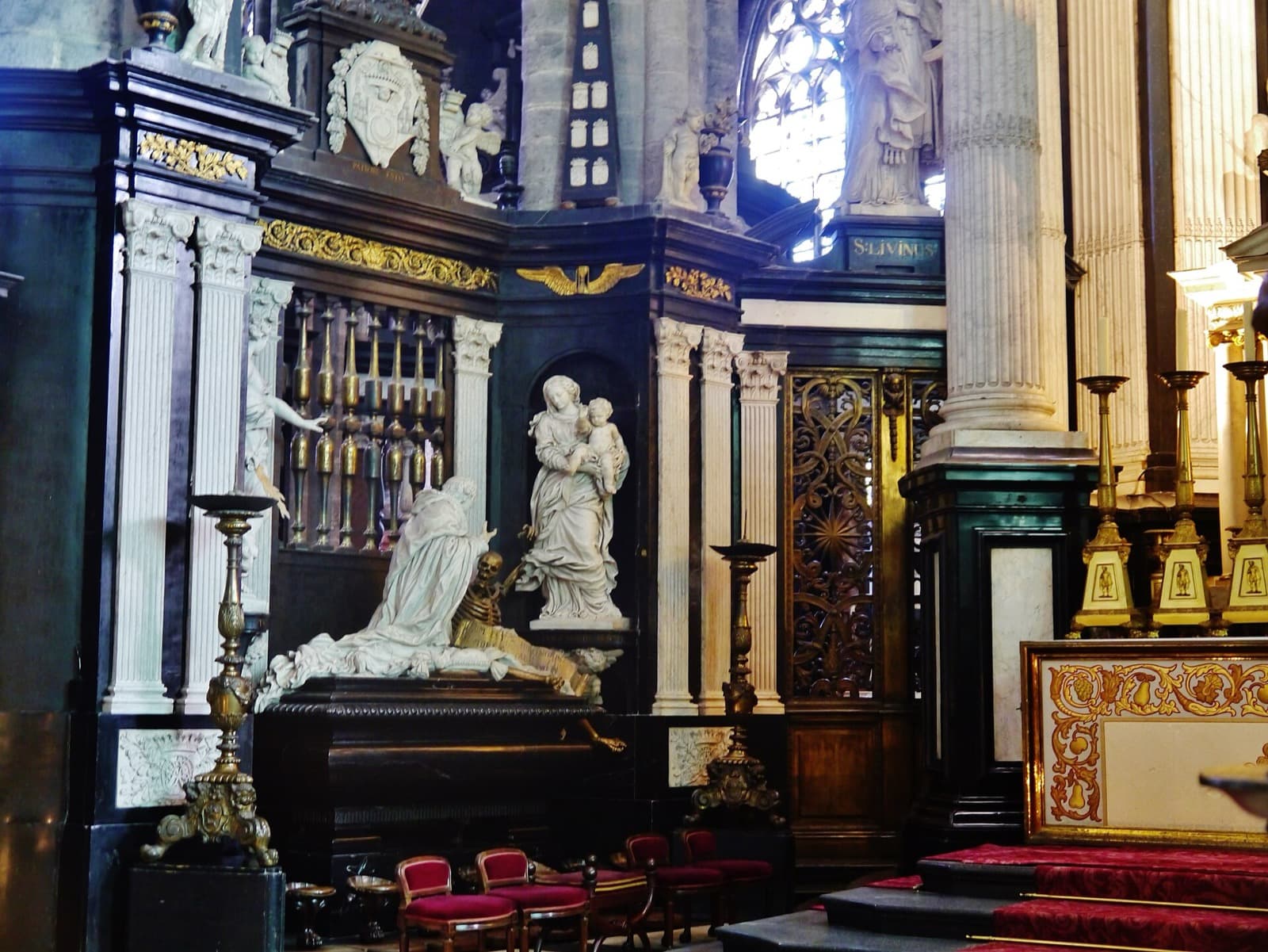
Sint-Baafskathedraal: The Cathedral That Guards the Mystic Lamb
The mother church of Ghent, third of the three towers, holding the Ghent Altarpiece, the Adoration of the Mystic Lamb.
- 5
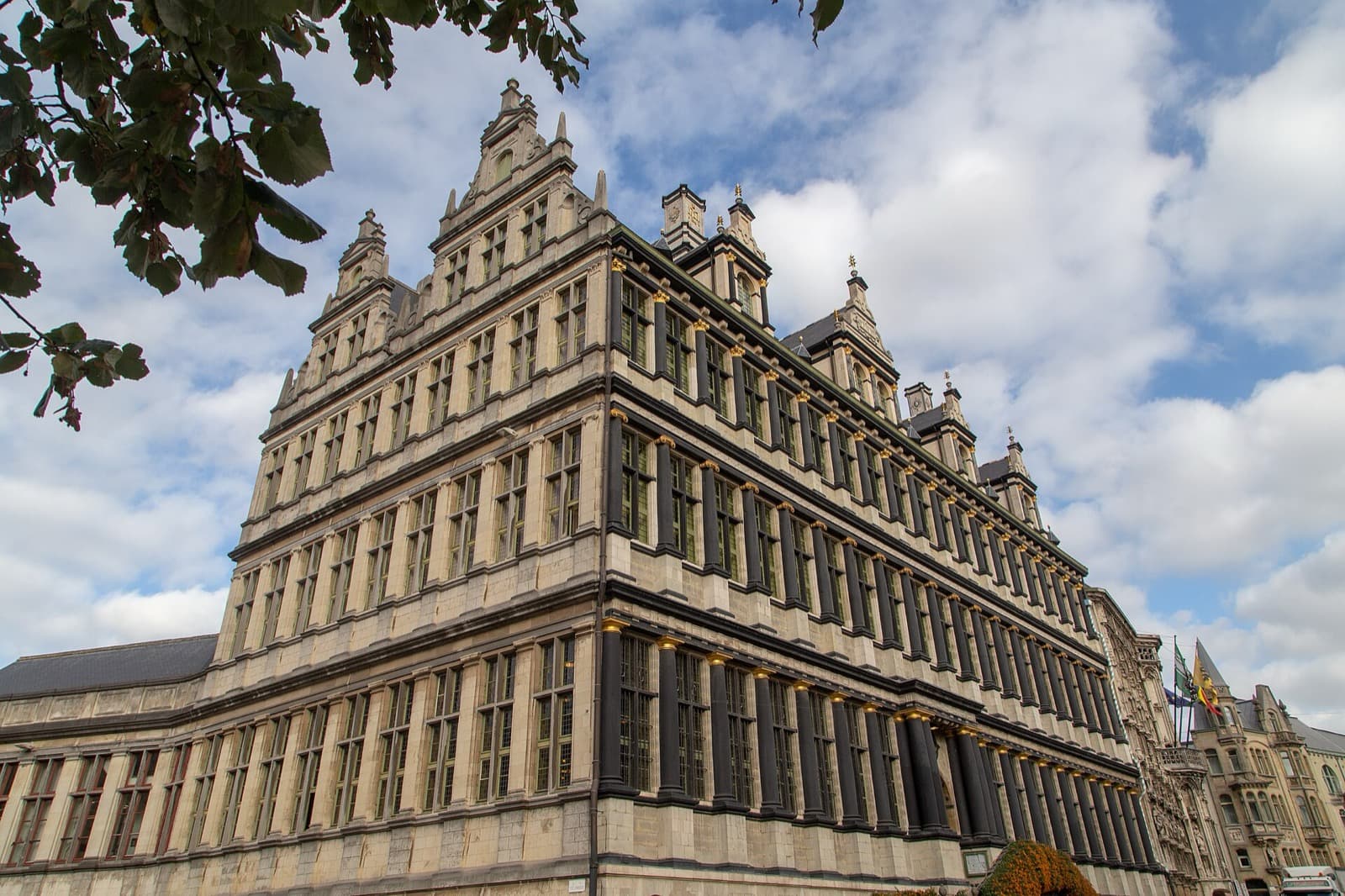
The Town Hall: A Rich City's Interrupted Century
Ghent's Town Hall, whose two clashing fronts, one dazzling and unfinished, one plain and complete, record a boom cut short.
- 6
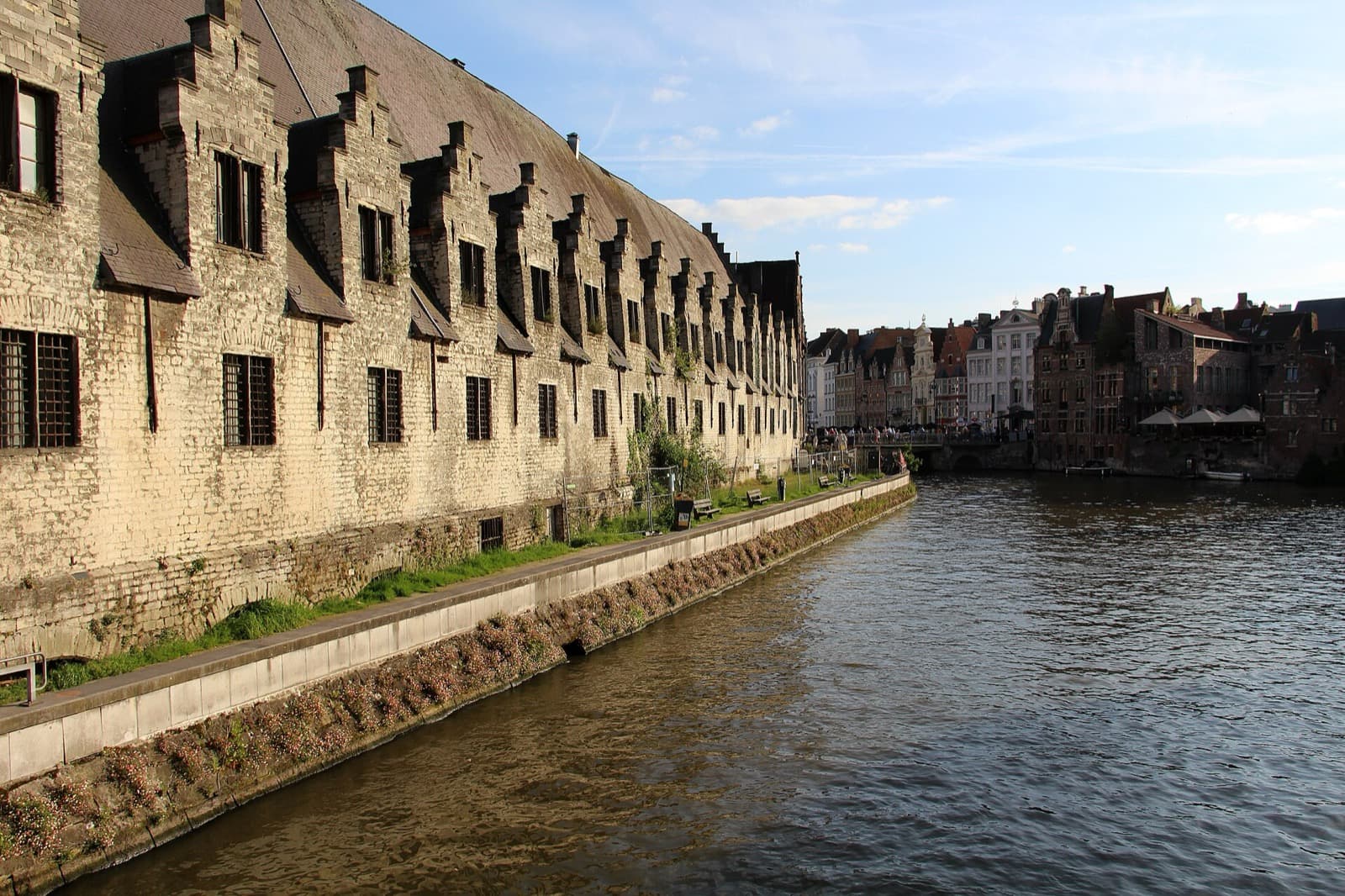
Groot Vleeshuis: The Butchers' Guild Hall on the Leie
The long medieval meat hall of the butchers' guild on the bank of the Leie, the guild city seen at street level.
- 7
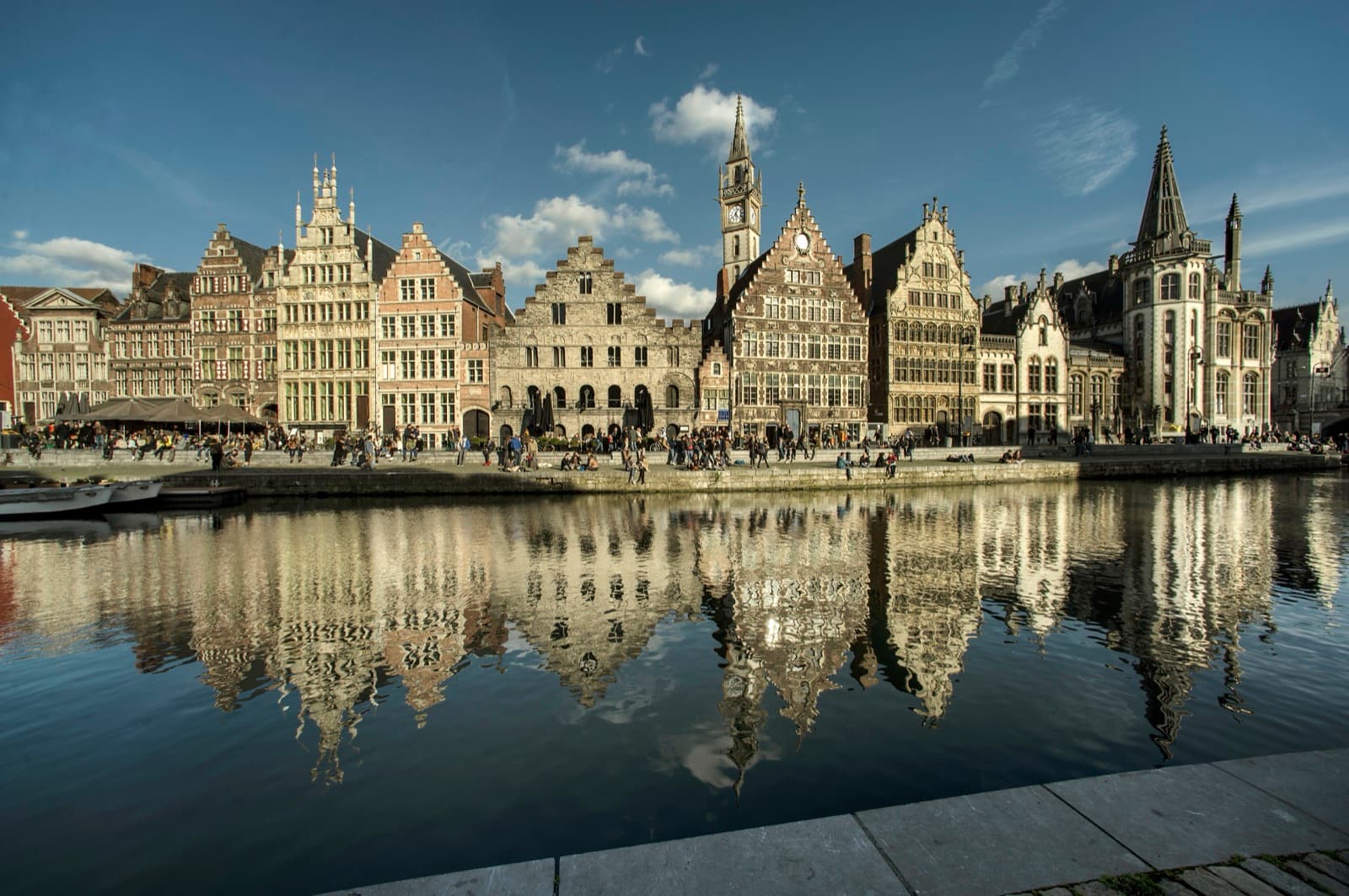
Graslei and Korenlei: The Golden-Age Harbour of the Cloth City
The two medieval quays facing each other across the Leie at the old inner harbour, lined with guild houses spanning Romanesque to Baroque.
Details
Best Time to Visit
Early morning or the hour before dusk gives the best light on the three towers from Saint Michael's Bridge and the thinnest crowds on the Graslei quays. Late spring through early autumn offers the mildest weather for a walk along the water, though Ghent is atmospheric under cloud in any season. If you plan to view the Ghent Altarpiece inside Saint Bavo's, aim for a weekday and book a timed slot, since it is ticketed and popular.
Pro Tips
- •See the whole tour in one glance first: from mid-span on Saint Michael's Bridge, pick out all three towers in a row before you walk to any of them.
- •The Ghent Altarpiece is viewed on a timed, ticketed basis inside Saint Bavo's Cathedral, so reserve a slot in advance rather than turning up and hoping.
- •The Belfry interior and its climb are paid, while the exterior and the view of it are free; go up when the queue is thin to enjoy it at your own pace.
- •Head inside Saint Nicholas's Church to see how the central lantern tower drops daylight into the crossing, an effect you cannot read from the street.
- •Save the Graslei and Korenlei for last and time your arrival for golden light, when the guild houses glow along the water.
- •Because the whole route runs on foot through the compact old core, you can pause, double back, or linger at any tower without losing the thread of the walk.
Safety & Precautions
- •The old town is paved with cobbles and the quays along the Leie often have no railing at the water's edge, so wear steady shoes and take care near the canal, especially with children or in the wet.
- •The Belfry climb involves stairs and can queue at busy times, so go when it is quiet, pace yourself, and skip it if stairs are difficult for you.
- •Saint Bavo's Cathedral and Saint Nicholas's Church are working places of worship, so dress modestly and keep your voice low, and note that the Altarpiece viewing is separately ticketed and timed.
- •Bikes and trams share the streets of the old town throughout Flanders, so watch for cyclists at crossings, and carry a waterproof for the changeable northern weather, since towers and museums charge entry in euros.
Gallery
Related Reading
Go deeper on what you'll see, hear, and walk through.
Overview
Best Self-Guided Walking Tours in Ghent (2026)
3 min
Overview
Ghent Travel Guide: How Many Days, Getting Around, and When to Go
6 min
Overview
One Day in Ghent: A Walkable Morning-to-Evening Itinerary
8 min
Thematic
Best History Walking Tours in Ghent (2026)
2 min
Thematic
Ghent: The Medieval Giant of Three Towers and Endless Revolts
7 min
Companion
Sint-Baafskathedraal and the Mystic Lamb: The Last Word in Ghent's Skyline
6 min
Deep dive
Graslei and Korenlei: The Harbour That Paid for Ghent
6 min
Read
What to Eat in Ghent: Waterzooi, Cuberdons, and How to Order Like a Local
6 min
Read the walk
The full story of Historic Center: The Harbour City of Three Towers, in words. Prefer to listen? Play it narrated, from home or on location.
Introduction
Ghent, in the Dutch-speaking region of Flanders in Belgium, grew where two rivers meet, the Leie and the Scheldt, and in the Middle Ages it became one of the largest and richest cities in northern Europe, a giant of the wool and cloth trade holding perhaps fifty to sixty thousand people around thirteen hundred. Its Golden Age was the fourteenth and fifteenth centuries, and this walk reads that grandeur through a single, remarkable line in the sky. From one stone bridge, three great towers stand in a row, and each one belongs to a different kind of power: the merchants' church, the civic belfry of the guilds, and the cathedral of God that guards the Ghent Altarpiece. This is a self-guided route of seven stops, covering roughly one and a half kilometres over about sixty minutes, and it moves entirely on foot through the old core, so you set the pace and the pauses. Three towers in a row are not an accident of skyline. They are a diagram of who held power in a medieval Flemish city, trade and town and Church balanced against one another, and beneath them a river port whose wealth built all three. You will read that diagram tower by tower, then descend to the quays where grain ships once unloaded. There is no group at your back and no clock but your own, so you can linger under the Belfry or sit by the water as long as you please. When you arrive at Saint Michael's Bridge, begin with stop one.
1. Saint Michael's Bridge: The Three Towers in a Row
You are standing on Sint-Michielsbrug, Saint Michael's Bridge, a stone arch bridge over the River Leie built between nineteen oh five and nineteen oh nine to a design by the architect Louis Cloquet. It replaced an earlier flat swing bridge, and it was raised in part to frame a view that Ghent had always owned but never gathered in one place. This is the single vantage point from which all three of the city's great medieval towers line up in one row: Saint Nicholas's Church nearest you, the Belfry rising tallest behind it, and the cathedral of Saint Bavo's beyond. Below the bridge, the old guild houses of the Graslei and Korenlei crowd the water. Overhead, the bridge lantern carries a bronze figure of Saint Michael driving down a dragon. Take a moment with the three towers, because they are the whole tour in one glance. Ghent grew where the Leie and the Scheldt meet, and in the Middle Ages it swelled into one of the largest and richest cities in northern Europe, home to perhaps fifty to sixty thousand people around thirteen hundred. It is often said to have been second only to Paris north of the Alps, a claim repeated so widely it has almost become fact, though historians treat it with care. What is certain is the wealth, built on wool spun and woven into cloth and sold across a continent. That wealth raised these towers, and it raised them for three different masters. Read the skyline now as a single sentence, and the rest of the walk will teach you how to parse it. Catch the towers at dawn or by lamplight, whenever the light and the quiet suit you, with no one hurrying you along.
2. Sint-Niklaaskerk: The Merchants' Tower at the Corn Market
This is Sint-Niklaaskerk, Saint Nicholas's Church, the first of your three towers and the first word in the sentence you are learning to read. It was begun in the early thirteenth century to replace an older Romanesque church, and it was built through that century in the local style called Scheldt Gothic, named for the river, using the blue-grey stone quarried near Tournai. Notice how the tower sits. It does not rise over the entrance, as you might expect, but over the crossing, the point where the nave and the transept meet. That single great lantern tower lets daylight pour down into the church below, and slender turrets rise at the corners. The church stands on the Korenmarkt, the corn market, in the heart of Ghent's old trading quarter. Korenmarkt means the wheat market, and that placement is the whole point of this stop. This was the church of the merchants and the guilds. Those who grew rich on grain and cloth worshipped here, and through the fourteenth and fifteenth centuries the guilds added their own side chapels along its flanks, each one a claim staked in stone by a trade. It is God's house, but it is God's house paid for by commerce, a merchants' tower at a merchants' market. Keep that in mind as the walk continues, because the next tower answers this one. Where Saint Nicholas belongs to trade, the Belfry ahead belongs to the town itself, and the cathedral beyond belongs to the Church. Head inside and out on your own clock, since there is no scheduled slot and no group waiting on you.
3. The Belfry: The Tower of the Guilds and the City's Charters
This is Het Belfort, the Belfry of Ghent, the middle and the tallest of your three towers at ninety-one metres, and the second word in the sentence. If Saint Nicholas is trade and Saint Bavo's ahead is the Church, the Belfry is the town itself, town power made vertical and set deliberately between the two churches. It was begun in thirteen thirteen and completed in thirteen eighty. On its summit turns a gilded copper dragon, placed there in thirteen seventy-seven, which became the emblem of the city. This tower was the beating heart of Ghent's self-government. In a strongroom high inside it, the city guarded its charters and privileges, the written proof of its liberties, and from it the bells rang out the orders of civic life, the hours of work and market and alarm. At its foot stands the Lakenhalle, the Cloth Hall, begun in fourteen twenty-five, where the woollen cloth that made Ghent rich was officially inspected and measured before it could be sold. The original design was only completed in nineteen oh three. The Belfry is part of a World Heritage Site, and UNESCO records it among the Belfries of Belgium and France, inscribed in nineteen ninety-nine, a group of towers that stand for the hard-won self-rule of the medieval Flemish towns. That is what this tower says. The guilds and the townsmen held real power here, power they measured out in cloth and locked away as charters and rang from these bells. Climb it when the queue is thin and you can take the stairs at your own pace.
4. Sint-Baafskathedraal: The Cathedral That Guards the Mystic Lamb
This is Sint-Baafskathedraal, Saint Bavo's Cathedral, the third tower and the last word in the sentence, eighty-nine metres of Gothic stone rising as the mother church of Ghent. Building began around twelve seventy-four, over the site of an older chapel of Saint John the Baptist…
Full narration for this stop unlocks with the tour.
5. The Town Hall: A Rich City's Interrupted Century
This is Het Stadhuis, the Town Hall of Ghent, and it may be the most honest building on the walk, because it wears its own interrupted history on its face. Stadhuis means town hall, and this is a four-sided complex whose two adjoining fronts belong to two very different…
Full narration for this stop unlocks with the tour.
6. Groot Vleeshuis: The Butchers' Guild Hall on the Leie
This is Het Groot Vleeshuis, the Great Butchers' Hall, and after three towers and a town hall it brings the guild city down to street level. Vleeshuis means the meat house, the butchers' hall, and groot means great. It is a long guild hall standing right on the bank of the River…
Full narration for this stop unlocks with the tour.
7. Graslei and Korenlei: The Golden-Age Harbour of the Cloth City
You have reached the Graslei and Korenlei, two quays facing each other across the River Leie, and this is where the whole walk finally settles, because this is the harbour that paid for everything above. The stretch was known as the Tussen Bruggen, between the bridges, and here…
Full narration for this stop unlocks with the tour.