Historic Center: The Harbour City of Three Towers
60 min · 1.4 km · easy
Ghent rewards a slow, mostly on-foot visit, and this guide covers how many days to plan, how to get around, when to come, what things cost, and how safe the city is. The short version: give the city two full days, walk the medieval core, use a De Lijn tram only for the ride in from the station, aim for late spring or early autumn, and budget for a handful of paid interiors on top of otherwise free streets and squares. Ghent's old center is compact and largely car-free, so the walking itself is the main event.
How many days do you need in Ghent?
Two full days is the sweet spot. One day lets you see the medieval spine (the three towers, the castle, the old harbour quays) but leaves no room to slow down. Two days lets you climb an interior or two, sit by the water, and cross the river into the quieter Patershol lanes without rushing. Three days suits travelers who want day trips to Bruges or Brussels (both under an hour by train) or who are pacing a longer Flanders trip.
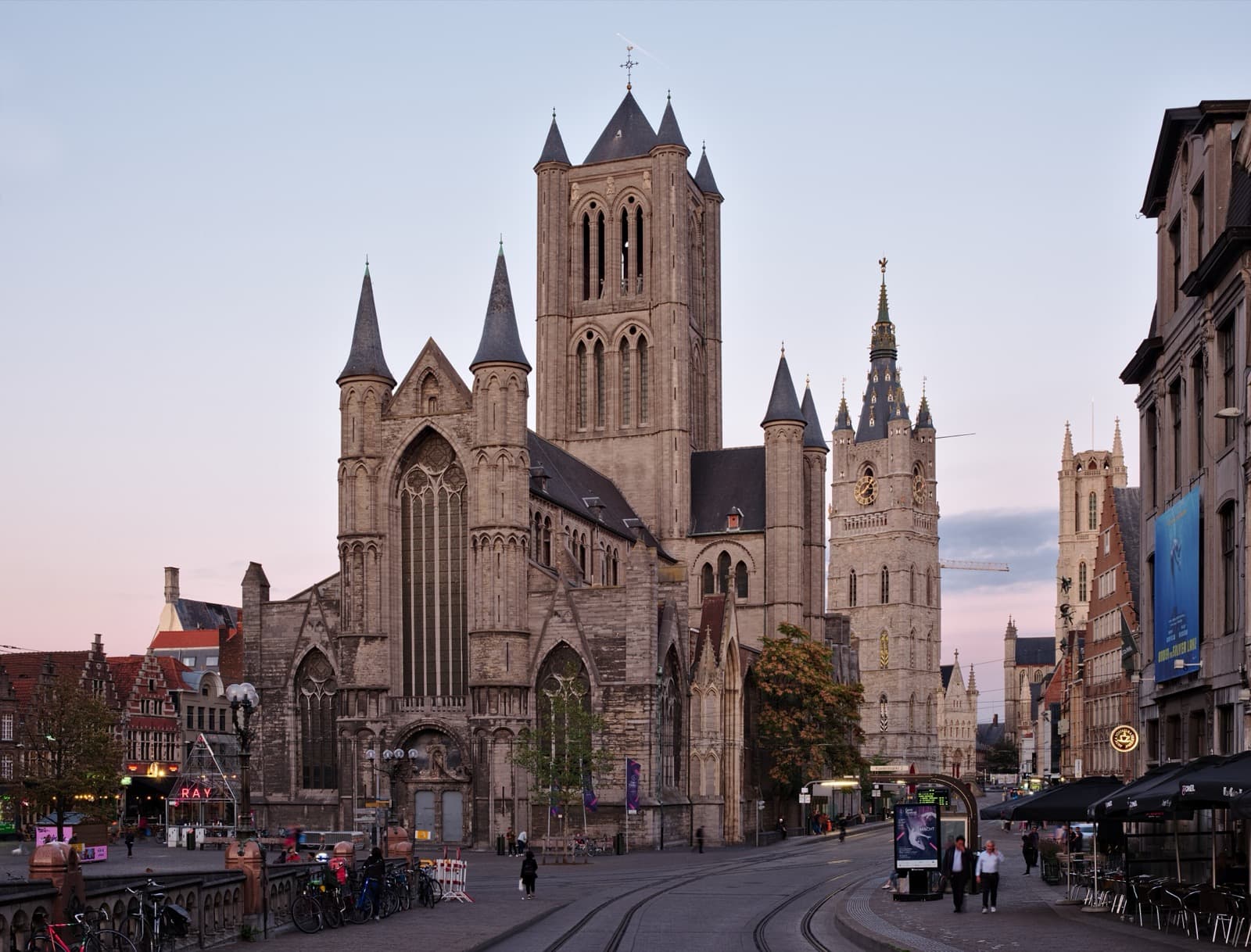
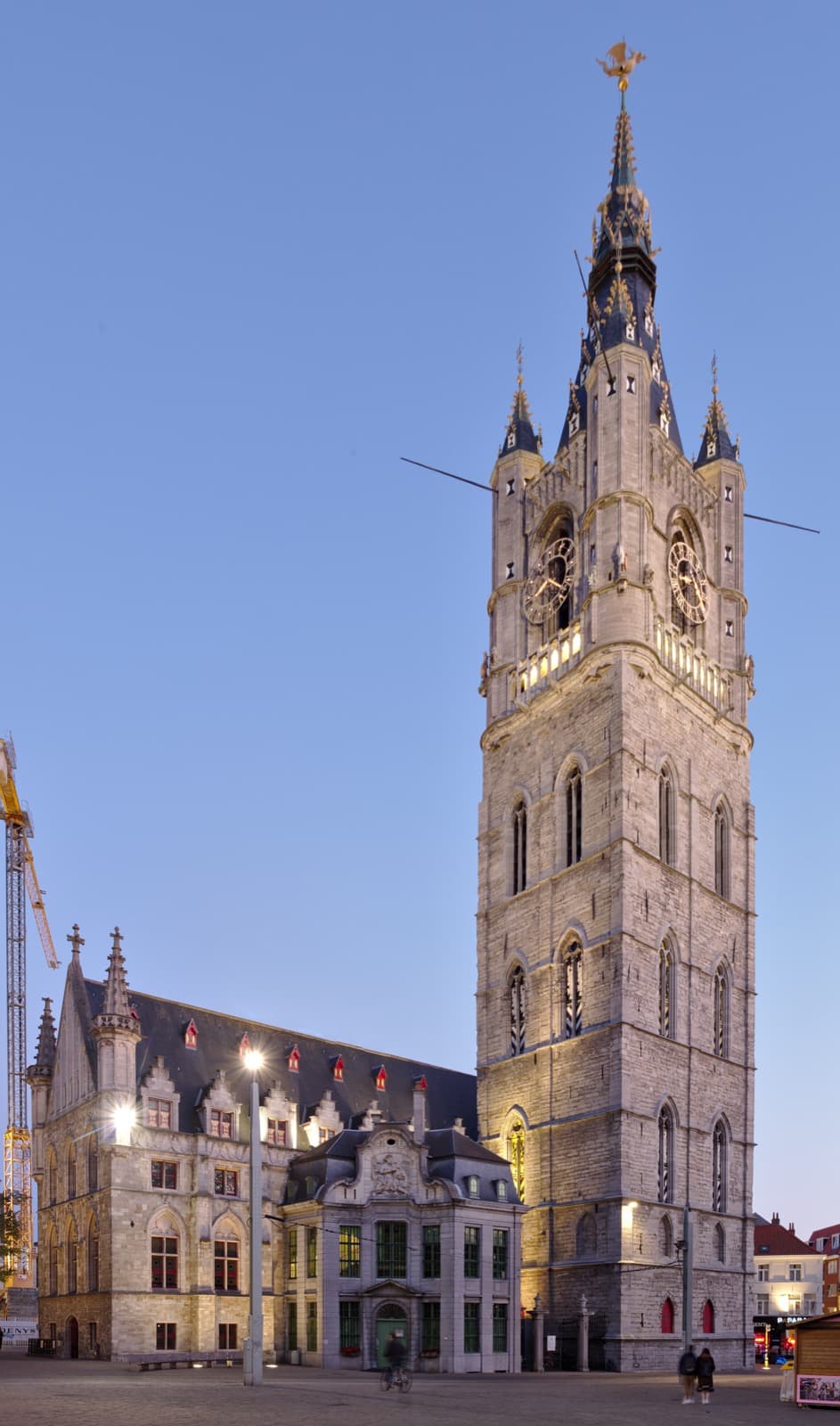
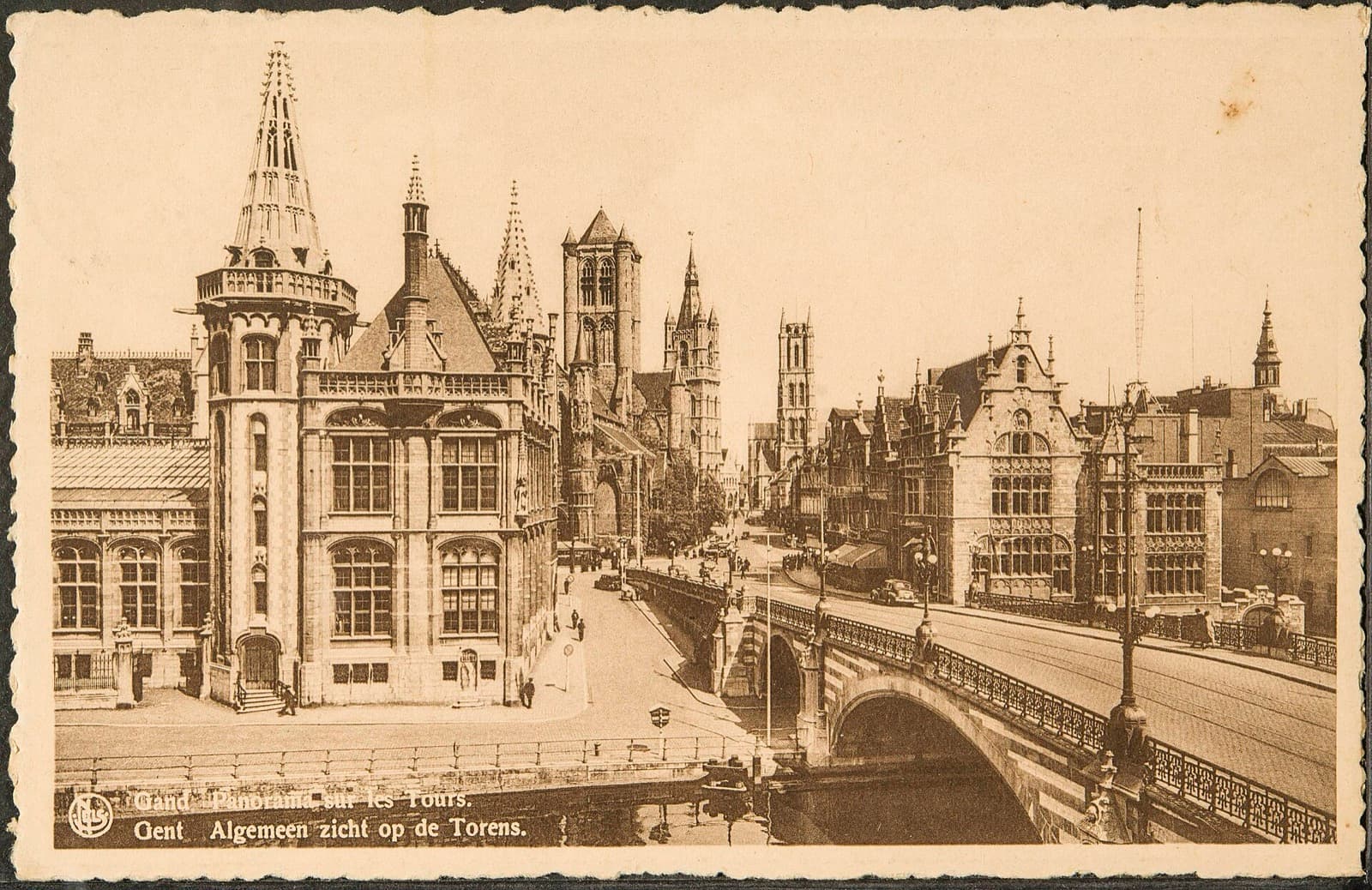
If you only have a few hours on a Bruges-and-Ghent combined day trip, focus everything on the stretch between Saint Michael's Bridge and Saint Bavo's Cathedral. That single line of the city holds the Belfry, Saint Nicholas' Church, the Cloth Hall, and the cathedral within a few hundred meters of each other.
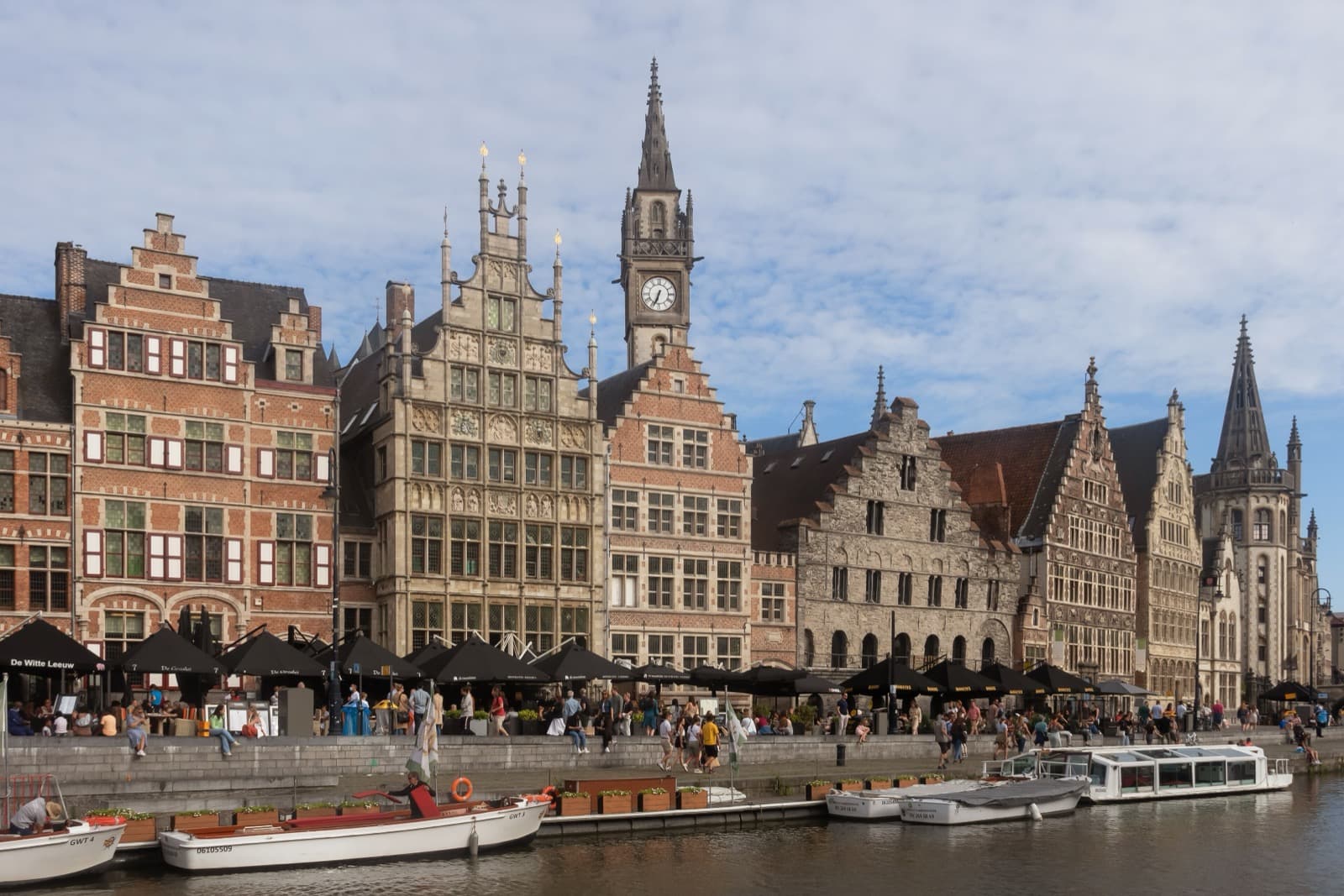
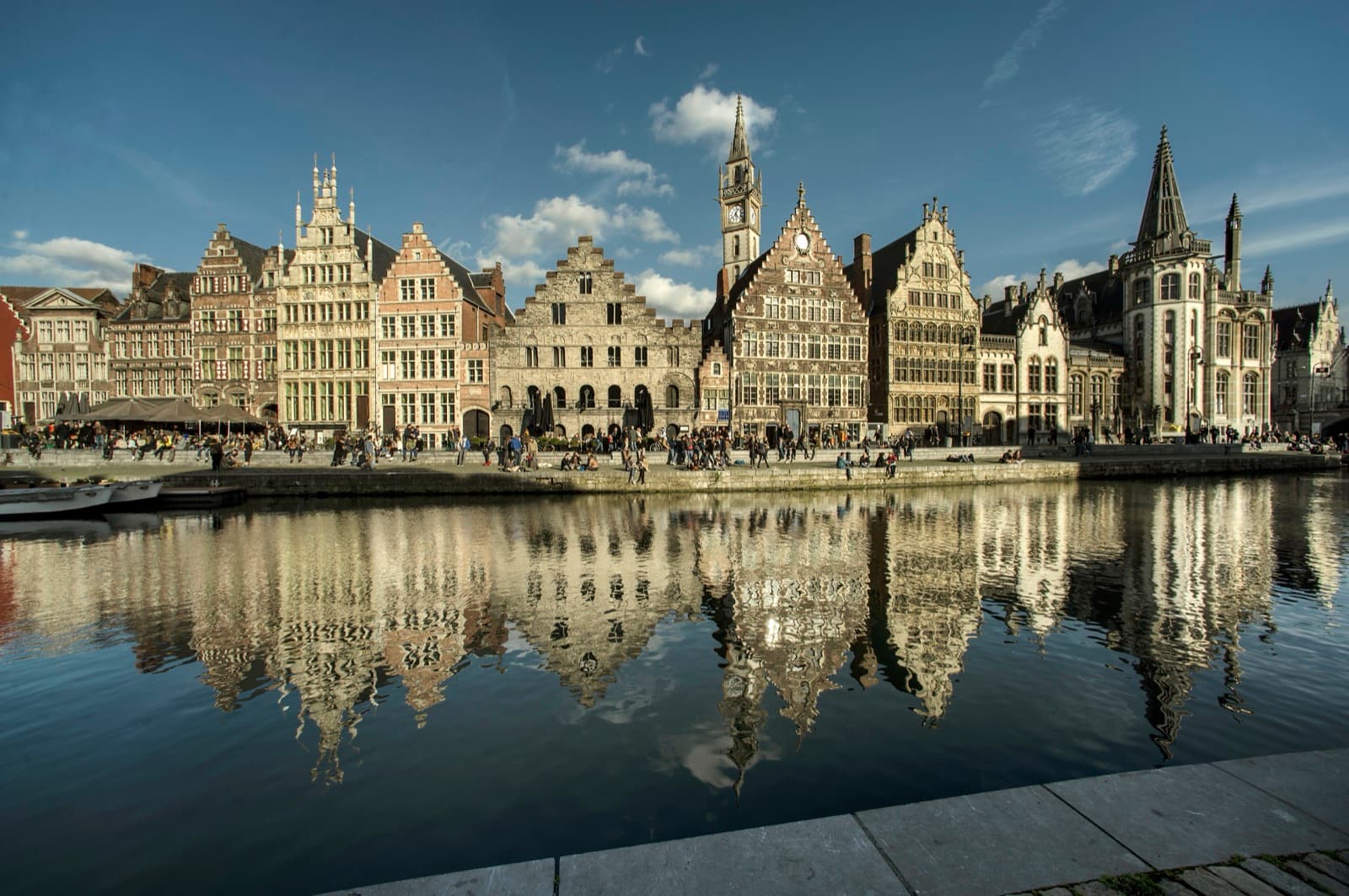
Two walking tours map directly onto a two-day plan. The Historic Center: Three Towers route runs about 1.4 kilometers from Saint Michael's Bridge past the Belfry and Saint Bavo's Cathedral down to the Graslei and Korenlei quays, roughly an hour of walking. The Gravensteen: Rebel City route adds about 2.4 kilometers across the river, through the Patershol quarter, the Friday Market, and out to the medieval water gates. Do one each day and you have covered the essential city on your own schedule.
How do you get around Ghent?
Hear a stop from this walk
Graslei and Korenlei: The Golden-Age Harbour of the Cloth City
Walk. The historic center is small enough to cross on foot in about twenty minutes, and most of it sits inside a car-free zone, so you rarely deal with traffic. Both self-guided routes above are entirely on foot with no transfers.
You will likely use public transport exactly once: the ride from Gent-Sint-Pieters, the main railway station, into the center. De Lijn, the Flemish transport operator, runs the trams and buses. Tram lines 1, 2, 3, and 4 pass right through the city center, and lines from Sint-Pieters drop you near the Korenmarkt at the edge of the old core. A single ride bought contactless with a debit card, phone, or smartwatch at the white terminals costs 3 euros, and any additional tram or bus within the following hour is free. You can also buy tickets at a Lijnwinkel shop at the station or at Korenmarkt.
If you are staying multiple days, ask your accommodation whether a CityCard Gent fits your plans. It bundles unlimited De Lijn trams and buses with entry or discounts at several attractions. Cycling is the local default for going farther afield, and rental bikes are easy to find, but for a two-day sightseeing visit your feet will do almost everything.
When is the best time to visit Ghent?
Late spring (May and June) and early autumn (September) are the most comfortable windows: mild weather, long daylight, and gardens and quays at their best without the deepest summer crowds. Belgian weather is changeable year-round, so pack a light rain layer whatever the month.
Mid-to-late July brings the Gentse Feesten (Ghent Festival), when the center turns into roughly ten days of free concerts, street performance, and theatre. It is a genuine spectacle and a strong reason to come, but expect denser crowds, higher room rates, and some rerouted foot traffic. If you want quiet medieval streets, avoid the festival dates; if you want a party, aim straight for them. Winter is cold and darker but atmospheric, and the interiors (the castle, the cathedral) become the natural focus.
What does a visit to Ghent cost?
The streets are free, the interiors are not. Walking the quays, squares, bridges, and market halls costs nothing, and the two self-guided routes are built to work as a paid audio layer over otherwise free public space. Budget for the specific interiors you actually want.
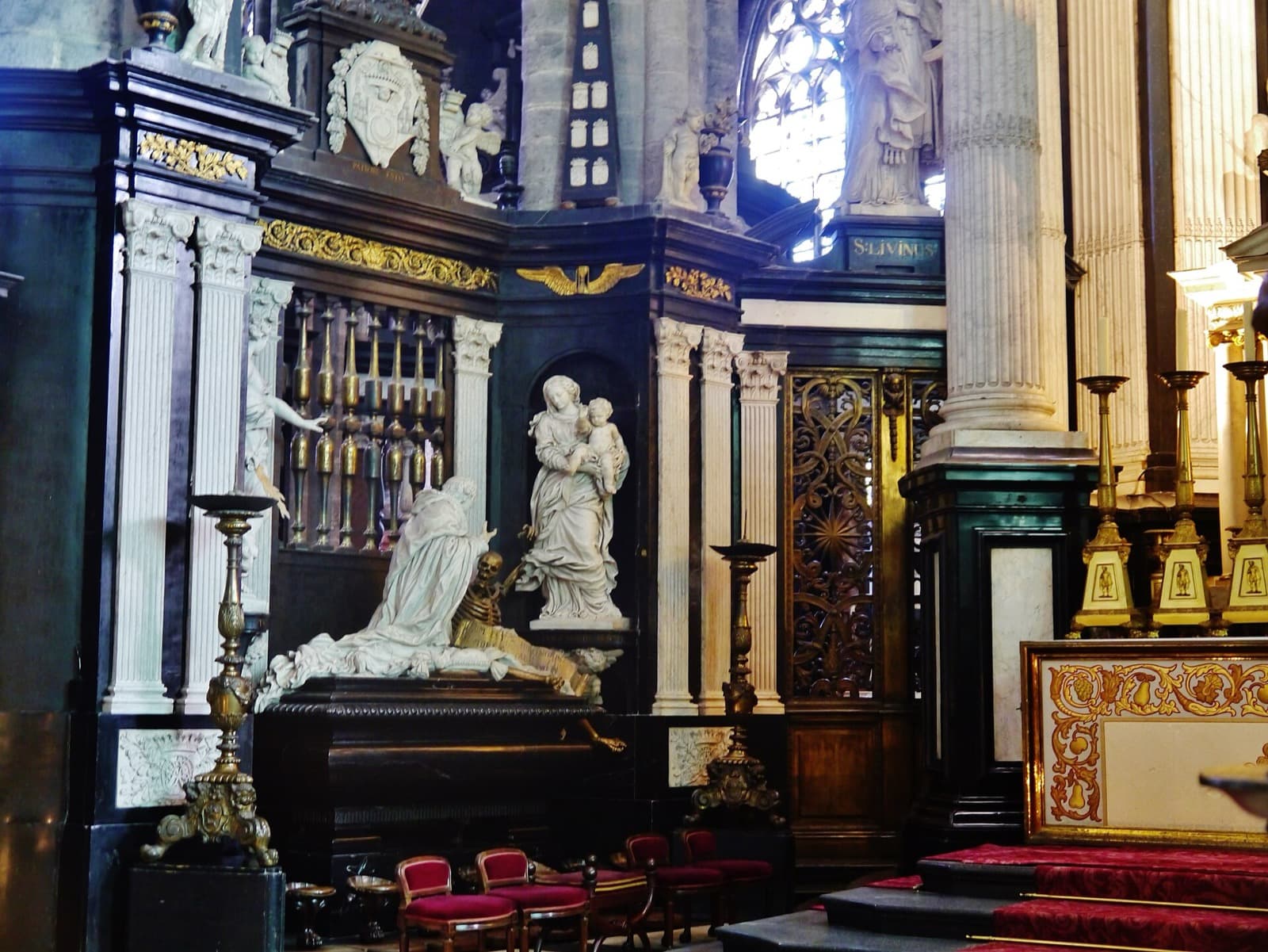
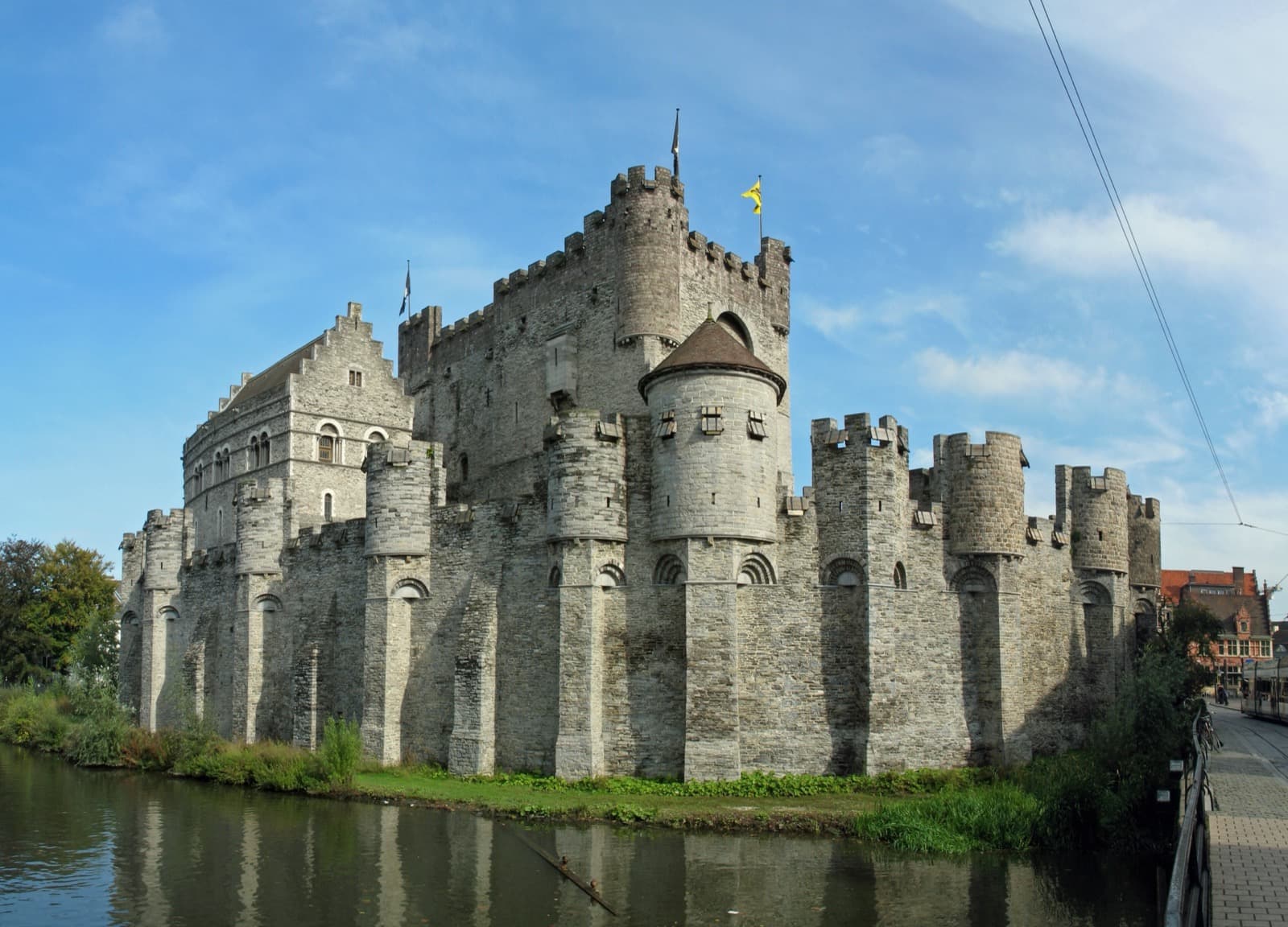
The Gravensteen, the medieval Castle of the Counts, charges around 13 to 15 euros for an adult ticket that includes an audio guide, and it is open daily from 10 a.m. to 6 p.m. (with last admission in the late afternoon). Viewing the Ghent Altarpiece, Jan van Eyck's polyptych of the Adoration of the Mystic Lamb inside Saint Bavo's Cathedral, runs around 12.50 euros for adults and includes an augmented-reality experience; booking online in advance is required. The cathedral nave itself is free to enter, as are Saint Nicholas' Church and the Belfry's exterior (climbing the Belfry tower carries a separate small ticket).
For overall daily spending, a mid-range traveler can plan on roughly 80 to 120 euros per person per day excluding accommodation, covering meals, the occasional tram ride, and a couple of paid attractions. Eat where the students eat and drink a local beer standing at the bar and you will land at the low end.
Is Ghent safe?
Yes, Ghent is a safe city for visitors, with the usual big-city caveat about petty theft. Violent crime is uncommon in the areas travelers use, and the tourist core feels relaxed day and night thanks to a large student population that keeps the streets active late.
The real risk is pickpocketing in crowds, and the common flashpoints are Gent-Sint-Pieters railway station, packed trams, festival areas, and busy tourist streets. Keep your phone and wallet in a front or cross-body bag, stay aware when you are distracted by a photo or a ticket machine, and do not leave anything visible in a rental car. Late at night the tourist center stays comfortable, but as anywhere, stick to lit, populated streets if you wander far from the core. Buy attraction tickets through official sites or the cathedral's own booking page rather than from touts.
Where to start your walk
Begin at Saint Michael's Bridge. It gives you the postcard line of the three towers in one view and sits at the head of both self-guided routes. From there the Historic Center: Three Towers walk pulls you east along the medieval spine, and the Gravensteen route sends you north across the water into the older, tighter streets. For the full picture of every stop and how the routes connect, see the Ghent walking tours hub, then open the Ghent city page to pick your day.
Sources
- Public Transport in Ghent, Visit Gent (official tourism site)
- Ghent Belfry, Visit Gent (official tourism site)
- The Ghent Altarpiece tickets, Saint Bavo's Cathedral (official)
- Gravensteen, Ghent: ticket prices and hours (2026 visitor guide)
- Is Ghent Safe for Travel Right Now? 2026 Safety Rating, TravelSafe Abroad
Frequently asked questions
- How many days do you need in Ghent?
- Two full days is ideal. One day covers the medieval core between Saint Michael's Bridge and Saint Bavo's Cathedral, and a second day adds the Gravensteen castle, the Patershol quarter, and the old water gates across the river. Three days suits travelers adding day trips to Bruges or Brussels, both under an hour away by train.
- How do you get around Ghent?
- On foot, mostly. The historic center is compact, largely car-free, and crossable in about twenty minutes. You will likely use a De Lijn tram only for the ride from Gent-Sint-Pieters station into the center. Tram lines 1, 2, 3, and 4 run through the city center, and a single contactless ride costs 3 euros with free transfers for one hour.
- What is the best time to visit Ghent?
- Late spring (May and June) and early September offer mild weather, long daylight, and thinner crowds than peak summer. Mid-to-late July brings the Gentse Feesten festival with about ten days of free concerts and street performance, which is lively but crowded and more expensive. Pack a light rain layer in any season.
- Is Ghent safe for tourists?
- Yes. Ghent is a safe city with low violent crime in the areas visitors use, and the tourist center stays active late thanks to a large student population. The main risk is pickpocketing in crowds, including Gent-Sint-Pieters station, packed trams, and festival areas, so keep valuables in a front or cross-body bag and stay aware at ticket machines.
- How much does it cost to visit Ghent?
- The streets, squares, quays, and bridges are free to walk. Budget for interiors: the Gravensteen castle runs around 13 to 15 euros including an audio guide, and viewing the Ghent Altarpiece in Saint Bavo's Cathedral is around 12.50 euros with an augmented-reality experience and requires advance booking. A mid-range traveler can plan on roughly 80 to 120 euros per day excluding accommodation.
- What are the essential stops on a Ghent walk?
- Start at Saint Michael's Bridge for the view of the three towers, then walk the medieval spine past the Belfry and Cloth Hall, Saint Nicholas' Church, and Saint Bavo's Cathedral, ending at the Graslei and Korenlei quays. Across the river, the Gravensteen castle, Sint-Veerleplein, the Patershol quarter, and the Vrijdagmarkt round out the essential city.
Ready to experience it?
Historic Center: The Harbour City of Three Towers
60 min · 1.4 km · easy
More from Ghent
Explore more at your own pace.
One Day in Ghent: A Walkable Morning-to-Evening Itinerary
Ghent: The Medieval Giant of Three Towers and Endless Revolts
Sint-Baafskathedraal and the Mystic Lamb: The Last Word in Ghent's Skyline
The Gravensteen: Why the Counts of Flanders Planted a Castle Inside a Rebel City
Graslei and Korenlei: The Harbour That Paid for Ghent