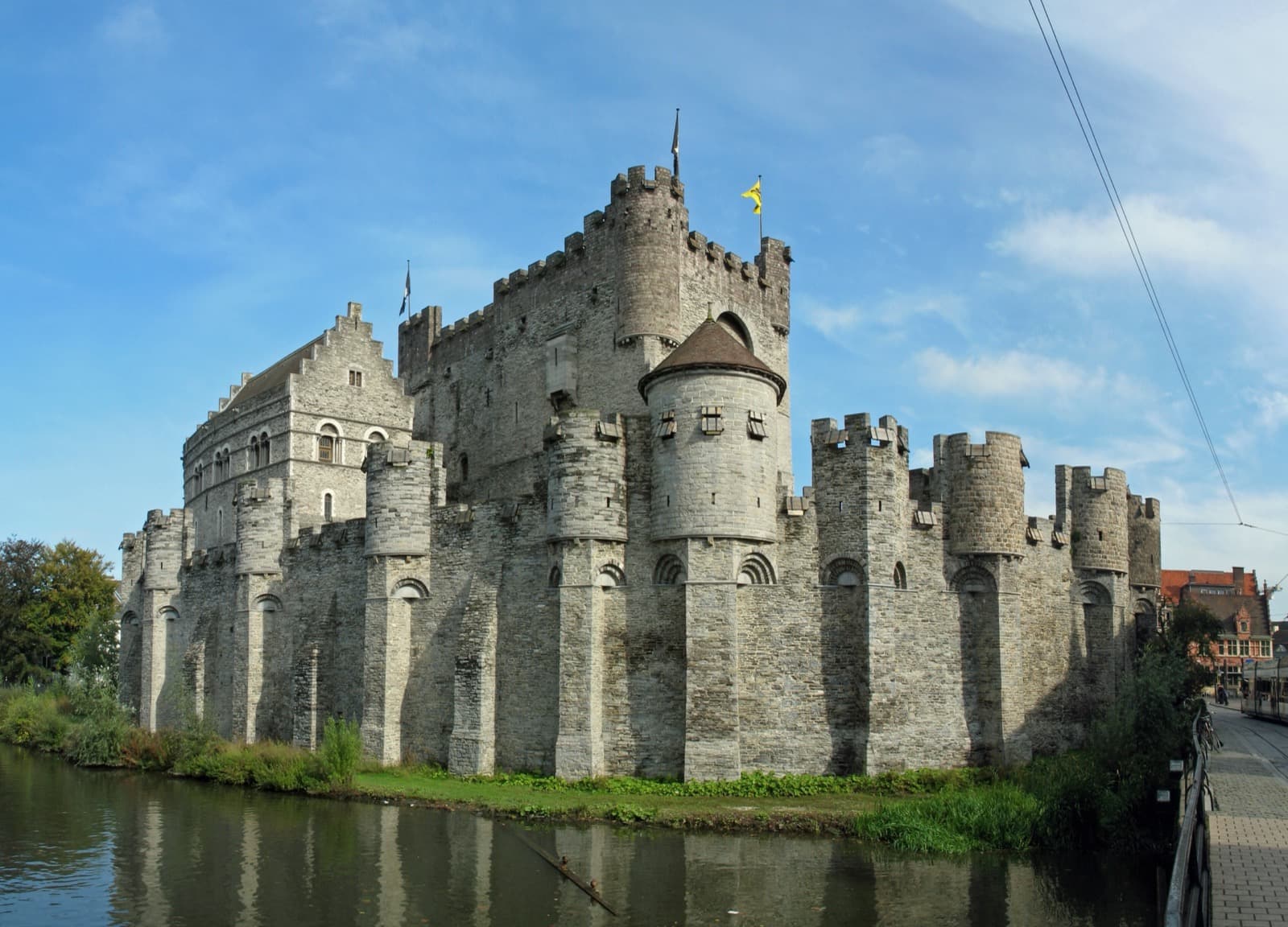
A walk through medieval Ghent's harder story: a stone castle planted to overawe its citizens, and a weaving city that rioted, allied itself with a foreign king, cast a monster cannon, and turned even its punishment into pride.
Start · The Castle of the Counts: The Fortress Planted Among the Rebels
DirectionsStops
- 1
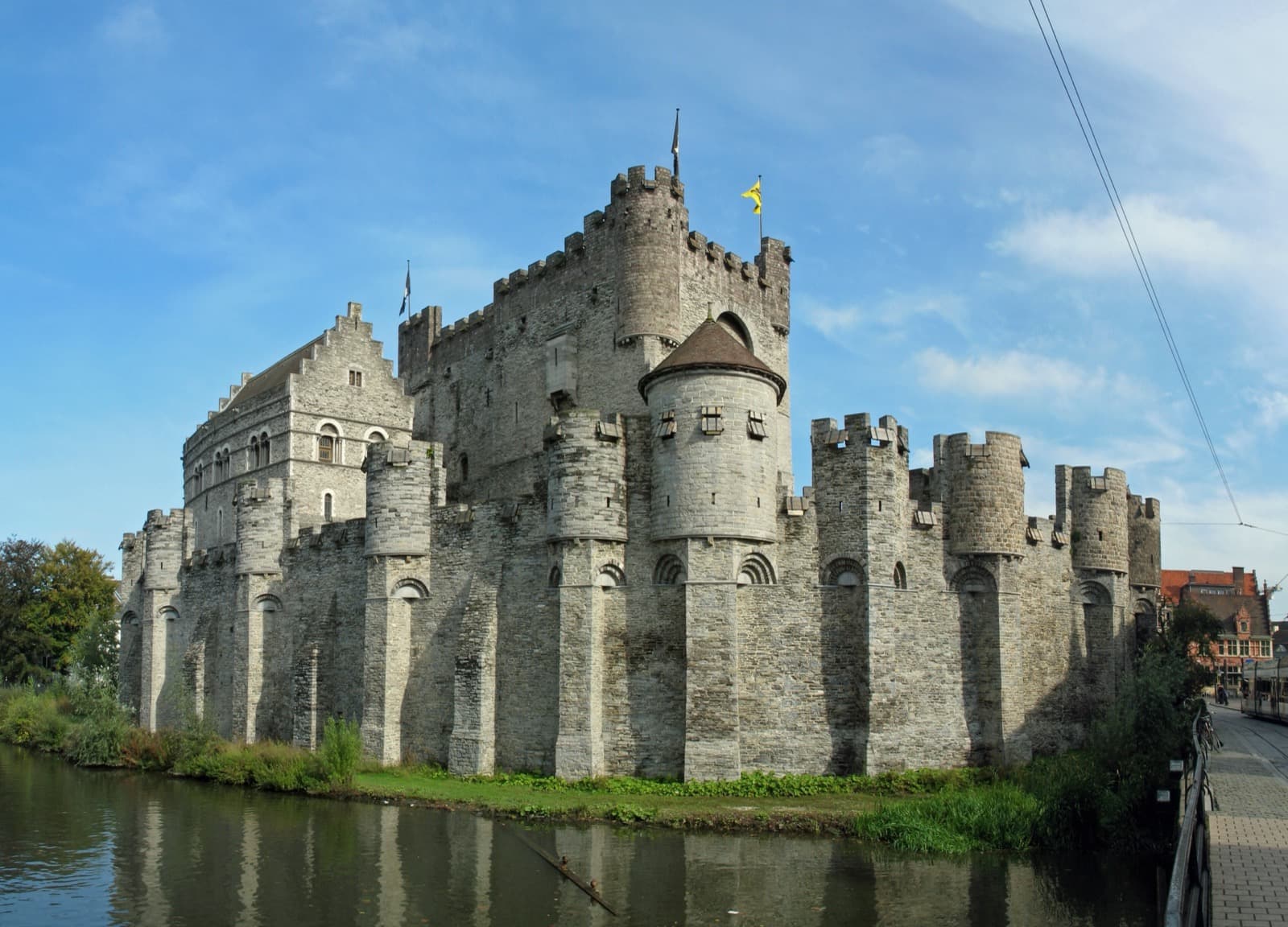
The Castle of the Counts: The Fortress Planted Among the Rebels
The moated stone castle the counts of Flanders planted in the heart of their unruly weaving city, as much to overawe its people as to defend them.
- 2
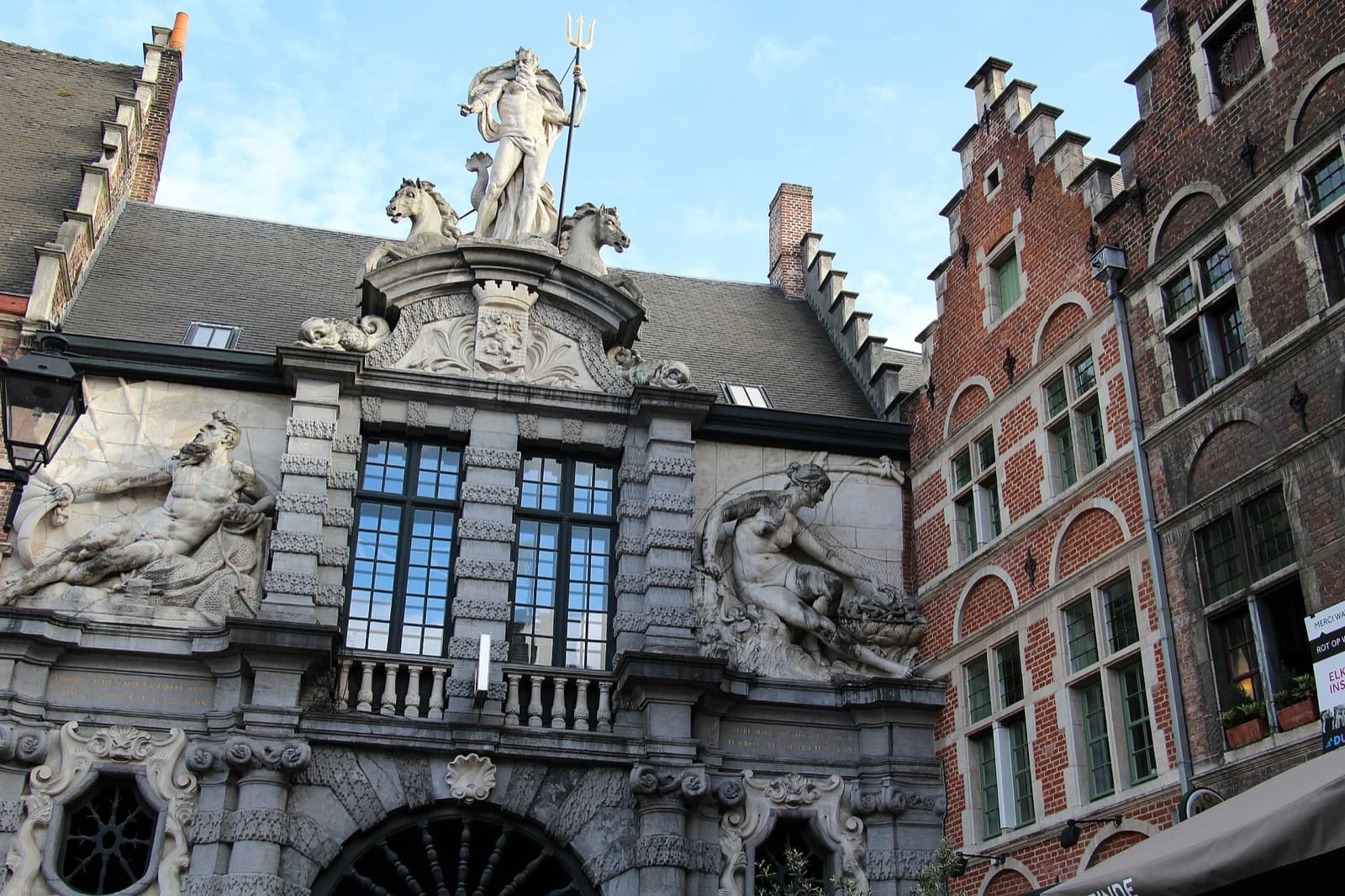
Sint-Veerleplein: The Square of Justice Below the Walls
The old square before the castle gate, for centuries a place of public justice and execution, where nine leaders of the Ghent revolt were beheaded in fifteen forty.
- 3
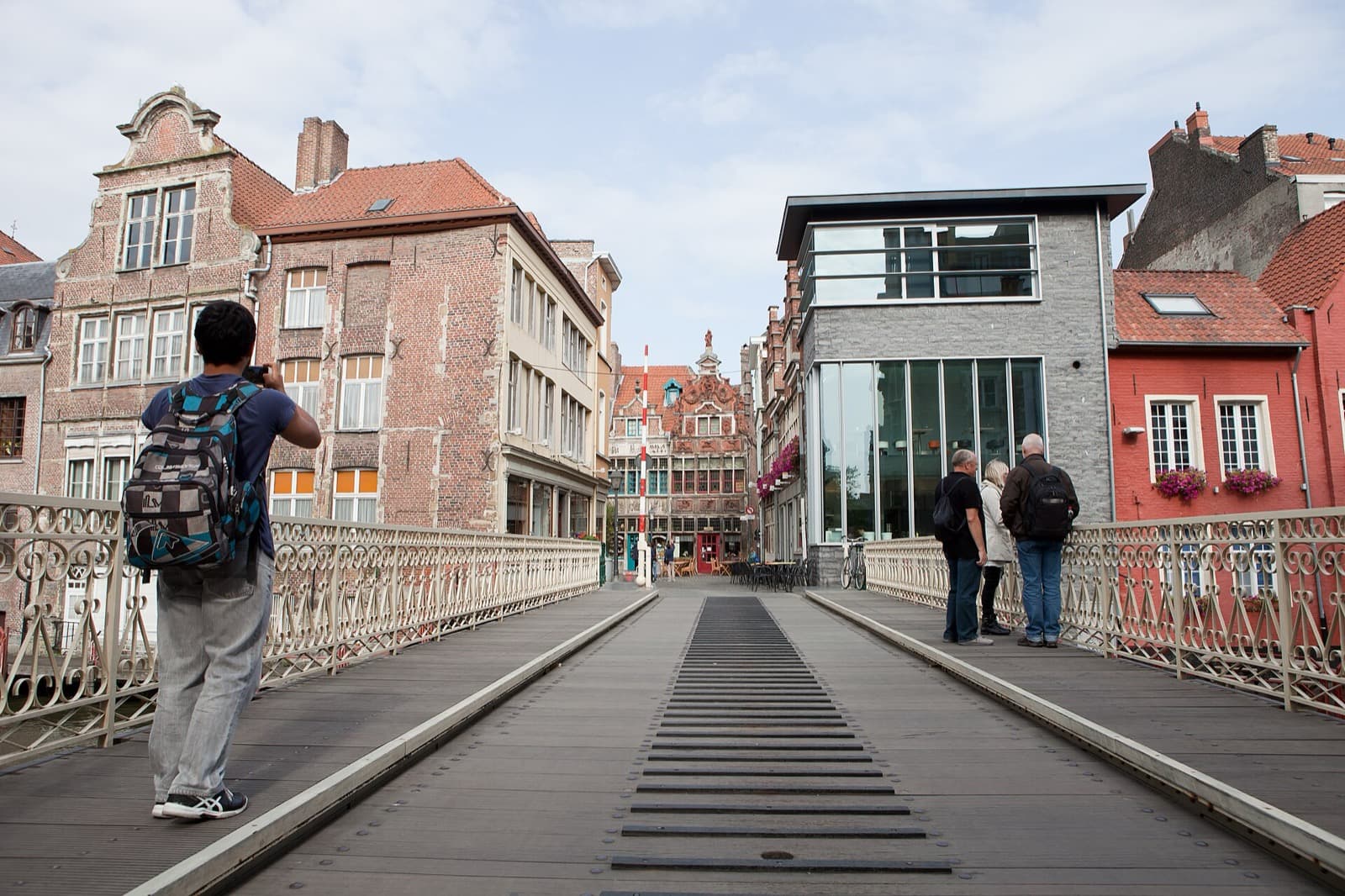
The Patershol: The Craftsmen's Maze Behind the Castle
A knot of narrow medieval lanes behind the castle where the tanners and craftsmen who served it once lived, its street plan almost untouched.
- 4
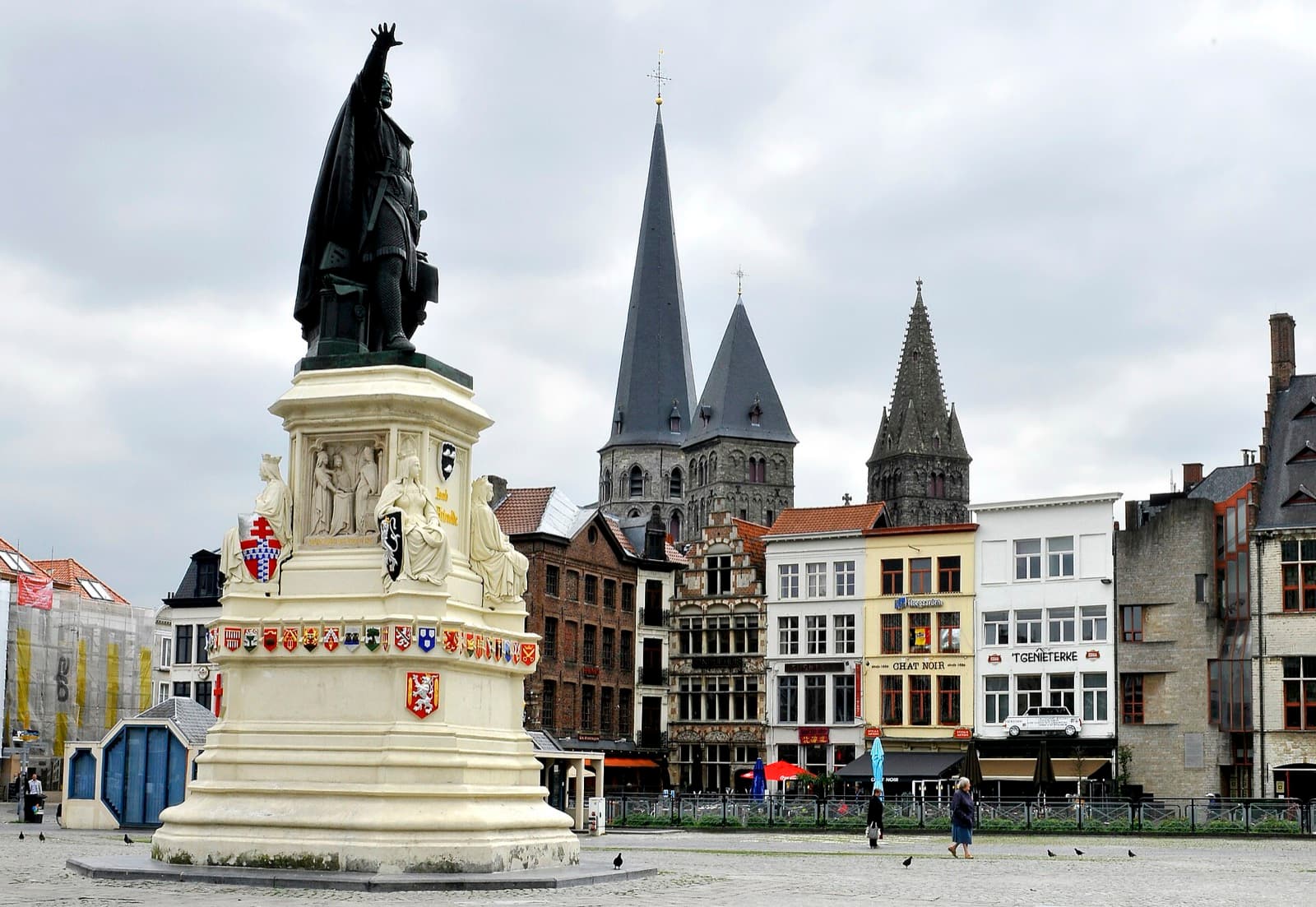
The Friday Market: The Square of Revolts and the Man Who Allied Ghent with England
Ghent's great civic-political square, where guilds mustered, counts were sworn in, crowds rioted, and Jacob van Artevelde allied the city with England for its wool.
- 5
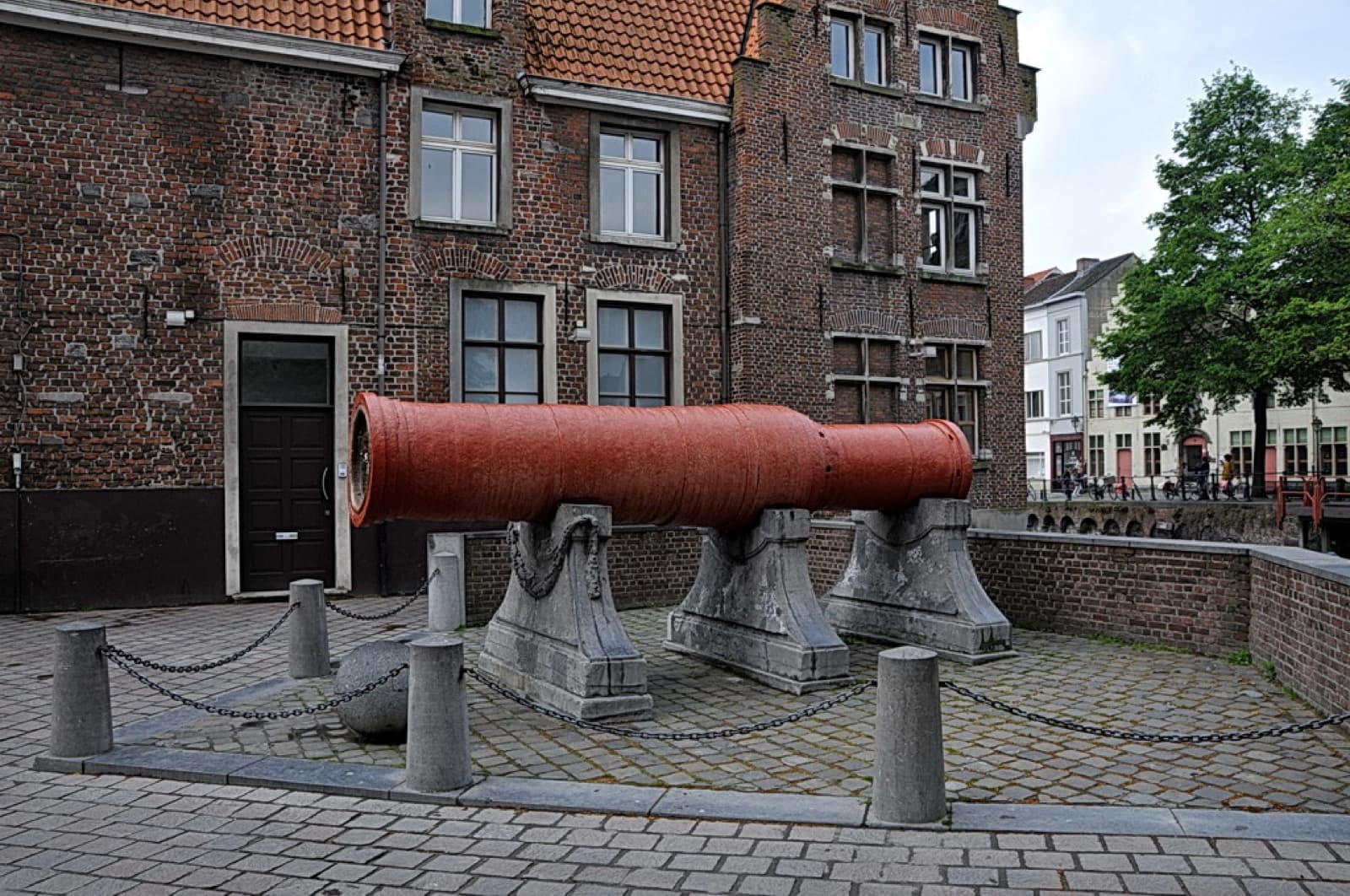
The Dulle Griet: Mad Meg, the Giant Cannon of a Defiant City
A monstrous wrought-iron medieval cannon, too large to be truly useful, that became a monument to Ghent's martial pride and gathered its own folklore.
- 6
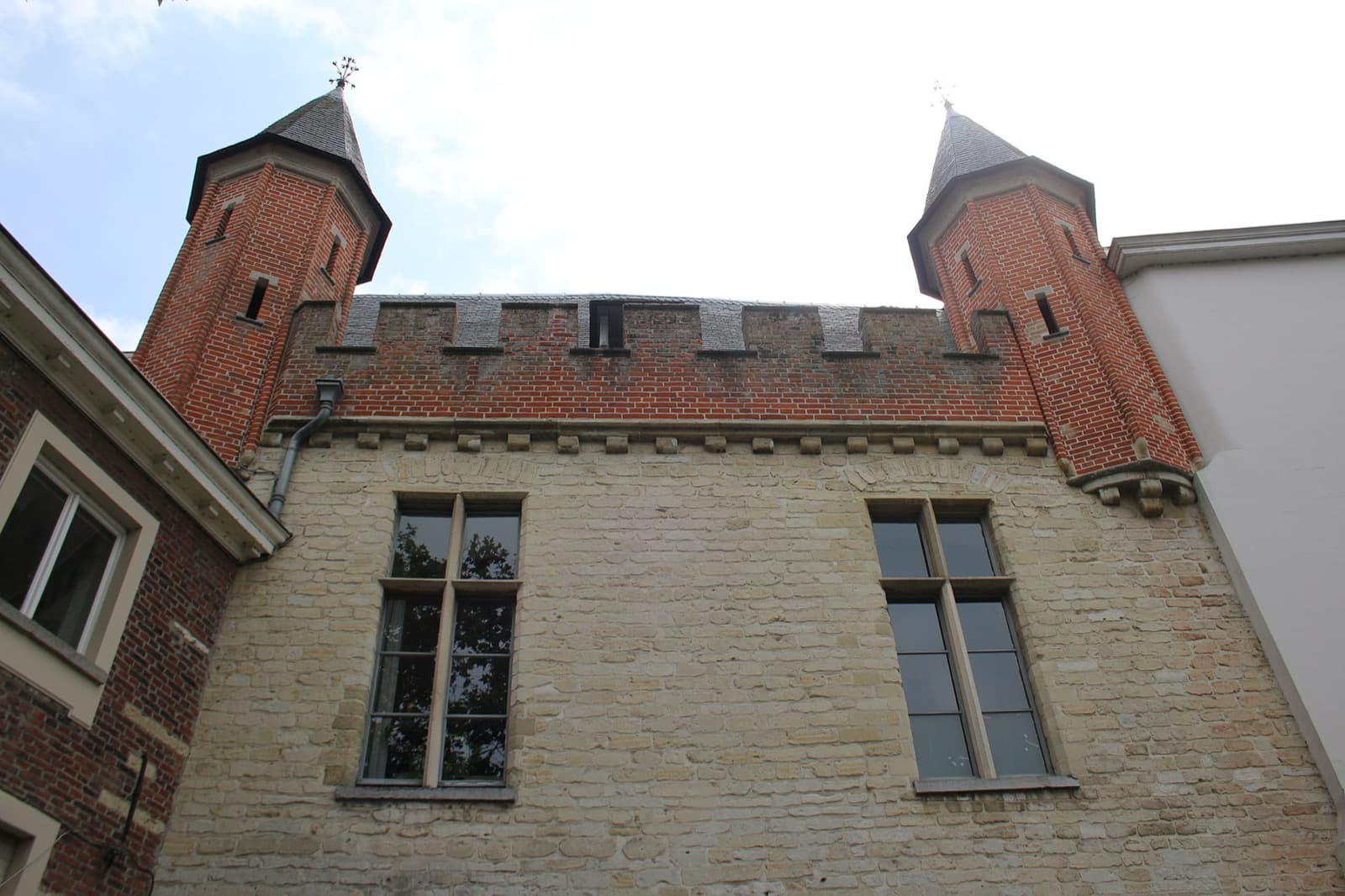
The Prinsenhof and the Dark Gate: Ghent's Own Son, and Its Harshest Master
The vanished palace where the Emperor Charles the Fifth was born in fifteen hundred, whose surviving gate marks the city his own son later humbled.
- 7
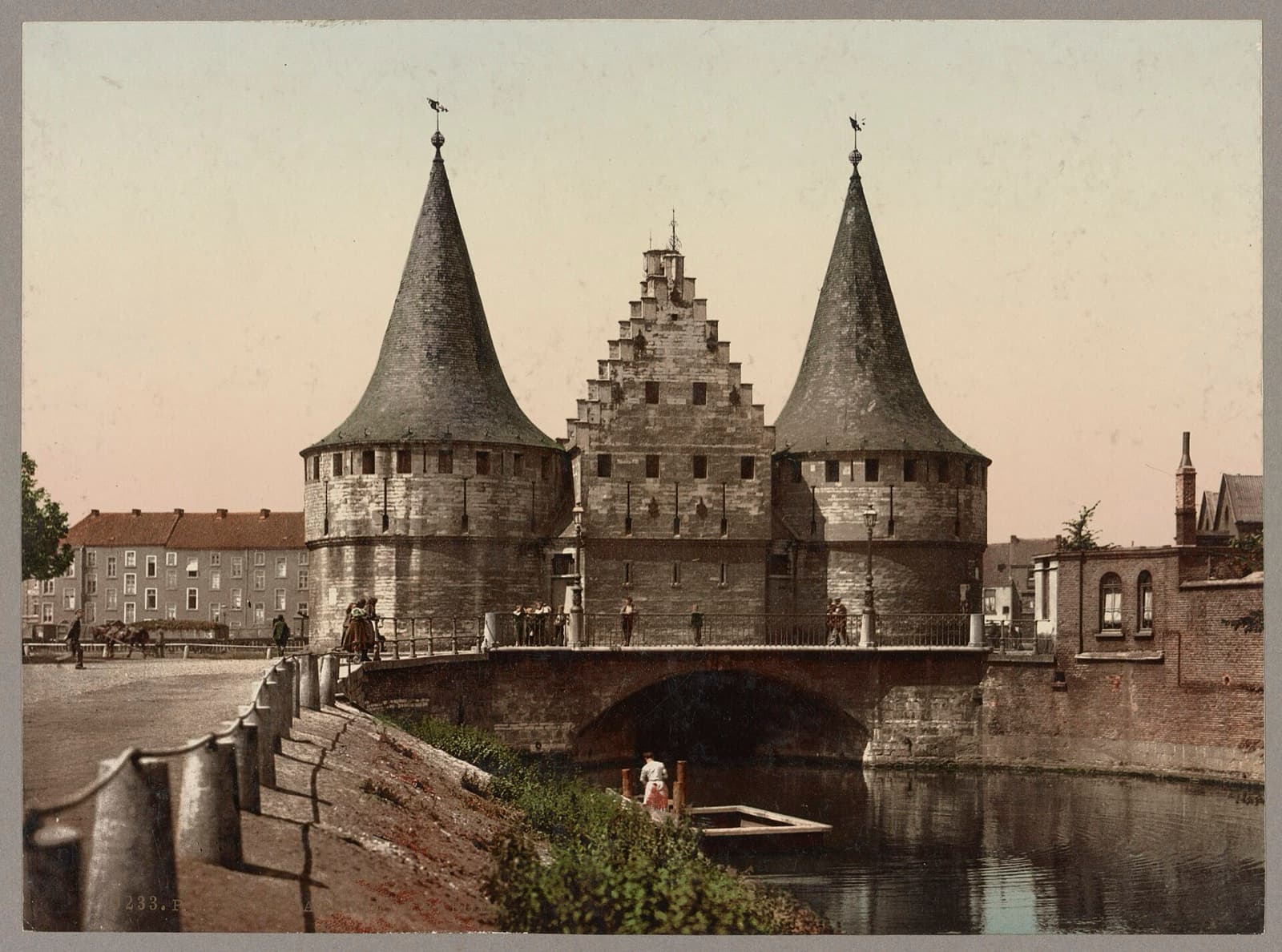
The Rabot: The Water-Gate of a City That Fought Off Its Besiegers
A twin-towered fortified water-gate raised after Ghent withstood a siege, a monument to the city's long habit of resistance and the last word of rebel Ghent.
Details
Best Time to Visit
Late morning to mid-afternoon is ideal, when the castle museum and the squares are open and the light is good along the water. Weekdays and earlier hours are calmer than weekend afternoons, and the Friday Market is at its liveliest, though busiest, on Friday mornings. In the softer light of early evening the castle and the Rabot towers look their most dramatic, and the crowds thin.
Pro Tips
- •This is a continuous walk on foot of about three kilometres over roughly two hours, so wear comfortable shoes for cobbles and plan to move entirely at your own pace, lingering or skipping stops as you like.
- •The Gravensteen exterior, all the squares, and the Rabot are free to view; only the castle interior charges entry, around thirteen euros including an audio guide, if you want to climb the walls and dungeons.
- •You can pause the walk in the Patershol, where the medieval lanes reward slow wandering, without losing the thread of the tour.
- •Carry a little cash and a card in euros if you plan to enter the castle museum, since the outdoor stops need no tickets at all.
- •For the quietest experience of Sint-Veerleplein and the Friday Market, come earlier in the day; both squares fill up on warm weekend afternoons.
- •Keep your phone charged for the map and audio, as the route threads several turns through the old quarter between the castle and the Rabot.
Safety & Precautions
- •Ghent's old town is paved in cobbles and lined with canal quays, many without railings, so watch your footing near the water, especially with children or a camera in hand.
- •The Gravensteen's interior involves steep, narrow stairs and uneven medieval floors; take the castle climb slowly and mind low doorways if you go inside.
- •Bikes and trams share the streets of the old town throughout Flanders, so look carefully before stepping into any lane or crossing, as cyclists move quickly and quietly.
- •Northern weather changes fast, so carry a waterproof layer; cobbles and quaysides become slippery in the rain, particularly around the castle moat and the Rabot water-gate.
Gallery
Related Reading
Go deeper on what you'll see, hear, and walk through.
Overview
Best Self-Guided Walking Tours in Ghent (2026)
3 min
Overview
Ghent Travel Guide: How Many Days, Getting Around, and When to Go
6 min
Overview
One Day in Ghent: A Walkable Morning-to-Evening Itinerary
8 min
Thematic
Best History Walking Tours in Ghent (2026)
2 min
Thematic
Ghent: The Medieval Giant of Three Towers and Endless Revolts
7 min
Companion
The Gravensteen: Why the Counts of Flanders Planted a Castle Inside a Rebel City
7 min
Deep dive
Vrijdagmarkt, Ghent: The Friday Market Where a Rebel City Did Its Politics Out Loud
6 min
Read
What to Eat in Ghent: Waterzooi, Cuberdons, and How to Order Like a Local
6 min
Read the walk
The full story of Gravensteen: The Castle and the Rebel City, in words. Prefer to listen? Play it narrated, from home or on location.
Introduction
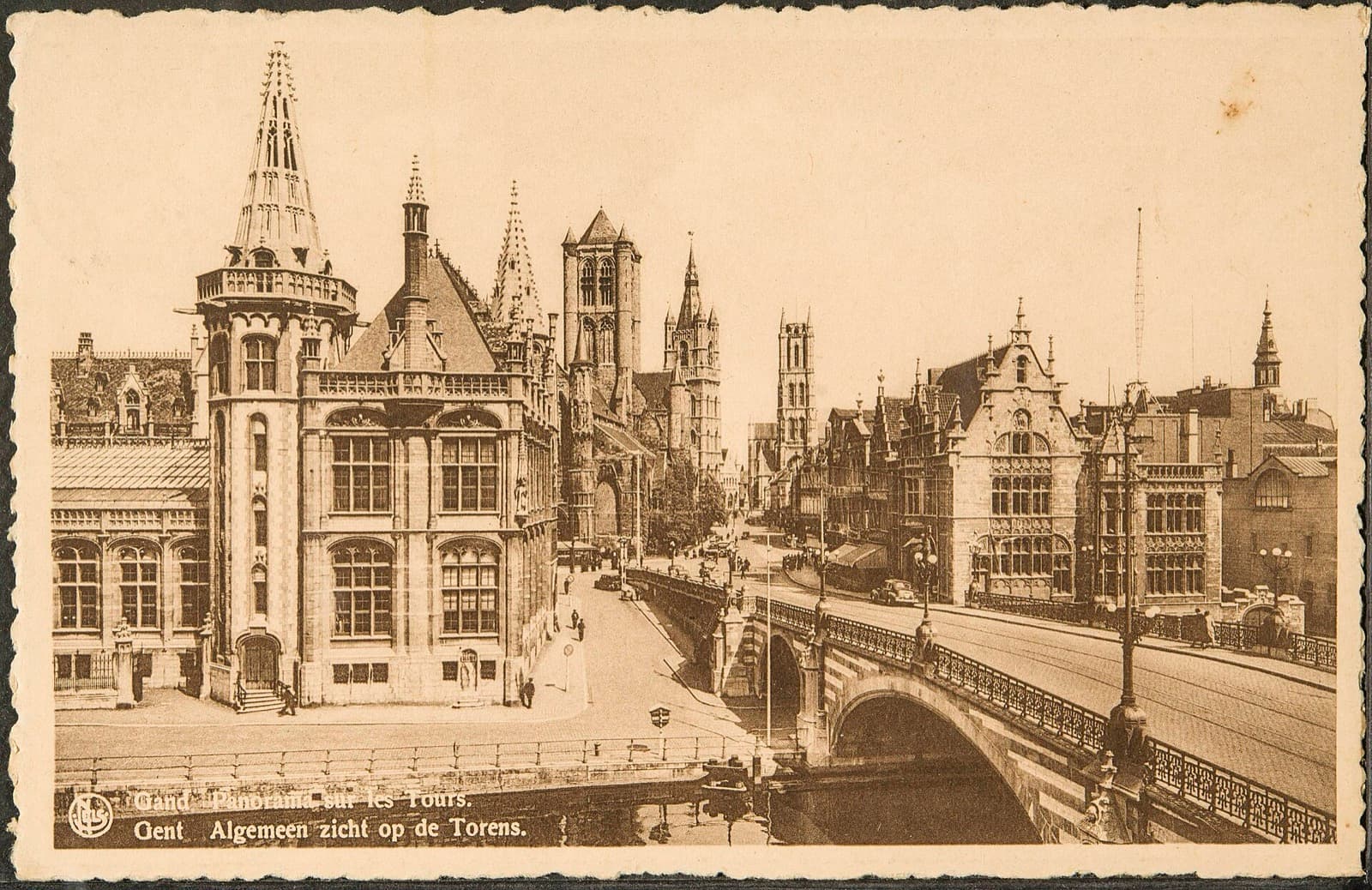
Behind the three towers of Ghent hides a harder story: one of the proudest and most rebellious cities of medieval Europe, a town of tens of thousands of weavers who rose again and again against their counts, their kings, and even their emperor. The counts planted a stone castle, the Gravensteen, in the middle of the city as much to overawe its citizens as to defend them. On the Friday Market the guilds gathered, rioted, and made and unmade governments, led at their height by Jacob van Artevelde, who allied Ghent with England for the wool the weavers needed. The city cast a giant cannon, the Dulle Griet, and defied its rulers, until Charles the Fifth, born here in fifteen hundred, crushed the tax revolt of fifteen forty, stripped the city of its privileges, and made its notables walk in penance with nooses at their necks, an insult Ghent turned into a proud nickname, the Stroppendragers, the Noose-bearers. This self-guided walk moves through seven stops over roughly seventy minutes and about two and a half kilometres, in Ghent, in Belgium, on foot the whole way, at your own pace, with no group and no schedule. It runs from the grim moated castle to a water-gate raised to a rebel victory, the last word of a city that would not bow, and you can linger or move on exactly as you please. When you arrive at the Gravensteen, the Castle of the Counts, begin with stop one.
1. The Castle of the Counts: The Fortress Planted Among the Rebels
The Gravensteen, the Castle of the Counts, is the grim, grey thing the counts of Flanders set down in the middle of a city that never much wanted them. The present stone castle was built in eleven eighty by Philip of Alsace, count of Flanders, of sandstone and pale Tournai limestone, with a large central keep, an oval ring wall, and a moat fed by the River Leie. It stood on an older site: around the year one thousand, Arnulf the First of Flanders had raised a wooden fort here, and that earlier stronghold burned around eleven seventy-six. What Philip built to replace it was meant to last, and to be seen. A castle inside a city, rather than out on its frontier, sends a message, and this one sent it to the weavers and craftsmen crowded in the lanes below: the count is here, and he is watching. Over the centuries its uses shifted with the city's fortunes. It was the counts' residence until the middle of the fourteenth century, then Ghent's mint, striking Flemish coin, for well over a century. Later it served as a court and a prison, and in the nineteenth century, during the Industrial Revolution, part of it worked as a cotton mill. The building you see was heavily restored between eighteen ninety-three and nineteen oh seven under the architect Joseph De Waele, and the city of Ghent now runs it as a museum. You can walk its walls and dungeons for yourself, on your own time. From out here the shape is clear enough: a fortress of power, planted among people who spent centuries pushing back against it. That tension is the whole of this walk.
2. Sint-Veerleplein: The Square of Justice Below the Walls
Sint-Veerleplein, the square directly before the castle gate, is prettier than its history. Plein means square, and this was the old heart of the counts' quarter, and for centuries a place of public justice and execution carried out in full view of the castle walls. The city records place executions here from fourteen oh seven into the late eighteenth century, one of three such sites in Ghent. The sober record is not gentle: counterfeiters could be boiled, and those condemned for murder beheaded, and between the fourteenth and early eighteenth centuries a number of people accused of witchcraft in the Ghent region were tried, some of them executed. These were real people, and this quiet square was where their lives ended. One date belongs to the larger story of this walk. On the seventeenth of March, fifteen forty, nine leaders of the Ghent revolt were beheaded on this square by order of the Emperor Charles the Fifth, with more following that spring. Hold that in mind: you will come to the emperor himself, and to why his own birthplace so enraged him, near the end of the tour. The gentler feature here belongs to a later age. The old fish market moved to this square in sixteen eighty-nine, and its ornate gateway was once crowned with three sea gods. A fire in eighteen seventy-two destroyed two of them and left only the figure of Neptune, who still looks out from the gate, said to watch over the meeting of the Scheldt and the Leie, the one imagined as male, the other as female. Take the square slowly. Under the postcard, this was a place of judgement.
3. The Patershol: The Craftsmen's Maze Behind the Castle
Behind the castle the streets tighten into the Patershol, a small quarter of narrow cobbled lanes and step-gabled houses whose name means something close to Monk's Hollow. This is one of the oldest surviving residential districts in Ghent, and its closed medieval street pattern is still largely intact, so the maze you move through now is much the same knot of lanes that existed here in the Middle Ages. It was settled by the working city: leather tanners above all, and stonemasons, carpenters, blacksmiths, the craftsmen who served the castle and its household and who valued being close to the water of the Leie for their trades. This is the counterweight to the fortress you just left. The count's power stood in stone on the height; the people who fed, clothed, built, and armed the city lived down here in the shadow of it. Later, in the seventeenth and eighteenth centuries, magistrates and lawyers built finer houses among the lanes, and the quarter had a comfortable spell. Then it fell hard. By around nineteen hundred the Patershol had declined into a slum, a labyrinth of dark, crowded lanes, and it stayed that way for decades. It was protected as a historic townscape in nineteen eighty-one, and from the early nineteen eighties the city and private owners restored it into the lived-in cultural quarter you find today. Wander it however you like. There is no single monument to stop for here. The point is the grain of the place: the scale of the doorways, the turns of the lanes, the sense of a working, pre-industrial city that lived in the castle's shadow and, again and again, refused to stay quiet.
4. The Friday Market: The Square of Revolts and the Man Who Allied Ghent with England
The Vrijdagmarkt, the Friday Market, is where the rebel city did its politics out loud. Markt means market, and a market has been held here every Friday since eleven ninety-nine, but this roughly square space, about one hundred metres on a side, was far more than a place to buy…
Full narration for this stop unlocks with the tour.
5. The Dulle Griet: Mad Meg, the Giant Cannon of a Defiant City
Just off the Friday Market, on the Grootkanonplein, the Big Gun Square, sits the Dulle Griet, Mad Meg, a monster of wrought iron painted a dull red. It is a giant medieval bombard, made in the first half of the fifteenth century from thirty-two long iron bars bound together by…
Full narration for this stop unlocks with the tour.
6. The Prinsenhof and the Dark Gate: Ghent's Own Son, and Its Harshest Master
The Prinsenhof quarter marks the site of a vanished palace and the sharpest irony of this whole walk. Here stood the Prinsenhof, a walled complex said to have held around three hundred rooms, with gates, a chapel, kitchens, stables, and cellars, and here, on the twenty-fourth of…
Full narration for this stop unlocks with the tour.
7. The Rabot: The Water-Gate of a City That Fought Off Its Besiegers
The Rabot, in the north of the old city, is the right place to end a walk about a city that would not bow. It is a fortified water-gate of two massive round towers, each capped with a cone, standing where the old canal called the Lieve crossed the city moat. It was built between…
Full narration for this stop unlocks with the tour.